Possessive Adjectives vs Possessive Pronouns: My vs Mine

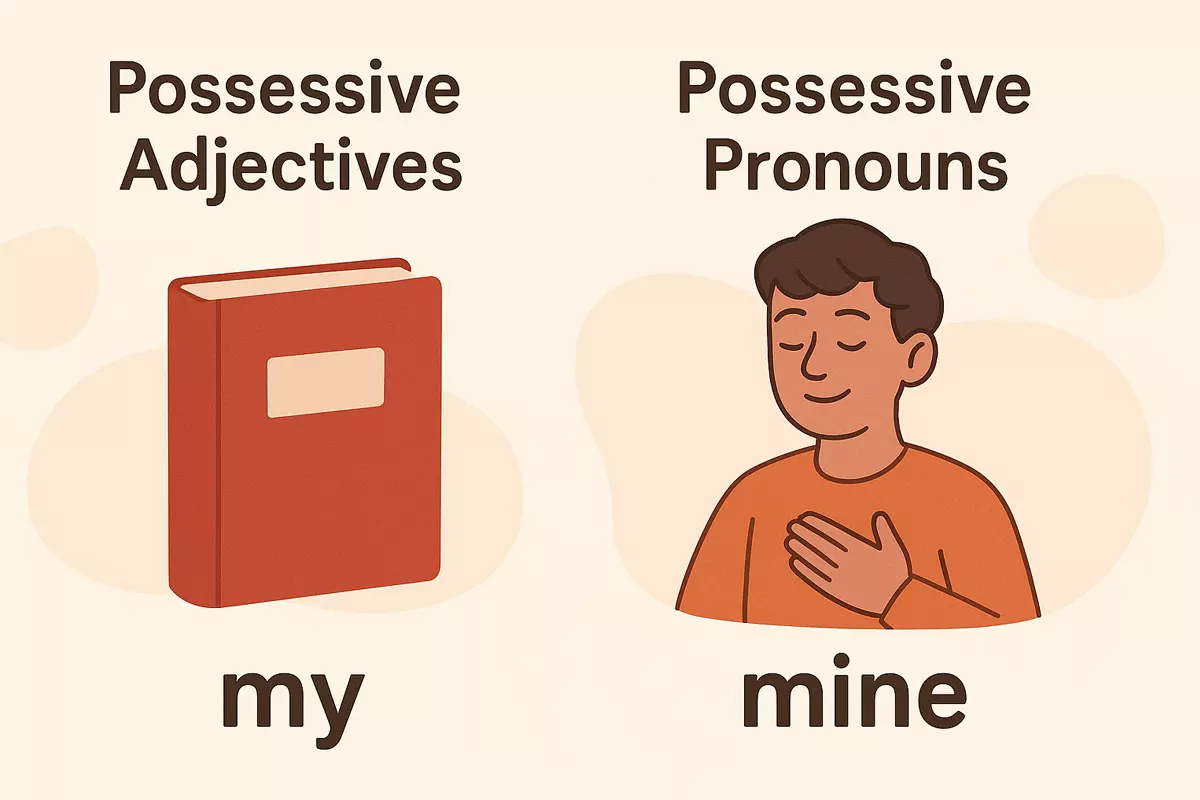 Here we possessive adjectives like my and your, and possessive pronouns such as mine and yours. It discusses where they appear in sentences, noting that "its" cannot stand alone.
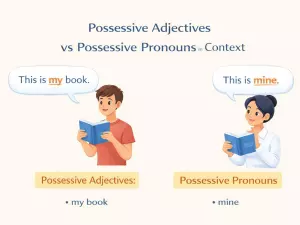
In English, it’s important to distinguish between possessive adjectives and possessive pronouns. Both express ownership, but they function differently in a sentence. A possessive adjective, such as "my", always comes before a noun (e.g., "my book"). A possessive pronoun, such as "mine", replaces the noun entirely (e.g., "The book is mine."). Understanding this difference helps make your speech and writing clearer and more natural.
Possessive Adjectives (my, your, his, her, its, our, their)
Possessive adjectives show who something belongs to and are always used before a noun.
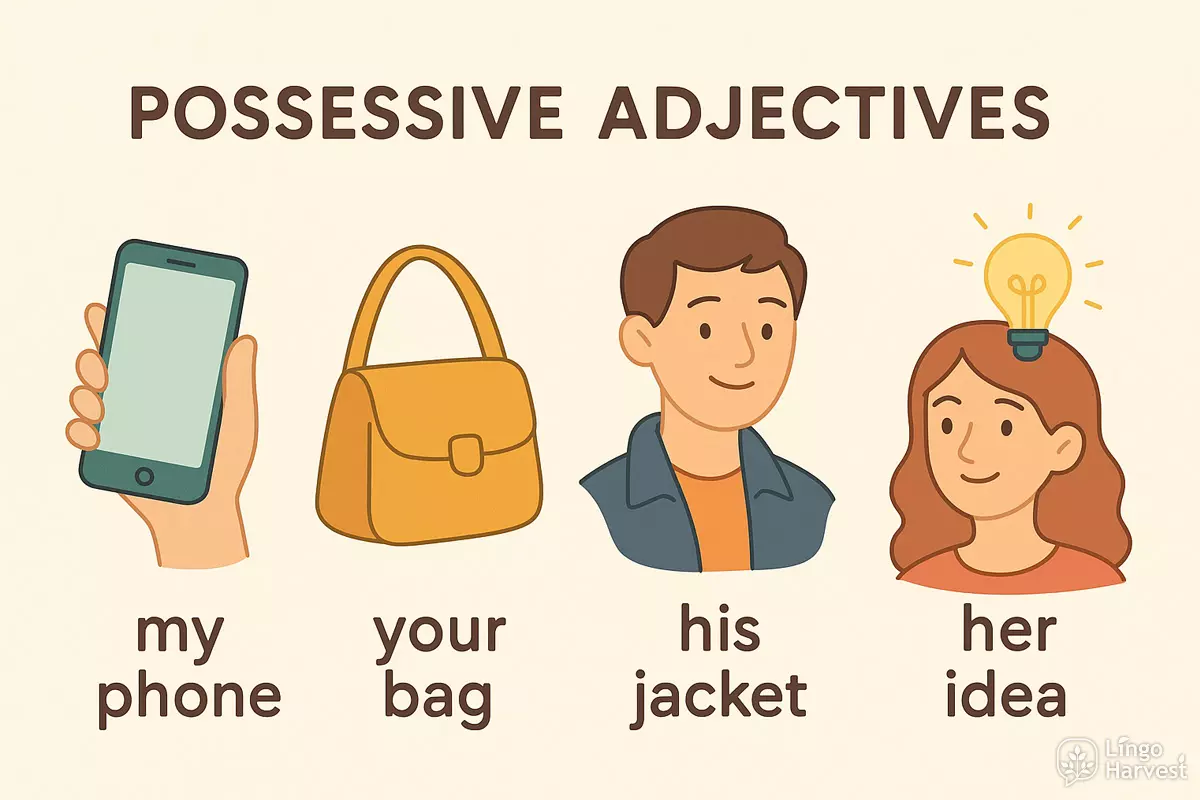
Examples
- my phone — The phone belongs to me.
- your bag — The bag belongs to the person being spoken to.
- his jacket — Belongs to a male person.
- her idea — Belongs to a female person.
- its tail — Used for animals or objects.
- our classroom — Belongs to a group including the speaker.
- their house — Belongs to a group of people (not including the speaker).
Common Mistakes
- Do not confuse its (possessive adjective) with it's (contraction of “it is”).
- Possessive adjectives must be followed by a noun:
Correct: This is my book.
Incorrect: This book is my.
Comparison Table
| Possessive Adjective | Example Sentence | Possessive Pronoun |
|---|---|---|
| my | This is my hat. | mine |
| your | Is this your pen? | yours |
| his | His shoes are new. | his |
| her | Her dress is beautiful. | hers |
| its | The cat licked its paw. | — |
| our | Our project was successful. | ours |
| their | Their garden is lovely. | theirs |
Remember: Possessive adjectives modify a noun, while possessive pronouns replace it. Mastering this difference helps make your English smoother and more precise.
Possessive Pronouns (mine, yours, his, hers, ours, theirs)
Possessive pronouns replace a noun to show ownership, helping avoid repetition. For example, instead of saying, “This is my book and that is your book,” we can say, “This is my book, and that is yours.”
List of Possessive Pronouns
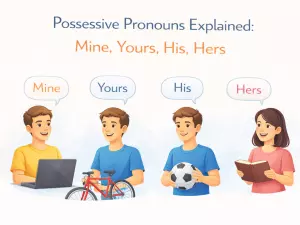
- mine — belongs to the speaker. Example: “The red bicycle is mine.”
- yours — belongs to the person being spoken to. Example: “Is this pen yours?”
- his — belongs to a male person. Example: “The jacket on the chair is his.”
- hers — belongs to a female person. Example: “The book on the table is hers.”
- ours — belongs to the speaker and others. Example: “The decision is ours.”
- theirs — belongs to a group of people. Example: “The victory was theirs.”
Key Rule
Possessive pronouns stand alone. They do not go before a noun.
Compare:
- ✅ “This is my book.” (possessive adjective + noun)
- ✅ “This book is mine.” (possessive pronoun replaces the noun)
- ❌ “This is mine book.” (incorrect)
Where They Go: Before a Noun vs Stand-Alone
Possessive adjectives appear before nouns. Possessive pronouns replace nouns entirely.
Possessive Adjectives (before a noun)
- my book is on the table.
- She drove her car to work.
- We love our new apartment.
Possessive Pronouns (stand alone)
- The book on the table is mine.
- The blue car outside is hers.
- The final decision was theirs.
Comparison Table
| Possessive Adjective | Possessive Pronoun |
|---|---|
| my | mine |
| your | yours |
| his | his |
| her | hers |
| our | ours |
| their | theirs |
In summary, use possessive adjectives before nouns and possessive pronouns when the noun is not repeated. This keeps speech and writing clear, natural, and concise.
Special Case: No Stand-Alone “its”
In English, its is a possessive adjective, not a possessive pronoun. This means it must always be used before a noun and cannot stand alone. This makes its different from forms like mine or yours, which can replace nouns completely.
How “its” Works
Its shows ownership for animals, objects, or ideas. It modifies a noun directly.
- The cat licked its paw.
- The company changed its policy.
- The tree lost its leaves.
You cannot say: “The paw is its.” — this is incorrect because its cannot stand alone.
How It Differs from Other Possessive Forms
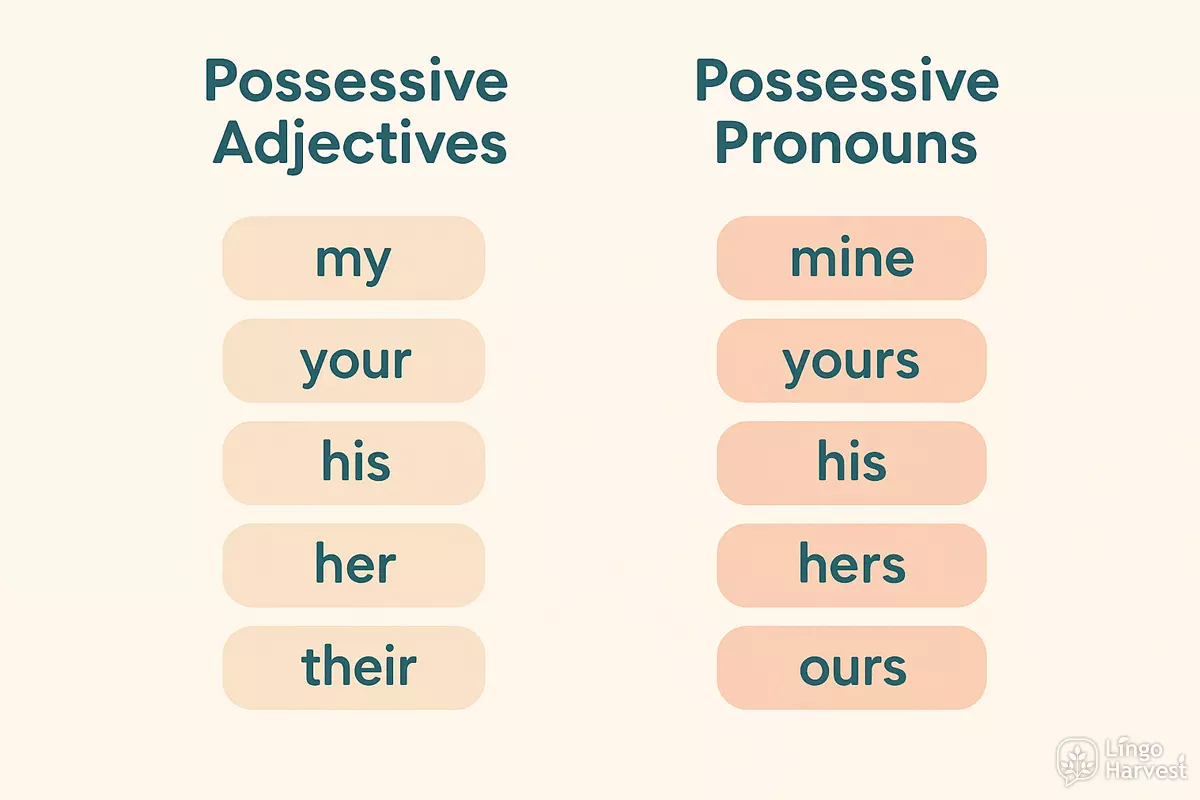
Compare possessive adjectives vs. possessive pronouns:
- my → mine
- your → yours
- his → his
- her → hers
- our → ours
- their → theirs
its has no stand-alone form — it is always used before a noun.
Common Mistake
Incorrect: “The book is its.”
Correct: Rephrase: “The book belongs to the dog.” / “The book is theirs.”
Its vs. It’s: No Apostrophe in Possessives
A common confusion: its (possessive) and it’s (contraction) look similar but have different functions.
- its = shows ownership
- it’s = contraction of it is or it has
Examples
- The cat cleaned its fur. (possession)
- It’s raining outside. (“it is”)
- The company updated its website. (possession)
- It’s been a long day. (“it has”)
Quick Check Trick
If you can replace the word with “it is” or “it has”, use it’s. If not — use its.
Reference Table
| Form & Meaning | Example Sentence |
|---|---|
| its (possessive adjective) | The robot moved its arm. |
| it’s = it is | It’s a beautiful morning. |
| it’s = it has | It’s been two hours already. |
Remember: Possessive = no apostrophe. The apostrophe always means a contraction.
Common Mistakes and Fixes
Many learners confuse possessive adjectives and possessive pronouns. Understanding the difference helps ensure clarity and avoids common errors.
Confusing Possessive Adjectives with Possessive Pronouns
Remember:
- Possessive adjectives (my, your, her, etc.) go before a noun.
- Possessive pronouns (mine, yours, hers, etc.) replace the noun.
- Incorrect: This is mine book.
Correct: This is my book. - Incorrect: That is yours car.
Correct: That is your car.
Overusing Possessive Pronouns
Use possessive pronouns only when the noun being replaced is clear.
- Incorrect: Her dress is blue, and mine dress is red.
Correct: Her dress is blue, and mine is red.
Omitting the Noun After a Possessive Adjective
Possessive adjectives must always accompany a noun.
- Incorrect: My is on the table.
Correct: My book is on the table.
Using the Wrong Form
- Incorrect: Theirs car is new.
Correct: Their car is new. - Incorrect: This book is their.
Correct: This book is theirs.
By keeping these distinctions in mind, you can use possessive forms accurately and naturally.
Practice
1. Identify the Form
Decide whether the bold word is a possessive adjective or a possessive pronoun.
- That book is my favorite.
- The cat is mine.
- She forgot her umbrella.
- The decision was theirs.
- Is this your coat?
Show answers
- Possessive adjective
- Possessive pronoun
- Possessive adjective
- Possessive pronoun
- Possessive adjective
2. Fill in the Blanks
Choose the correct word.
- This is not my book; it's _______ (hers / her).
- _______ (Their / Theirs) car is parked outside.
- I believe this pen is _______ (yours / your).
- _______ (My / Mine) house is the one on the corner.
- They brought _______ (their / theirs) lunch.
Show answers
- hers
- Their
- yours
- My
- their
Comparison Table
Use this table as a quick reference:
| Possessive Adjectives | Possessive Pronouns |
|---|---|
| my | mine |
| your | yours |
| his | his |
| her | hers |
| its | — (no stand-alone form) |
| our | ours |
| their | theirs |
Reviewing this chart regularly will help reinforce the difference between these two forms.