Demonstrative Pronouns: This, That, These, Those

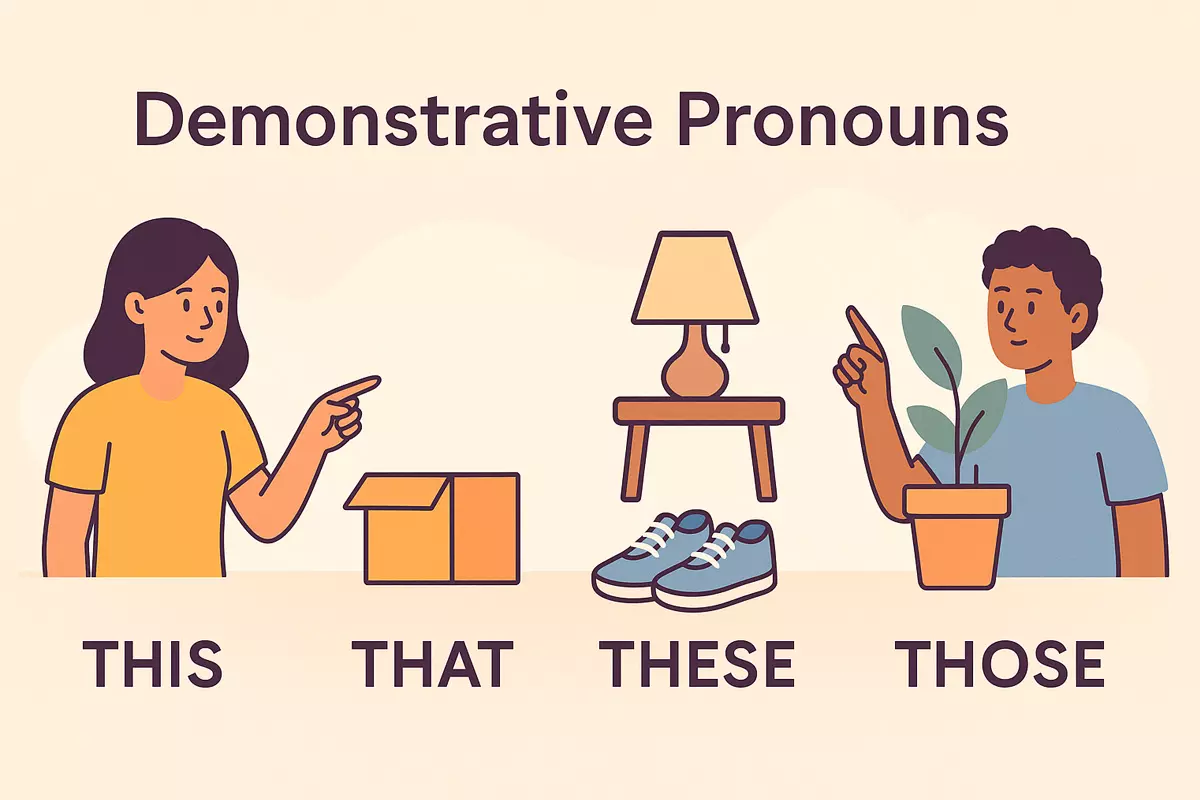 Explore demonstrative pronouns like this, that, these, and those to distinguish between singular and plural, near and far. Learn their usage in real-life situations involving objects, places, and time, and discover how to avoid common mistakes.
In the realm of language, words play a crucial role in pointing to specific objects or individuals, thereby enhancing clarity in communication. These words, known as demonstrative pronouns, include terms such as "this," "that," "these," and "those." Mastering their usage can significantly improve your ability to convey messages with precision and engagement. By effectively employing demonstrative pronouns, you can make your conversations more direct and understandable, ensuring that your audience fully grasps the context and specifics of what you are discussing. This skill is invaluable in both personal and professional interactions, where clear communication is key to successful exchanges.
What Are Demonstrative Pronouns?
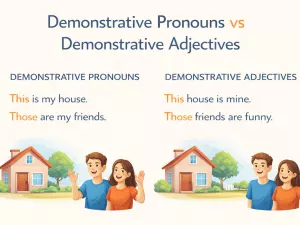
Demonstrative pronouns are words used to point to specific things or people. They help clarify which object or person is being referred to in a conversation or text. The English language includes four main demonstrative pronouns: "this," "that," "these," and "those." Each serves to indicate something either near or far from the speaker, both in physical space and in time.
Understanding Usage
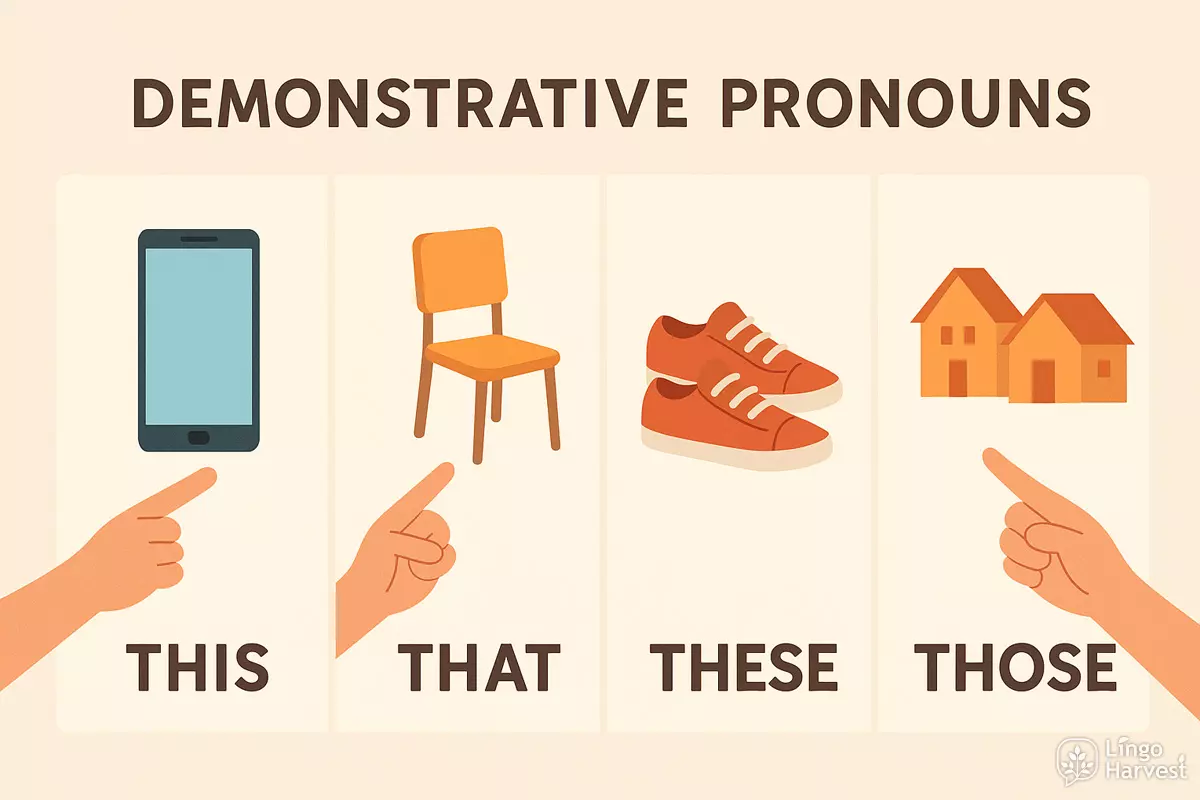
The choice between these pronouns depends largely on the distance from the speaker and the number of items being referred to. Here’s a quick guide:
- This: Refers to a singular noun that is nearby. Example: "This is my book."
- That: Refers to a singular noun that is farther away. Example: "That is your car over there."
- These: Refers to plural nouns that are nearby. Example: "These are my keys."
- Those: Refers to plural nouns that are farther away. Example: "Those are your shoes on the shelf."
Comparing Demonstrative Pronouns
To better understand how these pronouns function, consider the following structured examples:
| Pronoun | Example Sentence |
|---|---|
| This | This is the pen I use daily. |
| That | That was a fantastic performance! |
| These | These are the documents you requested. |
| Those | Those were the days of our youth. |
Practical Tips
When using demonstrative pronouns, consider the context and ensure clarity. If the object or person is not visually present, additional descriptors may be necessary to avoid confusion. Remember that the choice of pronoun can subtly change the meaning of a sentence, so choose wisely to convey the intended message effectively.
This vs That (Singular: near vs far)
Understanding the difference between "this" and "that" helps in conveying precise meaning, especially when referring to objects based on their proximity. "This" is used when the object is near the speaker, while "that" refers to something farther away.
Usage of "This" and "That"
- This: Use "this" to indicate an object or idea that is within close physical or psychological distance. For example: - This book in my hand is interesting. - This idea seems promising. - That: "That" is used for objects or concepts that are not immediately present or are further away. Examples include: - That mountain over there is majestic. - That was a memorable day.
Examples in Sentences
Using "this" and "that" correctly can enhance clarity. Here are some examples:
- This is the pen I was looking for.
- That is the car we saw yesterday.
- This moment is precious.
- That restaurant is famous for its pasta.
- This chair is more comfortable than the other.
- That sound is coming from the next room.
- This solution works perfectly.
- That decision was unexpected.
Comparative Table
To further illustrate the differences, consider this structured comparison:
| Aspect | This | That |
|---|---|---|
| Proximity | Near | Far |
| Usage Context | Immediate surroundings | Beyond immediate reach |
| Examples | This phone, this idea | That house, that thought |
| Emotional Connection | Often stronger | Often weaker |
By understanding when to use "this" and "that," you can create more vivid and accurate expressions in both written and spoken communication.
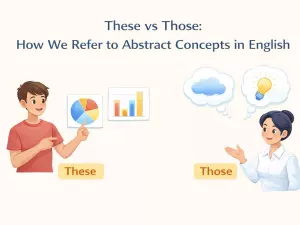
These vs Those (Plural: near vs far)
Understanding how to use "these" and "those" correctly in English is essential for clear communication. Both words are demonstrative pronouns used to indicate plural items, but their usage depends on the relative distance of the items from the speaker.
Usage of "These"
When referring to items that are physically close to the speaker, "these" is the appropriate choice. It indicates proximity in space or time, emphasizing that the objects are within reach or recently mentioned. For example:
- These books on the table are mine.
- Can you pass me these papers?
- These days have been really busy.
Usage of "Those"
"Those" is used to refer to items that are farther away from the speaker, either in terms of physical distance or in time. It suggests that the objects are not immediately accessible or are less directly relevant to the current context. Consider the following examples:
- Those mountains in the distance are breathtaking.
- What do you think of those cars parked across the street?
- Those were the days when we were carefree.
Comparative Overview
To further clarify the distinction, consider the following structured comparison of "these" and "those":
| Demonstrative Pronoun | Indicates |
|---|---|
| These | Items close to the speaker |
| Those | Items far from the speaker |
Practical Tips
To effectively use "these" and "those," consider the context of your conversation. Ask yourself whether the items you're pointing to are nearby or further away. This will guide your choice and ensure your message is clear. Remember that in addition to physical distance, you can use these pronouns to denote temporal distance or emotional detachment, adding nuance to your language.
How to Use in Real Situations (objects, places, time)
Understanding how to use demonstrative pronouns effectively can greatly enhance your communication skills. These pronouns—this, that, these, and those—help specify objects, places, or even times. Here’s a guide on how to apply them in everyday scenarios.
Using Demonstrative Pronouns with Objects
When referring to objects, the choice of demonstrative pronoun depends on the distance from the speaker:
- This: Use for a singular object that is close to the speaker. Example: "This pen is mine."
- That: Use for a singular object that is farther away. Example: "That building is the museum."
- These: Use for multiple objects that are near. Example: "These books are interesting."
- Those: Use for multiple objects at a distance. Example: "Those cars are expensive."
Applying Demonstrative Pronouns to Places
Demonstrative pronouns can also indicate proximity regarding locations:
- This: Refers to a place close to you. Example: "This is my favorite café."
- That: Points to a location further away. Example: "That is where the concert will be."
Referring to Time with Demonstrative Pronouns
These pronouns can be used to express time-related concepts:
- This: Indicates the current time period or moment. Example: "This morning was hectic."
- That: Refers to a past or future time. Example: "That day was unforgettable."
Structured Examples of Usage
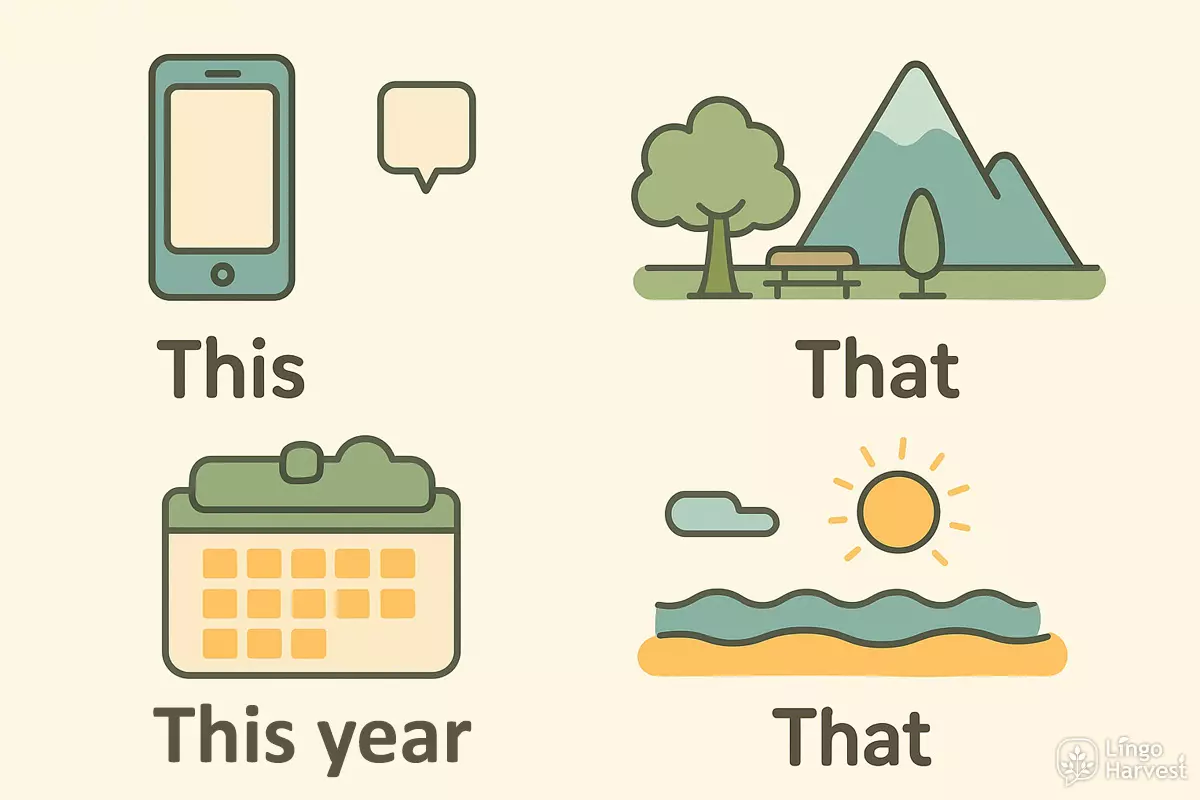
Below is a structured set of examples illustrating the different contexts in which these pronouns are used:
| Context | Example |
|---|---|
| Object (Near) | This phone is new. |
| Object (Far) | That star looks bright. |
| Place (Near) | This park is beautiful. |
| Place (Far) | That mountain is high. |
| Time (Current) | This year has been challenging. |
| Time (Past/Future) | That summer was memorable. |
Mastering the use of these pronouns in various contexts will make your communication clearer and more precise. Whether you're talking about objects, places, or time, understanding the distance and relevance will help you choose the correct term.
Pointing in Speech vs Writing
Demonstrative pronouns like "this," "that," "these," and "those" serve as linguistic pointers in both verbal and written communication. However, their application can differ significantly between these two modes. In spoken language, these pronouns are often accompanied by gestures, such as pointing, which provide additional context and clarity. This physical pointing helps the listener understand exactly what or whom the speaker is referring to, making the communication more direct and immediate.
Demonstratives in Spoken Language
When we speak, the use of demonstratives can be quite dynamic. Consider scenarios where you might say, "Look at that," while pointing to a distant object, or "These are my favorite," as you gesture towards items in front of you. The context is enriched by the presence of visual cues, which can make the meaning clear without further explanation. This immediacy is a key feature of spoken communication.
Demonstratives in Written Language
In contrast, writing lacks the benefit of non-verbal cues, so writers must rely on context within the text to convey the same clarity. Demonstratives in writing often refer to information previously mentioned or to something the reader is expected to know. For example, phrases such as "this idea" or "those days" rely on the reader's memory of prior content to make sense. Writers need to be more explicit, often using additional descriptors to ensure the reader understands the reference.
| Mode | Example |
|---|---|
| Spoken | "Can you pass me those?" (while pointing to objects) |
| Written | "In this chapter, we will explore..." |
| Spoken | "This is delicious!" (referring to the food being eaten) |
| Written | "That moment changed everything." |
Overall, the effectiveness of demonstrative pronouns relies heavily on context, whether spoken or written. In speech, gestures and intonation aid understanding, while in writing, precise wording and context are crucial. Understanding these differences can enhance communication skills in both realms, ensuring clarity and precision in conveying ideas.
Common Mistakes and How to Avoid Them
When using demonstrative pronouns like "this," "that," "these," and "those," it's easy to fall into a few common traps. Here are some typical errors and how to steer clear of them to improve your English communication skills.
Confusing Singular and Plural Forms
One frequent mistake is mixing up singular and plural forms. "This" and "that" are singular, while "these" and "those" are plural. Misusing these can lead to confusion. For example:
- ❌ This books are interesting.
- ✅ These books are interesting.
Incorrect Distance Context
Another issue arises with the context of distance. "This" and "these" refer to objects that are near the speaker, whereas "that" and "those" refer to objects further away. Consider these examples:
- ❌ That pen here is mine.
- ✅ This pen here is mine.
Using Demonstratives Without a Clear Reference
Sometimes, demonstratives are used without a clear reference, leaving the listener confused. Always ensure that the noun being referred to is either stated or clearly implied:
- ❌ I don't like that. (What is "that"?)
- ✅ I don't like that movie we watched.
Redundancy with Demonstratives
Using demonstratives redundantly can clutter your sentences. Avoid unnecessary repetition:
- ❌ This here is my favorite book.
- ✅ This is my favorite book.
Comparing Demonstrative Pronouns
| Pronoun | Usage Context |
|---|---|
| This | Singular, near |
| That | Singular, far |
| These | Plural, near |
| Those | Plural, far |
By being mindful of these common pitfalls and using demonstrative pronouns correctly, you can enhance clarity and precision in your communication. Practice makes perfect, so keep these guidelines in mind as you refine your language skills.
Practice
Understanding and using demonstrative pronouns correctly can enhance your communication skills. Here, we'll explore various exercises and examples to solidify your grasp of "this," "that," "these," and "those."
Identifying Demonstrative Pronouns
Try to identify the demonstrative pronouns in the following sentences. Remember, they help specify the subject in terms of distance or time. 1. This is the book I was talking about. 2. Those were the days! 3. Are these your keys? 4. That movie was amazing.
Show answers
- This
- Those
- These
- That
Choosing the Correct Pronoun
Select the appropriate demonstrative pronoun for each sentence based on the context provided. 1. (This/Those) cookies on the table are delicious. 2. I remember (that/these) summer we spent in France. 3. Can you pass me (these/that) pen right next to you? 4. (This/Those) pictures from the trip are beautiful.
Show answers
- Those
- That
- That
- These
Demonstrative Pronouns in Dialogue
Fill in the blanks with the correct demonstrative pronoun: this, that, these, those.
- Person A: "I can't believe ____ happened!"
Person B: "I know, ____ was unbelievable." - Person A: "Do you remember ____ days at the beach?"
Person B: "Yes, ____ were the best days of my life." - Person A: "____ is my favorite song."
Person B: "Really? I prefer ____ one over there." - Person A: "Could you hand me ____ book on the table?"
Person B: "Which one? ____ one or ____ one near the window?" - Person A: "____ cookies smell amazing."
Person B: "Yes, I baked ____ this morning."
Show answers
- that / that
- those / those
- this / that
- that / this / that
- These / these
Comparing Demonstrative Pronouns
Here's a table to help you understand the distinctions among the four demonstrative pronouns in terms of distance and number.
| Pronoun | Distance | Number |
|---|---|---|
| This | Near | Singular |
| That | Far | Singular |
| These | Near | Plural |
| Those | Far | Plural |
These exercises should help you become more comfortable with using demonstrative pronouns in various contexts. Practice regularly to improve your understanding and usage of these versatile words.