Common Pronoun Mistakes and How to Fix Them

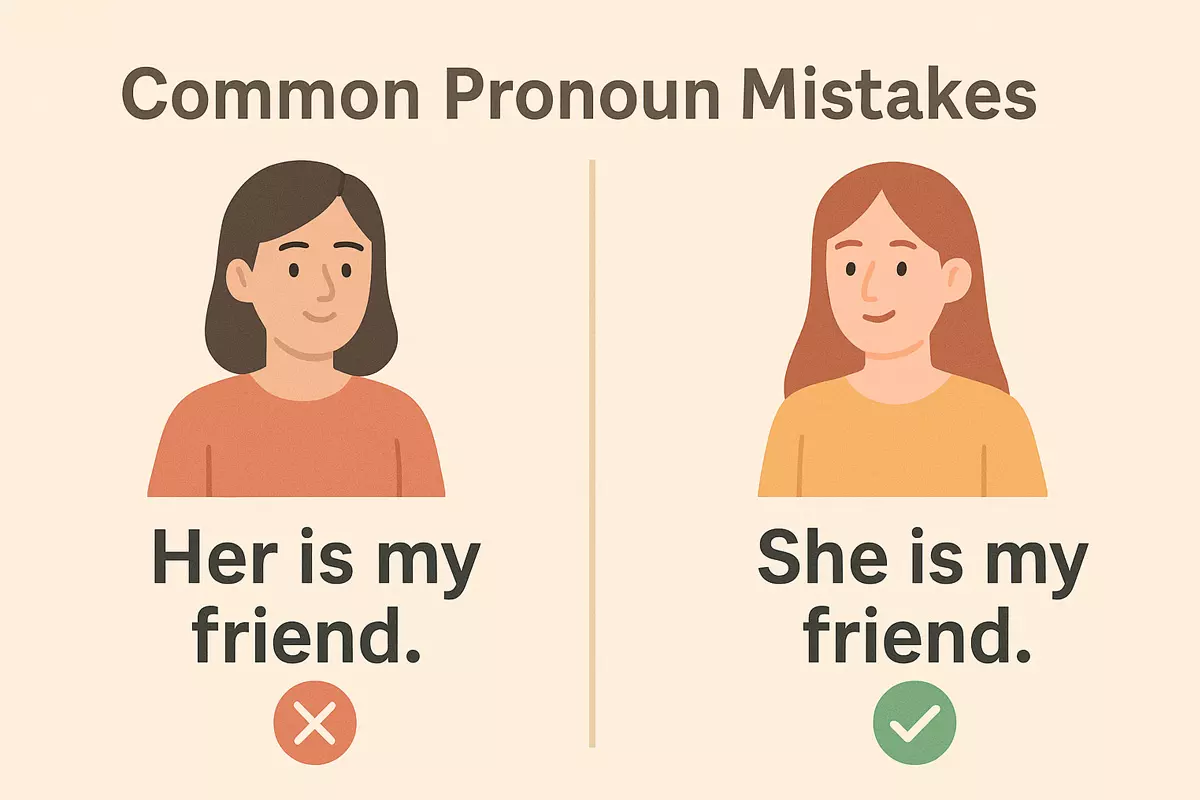 This article tackles common pronoun mistakes, including subject vs object confusion, its vs it's, their vs they're vs there, and unclear references. It explains when to use he, she, or they, and offers quick fixes and practice exercises.
Mixing up he and him or they and them is a common mistake that can trip up even careful writers, but using these pronouns correctly is important for clear and professional writing. While misusing them might seem like a minor issue, it can easily lead to confusion or awkward phrasing that distracts readers from your message. Taking the time to learn the proper use of subject and object pronouns will help you communicate your ideas more effectively and ensure your writing is both accurate and polished.
Subject vs Object Confusion
Mixing up subject and object pronouns is a frequent error, especially in casual speech and writing. These two types of pronouns perform different roles: subjects do the action, while objects receive it. Using the wrong form can make sentences sound awkward or incorrect.
How to Tell the Difference
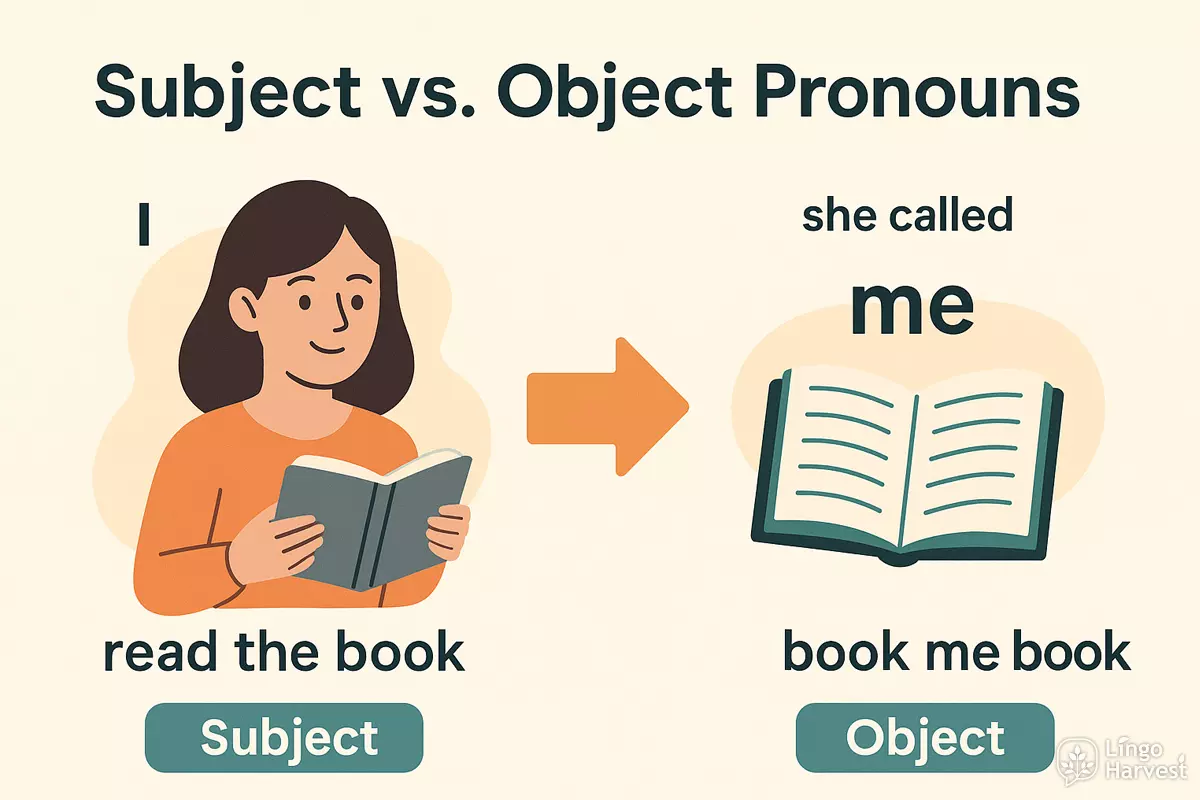
Subject pronouns (like I, he, she, we, they) appear before the verb and perform the action. Object pronouns (me, him, her, us, them) come after the verb or a preposition and receive the action. Remembering their positions helps avoid mistakes.
Common Mistakes and Fixes
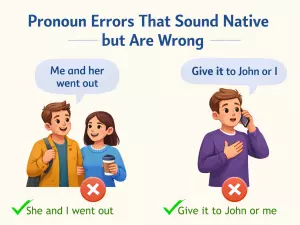
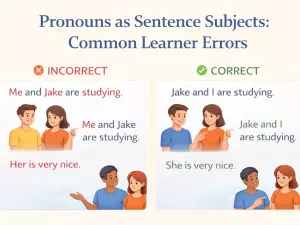
- Incorrect: Me and John went to the store. ❌
Correct: John and I went to the store. ✅ - Incorrect: She gave the tickets to you and I. ❌
Correct: She gave the tickets to you and me. ✅ - Incorrect: Him and his sister are here. ❌
Correct: He and his sister are here. ✅ - Incorrect: Between you and I, this is a secret. ❌
Correct: Between you and me, this is a secret. ✅
Quick Reference Table
| Subject Pronoun | Object Pronoun | Example Sentence |
|---|---|---|
| I | me | I called her. / She called me. |
| he | him | He likes pizza. / We invited him. |
| she | her | She arrived early. / I saw her. |
| we | us | We finished first. / They joined us. |
| they | them | They won easily. / I met them. |
| you | you | You are next. / She called you. |
| it | it | It works well. / I fixed it. |
Tips for Getting It Right
- When in doubt, remove the other person from the sentence: “Me went” or “I went”?
- After prepositions (to, for, with, between), always use the object form: “between you and me.”
- In compound subjects or objects, check each pronoun separately.
- Listen for what sounds natural, but double-check in writing.
Its vs It's
Many writers stumble over the difference between these two similar-looking words. One is a possessive pronoun, while the other is a contraction. Mixing them up can lead to confusion, but with a clear understanding, you can avoid this common pitfall.
Breaking Down the Difference
- Its is the possessive form of "it," used to show ownership or belonging. For example, "The dog wagged its tail."
- It's is a contraction of "it is" or "it has." For example, "It's raining outside" or "It's been a long day."
How to Decide Which to Use
Whenever you write one of these words, ask yourself if you can expand it to "it is" or "it has." If so, the version with the apostrophe is correct. If not, use the possessive form without an apostrophe.
| Usage | Example Sentence |
|---|---|
| Possessive (its) | The company changed its policy. |
| Contraction (it's = it is) | It's almost time for lunch. |
| Contraction (it's = it has) | It's been a busy week. |
Quick Tips to Remember
- If you see an apostrophe, think: Am I shortening "it is" or "it has"? If not, skip the apostrophe.
- Possessive pronouns (his, hers, its, yours, ours, theirs) never use an apostrophe.
- Read the sentence aloud with "it is" or "it has" in place—if it sounds odd, you probably need the possessive.
Common Mistakes and How to Fix Them
- ❌ "The cat licked it's paw." → Fix: "The cat licked its paw."
- ❌ "Its going to rain later." → Fix: "It's going to rain later."
- ❌ "I think its been a mistake." → Fix: "I think it's been a mistake."
- ❌ "The school lost it's reputation." → Fix: "The school lost its reputation."
Their vs They're vs There
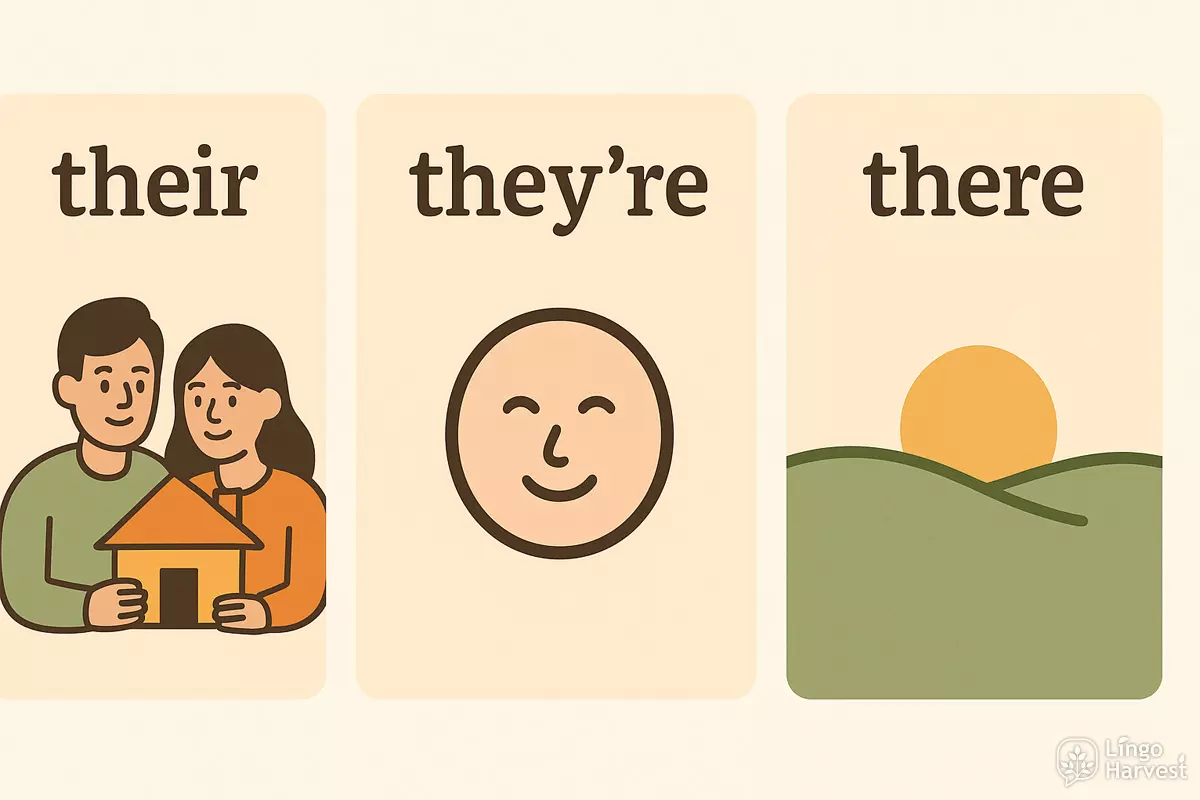
Understanding the distinction between these three words is crucial for clear, accurate writing. Each one sounds the same, but they serve very different purposes in a sentence. Mixing them up can be confusing for your reader and is among the most common mistakes in English.
Quick Guide to Usage
- Their—a possessive adjective, shows ownership by a group or person. Example: “Their books are on the table.”
- They're—a contraction for “they are.” Example: “They're going to the park.”
- There—refers to a place or is used to introduce a sentence. Example: “There is a cat outside.”
Common Mix-Ups and How to Fix Them
Writers often confuse these terms because they sound identical. To avoid errors, ask yourself:
- Am I talking about possession? Use their.
- Can I replace the word with “they are”? If yes, use they’re.
- Is it about a place or existence? Choose there.
Detailed Comparison Table
| Word | Meaning | Example Sentence |
|---|---|---|
| Their | Shows possession; belongs to them | Their car is red. |
| They're | Short for “they are” | They're excited for the trip. |
| There | Refers to a place or introduces a subject | There is a problem with the printer. |
Practice: Spot the Error
- There going to bring their dog. (Should be: They're going to bring their dog.)
- Their is a big difference between the two. (Should be: There is a big difference between the two.)
- They're house is near the station. (Should be: Their house is near the station.)
Tips to Remember
- For they’re, see if “they are” fits the sentence.
- For their, look for ownership or possession.
- For there, check if it’s about place or existence.
- Reading your sentence aloud can help spot the right word.
- Double-check contractions—apostrophes usually mean two words combined.
Getting comfortable with the differences among these homophones will make your writing clearer and help you avoid one of the most frequent pronoun mistakes.
He / She vs They for People
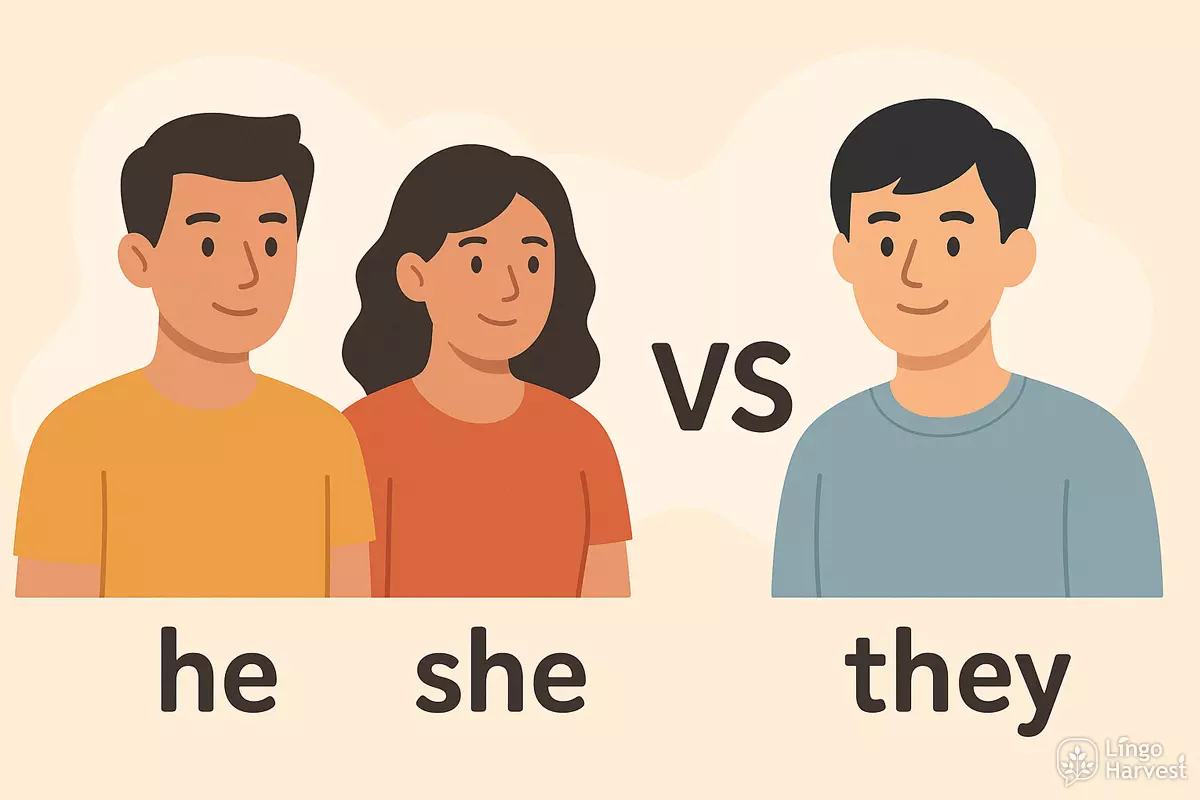
Choosing the right pronoun when referring to people can be confusing, especially as language evolves. Traditionally, English used "he" or "she" when talking about a person whose gender was known. However, "they" has become increasingly common as a singular, gender-neutral pronoun. This shift helps avoid assumptions about gender and makes language more inclusive.
When to Use Each Pronoun
If you know a person's gender and they have indicated a preference for "he" or "she," use that pronoun. But when someone's gender is unknown, irrelevant, or if they prefer not to be identified as male or female, "they" is a respectful and widely accepted choice. For example, instead of saying "If a student forgets his book," you can say "If a student forgets their book."
Common Mistakes and How to Fix Them
- Assuming gender based on name or appearance ❌: Use "they" if unsure.
- Mixing singular and plural forms ❌: Remember, "they" can be singular ("They are here" even for one person).
- Switching pronouns mid-sentence ❌: Stick with one pronoun per person for clarity.
- Using "he/she" repeatedly ❌: "They" streamlines language and avoids awkwardness.
- Omitting pronouns entirely ❌: This often leads to unnatural or unclear sentences.
Examples: Traditional vs. Inclusive Language
| Traditional Usage | Inclusive Usage |
|---|---|
| If a patient forgets his appointment, he should call. | If a patient forgets their appointment, they should call. |
| Each employee must submit his or her timesheet. | Each employee must submit their timesheet. |
| Ask your friend if he/she wants to join. | Ask your friend if they want to join. |
| If someone wants to volunteer, he or she should sign up. | If someone wants to volunteer, they should sign up. |
Quick Tips for Avoiding Pronoun Mistakes
- When in doubt, use "they" for a person unless you know their pronoun.
- Respect individuals’ stated pronouns if known.
- Practice rewriting sentences to use "they" naturally.
- Remember that "they" has a long history as a singular pronoun.
- Check your writing for unnecessary gendered language.
Unclear Pronoun Reference
A frequent issue in writing is when a pronoun’s meaning isn’t obvious, leaving readers confused about what or whom it refers to. This problem usually happens when it’s not clear which noun a pronoun replaces, especially if multiple nouns are nearby or if the pronoun is too far from its intended antecedent. Ambiguous references can disrupt the flow of your text and make your message harder to understand.
Common Causes of Ambiguous Pronoun Use
- Using a pronoun immediately after mentioning several nouns without clarifying which one you mean
- Starting a sentence with “it” or “this” without a clear subject
- Placing the pronoun several sentences away from its antecedent
- Relying on context that only you, the writer, can see
How to Spot and Fix Unclear References
To improve clarity, always make sure it’s obvious which noun a pronoun stands for. When in doubt, repeat the noun or rephrase the sentence. Consider these strategies:
- Replace the pronoun with the specific noun
- Restructure the sentence so the noun and pronoun are closer together
- Use demonstrative pronouns (“this,” “that”) only when the reference is unmistakable
- Read your writing aloud to catch confusing passages
Examples: Problematic vs. Clear Sentences
| Original (Unclear) | Improved (Clear) |
|---|---|
| Maria gave Ana her book. | Maria gave her book to Ana. or Maria gave Ana Ana’s book. |
| When Jim met Tom, he was nervous. | When Jim met Tom, Jim was nervous. |
| The dog chased the cat, but it escaped. | The dog chased the cat, but the cat escaped. |
| I asked my sister to take the plate to the kitchen, but she broke it on the way. | I asked my sister to take the plate to the kitchen, but she broke the plate on the way. |
| Sam told Alex that he would win. | Sam told Alex, “You will win.” or Sam said that he would win. |
Quick Tips to Avoid Ambiguity
- Always check if your pronoun could refer to more than one noun
- If two people of the same gender are mentioned, use names for clarity
- Don’t assume the reader knows your intended meaning
- Be especially careful with “it,” “this,” “that,” and “they”
- Ask someone else to read your writing for possible confusion
By paying attention to these details, you can make your writing clearer and easier for everyone to follow.
Quick Fix Techniques
Spotting and correcting pronoun errors quickly can make your writing clearer and more professional. Instead of getting bogged down by grammar rules, try these practical methods for identifying and fixing common slip-ups with pronouns in daily communication.
Check Pronoun-Antecedent Agreement
One of the fastest ways to avoid confusion is to make sure every pronoun matches the noun it replaces in both number and gender. Read your sentence out loud and see if the pronoun clearly points back to a specific noun. If it doesn’t, clarify or rephrase.
- Incorrect: Each student must bring their pencil.
- Correct: Each student must bring his or her pencil.
- Correct (modern): All students must bring their pencils.
Eliminate Ambiguous References
Ambiguous pronouns make your meaning unclear. If it’s not obvious what “it,” “they,” or “this” refers to, rewrite the sentence. Try replacing the pronoun with the noun, or restructure the sentence for clarity.
- Unclear: When Sam met Alex, he was late.
- Clear: When Sam met Alex, Sam was late.
- Clear: When Sam met Alex, Alex was late.
Use the Correct Case Form
Choosing between “I” vs. “me” or “who” vs. “whom” can be tricky. A quick check: use the pronoun as if it were alone in the sentence to see what sounds right.
- Incorrect ❌: Me and Sarah went to the store.
- Correct ✅: Sarah and I went to the store.
- Incorrect ❌: Give the documents to John and I.
- Correct ✅: Give the documents to John and me.
Common Fixes at a Glance
| Mistake | Correction |
|---|---|
| Everyone forgot their ticket. | Everyone forgot his or her ticket. ✅ |
| Me and him will help. | He and I will help. ✅ |
| They gave the award to myself. | They gave the award to me. ✅ |
| It says you should read it carefully. | The manual says you should read it carefully. ✅ |
Quick Pronoun Checklist
- Is it clear what noun the pronoun replaces?
- Does the pronoun agree in number and gender?
- Have you picked the right case (subject, object, possessive)?
- Are reflexive pronouns used only when the subject and object are the same?
- Are there any double subjects (e.g., “My brother he”)?
- Is “who” used for subjects and “whom” for objects?
- Is “they” used for plural or singular (as appropriate for style)?
- Are pronouns placed close to the nouns they replace to avoid confusion?
- Have you avoided unnecessary pronouns?
- Is the pronoun needed, or can you rephrase for clarity?
With these strategies, you can catch and correct pronoun issues swiftly. Just a quick review, using these patterns and reminders, can make a big difference in your writing’s clarity and precision.
Practice
Grasping the correct use of pronouns often requires more than reading rules—it takes hands-on experience. Below, you'll find targeted exercises and examples designed to help you spot and correct typical errors with personal, possessive, reflexive, and relative pronouns.
Spot the Error
Identify and correct the pronoun mistakes in these sentences:
- Me and him went to the store.
- Each of the students must bring their pencil.
- Everyone should do their own homework by themselves.
- The team lost its confidence after they failed the test.
- Who did you give the book to?
Show answers
- He and I went to the store. ✅
- Each of the students must bring his or her pencil. (Or: Each student must bring a pencil.)
- Everyone should do his or her own homework. (Or: Everyone should do their own homework. "They" is now often accepted for singular, but "by themselves" is redundant.)
- The team lost its confidence after it failed the test.
- To whom did you give the book? (Or: Who did you give the book to?—informal, but "whom" is traditional.)
Choose the Correct Pronoun
- Neither John nor (he/him) was at the meeting.
- Between you and (I/me), this is a secret.
- It was (she/her) who called last night.
- (Who/Whom) should I ask for help?
- This is the person (who/whom) I told you about.
Show answers
- he
- me
- she
- Whom
- whom
Common Problem Pairs
Some pronoun pairs frequently cause confusion. Review the differences below:
| Pronoun Pair | When to Use |
|---|---|
| Who / Whom | Who = subject (Who called?) Whom = object (To whom did you speak?) |
| I / Me | I = subject (I went.) Me = object (He saw me.) |
| They / Them | They = subject (They left.) Them = object (I saw them.) |
| Its / It’s | Its = possessive (The dog wagged its tail.) It’s = it is (It’s raining.) |
| Who’s / Whose | Who’s = who is (Who’s coming?) Whose = possessive (Whose book is this?) |
Rewrite the Sentences
Rewrite these sentences, replacing the incorrect or unclear pronoun with the correct one:
- Each person should bring their own lunch.
- Her and me are going to the concert.
- Do you know whose coming to the party?
- The cat licked it’s paw.
Show answers
- Each person should bring his or her own lunch. (Or: Everyone should bring lunch.)
- She and I are going to the concert.
- Do you know who’s coming to the party?
- The cat licked its paw.
Quick Self-Test
Fill in the blanks with the right form:
- _____ is going to the meeting with you? (Who/Whom)
- Between you and _____, I prefer tea. (I/me)
- It was _____ who finished the project. (he/him)
- Neither Jane nor _____ received the email. (she/her)
- That’s the student _____ essay won the prize. (whose/who’s)
Show answers
- Who
- me
- he
- she
- whose
By regularly working through exercises like these and reviewing example sentences, you’ll gradually build confidence in using pronouns accurately in both speech and writing.