Pronouns in Questions, Short Replies, and Tags

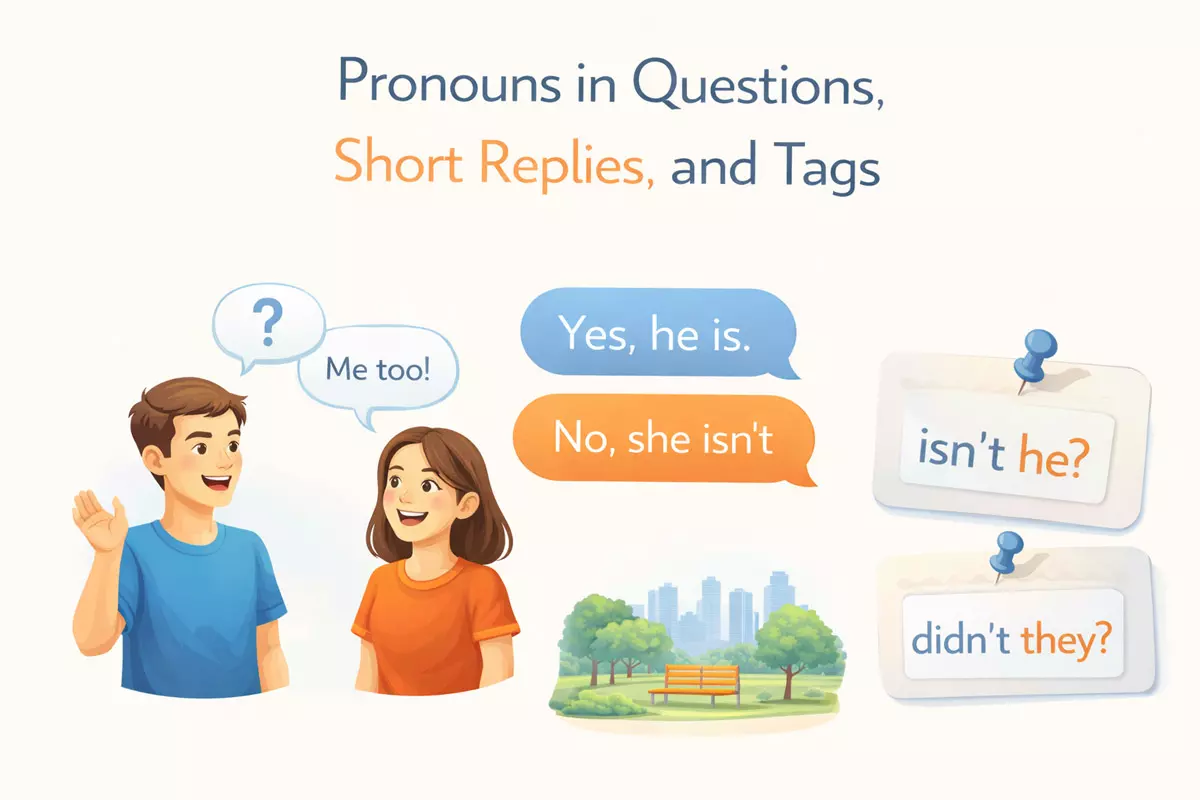 This article explains choosing correct pronouns in questions, forming short replies, and building tag questions with proper pronoun and auxiliary agreement. It highlights common mistakes and includes practice with everyday spoken English structures.
- Pronoun choice in questions: who/whom/which basics
- Short replies: Yes, I am / No, he isn’t / Yes, they do
- Avoiding repetition with pronouns in answers
- Tag questions: structure and matching pronouns
- Subject–auxiliary agreement in tags: isn’t it, don’t they
- Common tag errors: wrong pronoun or wrong auxiliary
- Spoken patterns: me too, so do I, neither did we
- Practice: add correct short replies and tags
Navigating everyday conversations requires knowing which referring words to use when asking questions, giving answers, or confirming information. By mastering these subtle aspects of language, we can communicate more clearly and naturally in a variety of situations. Using the right words not only helps us pose queries effectively but also enables us to reply concisely and check understanding with ease, making our interactions smoother and more efficient in daily life.
Pronoun choice in questions: who/whom/which basics
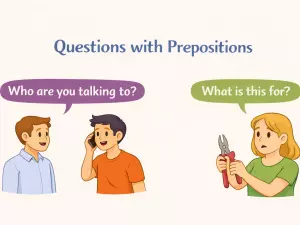
Understanding how to select the correct pronoun in questions can make your English clearer and more accurate. When forming questions, the main interrogative pronouns you’ll encounter are who, whom, and which. Each has a specific function, and using them correctly depends on the role of the missing information in the sentence.
Who vs. Whom
The distinction between who and whom is about whether the pronoun acts as a subject or an object in the question. Who is used for the subject—when you’re asking about the person doing the action. Whom is for the object—when you’re asking about the person receiving the action. In everyday speech, especially in informal contexts, whom is often replaced by who, but knowing the difference is still useful for formal writing.
- Who called you last night? (subject)
- To whom did you send the letter? (object)
- Who wants coffee?
- With whom are you meeting?
- Who broke the window?
- For whom is this gift?
- Who made this cake?
- Whom did you see at the party?
- Who knows the answer?
- To whom should I address the envelope?
- Who is coming to dinner?
- Whom are you inviting?
Which: Choosing Among Options
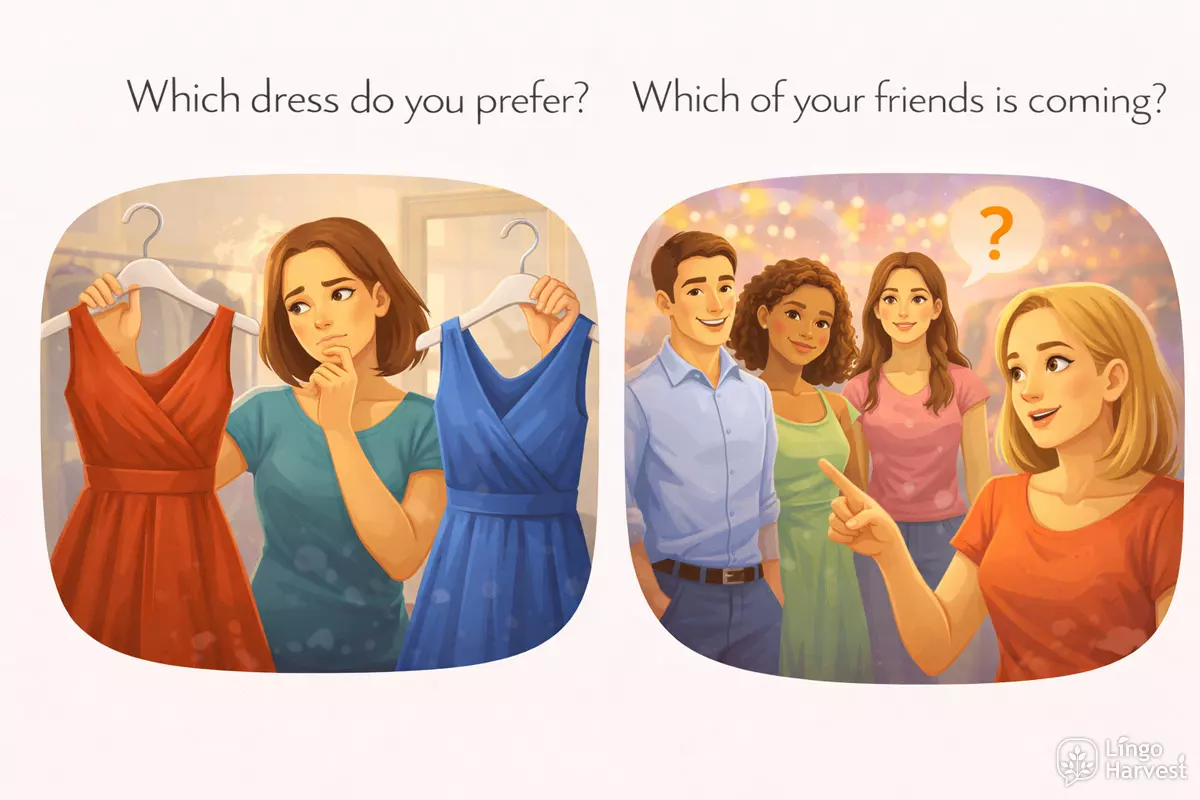
Which is used when you are asking to choose from a known, limited set of people or things. It can refer to both people and objects, unlike who or whom, which are only for people.
- Which dress do you prefer?
- Which of your friends is coming?
- Which book did you borrow?
- Which way should we go?
- Which team won?
- Which color do you like?
- Which seats are available?
- Which of these pens is yours?
- Which student answered first?
- Which one do you want?
Quick Reference: Pronoun Roles in Questions
| Pronoun | When to Use | Example Question |
|---|---|---|
| Who | Subject (person doing the action) | Who opened the door? |
| Whom | Object (person receiving the action) | Whom did you call? |
| Which | Choosing from a set (people or things) | Which movie do you want to watch? |
Tips for Everyday Use
- In casual conversation, who is often used instead of whom ✅.
- Use which when the options are clear or limited → “Which train goes to the airport?”
- Remember: if you can substitute “he/she,” use who; if “him/her,” use whom.
Choosing the right pronoun helps your questions sound natural and precise. With practice, these distinctions become second nature, especially in both spoken and written English.
Short replies: Yes, I am / No, he isn’t / Yes, they do
Short replies in English are a quick way to answer questions without repeating the whole sentence. Instead of restating everything, people use the subject pronoun plus the auxiliary or main verb from the question. This keeps conversations clear and efficient, especially in casual settings or when confirming information.
Forming short answers with pronouns
The structure depends on the type of question. For questions with be, use the correct form of be and the matching pronoun. For questions with auxiliary verbs like do, does, did, can, or will, use the same auxiliary in your reply. Negative answers use the negative form of the verb.
- ✅ Are you tired? Yes, I am. / No, I’m not.
- ✅ Is she coming? Yes, she is. / No, she isn’t.
- ✅ Do they like pizza? Yes, they do. / No, they don’t.
- ✅ Can you swim? Yes, I can. / No, I can’t.
- ✅ Will it rain? Yes, it will. / No, it won’t.
- ✅ Did Tom call? Yes, he did. / No, he didn’t.
- ✅ Are we late? Yes, we are. / No, we aren’t.
- ✅ Has she arrived? Yes, she has. / No, she hasn’t.
- ✅ Should I wait? Yes, you should. / No, you shouldn’t.
- ✅ Were they at home? Yes, they were. / No, they weren’t.
- ✅ Would you help? Yes, I would. / No, I wouldn’t.
- ✅ Must we leave? Yes, you must. / No, you mustn’t.
Common patterns and variations
Short replies always match the subject and verb tense of the question. Pay attention to contracted forms, especially in negatives: isn’t, aren’t, don’t, didn’t. This helps your answer sound natural and fluent. Using the correct pronoun is important for clarity, especially with he, she, they, and it.
| Question | Short Reply |
|---|---|
| Are you ready? | Yes, I am. / No, I’m not. |
| Does she work here? | Yes, she does. / No, she doesn’t. |
| Can they come? | Yes, they can. / No, they can’t. |
| Has it started? | Yes, it has. / No, it hasn’t. |
| Were you late? | Yes, I was. / No, I wasn’t. |
| Will we win? | Yes, we will. / No, we won’t. |
Using short answers makes conversations smoother and helps avoid unnecessary repetition. Practicing these forms will boost your confidence in everyday English exchanges.
Avoiding repetition with pronouns in answers
When answering questions in English, repeating nouns or full noun phrases can make your speech sound awkward or overly formal. Using pronouns appropriately helps keep answers concise and natural. Pronouns refer back to something previously mentioned, allowing speakers to avoid unnecessary repetition.
Why minimize repetition?
Repeating the subject or object in every sentence can distract listeners and interrupt the flow of conversation. For example, consider these responses:
- Q: Does Anna like chocolate?
A: Yes, Anna likes chocolate. ❌ (too repetitive) - Q: Does Anna like chocolate?
A: Yes, she does. ✅ (natural)
The second reply sounds much smoother because the pronoun "she" replaces "Anna," and "does" stands in for "likes chocolate."
Common patterns for short replies
Short answers often use auxiliary verbs and pronouns to prevent repeating the entire question. Here are some examples:
- Q: Are they coming?
A: Yes, they are. / No, they aren’t. - Q: Did you see the movie?
A: Yes, I did. / No, I didn’t. - Q: Is it raining?
A: Yes, it is. / No, it isn’t. - Q: Will John help?
A: Yes, he will. / No, he won’t. - Q: Have your friends arrived?
A: Yes, they have. / No, they haven’t. - Q: Do you need any help?
A: No, I don’t. - Q: Does this bus go to the city center?
A: Yes, it does. - Q: Can Sarah drive?
A: Yes, she can. - Q: Were you at home last night?
A: No, I wasn’t. - Q: Should we start now?
A: Yes, we should. - Q: Would you like some tea?
A: Yes, I would. - Q: Has the package arrived?
A: No, it hasn’t. - Q: Do the students understand?
A: Yes, they do. - Q: Did you enjoy the party?
A: Yes, I did. - Q: Are these your keys?
A: No, they aren’t. - Q: Is Tom your brother?
A: Yes, he is. - Q: Will it rain tomorrow?
A: No, it won’t. - Q: Could you help me?
A: Yes, I could.
Quick reference: avoiding repetition with pronouns
| Full Answer (Repetitive) | Natural Short Reply |
|---|---|
| Yes, John will help. | Yes, he will. |
| No, the students didn’t understand. | No, they didn’t. |
| Yes, the bus goes to the city center. | Yes, it does. |
| No, Anna can’t drive. | No, she can’t. |
| Yes, I was at home. | Yes, I was. |
| No, the package hasn’t arrived. | No, it hasn’t. |
Using pronouns and auxiliary verbs in replies not only streamlines your answers but also shows command of natural English conversation. Practice these patterns to make your spoken and written responses sound more fluent and less repetitive.
Tag questions: structure and matching pronouns
Tag questions are short questions added to the end of a statement, inviting agreement or confirmation. In English, these consist of an auxiliary (helping) verb and a pronoun that corresponds to the subject of the main sentence. The structure and choice of pronoun must match the subject in person, number, and gender (where relevant), as well as the verb tense.
How tag questions are built
The basic formula is: Statement + auxiliary verb + pronoun? If the statement is positive, the tag is negative, and vice versa. The pronoun in the tag always refers back to the subject of the statement, so matching is essential for clarity and correctness.
Matching pronouns in tag questions
Selecting the correct pronoun depends on the subject of the original sentence. For example:
- John is coming, isn't he?
- Your friends were late, weren't they?
- This is yours, isn't it?
- My parents can help, can't they?
- The book was interesting, wasn't it?
- Anna has arrived, hasn't she?
- We should go, shouldn't we?
- You're tired, aren't you?
- I am late, aren't I? (note: "aren't I" is the standard tag for "I am")
- There was a problem, wasn't there?
- Someone called, didn't they? (singular 'they' for unknown gender)
- No one has finished, have they?
- Let's start, shall we?
- Nobody saw, did they?
Common patterns: auxiliary verbs and pronoun pairs
The auxiliary used in the tag matches the tense and form of the main verb. Below is a comparison of typical patterns:
| Subject in statement | Tag pronoun & example |
|---|---|
| I | aren't I? I'm late, aren't I? |
| You | are/aren't you? You know, don't you? |
| He/She/It | isn't he/she/it? It's cold, isn't it? |
| They | aren't they? Your friends are here, aren't they? |
| We | aren't we? We're leaving, aren't we? |
| There | isn't/wasn't there? There's a problem, isn't there? |
| Someone/Nobody | do/did/have they? Someone called, didn't they? |
Special cases and notes
Some subjects require special attention. For example, "let's" always uses "shall we?" as its tag. Indefinite pronouns like "someone," "everyone," or "nobody" are usually followed by "they" in the tag, regardless of the singular meaning. When the subject is "I am," the tag form is "aren't I?" rather than "amn't I," which is not standard in most varieties of English.
Understanding how to match pronouns and auxiliaries in tag questions helps ensure your English sounds natural and clear. It also avoids confusion for listeners and readers.
Subject–auxiliary agreement in tags: isn’t it, don’t they
Getting the agreement right between the subject and the auxiliary verb is essential when forming question tags in English. The auxiliary must match the subject in both number (singular/plural) and person (first, second, or third). For example, if the statement uses "he," the tag should use "he" as well—"He is tall, isn’t he?" Mistakes in this area can lead to confusion or make sentences sound unnatural.
How agreement works in question tags
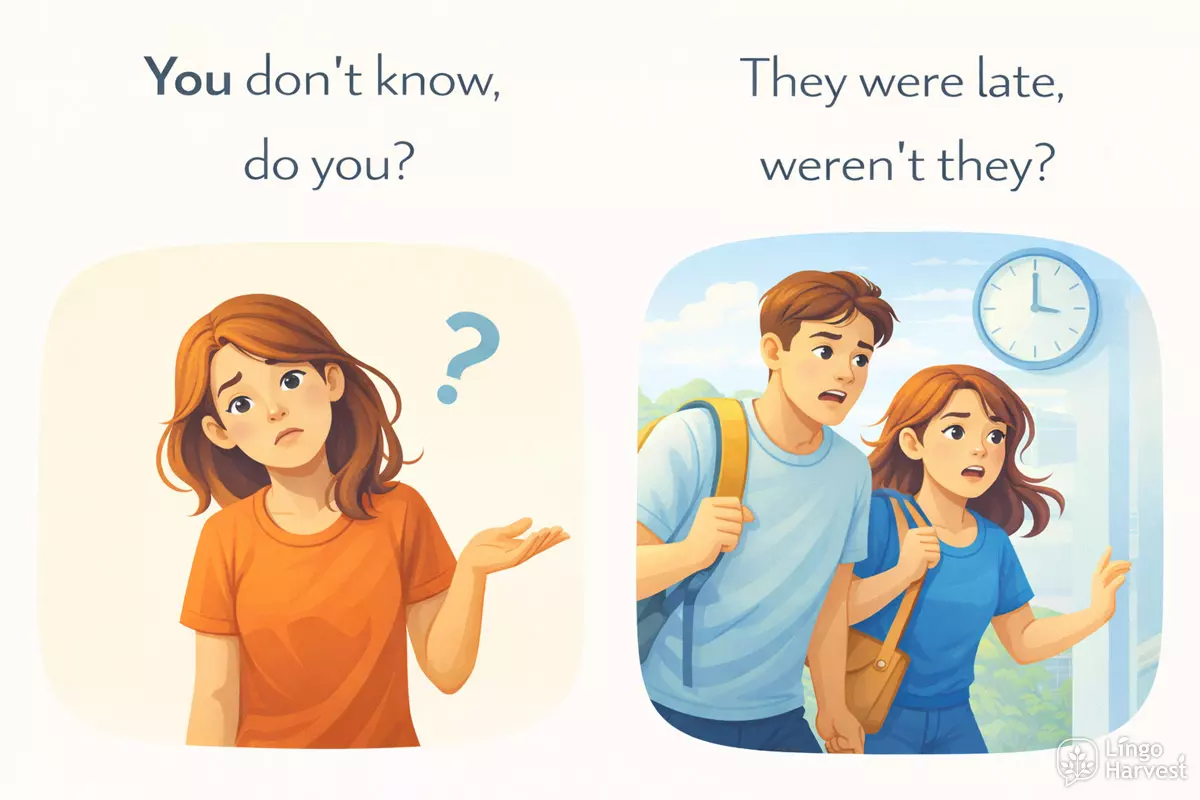
In a typical statement with a pronoun subject, the auxiliary in the tag reflects the tense and form of the main verb. The pronoun in the tag always refers back to the subject of the main clause:
- She’s coming, isn’t she?
- You don’t know, do you?
- They were late, weren’t they?
- It hasn’t rained, has it?
- John likes coffee, doesn’t he?
- We can go, can’t we?
- I am early, aren’t I? (note the irregular form)
- The children will help, won’t they?
- Nothing happened, did it?
- Somebody called, didn’t they?
Common patterns and special cases
Most of the time, the agreement is straightforward, but some cases require special attention:
- With "I": The tag is "aren’t I?" not "amn't I?"
- With indefinite pronouns ("everyone," "nobody"): Use "they" in the tag: "Everyone left, didn’t they?"
- Negative statements: Use a positive tag: "She isn’t here, is she?"
- Positive statements: Use a negative tag: "He likes it, doesn’t he?"
Examples of agreement in tags
| Statement | Tag | Explanation |
|---|---|---|
| It’s raining | isn’t it? | Singular "it" with "is" |
| They have finished | haven’t they? | Plural "they" with "have" |
| He can swim | can’t he? | Singular "he" with "can" |
| You didn’t see | did you? | Negative statement, positive tag |
| Nobody called | did they? | Indefinite subject uses "they" |
Summary tips
To form natural-sounding tags, always:
- Match the pronoun in the tag to the subject of the main clause.
- Use the same auxiliary (or do/does/did if there’s no auxiliary in the statement).
- Switch positive to negative, and vice versa.
- Be careful with special cases like "aren’t I?" and indefinite pronouns.
Mastering this pattern helps make your English sound far more authentic and natural in conversation.
Common tag errors: wrong pronoun or wrong auxiliary
Mistakes with question tags often happen when the pronoun or auxiliary verb in the tag doesn’t match the subject or verb in the main sentence. These errors are easy to make, especially for learners, but recognizing patterns can help prevent them.
Mixing up pronouns in tags
When forming a tag, the pronoun must reflect the subject of the main clause. Using the wrong pronoun can cause confusion or sound unnatural. For example, if the subject is "the students," the tag should use "they," not "he" or "it."
- "Your friends are here, aren't they?" ✅
- "Your friends are here, isn't he?" ❌
- "The car is new, isn't it?" ✅
- "The car is new, aren't they?" ❌
Auxiliary verb confusion
The auxiliary in a tag must match the verb tense and type (be, do, have, modal) from the main part of the sentence. Choosing the wrong auxiliary is a frequent slip.
| Main Sentence | Correct Tag | Incorrect Tag |
|---|---|---|
| She is coming, | isn't she? | doesn't she? |
| You like music, | don't you? | aren't you? |
| He has finished, | hasn't he? | didn't he? |
| They can swim, | can't they? | don't they? |
| It was cold, | wasn't it? | isn't it? |
Checklist for accurate tags
To avoid these frequent mistakes, keep this checklist in mind:
- Match the pronoun in the tag to the subject of the main clause (e.g., "the children" → "they").
- Use the same auxiliary verb (or modal) as in the sentence, or use "do/does/did" if there’s no auxiliary present.
- Keep the tag negative if the main sentence is positive, and vice versa.
- Be careful with subjects like "everyone," "nobody," "someone"—use "they" in the tag.
- Remember "I am" uses "aren't I?" as an exception: "I'm late, aren't I?"
- Don’t use a noun as the tag subject; always use the correct pronoun.
- Never mix tenses between the main clause and the tag (e.g., "You were here, aren’t you?" ❌).
- With modals, repeat the modal in the tag: "You can help, can't you?"
- For imperative sentences, use "will you?" or "won't you?" as appropriate.
- For "let’s," use "shall we?" in the tag: "Let's go, shall we?"
By practicing these points, you’ll avoid the most typical slip-ups with pronouns and auxiliary verbs in question tags.
Spoken patterns: me too, so do I, neither did we
In everyday English, certain short phrases help us agree or disagree with what someone just said, often using pronouns and auxiliary verbs. These responses make conversations flow more naturally, especially when you want to show you feel the same way or the opposite. Patterns like me too, so do I, and neither did we are common in friendly exchanges, and each has its own usage and formality.
Agreeing with positive statements
To agree with a positive sentence, English speakers often use either me too or so + auxiliary + pronoun. The choice depends on context and style. “Me too” is informal and widely used in speech, while “So do I” (or similar forms) is more neutral and grammatically mirrors the original statement.
- Me too. (informal, quick) → “I’m tired.” → “Me too.”
- So do I. → “I work remotely.” → “So do I.”
- So does she. → “I like this song.” → “So does she.”
- So have we. → “I’ve been there before.” → “So have we.”
- So will they. → “I’ll join the call.” → “So will they.”
- So am I. → “I’m ready.” → “So am I.”
- So can he. → “I can help you.” → “So can he.”
- So did you. → “I called earlier.” → “So did you.”
Agreeing with negative statements
When you want to agree with a negative remark, use me neither (informal) or neither + auxiliary + pronoun. These patterns signal that you share the negative experience or opinion.
- Me neither. → “I don’t eat meat.” → “Me neither.”
- Neither did we. → “We didn’t hear the announcement.” → “Neither did we.”
- Neither have I. → “I haven’t finished yet.” → “Neither have I.”
- Neither can she. → “I can’t come today.” → “Neither can she.”
- Neither am I. → “I’m not ready.” → “Neither am I.”
- Neither will they. → “They won’t agree.” → “Neither will they.”
Comparison of forms
The structure of these replies depends on the verb tense and the pronoun. Here’s a quick comparison of the main patterns:
| Original Statement | Short Agreement | Pattern Used |
|---|---|---|
| I like coffee. | Me too. / So do I. | Positive agreement |
| She can swim. | So can I. / Me too. | Positive agreement |
| We didn’t enjoy it. | Neither did we. / Me neither. | Negative agreement |
| He hasn’t finished. | Neither have I. / Me neither. | Negative agreement |
| They will come. | So will we. | Positive agreement |
| I am tired. | So am I. | Positive agreement |
Quick notes on usage
- Use the correct auxiliary verb (do, am, have, can, will, etc.) to match the original statement.
- “Me too” and “me neither” are common in informal situations, but avoid them in very formal writing.
- “So do I” and “neither did we” are preferred in more careful or written English.
- Don’t use “me either” for negative agreement in formal contexts—use “me neither” or “neither + auxiliary”.
Mastering these short replies helps you sound more natural and engaged in English conversations, making it easier to connect and respond quickly in everyday interactions.
Practice: add correct short replies and tags
Working with pronouns in questions, short replies, and question tags is essential for fluent English. Practice helps you internalize these patterns, making your responses sound natural and accurate. Below, you’ll find exercises to complete with the right short answers and tag endings, plus tips for recognizing which pronouns and auxiliaries to use.
Short Replies: Choose the Correct Pronoun and Auxiliary
Respond to each question with a concise short reply. Focus on matching the subject pronoun and auxiliary verb.
- Are you coming to the meeting?
- Has she finished her homework?
- Did they call you yesterday?
- Will it rain tomorrow?
- Can we start now?
- Were you at home last night?
- Is he your brother?
- Do you like chocolate?
- Should I close the window?
- Have you been to London?
Show answers
- Yes, I am. / No, I'm not.
- Yes, she has. / No, she hasn't.
- Yes, they did. / No, they didn't.
- Yes, it will. / No, it won't.
- Yes, we can. / No, we can't.
- Yes, I was. / No, I wasn't.
- Yes, he is. / No, he isn't.
- Yes, I do. / No, I don't.
- Yes, you should. / No, you shouldn't.
- Yes, I have. / No, I haven't.
Question Tags: Complete the Sentences
Add a suitable question tag to each sentence. Pay attention to the pronoun and auxiliary in the main sentence.
- She’s coming, __________?
- You don’t mind, __________?
- They haven’t eaten yet, __________?
- It’s cold today, __________?
- He can swim, __________?
- We’re late, __________?
- You were there, __________?
- I’m early, __________?
- Let’s go, __________?
- Nobody called, __________?
Show answers
- isn’t she?
- do you?
- have they?
- isn’t it?
- can’t he?
- aren’t we?
- weren’t you?
- aren’t I?
- shall we?
- did they?
Common Pronouns in Short Replies & Tags
Here is a quick reference for matching pronouns and auxiliaries in answers and tags:
| Subject Pronoun | Auxiliary/Verb in Tag/Reply | Example Tag |
|---|---|---|
| I | am / aren’t | I’m late, aren’t I? |
| You | are / aren’t | You’re ready, aren’t you? |
| He/She/It | is / isn’t | It’s raining, isn’t it? |
| We | are / aren’t | We finished, didn’t we? |
| They | are / aren’t | They left, didn’t they? |
Tips for Accurate Short Replies and Tags
- Use the same auxiliary (be, have, do, will, etc.) as in the main sentence.
- Match the pronoun in your reply or tag to the subject.
- For negative sentences, the tag is positive, and vice versa.
- “I am” uses “aren’t I?” in tags, not “am I not?”
- After “Let’s,” use “shall we?” as the tag.
- With nobody/nothing/never, use a positive tag (e.g., “Nobody saw you, did they?”).
- Short replies echo the auxiliary and pronoun from the question.
- “It” is used for weather, time, and things.
- Don’t use contractions in affirmative short replies (Yes, I am. Not: Yes, I’m.).
- Listen for the tense in the question to choose the right auxiliary.