Intensive Pronouns for Emphasis: I Did It Myself

 This article explains what intensive pronouns are, how they differ from reflexive pronouns, where they fit in sentences, and how to use them for emphasis. It covers common mistakes, patterns, spoken vs written use, and offers practice exercises.
- What intensive pronouns are
- Difference between intensive and reflexive pronouns
- Position of intensive pronouns in a sentence
- Using intensive pronouns for emphasis
- Common verbs and natural patterns
- Typical learner confusion with reflexives
- Spoken emphasis vs written emphasis
- Practice: add emphasis using intensive pronouns
Have you ever wanted to emphasize that you achieved something entirely on your own? In English, certain words and phrases can help you highlight your individual effort and make your message unmistakably clear. For example, using words like personally, myself, or on my own can add emphasis to your statements and ensure your audience understands that you alone were responsible for the accomplishment. Mastering these expressions allows you to communicate your achievements confidently and precisely.
What intensive pronouns are
Intensive pronouns are special words in English that are used to add emphasis to a noun or pronoun in a sentence. They help make it clear that the subject performed an action alone, or without help. These pronouns look just like reflexive pronouns, ending in -self or -selves, but their role is different: they don’t change the meaning of the sentence if you remove them—they just add extra force or focus.
How intensive pronouns work
You’ll often see these pronouns placed right after the noun or pronoun they emphasize, but sometimes they come later in the sentence for stylistic reasons. The main function is to highlight that someone did something personally, without assistance, or to stress the identity of the person or thing involved.
- I baked the cake myself.
- The president himself signed the letter.
- We cleaned the house ourselves.
- The children built the fort themselves.
- She herself answered the phone.
- You yourself told me the story.
- The dog opened the door itself.
- They themselves admitted the mistake.
- He himself designed the logo.
- You yourselves must decide.
Forms of intensive pronouns
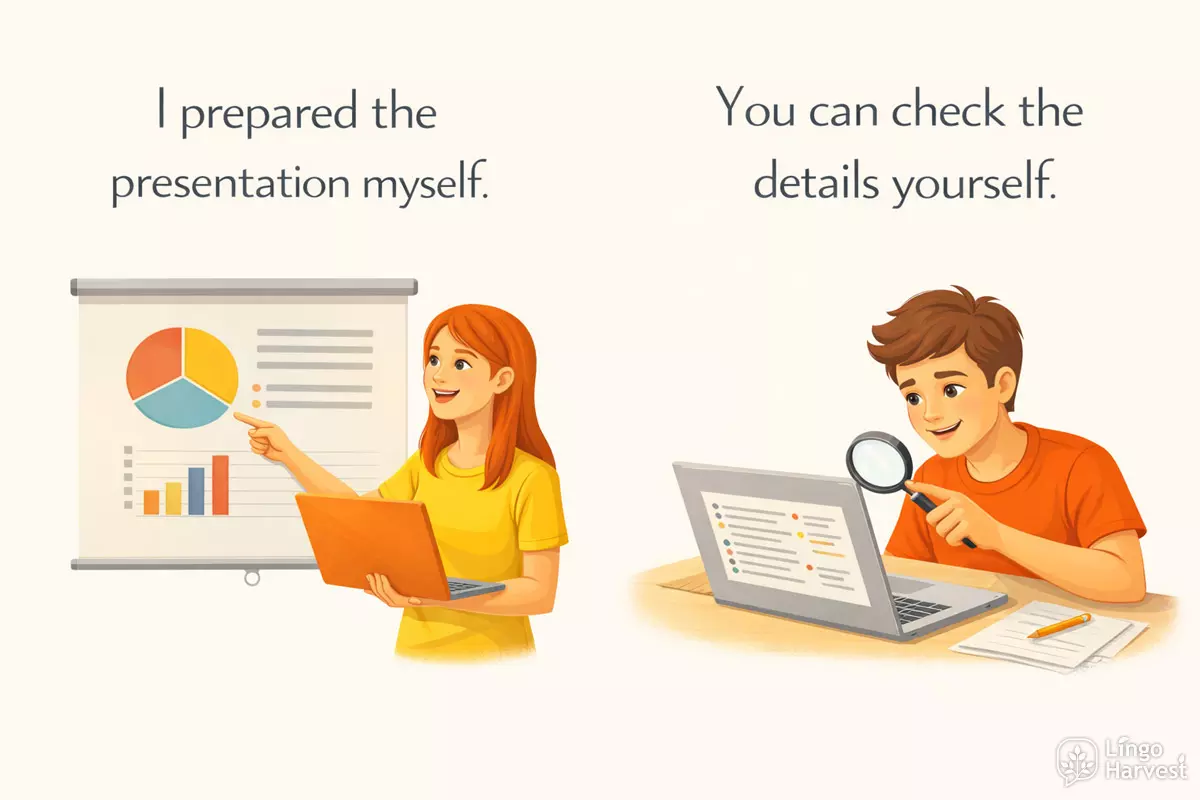
All intensive pronouns are formed by adding -self (singular) or -selves (plural) to certain personal pronouns. Here’s a quick reference:
| Personal Pronoun | Intensive Pronoun | Example |
|---|---|---|
| I | myself | I prepared the presentation myself. |
| you (singular) | yourself | You can check the details yourself. |
| he | himself | He fixed the problem himself. |
| she | herself | She completed the task herself. |
| it | itself | The door closed by itself. |
| we | ourselves | We built the prototype ourselves. |
| you (plural) | yourselves | You should introduce yourselves first. |
| they | themselves | They designed the entire system themselves. |
Remember, the real difference between these and reflexive pronouns is the purpose: intensive pronouns add emphasis, but they aren’t necessary for the sentence to make sense.
Difference between intensive and reflexive pronouns
Understanding how intensive and reflexive pronouns function can clear up confusion in both speaking and writing. Both types use the same pronoun forms (myself, yourself, himself, herself, itself, ourselves, yourselves, themselves), but their roles in the sentence are quite distinct. The key difference lies in their grammatical function and the necessity of the pronoun to the sentence's meaning.
What does an intensive pronoun do?
An intensive pronoun is used for emphasis. Its main job is to highlight that a particular person or thing is performing an action, often to stress exclusivity or personal involvement. For example: "I baked this cake myself." Removing "myself" does not change the core meaning: "I baked this cake."
How does a reflexive pronoun work?
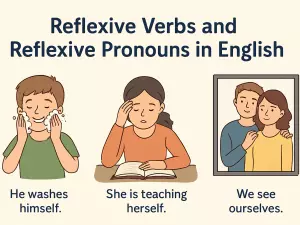
A reflexive pronoun acts as the object of the verb and refers back to the subject. It is essential for the sentence to make sense. For instance: "She hurt herself." Without "herself," the meaning is incomplete: "She hurt" leaves us asking, "She hurt whom?"
- Intensive pronouns add emphasis; they are not required for sentence clarity.
- Reflexive pronouns are necessary for the sentence to make sense, as they indicate that the subject and object are the same.
- Both types use identical forms but serve different purposes.
| Pronoun Function | Example Sentence | Is the pronoun essential? |
|---|---|---|
| Intensive | The mayor herself attended the meeting. | ❌ (No, it could be removed) |
| Reflexive | He prepared himself for the exam. | ✅ (Yes, needed for meaning) |
| Intensive | We built the house ourselves. | ❌ |
| Reflexive | The cat cleaned itself. | ✅ |
Quick ways to tell them apart
- If the pronoun can be removed and the sentence still makes sense, it's for emphasis (intensive).
- If removing the pronoun leaves the action incomplete or unclear, it's reflexive.
- Intensive pronouns often come directly after the subject or at the end for emphasis.
- Reflexive pronouns usually function as direct or indirect objects.
To sum up, while both pronoun types look the same, their functions are not interchangeable. Paying attention to whether the pronoun is necessary for the meaning or simply adds emphasis will help you use them correctly.
Position of intensive pronouns in a sentence
Intensive pronouns, such as myself, yourself, himself, and themselves, are most often placed immediately after the noun or pronoun they emphasize. This placement directly highlights the subject or object, making it clear where the emphasis belongs. However, there are a few flexible positions within a sentence where these words can appear, depending on the focus and style of the statement.
Typical placements for emphasis
- Directly after the subject: I myself baked the cake.
- After the verb (for extra emphasis): She completed the project herself.
- After the object (if present): They painted the house themselves.
- Between auxiliary and main verb (less common): He himself has never tried it.
- After prepositional phrases: The decision was made by the manager himself.
- In short replies for strong emphasis: "Who fixed the car?" — "I did myself!"
- With appositive constructions: The author, herself, announced the news.
- To reinforce the subject in contrast: You yourself admitted the mistake.
- In imperative sentences: Handle it yourself.
- With passive voice for clarity: The cake was eaten by the children themselves.
Examples in context
Here are several sentences illustrating where these pronouns can appear for optimal emphasis:
- She herself organized the event.
- The president himself attended the meeting.
- We finished the project ourselves.
- Did you do this yourself?
- The children themselves built the model.
- He himself admitted the error.
- I’ll handle the details myself.
- The artist herself painted the mural.
- You yourself told me the story.
- The repairs were completed by the workers themselves.
Placement comparison: Intensive vs. Reflexive Pronouns
| Function | Typical Placement |
|---|---|
| Intensive pronoun (for emphasis) | Immediately after the noun/pronoun or at the end of the clause for focus |
| Reflexive pronoun (for action to self) | Directly after the verb or preposition, showing the subject acts on itself |
Choosing the right spot for an intensive pronoun enhances clarity and impact. The main goal is to ensure the pronoun unmistakably reinforces the subject or object, leaving no doubt about who performed the action.
Using intensive pronouns for emphasis
Intensive pronouns are a handy way to highlight who performed an action, often to clear up confusion or add dramatic flair. They are formed by adding -self (singular) or -selves (plural) to certain pronouns. You might use them when you want to make it absolutely clear that someone did something alone or without help. For example, in “She cooked the dinner herself,” the word herself lets us know she didn’t get any assistance.
Where do intensive pronouns fit in a sentence?
They usually come right after the subject or at the end of the clause, depending on what you’re emphasizing. Compare these examples:
- I myself organized the event. (emphasizes the subject)
- I organized the event myself. (emphasizes the action was done alone)
Notice that removing the intensive pronoun doesn’t change the basic meaning of the sentence, but it does take away the extra emphasis.
Common intensive pronouns
Here are the most frequently used forms:
- myself: I completed the entire report myself.
- yourself: You should see the result for yourself.
- himself: The CEO himself approved the final decision.
- herself: She designed the logo herself.
- itself: The device shuts down itself after overheating.
- ourselves: We taught ourselves how to use the new software.
- yourselves: Please introduce yourselves to the team.
- themselves: They built the company themselves from scratch.
These are identical to reflexive pronouns in form, but their purpose is different: intensives add emphasis, while reflexives reflect action back to the subject.
Examples of emphasis with intensive pronouns
Let’s look at how these words add focus in different contexts:
- He himself fixed the car.
- The president herself attended the meeting.
- We built the cabin ourselves.
- The cat itself opened the door.
- You yourself said it was a good idea.
- The children cleaned up themselves.
- I myself made the cake from scratch.
- The artists themselves unveiled the sculpture.
- Did you yourself see what happened?
- She painted the mural herself.
Comparing intensive and reflexive pronouns
It’s easy to mix up these two types, so here’s a quick comparison:
| Intensive Pronoun (Emphasis) | Reflexive Pronoun (Reflects Action) |
|---|---|
| She herself baked the bread. ✅ | She baked the bread herself. ✅ |
| I myself will handle it. ✅ | I hurt myself. ❌ |
| The mayor herself spoke to us. ✅ | The mayor blamed herself. ❌ |
| They themselves designed the logo. ✅ | They introduced themselves. ❌ |
When you want to add a special spotlight to the doer of an action, using an intensive pronoun is the tool for the job. Just remember: if removing it leaves the sentence’s meaning intact, you’re using it for emphasis, not necessity.
Common verbs and natural patterns
When using intensive pronouns for emphasis, certain verbs and sentence structures come up repeatedly in everyday English. These patterns help speakers make it clear who performed an action without help, or to emphasize personal involvement. Intensive pronouns, such as myself, yourself, himself, and so on, are often paired with action verbs to highlight independence or direct responsibility.
Typical verbs used with intensive pronouns

Some verbs naturally pair with intensive pronouns when a speaker wants to underscore that they, and no one else, did something. Here are some of the most common:
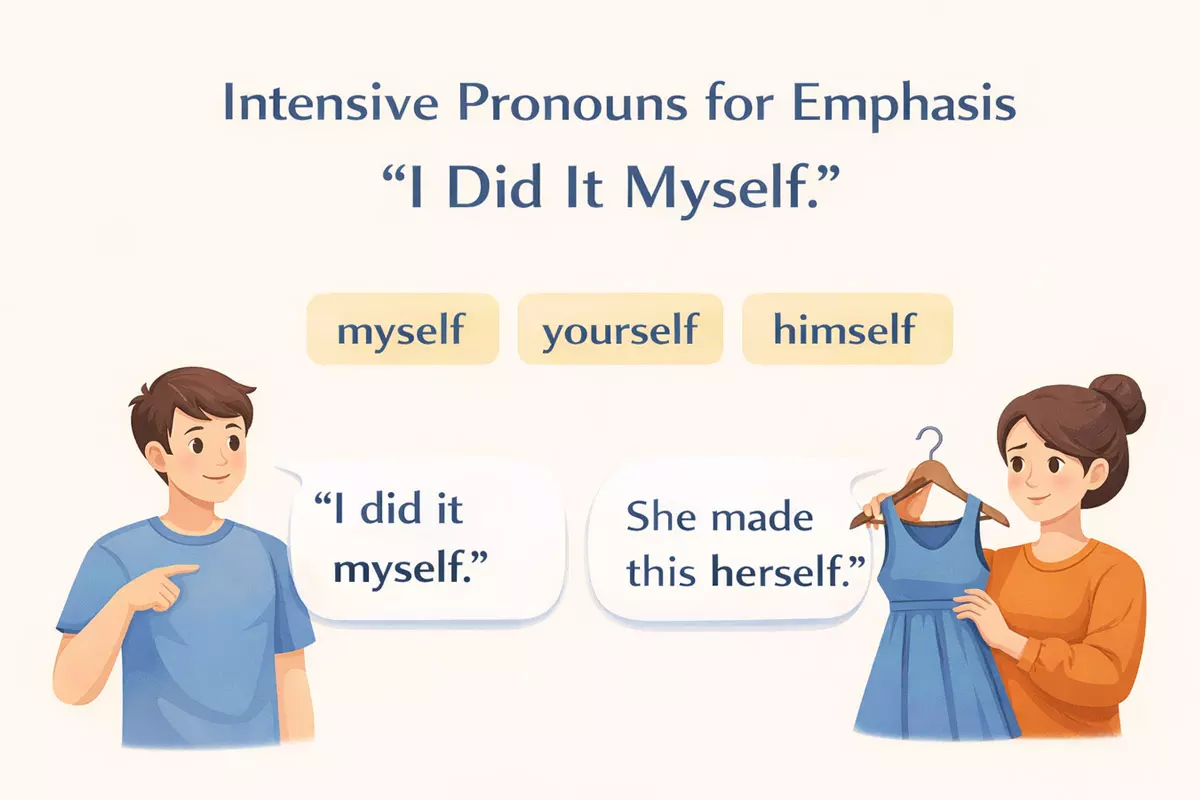
- do ("I did it myself.")
- make ("She made it herself.")
- fix ("He fixed the car himself.")
- build ("We built the shed ourselves.")
- clean ("You cleaned the room yourself.")
- cook ("They cooked dinner themselves.")
- find ("I found the answer myself.")
- choose ("She chose it herself.")
- solve ("He solved the problem himself.")
- paint ("We painted the house ourselves.")
- buy ("You bought the gift yourself.")
- write ("They wrote the report themselves.")
- organize ("I organized the event myself.")
- carry ("She carried the bags herself.")
- repair ("He repaired the watch himself.")
- decorate ("We decorated the room ourselves.")
- plan ("They planned the trip themselves.")
- assemble ("You assembled the furniture yourself.")
- draw ("She drew the portrait herself.")
- pack ("I packed the suitcase myself.")
Sentence patterns with intensive pronouns
Intensive pronouns usually come directly after the noun or pronoun they emphasize. This structure is much more common than placing the intensive pronoun elsewhere in the sentence. Here are some typical ways these forms appear:
- Subject + verb + object + intensive pronoun ("He finished the project himself.")
- Subject + intensive pronoun + verb + object (less common, but possible for emphasis: "She herself answered the phone.")
- Subject + verb + intensive pronoun (when no object: "I did it myself.")
Comparing reflexive and intensive pronouns
It’s easy to confuse intensive pronouns with reflexive ones, since they look the same. The difference is their function in the sentence. Intensive pronouns add emphasis, while reflexive pronouns are required for meaning. Below is a comparison:
| Usage | Example |
|---|---|
| Intensive (emphasis) | She baked the cake herself. (to stress she, not someone else, did it) |
| Reflexive (required) | She baked herself a cake. (the action returns to the subject) |
| Incorrect usage | She baked herself. (makes no sense in this context ❌) |
| Alternative emphasis | She herself baked the cake. (unusual but possible for extra focus) |
Recognizing these patterns and common verbs helps you use intensive pronouns naturally and avoid confusion with reflexive forms. This makes your emphasis clear and your sentences sound more idiomatic.
Typical learner confusion with reflexives
Many English learners mix up intensive and reflexive pronouns, especially when they see words like myself, yourself, or themselves. The confusion often comes from the fact that these pronouns look identical, but their function in a sentence is different. Intensive pronouns add emphasis, while reflexive pronouns refer back to the subject and are necessary for the sentence's meaning.
Common mistakes and misunderstandings
- Using a reflexive pronoun where a simple personal pronoun is needed: “Please give it to myself” instead of “Please give it to me.”
- Forgetting that intensive pronouns are not essential to the sentence: “I did it myself” (correct for emphasis), but “I did myself it” (incorrect).
- Thinking that all -self/-selves forms are always reflexive: sometimes they just add emphasis.
- Placing the intensive pronoun in the wrong part of the sentence, which can sound awkward or change the meaning.
- Confusing subject and object forms: “Himself did the work” instead of “He himself did the work.”
- Using reflexive pronouns with verbs that don’t require them: “She enjoyed herself” (correct), but “She left herself” (usually incorrect unless literal).
- Overusing reflexive pronouns to sound formal or polite, which can make sentences unnatural.
- Misunderstanding reflexive actions vs. emphasis: “He shaved himself” (the action is on him), compared to “He himself shaved” (he—not someone else—did it).
- Translating directly from a first language where reflexive forms are used differently.
- Using reflexive pronouns with passive voice: “The book was written by myself” instead of “by me.”
Comparing reflexive and intensive pronouns
It helps to see how the same word form can play two roles. In the table below, notice how the meaning changes depending on how the pronoun is used:
| Sentence | Function |
|---|---|
| I hurt myself. | Reflexive (the action goes back to the subject) |
| I did it myself. | Intensive (adds emphasis, not required for meaning) |
| She introduced herself. | Reflexive (she is both subject and object) |
| She herself introduced the speaker. | Intensive (emphasizes 'she' did the introducing) |
| They blamed themselves. | Reflexive (they are responsible for the action) |
| They themselves fixed the problem. | Intensive (no one else fixed it) |
Quick tips to avoid confusion
- Check if the sentence still makes sense without the -self/-selves word. If yes, it’s probably intensive.
- If the subject and object are the same person or people, use a reflexive pronoun.
- For emphasis, place the intensive pronoun right after the subject or at the end of the sentence.
- Don’t use reflexive pronouns after prepositions of place (e.g., “He sat by himself” is correct, but not “He sat by him”).
- Practice with sample sentences to internalize the difference.
Spoken emphasis vs written emphasis
When using intensive pronouns such as myself, yourself, or themselves for emphasis, the effect can differ greatly depending on whether you’re speaking or writing. In conversation, the way you say something—your tone, volume, and even body language—adds another layer of meaning that can’t always be captured in text. For example, you might stress the word myself with your voice, making it clear that you alone did something. In writing, you have to rely on word order, punctuation, and sometimes formatting to show the same kind of focus.
How spoken and written emphasis differ
In speech, listeners pick up on cues like a raised voice or a pause before the intensive pronoun. These cues make the emphasis obvious, even if the sentence structure is simple. Written language, on the other hand, needs to make the emphasis clear with context or typographical choices, since the reader can’t hear your voice. This is why writers sometimes use italics or bold font to highlight the intensive pronoun, or choose sentence structures that draw attention to it.
| Feature | Spoken Language | Written Language |
|---|---|---|
| Emphasis tools | Tone, stress, pauses | Word order, punctuation, formatting |
| Clarity of focus | Immediate and clear through vocal cues | Relies on context and visual markers |
| Common markers | Louder voice, slower speech, gestures | Italics, bold, exclamation marks |
| Risk of misunderstanding | Lower, due to nonverbal cues | Higher, if emphasis isn’t shown clearly |
Examples of intensive pronouns in context
- I did it myself. (spoken: stress on “myself,” possibly with a gesture)
- She cooked the meal herself. (written: “herself” at the end for focus)
- You yourself said it was difficult.
- They themselves organized the event.
- He fixed the bike himself!
- We ourselves are responsible.
- The cat itself opened the door.
- Did you do this yourself?
- I’ll handle it myself, thank you.
- The children themselves cleaned up.
In summary, vocal delivery can make the emphasis feel more immediate or emotional, while written language requires more deliberate choices to communicate the same idea. Paying attention to these differences helps ensure your intended meaning comes across, whether you’re speaking or writing.
Practice: add emphasis using intensive pronouns
Intensive pronouns like myself, yourself, himself, and others are used to stress that someone did something personally, without help. To get comfortable with their use, try adding them to sentences or rewriting statements to highlight who performed the action. Practicing this skill helps you sound more natural and emphatic in English.
Where to Place Intensive Pronouns
Typically, an intensive pronoun comes directly after the noun or pronoun it emphasizes, or at the end of the clause. Here are some common patterns:
- I myself baked this cake.
- She cleaned the house herself.
- The president himself attended the meeting.
- We will fix the problem ourselves.
- You yourself admitted the mistake.
- The students completed the project themselves.
- The cat itself opened the door.
- They themselves organized the event.
- He himself wrote the letter.
- She herself designed the poster.
Try It: Add Emphasis
Insert the correct intensive pronoun to emphasize who did each action. Choose from: myself, yourself, himself, herself, itself, ourselves, yourselves, themselves.
- I fixed the bike ______________.
- Did you paint this wall ______________?
- She prepared dinner ______________.
- The dog opened the gate ______________.
- We finished the project ______________.
- You (plural) cleaned the classroom ______________.
- They built the shelter ______________.
- He answered the phone ______________.
- The computer restarted ______________.
- Anna decorated the room ______________.
Show answers
- I fixed the bike myself.
- Did you paint this wall yourself?
- She prepared dinner herself.
- The dog opened the gate itself.
- We finished the project ourselves.
- You (plural) cleaned the classroom yourselves.
- They built the shelter themselves.
- He answered the phone himself.
- The computer restarted itself.
- Anna decorated the room herself.
Spot the Emphasis
Decide which sentences use an intensive pronoun for emphasis, and which do not. Mark with ✅ for correct use, ❌ for missing or incorrect use.
- She herself organized the party.
- I did not see the movie myself.
- They washed the car.
- You yourself told me the story.
- The cake itself was delicious.
- He fixed the computer himself.
- We prepared the presentation ourselves.
- The children cleaned the room.
- Did you write this report yourself?
- The company itself announced the changes.
Show answers
- ✅ She herself organized the party.
- ✅ I did not see the movie myself.
- ❌ They washed the car. (no intensive pronoun)
- ✅ You yourself told me the story.
- ✅ The cake itself was delicious.
- ✅ He fixed the computer himself.
- ✅ We prepared the presentation ourselves.
- ❌ The children cleaned the room. (no intensive pronoun)
- ✅ Did you write this report yourself?
- ✅ The company itself announced the changes.
Practicing with these forms and examples will help you use emphasis naturally in speech and writing.