How Pronouns Can Completely Change Sentence Meaning

 This article explains how changing pronouns can shift meaning, responsibility, or agency, and cause ambiguity. It provides examples, highlights common learner errors, and offers editing strategies and practice for identifying and correcting meaning shifts.
- Why pronoun choice can alter meaning dramatically
- Same structure, different pronoun: meaning shifts
- Pronouns affecting responsibility and agency
- Ambiguity caused by incorrect pronoun reference
- Contrast examples: correct vs misleading meaning
- Typical learner pitfalls with meaning-changing pronouns
- Editing strategies to test intended meaning
- Practice: identify and fix meaning shifts
Replacing even a single small word, such as he with they, can significantly change the meaning and clarity of your writing or speech. Recognizing how these subtle word choices affect interpretation is essential for effective communication. By paying close attention to the words you select, you can ensure your message is understood as intended and prevent misunderstandings that may arise from ambiguous language. Careful word choice supports both precision and inclusivity in your communication.
Why pronoun choice can alter meaning dramatically
Choosing the right pronoun can change who is involved in an action, shift the perspective, or even hide or reveal responsibility. These small words often carry far more weight than they seem, influencing which person or group is the subject, object, or owner in a sentence. Because pronouns replace nouns, a simple switch can make a statement more personal, general, or ambiguous.
Pronouns shape perspective and clarity
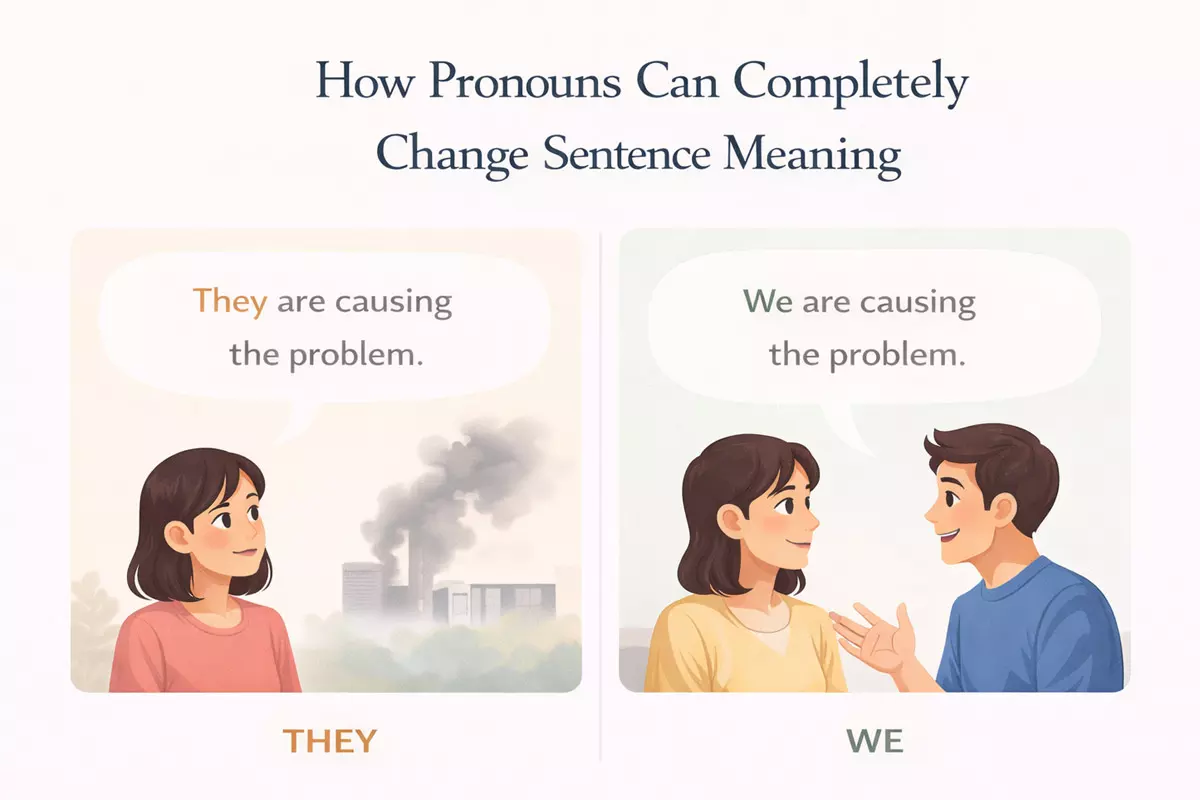
When we swap "I" for "you" or "they" for "we," the sentence’s meaning transforms. This isn’t just about grammar—it’s about whose viewpoint is being expressed and who is included or excluded. For example, “We need to finish the project” implies shared responsibility, while “You need to finish the project” singles someone out. This shift affects how statements are received and interpreted.
Ambiguity and precision
Using vague pronouns can lead to confusion. If a sentence starts with "They said it was okay," without context, it’s unclear who "they" are or what "it" refers to. On the other hand, choosing specific pronouns helps clarify meaning and avoid misunderstandings. When clarity is crucial, precise pronoun selection matters just as much as the verbs or nouns used.
Comparison of pronoun effect in sentences
| Original Sentence | After Pronoun Change |
|---|---|
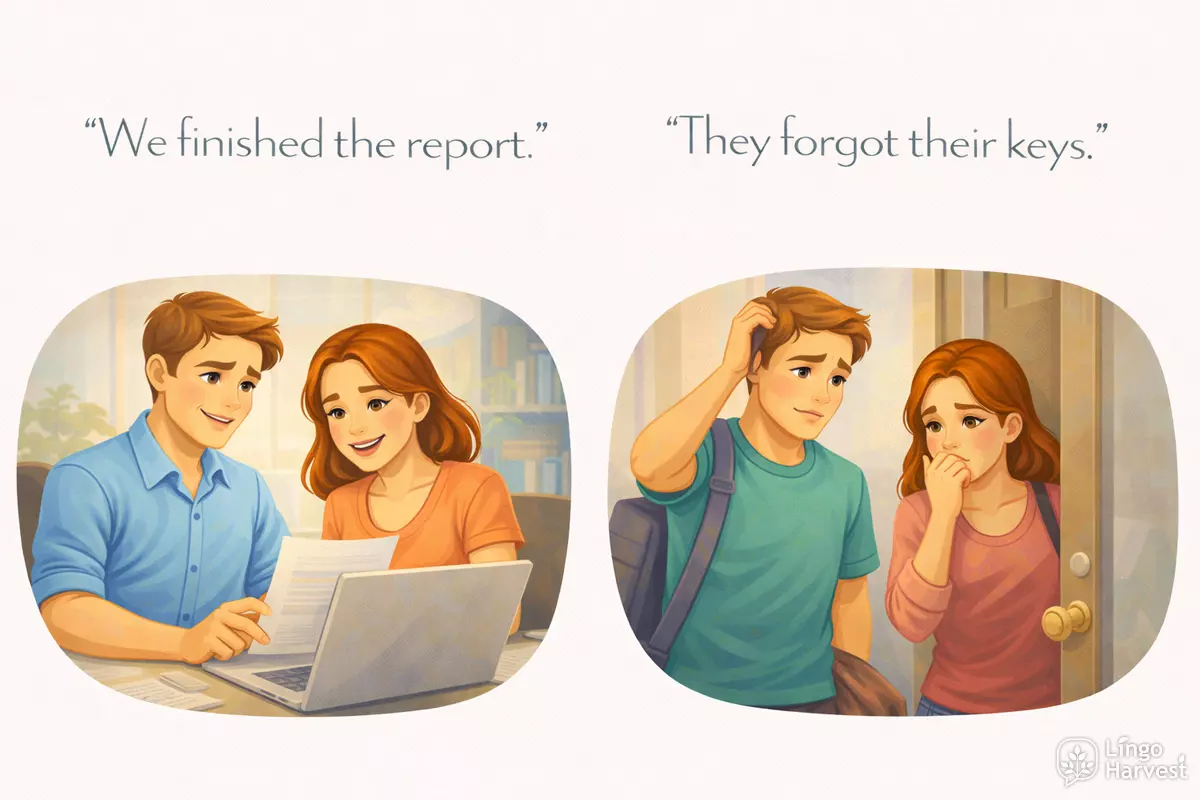
| I finished the report. | We finished the report. |
| She forgot her keys. | They forgot their keys. |
| You broke the vase. | It broke. |
| He will help. | Someone will help. |
| This is my idea. | This is our idea. |
Common ways pronouns alter meaning
- Changing the subject: “She left early” vs. “They left early”
- Altering responsibility: “I forgot” vs. “We forgot”
- Adjusting inclusivity: “We won the game” vs. “They won the game”
- Shifting ownership: “My book” vs. “Our book”
- Hiding agency: “Mistakes were made” instead of “I made mistakes”
- Changing perspective: “You should try” vs. “One should try”
- Adding or removing specificity: “He did it” vs. “Someone did it”
- Reflecting gender or neutrality: “He/she” vs. “They”
- Switching between singular and plural: “It is ready” vs. “They are ready”
- Directing statements: “You need to leave” vs. “We need to leave”
Understanding how pronouns function in context helps ensure messages are precise and intentions are clear. The impact of these subtle word choices is often underestimated, but as shown above, a single pronoun can completely change the meaning and tone of a sentence.
Same structure, different pronoun: meaning shifts
Changing the pronoun in a sentence—even when every other word stays the same—can dramatically alter both meaning and emphasis. Pronouns do more than just stand in for nouns; they signal relationships, perspectives, and even hidden assumptions. Swapping one for another can shift agency, responsibility, and the emotional tone.
How pronoun swaps affect interpretation
Consider how the meaning of a statement transforms when you replace one pronoun with another. The subject, the object, or even the implied context can all flip, often with surprising results. This is especially true in sentences about feelings, opinions, or instructions, where the pronoun directly points to who is involved.
- I means the speaker is involved; you directs the action or feeling at the listener.
- He/She/They distances the speaker from the subject, making it third-person.
- We creates a sense of shared experience or responsibility.
- It can make statements impersonal or general.
- Switching from my to your can change advice into criticism.
- Changing ours to theirs shifts inclusion or exclusion of groups.
- Using someone or nobody can obscure agency.
- Replacing this with that shifts emotional closeness or distance.
- Moving from me to him/her/them can signal blame or remove oneself from responsibility.
- Choosing you over one can make a statement feel personal rather than general.
Examples: Pronoun changes in action
Below is a table showing how identical sentence structures take on new meanings when only the pronoun is changed:
| Sentence with Pronoun | Meaning Shift |
|---|---|
| I forgot the meeting. | The speaker takes responsibility for missing it. |
| You forgot the meeting. | The listener is now at fault; possible criticism. |
| We forgot the meeting. | Responsibility is shared between speaker and listener. |
| They forgot the meeting. | Blame shifts to a third party, distancing both speaker and listener. |
| No one forgot the meeting. | Negates blame, emphasizing that everyone remembered. |
Why these shifts matter
Paying attention to pronoun choice is essential for clear communication. A simple swap can turn a neutral statement into a personal accusation or make an individual experience feel collective. In professional, academic, and everyday contexts, being mindful of pronouns helps avoid misunderstandings and unintended implications.
Pronouns affecting responsibility and agency
The choice of pronoun can subtly shift who seems responsible for an action, or who is portrayed as having control. In many sentences, swapping “I” for “we” or “they” can make a statement sound more collective or distant, even if the underlying facts don’t change. This has a real impact on how readers or listeners interpret blame, credit, or initiative.
How pronouns shift agency in sentences
Agency refers to who is seen as the actor in a sentence. By changing pronouns, speakers can highlight or obscure their own involvement, delegate responsibility, or generalize actions. For example, politicians often use passive structures (“Mistakes were made”) or generic pronouns (“one must consider”) to avoid direct accountability.
- I – Directly claims responsibility or action (“I broke the vase.”)
- We – Spreads responsibility or credit across a group (“We decided to leave early.”)
- You – Can generalize or shift focus to the listener (“You can’t always get what you want.”)
- They – Shifts agency to an outside group (“They didn’t tell us the rules.”)
- It – Often removes clear agency (“It was decided that we’d go.”)
- One – Formal and impersonal; avoids specifying anyone (“One should always be polite.”)
- He/She – Identifies a specific individual as agent (“She completed the project.”)
- People – Generalizes agency to a broad group (“People make mistakes.”)
- Someone/Anyone – Vague about who is responsible (“Someone left the door open.”)
- No one – Explicitly says nobody is responsible (“No one knows the answer.”)
Comparing pronoun impact: directness and responsibility
| Pronoun Example | Effect on Responsibility/Agency |
|---|---|
| I forgot to send the email. | Directly admits personal responsibility. |
| We forgot to send the email. | Diffuses responsibility across a group. |
| The email wasn’t sent. | Omits agency; responsibility is unclear. |
| They forgot to send the email. | Shifts responsibility to another party. |
| It was forgotten. | Removes any clear agent; very indirect. |
Understanding these subtle differences is crucial for precise communication. Whether you want to take credit, avoid blame, or simply be tactful, the pronouns you choose make a significant difference in how your message is received.
Ambiguity caused by incorrect pronoun reference
When a pronoun doesn’t clearly point to its intended noun, readers can be left scratching their heads. Misplaced or vague references often make sentences confusing, especially when more than one possible noun is present. This can lead to misunderstandings or even entirely different interpretations of what’s happening in a statement.
How unclear pronouns create confusion
A pronoun should always refer back to a specific noun (its antecedent). If it’s not obvious who or what the pronoun is talking about, the meaning of the sentence becomes muddled. Writers sometimes assume their meaning is clear, but without careful wording, pronouns can easily cause mix-ups.
- “When Mary met Jane, she was nervous.” (Who was nervous—Mary or Jane?)
- “The teacher told the student that he needed to study more.” (Does “he” refer to the teacher or the student?)
- “Alex gave Chris his book.” (Whose book? Alex’s or Chris’s?)
- “After putting the dog in the car, it started to rain.” (“It” refers to what—the dog, the car, or the weather?)
- “Sam handed the keys to Jordan because he was leaving.” (Who is leaving?)
- “The lamp fell on the table and broke it.” (What broke—the lamp or the table?)
- “If your friend calls, tell her I’ll call her back.” (Who is “her” in both instances?)
- “The committee thanked the manager for her service, and they sent a card.” (Who sent the card?)
- “Sarah told Mia that her car was blocking the driveway.” (Whose car?)
- “When the bottle hit the floor, it shattered.” (What shattered?)
- “After the dog chased the cat, it hid under the bed.” (Who hid?)
- “Tom called Mike while he was eating dinner.” (Who was eating?)
- “The book is on the table, please put it back.” (Put what back—the book or the table?)
- “The doctor spoke to the nurse before she left.” (Who left?)
- “I told my neighbor that his fence needed repairs.” (Whose fence?)
Why these problems matter
Misunderstandings from unclear pronouns can lead to miscommunication in everyday conversations, business writing, or even legal documents. In some cases, a single ambiguous word can change the outcome of a contract or the meaning of a story.
Common sources of unclear pronouns
- Using “it,” “they,” or “this” without a clear noun to reference
- Placing the pronoun too far from its antecedent
- Multiple possible nouns before the pronoun
- Switching topics or subjects abruptly
- Overusing pronouns in complex sentences
Clear vs. unclear pronoun reference
| Unclear Example | Improved (Clear) Version |
|---|---|
| Emily told Anna she won the prize. | Emily told Anna that Anna won the prize. |
| Jack gave Mark his keys. | Jack gave Mark Jack’s keys. |
| The dog chased the cat, and it ran away. | The dog chased the cat, and the cat ran away. |
| The vase was on the table, but it broke. | The vase, which was on the table, broke. |
By reviewing sentences for possible confusion and making sure each pronoun clearly connects to its noun, you can avoid the pitfalls that come with vague references. This careful attention keeps your writing precise and your meaning unmistakable.
Contrast examples: correct vs misleading meaning
The use of pronouns can dramatically shift a sentence’s interpretation, sometimes with unintended or even misleading results. Understanding where ambiguity or error creeps in is key to clear writing. Let’s look at how minor changes in pronoun reference can lead to major shifts in meaning, and how to spot potential pitfalls.
Common scenarios where pronoun choice alters meaning
- Ambiguous reference: When it’s unclear who or what the pronoun refers to.
- Pronoun-antecedent mismatch: When the pronoun does not agree in number or gender with its antecedent.
- Shift in perspective: Using “I,” “we,” or “they” changes the subject’s role or involvement.
- Implied accusation or praise: “You” versus “he/she” can shift blame or credit in subtle ways.
- Possessive confusion: “His” and “her” can be swapped, leading to misunderstandings about ownership or responsibility.
- Generic vs. specific: “They” might refer to a group, or to a specific person whose gender is not known, creating possible confusion.
- Reflexive misuse: Using “myself” or “themselves” in the wrong context can obscure meaning.
- Vague “it”: Starting sentences with “it” without a clear subject causes ambiguity.
- Switching referents mid-paragraph: Changing the pronoun reference without warning leads to a muddled message.
- Multiple possible antecedents: When two or more nouns precede a pronoun, it’s unclear which is meant.
Direct comparison: accurate vs. misleading sentences

It’s helpful to see side-by-side contrasts where a pronoun swap changes the entire implication or clarity of a sentence. Here are several illustrative examples:
| Clear Pronoun Use ✅ | Misleading or Ambiguous Use ❌ |
|---|---|
| Maria gave her book to Anna. (“her” clearly refers to Maria) |
Maria gave her book to Anna. (“her” could refer to either Maria or Anna) |
| When John met Sam, he smiled. (“he” = John, as context makes clear) |
When John met Sam, he seemed nervous. (Who is nervous—John or Sam?) |
| Each student must submit his or her assignment. | Each student must submit their assignment. (“their” may confuse some readers, though it’s increasingly accepted) |
| The dog chased its tail. (“its” points to the dog) |
The dog chased his tail. (“his” is only correct if the dog’s gender is known and male) |
| After the meeting, Sarah called her manager. (Sarah is the caller) |
After the meeting, she called her manager. (Who is “she”? Sarah or someone else?) |
| The engineers presented their findings. (The findings belong to the engineers) |
The engineers presented his findings. (Mismatch in number: “engineers” vs. “his”) |
| The cat licked itself. (Reflexive pronoun, clear subject) |
The cat licked him. (Who is “him”? Ambiguous and possibly misleading) |
| It is raining. (“It” as dummy subject, clear in context) |
It was lost. (What is “it”? No clear antecedent) |
| Alex and Jamie argued, but he apologized. (If context makes “he” clear) |
Alex and Jamie argued, but he was upset. (Unclear which person “he” refers to) |
| I saw them at the store. (“them” clearly refers to a group previously mentioned) |
I saw them and she at the store. (“she” and “them” distinction is confusing) |
Takeaway
Being precise with pronoun use helps avoid confusion and misinterpretation. Always check that each pronoun clearly refers to its intended subject or object. When in doubt, repeat the noun or restructure the sentence for clarity.
Typical learner pitfalls with meaning-changing pronouns
When people study a new language, pronouns can seem deceptively simple. However, even small pronoun changes can create misunderstandings or completely alter what a sentence means. Many learners stumble over these details, especially when their native language handles pronouns differently or lacks certain distinctions altogether.
Common Mistakes to Watch Out For
- Confusing subject and object pronouns: Mistaking “he” for “him” or “they” for “them” can change who is doing what in a sentence.
- Mixing up gendered pronouns: Accidentally swapping “she” and “he” often leads to confusion about who is involved.
- Misusing possessive forms: Learners sometimes use “his” instead of “him,” or “their” instead of “theirs,” which can shift the meaning from possession to identity.
- Overusing “it” for people: In some languages, the equivalent of “it” might be used for people, but in English this is incorrect and can sound rude.
- Forgetting to match pronouns with antecedents: Using “they” when the last mentioned subject was singular, or vice versa, leads to ambiguity.
- Switching between formal and informal pronouns incorrectly: Languages like French, German, or Spanish have formal/informal pronouns, and using the wrong one can change the tone or even be disrespectful.
- Using reflexive pronouns needlessly: Adding “myself,” “yourself,” etc., where not required, often causes awkward sentences.
- Omitting pronouns entirely: Some learners drop pronouns (especially in English), which can make sentences unclear.
- Using ambiguous pronouns: If it’s unclear who “he,” “she,” or “they” refers to, the sentence meaning is lost or misinterpreted.
- Singular “they” confusion: Learners may not realize “they” can refer to one person, leading to misunderstanding or incorrect agreement.
- Relative pronoun errors: Mixing up “who,” “whom,” “which,” and “that” can change sentence relationships and clarity.
- False friends from native language: Words that look like pronouns in both languages but function differently can cause mistakes.
Examples of Pronoun Mix-ups and Changed Meanings
These sample sentences show how swapping a single pronoun can create a totally different meaning:
| Original Sentence | Changed Pronoun & New Meaning |
|---|---|
| She gave her book to him. | She gave her book to her. → The recipient changes from a male to a female. |
| I saw them at the store. | I saw him at the store. → The group becomes a single male person. |
| This is my seat. | This is your seat. → Ownership shifts from the speaker to someone else. |
| They finished their homework. | She finished her homework. → The subject moves from plural to singular (and changes gender). |
| He did it himself. | He did it. → No emphasis on doing it alone; meaning softens. |
Trouble Spots by Pronoun Type
- Demonstratives: “This” vs. “that” (near vs. far).
- Indefinites: “Someone” vs. “anyone” vs. “no one.”
- Personal pronouns: “I” vs. “me,” “we” vs. “us.”
- Possessives: “Its” vs. “it’s,” “their” vs. “they’re.”
- Reflexives: “Ourselves” vs. “each other.”
- Relative pronouns: “Who” vs. “that.”
- Interrogatives: “Who” vs. “whom.”
Being aware of these patterns helps learners avoid miscommunications and build clearer, more accurate sentences. Double-checking pronoun choice—especially after editing—can save a lot of confusion and embarrassment.
Editing strategies to test intended meaning
When revising sentences, especially those with pronouns, it’s easy to miss subtle shifts in meaning. To ensure your writing says exactly what you intend, it helps to use specific review techniques. Here are practical approaches to catch and correct any confusion that pronouns might introduce.
Read with Pronoun Substitution
One of the simplest ways to check clarity is to substitute pronouns with the nouns they refer to. This makes ambiguous references obvious. Try swapping each pronoun in a sentence with its possible antecedent and see if the sentence still makes sense.
- Replace “he” or “she” with the actual person’s name.
- Switch “it” with the object or concept discussed earlier.
- For “they,” specify the group or individuals meant.
Ask Clarifying Questions
If a sentence uses pronouns, ask yourself:
- Who or what does this pronoun refer to?
- Could a reader reasonably choose a different antecedent?
- Is the pronoun too far from its noun?
If any answer feels uncertain, consider revising for clarity.
Compare Alternatives
Sometimes, rephrasing can show how pronoun choice changes meaning. The table below illustrates how swapping pronouns changes interpretation:
| Original Sentence | Possible Meanings |
|---|---|
| Alex gave Sam his book. | “His” could refer to either Alex or Sam. |
| Alex gave Sam Alex’s book. | Unambiguously, the book belongs to Alex. |
| Alex gave Sam Sam’s book. | Now, clearly, the book is Sam’s. |
| They said they would help. | Unclear who “they” refers to—multiple possible groups. |
Check for Consistent Reference
Track each pronoun’s antecedent throughout your text. Make a quick list of all nouns and the pronouns that refer to them. This helps spot where a pronoun might refer to the wrong thing or change reference partway through.
Practice: Spot the Ambiguity
Try identifying the pronoun reference in each sentence. Which noun does the pronoun point to?
- Jamie told Taylor that he needed to leave early.
- The dog chased the cat because it was scared.
- Maria called Anna after she finished her homework.
- The teachers spoke to the students about their project.
Show answers
- “He” could refer to Jamie or Taylor.
- “It” could mean the dog or the cat.
- “She” might be Maria or Anna.
- “Their” could mean the teachers’ or the students’ project.
Read Aloud or Peer Review
Reading sentences out loud often exposes awkward or unclear pronoun use. Alternatively, ask someone else to read your text and explain what each pronoun refers to—if they’re unsure, consider a revision. By methodically reviewing your writing, you can ensure pronouns clarify rather than confuse, and your sentences communicate precisely what you intend.
Practice: identify and fix meaning shifts
Understanding how pronouns affect clarity can be challenging. Even a small change—like switching “he” for “she” or using “they” instead of a name—can lead to confusion or unintended interpretations. To help you spot and correct these shifts, let’s work through some practical examples and exercises.
Spot the ambiguous pronoun
Read each sentence below and identify which pronoun might cause confusion. Then, decide how you would revise the sentence to make the meaning clearer.
- When Alex met Jordan, he was already late.
- Maria told Anna that she should study more.
- The dog chased the cat, but it escaped through the window.
- Sam gave Chris his book.
- The teacher spoke to the student because she was upset.
- Paul called Mark after he finished the report.
- The manager thanked the assistant because he was helpful.
- Linda spoke to her sister after she arrived.
- The boy saw the man with his telescope.
- Emma emailed Sophie when she was traveling.
Show answers
- “He” – unclear whether Alex or Jordan was late. Clarify: “When Alex met Jordan, Alex was already late.”
- “She” – unclear whether Maria or Anna should study more. Clarify: “Maria told Anna, ‘You should study more.’”
- “It” – unclear whether the dog or the cat escaped. Clarify: “The dog chased the cat, but the cat escaped through the window.”
- “His” – unclear whose book it was. Clarify: “Sam gave Chris Sam’s book.” or “Sam gave Chris Chris’s book.”
- “She” – unclear whether it refers to the teacher or the student. Clarify: “The teacher spoke to the student because the student was upset.”
- “He” – unclear whether Paul or Mark finished the report. Clarify: “Paul called Mark after Mark finished the report.”
- “He” – unclear whether the manager or the assistant was helpful. Clarify: “The manager thanked the assistant because the assistant was helpful.”
- “She” – unclear whether Linda or her sister arrived. Clarify: “Linda spoke to her sister after her sister arrived.”
- “His” – unclear who owns the telescope. Clarify: “The boy saw the man using the boy’s telescope.” or “...using the man’s telescope.”
- “She” – unclear whether Emma or Sophie was traveling. Clarify: “Emma emailed Sophie while Emma was traveling.”
Common types of meaning shifts with pronouns
Here are some patterns where pronoun use often leads to unintended meaning changes:
- Switching between singular and plural pronouns (“he” vs. “they”)
- Unclear antecedents (not specifying who “she/he/they” refers to)
- Shifting perspective (suddenly using “we” or “you” without context)
- Ambiguous gender references (“they” for a single person vs. a group)
- Possessive confusion (“her book” – whose book?)
- Reflexive pronoun misuse (“himself,” “themselves”)
- Overusing “it” for actions or objects
- Inconsistent use of names and pronouns in the same paragraph
- Switching subjects mid-sentence without clear markers
- Pronouns used before the noun is introduced
- Use of “this” or “that” without clear reference
- Mixing formal/informal pronouns (especially in other languages)
- Incorrect gendered pronoun for a known individual
- Pronouns that refer to entire previous ideas, not people
- Changing point of view (“I” to “he/she”)
Compare and correct: pronoun shifts in context
Let’s look at some sentences where a pronoun shift creates a new, unintended meaning. Notice how a small change can alter the whole message.
| Original Sentence | Possible Meaning Shift |
|---|---|
| Lisa told her sister she won the contest. | Unclear if Lisa or her sister won. |
| They said the meeting was canceled. | “They” could mean managers, colleagues, or someone else. |
| Tom called Jim after he finished work. | “He” – Was it Tom or Jim who finished work? |
| The students thanked the teacher because they learned a lot. | “They” could refer to students or teachers in some contexts. |
| Sarah put the vase on the table and broke it. | Did Sarah break the vase or the table? |
Show answers
- Lisa told her sister she won the contest: Clarify by specifying the winner: “Lisa told her sister, ‘You won the contest.’” or “Lisa told her sister that Lisa won the contest.”
- They said the meeting was canceled: Specify who “they” are: “The managers said the meeting was canceled.”
- Tom called Jim after he finished work: Clarify who finished work: “Tom called Jim after Tom finished work.”
- The students thanked the teacher because they learned a lot: Specify if needed: “The students thanked the teacher because the students learned a lot.”
- Sarah put the vase on the table and broke it: Clarify: “Sarah put the vase on the table and broke the vase.”
Quick self-check: rewrite to clarify
Try rephrasing these sentences to avoid any pronoun ambiguity:
- After Jamie saw Taylor, she smiled.
- My friend met their cousin at the airport, but they were late.
- When the doctor called the nurse, he answered right away.
- After Alex spoke to Morgan, they left the room.
- When Sarah emailed Emma, she was already on vacation.
- The manager talked to the employee because he was concerned.
- When the coach thanked the player, he looked relieved.
- After Chris joined Pat, they went to lunch.
- The teacher emailed the parent after she arrived home.
- When Jordan met Riley, they seemed nervous.
Show answers
- After Jamie saw Taylor, Jamie smiled. or After Jamie saw Taylor, Taylor smiled.
- My friend met their cousin at the airport, but my friend was late. or the cousin was late.
- When the doctor called the nurse, the nurse answered right away. or the doctor answered right away.
- After Alex spoke to Morgan, Alex left the room. or Morgan left the room.
- When Sarah emailed Emma, Sarah was already on vacation. or Emma was already on vacation.
- The manager talked to the employee because the manager was concerned. or the employee was concerned.
- When the coach thanked the player, the coach looked relieved. or the player looked relieved.
- After Chris joined Pat, Chris went to lunch. or Pat went to lunch. or both went together.
- The teacher emailed the parent after the teacher arrived home. or after the parent arrived home.
- When Jordan met Riley, Jordan seemed nervous. or Riley seemed nervous.
Tuning your attention to pronoun use helps you avoid miscommunication and ensures your sentences say exactly what you intend. Regular practice with these patterns will make your writing clearer and more precise.