Pronoun Choice for Inclusive Communication

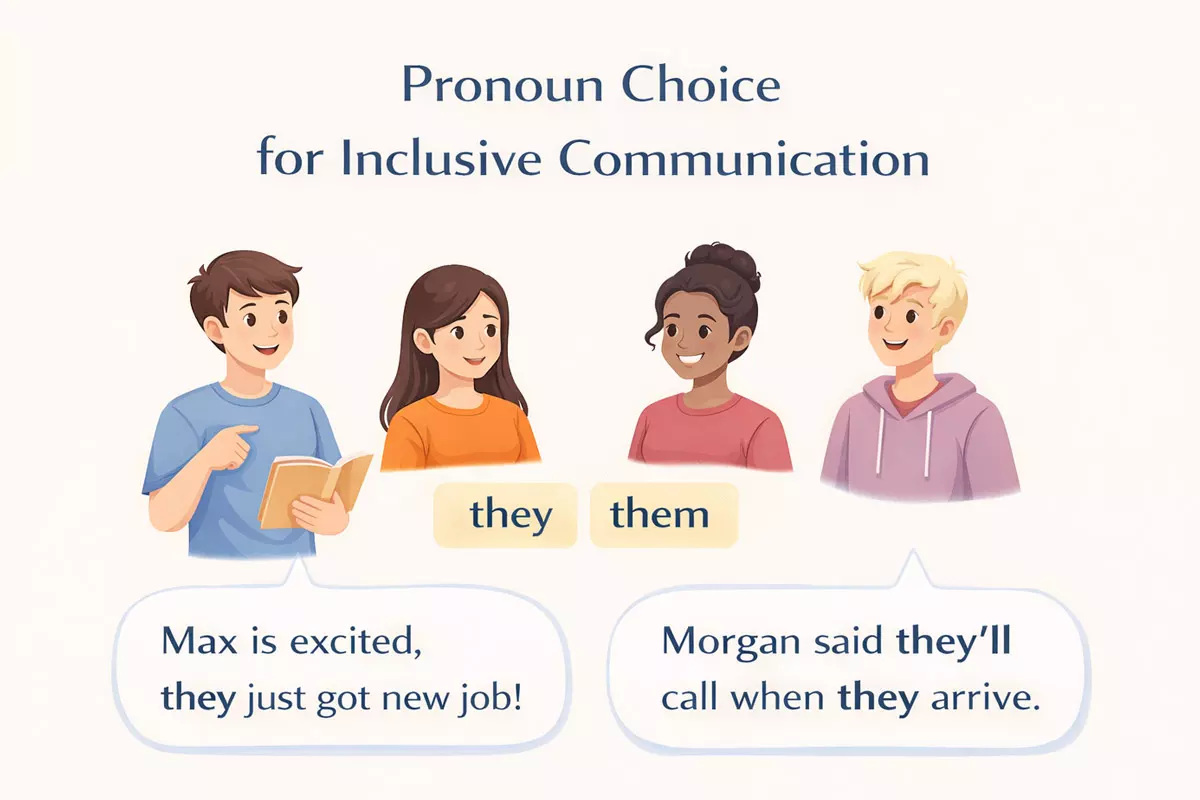 The article defines inclusive communication, covers respectful use of gender-neutral pronouns such as singular they, and explains how to avoid exclusion and common mistakes. It includes practical tips and sentence rewrites for using inclusive language professionally.
- What inclusive communication means today
- Gender-neutral pronouns and respectful usage
- Singular they in modern English
- Avoiding exclusion through pronoun choice
- Inclusive alternatives in professional contexts
- Common mistakes and overcorrections
- Tone and audience awareness
- Practice: rewrite sentences for inclusivity
The language we use plays a crucial role in shaping how welcome and respected others feel, particularly when referring to individuals. Thoughtfully selecting appropriate pronouns is a straightforward yet meaningful way to demonstrate consideration and support for people of all backgrounds. By being mindful of pronouns, we contribute to creating an inclusive environment where everyone can feel acknowledged and valued, reinforcing a culture of respect and belonging in our communities and everyday interactions.
What inclusive communication means today
Inclusive communication today is about recognizing and respecting the diversity of identities and experiences within any group. It goes beyond simply avoiding offensive language; it actively seeks to ensure everyone feels seen, heard, and valued. This involves paying attention not just to what is said, but also to how messages are delivered and received. Using appropriate pronouns is just one aspect—communicators are also mindful of tone, accessibility, and context.
Key principles for fostering inclusivity
- Respect individual identities: Use names, pronouns, and descriptors as people request.
- Listen actively: Pay attention to feedback and be willing to adapt language.
- Be open to learning: Recognize that language evolves and stay informed about inclusive practices.
- Avoid assumptions: Do not presume gender, background, or needs based on appearance or name.
- Value clarity: Choose words that are clear and accessible to all participants, regardless of background.
- Promote accessibility: Consider how information is shared, ensuring it is available for those using assistive technologies or with language differences.
Examples of inclusive language strategies
- Introducing yourself with your pronouns (e.g., "Hi, I'm Alex, and I use they/them pronouns.")
- Using gender-neutral terms ("partner" instead of "husband" or "wife")
- Addressing groups as "everyone" or "folks" instead of "guys" or "ladies and gentlemen"
- Reframing questions to avoid assumptions ("Do you have a significant other?" instead of "Do you have a wife?")
- Providing options for pronouns on forms and name tags
- Checking for understanding and comfort in conversations
- Avoiding idioms or jargon that may exclude non-native speakers
- Using person-first language when relevant (e.g., "person with a disability")
- Offering information in multiple formats: written, spoken, visual
- Correcting yourself promptly and respectfully if you make a mistake
- Encouraging others to share their names and pronouns if comfortable
- Being mindful of regional or cultural language variations
Common pronoun choices and their use

| Pronoun | Example in a sentence | Typical use |
|---|---|---|
| he/him | He is presenting today. | Masculine, for those who identify as male |
| she/her | She will join us soon. | Feminine, for those who identify as female |
| they/them | They are on their way. | Gender-neutral, for nonbinary or when gender is unknown |
| ze/zir | Ze completed zir work. | Gender-neutral, for those who prefer neopronouns |
| xe/xem | Xe thanked xem for the help. | Another set of gender-neutral neopronouns |
| no pronouns (name only) | Jordan brought Jordan’s laptop. | For individuals who prefer not to use pronouns |
Building a more inclusive environment is an ongoing process. Paying attention to language—especially pronoun usage—is a practical and respectful way to support everyone’s sense of belonging. By adapting our communication habits, we help create spaces where all identities are acknowledged and affirmed.
Gender-neutral pronouns and respectful usage
Inclusive language often means choosing pronouns that do not assume or assign a specific gender. Using gender-neutral pronouns helps foster environments where everyone feels acknowledged and respected, regardless of their gender identity or expression. Many people prefer pronouns that reflect their identity, and being mindful of this is an important step toward more considerate communication.
Common gender-neutral pronouns and their forms
Several pronouns can be used in a non-gendered way. Some, like "they," are already widely accepted in both spoken and written English. Others, such as "ze" or "xe," are less familiar but are used by some individuals. Here are some commonly used options:
- they/them/theirs
- ze/hir/hirs
- xe/xem/xyrs
- ey/em/eirs
- per/per/pers
- ve/ver/vis
- fae/faer/faers
- ae/aer/aers
- ne/nem/nirs
- spivak (e/em/eir)
- name/self (using the person’s name in place of a pronoun)
Guidelines for respectful pronoun use
- Ask politely if you are unsure about someone’s pronouns. A simple, “What pronouns do you use?” is respectful.
- Use the pronouns that a person requests, even if they are less familiar to you.
- If you make a mistake, briefly apologize and correct yourself, then move on without drawing attention.
- Do not question or debate someone’s pronoun choice.
- Update records, email signatures, and documents to reflect people’s correct pronouns.
- Encourage group introductions that include pronouns to normalize sharing and learning them.
Comparing gender-neutral pronoun forms
| Subject | Object | Possessive Adjective | Possessive Pronoun | Reflexive |
|---|---|---|---|---|
| they | them | their | theirs | themself |
| ze | hir | hir | hirs | hirself |
| xe | xem | xyr | xyrs | xemself |
| ey | em | eir | eirs | emself |
| per | per | per | pers | perself |
Why honoring pronoun choices matters
Recognizing and using someone’s correct pronouns demonstrates respect and helps create a welcoming atmosphere. It signals that you value their identity and wish to communicate thoughtfully. In group settings, normalizing pronoun sharing can reduce discomfort and help everyone feel included. Paying attention to pronouns is a simple but powerful way to support inclusive communication.
Singular they in modern English
The use of they to refer to a single person whose gender is unknown, unspecified, or nonbinary is increasingly common in both spoken and written English. This practice helps avoid assumptions about gender and supports respectful, inclusive communication. Writers and speakers often choose they when the subject could be anyone, when a person's pronouns are unknown, or when referring to someone who uses they/them pronouns specifically.
When and why people use singular they
- Referring to a hypothetical person: "If anyone calls, tell them I'll call back."
- Describing someone whose gender is irrelevant: "Every student must submit their work."
- Respecting individuals who use they/them as personal pronouns: "Alex said they will join us at 6."
- In job applications or instructions: "The applicant should include their resume."
- When discussing people in general: "No one wants to lose their keys."
- When the gender of a person is intentionally not revealed: "The winner will receive their prize soon."
- With indefinite pronouns: "Somebody left their umbrella."
- To avoid awkward or repetitive language: "A doctor should listen to their patients."
- In stories or examples where the gender is not central: "If a reader finishes the book, they get a reward."
- When quoting or paraphrasing people who use they/them pronouns: "Jordan said they are traveling tomorrow."
Forms of singular they
| Function | Example |
|---|---|
| Subject | They are on their way. |
| Object | I saw them at the park. |
| Possessive Adjective | This is their book. |
| Possessive Pronoun | The choice is theirs. |
| Reflexive | They introduced themself. |
Adopting they as a singular pronoun is supported by major style guides and dictionaries. It also aligns with the movement toward more inclusive language, especially in academic, professional, and public settings. While some may still find it unfamiliar, its clarity and neutrality make it a practical option for many communicators today.
Avoiding exclusion through pronoun choice
Choosing appropriate pronouns in communication directly impacts whether people feel acknowledged and respected. Using the wrong pronoun, or assuming pronouns based on appearance or name, can unintentionally marginalize individuals and create barriers to inclusion. By paying attention to how we refer to others, we signal that everyone’s identity matters.
Why intentional pronoun use matters
Language shapes our interactions and can either reinforce or break down social divides. When we use someone's correct pronouns, we demonstrate basic respect and foster a more welcoming environment. On the other hand, misgendering—using pronouns that do not align with a person’s identity—can make people feel invisible, unwelcome, or even unsafe. This is especially important for transgender, nonbinary, and gender-nonconforming individuals, who may frequently encounter incorrect assumptions.
Common scenarios where exclusion happens
- Introducing someone with incorrect pronouns in a group setting
- Using gendered pronouns when writing about an unknown or hypothetical person
- Assuming pronouns based on voice or appearance in emails or phone calls
- Forgetting to update pronouns after someone shares a change
- Omitting pronouns altogether, leading to awkward avoidance or miscommunication
Strategies for inclusive pronoun usage
- Ask for and use each person’s pronouns whenever possible
- Include your own pronouns in introductions, email signatures, and name tags
- Use neutral language (“they/them”) if you are unsure of someone’s pronouns
- Correct mistakes promptly and move on without making a scene
- Encourage spaces where pronoun sharing is normalized but never forced
- Listen and adapt if someone tells you their pronouns have changed
- Educate yourself about less common pronouns to avoid confusion
- Support colleagues or friends who are misgendered by respectfully modeling correct pronoun use
- Use inclusive forms and surveys that allow people to self-identify
- Refrain from using gendered terms like “ladies” or “guys” when addressing groups
Examples of inclusive and exclusive pronoun choices
| Exclusive Example | Inclusive Revision |
|---|---|
| “Every student should submit his paper by Friday.” | “Every student should submit their paper by Friday.” |
| “The manager said he will contact you.” | “The manager said they will contact you.” |
| “Let’s welcome our new guys!” | “Let’s welcome our new team members!” |
| Assuming “she/her” for someone named Alex without asking | Asking, “Hi Alex, what pronouns do you use?” |
| Leaving pronoun fields off forms | Adding a space for people to specify pronouns |
Being mindful about pronoun selection is a simple yet powerful step toward more inclusive communication. Small changes in language can help prevent people from feeling overlooked or alienated, and promote a sense of belonging for everyone.
Inclusive alternatives in professional contexts
Choosing pronouns thoughtfully in the workplace can help everyone feel respected, regardless of gender identity or background. When communicating with colleagues, clients, or stakeholders, relying on inclusive language supports a welcoming environment and reduces the risk of misgendering. Many organizations are now revisiting their communication guidelines to promote respectful interaction and ensure everyone is addressed appropriately.
Common inclusive pronoun practices
Instead of defaulting to gendered language, professionals can use a range of alternatives. This is especially helpful in emails, reports, presentations, and meetings where you may not know everyone’s pronouns. Here are effective strategies:
- Use they/them as a singular pronoun when an individual’s pronouns are unknown.
- Address groups with neutral terms like “everyone,” “team,” or “colleagues” instead of “guys” or “ladies and gentlemen.”
- Refer to roles, not assumed genders: say “the applicant,” “the manager,” or “the client.”
- Ask for and share pronouns during introductions or in email signatures.
- Use people’s names rather than pronouns if unsure.
- Replace “he/she” constructions with “they.”
- Opt for “partner” or “spouse” instead of “husband/wife.”
- Avoid gendered honorifics like “Mr.” or “Ms.” unless requested.
- Update templates and forms to include a pronoun field or a blank space for self-identification.
- Encourage leadership to model inclusive language in all communications.
Comparing inclusive and traditional language
Below is a comparison illustrating how neutral pronouns and inclusive terms can replace traditional, gendered expressions in professional settings:
| Traditional Expression | Inclusive Alternative |
|---|---|
| He/she will respond soon. | They will respond soon. |
| Ladies and gentlemen | Colleagues |
| Chairman | Chairperson |
| His/her feedback is valuable. | Their feedback is valuable. |
| Mother/Father | Parent/Guardian |
| Salesmen | Sales team |
| Dear Sir or Madam | To whom it may concern |
| Wife/Husband | Partner/Spouse |
Tips for fostering inclusive communication
- Normalize stating your pronouns in meetings and email signatures.
- Promote a culture where asking about pronouns is routine, not exceptional.
- Encourage feedback about language use and adapt as needed.
- Provide resources or training on gender diversity and respectful communication.
Conscious pronoun choices and language updates can have a significant impact on workplace culture. By adopting these practices, professionals can help ensure that all individuals feel acknowledged and included.
Common mistakes and overcorrections
Choosing pronouns thoughtfully supports a more welcoming environment, but it’s easy to slip into patterns that unintentionally cause discomfort or confusion. Sometimes, in an effort to be inclusive, people may actually overcompensate or make mistakes that undermine their intentions. Recognizing these frequent pitfalls can help you communicate more effectively and respectfully.
Typical errors to watch for
- Assuming pronouns based on appearance or name.
- Using gendered language (“he/she”) when a neutral option (“they”) is more appropriate.
- Forgetting to ask for or use someone’s stated pronouns.
- Over-apologizing after a slip, which can make the person feel uncomfortable.
- Making pronoun use the focus of conversation, rather than a natural part of communication.
- Defaulting to “they/them” without checking if that’s what the person prefers.
- Correcting others in a way that draws unwanted attention to someone’s identity.
- Neglecting to update records or documentation after a person shares new pronouns.
- Using “it” for a person, which is generally considered disrespectful.
- Assuming everyone wants to disclose their pronouns publicly.
- Adding unnecessary pronoun clarifications when it’s already clear.
- Using only binary pronouns when more inclusive options exist.
Overcorrections to avoid
Intentions matter, but excessive corrections or performative displays can backfire. Here are some common overcorrections:
- Insisting everyone share pronouns in every setting, even when some may not feel safe or ready.
- Making a show of using someone’s pronouns repeatedly in conversation to prove awareness.
- Correcting minor pronoun slips in public, which may embarrass the person involved.
- Changing all language to neutral forms where it may cause confusion or reduce clarity.
- Assuming nonbinary pronouns for everyone who doesn’t fit traditional gender norms.
Examples of inclusive and less-inclusive pronoun use
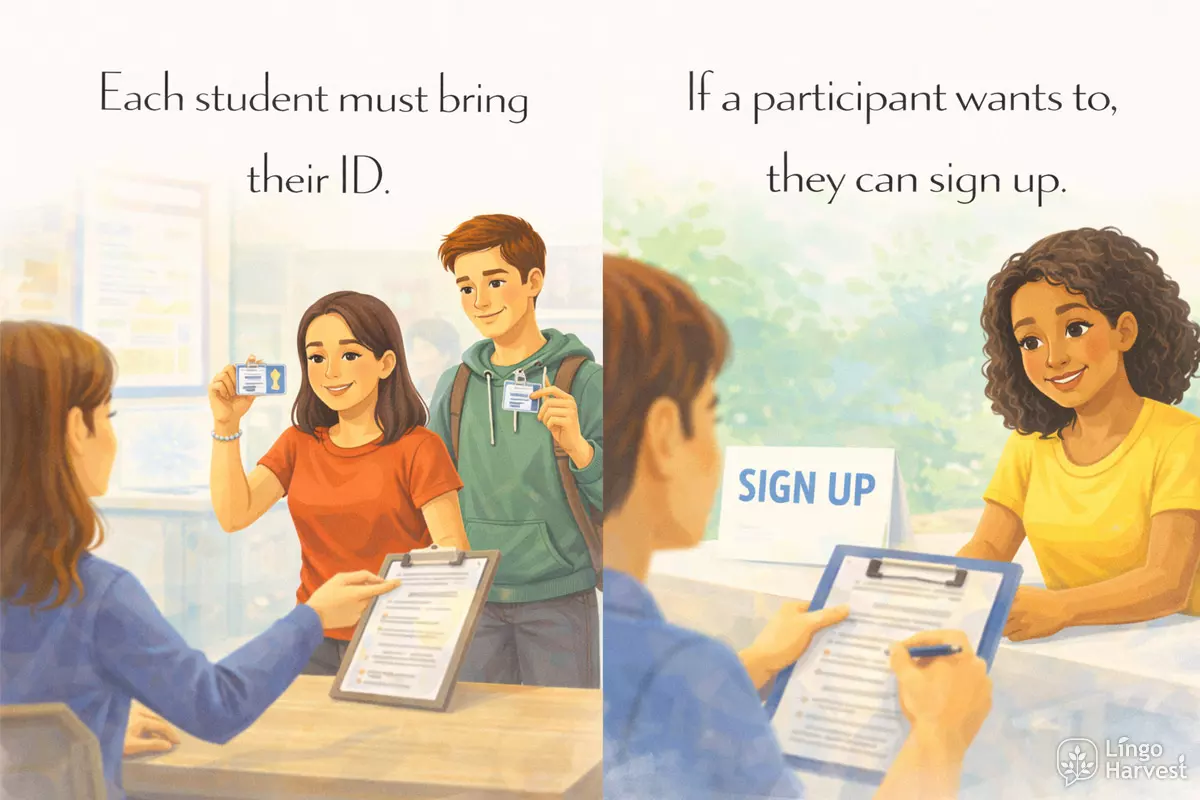
| Less Inclusive | More Inclusive |
|---|---|
| Each student must bring his or her ID. | Each student must bring their ID. |
| If a participant wants to, he can sign up. | If a participant wants to, they can sign up. |
| Welcome, ladies and gentlemen. | Welcome, everyone. |
| Ask him or her for feedback. | Ask them for feedback. |
| He/she will present the findings. | The presenter will share the findings. |
Being mindful of these patterns—whether they’re accidental slips or overenthusiastic corrections—helps foster genuine respect. Remember, pronoun usage is about facilitating comfort and belonging, not just following rules or trends.
Tone and audience awareness
Choosing pronouns thoughtfully requires a keen sense of context and sensitivity to the people you’re addressing. The way you present information, ask questions, or refer to others can dramatically affect how included and respected your audience feels. It’s not just about using the “right” words, but also about ensuring your message is welcoming and considerate of everyone’s identity.
Understanding your audience
Different groups have different expectations and experiences with pronoun use. For instance, a formal business meeting may require a different approach than a casual classroom or an online forum. Before communicating, consider factors such as the group’s familiarity with inclusive language, cultural backgrounds, and whether you already know individuals’ pronoun preferences.
- In professional settings, default to gender-neutral language if unsure.
- In educational environments, encourage everyone to share their pronouns if comfortable.
- When addressing the public, avoid assumptions based on appearance or names.
- In one-on-one interactions, listen for how people refer to themselves and mirror that.
Adapting tone for clarity and respect
The tone you use should match both the formality of the situation and your intent to include everyone. A respectful, open approach signals that you value diverse identities. Avoid language that could be interpreted as dismissive, condescending, or overly casual when discussing pronouns or gender.
- Use “they/them” as a default if pronouns are unknown.
- Ask, “What pronouns do you use?” rather than “What are your preferred pronouns?” to avoid suggesting pronouns are optional.
- Apologize briefly and move on if you make a mistake—prolonged attention can feel awkward.
- Refrain from making jokes about pronouns or gender identity.
- Be mindful of regional, generational, or cultural differences in pronoun awareness.
Common inclusive language patterns
Using inclusive forms and alternatives helps ensure everyone feels seen. Here are several ways to phrase statements or questions to support a welcoming environment:
- Hello everyone, please introduce yourselves with your names and pronouns if you’d like.
- Each participant should write their pronouns on their name tag.
- Let’s respect each person’s chosen pronouns during our discussion.
- If you’re unsure of someone’s pronouns, use their name or “they/them.”
- Thanks for correcting me if I use the wrong pronoun.
- Our forms now include a space for pronouns.
- We encourage staff to share pronouns in email signatures.
- The speaker will share their experiences with us today.
- Everyone is welcome, regardless of gender identity.
- We want to make this space comfortable for all genders.
- “They” can be used for anyone whose pronouns you don’t know.
- Let’s avoid making assumptions about gender or pronouns.
- Feel free to let me know how you’d like to be addressed.
- Our policies support nonbinary and transgender team members.
- We strive to use affirming language in all communications.
- Pronouns are important for everyone’s sense of belonging.
- Let’s model inclusive language for new members.
When and how to ask about pronouns
Timing and phrasing matter when inquiring about someone’s pronouns. In group introductions, inviting everyone to share pronouns (with the option to decline) helps normalize the practice. In private, a simple, respectful question works best. Avoid pushing for information if someone seems uncomfortable.
- “Would you like to share your pronouns?”
- “How would you like me to refer to you?”
- “Is there a name or pronoun you’d prefer I use?”
Summary: Matching tone and approach to your audience
The key to effective, inclusive pronoun use is flexibility and genuine respect. Adapt your language, tone, and questions to the specific context and needs of your listeners. This not only helps avoid mistakes but signals that you value every individual’s identity and comfort.
Practice: rewrite sentences for inclusivity
Making language more inclusive often means rethinking how we use pronouns and references to people. Below, you'll find example sentences that could be more welcoming to all gender identities, along with opportunities to practice revising them. Try to spot ways to avoid assuming gender, and consider alternatives that respect everyone’s identity.
Identify and Revise Non-Inclusive Sentences
Review the following sentences. For each, think about how you might rephrase it to be more inclusive. Focus on removing gender assumptions, using singular "they," or rewording to avoid pronouns entirely.
- Each student must submit his assignment by Friday.
- The manager should talk to his team about the changes.
- If a customer has a complaint, he should contact support.
- The doctor will decide if he wants to see more patients today.
- When an employee is late, he should notify his supervisor.
- Every child should bring his lunch to school.
- Ask your waiter if he can recommend a dish.
- The winner will be announced after he is notified.
- If the author agrees, he will sign the contract.
- Let each participant share his thoughts.
Show answers
- Each student must submit their assignment by Friday.
- The manager should talk to their team about the changes.
- If a customer has a complaint, they should contact support.
- The doctor will decide if they want to see more patients today.
- When an employee is late, they should notify their supervisor.
- Every child should bring their lunch to school.
- Ask your waiter if they can recommend a dish.
- The winner will be announced after they are notified.
- If the author agrees, they will sign the contract.
- Let each participant share their thoughts.
Common Strategies for Inclusive Pronoun Use
- Replace "he" or "she" with "they" when referring to a person whose gender is unknown or irrelevant.
- Use job titles or roles instead of pronouns (e.g., "The manager should talk to the team" instead of "his team").
- Rewrite sentences in the plural to make "they" naturally fitting (e.g., "All students must submit their assignments").
- Avoid unnecessary gendered language (e.g., "waiter" → "server").
Inclusive vs. Non-Inclusive Sentence Comparison
| Non-Inclusive Example | Inclusive Revision |
|---|---|
| Everyone should do his best. | Everyone should do their best. |
| Ask the chairman if he agrees. | Ask the chair if they agree. |
| Each applicant must submit his resume. | Each applicant must submit their resume. |
| The firefighter will give his report. | The firefighter will give their report. |
| If a student is absent, he should call the office. | If a student is absent, they should call the office. |
Practicing these revisions can help you develop habits that lead to more respectful and welcoming communication. For each sentence you encounter, pause to consider whether it could be phrased in a way that acknowledges and includes everyone.