Pronouns After Linking Verbs: It Is Me vs It Is I

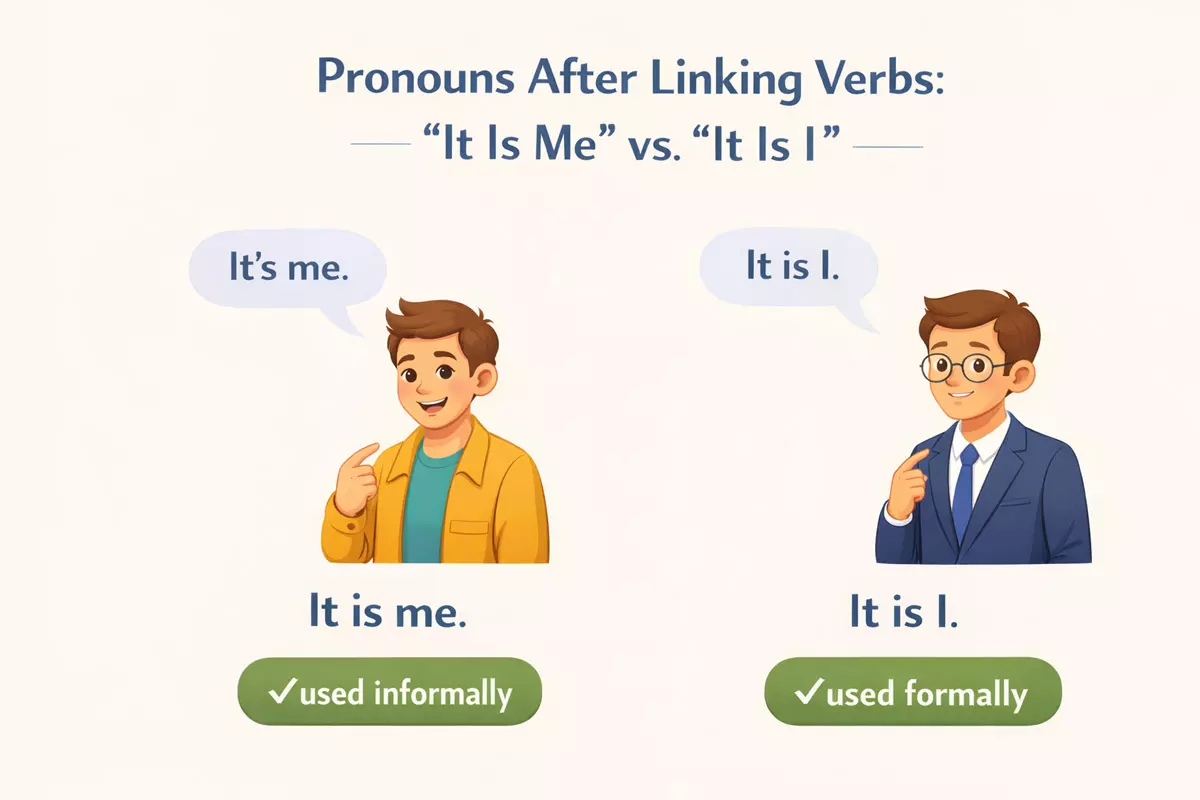 Here we the role of linking verbs, differences between traditional rules and modern usage, pronoun case in subject complements, formal versus informal preferences, common learner confusion, and how to choose natural forms like it is me or who/whom in…
Have you ever paused before deciding whether to use “me” or “I” after words like “is” or “was”? Selecting the correct pronoun following linking verbs can be unexpectedly challenging, even for native English speakers. The key is understanding that in formal writing, “I” is traditionally used after linking verbs, as in “It is I,” while in everyday speech, “me” often sounds more natural, as in “It’s me.” Knowing when to use each form can help you communicate more confidently and clearly.
What linking verbs are and why they matter
Linking verbs play a unique role in English sentences: they connect the subject to additional information, often describing identity, condition, or characteristics. Unlike action verbs, these verbs do not express an action performed by the subject. Instead, they serve as grammatical “equals signs,” linking the subject to a word or phrase that renames or describes it. Understanding how these verbs work is essential for choosing the correct pronoun after them, which is why they’re at the heart of debates like “It is me” versus “It is I.”
How linking verbs function
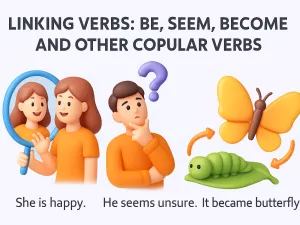
When a linking verb appears, it’s there to join the subject with a subject complement—usually a noun, pronoun, or adjective that gives more information about the subject. The most common linking verb is “to be” in all its forms (am, is, are, was, were, etc.), but several other verbs can serve this function.
- am, is, are, was, were → The results are consistent with the initial hypothesis.
- be, being, been → The process has been carefully documented.
- become, became → The issue became increasingly complex over time.
- seem → The explanation seems plausible given the available evidence.
- appear → The data appear to support the proposed model.
- feel → The outcome feels uncertain at this stage.
- look → The solution looks effective in theory.
- sound → The proposal sounds reasonable to most reviewers.
- smell → The substance smells harmless after treatment.
- taste → The mixture tastes slightly bitter.
- remain → The findings remain inconclusive.
- grow → Concerns grow more serious as new data emerges.
- turn → The discussion turned heated after the announcement.
- stay → The conditions stay stable throughout the experiment.
- prove → The method proved effective in multiple trials.
With linking verbs, the word following the verb (the complement) refers back to the subject. This is why the choice between “It is I” and “It is me” matters: the pronoun after a linking verb should match the subject in case, at least according to traditional grammar rules.
Why linking verbs affect pronoun choice
Because linking verbs equate the subject and its complement, the complement is expected to be in the same case as the subject—typically the subjective (nominative) case. For example, after “It is,” many grammar guides prefer “I” (nominative) over “me” (objective). However, in everyday English, the objective form is common and widely accepted in conversation.
| Linking Verb | Example Sentence |
|---|---|
| am | I am tired. |
| is | She is a doctor. |
| are | You are welcome. |
| was | He was my friend. |
| were | They were happy. |
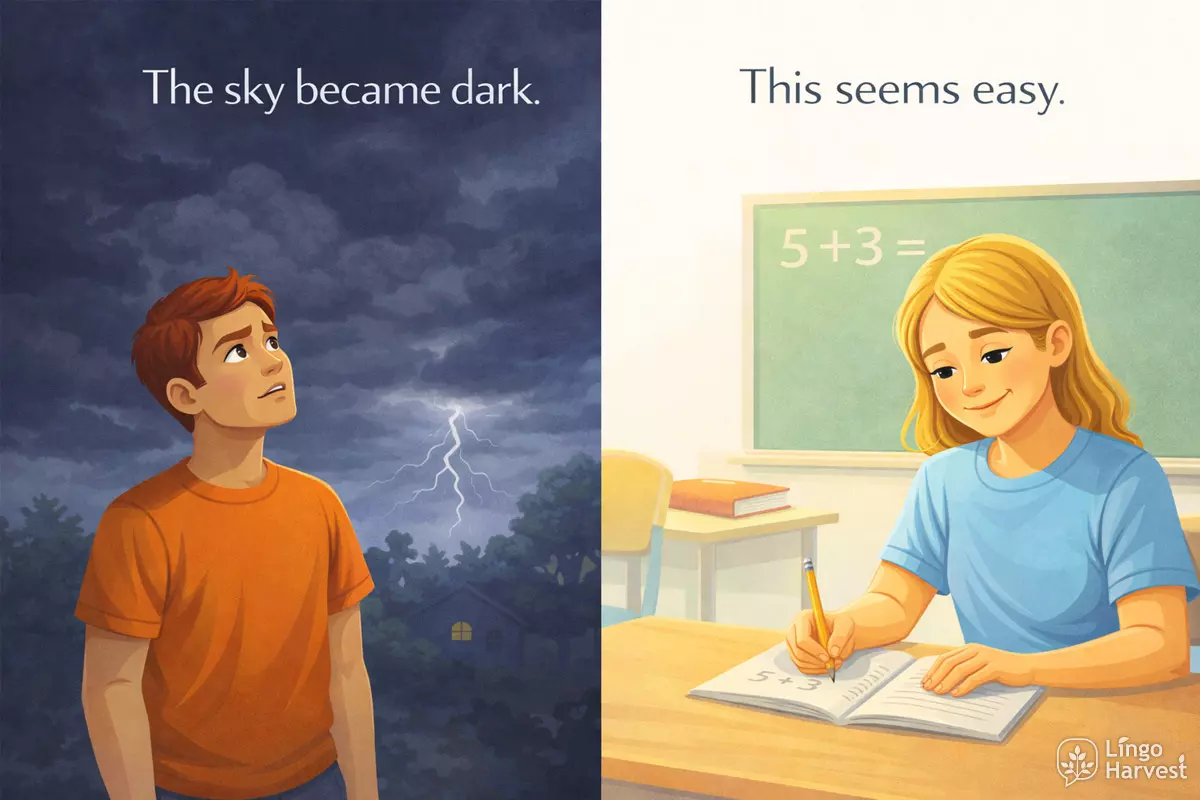
| become | The sky became dark. |
| seem | This seems easy. |
| feel | I feel confident. |
| look | It looks interesting. |
| sound | Your idea sounds great. |
In summary, linking verbs are crucial for understanding sentence structure and pronoun use. Recognizing these verbs helps you make informed choices about language, whether you’re aiming for formal correctness or everyday clarity.
Traditional rule vs modern usage
Grammarians have long debated whether to say "It is I" or "It is me" after linking verbs like is, was, or were. The distinction centers on whether to follow centuries-old prescriptive rules or reflect how people actually speak and write today.
The classic prescriptive approach
Traditional grammar dictates that pronouns following linking verbs should be in the subjective (nominative) case. This means using "I," "he," "she," "we," and "they" after verbs like be. The logic is that the pronoun refers back to the subject, so it should match in case.
- It is I.
- This is she.
- Was it they?
- If you were he, what would you do?
Modern, colloquial usage
In everyday conversation, most English speakers use the objective case—"me," "him," "her," "us," "them"—after linking verbs. This pattern has become so common that the "correct" form often sounds overly formal or even unnatural to many ears.
- It’s me.
- This is her.
- Was it them?
- If you were him, what would you do?
Both forms are understood, but the objective case dominates in speech and informal writing. The subjective forms are now mainly found in very formal contexts, legal language, or when writers want to sound especially precise.
Comparing the forms
| Traditional (Subjective Case) | Modern (Objective Case) |
|---|---|
| It is I | It is me |
| This is she | This is her |
| Was it they? | Was it them? |
| If you were he | If you were him |
| It must have been we | It must have been us |
| The winner is I | The winner is me |
Context matters
Choosing between these options depends on the setting. In formal writing or speech—such as academic papers or official announcements—the subjective form may be expected. In casual conversation, however, using "It is me" or similar phrases is not only acceptable but preferred by most native speakers.
- Formal: "It is I who am responsible."
- Everyday: "It's me. I forgot to lock the door."
In summary, the "correct" choice often depends less on strict rules and more on context, audience, and tone. Both forms are grammatically possible, but the objective case has become the natural choice in most modern situations.
Subject complements and pronoun case
When a pronoun follows a linking verb such as is, are, or was, it acts as a subject complement. This means it refers back to the subject and describes or identifies it. The question is: should you use the subjective (nominative) form—like I, he, she—or the objective form—like me, him, her—in this position?
Traditional grammar rules say the pronoun after a linking verb should match the subject case: It is I, This is she. However, in everyday English, most people prefer the object forms: It’s me, That’s her. Both forms are widely understood, but the choice can make a sentence sound either very formal or completely natural.
Which pronoun form to use?
Standard written English still favors the subject form after linking verbs, especially in formal contexts. In contrast, spoken English and informal writing overwhelmingly use the object form. Here’s a quick comparison:
| After Linking Verb | Preferred in… |
|---|---|
| It is I / It was he / This is she | Formal writing, traditional grammar |
| It’s me / That was him / It’s her | Everyday conversation, informal writing |
Examples of pronouns after linking verbs
- It is I. ✅ (formal) / It’s me. ✅ (informal)
- This is she. / This is her.
- Who is it? – It is we. / It’s us.
- Was it they who called? / Was it them?
- It was he who won. / It was him.
- The winner is she. / The winner is her.
- The culprit was I. / The culprit was me.
- The next speaker will be he. / The next speaker will be him.
- It must have been they. / It must have been them.
- Is it I you’re looking for? / Is it me?
- The only one left is she. / The only one left is her.
- That was he on the phone. / That was him.
In summary, the choice between “It is I” and “It is me” depends on context and audience. For exams, resumes, or very formal writing, stick to the traditional subject form. For emails, texts, or conversation, the object form is not just common—it’s often expected.
Formal vs informal preferences
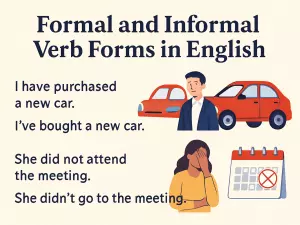
Choosing between “It is I” and “It is me” often comes down to the level of formality required by the situation. In traditional grammar, “It is I” is considered correct after a linking verb, since “I” is a subject pronoun. However, in everyday conversation, “It is me” is far more common and sounds natural to most native speakers. This difference isn’t just a matter of grammar—it’s shaped by context, audience, and evolving language habits.
When to use each expression
In formal writing or speech, such as academic essays, legal documents, or ceremonies, many people still prefer “It is I.” On the other hand, “It is me” tends to be the default in informal contexts, including casual conversation, text messages, and emails among friends. Understanding these distinctions helps you choose the right tone for your audience.
| Expression | Typical Context | Perceived Formality | Example |
|---|---|---|---|
| It is I | Formal writing, speeches, traditional grammar settings | High | “Who is there?” “It is I.” |
| It is me | Casual conversation, modern spoken English, informal writing | Low to medium | “Who’s calling?” “It’s me.” |
| This is she/he | Telephone etiquette, business calls, semi-formal situations | Medium | “May I speak to Sarah?” “This is she.” |
| This is her/him | Informal speech, relaxed contexts | Low | “Can I talk to Mike?” “This is him.” |
Other common examples in context
- “It was he who called.” (formal, rarely used in speech)
- “It was him who called.” (informal, widely used)
- “Was it they at the door?” (very formal, uncommon)
- “Was it them at the door?” (informal, normal in conversation)
- “This is she.” (often heard on the phone, semi-formal)
- “That’s us.” (informal, natural)
- “It is we who are responsible.” (formal, academic writing)
- “It’s us who are responsible.” (informal, speech)
- “It is me in the picture.” (colloquial)
- “It is I in the picture.” (formal, rarely used)
Ultimately, both forms are widely understood, but your choice signals your awareness of the setting and the expectations of your listeners or readers. While some grammar guides still recommend the traditional approach, most modern usage guides acknowledge that the informal version dominates spoken English. Adjust your language to fit the context, and you’ll communicate more effectively.
Why native speakers prefer it is me
Native English speakers tend to say "it is me" because it fits naturally with how people communicate in everyday conversation. While traditional grammar rules may label "it is I" as more correct, usage has shifted over time. The phrase "it is me" sounds more informal, friendly, and direct, which matches how most people speak outside of formal writing or highly structured settings.
Everyday Usage and Comfort
For most speakers, "me" feels right after linking verbs like "is" because it matches the patterns they hear from childhood. The formal alternative, "it is I," can come across as stiff or overly formal. This tendency isn't unique to English; many languages favor the object pronoun in similar situations. Over generations, this preference has become the standard in spoken English, even if traditional grammar books recommend otherwise.
Influence of Spoken English
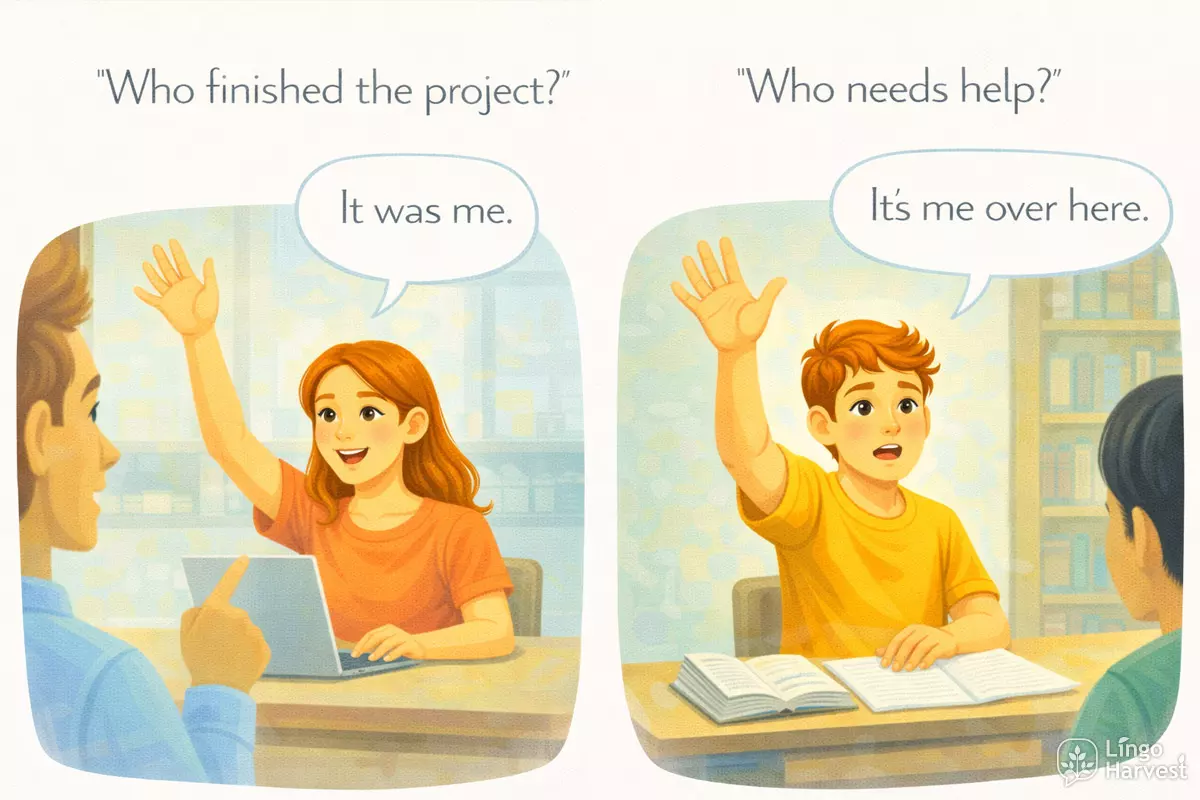
Spoken language often leads the way in shaping grammar rules. In casual conversations, clarity and ease matter more than following strict rules. Since "me" is the pronoun used as an object in English, it feels more natural for most speakers to use it after "is," especially when identifying themselves or others.
- "Who's there?" — "It's me."
- "Who wants ice cream?" — "It's me!"
- "Is that you?" — "Yes, it's me."
- "Who broke the vase?" — "It was me."
- "Who called?" — "It was me on the phone."
- "Who finished the project?" — "It was me."
- "Who needs help?" — "It's me over here."
- "Who left their bag?" — "That was me."
- "Who’s next in line?" — "It’s me."
- "Who’s ready?" — "Me."
- "Who’s at the door?" — "It’s me."
- "Who’s responsible?" — "It’s me."
- "Who’s hungry?" — "It’s me."
Comparison: Formal vs. Everyday Speech
| Formal/Traditional | Everyday/Colloquial |
|---|---|
| It is I | It is me |
| It was I who called | It was me who called |
| It is she/he | It's her/him |
| This is he (on the phone) | This is him (on the phone) |
Ultimately, "it is me" has become the comfortable, expected way to respond in most social situations. The influence of real-life conversation outweighs older prescriptive rules. Grammar evolves, and this shift reflects how language adapts to the needs of its speakers.
Similar patterns with who/whom
Just like the debate over “It is me” versus “It is I,” English speakers often pause when choosing between “who” and “whom.” Both pairs illustrate how formal grammar rules sometimes clash with everyday speech. In both cases, the confusion arises because the traditional rule focuses on the pronoun's role in the sentence—whether it’s acting as a subject or an object.
Let’s break down how this applies to “who” and “whom.” “Who” is used as a subject, while “whom” is used as an object. This distinction is similar to the subject (I/he/she) vs. object (me/him/her) pronouns used after linking verbs. However, just as “It is me” has become widely accepted in conversation, “who” often replaces “whom” in speech—even when “whom” is technically correct.
Common scenarios with “who” and “whom”
- Who is there? (subject of “is”)
- Whom did you see? (object of “see”)
- Who do you think will win? (subject of “will win”)
- Whom should I call? (object of “call”)
- Who was chosen? (subject of “was chosen”)
- Whom are you inviting? (object of “inviting”)
- Who wants dessert? (subject of “wants”)
- Whom did they hire? (object of “hire”)
- Who made this? (subject of “made”)
- Whom can I ask? (object of “ask”)
- Who left their bag? (subject of “left”)
- Whom are you talking about? (object of “about”)
Notice how “who” aligns with the subject, just as “I” does in “It is I.” Meanwhile, “whom” matches object pronouns like “me” in “It is me.”
Quick comparison: “It is me/I” vs. “who/whom”
| Linking Verb Example | Who/Whom Example |
|---|---|
| It is I. ✅ (formal) | Who is there? ✅ (subject) |
| It is me. ✅ (informal, common) | Whom did you see? ✅ (object) |
| This is she. ✅ (formal) | Whom are you calling? ✅ (object) |
| This is her. ✅ (informal, common) | Who ate the cake? ✅ (subject) |
In summary, patterns with “who” and “whom” mirror the subject/object choice after linking verbs. While formal writing still prefers “whom” and “It is I,” spoken English often leans toward the simpler, more familiar forms. Knowing the underlying rule can help you choose the right word for the context, whether you’re aiming for conversational ease or formal precision.
Common learner confusion
Many English learners find it tricky to know whether to use "me" or "I" after linking verbs like "is," "was," or "are." This confusion often comes from differences between traditional grammar rules and what people actually say in everyday conversation. While textbooks may stress one form, native speakers frequently use another, which makes the topic even more puzzling for learners.
Mixing Up Subject and Object Pronouns
One major challenge is deciding when to use subject pronouns (I, he, she, we, they) versus object pronouns (me, him, her, us, them) after linking verbs. Many are taught that "It is I" is correct because "I" is a subject pronoun, but in casual speech, "It is me" is much more common. This leads to uncertainty, especially in formal settings like exams or public speaking.
Comparison of Formal and Informal Usage
| Expression | Typical Context | Grammatical Tradition | Commonness |
|---|---|---|---|
| It is I | Formal writing, exams, old-fashioned speech | Prescriptive (traditional grammar) | Less common |
| It is me | Everyday conversation, informal writing | Descriptive (modern usage) | Very common |
| This is she/he | Answering phone calls formally | Prescriptive | Rare outside formal contexts |
| This is her/him | Casual speech | Descriptive | Frequent |
Common Mistakes Learners Make
- Using "It is me" in formal essays where "It is I" is expected
- Feeling unsure which form to choose in job interviews or presentations
- Assuming "me" is always incorrect after "is" due to strict grammar rules
- Copying patterns from their native language that don’t match English structure
- Over-correcting and using "I" in places where "me" is actually correct (e.g., "between you and I" instead of "between you and me")
Why the Rules Seem Inconsistent
Learners often notice that what is considered "correct" in textbooks does not always match what they hear from native speakers. This is because language evolves, and spoken English tends to favor simpler, more natural-sounding patterns. As a result, both "It is I" and "It is me" are understood, but the choice depends on formality, habit, and context.
Examples That Cause Uncertainty
- Who is it? — It is I. ✅ (formal, rare) / It is me. ✅ (informal, common)
- This is she. ✅ (formal, answering the phone) / This is her. ✅ (informal)
- It was they who called. ✅ (very formal) / It was them who called. ✅ (everyday speech)
- Is that you? — Yes, it is I. ✅ (unusual) / Yes, it’s me. ✅ (typical)
In summary, confusion often arises from a mismatch between prescriptive rules and real-world usage. Awareness of both helps learners make confident choices based on context and audience.
Practice: choose the natural form by context
Understanding when to say "It is me" versus "It is I" can be confusing, especially because both forms appear in spoken and written English. The following exercises will help you develop an ear for the most natural choice in everyday situations.
Choose the most natural response
For each sentence below, decide which option fits best in casual, modern English.
- Someone knocks. You open the door and say: “Who is it?”
a) It is I.
b) It is me. - Your teacher calls your name in class. You answer:
a) It is I.
b) It is me. - On the phone, a friend asks, “Is that you?” You reply:
a) Yes, it is I.
b) Yes, it is me. - At a formal dinner, you are introduced and respond:
a) It is I.
b) It is me. - In a play, a character dramatically announces: It is I! Which situation is this most likely to occur in?
a) Everyday conversation
b) Dramatic or literary context - Writing a formal academic speech, you introduce yourself:
a) It is I who will present the findings.
b) It is me who will present the findings. - Meeting friends at a café, someone asks, “Who ordered the coffee?”
a) It was I.
b) It was me. - In a courtroom, a witness identifies themselves:
a) It is I.
b) It is me. - In a casual text message, someone asks, “Was that you at the door?”
a) Yes, it was I.
b) Yes, it was me. - In a novel, a narrator reveals their identity at the climax:
a) It was I all along.
b) It was me all along.
Show answers
- b) It is me.
- b) It is me.
- b) Yes, it is me.
- a) It is I. (formal; “It is me” is common in modern speech)
- b) Dramatic or literary context.
- a) It is I who will present the findings.
- b) It was me.
- a) It is I.
- b) Yes, it was me.
- a) It was I all along.
Compare usage in different contexts
The table below shows how the two forms are typically used depending on the level of formality and context:
| Context | Most Natural Form |
|---|---|
| Everyday conversation | It is me |
| Phone calls | It is me |
| Formal writing or speech | It is I |
| Literary/dramatic style | It is I |
| Answering a knock at the door | It is me |
| Official announcements | It is I |
Spot the natural choice
Decide if the sentences below sound natural in modern spoken English. Mark ✅ for natural, ❌ for unnatural.
- It is I who called you.
- It is me at the door.
- This is she speaking.
- It was I who finished the project.
- It is me you are looking for.
- This is her speaking.
- It is I at the door.
- It was me who finished the project.
- It is I you are looking for.
- This is me speaking.
Show answers
- ❌ It is I who called you. (formal, not natural in casual speech)
- ✅ It is me at the door. (natural in conversation)
- ✅ This is she speaking. (standard on the phone, but formal elsewhere)
- ❌ It was I who finished the project. (formal, rare in everyday talk)
- ✅ It is me you are looking for. (natural in most contexts)
- ✅ This is her speaking. (standard on the phone, but formal elsewhere)
- ❌ It is I at the door. (grammatical but overly formal for this situation)
- ✅ It was me who finished the project. (natural in modern speech)
- ❌ It is I you are looking for. (formal and unnatural in most contexts)
- ✅ This is me speaking. (common and natural in conversation)
Tips for real-life usage
- In casual speech, "It is me" is almost always used.
- "It is I" may sound overly formal or old-fashioned in daily life.
- Use "It is I" for specific formal writing or when imitating classic or dramatic styles.
- Phone etiquette sometimes preserves older forms ("This is she"), but context matters.