Using Relative Pronouns to Refer to Entire Clauses

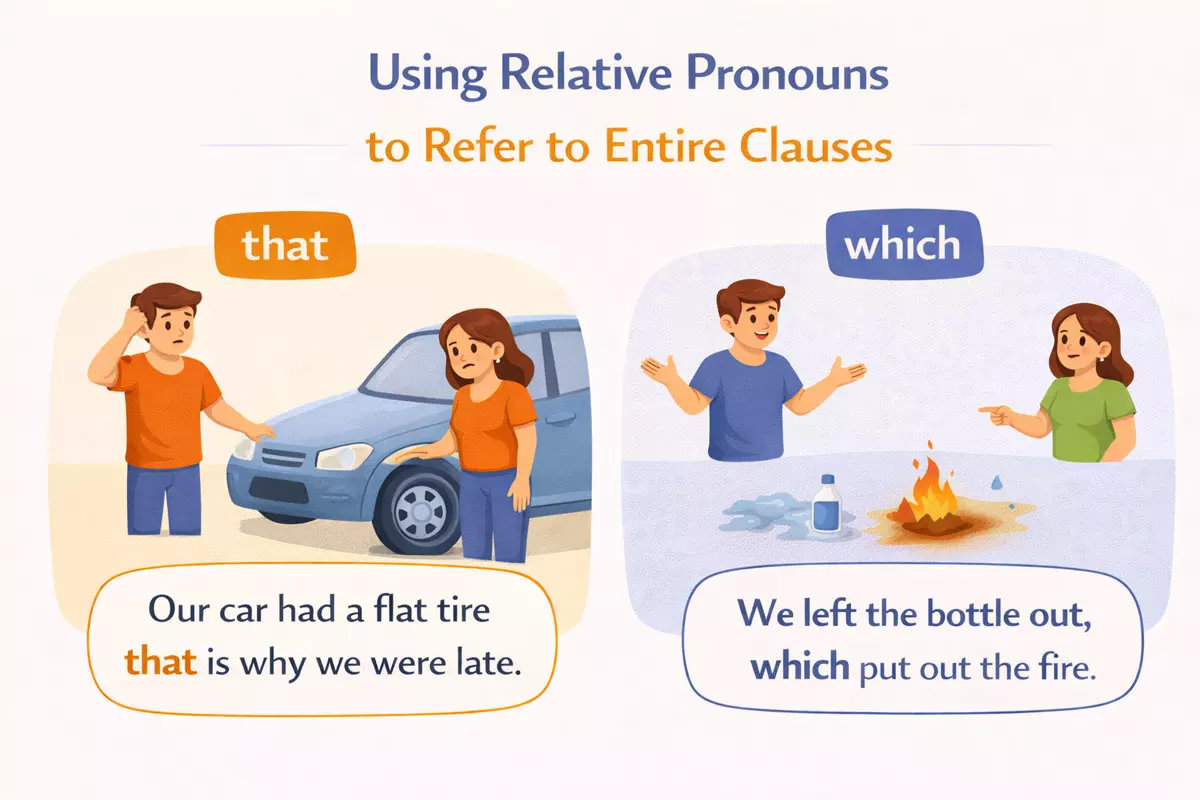 Here we how relative pronouns like which can refer to entire ideas or clauses, explains differences between this, that, and relative which, addresses punctuation and ambiguity, and provides editing strategies and practice to improve clarity in writing.
Have you ever wondered how to connect an entire idea from one sentence to the next without making your writing sound awkward? By mastering the use of connecting words such as this, that, or such, you can smoothly refer back to a previous statement or concept, allowing your writing to flow more naturally. These words act as bridges, linking ideas and helping readers easily follow your train of thought. With practice, using these connectors will make your writing clearer, more coherent, and more engaging for your audience.
How relative pronouns can refer to ideas, not nouns
Relative pronouns like which, that, and what often connect clauses to nouns, but they can also refer back to whole ideas, not just individual words. This usage is especially common when the pronoun stands for an entire statement or situation mentioned earlier. In these cases, it's not a concrete noun being referenced, but a concept, action, or fact from the previous sentence.
Examples of idea reference in context
Consider these sentences, where the pronoun refers to the preceding statement as a whole:
- She forgot her umbrella, which surprised me.
- He passed the exam, which was unexpected.
- They didn't call, which made us worry.
- The team lost again, which disappointed their fans.
- I finished early, which gave me time to relax.
- She apologized, which I appreciated.
- He quit his job, which shocked everyone.
- We moved to a new city, which was challenging at first.
- They ignored the warning, which led to trouble.
- I missed the bus, which meant I was late.
Comparing noun and idea reference
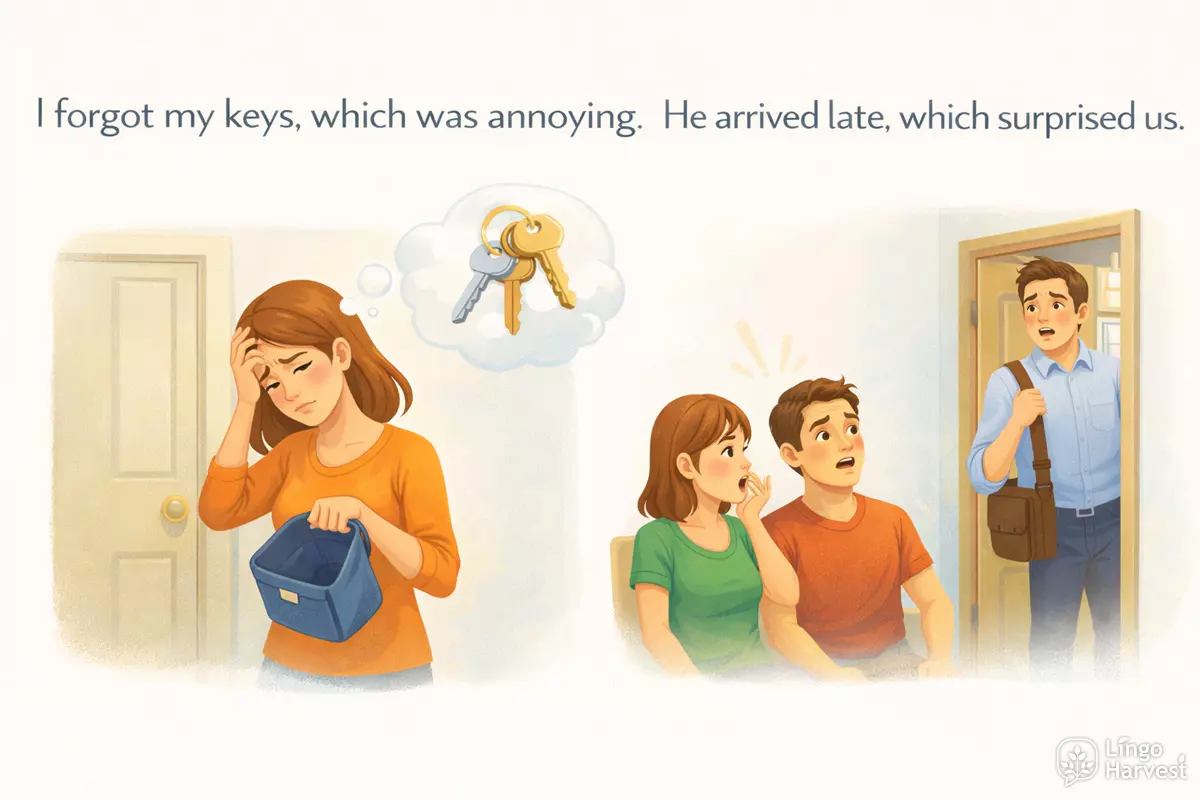
To clarify the distinction, here's a comparison between when a relative pronoun points to a noun and when it refers to a whole idea:
| Refers to a Noun | Refers to an Idea/Clause |
|---|---|
| I read the book that you gave me. (that = book) |
I forgot my keys, which was annoying. (which = forgetting keys) |
| The movie which won the award is excellent. (which = movie) |
He arrived late, which surprised us. (which = arriving late) |
| The cake that she baked was delicious. (that = cake) |
We missed the train, which caused problems. (which = missing the train) |
| The dog that barked is friendly. (that = dog) |
She didn't answer, which worried me. (which = not answering) |
When and why this matters
Using relative pronouns for ideas is especially helpful when you want to comment, add information, or express a reaction to the entire previous statement. This construction is common in both formal and informal English. It can help your writing or speech sound more natural and connected, allowing you to avoid repetition and provide smooth transitions between thoughts.
Keep in mind that which is the most frequent choice for referring to previous ideas or clauses. Other relative pronouns like that rarely serve this function. Mastering this subtle point can make your English clearer and more nuanced.
Which referring to a full clause
When "which" is used to refer to an entire preceding clause, it acts as a connector that provides extra information or a comment about the whole situation described, rather than just a single noun. This usage is common in both spoken and written English, especially for adding observations, clarifications, or reactions.
How "which" refers to a whole idea
Instead of pointing to one specific word, "which" can summarize the meaning of the entire previous statement. This construction is typically set off with a comma, indicating that the information is non-defining (not essential to the core meaning of the sentence). Consider the following examples:
- He missed the last train, which meant he had to walk home.
- They forgot to send the invitation, which surprised everyone.
- The exam was postponed, which gave us more time to prepare.
- She didn't answer the phone, which worried her friends.
- The team won every match, which was unexpected.
- We moved to a new city, which was both exciting and daunting.
- The restaurant was closed, which forced us to change our plans.
- Our flight was delayed, which made us late for the meeting.
- He finished the marathon, which impressed his family.
- They adopted a puppy, which brought a lot of joy to their home.
- The power went out, which caused a lot of confusion.
- She learned to play the piano, which took a lot of dedication.
- We forgot our tickets, which was a big problem at the entrance.
- The project was completed ahead of schedule, which pleased the client.
Common patterns and punctuation
This use of "which" is almost always preceded by a comma. The clause introduced by "which" is non-restrictive and adds extra information. It is important not to confuse this with "that," which cannot refer to a whole clause. Here’s a quick comparison:
| Pattern | Example |
|---|---|
| Referring to a single noun | I saw a movie which was very funny. |
| Referring to a whole clause | He forgot my birthday, which upset me. |
| Using "that" (❌ not for clauses) | ❌ He lost his keys, that made him late. |
| Proper punctuation | The meeting was cancelled, which was a relief. |
Why this structure is useful
Using "which" to refer back to a full statement allows speakers and writers to express opinions, results, or consequences in a concise way. It helps link ideas smoothly, making writing more natural and coherent. This construction is especially common when commenting on events, explaining outcomes, or showing reactions. Remember: only "which" (never "that") is used in this way, and it always refers to the preceding clause as a whole, not just a single word.
Using this and that vs relative which
When referring back to a whole idea, event, or statement, English speakers often have a choice between demonstratives like this and that, or the relative pronoun which. The decision between these options depends on context, emphasis, and style.
Referring to Entire Clauses with "Which"
The relative pronoun which can be used to refer back to an entire preceding clause, not just a single noun. This use is common in more formal writing and allows for clear connections between ideas. Typically, a comma precedes which in this structure.
- He missed the last train, which meant he had to walk home.
- The weather turned suddenly cold, which surprised everyone.
- She forgot her umbrella, which was unfortunate given the rain.
- Our team won the championship, which delighted the fans.
In these examples, which refers back to the whole previous statement, not just a single word.
Using "This" and "That" for Reference
Alternatively, demonstratives like this and that can point to an entire idea or situation. These are especially common in spoken English or less formal writing. They make the reference explicit and can be followed by a noun to clarify what is being referred to.
- I missed the last train. That meant I had to walk home.
- The weather turned suddenly cold. This surprised everyone.
- She forgot her umbrella. That was unfortunate, given the rain.
- Our team won the championship. This delighted the fans.
Notice how this and that often start a new sentence and serve as a bridge, sometimes with a clarifying noun: "This result surprised everyone."
Comparison of Usage
| Relative "Which" | Demonstratives "This/That" |
|---|---|
| Usually links two clauses within the same sentence | Often starts a new sentence |
| More common in formal or written English | Frequent in spoken and informal writing |
| Always refers back to the whole idea or event previously mentioned | May refer to the previous idea, event, or even something about to be explained |
| Preceded by a comma | Not preceded by a comma; usually follows a period |
| Example: She was late, which annoyed her boss. | Example: She was late. That annoyed her boss. |
Choosing the Best Option
Select which when you want to connect ideas more tightly within a sentence, especially in formal contexts. Opt for this or that if you prefer a more conversational tone, or if you want to emphasize the result or consequence in a separate statement. Both structures help clarify meaning, but the choice can subtly affect the style and flow of your writing.
Punctuation and clause boundaries
Understanding how to punctuate sentences with relative pronouns that refer to entire clauses is essential for clarity. When a relative pronoun like "which" or "that" refers back to a whole statement rather than just a single noun, punctuation choices can shift the meaning or readability of the sentence.
Comma usage with relative pronouns
A common point of confusion is whether to use a comma before the relative pronoun. When the pronoun refers to an entire preceding clause, a comma is typically needed. This signals that the information following the pronoun is non-restrictive (not essential to the core meaning).
- She forgot her umbrella, which surprised everyone.
- He missed the train, which meant he was late for work.
- The team lost again, which disappointed the fans.
In these examples, the phrase after "which" comments on the whole situation described in the first part of the sentence, not just a single noun.
Identifying clause boundaries
To avoid ambiguity, it's important to recognize where one idea ends and another begins. When a relative pronoun refers to a previous clause, it often introduces a new, loosely connected idea. This boundary is usually marked with a comma, dash, or even a semicolon in more formal writing.
- She passed her exam, which was unexpected.
- He didn't answer my call—which worried me.
- The lights went out; which caused confusion.
Note that while a semicolon before "which" is less common, it can be used for stylistic reasons in formal contexts.
Comparing restrictive and non-restrictive use
When "which" refers to an entire clause, the structure and punctuation differ from when it refers only to a noun. Consider the following comparison:
| Refers to a noun (restrictive/non-restrictive) | Refers to a whole clause |
|---|---|
| The car that broke down was new. (restrictive, no comma) |
The car broke down, which surprised us. (non-restrictive, comma needed) |
| I bought a book, which was expensive. (non-restrictive, extra detail about "book") |
I bought a book, which made me happy. (comment on the whole action, comma needed) |
| The students who study hard succeed. (restrictive, no comma) |
The students finished early, which allowed them to relax. (refers to the entire preceding clause) |
| He visited the museum that opened last year. (restrictive, no comma) |
He visited the museum, which impressed him. (comment on the whole visit) |
Common pitfalls and tips
Writers often drop the comma or misplace it, leading to confusion. Here’s how to avoid typical mistakes:
- Always use a comma before "which" when it summarizes or comments on the previous clause.
- Do not use "that" to refer to entire clauses; use "which" instead.
- Avoid run-on sentences by clearly marking boundaries with commas or dashes.
- Read your sentence aloud—if the second part feels like an afterthought, a comma is probably needed.
Careful punctuation ensures that readers understand whether your relative pronoun is pointing to a single noun or the whole preceding action. Mastering these distinctions makes your writing clearer and more precise.
Formal writing preferences
In academic and professional contexts, writers tend to favor certain relative pronouns when referring back to whole clauses, rather than just single nouns. These preferences help maintain clarity and precision, which are valued in formal texts. Choosing the appropriate relative pronoun can subtly affect the tone and readability of your writing, especially when summarizing or evaluating an entire preceding statement.
Common pronouns for referring to clauses
When referencing an entire idea or statement, rather than a single noun, the most widely accepted options in formal English are which and what. However, their usage differs significantly:
- Which is usually preceded by a comma and refers back to a whole clause, summarizing or commenting on it.
Example: She missed the deadline, which surprised everyone. - What is less common and typically introduces a new clause, rather than referring back to a previous one.
Example: What she did was unexpected. - This/That (demonstratives) can serve as pronoun substitutes for clauses but are more often used in speech or less formal writing.
Less preferred options
While conversational English sometimes employs that or omits the pronoun altogether, these choices are generally avoided in formal writing when referencing entire clauses. Explicitness is valued, so ambiguity is minimized.
Comparison of relative pronoun use in formal contexts
| Relative Pronoun | Typical Formal Usage |
|---|---|
| Which | Refers to a whole preceding clause; often introduces a comment or result. e.g., The results were inconclusive, which was disappointing. |
| What | Introduces a noun clause; does not refer back but presents new information. e.g., What surprised us was her reaction. |
| That | Rarely used to refer to whole clauses in formal writing; can cause ambiguity. |
| Omitted pronoun | Informal and often unclear; not recommended for academic or professional texts. |
Additional guidance for clarity
- Use a comma before which when it refers to the entire preceding clause.
- Avoid ambiguous references by ensuring your pronoun clearly points to the intended statement.
- Rephrase the sentence if there is any chance of confusion about what is being referenced.
- Reserve informal patterns for conversational contexts, not research papers or reports.
Adhering to these conventions helps your writing remain precise and professional, making your arguments and explanations easier to follow. If in doubt, default to which—with a comma—for referencing whole clauses in formal English.
Common ambiguity problems
When referring to entire clauses with relative pronouns, English speakers often run into confusion about what exactly is being referenced. Unlike using "which" or "that" for a single noun, referencing a whole idea or event can make the sentence less clear, especially in spoken conversation or informal writing.
Ambiguity from unclear antecedents
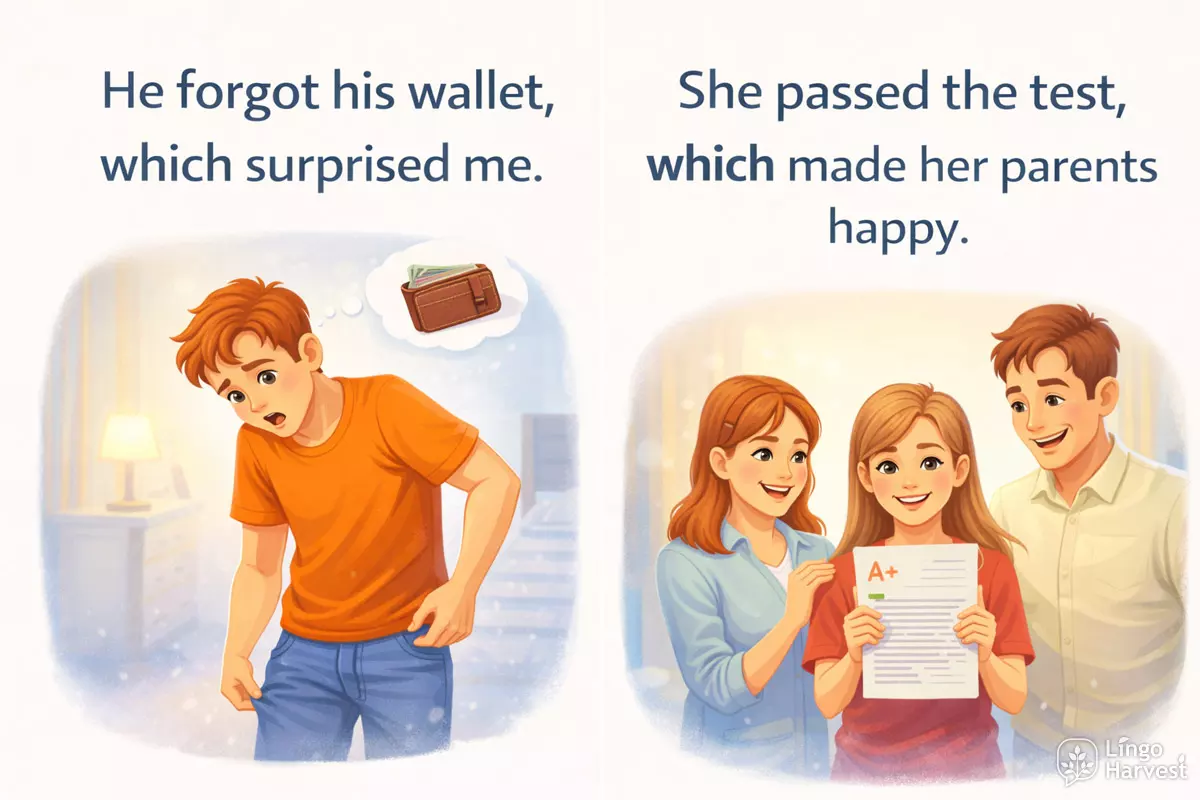
Sometimes, it’s difficult to know whether the relative pronoun refers to the closest noun or to the entire preceding statement. This uncertainty can lead readers to misunderstand the intended meaning.
- Example: "He forgot his wallet, which surprised me."
– Does "which" refer to the act of forgetting, or to the wallet itself? - "She passed the test, which made her parents happy."
– Here, "which" points to the whole event, but some may initially think it refers to "the test." - "The dog barked all night, which annoyed the neighbors."
– Is it the barking or something else that annoyed them?
Comparing restrictive and non-restrictive uses
Relative pronouns like "which" are often used in non-restrictive clauses to refer to the previous statement. However, in restrictive clauses (often using "that"), the reference is typically to a specific noun. Mixing these up can make the meaning ambiguous.
| Sentence | Possible Interpretations |
|---|---|
| He lost his keys, which upset him. | Upset by losing keys (the event) or by the keys themselves? |
| She said she would arrive early, which was unexpected. | Unexpected that she said it, or that she would arrive early? |
| The team won their match, which surprised everyone. | Surprise at the win, or something about the match? |
| I missed the bus that goes downtown. | Clear: "that" refers to the specific bus, not the action. |
Misplaced modifiers and sentence structure
Ambiguity often arises from word order or punctuation. If the relative pronoun is too far from what it’s supposed to refer to, the reader may struggle to connect the dots.
- Placing the relative clause immediately after the clause or statement it modifies helps reduce confusion.
- Using a comma before "which" typically signals it refers to the whole preceding clause.
- Overly long sentences with multiple ideas before the relative pronoun can make the reference unclear.
Strategies to avoid confusion
To clarify your meaning, consider these tips:
- Rephrase the sentence to explicitly state what you mean (e.g., "This surprised me" instead of "which surprised me").
- Use demonstratives ("this," "that") to point to the whole idea: "He forgot his wallet. This surprised me."
- Keep related clauses close together, and avoid inserting extra information between the main clause and the relative pronoun.
- Choose your relative pronouns carefully, especially in complex sentences.
By being mindful of these common pitfalls, writers and speakers can ensure their references to entire clauses are clear and unambiguous.
Editing strategies for clarity
Clear writing often depends on how well you guide your reader through complex ideas, especially when using relative pronouns to refer to entire statements or actions. Ambiguity can creep in if it’s unclear what the pronoun is referencing, or if the sentence structure is overly complicated. The following approaches will help ensure your sentences are both precise and easy to follow.
Break up lengthy sentences
Long sentences packed with multiple clauses often cause confusion. When a relative pronoun (like "which" or "that") refers to an entire previous idea, consider splitting the sentence into two. This not only clarifies what the pronoun points to, but also improves readability.
Specify the reference
Sometimes, a pronoun seems to refer to more than one possible idea. To prevent this, make sure the antecedent is unmistakable. If necessary, restate part of the previous clause, or use a demonstrative ("this," "that") to reinforce the connection.
- Instead of: She missed the bus, which made her late.
- Try: She missed the bus. This made her late.
- Or: Missing the bus made her late.
Choose the right pronoun
Relative pronouns like "which" and "that" are the most common for referring to entire actions. However, "what," "who," and "whose" may sometimes be used for clarity, depending on the context. If you're ever unsure, rephrase the sentence to avoid confusion.
Check for misplaced modifiers
Misplaced or dangling modifiers can make it unclear which idea the pronoun is referencing. After drafting, reread your sentences to confirm that the pronoun clearly refers to the intended clause.
Common patterns and alternatives
Here are frequent ways to clarify references to whole clauses, along with alternative phrasing options:
- Original: The team lost the match, which was disappointing.
Alternative: The fact that the team lost the match was disappointing. - Original: He forgot his keys, which surprised no one.
Alternative: His forgetting his keys surprised no one. - Original: She finished the project early, which impressed her boss.
Alternative: Finishing the project early impressed her boss. - Original: The power went out, which meant we had to cancel.
Alternative: Because the power went out, we had to cancel. - Original: They missed the deadline, which caused problems.
Alternative: Missing the deadline caused problems. - Original: He apologized, which I appreciated.
Alternative: I appreciated his apology. - Original: We ran out of time, which was unfortunate.
Alternative: Running out of time was unfortunate. - Original: The meeting was rescheduled, which annoyed some people.
Alternative: Some people were annoyed that the meeting was rescheduled. - Original: She lost her passport, which delayed the trip.
Alternative: Losing her passport delayed the trip. - Original: He won the award, which surprised everyone.
Alternative: Everyone was surprised that he won the award.
Quick comparison of clarity
| Less Clear | More Clear |
|---|---|
| She quit her job, which upset her friends. | Her decision to quit her job upset her friends. |
| The lights flickered, which scared the children. | The flickering lights scared the children. |
| He didn't call, which worried me. | His failure to call worried me. |
| They arrived late, which was unexpected. | Their late arrival was unexpected. |
| I forgot the appointment, which was embarrassing. | Forgetting the appointment was embarrassing. |
Final review tips
- Read sentences aloud to spot ambiguity.
- Ask someone else to read your draft and identify unclear references.
- Use concise language to avoid unnecessary complexity.
- Revise until each pronoun’s reference is unmistakable.
By applying these techniques, you’ll make your writing more accessible and prevent misunderstandings when referencing entire actions or situations with relative pronouns.
Practice: rewrite sentences with clause reference
Understanding how to refer back to entire clauses with relative pronouns like "which" or "that" can make your writing clearer and more concise. In English, it's common to use these pronouns to summarize or comment on a whole idea from the previous clause, not just a single noun. Let’s practice transforming simple sentences so the relative pronoun refers to the whole preceding statement.
Task: Combine Sentences Using Clause Reference
Below, you’ll find pairs of sentences. Your job is to rewrite each pair as a single sentence, using a relative pronoun (such as "which" or "that") to refer to the entire first clause.
- The weather was terrible. This made the trip difficult.
- She forgot her umbrella. That surprised everyone.
- He finished the marathon. This amazed his friends.
- The team lost the match. This was disappointing.
- We missed the last bus. That meant we had to walk home.
- They canceled the concert. This upset the fans.
- The power went out during dinner. That was inconvenient.
- My phone broke yesterday. This caused a lot of problems.
- He didn’t study for the test. That explains his low score.
- She won the award. This made her parents proud.
- I forgot my wallet. That was embarrassing.
- They arrived late. That annoyed the teacher.
- The dog barked all night. This kept everyone awake.
- He apologized for his mistake. That was appreciated.
- We finished the project early. This impressed the manager.
- The restaurant was closed. That forced us to eat elsewhere.
- She lost her keys again. This happens often.
- He made a funny joke. That lightened the mood.
- Our team won the championship. This was unexpected.
- I got a flat tire. That delayed my arrival.
Show answers
- The weather was terrible, which made the trip difficult.
- She forgot her umbrella, which surprised everyone.
- He finished the marathon, which amazed his friends.
- The team lost the match, which was disappointing.
- We missed the last bus, which meant we had to walk home.
- They canceled the concert, which upset the fans.
- The power went out during dinner, which was inconvenient.
- My phone broke yesterday, which caused a lot of problems.
- He didn’t study for the test, which explains his low score.
- She won the award, which made her parents proud.
- I forgot my wallet, which was embarrassing.
- They arrived late, which annoyed the teacher.
- The dog barked all night, which kept everyone awake.
- He apologized for his mistake, which was appreciated.
- We finished the project early, which impressed the manager.
- The restaurant was closed, which forced us to eat elsewhere.
- She lost her keys again, which happens often.
- He made a funny joke, which lightened the mood.
- Our team won the championship, which was unexpected.
- I got a flat tire, which delayed my arrival.
Common Patterns for Clause Reference
When using relative pronouns for clause reference, certain patterns appear frequently. Here are some typical structures:
- [Main clause], which [result or comment].
- [Statement], which [explanation or consequence].
- [Action], which [reaction or effect].
Quick Reference Table: Clause Reference vs. Noun Reference
Notice how the meaning changes when the pronoun refers to a noun versus an entire clause:
| Sentence | What "which" refers to |
|---|---|
| He lost his keys, which was frustrating. | The whole situation (losing the keys) |
| He lost his keys, which were very old. | The noun "keys" |
| I missed the train, which meant I was late. | The entire first clause (missing the train) |
| I missed the train, which was crowded. | The noun "train" |
Practicing these rewrites helps you master the use of relative pronouns for summarizing or commenting on previous statements, making your language more natural and precise.