Managing Pronoun Reference Across Paragraphs

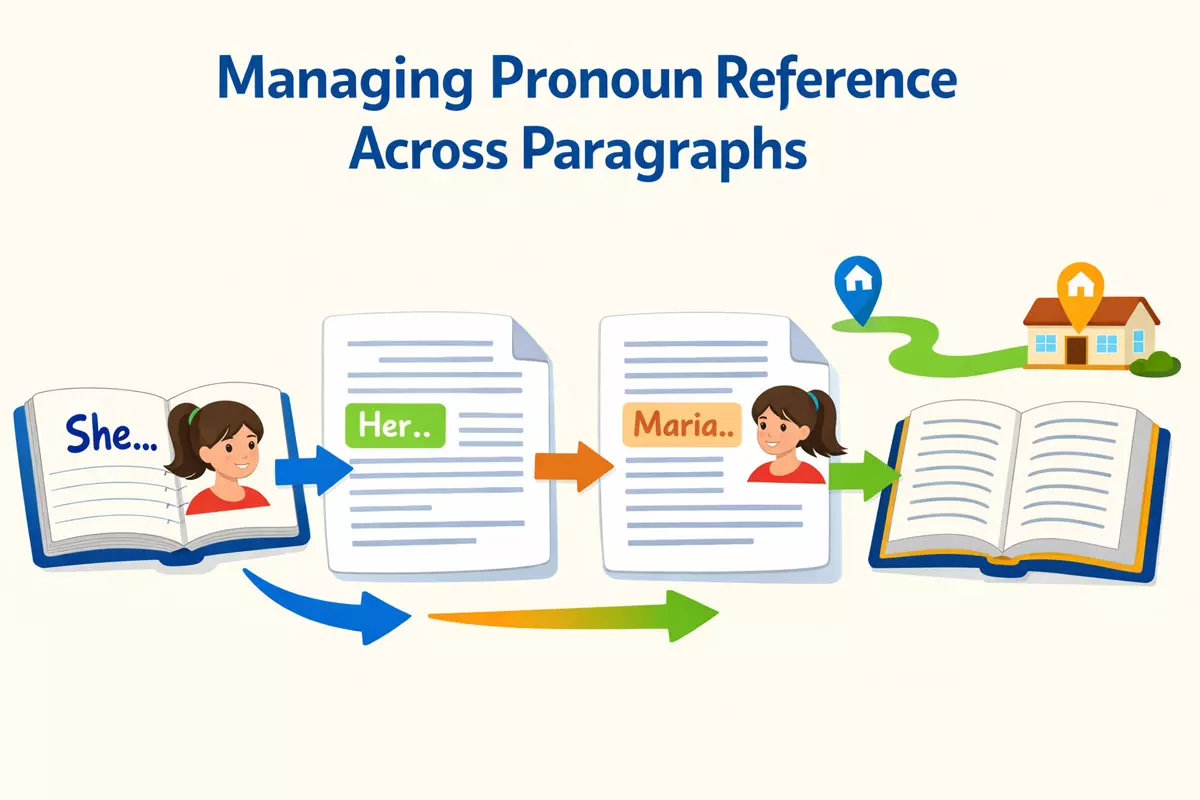 Here we why pronoun reference fails across paragraphs, how to reintroduce nouns for clarity, ways to track antecedents in long texts, finding a balance between pronouns and repetition, spotting ambiguity, editing strategies, and practical revision examples.
Clear writing relies on smoothly guiding readers from one idea to the next, and a key skill for accomplishing this is maintaining clarity when referring back to earlier subjects. By carefully managing these connections between sentences and sections, you help your audience follow the development of your ideas without confusion. This approach prevents readers from losing track of who or what is being discussed, even as the focus shifts or new paragraphs begin, ensuring your writing remains coherent and easy to understand throughout.
Why pronoun reference breaks across paragraphs
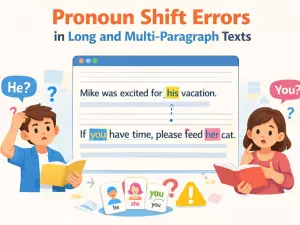
Pronouns can lose clarity as text moves from one paragraph to the next. This often happens because the connection between the pronoun and its antecedent becomes less direct. When readers encounter a pronoun like "she" or "they" at the start of a new paragraph, they may struggle to recall which person, object, or idea that pronoun refers to, especially if several candidates have been mentioned or if there’s been a shift in topic.
Causes of Pronoun Reference Confusion
- Distance from the antecedent: The more text separates the pronoun from its original noun, the harder it is for readers to connect them.
- Multiple potential referents: Introducing several people or objects before the pronoun creates ambiguity.
- Topic shifts: Changing the subject between paragraphs can make it unclear what or whom the pronoun is meant to represent.
- Implicit references: Sometimes writers assume the reader will remember the antecedent without restating it, but memory fades quickly across paragraphs.
- Lack of repetition: Without occasional reminders of the subject, readers may lose track of who or what is being discussed.
Common Patterns Where Reference Breaks
- Pronouns at the start of a new paragraph with no repeated noun
- Several named entities followed by "he," "she," or "they"
- Switching from discussing a group to an individual
- Describing actions in sequence, then using "it" or "this"
- Using "they" after introducing multiple groups
- Continuing a narrative with "she" after a paragraph break, but introducing a new female character in between
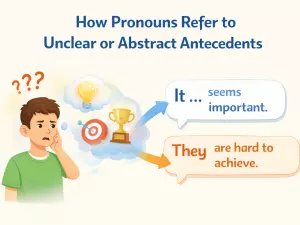
- Shifts from concrete to abstract references, such as "this" or "that"
- Changing time frames or locations between paragraphs
- Using pronouns after a list of items or people
- Introducing new pronouns without clear antecedents
Comparison: Clear vs. Broken Reference
| Broken Reference Example | Clear Reference Example |
|---|---|
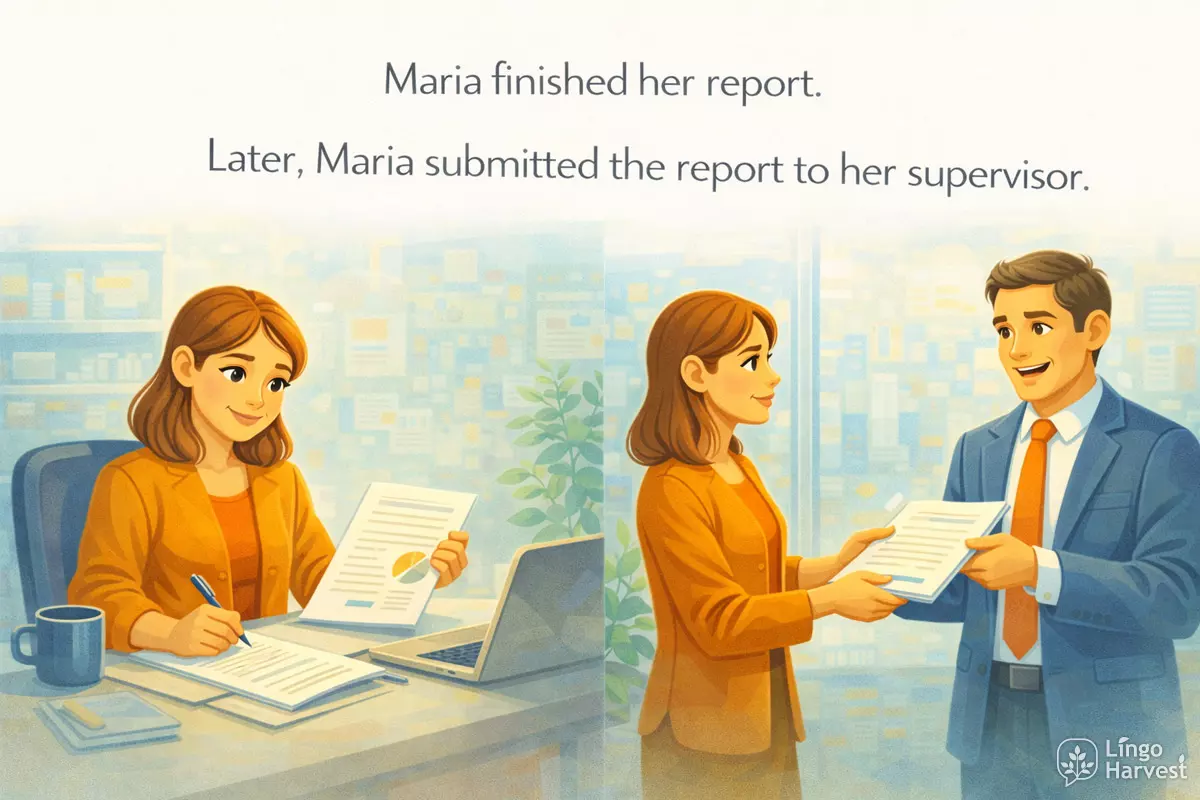
| Maria finished her report. In the next paragraph: Later, she submitted it. (Who is “she”?) | Maria finished her report. In the next paragraph: Later, Maria submitted the report to her supervisor. |
| The committee reviewed the proposal. In the next paragraph: They decided to approve it. (“They” could refer to a different group.) | The committee reviewed the proposal. In the next paragraph: The committee decided to approve the proposal. |
| After the storm, the roof was damaged. In the next paragraph: It required immediate repairs. (What does “it” refer to?) | After the storm, the roof was damaged. In the next paragraph: The roof required immediate repairs. |
| Julia and Sam arrived at the meeting. She took notes. (Who took notes?) | Julia and Sam arrived at the meeting. Julia took notes. |
Summary
Ultimately, referencing problems across paragraphs often arise from increased distance, added complexity, or a lack of explicit cues. Writers can prevent confusion by reintroducing key nouns, avoiding ambiguous pronouns, and considering the reader’s need for clear signposts as the text moves forward.
Reintroducing nouns for clarity
When writing across multiple paragraphs, relying too heavily on pronouns can make your text ambiguous and difficult to follow. To keep your meaning clear, it’s often necessary to restate the noun that a pronoun refers to, especially after a break or when multiple subjects are in play. This technique helps readers track who or what is being discussed, reducing confusion and improving flow.
When to restate the noun
Writers should reintroduce the original noun in several key situations:
- After a long paragraph or several sentences separate the pronoun from its noun antecedent
- When two or more possible referents exist (e.g., “he” could mean either John or Mark)
- At the start of a new paragraph, especially if the previous context is complex
- Whenever a new topic or character is introduced in between references
- When switching between singular and plural entities
- If the previous noun is abstract or unfamiliar to the reader
- After using “this,” “that,” “these,” or “those” in a vague way
- When referring back after an extended quotation or example
- In technical or academic writing that demands precision
- For clarity in instructions or procedural texts
Practical ways to reintroduce nouns
There are several ways to restate subjects or objects to clarify your references. Here are some common strategies:
- Repeat the full noun: “The committee reviewed the proposal. The committee then requested revisions.”
- Use a synonym or descriptive phrase: “The patient reported pain. The individual later received medication.”
- Add an appositive: “Maria submitted her report. Maria, the team leader, also presented the findings.”
- Combine noun and pronoun: “The software was updated. This program now runs faster.”
Examples: Ambiguous vs. Clear Reference
Below is a comparison showing how reintroducing the specific subject can resolve confusion caused by pronoun ambiguity.
| Ambiguous | Clear |
|---|---|
| Sarah spoke to Emily after she finished the meeting. | Sarah spoke to Emily after Sarah finished the meeting. |
| The dog chased the cat, but it escaped. | The dog chased the cat, but the cat escaped. |
| After reviewing the documents, they were signed. | After reviewing the documents, the manager signed them. |
| When the car hit the tree, it was damaged. | When the car hit the tree, the car was damaged. |
Best practices for noun reintroduction
- Balance clarity with conciseness—avoid excessive repetition, but don’t sacrifice understanding
- Vary sentence structure to keep the writing engaging
- Use explicit nouns when introducing new paragraphs or topics
- Check for reference ambiguity during editing, especially in multi-paragraph texts
- Test your writing by asking if a reader unfamiliar with the context would know what each pronoun refers to
By thoughtfully bringing back the original noun at key points, writers help readers stay oriented throughout longer passages. This practice is especially valuable in complex or technical writing, but it benefits all forms of clear communication.
Tracking antecedents over long texts
When reading or analyzing lengthy documents, following which noun a pronoun refers to can quickly become challenging. As narratives and expository texts grow in size, antecedents may be separated from their pronouns by several sentences or even entire paragraphs. This separation increases the cognitive load for both readers and language processing systems.
Common difficulties in maintaining reference
Readers and writers alike often encounter ambiguity when pronouns appear far from their antecedents. Distractions such as intervening nouns, topic shifts, and multiple possible referents can cause confusion. To maintain clarity, writers may need to repeat the noun or restructure sentences, while readers must use contextual clues and memory to resolve references.
Strategies for resolving pronoun reference
- Repetition of key nouns: Restating the main subject periodically helps reinforce the link for readers.
- Consistent naming: Using the same term for a character or object prevents ambiguity.
- Explicit context clues: Adding descriptive phrases before pronouns (“the doctor, who had been silent, spoke up. He…”).
- Paragraph structure: Beginning new paragraphs with the referent can reset the context.
- Pronoun variety: Alternating between “he,” “she,” “they,” and names where possible.
- Limiting intervening content: Avoiding unnecessary details between the pronoun and its referent.
- Visual markers: In digital formats, using color or highlighting for referents.
- Summarizing previous content: Brief recaps can refresh the antecedent in the reader’s mind.
- Use of demonstratives: Words like “this,” “that,” or “these” can clarify reference.
- Referential redundancy: Occasionally restating the antecedent along with the pronoun (“The committee decided. The committee then… It…”).
Examples of pronoun reference across paragraphs
Here’s a list of patterns showing how pronouns and their antecedents can interact over extended passages:
- The dog barked all night. In the morning, it was tired.
- Maria finished her report. This achievement made her proud.
- The city grew rapidly. Its population doubled in a decade.
- The solution was complex. It required further analysis.
- After the meeting, the manager left. She had another appointment.
- The children played outside. They returned home at dusk.
- The committee debated the issue. Their decision was unanimous.
- Rain fell for hours. This caused flooding downtown.
- The book was well-written. It received several awards.
- John and Lisa traveled together. They enjoyed the trip.
- The engine sputtered. That worried the driver.
- Government officials met yesterday. They discussed new policies.
- The experiment failed. This result was unexpected.
- Sarah baked cookies. She shared them with her friends.
- The museum opened a new exhibit. It attracted many visitors.
- The laptop overheated. This led to a system crash.
- The artist painted a mural. Her work was admired by all.
- The film premiered last night. It was a huge success.
Comparing approaches for reference tracking
| Method | Example / Description |
|---|---|
| Repetition of noun | The teacher explained the lesson. The teacher then gave homework. |
| Pronoun with context | The teacher explained the lesson. She then gave homework. |
| Demonstrative reference | The teacher explained the lesson. This helped the students understand. |
| Summarizing phrase | The teacher explained the lesson. This explanation was clear. |
By applying these strategies and recognizing common reference patterns, both writers and readers can better manage pronoun-antecedent relationships in extended texts, reducing ambiguity and improving comprehension.
Pronouns vs repetition balance
Finding the right mix between using pronouns and repeating nouns is essential for clarity and readability in writing, especially across multiple paragraphs. Overusing pronouns can confuse readers, making it unclear who or what is being discussed. On the other hand, repeating the same nouns too frequently can make the text sound awkward or monotonous. Striking an effective balance helps maintain flow while ensuring the reader always knows who or what each pronoun refers to.
When to use pronouns
Pronouns are most useful when the subject or object is clear from the previous context. They help avoid unnecessary repetition and keep sentences concise. However, their use requires careful attention to ensure that the reference remains unambiguous, particularly when several entities have been introduced.
- After the noun has been clearly established
- When only one possible referent exists in the context
- To connect closely related sentences smoothly
- To avoid cumbersome repetition in descriptive passages
- For stylistic variety in longer narratives
When to repeat nouns
Repetition of nouns is necessary when there is any risk of confusion, especially if several subjects or objects are present. It also reinforces key concepts or terms that are central to the discussion, and can be valuable in technical writing or instructional content.
- When introducing new topics or entities
- If multiple people or things are mentioned in the same paragraph
- At the start of a new paragraph to re-anchor the reader
- When a pronoun’s antecedent is not immediately obvious
- For emphasis or to highlight key ideas
Common pitfalls in reference management
Writers often slip into patterns that reduce clarity. Here are some things to watch for:
- Switching referents mid-paragraph without reintroducing the noun
- Using “he,” “she,” or “it” when several possible referents exist
- Repeating the noun too frequently in close proximity
- Failing to reestablish the referent after a long digression
- Using vague pronouns such as “this” or “that” without clear context
Comparison: Pronouns vs. Noun Repetition
| Strategy | Best Use Case | Potential Issue | Example |
|---|---|---|---|
| Pronoun | Referent is obvious and recently mentioned | Ambiguity if several entities are present | Maria finished the report. She sent it to the manager. |
| Noun repetition | Multiple subjects/objects or re-establishing context | Awkwardness or monotony if overused | Maria finished the report. Maria sent the report to the manager. |
| Mix of both | Maintaining clarity and variety in longer texts | Requires careful monitoring to avoid confusion or tedium | Maria finished the report. She sent the report to the manager. |
| Vague pronoun | Summarizing or referencing an idea | Can leave the reader guessing | Maria finished the report. This was important. |
Tips for smooth reference management
- Read your paragraph aloud to check for ambiguity
- Ask yourself if every pronoun’s referent is unmistakable
- Vary sentence structure to avoid monotony
- Reintroduce nouns at logical points, such as paragraph openings
- Use pronouns to maintain flow, but never at the cost of clarity
- Limit noun repetition by substituting with synonyms where appropriate
- Be especially cautious with “it,” “they,” and “this,” which can be vague
- Balance is key: prioritize reader understanding above all
Mastering this balancing act will make your writing clearer and more engaging, ensuring your readers never lose track of your message.
Common ambiguity patterns
When pronouns are used across paragraphs, several recurring problems can make it unclear which entity a pronoun refers to. These issues often arise in both casual writing and formal texts, especially when multiple subjects are discussed or when the narrative shifts focus. Recognizing these patterns can help writers and editors improve clarity.
Frequent sources of confusion
- Multiple candidates: If more than one person or object is mentioned before the pronoun, readers may not know which is meant.
- Shifting topics: Pronouns that follow a change in subject or context can become ambiguous if the new referent isn't clearly introduced.
- Distance from antecedent: When the noun a pronoun stands for appears far earlier in the text (especially across paragraphs), readers might forget the original referent.
- Generic pronouns: Using "it," "they," or "this" without specifying what is meant can introduce vagueness.
- Implicit referents: Sometimes a pronoun refers to something implied but not explicitly stated, leaving interpretation open.
- Changing point of view: Switching between first, second, and third person within or between paragraphs can make reference tracking more difficult.
- Ellipsis: Omitting repeated nouns and relying on pronouns can cause confusion if the omitted information isn't clear from context.
- Pronoun pile-up: Using several pronouns in a row without clear antecedents (e.g., "He told him that he should...") often leads to ambiguity.
- Unclear group references: When "they" or "them" could refer to more than one group, it’s easy for the reader to misinterpret.
- Gender-neutral pronouns: The use of "they" as a singular pronoun can sometimes introduce uncertainty if there are both singular and plural antecedents nearby.
- Repeated noun phrases: If two or more entities share similar or identical names (e.g., "the manager" in different departments), pronoun reference can be muddled.
- Referents in subordinate clauses: Pronouns that refer back to nouns in embedded or subordinate clauses can be especially tricky to interpret.
- Ambiguous demonstratives: Words like "this," "that," "these," and "those" may not clearly connect to a specific item or idea in previous text.
- Unintroduced referents: Introducing a pronoun before the noun it refers to can leave readers guessing.
Examples of ambiguous pronoun use
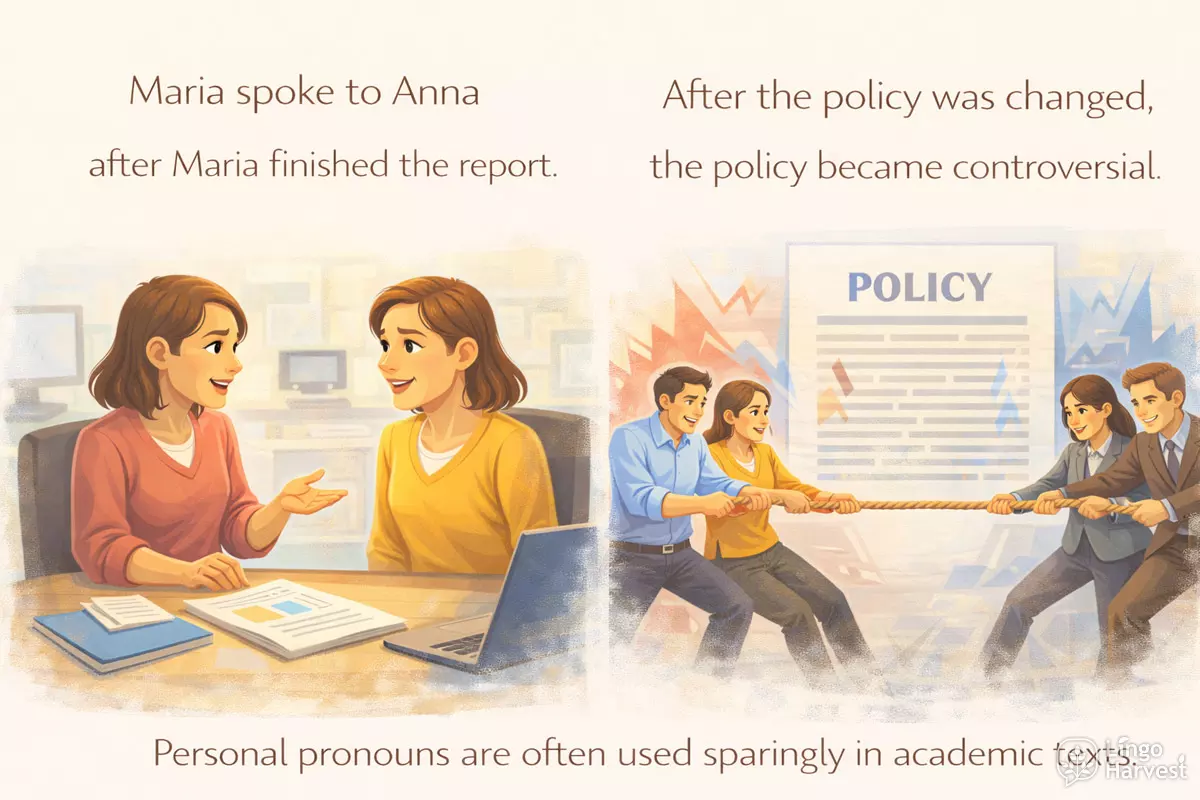
To illustrate how unclear references can occur, compare the following sentences:
- Maria spoke to Anna after she finished the report. → Maria spoke to Anna after Maria finished the report.
- The committee reviewed the proposal and the contract. They decided to proceed. → The committee reviewed the proposal and the contract. The committee decided to proceed.
- After the policy was changed, it became controversial. → After the policy was changed, the policy became controversial.
- Sam called Alex while he was driving. → Sam called Alex while Sam was driving.
Summary of patterns and possible interpretations
| Pattern | Potential Ambiguity |
|---|---|
| Multiple candidates | Pronoun could refer to more than one entity |
| Distance from antecedent | Referent is forgotten or unclear due to separation |
| Unclear group references | Pronoun may refer to any of several groups |
| Ambiguous demonstratives | "This" or "that" not clearly linked to a specific noun |
| Pronoun pile-up | Several pronouns in a sentence obscure meaning |
Awareness of these tendencies can help writers spot and resolve unclear references, making their texts easier to follow for any reader.
Editing techniques for long texts
Maintaining clear pronoun reference becomes more challenging as your writing grows in length and complexity. When reviewing extended passages, it’s important to actively check how pronouns connect to their antecedents, especially across multiple paragraphs. Effective revision strategies can help you spot ambiguous references and clarify them before they confuse readers.
Strategies for revising pronoun links in extended passages
- Read in context: Review entire paragraphs, not just sentences, to ensure each pronoun’s meaning stays clear as the discussion shifts.
- Track noun-pronoun pairs: Make a quick list of main nouns and their pronouns to see if any links are weak or ambiguous after several sentences.
- Check for intervening subjects: If new characters or concepts are introduced between a noun and its pronoun, restate the noun or use a more specific term.
- Alternate pronoun forms: Use “this,” “that,” or “these” plus a noun (“this idea,” “that approach”) to reinforce clarity.
- Vary sentence openings: Don’t start every sentence with “he,” “she,” or “it” in a dense section; mix in names and descriptive phrases.
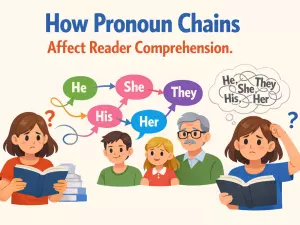
- Limit pronoun chains: Avoid sequences like “he...he...he…” without clear reference updates, especially after a paragraph break.
- Use summary statements: At the start of a new paragraph, restate the subject (“The committee decided...”) to re-anchor the reader.
- Highlight with markup: When editing digitally, use highlighting or comments to flag pronouns whose meaning isn’t instantly clear.
- Read aloud: Hearing the text can expose confusing or repetitive pronoun usage that’s easy to miss on the page.
- Peer review: Ask another reader to identify pronouns whose referents are unclear; outside perspectives often catch what you might overlook.
Common pronoun reference pitfalls in long texts
Writers often encounter recurring issues when handling pronouns over several paragraphs. The table below outlines some frequent problems and ways to address them.
| Issue | Solution |
|---|---|
| Ambiguous “it” after topic shift | Replace “it” with the specific noun or restate the concept |
| Multiple possible antecedents | Clarify by naming the subject or using a descriptive phrase |
| Pronoun too far from noun | Repeat the noun or restructure sentences to keep references close |
| Unclear group pronouns (“they”/“them”) | Specify which group or individuals are meant |
Checklist for final review
- Does every pronoun clearly refer to a single, unmistakable noun?
- Are any antecedents missing, distant, or ambiguous?
- Have you varied your language to avoid repetitive or confusing pronoun use?
- Would a reader unfamiliar with your topic follow the references easily?
Careful attention to these points during editing will help ensure your pronoun references remain clear and effective, even as your writing expands over multiple paragraphs.
Before-and-after examples
Clear pronoun reference is essential when information stretches across several paragraphs. Ambiguous or unclear pronouns can confuse readers, especially if multiple subjects are involved. Let’s examine how revising pronoun use improves clarity and flow between paragraphs.
Original and improved paragraph pairs
In the following examples, the initial version contains vague or confusing pronouns. The revised version shows how to clarify references for smoother comprehension.
- Unclear: Maria told Anna that she would arrive early. She hoped the meeting would start on time. She brought the documents.
- Clear: Maria told Anna that she would arrive early. Anna hoped the meeting would start on time. Maria brought the documents.
- Unclear: The committee reviewed the proposal. They decided to postpone the vote. It was not ready.
- Clear: The committee reviewed the proposal. The members decided to postpone the vote. The proposal was not ready.
- Unclear: The laptop was left on the desk. It was locked later. This prevented theft.
- Clear: The laptop was left on the desk. The device was locked later. This precaution prevented theft.
- Unclear: When the children entered the room, they started laughing. It was funny to them.
- Clear: When the children entered the room, the children started laughing. The joke was funny to them.
- Unclear: The teacher spoke to the student after class. He was grateful for the feedback.
- Clear: The teacher spoke to the student after class. The student was grateful for the feedback.
- Unclear: Susan baked a cake for her friend. She decorated it with flowers. She loved the result.
- Clear: Susan baked a cake for her friend. Susan decorated it with flowers. Her friend loved the result.
Patterns for improving pronoun reference
Writers can ensure clarity by following a few practical approaches:
- Repeat the noun at the start of a new paragraph if confusion is possible.
- Use names instead of pronouns when more than one person is involved.
- Introduce or reintroduce the subject after a long descriptive passage or topic change.
- Replace “it,” “they,” or “this” with a specific noun if the reference is not unmistakable.
Common pitfalls and effective fixes
| Ambiguous Example | Revised for Clarity |
|---|---|
| Alex called Jordan when he finished the report. He was relieved. | Alex called Jordan when Alex finished the report. Alex was relieved. |
| The dogs chased the cats. They escaped into the alley. | The dogs chased the cats. The cats escaped into the alley. |
| Sarah and Lily went shopping. She bought a new dress. | Sarah and Lily went shopping. Lily bought a new dress. |
| The book was on the table. It was interesting. | The book was on the table. The book was interesting. |
By identifying and revising vague pronouns, writers can guide readers smoothly from one paragraph to the next, reducing misunderstanding and enhancing the overall reading experience.
Practice: revise a multi-paragraph passage
When writing extended texts, correctly managing pronouns across paragraphs helps readers follow your ideas. In this exercise, you'll analyze a sample passage with unclear pronoun references and practice making those connections explicit. The goal is to ensure every pronoun points clearly to its intended noun, especially when multiple people, objects, or ideas are involved.
Task: Identify and Fix Ambiguous Pronouns
Read the following two-paragraph excerpt. Identify any pronouns that could confuse the reader, and revise the passage so that all references are unambiguous.
-
Paragraph 1: Maria and Julia arrived at the conference early. She checked the schedule, while she went to get coffee. After that, she found a seat near the front.
-
Paragraph 2: When she returned, she joined her and discussed the keynote speaker. She hoped her questions would be answered during the talk.
Consider these strategies as you revise:
- Replace pronouns with specific names when needed.
- Rephrase sentences to clarify who is performing each action.
- Introduce or repeat the noun to establish clear reference, especially at the start of a new paragraph.
Checklist: Common Pronoun Reference Problems
- Multiple people or things are mentioned, but a pronoun could refer to more than one of them.
- Paragraphs begin with pronouns, but the reference is unclear from the previous text.
- Pronouns are used too frequently without repeating the noun.
- There is a long gap between the noun and the pronoun, leading to confusion.
- Pronouns refer to something not explicitly named.
Revision Patterns
Writers often use these methods to clarify pronoun reference across paragraphs:
- Repeat the subject's name at the start of a new paragraph.
- Use descriptive phrases instead of pronouns (e.g., "the organizer" instead of "she").
- Combine sentences to reduce ambiguity.
- Provide context before introducing a pronoun.
Before and After: Example Comparison
| Original Passage | Revised Passage |
|---|---|
| Maria and Julia arrived at the conference early. She checked the schedule, while she went to get coffee. After that, she found a seat near the front. | Maria and Julia arrived at the conference early. Maria checked the schedule, while Julia went to get coffee. After that, Julia found a seat near the front. |
| When she returned, she joined her and discussed the keynote speaker. She hoped her questions would be answered during the talk. | When Julia returned, she joined Maria and discussed the keynote speaker. Maria hoped her questions would be answered during the talk. |
Try It Yourself
Now, revise the original passage on your own. Pay special attention to the start of each paragraph and moments where multiple people are involved.
Show answers
- Sample revision: Maria and Julia arrived at the conference early. Maria checked the schedule, while Julia went to get coffee. After that, Julia found a seat near the front.
- When Julia returned, she joined Maria and discussed the keynote speaker. Maria hoped her questions would be answered during the talk.