Quantifiers in Negative Sentences: Common Learner Errors

 Here we how negation changes quantifier meaning, common negative sentence patterns, issues with double negatives, use of much, many, and any in negatives, word order problems, typical learner errors, and provides examples with practice corrections.
- How negation changes quantifier meaning
- Common negative sentence patterns
- Double negatives and why they are incorrect
- Much, many, any in negative contexts
- Word order issues in negative sentences
- Typical learner transfer errors
- Examples of incorrect vs corrected sentences
- Practice: fixing negative sentence errors
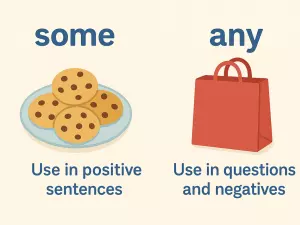
Navigating words that express amount or quantity can be especially tricky when forming negative sentences in English, leading to frequent mistakes for language learners. Understanding where these slip-ups happen is key to mastering clearer, more accurate communication. Common errors often occur with the use of words like much, many, any, and some, particularly when trying to express a lack or absence of something. To avoid confusion, it is important to remember that much and many are typically used in negative sentences or questions, while some is generally reserved for positive statements.
How negation changes quantifier meaning
Negation often reverses or alters the scope and sense of quantifiers in English sentences. For many learners, this can cause confusion, especially when similar-looking sentences end up meaning the opposite due to a simple change in word order or the addition of "not." Understanding these shifts is crucial for both accuracy and clarity in communication.
Positive vs. negative quantifiers
In positive sentences, quantifiers like "some," "many," "all," and "a few" typically indicate the presence or amount of something. When you introduce negation, the interpretation of these words can change dramatically. For example, "some" in "I have some apples" suggests a nonzero amount, but "I don't have any apples" (the negative equivalent) uses "any" instead of "some" to express none at all.
Common changes in meaning
Negation interacts with quantifiers in several predictable ways. Here are some common patterns learners should watch for:
- all + negation: "Not all students passed." (Some did not pass.)
- any in negatives: "She doesn't have any friends." (Zero friends.)
- some in questions/negatives: "I don't want any tea." ("Some" is rarely used in negatives.)
- many vs. much: "He doesn't have much time."
- every + negation: "Not every answer is correct." (At least one is wrong.)
- few/a few + negation: "I don't have many books." (Fewer than expected.)
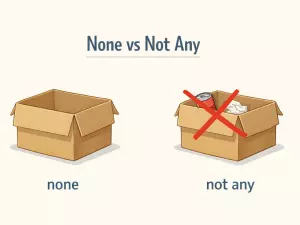
- none: "None of the cookies are left." (Zero remain.)
- no: "There are no tickets available." (Zero available.)
- both + negation: "Not both solutions work." (Only one or none work.)
- either + negation: "He didn't eat either meal." (He ate neither.)
- neither: "Neither option is good." (Zero options are good.)
- one + negation: "Not one person agreed." (Nobody agreed.)
Comparing sentences: meaning shifts

It's helpful to see how similar sentences with and without negation differ in meaning:
| Positive Sentence | Negative Sentence |
|---|---|
| All students passed the exam. | Not all students passed the exam. |
| She has some money. | She doesn't have any money. |
| Every answer is correct. | Not every answer is correct. |
| Both brothers attended. | Not both brothers attended. |
| He ate either apple. | He didn't eat either apple. |
Key learner errors to avoid
- Using "some" instead of "any" in negative sentences (❌ "I don't have some" → ✅ "I don't have any").
- Misplacing "not" with quantifiers, which can reverse meaning.
- Assuming "not all" means "none" (it means "some, but not every one").
- Forgetting that "no" and "none" mean zero, not a small amount.
- Confusing "few" (almost none) and "a few" (some), especially after negation.
Careful attention to quantifier and negation combinations helps learners avoid misunderstandings and express ideas accurately in both spoken and written English.
Common negative sentence patterns
When using quantifiers in sentences with a negative meaning, English learners often face challenges with word order, auxiliary verbs, and the selection of appropriate quantifiers. Negative constructions commonly involve auxiliary verbs such as do/does/did, be, or have, followed by not (or its contraction, n't). The placement of quantifiers can shift the meaning or even make a sentence ungrammatical.
Standard structures for negation
Most negative statements use the auxiliary + not + main verb pattern. When quantifiers are added, special attention is needed to avoid typical learner mistakes. Here are some typical formats:
- Subject + auxiliary + not + quantifier + noun
She does not have much money. - There + be + not + quantifier + noun
There aren’t any apples left. - Subject + can/could/will/would + not + quantifier + noun
We can’t take any more guests. - Subject + have/has/had + not + quantifier + noun
He hasn’t got much patience.
Common quantifiers used in negative contexts
The choice of quantifier is crucial. Some quantifiers, like any, are typically used with negatives, while others, like some, are usually not. Here are quantifiers frequently seen in negative sentences:
- any (I don’t have any questions.)
- much (She doesn’t eat much bread.)
- many (He didn’t see many people.)
- either (We can’t find either solution.)
- no (There are no cookies left.)
- few (Not many students passed the test.)
- little (They have little hope left.)
- none (None of the answers were correct.)
- never (She never makes any mistakes.)
- nowhere (There was nowhere to go.)
- barely (He barely has any time.)
- hardly (They hardly know anyone here.)
Comparison of negative quantifier patterns
The following table highlights the difference between correct and incorrect usage of quantifiers in negative sentences. Watch for errors with word order and quantifier choice.
| Incorrect | Correct |
|---|---|
| I don’t have some friends in London. | I don’t have any friends in London. |
| She doesn’t have many money. | She doesn’t have much money. |
| We haven’t got no bread. | We haven’t got any bread. |
| He didn’t see much people. | He didn’t see many people. |
| They can’t go nowhere. | They can’t go anywhere. |
| I haven’t got no time. | I haven’t got any time. |
Key points to remember
- Use “any” with negative and interrogative forms, not “some.”
- Much and many depend on whether the noun is countable or uncountable.
- Double negatives (e.g., I don’t have no) are incorrect in standard English.
- Negation often changes the quantifier: some → any, much for uncountable, many for countable.
- Negative adverbs like never and hardly also function as negative quantifiers.
Mastering these patterns helps avoid confusion and ensures your sentences are both clear and grammatically sound.
Double negatives and why they are incorrect
Double negatives often cause confusion for English learners, especially in negative sentences with quantifiers. In standard English, using two negative words in the same clause usually results in a positive meaning or creates a sentence that is ungrammatical. This can make the intended message unclear to listeners or readers.
What is a double negative?
A double negative occurs when two negative forms—such as "not," "no," "never," "nothing," or negative quantifiers like "nobody" and "none"—appear together in a single clause. While some languages use double negatives for emphasis, standard English grammar usually treats them as errors.
Common patterns with double negatives
- I don’t have nothing. ❌ (incorrect – two negatives)
- She didn’t see nobody. ❌ (incorrect – two negatives)
- We can’t find no solution. ❌ (incorrect – two negatives)
- He hasn’t got no friends. ❌ (incorrect – two negatives)
- They haven’t done nothing. ❌ (incorrect – two negatives)
- There isn’t any food. ✅ (correct – only one negative)
- I don’t know anything. ✅ (correct – only one negative)
- She hasn’t seen anyone. ✅ (correct – only one negative)
- We can’t find any solution. ✅ (correct – only one negative)
- He has no friends. ✅ (correct – only one negative)
How double negatives change meaning
In English, two negatives can cancel each other out, which sometimes results in a positive meaning. However, in everyday usage, sentences with double negatives are more often simply confusing or considered incorrect rather than actually positive. This is especially true with negative quantifiers.
| Incorrect Sentence | Correct Sentence |
|---|---|
| I don’t need no help. | I don’t need any help. OR I need no help. |
| You can’t see nothing. | You can’t see anything. OR You see nothing. |
| She didn’t say nothing. | She didn’t say anything. OR She said nothing. |
| He hasn’t got no time. | He hasn’t got any time. OR He has no time. |
Why do learners make this mistake?
Many learners use double negatives because of influence from their first language, where double negatives may be correct or even required for emphasis. Others assume that adding more negatives makes the sentence "more negative." However, in English, this leads to mistakes and can make communication less clear.
Tips to avoid double negatives
- Use only one negative word in a clause.
- With negative verbs ("don’t," "can’t," "hasn’t"), use positive quantifiers ("anyone," "anything," "any") instead of negative ones ("nobody," "nothing," "no").
- If you use a negative quantifier ("nobody," "nothing," "no"), do not add "not" or another negative verb.
- Check your sentences for more than one negative word—if you find two, revise the sentence.
Mastering this point will help you create sentences that are both grammatically correct and easy to understand. Avoiding double negatives is a key step toward clearer communication in English, especially when working with quantifiers in negative sentences.
Much, many, any in negative contexts
Learners often struggle with how to use much, many, and any when making negative statements in English. These quantifiers behave differently depending on whether the noun is countable or uncountable, and mistakes can lead to sentences that sound unnatural or confusing. Understanding the correct usage is key to forming clear negative sentences.
Key differences in usage
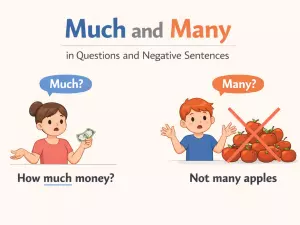
Much is used with uncountable nouns, while many is used with countable plurals. Any can be used with both, but is especially common in negative and interrogative sentences. Incorrect combinations, such as "much apples" or "many water," are frequent mistakes.
| Quantifier | Correct Negative Example | Common Error |
|---|---|---|
| much | We don’t have much time. | ❌ We don’t have much chairs. |
| many | She doesn’t have many friends. | ❌ She doesn’t have many money. |
| any | There isn’t any milk left. | ❌ There isn’t any milks. |
| any | We don’t have any questions. | ❌ We don’t have any informations. |
Typical sentence patterns
- Negative with much + uncountable noun: “I don’t have much patience.”
- Negative with many + plural countable noun: “They don’t know many people here.”
- Negative with any (uncountable or plural): “She doesn’t eat any meat.” / “He doesn’t have any friends.”
Frequent learner errors
- Using much with plural nouns: “I don’t have much books.” ❌
- Using many with uncountable nouns: “We don’t have many water.” ❌
- Omitting any when required: “I don’t have money.” (correct, but “I don’t have any money.” is more natural in many contexts)
- Double negatives: “I don’t have no friends.” ❌ (should be “I don’t have any friends.”)
- Confusing any and some in negatives: “We don’t have some apples.” ❌ (should be “We don’t have any apples.”)
Summary tips
- Use much with uncountable nouns in negatives.
- Use many with countable plural nouns in negatives.
- Any works with both and is common in negative statements.
- Check if the noun is countable or uncountable before choosing the quantifier.
Mastering these patterns helps avoid common errors and makes negative sentences sound more natural in English.
Word order issues in negative sentences
Learners often struggle with the correct placement of quantifiers like any, much, many, few, and enough when forming negative statements. Mistakes usually happen when quantifiers are positioned incorrectly relative to the negative auxiliary (such as do not, isn't, or can't). Understanding the standard structure is essential to avoid confusion or ambiguity.
Typical word order patterns

In English, negative sentences with quantifiers usually follow this order: subject + auxiliary + not + quantifier + main verb/complement. Problems arise when students place the quantifier before the negative auxiliary, or use double negatives unintentionally.
- He doesn't have any friends.
- He doesn't have many problems.
- She can't eat much sugar.
- We don't have enough chairs.
- They haven't got any money.
- He doesn't know much about it.
- I don't see many differences.
- She doesn't read many books.
- I don't have enough time.
- We don't need any help.
Common mistakes to avoid
Many errors come from direct translation, especially from languages where word order is more flexible. Here are frequent missteps learners make:
- Any or much placed before the auxiliary: Any people don't come to the meeting. ❌
- Mixing up quantifier and negative: He doesn't any have friends. ❌
- Double negatives: She doesn't have no money. (should be any money) ❌
- Omitting the auxiliary: He not have many books. ❌
- Misplacing enough: We enough don't have chairs. ❌
- Using positive form word order: Much people don't like it. ❌
Comparison of correct and incorrect word order
| Incorrect Example | Correct Example |
|---|---|
| Any students don't understand. | Students don't understand any (of it). |
| He not have many friends. | He doesn't have many friends. |
| She doesn't have no time. | She doesn't have any time. |
| We enough don't have chairs. | We don't have enough chairs. |
| Much people don't agree. | Many people don't agree. |
Tips to master negative quantifier word order
Focus on these guidelines to ensure your sentences are clear and natural:
- Place the auxiliary verb before the quantifier in negatives.
- Use any and much mainly in negative forms (not positive statements).
- Avoid double negatives unless it's intentional for emphasis or dialect.
- Practice by transforming positive statements to negatives, keeping quantifiers in the right place.
- Read and listen to authentic examples to develop a natural sense of order.
Developing an instinct for correct structure takes time, but careful attention to these patterns will help avoid the most frequent pitfalls when using quantifiers in negative clauses.
Typical learner transfer errors
Learners often bring patterns from their native language when forming negative sentences with quantifiers in English. This transfer can lead to a range of predictable mistakes, especially when the learner’s first language handles negation or quantity differently. Such errors usually appear in sentence structure, quantifier choice, or even double negatives.
Frequent issues with quantifiers in negative structures
- Using any instead of no: “I have any friends” instead of “I have no friends.”
- Incorrect double negatives: “I don’t have no money” (instead of “I don’t have any money” or “I have no money”).
- Omitting necessary quantifiers: “I don’t have friends” when English prefers “I don’t have any friends.”
- Transferring positive quantifier forms: “I have much books” in negative sentences, instead of “I don’t have many books.”
- Misusing some in negatives: “I don’t have some time” rather than “I don’t have any time.”
- Incorrect placement: “Any I don’t have friends” instead of “I don’t have any friends.”
- Literal translation from the first language: “I have nothing of money” instead of “I have no money.”
- Overusing none: “I have none friends” instead of “I have no friends” or “I don’t have any friends.”
- Mixing up few and a few in negatives: “I don’t have a few friends” (should be “I have few friends” or “I don’t have many friends”).
- Confusing little and a little: “I don’t have a little money” when the intended meaning is “I have little money.”
- Using singular quantifiers with plural nouns: “I don’t have much friends.”
- Unnecessary repetition: “I don’t have any no money.”
Comparison: Native language transfer vs. standard English
| Transferred Pattern | Standard English |
|---|---|
| I don’t have no time | I don’t have any time / I have no time |
| I have nothing of friends | I have no friends |
| I don’t have some money | I don’t have any money |
| I have none books | I have no books |
| I don’t have much friends | I don’t have many friends |
| I don’t have a few friends | I have few friends / I don’t have many friends |
Understanding why these mistakes happen helps teachers address them more effectively. Many errors stem from direct translation or overgeneralization of English quantifier rules. Highlighting and practicing standard negative sentence patterns with quantifiers can gradually reduce these common transfer problems.
Examples of incorrect vs corrected sentences
When learning to use quantifiers in negative statements, English learners often make predictable mistakes. These usually involve confusing quantifiers like "any," "some," "much," "many," or misplacing "no" within a sentence. Getting these details right is crucial for clear, natural communication. Below, you'll find common errors alongside their corrected forms, with explanations to highlight the logic behind each change.
Common learner mistakes with negative quantifiers
| ❌ Incorrect | ✅ Correct |
|---|---|
| I don't have some money. | I don't have any money. |
| She doesn't have much friends. | She doesn't have many friends. |
| There isn't no milk left. | There isn't any milk left. |
| We haven't got some apples. | We haven't got any apples. |
| He doesn't want no dessert. | He doesn't want any dessert. |
| They didn't buy much books. | They didn't buy many books. |
| There aren't any water bottles. | There aren't any bottles of water. / There isn't any water. |
| She doesn't know nothing about it. | She doesn't know anything about it. |
| We don't have no time. | We don't have any time. |
| He didn't eat no breakfast. | He didn't eat any breakfast. |
| I can't see some stars. | I can't see any stars. |
| There isn't much chairs in the room. | There aren't many chairs in the room. |
| They don't want some help. | They don't want any help. |
| We didn't find no mistakes. | We didn't find any mistakes. |
| She hasn't got no friends here. | She hasn't got any friends here. |
Summary: Negative quantifiers at a glance
| Incorrect Use | Corrected Form |
|---|---|
| Don't have some | Don't have any |
| Doesn't want no | Doesn't want any |
| Didn't see much people | Didn't see many people |
| There isn't no | There isn't any |
| Haven't got some | Haven't got any |
As shown above, the most typical pattern is incorrectly using "some," "no," or "much" with negatives, instead of the expected "any" or "many." Double negatives like "didn't…no" are also a frequent error and should be avoided in standard English. Focusing on these patterns helps learners produce more accurate negative sentences with quantifiers.
Practice: fixing negative sentence errors
Understanding and correcting mistakes with quantifiers in negative statements is a common challenge for English learners. Let’s focus on identifying typical errors, correcting faulty sentences, and reinforcing good habits. Review the explanations and then try the exercises that follow.
Spot the Error: Negative Quantifiers
Read each sentence and decide if the quantifier is used correctly. If not, rewrite the sentence to fix the error.
- He doesn’t have some friends in this city.
- There isn’t any milk in the fridge.
- We don’t have much money for the trip.
- She doesn’t know many about the topic.
- They don’t have no time to finish the project.
- I don’t see any mistakes in your essay.
- There aren’t much people at the party.
- He doesn’t want any help.
- We don’t have any questions.
- She doesn’t have no brothers or sisters.
Show answers
- Incorrect. Correct: He doesn’t have any friends in this city.
- Correct.
- Correct.
- Incorrect. Correct: She doesn’t know much about the topic.
- Incorrect (double negative). Correct: They don’t have any time to finish the project.
- Correct.
- Incorrect. Correct: There aren’t many people at the party.
- Correct.
- Correct.
- Incorrect (double negative). Correct: She doesn’t have any brothers or sisters.
Common Quantifier Mistakes in Negatives
Learners often confuse which quantifiers work with negatives. Here’s a quick comparison of correct and incorrect patterns:
| Incorrect | Correct |
|---|---|
| She doesn’t have some time. | She doesn’t have any time. |
| They don’t need much apples. | They don’t need many apples. |
| He doesn’t see no problems. | He doesn’t see any problems. |
| There aren’t much cars here. | There aren’t many cars here. |
| I don’t have no idea. | I don’t have any idea. |
Quick Practice: Choose the Right Quantifier
Select the correct quantifier for each blank: any, many, or much.
- We don’t have _____ bread left.
- She doesn’t have _____ friends in this city.
- There isn’t _____ water in the bottle.
- He doesn’t see _____ mistakes in your homework.
- There aren’t _____ people at the meeting today.
- I don’t have _____ time to explain this now.
- She doesn’t eat _____ vegetables.
- We didn’t receive _____ information about the change.
- There aren’t _____ chairs for everyone.
- He doesn’t make _____ effort at work.
Show answers
- any
- many
- much
- any
- many
- much
- many
- any
- many
- much
Tips for Avoiding Quantifier Errors in Negatives
- Use any instead of some in most negative sentences.
- Use much for uncountable nouns and many for countable nouns in negative contexts.
- Avoid double negatives (e.g., don’t use no or nothing with another negative verb).
- Practice by rewriting positive sentences as negatives, paying attention to quantifier changes.
Building confidence with negative structures takes practice. Review these examples and exercises regularly to reinforce correct usage.