Stop Guessing Quantifiers: Quick Visual Guide for Beginners

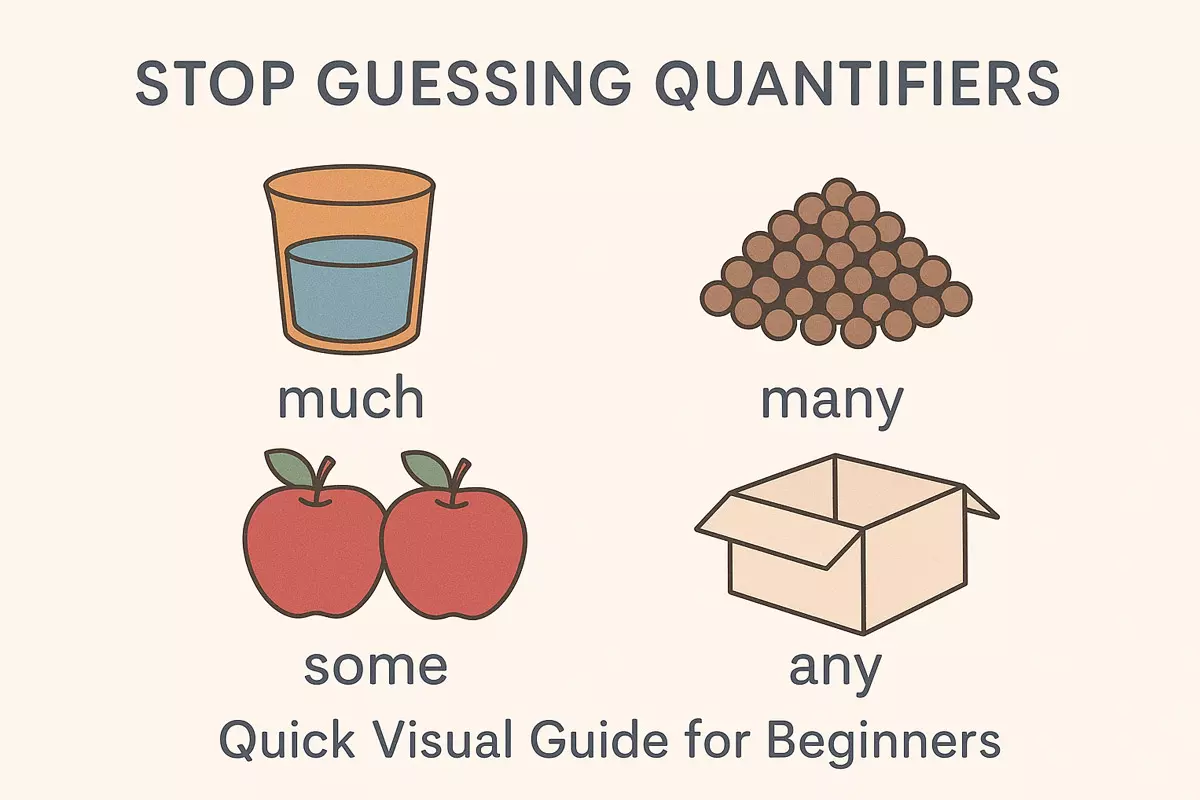 This article explains how to choose between much, many, some, and any by countability, context, and common confusions. It includes decision charts, tables, and practice activities to help you use these words correctly in real situations.
If you find it challenging to decide how many words to use in English, this straightforward visual guide is designed to help new learners confidently select expressions such as much, many, or a few. By providing clear, practical examples, it eliminates confusion and helps you communicate your ideas more accurately. With this resource, you can stop second-guessing your choices and focus on expressing yourself with clarity and confidence in everyday situations.
Choose by Countability (count vs noncount)
Understanding whether a noun is countable or uncountable is the first step to selecting the right quantifier. Count nouns refer to items you can count individually (like "apples" or "chairs"), while noncount nouns represent things that can’t be separated easily into individual units (such as "water" or "information"). Quantifiers change depending on this distinction.
Common Quantifiers for Count and Noncount Nouns
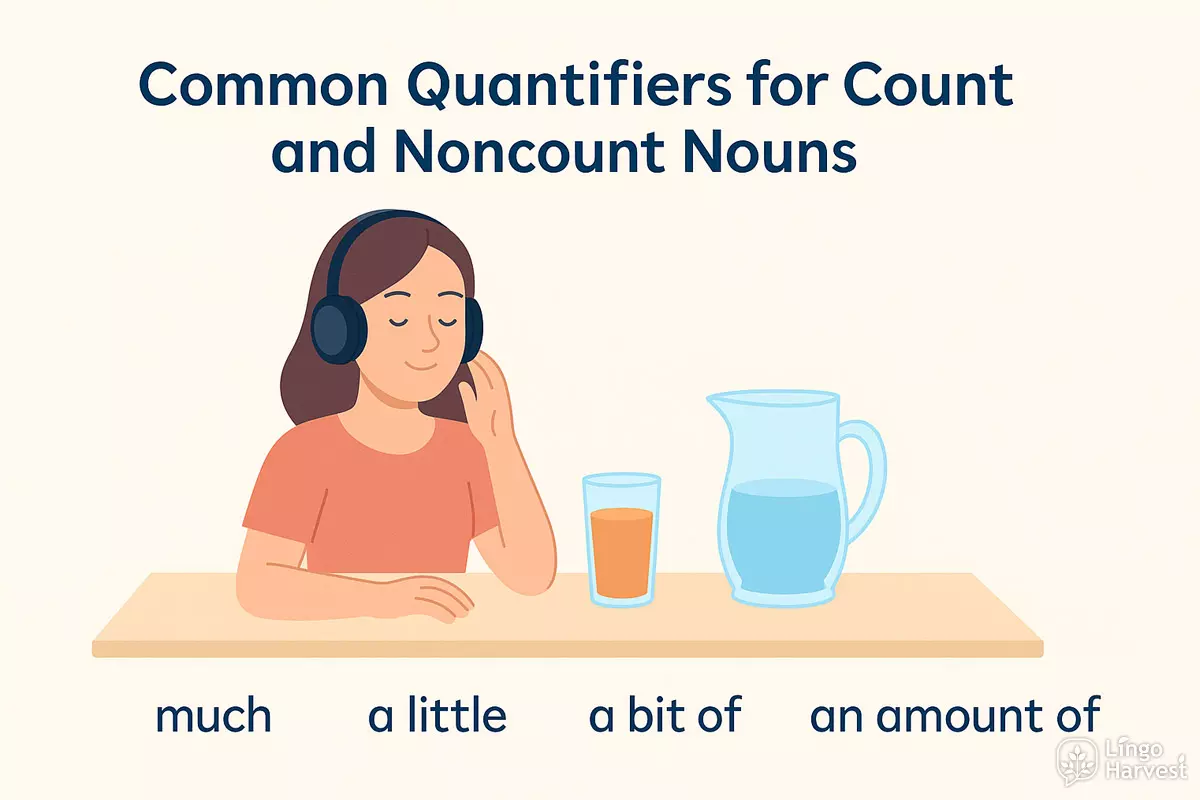
Using the correct quantifier helps your meaning stay clear. Some words work only with countable nouns, some with uncountable, and a few with both (but with different meanings). Here are typical choices:
- Count nouns: many, a few, several, a number of, each, every
- Noncount nouns: much, a little, a bit of, an amount of
- Both (with nuance): some, any, no, enough, plenty of, lots of
Quick Reference Table
| Quantifier | Typical Use |
|---|---|
| many | Count nouns (e.g., many books) |
| much | Noncount nouns (e.g., much water) |
| a few | Count nouns (e.g., a few coins) |
| a little | Noncount nouns (e.g., a little sugar) |
| some | Both (e.g., some apples, some coffee) |
| any | Both, often in negatives/questions (e.g., any ideas?, any milk?) |
| lots of / plenty of | Both (e.g., lots of friends, plenty of time) |
| each / every | Count nouns (e.g., each student, every day) |
| a bit of | Noncount nouns (e.g., a bit of advice) |
| several | Count nouns (e.g., several options) |
Tips for Beginners
Start by asking: can I count it? If yes, use forms like "many" or "a few." If not, reach for "much," "a little," or similar. Some words, such as "some" or "any," are flexible but pay attention to context. Practice by matching the quantifier to the noun in real sentences:
- How many chairs are in the room?
- Can I have a little milk?
- She has several questions.
- There isn’t much time left.
- We need some information.
Choosing the correct quantifier becomes much easier once you recognize which nouns are countable and which are not. This awareness is essential for accurate, natural English.
Choose by Context (offers, negatives, questions)
Understanding when to use quantifiers like "some," "any," "much," "many," or "a few" depends on the type of sentence—whether it's an offer, a negative statement, or a question. Context shapes which quantifier fits naturally, and a quick review of common patterns can help you avoid second-guessing.
Offers and Requests
When making offers or polite requests, "some" is typically the go-to choice. This holds true even in questions, which might seem counterintuitive at first. You’ll often hear:
- Would you like some tea?
- Can I get you some help?
- Could you lend me some money?
- Shall we buy some flowers?
The word "any" is less common in offers but can appear for emphasis, especially in negative or open-ended contexts.
Negatives and Denials
Negative sentences usually call for "any," "much," or "many" depending on whether the noun is countable or uncountable. For example:
- We don’t have any milk. ❌
- There aren’t many tickets left.
- I don’t have much time.
- She didn’t make any mistakes. ❌
"Some" is rarely used in negatives, except in special cases emphasizing limited or unexpected presence.
Questions
Questions about quantity typically use "any" for both countable and uncountable nouns. However, "some" appears in questions when expecting or offering a positive answer.
- Do you have any brothers or sisters?
- Is there any water left?
- Would you like some more bread?
- Could I borrow some sugar?
Quick Reference Table
| Context | Common Quantifiers | Example |
|---|---|---|
| Offers/Requests | some | Would you like some coffee? |
| Negatives | any, much, many | We don’t have any apples. |
| Questions (neutral) | any, much, many | Is there any bread? |
| Questions (offers/expecting yes) | some | Can I get you some water? |
Summary List: Patterns to Remember
- Use some for positive offers and requests.
- Use any in negatives and most questions.
- Choose many for countable nouns in negatives/questions.
- Use much for uncountable nouns in negatives/questions.
- Avoid some in negatives unless emphasizing an exception.
- Switch to some in questions when expecting a "yes."
- Remember: context guides your choice—listen for what fits naturally in conversation.
Mastering these context-driven patterns makes choosing quantifiers less of a guessing game and more of a confident habit.
Frequency vs Quantity Words
Understanding the difference between terms that describe how often something happens and those that indicate how much or how many is essential for clear communication. Beginners often mix up these categories, but each serves a unique purpose in sentences. Frequency expressions answer "how often?", while quantity terms respond to "how much?" or "how many?".
When to Use Each Type
Use frequency vocabulary for routines, habits, or repeated actions. If you want to discuss the amount or number of items, choose a quantity word. Consider the context of your statement to decide which fits best.
Common Examples
Here’s a quick reference list to help distinguish these two types:
- Frequency: always, usually, often, sometimes, rarely, never, occasionally, frequently, every day, once a week, twice a month, daily, weekly, monthly, annually, seldom, regularly, from time to time, hardly ever, all the time
- Quantity: much, many, a lot of, several, few, little, some, any, plenty of, a couple of, dozens of, hundreds of, none, all, most, both, each, every, enough, no
Quick Comparison
Below is a structured comparison to clarify how these words are used in context:
| Type | Typical Usage Example |
|---|---|
| Frequency | I usually drink coffee in the morning. |
| Frequency | She goes jogging every weekend. |
| Quantity | There are many books on the shelf. |
| Quantity | We have little time left. |
| Frequency | They rarely eat out. |
| Quantity | He has no money in his wallet. |
Tips for Beginners
- Ask yourself: Are you talking about how often (pick a frequency term) or how much/many (choose a quantity word)?
- Some words can seem similar (like "every" vs. "all"). Pay attention to whether the focus is on repetition or total amount.
- Practice by replacing the word in a sentence—if it sounds strange, you may have picked the wrong category!
By learning to separate these categories, your sentences will be more precise and understandable. This distinction is a simple but powerful step for anyone starting out with English quantifiers.
Mini Decision Charts and Tables
Choosing the right quantifier in English can be tricky, especially for beginners. To make it easier, we've organized quick-reference visuals and lists so you can decide which word to use faster. Use these guides to check which quantifier fits the noun or context you have in mind.
Common Quantifiers at a Glance
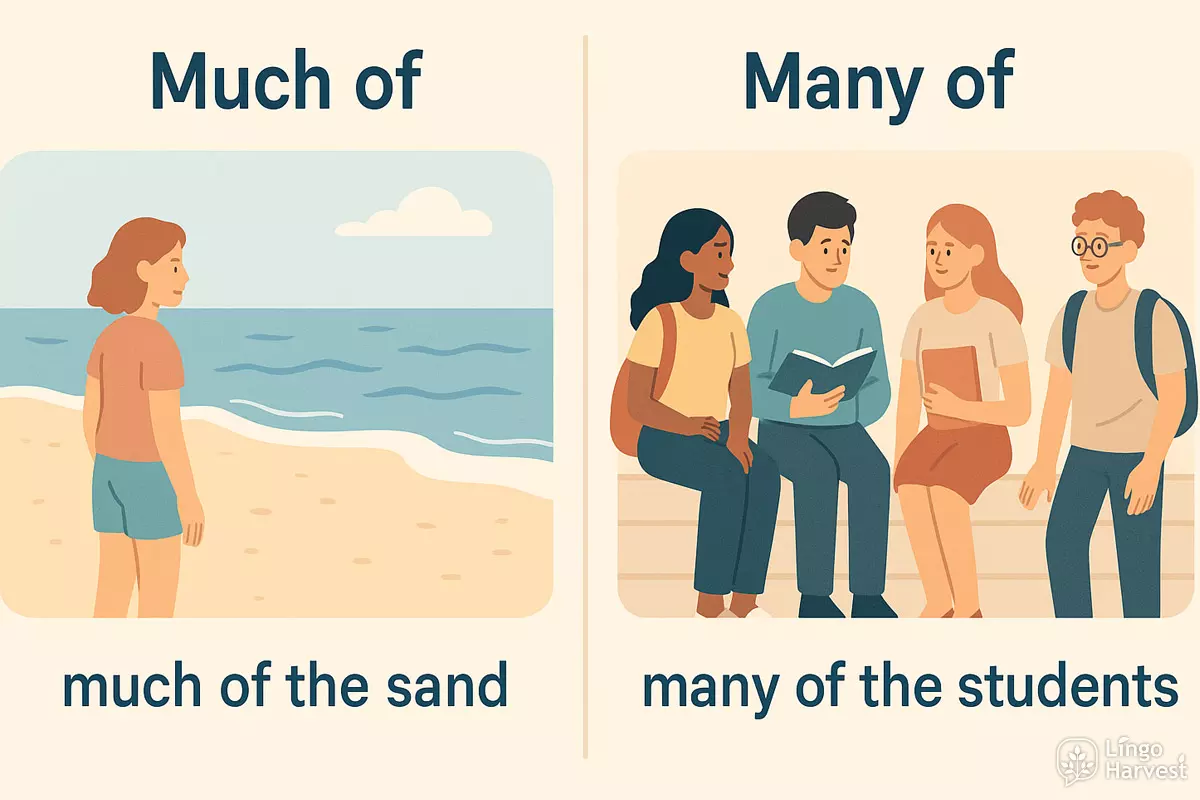
Some quantifiers work only with countable nouns, others with uncountables, and a few can be used with both. Here’s a quick rundown:
- Much – for uncountable nouns (e.g., much water)
- Many – for countable nouns (e.g., many apples)
- A lot of – for both (e.g., a lot of money, a lot of books)
- Few – countable (e.g., few ideas)
- Little – uncountable (e.g., little time)
- Some – both (e.g., some milk, some chairs)
- Any – both, usually in negatives/questions (e.g., any bread? any pens?)
- Several – countable (e.g., several options)
- Much vs. Many – uncountable vs. countable
- Plenty of – both (e.g., plenty of reasons, plenty of space)
- No – both (e.g., no sugar, no cars)
- Each – singular countable (e.g., each student)
- Every – singular countable (e.g., every chance)
- Most – both (e.g., most advice, most people)
- All – both (e.g., all money, all children)
- Enough – both (e.g., enough food, enough chairs)
- None – both (e.g., none left)
- Lots of – both (e.g., lots of time, lots of cookies)
- Much of – uncountable (e.g., much of the sand)
- Many of – countable (e.g., many of the students)
Quick Reference Table: Which Quantifier for Which Noun?
| Quantifier | Countable Noun? | Uncountable Noun? | Example |
|---|---|---|---|
| Much | ❌ | ✅ | much information |
| Many | ✅ | ❌ | many books |
| A lot of | ✅ | ✅ | a lot of ideas / a lot of water |
| Few / A few | ✅ | ❌ | few friends |
| Little / A little | ❌ | ✅ | little sugar |
| Some / Any | ✅ | ✅ | some apples / any advice |
| Several | ✅ | ❌ | several problems |
| Plenty of | ✅ | ✅ | plenty of chairs / plenty of time |
| No | ✅ | ✅ | no cookies / no water |
| All | ✅ | ✅ | all children / all bread |
Quick Tips for Choosing Quantifiers
- Ask yourself if the noun can be counted or not.
- For general statements, "a lot of" and "some" are usually safe choices.
- In questions and negatives, "any" is often used.
- Use "few" and "little" for small amounts, but remember the countable/uncountable rule.
Keep these references nearby as you practice. Over time, recognizing which quantifier fits will become a habit, not a guessing game.
Common Confusions (some/any, much/many)
New learners often find it tricky to use quantifiers correctly, especially when choosing between pairs like some vs any or much vs many. These small words can change the meaning of a sentence, so it’s worth understanding their differences and typical usage patterns.
When to Use some and any
Both some and any refer to an indefinite quantity, but their use depends on the type of sentence and sometimes the speaker’s intention.
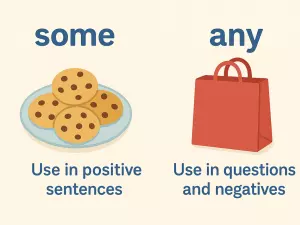
- some is common in positive statements: “I have some questions.”
- any appears in negatives and questions: “Do you have any questions?” / “I don’t have any questions.”
- Use some in offers and requests: “Would you like some tea?”
- Any sometimes appears in positive sentences to mean “it doesn’t matter which”: “You can take any seat.”
Choosing Between much and many
The difference between much and many is all about countability. Use many with things you can count, and much for things you can’t.
| Quantifier | Typical Use & Examples |
|---|---|
| some | Positive statements, offers, requests I bought some apples. / Would you like some coffee? |
| any | Negatives, questions, “it doesn’t matter which” Are there any tickets left? / I don’t have any money. / Any student can join. |
| much | Uncountable nouns, usually negatives/questions How much water do you need? / There isn’t much time. |
| many | Countable nouns, usually negatives/questions Are there many people here? / I don’t have many friends. |
Quick Tips to Avoid Mistakes
- Some and any can be used with both countable and uncountable nouns.
- Much is rare in positive sentences: say “a lot of water” instead of “much water.”
- For countable things in positive statements, use “a lot of” or “lots of” instead of “many” if you want to sound natural: “I have a lot of books.”
- Any is almost always used in negatives and questions.
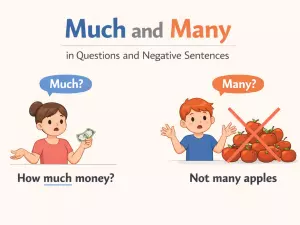
- Remember: “How much…?” (uncountable), “How many…?” (countable).
- Uncountable examples: water, money, information, advice.
- Countable examples: books, apples, chairs, questions.
- Don’t use “much” with plural nouns: ❌ “much apples” ✅ “many apples”
- Don’t use “many” with uncountable nouns: ❌ “many water” ✅ “much water”
- To sound more natural, use “some” in polite offers: “Would you like some help?”
Getting comfortable with these quantifiers takes practice, but recognizing the patterns will help you speak and write more clearly. When in doubt, check if your noun can be counted or not, and choose accordingly.
Practice: Describe Real Items Around You
To get comfortable with quantifiers, try describing objects you see right now. Focus on expressing amounts, numbers, or portions—this helps you stop guessing and start using the right words naturally. Look around your room, desk, or even out the window, and create sentences that include quantifiers. This practical approach builds confidence and helps you internalize usage patterns.
Common Quantifiers for Everyday Objects
- some
- many
- few
- several
- much
- a little
- a lot of
- plenty of
- no
- enough
- each
- every
- both
- all
- none
- most
- half
- one/two/three (etc.)
- a couple of
- lots of
Try Describing Items You See
Form your own sentences using the vocabulary above. Here are some prompts to help:
- How many pens or pencils are on your desk?
- Is there any water in your glass?
- How much paper do you have in your notebook?
- Are there any plants nearby? How many?
- Do you see any food? How much/many?
- Is there enough light in the room?
- How many chairs are in the space?
- Are there a lot of books on the shelf?
- Do you have any coins in your pocket?
- How many windows can you see?
- Is there any noise outside?
- Do you see any people nearby?
Visual Comparison: Quantifiers with Countable and Uncountable Nouns
| Countable Nouns (e.g., books, pens) |
Uncountable Nouns (e.g., water, furniture) |
|---|---|
| many | much |
| few / a few | little / a little |
| several | some |
| a number of | a bit of |
| each / every | some |
| no | no |
Mini Quiz: Choose the Right Quantifier
Fill in each blank with an appropriate quantifier:
- There are _______ chairs in the room.
- There is _______ milk left in the fridge.
- She has _______ books on her shelf.
- We don’t have _______ time.
- He brought _______ apples for everyone.
Show answers
- several / many / a few / some
- little / a little / some
- many / a lot of / plenty of / several
- much / any
- enough / a few / some
Tips for Self-Practice
- Pick any object and describe its quantity using two different quantifiers (e.g., “There are a few pens. There are many pens.”).
- Switch between countable and uncountable nouns for broader practice.
- Notice which quantifiers work only with certain nouns and make a note of patterns.
- Challenge yourself to avoid using the same quantifier repeatedly.
Practicing with real items around you helps reinforce correct quantifier choices. As you get used to matching quantifiers with nouns, your confidence and accuracy will grow.