No vs None: How to Express Zero Quantity Clearly

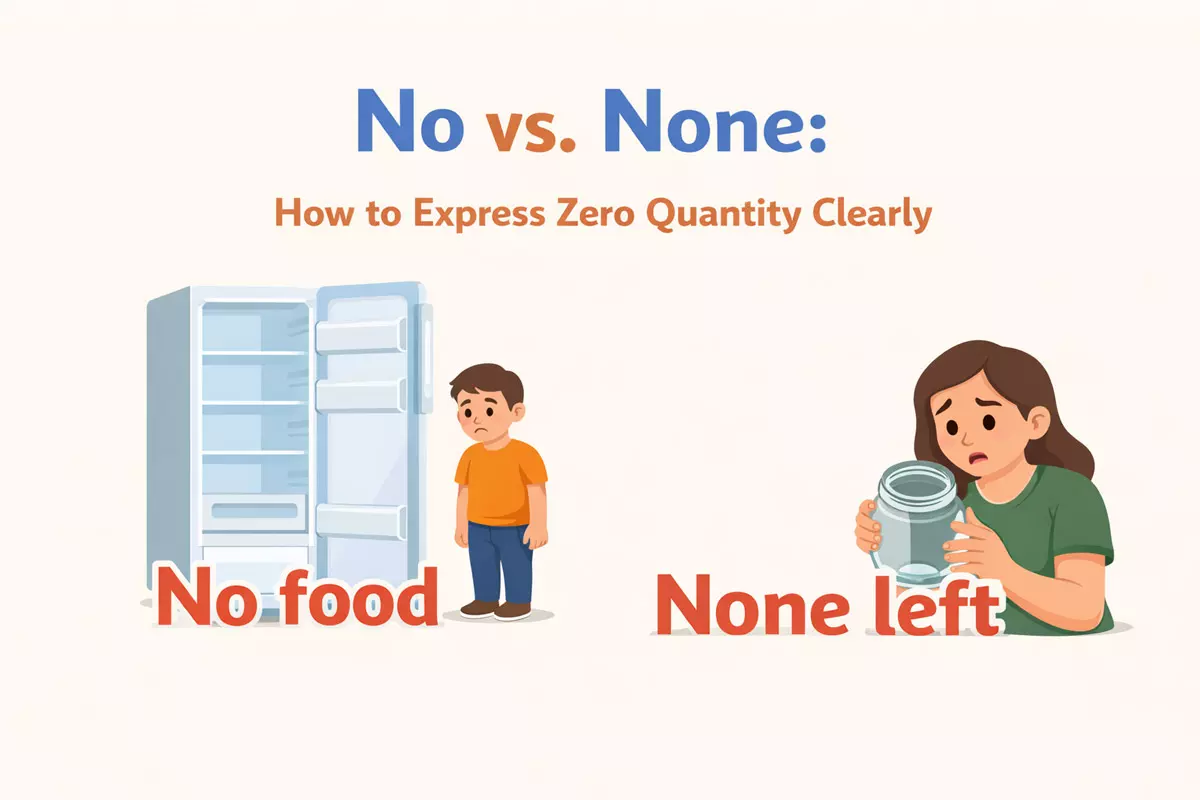 The article explains how to use no and none, showing their roles as determiner and pronoun. It covers agreement rules, double negatives, common errors, and gives clear examples and practice for choosing the correct word in everyday situations.
- Difference between determiner and pronoun usage
- When no must be followed by a noun
- When none replaces a noun completely
- Singular and plural agreement patterns
- Avoiding double negatives
- Common learner mistakes and confusion points
- Clear examples in everyday contexts
- Practice: choosing no or none correctly
Selecting the appropriate word to express absence can be challenging, particularly when choosing between "no" and "none." While both indicate a lack of something, "no" is typically used before a noun, as in "no milk," whereas "none" often stands alone or follows a verb, such as "there is none." Recognizing these subtle differences allows you to convey what is missing with greater accuracy and ensures your message is clear in both written and spoken communication.
Difference between determiner and pronoun usage
Understanding how “no” and “none” function in sentences is key to expressing zero quantity accurately. These words play different grammatical roles, which affects both the structure and clarity of your statements.
“No” as a Determiner
The word “no” is used directly before a noun to indicate the absence of something. It modifies the noun, similar to other determiners like “some” or “any.” Here are several common patterns:
- No milk left in the fridge.
- No students attended the lecture.
- No reason was given.
- No cars are allowed beyond this point.
- No evidence supports the claim.
- No pets permitted.
- No idea what happened.
- No time to lose.
- No one knows the answer. (Here, “no one” is an indefinite pronoun, but “no” itself is not a pronoun.)
- No books on the shelf.
Notice that “no” always comes before a noun or a noun phrase. It cannot stand alone without a noun following it.
“None” as a Pronoun
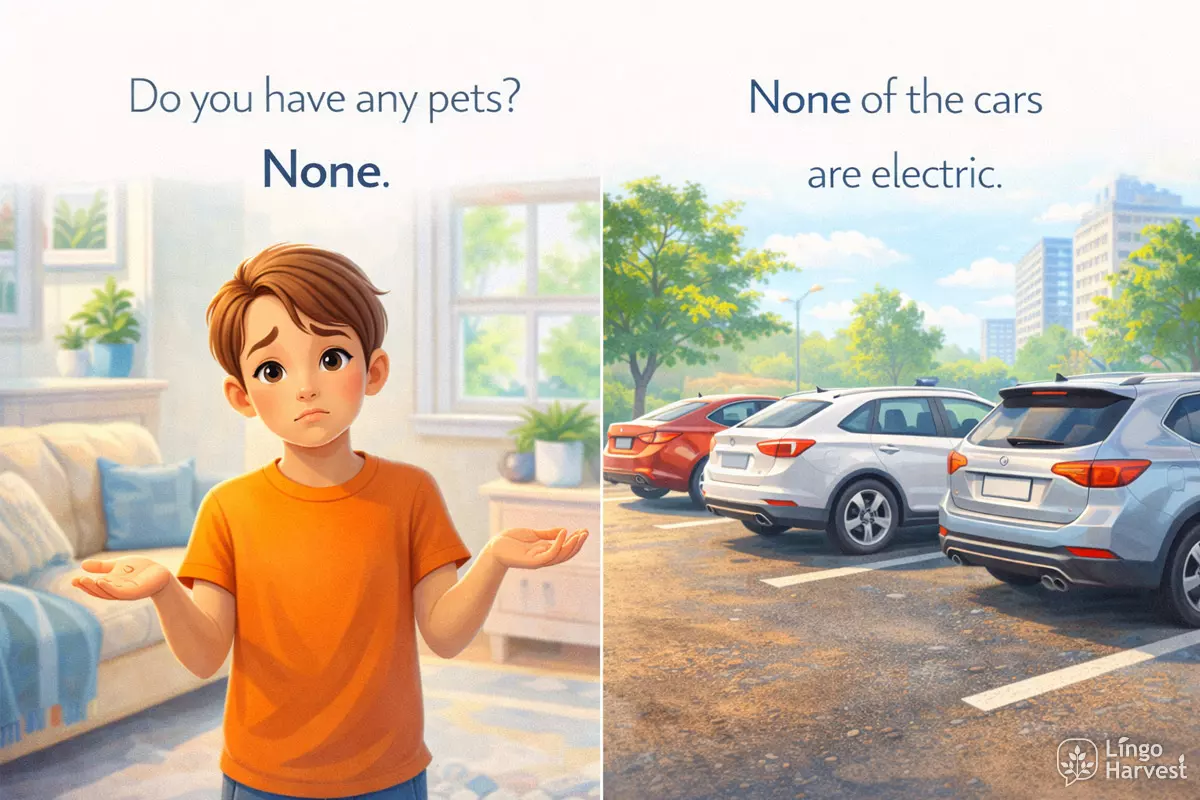
In contrast, “none” replaces a noun entirely, standing alone as a pronoun. It refers back to something already mentioned or understood in context. Consider these examples:
- How many cookies are left? None.
- Several students applied, but none were qualified.
- The evidence was examined, but none supported the claim.
- Do you have any pets? None.
- None of the cars are electric.
- We have many options, but none are suitable.
- None of my friends could come.
- He asked for volunteers, but none stepped forward.
- She offered explanations, but none were convincing.
- None of the answers are correct.
“None” can be used with or without “of” plus a noun phrase (e.g., “none of the cookies”). It never comes directly before a noun without “of.”
Direct Comparison
To make the distinction clearer, here’s a side-by-side look at how these words operate in real sentences:
| As Determiner (“no”) | As Pronoun (“none”) |
|---|---|
| No apples are left. | None are left. |
| No tickets remain. | None remain. |
| No students passed the test. | None passed the test. |
| No answers were correct. | None were correct. |
| No money was found. | None was found. |
| No options are available. | None are available. |
Summary
Use “no” to directly modify nouns and state the absence of something. Use “none” when you want a pronoun to stand in for “not any” of a previously mentioned noun. Choosing the correct form helps keep your meaning precise and sentences natural.
When no must be followed by a noun
In English, the word no acts as a determiner and directly modifies a noun. This means it requires a noun to complete its meaning. You’ll see no used in front of both countable and uncountable nouns to indicate the absence of something. Using it without a noun is not grammatically correct; if you want to refer to “zero” without specifying the thing, use none instead.
Common patterns using "no"
Here are some typical sentence structures where no is used before a noun:
- No + singular countable noun: No student was late.
- No + plural countable noun: No cookies remain.
- No + uncountable noun: No information is available.
- No + adjective + noun: No clear answer was given.
- No + possessive noun: No John's friends attended. (Rare, but possible for emphasis.)
- No + proper noun (in rare, poetic, or idiomatic cases): No London compares to the original.
- No + noun phrase: No students in the class finished early.
- No + gerund noun: No smoking allowed.
- No + abstract noun: No hope remains.
- No + collective noun: No staff are present.
Examples: Correct and Incorrect Usage
To clarify how no pairs with nouns, here’s a quick comparison:
| Correct Usage | Incorrect Usage |
|---|---|
| No dogs are allowed here. ✅ | No are allowed here. ❌ |
| No water was found. ✅ | No was found. ❌ |
| No tickets remain. ✅ | No remain. ❌ |
| No solution exists. ✅ | No exists. ❌ |
Quick Tips
- Use no only when it is immediately followed by a noun or noun phrase.
- If you want to express “none” without repeating the noun, use none instead: “No students were present.” vs “None were present.”
- Remember: no never stands alone in a sentence; it always needs a noun to clarify what is absent.
Understanding when no requires a noun helps you avoid common mistakes and makes your statements about zero quantity much clearer.
When none replaces a noun completely
In English, none can serve as a stand-alone word that takes the place of a noun phrase when referring to zero quantity. This means you don’t have to repeat the noun previously mentioned, as none makes the meaning clear by itself. Using none in this way helps avoid unnecessary repetition and keeps sentences concise.
How it works in sentences
Suppose someone offers you cookies and asks, “Would you like some cookies?” If you don’t want any, you could reply, “No, thank you. I want none.” Here, none stands in for “cookies.” This pattern is common in both spoken and written English, especially when the noun is obvious from context.
- “How many tickets are left?” — “None.” (meaning “No tickets are left.”)
- “Do you have any questions?” — “None at all.”
- “Which of these books have you read?” — “None.”
- “How many errors did you find?” — “None.”
- “Who wants tea?” — “None of us.”
- “How many students failed?” — “None.”
- “Do you have any pets?” — “None.”
- “Which colors do you prefer?” — “None in particular.”
- “Have you completed any assignments?” — “None yet.”
- “How many of your friends are coming?” — “None.”
- “Did any of the trains arrive on time?” — “None did.”
- “How many apples are in the basket?” — “None.”
Comparing 'none' and repeating the noun
Often, you could repeat the noun for clarity, but none is preferred for brevity when the context is clear. Here’s a comparison of full versus reduced forms:
| Full Sentence | With “none” |
|---|---|
| I have no stamps. | I have none. |
| There are no tickets left. | There are none left. |
| She wants no dessert. | She wants none. |
| We found no mistakes. | We found none. |
| He owns no cars. | He owns none. |
Notes on usage
None is flexible: it can refer to people, things, or abstract concepts, as long as the noun is clear from context. It’s also suitable in both formal and informal settings. However, avoid using none if the reference isn’t obvious, as this may confuse your reader or listener.
In summary, substituting an entire noun phrase with none streamlines communication, especially when talking about zero quantity. This usage is standard and readily understood in everyday English.
Singular and plural agreement patterns
Understanding how “no” and “none” interact with singular and plural nouns is essential for accurate, natural-sounding English. The agreement between these words and the nouns or verbs they modify can sometimes be confusing, especially for learners. Here’s how to use them correctly in different contexts.
“No” with Singular and Plural Nouns
“No” can be used before both singular and plural nouns, but the verb agreement depends on whether the noun is countable or uncountable, and whether it’s singular or plural. Consider the following patterns:
- No student is late. (singular noun, singular verb)
- No students are late. (plural noun, plural verb)
- No water is available. (uncountable noun, singular verb)
- No books are on the shelf. (plural noun, plural verb)
- No money is left. (uncountable noun, singular verb)
- No answer was given. (singular noun, singular verb)
- No answers were given. (plural noun, plural verb)
- No child has finished. (singular noun, singular verb)
- No children have finished. (plural noun, plural verb)
- No information is missing. (uncountable noun, singular verb)
“None” and Verb Agreement
“None” can refer to both singular and plural nouns, and the verb can be either singular or plural depending on what “none” refers to and the emphasis:
- None of the water is cold. (uncountable noun, singular verb)
- None of the cake was eaten. (singular/uncountable noun, singular verb)
- None of the students are ready. (plural noun, plural verb — common in modern English)
- None of the students is ready. (plural noun, singular verb — more formal or emphasizing “not one”)
- None of them have arrived. (plural referent, plural verb)
- None of it has been found. (singular referent, singular verb)
Comparing “No” and “None” in Agreement
The choice between singular and plural verbs often depends on the noun following “no,” or the noun “none” is referencing. Here’s a quick comparison to clarify common patterns:
| Expression | Correct Verb Agreement |
|---|---|
| No car is available. | Singular verb (“is”) |
| No cars are available. | Plural verb (“are”) |
| None of the car is available. | Singular verb (“is”) |
| None of the cars are available. | Plural verb (“are”) |
| None of the cake was eaten. | Singular verb (“was”) |
| None of the cakes were eaten. | Plural verb (“were”) |
Special Notes and Common Pitfalls
- With collective nouns, either singular or plural verbs may be possible with “none,” depending on whether the group is seen as a single unit or individuals.
- In formal writing, using a singular verb with “none” is sometimes preferred when it means “not one.” In everyday English, plural verbs are frequently used when referring to people or things.
- “No” never stands alone; it always comes before a noun. “None” can stand alone or be followed by “of.”
- Uncountable nouns always take singular verbs, regardless of whether you use “no” or “none.”
Mastering these patterns helps ensure your statements about zero quantity are clear, precise, and grammatically correct.
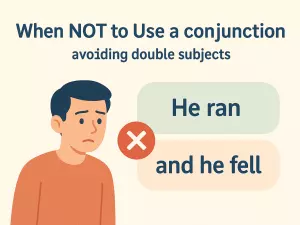
Avoiding double negatives
Clarity in expressing zero quantity often depends on steering clear of double negatives. In English, using more than one negative word in a sentence can confuse readers and listeners, sometimes even flipping the intended meaning. For example, saying "I don't have no time" actually suggests the opposite of "I have no time" in formal English. Instead, it's best to use a single negative word to express the absence of something.
Why double negatives cause confusion
When two negative forms appear together, they can unintentionally cancel each other out. This is common in some dialects, but in standard English, it usually results in ambiguity. To make your meaning unmistakable, choose a clear negative structure—either "no" or "none", but not both in the same clause.
Common double negative pitfalls
- Mixing "not" with "no" or "none" ("She didn't see no one" ❌)
- Using "nothing" after a negative verb ("He can't find nothing" ❌)
- Pairing "never" with "no" or "none" ("I never heard no sound" ❌)
- Stacking negatives with "hardly" or "barely" ("There isn't hardly any left" ❌)
Clear alternatives to double negatives

Instead of doubling up on negative words, opt for a single, direct form. Here are some ways to state zero quantity unambiguously:
- "I have no money."
- "There is none left."
- "We saw nobody."
- "She didn't see anyone."
- "He found nothing."
- "We never heard a sound."
- "There is hardly any left."
- "None of the answers were correct."
- "No dogs are allowed here."
- "Not a single person arrived."
Comparing correct and incorrect forms
| Incorrect (Double Negative) | Correct (Single Negative) |
|---|---|
| I don't have none. | I have none. |
| She didn't see nobody. | She saw nobody. She didn't see anybody. |
| We can't find nothing. | We can't find anything. We found nothing. |
| They never said nothing. | They never said anything. They said nothing. |
| There isn't no food left. | There is no food left. There isn't any food left. |
When you want to stress the absence of something, one negative is enough. If you’re unsure, replace "no" with "any" after a negative verb, or use "none" as the subject or object. This practice will help you communicate zero quantity without ambiguity or accidental double negatives.
Common learner mistakes and confusion points
Learners often struggle to distinguish when to use “no” and when “none” is the better choice. The confusion usually stems from differences in sentence structure, the presence (or absence) of a noun, and whether the word stands alone or modifies something. Understanding these distinctions is key to expressing zero quantity in clear, natural-sounding English.
Mixing up “no” and “none” with nouns
A frequent issue is using “none” directly before nouns, which is incorrect in standard English. “No” is used to modify a noun (“no apples”), while “none” stands alone or replaces a noun (“There are none left”).
- Incorrect: I have none money.
- Correct: I have no money.
- Correct: How much money do you have? None.
Forgetting subject-verb agreement with “none”
Another challenge is deciding whether “none” should take a singular or plural verb. In modern English, “none” can be followed by either, depending on context and whether you’re thinking of “not one” (singular) or “not any” (plural).
- None of the cake was eaten. ✅
- None of the cookies were left. ✅
Confusing “no” with “not any” or “not a”
Learners sometimes substitute “no” for “not any” or “not a,” which can affect sentence formality or emphasis. While all are correct, “no” is often more direct.
- There are no tickets left. (direct)
- There aren’t any tickets left.
- There is not a single ticket left.
Omitting “of” after “none”
When “none” refers to a specific group, “of” is required, but learners may leave it out.
- Correct: None of the students passed.
- Incorrect: None the students passed.
Summary Table: “No” vs “None” in Use
| Pattern | Example |
|---|---|
| “No” + noun | No cars are parked outside. |
| “None” (standalone) | How many? None. |
| “None of” + group | None of the answers are correct. |
| “No” in negative sentences | We have no idea. |
Additional pitfalls
Learners may also:
- Overuse “none” in formal writing where “no” is clearer.
- Use double negatives: I don’t have no friends. (should be I have no friends or I don’t have any friends.)
- Forget that “none” can refer to uncountable nouns: None of the water is left.
- Misinterpret “none” as always singular; context matters.
- Mix up register: “None left” (informal), “There are none remaining” (more formal).
- Incorrectly use “no” where “none” should follow a verb: There is no left. (should be There is none left.)
Careful attention to these patterns and exceptions will help you communicate the idea of zero quantity more naturally and accurately in English.
Clear examples in everyday contexts
Understanding the difference between "no" and "none" becomes much easier when you see how they're used in practical situations. Both words relate to the idea of zero quantity, but they appear in slightly different structures and can change the tone or clarity of your message. Here are some everyday scenarios to illustrate the distinction.
How "no" and "none" show zero quantity
- No milk left: "There is no milk in the fridge."
- None of the apples: "None of the apples are ripe yet."
- No homework: "We have no homework tonight."
- None for me: "None for me, thanks."
- No tickets available: "There are no tickets left for the concert."
- None of the emails: "None of the emails need replies."
- No rain today: "There's no rain in the forecast."
- None of the lights: "None of the lights are on."
- No pets allowed: "This building allows no pets."
- None of the students: "None of the students failed the test."
Side-by-side comparison
To make the contrast even clearer, here are some paired sentences showing how each word fits into common phrases. Notice the change in structure and focus.
| Using "no" | Using "none" |
|---|---|
| We have no bread. | None of the bread is fresh. |
| There are no messages. | None of the messages are important. |
| I saw no cars on the road. | None of the cars are moving. |
| She has no time to talk. | None of her time is free. |
Quick tips for everyday speech
- Use no directly before a noun to say something is completely absent. (e.g., "no sugar," "no problems")
- Use none when referring back to a group or set already mentioned. (e.g., "none of them," "none left")
- Both words are negative, so avoid double negatives: "I have no money" (✅), not "I don't have no money" (❌).
These patterns make expressing zero quantity more precise and natural in conversation, whether you're talking about food at home, assignments at school, or items at a store.
Practice: choosing no or none correctly
Understanding when to use "no" and when to choose "none" can make your writing clearer and more precise. Let's explore real-world contexts, sentence patterns, and some hands-on exercises to sharpen your skills.
Common Patterns: When to Use Each Word
- "No" is usually followed by a noun: no money, no time, no people.
- "None" stands alone, replacing a noun: None left, None were found.
- In questions and short answers, "none" is more common: How many tickets? None.
- For negative statements about quantity, "no" is used directly before the noun: There are no cookies.
- To stress the total absence, "none" can emphasize that not even one remains: None of the lights are working.
Examples: Spot the Correct Word
Try these sentences. Which word fits—"no" or "none"?
- There are _____ apples in the basket.
- _____ of the students passed the test.
- We have _____ bread left for breakfast.
- She wanted cookies, but there were _____.
- _____ of these answers is correct.
- I have _____ idea what you mean.
- There’s _____ milk in the fridge.
- _____ of his friends came to the party.
- Sorry, there are _____ tickets available.
- _____ of your suggestions worked.
Show answers
- no
- None
- no
- none
- None
- no
- no
- None
- no
- None
Quick Reference Table: Usage Comparison
| Context | Correct Form & Example |
|---|---|
| Before a noun | No cars are parked here. |
| Replacing a noun (standalone) | None were left after lunch. |
| In response to "How many?" | How many cookies? None. |
| With "of" phrases | None of the answers is correct. |
| Emphasizing absence in statements | There is no hope left. |
Mini Quiz: Correct or Incorrect?
Read each sentence. Decide if the use of "no" or "none" is correct (✅) or incorrect (❌).
- No of the lamps work.
- There are no pencils in the box.
- None bread was ordered.
- None of the children wanted to leave.
- No of the answers are correct.
- There is no milk in the fridge.
- None people came to the meeting.
- None of the tickets were available.
- No of the rooms are clean.
- There are no seats left.
Show answers
- ❌ (should be “None of the lamps work.”)
- ✅
- ❌ (should be “No bread was ordered.”)
- ✅
- ❌ (should be “None of the answers are correct.”)
- ✅
- ❌ (should be “No people came to the meeting.” or “None of the people came to the meeting.”)
- ✅
- ❌ (should be “None of the rooms are clean.”)
- ✅
Tips for Mastery
- Remember: "no" always comes before a noun; "none" never does.
- Think about what you are replacing—if the noun is missing, "none" is likely correct.
- Practice by making your own sentences and swapping "no" and "none" to see which sounds natural.