Fewer vs Less: The Rule, the Exceptions, and Real Usage

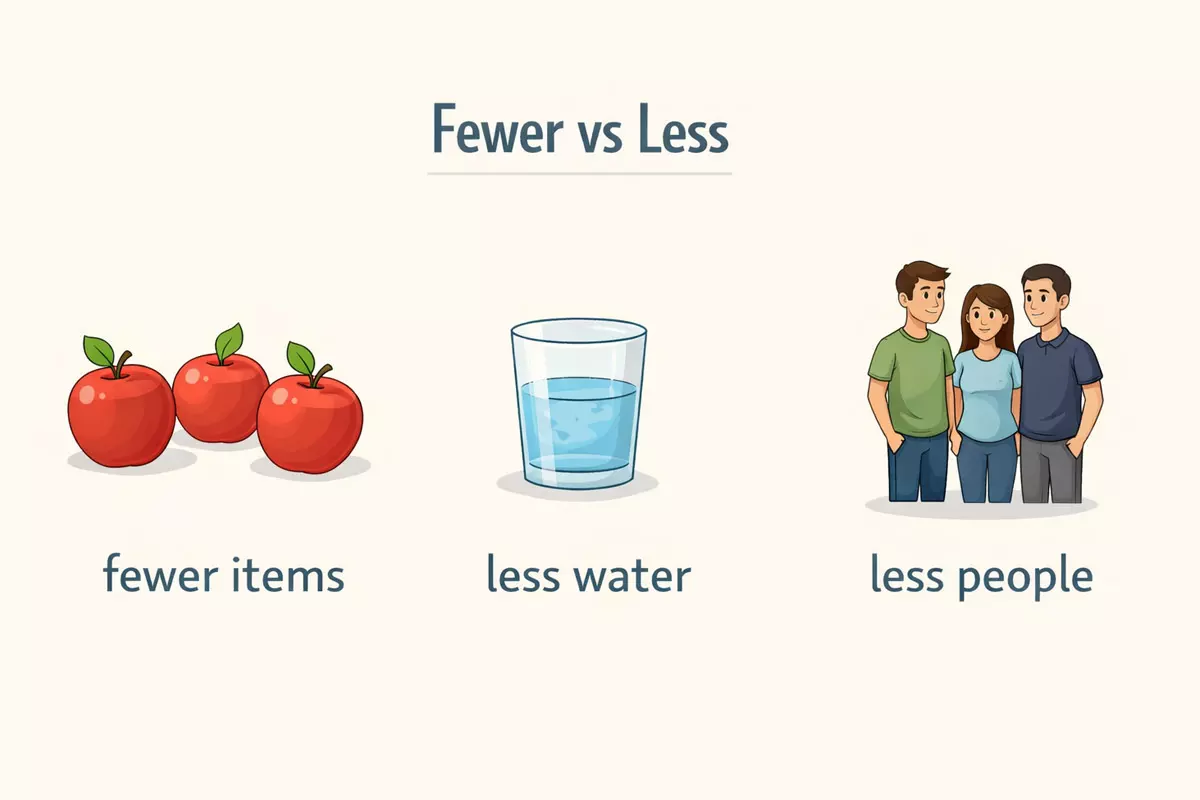 Here we the traditional rule for fewer and less with countable and uncountable nouns, modern exceptions such as time and money, differences between formal and spoken English, common mistakes, real-life examples, and practice exercises.
- Traditional rule for countable and uncountable nouns
- Common exceptions in modern English usage
- Use of less with time, distance, and money
- Formal rules vs everyday spoken English
- Why signs and headlines often break the rule
- Typical learner confusion and overcorrection
- Examples from real-life contexts
- Practice: applying fewer or less correctly
Deciding which words to use when describing smaller quantities or numbers can be more challenging than it seems, largely because of the various grammar rules and exceptions involved. Mastering these subtle distinctions requires not only learning the rules but also paying attention to how language is actually used in everyday situations. By observing real-life examples and practicing regularly, you can become more confident in choosing the correct terms and improve your overall communication skills.
Traditional rule for countable and uncountable nouns
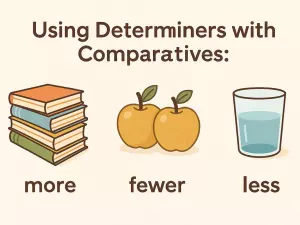
The classic guideline for using "fewer" and "less" relies on the distinction between things you can count and those you cannot. In standard English, "fewer" is reserved for items that can be counted individually, while "less" is used for things measured in bulk, quantity, or degree. This distinction helps clarify meaning, especially in formal writing or academic contexts.
How the distinction works
Countable nouns refer to separate, individual items—think "books," "apples," or "cars." Uncountable nouns (also called mass nouns) refer to substances or concepts that aren’t easily separated into individual elements, such as "water," "sand," or "information." The traditional rule states:
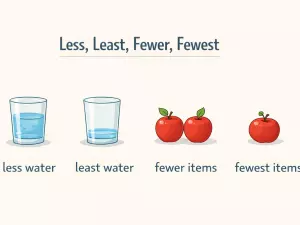
- Use fewer for plural, countable nouns: "fewer cookies," "fewer people," "fewer mistakes."
- Use less for singular, uncountable nouns: "less sugar," "less time," "less money."
| Type of Noun | Correct Form | Example |
|---|---|---|
| Countable | Fewer | There are fewer cars on the road today. |
| Uncountable | Less | We have less water than we need. |
| Countable | Fewer | She made fewer errors this time. |
| Uncountable | Less | He wants to spend less time commuting. |
| Countable | Fewer | We need fewer meetings each week. |
| Uncountable | Less | There's less noise after midnight. |
Common countable and uncountable examples
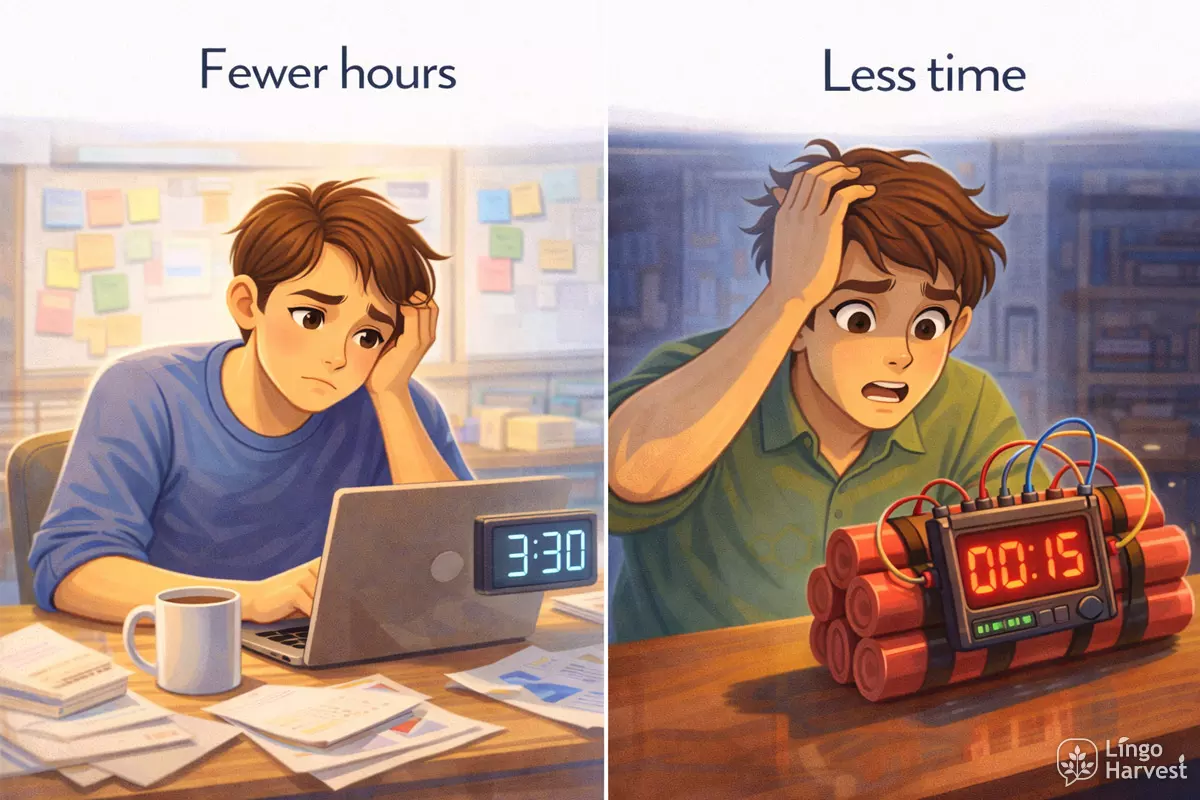
- Fewer chairs → Less furniture
- Fewer bottles → Less water
- Fewer coins → Less money
- Fewer students → Less education (as a concept)
- Fewer emails → Less correspondence
- Fewer hours → Less time
- Fewer options → Less choice
- Fewer questions → Less confusion
- Fewer ingredients → Less salt
- Fewer problems → Less trouble
- Fewer accidents → Less risk
- Fewer cars → Less traffic
While the rule is simple in theory, real-life usage is sometimes less clear-cut. Everyday speech and even some published writing can blur the boundaries, especially with words like "less than 10 items" or measurements ("less than 50 miles"). Still, the traditional approach provides a helpful starting point for clear, precise communication.
Common exceptions in modern English usage
English speakers often encounter situations where the traditional “fewer” versus “less” rule doesn’t quite fit real-world usage. While the classic guideline is to use "fewer" for countable items (like apples or cars) and "less" for uncountable quantities (like water or time), many exceptions have become standard in modern communication, particularly in set phrases, measurements, and casual speech.
Established phrases and set expressions
Certain fixed expressions defy the usual rule, even in formal contexts. These common examples have become so ingrained that alternatives would sound awkward:
- Less than ten miles (instead of “fewer than ten miles”)
- Less than two hours
- Less than $50
- Less than 100 people (often heard, though technically “fewer” is correct)
- Less than 20 items (as seen on supermarket express lanes)
Measurements, amounts, and distance
In many cases involving measurements or amounts—such as time, money, weight, or distance—“less” is used regardless of whether the noun is countable or not. This usage is so widespread that it’s accepted in both spoken and written English:
- Less than five kilometers
- Less than three liters
- Less than 30 minutes
- Less than 500 grams
- Less than a dozen eggs
Supermarket express lanes and public signage
One of the most visible exceptions appears in grocery stores. Signs often read “10 items or less,” even though purists would argue for “10 items or fewer.” The “less” version is so common that it no longer feels incorrect to most people, and many stores have adopted it for clarity and brevity.
Abstract concepts and percentages
When discussing percentages, fractions, or abstract ideas, “less” tends to dominate—especially when the noun is considered as a whole amount, not as individual units:
- Less than 30% of the students attended
- Less than half the class
- Less than a quarter of respondents
- Less than the majority
Summary: Traditional rule vs. real-world usage
| Context | Form Commonly Used |
|---|---|
| Exact counts (e.g., “apples”) | Fewer |
| Measurements (time, money, distance, weight) | Less |
| Percentages, fractions, or collective quantities | Less |
| Supermarket express lane signage | Less |
| Fixed expressions (“less than ten miles”) | Less |
In summary, while the rule about using “fewer” for countable nouns and “less” for uncountable ones is a helpful guideline, real-life English often bends or ignores it for the sake of clarity, convenience, or tradition. Familiarity with these exceptions can help you sound natural and avoid awkwardness, especially in everyday conversation and common signage.
Use of less with time, distance, and money
When talking about measurements like time, distance, and money, English speakers often use less instead of fewer, even though these words refer to countable units (such as minutes, miles, or dollars). This is an accepted exception to the typical rule that fewer is used with countable nouns. The reason is that, in these contexts, we usually think about the total amount as a singular mass or quantity rather than as individual units.
Why does this exception exist?
Expressions involving sums of time, money, or distance are generally treated as singular amounts. For example, when we say "less than 10 minutes," we're focusing on the overall duration, not each individual minute. The same logic applies to distances and sums of money: "less than 5 miles" and "less than 20 dollars" both treat the measurement as a whole.
Common examples
- She finished the test in less than 30 minutes.
- The store is less than 2 miles away.
- We spent less than $50 on groceries.
- They drove less than 100 kilometers.
- He slept for less than 6 hours.
- It’s less than 5 meters from here to the door.
- The journey took less than 3 days.
- You should drink less than 2 liters per day.
- Tickets cost less than 10 euros each.
- She ran less than 10 laps.
- It weighs less than 500 grams.
- I have less than 20 pounds in my wallet.
- We waited less than 15 seconds.
- There’s less than a week left until the deadline.
Comparison with “fewer”
Using fewer with these measurements generally sounds awkward or incorrect to native speakers. For instance, "fewer than 30 minutes" is rarely used, except in very formal or technical contexts, and even then, it may sound stilted.
| Measurement Type | Preferred Usage | Awkward/Incorrect Usage |
|---|---|---|
| Time | less than 20 minutes | fewer than 20 minutes |
| Distance | less than 5 miles | fewer than 5 miles |
| Money | less than $100 | fewer than $100 |
| Weight | less than 2 kilograms | fewer than 2 kilograms |
Key takeaway
Whenever you’re referring to amounts of time, sums of money, or measures of distance (and similar collective quantities), less is the preferred and natural choice in standard English. This pattern holds true in both formal and everyday language, so you can confidently use less in these contexts.
Formal rules vs everyday spoken English
In English grammar, the distinction between “fewer” and “less” is clear-cut: “fewer” is for things you can count (countable nouns), while “less” is for things you can’t count (uncountable nouns). For example, you’re supposed to say “fewer apples” but “less water.” However, when people actually talk, these rules are often stretched, ignored, or simply not on their radar.
How rules work in formal contexts
Standard written English, academic papers, and edited publications usually follow the traditional guideline. You’ll see sentences like:
- “There are fewer students in class today.”
- “We need less sugar in this recipe.”
- “Fewer than 10 people attended the meeting.”
- “Less information is available.”
Editors and teachers often correct “less people” to “fewer people” in these settings.
What people say in real life
Everyday conversation is much more relaxed. Many native speakers use “less” with countable nouns, especially when referring to time, money, distance, or even people. You might hear:
- “There were less cars on the road this morning.”
- “She has less friends than before.”
- “It took less than five minutes.”
- “We have less than 100 tickets left.”
- “That’s less calories.”
- “I want less problems, not more.”
- “They spent less days on vacation this year.”
- “There’s less options now.”
- “Less emails came in today.”
- “You’ll wait less hours if you come early.”
These phrases are common in speech, and even appear in advertising (“10 items or less”) and informal writing.
Comparing formal and casual usage
| Standard/Formal | Everyday Spoken English |
|---|---|
| Fewer people attended the party. | Less people came to the party. |
| Fewer than 10 mistakes were found. | Less than 10 mistakes were found. |
| We have fewer choices this year. | We have less choices this year. |
| I drank less water today. | I drank less water today. ✅ (correct both ways) |
| Please use fewer words. | Please use less words. |
Why do people bend the rule?
The reason “less” often replaces “fewer” in speech is simplicity and efficiency. “Less” feels more natural and is easier to say quickly. Also, some expressions—like “less than 10 minutes” or “10 items or less”—have become so common that the traditional rule just doesn’t stick for most speakers.
In short, the formal distinction is still expected in academic and professional writing, but relaxed rules dominate in spoken and casual English. It’s worth knowing both, so you can choose the right style for your audience.
Why signs and headlines often break the rule
Concise language is a top priority in signs and headlines, which often leads to grammar rules being set aside. The distinction between “fewer” and “less” is one such rule that gets ignored, especially when space or attention is limited. For example, “10 items or less” appears frequently in supermarkets, even though traditional grammar guides recommend “fewer” for countable nouns like items.
Why Brevity and Impact Matter
Visual clarity and speed are crucial in public messaging. Short, familiar words are easier to read at a glance, making “less” the preferred choice over “fewer” for many designers and editors. Headlines also favor brevity to fit limited space and to grab attention quickly.
- “Less” is one letter shorter and often feels more natural in rapid speech or reading.
- People are more likely to notice and remember signs that use common phrases.
- Marketing teams often select wording that matches the way people actually talk, not just what’s grammatically precise.
- Layout constraints may make a single word preferable over a longer or less familiar alternative.
Common Examples in Everyday Contexts
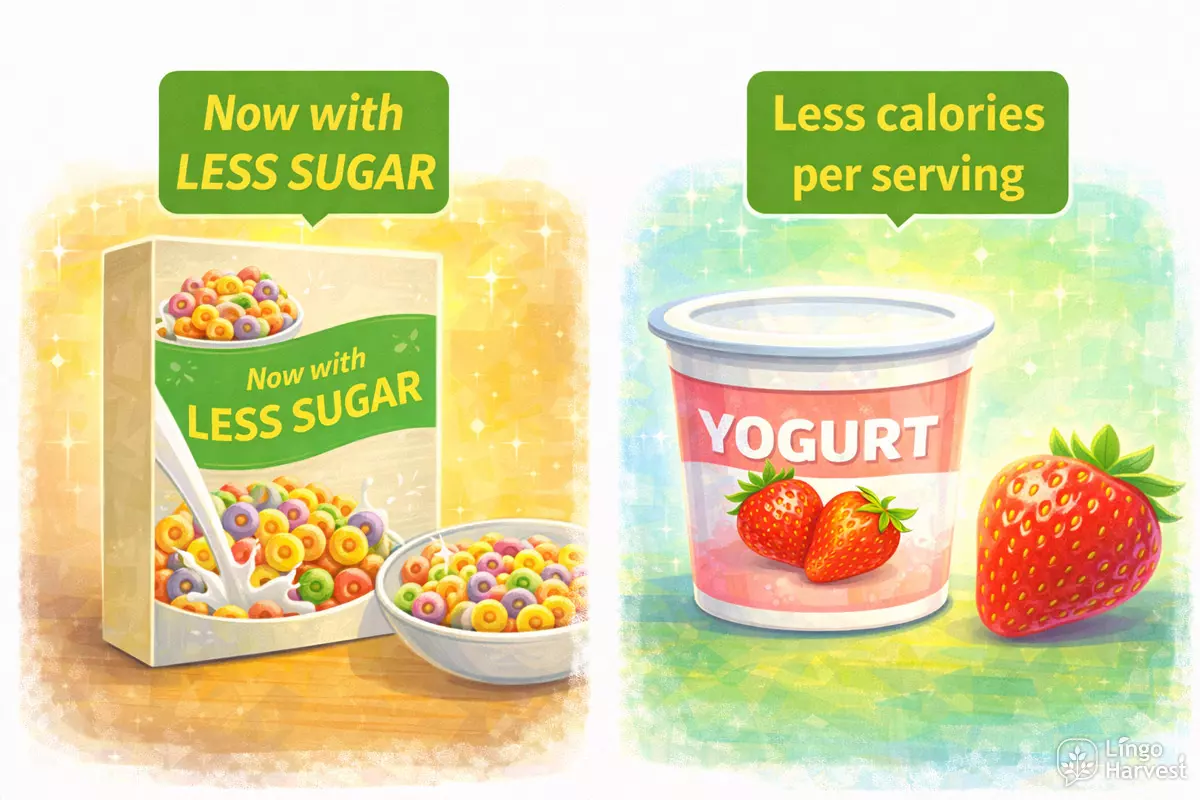
Below are some real-world phrases where the “fewer/less” distinction is commonly relaxed for the sake of clarity, space, or tone:
- 10 items or less
- Now with less sugar
- Less calories per serving
- Spend less time waiting
- Less than 100 available
- Less than 5 minutes away
- Less rules, more fun
- Less waste, more taste
- Less interruptions, more productivity
- Less lines, more savings
- Less steps to success
- Less paperwork required
- Less stress, more rest
- Less fees, more value
- Less noise, more focus
- Less hassle, more results
- Less effort, more reward
- Less traffic, more time
“Fewer” vs “Less” in Headlines and Signs
To highlight how these terms are actually used, here’s a comparison of typical phrases found in public spaces and the grammatically “correct” alternatives:
| Common Sign/Headline | Traditional Grammar |
|---|---|
| 10 items or less | 10 items or fewer |
| Less than 50 tickets left | Fewer than 50 tickets left |
| Less appointments available | Fewer appointments available |
| Spend less days waiting | Spend fewer days waiting |
| Less mistakes, more success | Fewer mistakes, more success |
| Less cars on the road | Fewer cars on the road |
Although language purists might cringe, the reality is that signs and headlines are designed for immediate understanding and recall, not for textbook perfection. Over time, the “less/fewer” rule has become one of those guidelines that is often bent for the sake of effective, practical communication.
Typical learner confusion and overcorrection
Many English learners struggle to distinguish when to use "fewer" versus "less," especially because the difference often seems subtle in real conversation. The basic rule—use "fewer" with countable nouns and "less" with uncountable ones—sounds simple, but everyday usage and exceptions quickly muddy the waters. As a result, students sometimes second-guess themselves or attempt to apply the rule too rigidly, leading to awkward or unnatural phrasing.
Where overcorrection happens
A common learner response is to overapply the "fewer" rule to every plural noun, even in cases where native speakers would naturally use "less." This happens most often with time, money, distance, and certain set expressions. For example, saying "fewer than 10 dollars" instead of "less than 10 dollars" can sound stilted or even incorrect to native ears.
- People spent less time on their phones today. ✅
- There were fewer people at the concert than last year. ✅
- We have less than 30 minutes left. ✅ (not "fewer than 30 minutes")
- He drank less water than usual. ✅
- "Ten items or less" vs. "Ten items or fewer" (both appear, but the first is more common in stores)
Examples of confusion in real usage
Learners often hesitate with phrases like:
- Less/fewer calories
- Less/fewer cars on the road
- Less/fewer opportunities
- Less/fewer than 100 people
- Less/fewer pieces of advice
- Less/fewer dollars
- Less/fewer hours
- Less/fewer mistakes
- Less/fewer bottles
- Less/fewer problems
- Less/fewer choices
- Less/fewer students
- Less/fewer ingredients
- Less/fewer rules
- Less/fewer steps
- Less/fewer questions
- Less/fewer seats
- Less/fewer options
Common patterns of overcorrection
The tendency to hyper-correct shows up in written assignments, tests, and even casual speech. Learners may feel pressured to use the "correct" form every time, even in fixed expressions or idiomatic phrases where native speakers would bend the rule.
| Context | Natural Usage |
|---|---|
| Money | less than $20 |
| Distance | less than 5 miles |
| Time | less than 10 minutes |
| Countable objects | fewer apples |
| Set phrase (signs) | 10 items or less |
In summary, the main challenge is not just knowing the rule, but recognizing when native usage deviates from it. Overcorrecting can make English sound unnatural, so awareness of these common pitfalls—and exposure to real-life examples—helps learners gain confidence and fluency.
Examples from real-life contexts
Understanding when to use "fewer" and when to use "less" can be tricky, especially since everyday speech and writing often bend the standard rule. The classic guideline is: use "fewer" with countable nouns (things you can count individually) and "less" with uncountable nouns (things measured in bulk or mass). However, the way people use these words in real scenarios can differ from textbook rules, especially in casual conversation, marketing, and even official signage.
Countable vs. Uncountable: Everyday Sentences
- There are fewer cars on the road during holidays.
- I drank less water than usual today.
- The supermarket checkout sign says: "10 items or less." ❌ (Standard rule: "10 items or fewer")
- She has fewer friends in this city than back home.
- We have less time before the meeting starts.
- He made fewer mistakes on this test compared to the last one.
- There's less sugar in this recipe.
- They spent less money this year.
- My phone has fewer apps installed now.
- There are fewer than 100 pages left in the book.
- People are buying less meat these days.
- This bottle contains less than a liter of juice.
- The store sold fewer tickets than expected.
- Can you use less salt next time?
- The new model uses less energy.
- She received fewer invitations this year.
- There are fewer options available now.
- He has less patience when he's tired.
Comparing "Fewer" and "Less" in Context
Sometimes, both words might seem correct, but only one fits the situation. Here's a quick comparison from actual usage:
| Phrase | Correct Word |
|---|---|
| Fewer calories / Less calories | Less calories (common in advertising, but "fewer calories" is correct by the rule) |
| Fewer people / Less people | Fewer people (standard), but "less people" is often heard in speech |
| Fewer hours / Less hours | Fewer hours (correct), though "less hours" appears in casual talk |
| Fewer bottles / Less bottles | Fewer bottles (by the rule) |
| Less water / Fewer water | Less water (always correct, "fewer water" is incorrect) |
Special Cases and Exceptions
Some expressions break the usual pattern, especially in set phrases, measurements, or when referring to time, distance, or money. Consider these situations:
- "Less than 10 miles to go" (distance, not countable items)
- "Less than $5" (money as an amount, not individual units)
- "In less than 2 hours" (time as a quantity)
- "No fewer than 50 applicants" (emphasizing the high count)
While the rule is helpful, actual usage in the wild sometimes favors "less" for ease or idiom, especially in informal speech and commercial contexts. Noticing these nuances can help you sound more natural and understand what you hear or read every day.
Practice: applying fewer or less correctly
Mastering the difference between “fewer” and “less” requires more than memorizing a single rule. To become comfortable with these words in context, it helps to look at practical examples, spot patterns, and try some exercises. Below, you’ll find a range of sentences and comparison points to test your understanding and see how these words work in everyday English.
Common Scenarios: When to Use Each Word
Consider these situations, which frequently cause confusion. Which word would you use in each example? Try to decide before checking the answers below.
- Items you can count (e.g., apples, cars, mistakes)
- Things you can’t count individually (e.g., water, time, money in general)
- Amounts with measurements or distances (e.g., miles, liters)
- Expressions with “less than” followed by a number (e.g., less than 10 minutes)
- Special cases in supermarket signs (“10 items or less” vs. “10 items or fewer”)
Quick Exercise: Which Word Fits?
- There are ________ students in class today than yesterday.
- We have ________ sugar left in the jar.
- She drank ________ cups of coffee this morning.
- This recipe calls for ________ salt.
- The store had ________ than 20 customers before noon.
- I spent ________ time on homework this week.
- Please try to make ________ mistakes on the next test.
- He wants to eat ________ sweets this month.
- The trip took ________ than three hours.
- There are ________ cars in the parking lot now.
Show answers
- fewer
- less
- fewer
- less
- fewer
- less
- fewer
- fewer
- less
- fewer
Comparison Table: Countable vs. Uncountable Nouns
| Countable Example | Uncountable Example |
|---|---|
| There are fewer books on the shelf. | There is less information in this article. |
| She made fewer errors this time. | He has less patience than before. |
| We need fewer chairs for the meeting. | They gave us less advice than expected. |
| He owns fewer cars now. | I have less hope for a sunny day. |
| There are fewer options available. | She has less energy in the evening. |
Spot the Exception
Some phrases break the usual pattern, especially with measurements or set expressions. Decide if each sentence is correct or incorrect.
- Less than 50 miles to go
- Less students came today
- 10 items or less (common in stores)
- Less people were at the meeting
- Less than 10 minutes
- Less books are available now
- Less than 5 dollars
- Less chairs are needed
- Less than 2 hours left
- Less emails were sent
Show answers
- ✅ (Correct as written)
- ❌ It should be “Fewer students came today.”
- ✅ (Correct as written)
- ❌ It should be “Fewer people were at the meeting.”
- ✅ (Correct as written)
- ❌ It should be “Fewer books are available now.”
- ✅ (Correct as written)
- ❌ It should be “Fewer chairs are needed.”
- ✅ (Correct as written)
- ❌ It should be “Fewer emails were sent.”
Tips for Everyday Use
- Use “fewer” for things you can count one by one.
- Choose “less” for things that are measured or can’t be counted individually.
- Remember common exceptions with time, money, and distance.
- In formal writing, “10 items or fewer” is preferred, but “10 items or less” is acceptable in everyday speech.
With practice, choosing the correct word becomes second nature. Review the examples above, try writing your own, and check your choices whenever you’re unsure.