Reported Questions in English: Direct to Indirect Speech

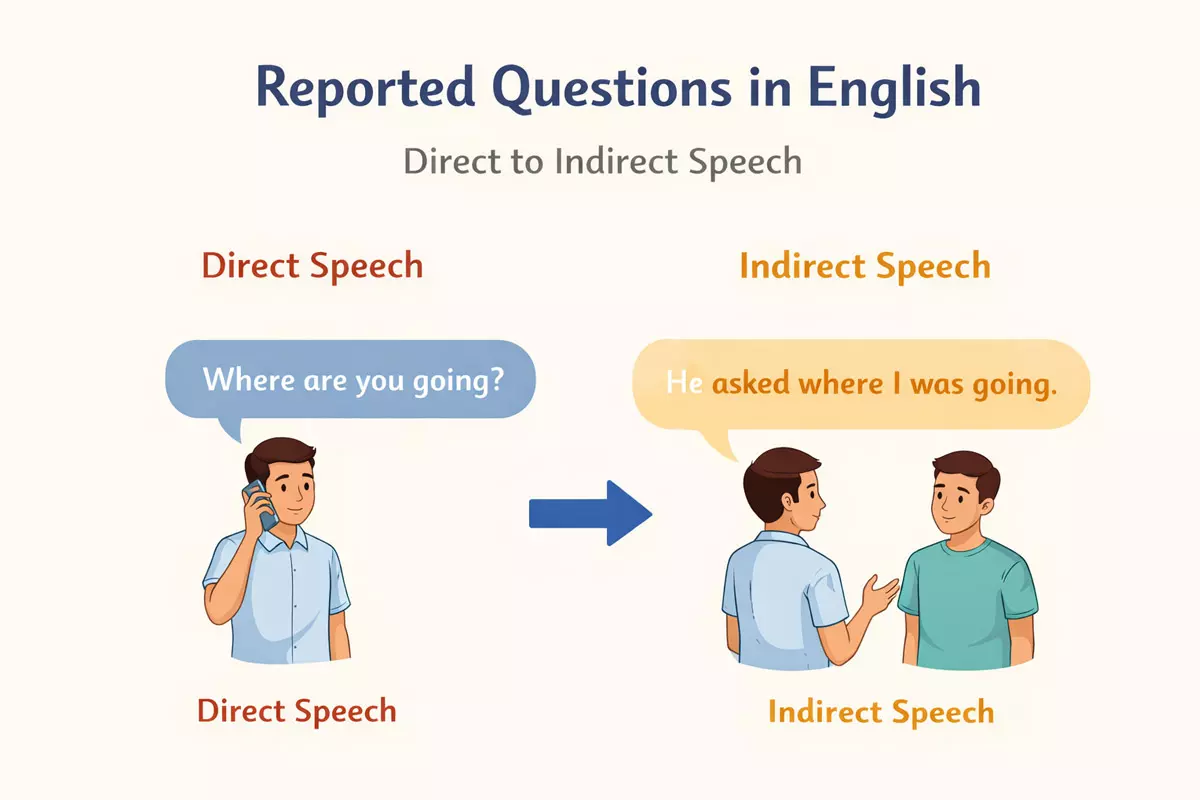 This article explains reported questions, the difference between direct and indirect questions, and how to change word order, tense, pronouns, and time expressions. It also covers reported yes/no and WH-questions, common mistakes, and includes practice exercises.
Turning direct queries into their indirect forms can puzzle even confident English speakers, but mastering this skill is important for effective communication. When reporting what someone has asked, knowing how to rephrase questions into indirect speech helps make conversations and writing smoother, more precise, and often more polite. For example, instead of saying, "Where is the station?" you might report, "She asked where the station was." Practicing this technique improves both clarity and professionalism in English.
What Reported Questions Are
When we transform a direct question into reported speech, we are expressing someone else’s question without quoting their exact words. This process involves changing both the structure and the wording of the original question. Reported questions are not direct quotations; instead, they summarize or rephrase what was asked, usually using verbs like ask, wonder, or inquire.
How Reported Questions Differ from Direct Questions
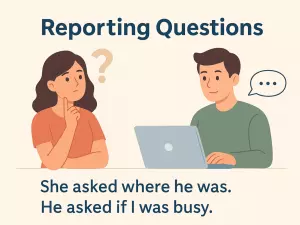
Unlike direct questions, which use question marks and often invert the subject and auxiliary verb (e.g., "Where is she?"), reported questions are statements and follow normal word order (e.g., "He asked where she was."). The punctuation also changes—a question mark is replaced by a period.
Main Features of Reported Questions
- Indirect form: The original question is rephrased as a statement.
- No question mark: Reported questions end with a period.
- Change in word order: Subject comes before the verb, as in normal statements.
- Tense shifts: Verb tenses often move back (e.g., present becomes past).
- Pronoun changes: Pronouns are adjusted to fit the perspective of the reporting speaker.
- No auxiliary do/does/did: These are dropped in reported yes/no questions.
- Reporting verbs: Common verbs include ask, want to know, wonder, and inquire.
Typical Patterns for Reporting Questions

To report a question, you generally use one of two patterns, depending on whether the original question begins with a question word (like what, where, why) or is a yes/no question.
| Direct Question | Reported Question |
|---|---|
| Where is the station? | He asked where the station was. |
| Did you see the movie? | She asked if I had seen the movie. |
| Why are you late? | They wanted to know why I was late. |
| Can you help me? | He asked whether I could help him. |
| What time does it start? | She asked what time it started. |
| Who called you? | He wanted to know who had called me. |
| Will it rain tomorrow? | They asked if it would rain the next day. |
| How do you do this? | She inquired how I did that. |
| Are you coming? | He asked whether I was coming. |
| What is your name? | She wanted to know what my name was. |
Common Reporting Verbs
- ask → She asked whether the meeting had been postponed.
- want to know → He wanted to know if the results were final.
- wonder → They wondered why the system wasn’t working.
- inquire → She inquired whether the course included speaking practice.
- question → He questioned how reliable the data really was.
- query → The student queried if the deadline could be extended.
- enquire → She enquired whether any materials were provided online.
- check → He checked if the form had been submitted correctly.
- find out → We tried to find out when the exam would take place.
- investigate → The team investigated why several answers were missing.
Understanding how to report questions helps you convey what others have asked in a clear, accurate, and grammatically correct way. It’s a key skill for both spoken and written English, especially when summarizing conversations or relaying information to others.
Direct vs Indirect Questions
When talking about questions in English, it's important to understand the differences between the original wording and how we report or retell those questions later. Direct queries use the speaker's exact words, often including quotation marks and a clear question form. Indirect questions, on the other hand, are used when reporting what someone asked without quoting them directly, and the structure changes.
Key Features of Direct Questions
- Use of question word order (auxiliary or modal before the subject): “Where are you going?”
- Typically enclosed in quotation marks in writing.
- End with a question mark.
- Often start with wh- words (who, what, where, when, why, how) or auxiliaries (is, do, can, etc.).
- Spoken with rising intonation.
How Indirect Questions Differ
- No question marks at the end—these are statements, not questions.
- Word order changes to a normal statement (subject before verb): He asked where I was going.
- Often introduced by verbs like ask, wonder, want to know, inquire.
- Quotation marks are not used.
- Reporting verbs may require changes in tense, pronouns, and time expressions.
Common Transformations
When changing from direct to reported speech, several elements shift. Here’s a comparison of what changes and what stays the same:
| Direct Question | Indirect (Reported) Question |
|---|---|
| "Where are you going?" | She asked where I was going. |
| "Did you see the movie?" | He wanted to know if I had seen the movie. |
| "What time does the train leave?" | They asked what time the train left. |
| "Can you help me?" | She wondered whether I could help her. |
| "Why is he late?" | I asked why he was late. |
Quick Tips for Changing to Indirect Speech
- Remove the question mark.
- Switch to statement word order (subject + verb).
- Change pronouns and time words as needed (e.g., now → then).
- Use an appropriate reporting verb.
- If there is no wh- word, use if or whether for yes/no questions.
Mastering these changes helps you report what others have asked in a clear, natural way, whether you’re writing or speaking.
Word Order Changes in Reported Questions
When turning direct questions into reported speech, the sequence of words often needs to be restructured. This shift is a key difference between direct and indirect questions in English. Instead of using the typical question word order (auxiliary before subject), reported questions usually follow the order of a normal statement.
How Word Order Shifts from Direct to Indirect Questions
In direct questions, English moves the auxiliary verb (like do, does, did, is, are, was, were, will) before the subject. However, when reporting a question, the subject comes before the verb, and the auxiliary is often omitted if possible. Also, question marks are not used in indirect questions.
| Direct Question | Reported Question |
|---|---|
| Where does she live? | He asked where she lived. |
| What are you doing? | She wondered what I was doing. |
| Did they finish the project? | He wanted to know if they had finished the project. |
| Who will come to the party? | They asked who would come to the party. |
| Why did you leave? | She asked why I had left. |
| Is it raining? | He asked if it was raining. |
| Have you seen this movie? | She wondered whether I had seen that movie. |
| Can you help me? | He asked if I could help him. |
| How old are you? | They wanted to know how old I was. |
| When did he arrive? | She asked when he had arrived. |
Key Patterns and Structures
- No inversion: The subject comes before the verb, not after.
- No auxiliary "do/does/did": These are dropped in indirect questions.
- No question mark: Indirect questions end with a full stop.
- Use of "if" or "whether": Yes/no questions become statements using "if" or "whether".
- Backshifting: Tenses often shift back (present to past, past to past perfect, etc.).
Common Examples of Indirect Question Patterns
- He asked where the station was.
- She wanted to know if I had finished my homework.
- They wondered why the bus was late.
- He asked when we would arrive.
- She inquired who the new teacher was.
- He wanted to know whether she had called.
- They asked how I could help.
- She wondered what time the meeting started.
- He asked if it was raining.
- She wanted to know why I was upset.
In summary, reporting questions in English involves a shift to a statement-like word order, removal of question auxiliaries, and the use of connectors like "if" or "whether" for yes/no questions. Mastering these patterns makes it easier to report questions accurately and naturally.
Tense Changes in Reported Questions
When turning direct questions into indirect speech, one of the most important steps is adjusting the verb tense. This process is called "backshifting," and it typically means moving the tense of the verb one step back in time. The specific change depends on the original tense used in the direct question. For example, present tenses usually become past tenses, and past tenses shift further into the past. This shift helps to reflect that the question was asked earlier and is now being reported.
How Verb Tenses Shift
Here’s a breakdown of the common tense changes that occur when converting direct questions to reported speech. These changes make the reported question fit grammatically and logically into the reporting sentence.
| Direct Question Tense | Reported Question Tense | Example |
|---|---|---|
| Present Simple | Past Simple | “Where do you live?” → She asked where I lived. |
| Present Continuous | Past Continuous | “What are you doing?” → He asked what I was doing. |
| Present Perfect | Past Perfect | “Have you finished?” → She asked if I had finished. |
| Past Simple | Past Perfect | “Where did you go?” → He asked where I had gone. |
| Past Continuous | Past Perfect Continuous | “Were you working?” → She asked if I had been working. |
| Will | Would | “Will you help me?” → He asked if I would help him. |
| Can | Could | “Can you swim?” → She asked if I could swim. |
| May | Might | “May I come in?” → He asked if he might come in. |
| Must | Had to | “Must I leave?” → She asked if she had to leave. |
| Shall | Should/Would | “Shall I open the window?” → He asked if he should/would open the window. |
When No Change Is Needed
Sometimes, verb tenses do not need to be shifted in reported questions. For instance, if the reporting verb is in the present, or if the information is still true or generally true, backshifting is not required. Examples include scientific facts, habitual actions, or if the reporting verb is in the present tense.
- “What time does the train leave?” → She asks what time the train leaves. ✅
- “Where is Paris?” → He asks where Paris is. ✅
Summary of Key Points
- Most tenses move one step back when reporting questions.
- Modal verbs like can, will, may, and must also change form.
- Backshifting is skipped for facts or when the reporting verb is present.
- Reported questions drop the auxiliary verb (do/does/did) and use statement word order.
Understanding these patterns makes it easier to accurately report questions in English, keeping both the tense and meaning clear.
Pronoun and Time Expression Changes
When transforming direct questions into reported speech, it’s important to adjust pronouns and time expressions to fit the new context. These changes help clarify who is speaking, to whom, and when the action takes place. Shifting from the perspective of the original speaker to that of the reporter often requires careful attention to these details.
How Pronouns Shift in Reported Questions
Pronouns must match the new speaker’s viewpoint. For example, “I” in a direct question may become “he,” “she,” or “they” in indirect speech, depending on who is being referred to. This avoids confusion and keeps the meaning accurate.
- “I” → “he”/“she”/“they”
- “my” → “his”/“her”/“their”
- “we” → “they”
- “our” → “their”
- “you” (singular) → “I”/“he”/“she” (depends on context)
- “you” (plural) → “we”/“they”
- “me” → “him”/“her”/“them”
Time Expression Adjustments
Time-related words and phrases in direct questions often change to fit the new reporting context. This ensures the timing remains clear from the reporter’s perspective.
| Direct Question | Reported Question |
|---|---|
| now | then |
| today | that day |
| tonight | that night |
| tomorrow | the next day / the following day |
| yesterday | the day before / the previous day |
| last week | the week before / the previous week |
| next month | the following month |
| here | there |
| this | that |
| these | those |
Practical Examples

- Direct: “Where is my book?”
Reported: She asked where her book was. - Direct: “Are you coming tomorrow?”
Reported: He asked if I was coming the next day. - Direct: “Did you see me yesterday?”
Reported: She wanted to know if I had seen her the day before. - Direct: “Is this your bag?”
Reported: He asked if that was my bag. - Direct: “Will we meet here?”
Reported: She asked if we would meet there.
Adjusting pronouns and references to time or place is essential for clear and accurate reported questions. These changes help the listener or reader understand exactly who and when is being discussed.
Reported Yes/No Questions
Transforming yes/no questions from direct to indirect speech in English involves several clear steps. Instead of quoting the original question word-for-word, you rephrase it as a statement, often beginning with introductory phrases like asked if or wanted to know whether. Quotation marks and the auxiliary verb inversion are dropped, and the word order shifts to that of a normal statement.
How to Change Yes/No Questions to Indirect Speech
- Start with a reporting verb: asked, wondered, or wanted to know.
- Use if or whether to introduce the reported part.
- Change the question word order to that of a statement (subject before verb).
- Adjust pronouns and time expressions as needed.
- Remove the question mark.
Common Patterns and Examples
Below is a comparison between direct yes/no questions and their indirect (reported) forms. Notice the changes in verb tense, pronouns, and word order.
| Direct Question | Indirect (Reported) Form |
|---|---|
| “Are you coming?” | He asked if I was coming. |
| “Did she finish her homework?” | They wanted to know whether she had finished her homework. |
| “Will it rain tomorrow?” | She wondered if it would rain the next day. |
| “Have they arrived?” | He asked whether they had arrived. |
| “Can you help me?” | She asked if I could help her. |
| “Is this your book?” | He wanted to know if that was my book. |
| “Do they like pizza?” | She wondered whether they liked pizza. |
| “Has John left?” | They asked if John had left. |
| “Did you see the movie?” | He asked if I had seen the movie. |
| “Will you be late?” | She wanted to know whether I would be late. |
Points to Remember
- Both if and whether are acceptable; whether is often used for more formal contexts or when alternatives are implied.
- In reported questions, the subject always comes before the verb.
- Verb tense usually shifts back one step (present to past, will to would, etc.) unless reporting a universal truth.
- Time references often change: today → that day, tomorrow → the next day, etc.
- Do not use a question mark in the indirect version.
Mastering this structure helps make your English sound more natural and allows you to report information accurately. Practice transforming various closed questions to indirect speech to gain confidence.
Reported WH-Questions
When turning direct questions that begin with a WH-word (such as who, what, where, when, why, or how) into indirect speech, the structure changes in a few important ways. The question word is kept at the beginning, but the word order shifts from question format to a standard statement. There are also changes to pronouns, verb tenses, and time expressions to match the reporting context.
How Structure Changes in Indirect WH-Questions
Unlike yes/no questions, WH-questions in reported speech do not use auxiliary verbs like do, does, or did in the indirect version. The subject comes before the verb, and the sentence ends with a period, not a question mark. The reporting verb (such as asked, wanted to know, or inquired) introduces the indirect question.
Common Patterns and Examples
- Direct: “Where are you going?”
Indirect: She asked me where I was going. - Direct: “What time does the train leave?”
Indirect: He wanted to know what time the train left. - Direct: “Why did you call me?”
Indirect: She asked why I had called her. - Direct: “Who is at the door?”
Indirect: He wondered who was at the door. - Direct: “How do you solve this problem?”
Indirect: The teacher asked how we solved that problem. - Direct: “When will you be back?”
Indirect: She inquired when I would be back. - Direct: “Which book do you recommend?”
Indirect: He asked which book I recommended. - Direct: “Where did you find it?”
Indirect: She wanted to know where I had found it. - Direct: “Who broke the window?”
Indirect: He wondered who had broken the window. - Direct: “How long have you lived here?”
Indirect: She asked how long I had lived there. - Direct: “Why are they leaving early?”
Indirect: He wanted to know why they were leaving early. - Direct: “What did she say?”
Indirect: He asked what she had said.
Summary of Changes: Direct vs. Indirect
| Direct WH-Question | Indirect Speech |
|---|---|
| “Where do you live?” | He asked me where I lived. |
| “Why did she leave?” | They wanted to know why she had left. |
| “How can I help?” | She asked how she could help. |
| “What is your name?” | He inquired what my name was. |
| “When will it start?” | They asked when it would start. |
Key Points to Remember
- Keep the original question word at the start of the indirect question.
- Change the word order to subject + verb (not verb + subject).
- Do not use a question mark in indirect speech.
- Adjust verb tenses and pronouns as needed to fit the reporting context.
- Reporting verbs like asked, wanted to know, or inquired are common.
Mastering this transformation makes your English reporting more natural and accurate, especially in formal or written contexts.
Common Mistakes with Reported Questions
Learning to transform direct questions into indirect ones often leads to confusion, especially for English learners. Many people stumble over word order, tense changes, and the use of auxiliary verbs. Recognizing frequent pitfalls can help you avoid them and improve your reported speech accuracy.
1. Forgetting to Change Question Word Order
A common oversight is keeping the direct question structure instead of using the statement word order. In indirect speech, the subject comes before the verb, not after it as in direct questions.
- Direct: Where are you going?
- Incorrect reported: She asked where are you going.
- Correct reported: She asked where you were going.
2. Using Question Marks Unnecessarily
Indirect questions are statements, not questions, so they should end with a period. Adding a question mark is a typical mistake.
- Incorrect: He asked if I was coming ?
- Correct: He asked if I was coming.
3. Incorrect Tense Shifts
When reporting, the tense usually shifts back (backshifting). Learners sometimes forget this or use the same tense as the original question.
| Direct Question | Reported Form |
|---|---|
| “Where is she?” | He asked where she was. |
| “What did you do?” | She asked what I had done. |
| “Are you coming?” | He asked if I was coming. |
| “Will it rain?” | She wondered if it would rain. |
4. Misusing or Omitting ‘If’ and ‘Whether’
For yes/no questions, “if” or “whether” is needed in indirect speech. Skipping these words, or using them incorrectly, leads to confusion.
- Incorrect: He asked I was tired.
- Correct: He asked if I was tired.
- Incorrect: She asked he would come.
- Correct: She asked whether he would come.
- Incorrect: They asked we needed help.
- Correct: They asked if we needed help.
5. Adding Unnecessary Auxiliary Verbs
Sometimes, learners keep “do/does/did” from the original question, which is not needed in reported speech.
- Incorrect: She asked what did I want.
- Correct: She asked what I wanted.
- Incorrect: He asked where did she live.
- Correct: He asked where she lived.
- Incorrect: They asked why did we leave early.
- Correct: They asked why we left early.
6. Using the Wrong Pronouns
Pronouns must match the perspective of the speaker and listener in indirect speech. Failing to adjust them is a frequent slip.
- Direct: “Where is my book?”
- Reported: She asked where her book was.
- Direct: “Can you help me?”
- Reported: He asked if I could help him.
- Direct: “Is this your seat?”
- Reported: She asked if that was my seat.
- Direct: “Did you see us?”
- Reported: They asked if I had seen them.
7. Forgetting to Remove “Do/Does/Did” in Wh-Questions
When reporting questions with “what,” “where,” “when,” etc., “do/does/did” should be omitted.
- Incorrect: He asked where did I go.
- Correct: He asked where I went.
- Incorrect: She asked what did he say.
- Correct: She asked what he said.
- Incorrect: They asked when did the class start.
- Correct: They asked when the class started.
- Incorrect: He asked how did she solve it.
- Correct: He asked how she solved it.
Quick Reference: Frequent Errors
- Retaining question word order (subject after verb)
- Leaving in question marks at the end
- Forgetting necessary tense backshift
- Ignoring the need for “if” or “whether” in yes/no questions
- Keeping unnecessary auxiliary verbs
- Not updating pronouns and time expressions
- Using double negatives by mistake
- Confusing “ask” with “say” when reporting questions
- Forgetting to remove “to” in reported requests versus questions
- Using “that” inappropriately (never use “that” to introduce reported questions)
By paying attention to these typical errors, you’ll be able to report questions more naturally and accurately in English.
Practice Exercises and Self-Check
To help you master converting direct questions into indirect speech, this section offers practical activities and opportunities for self-assessment. By working through these exercises, you can check your understanding of how word order, tense shifts, and pronoun changes work in reported questions.
Direct vs. Indirect Question Patterns
Review these examples to see how typical questions change from direct to indirect forms. Notice changes in auxiliary verbs, pronouns, and verb tenses.
| Direct Question | Indirect Question |
|---|---|
| Where are you going? | He asked where I was going. |
| Did she finish the project? | He asked if she had finished the project. |
| Why did they leave early? | She wanted to know why they had left early. |
| Can you help me? | He wondered if I could help him. |
| What time does the train arrive? | She asked what time the train arrived. |
| Are you coming tomorrow? | He asked if I was coming the next day. |
| Who is at the door? | She asked who was at the door. |
| Do you like chocolate? | He asked whether I liked chocolate. |
| Have they called you? | She wanted to know if they had called me. |
| When will you arrive? | He asked when I would arrive. |
Practice: Change to Indirect Speech
Rewrite each direct question as an indirect question. Pay attention to tense changes, pronoun shifts, and word order.
- “What did you eat for breakfast?”
- “Are they coming to the party?”
- “When is your birthday?”
- “Did you see the movie?”
- “Where does she live?”
- “Why are you leaving early?”
- “Can you help me later?”
- “How long have you worked here?”
- “Will they finish on time?”
- “What time does the class start?”
Show answers
- He asked what I had eaten for breakfast.
- She asked if they were coming to the party.
- He wanted to know when my birthday was.
- She asked if I had seen the movie.
- He wanted to know where she lived.
- She asked why I was leaving early.
- He asked if I could help him later.
- She wanted to know how long I had worked there.
- They asked if they would finish on time.
- He asked what time the class started.
Spot the Mistake
Each sentence below contains an error in its indirect question form. Identify and correct the mistakes.
- She asked where was I going.
- He asked did I like coffee.
- They wanted to know if has she finished her homework.
- She asked what did he say.
- He wanted to know where does she work.
- They asked when did the meeting start.
- She asked if was he ready.
- He wanted to know why did I leave early.
- She asked how much did it cost.
- They asked if have we seen the message.
Show answers
- She asked where I was going.
- He asked if I liked coffee.
- They wanted to know if she had finished her homework.
- She asked what he said.
- He wanted to know where she worked.
- They asked when the meeting started.
- She asked if he was ready.
- He wanted to know why I left early.
- She asked how much it cost.
- They asked if we had seen the message.
Challenge: Mixed Direct and Indirect
For each pair, decide if it is direct or indirect, then rewrite it the other way.
- He asked why I was late.
- “Where did you buy this book?”
- She wanted to know if he had finished.
- “Are you feeling better?”
- They asked when the train would arrive.
- “Did she call you yesterday?”
- He wanted to know what I was doing.
- “Can we leave now?”
- She asked whether I liked the course.
- “How long will the test take?”
Show answers
- Direct: “Why were you late?”
- Indirect: He asked where I had bought that book.
- Direct: “Did you finish?”
- Indirect: She asked if I was feeling better.
- Direct: “When will the train arrive?”
- Indirect: He asked if she had called me the day before.
- Direct: “What are you doing?”
- Indirect: They asked if they could leave then.
- Direct: “Do you like the course?”
- Indirect: She asked how long the test would take.
Use these exercises to reinforce your understanding of how to report questions accurately, and revisit them as your confidence grows.