How to Form Questions in English: Word Order Rules

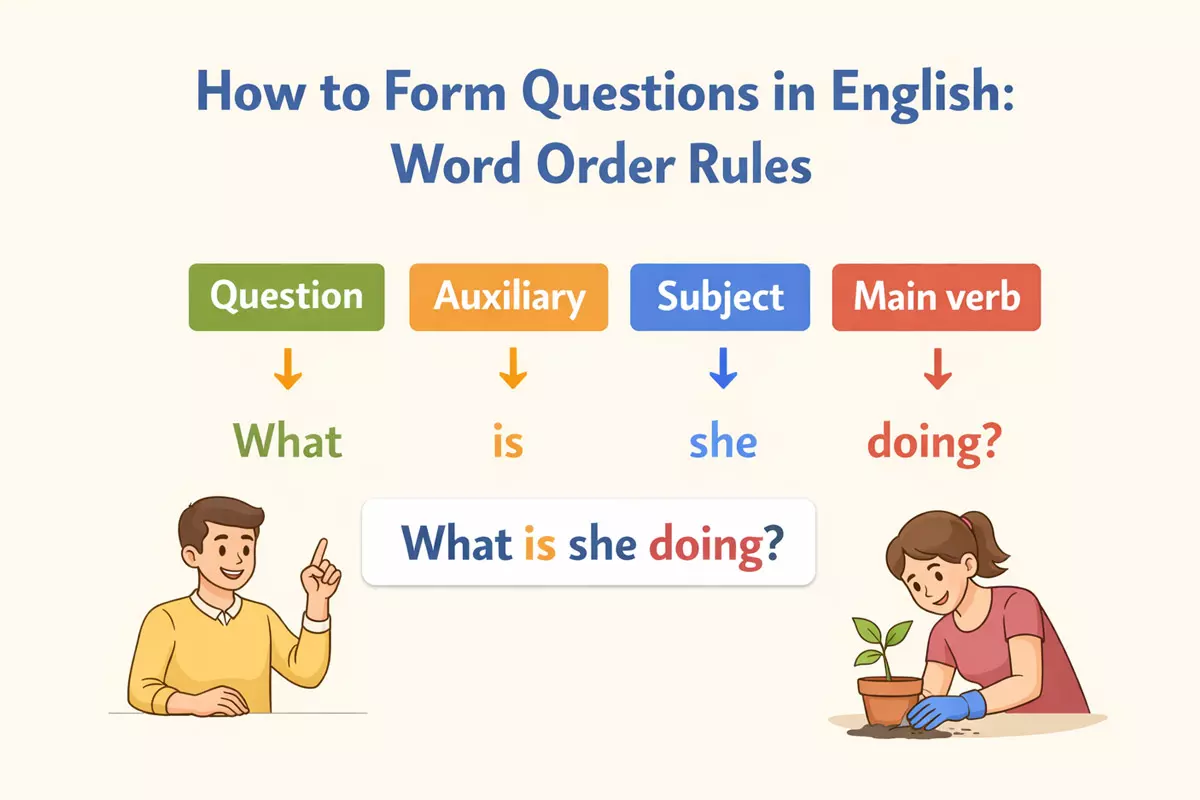 This article explains English question word order, comparing statements and questions, showing where to place auxiliary and be verbs, and how to use WH-words. It also highlights common mistakes and provides exercises for practice.
If you want to turn statements into questions in English, mastering the right word order is key for clear and effective communication. Understanding how to rearrange sentences—such as moving the auxiliary verb before the subject—will help you ask questions confidently in everyday conversations. This guide provides simple strategies and examples to help you recognize common question patterns, making it easier to transform statements into inquiries and improve your overall English skills.
Basic Word Order in English Questions
Understanding how words are arranged in English questions is key to communicating clearly. In most cases, forming a question in English involves changing the usual subject-verb-object order used in statements. Instead, questions often start with a helping verb or a question word, which signals to the listener that a response is expected.
Standard Question Structure
The most common pattern for yes/no questions is to place an auxiliary verb (helping verb) before the subject, followed by the main verb. For example, "Are you coming?" or "Did she call?"
Wh- Questions
When asking for specific information, questions usually begin with a question word such as "what," "where," "who," "why," "when," or "how." After the question word, the auxiliary verb comes next, then the subject, and finally the main verb. For example, "Where do you live?" or "How did they react?"
Examples of Word Order in English Questions
- Do you like pizza?
- Is she at home?
- Can he swim?
- Have they finished?
- What are you doing?
- When does the train leave?
- Where did you go?
- Who called you?
- Why is it raining?
- How do you know?
- Has she arrived?
- Will you help me?
Comparing Statements and Questions
Switching between statements and questions requires careful attention to word order. The table below shows typical transformations from statements to questions:
| Statement | Question |
|---|---|
| You are tired. | Are you tired? |
| She can drive. | Can she drive? |
| They have finished. | Have they finished? |
| He is coming. | Is he coming? |
| We will go. | Will we go? |
Special Cases: Questions Without Auxiliaries
Sometimes, especially with the verb "to be," questions do not need an extra auxiliary. For example, "Is she ready?" instead of "Does she be ready?" Also, "Who called?" uses the question word as the subject, so no auxiliary is needed.
Key Takeaways
- Most questions begin with an auxiliary verb or a question word.
- The subject usually comes after the auxiliary in questions.
- Some questions, especially with "to be" or with "who" as the subject, don't require an auxiliary.
- Word order is essential for clear, grammatically correct questions.
By practicing these patterns, forming natural-sounding questions becomes much easier.
Statement vs Question Structure
Understanding how English sentences change when forming questions is essential for clear communication. In regular statements, English follows a straightforward pattern: subject first, then verb, and finally the object or complement. However, when you turn a statement into a question, this order often changes, especially with auxiliary verbs, modals, and the verb “to be.”
Basic Word Order in Statements
Most English statements use the structure: Subject + Verb + (Object/Complement). For example:
- She likes chocolate.
- They are students.
- We play football.
How Questions Change the Order
To form questions, English typically moves an auxiliary verb (or “to be”) before the subject. If there’s no auxiliary in the statement, “do/does/did” is added. The main verb follows the subject. This change signals a question and makes the sentence easy to recognize as such.
| Statement | Question |
|---|---|
| He plays guitar. | Does he play guitar? |
| She is tired. | Is she tired? |
| You have finished. | Have you finished? |
| They will come. | Will they come? |
| We can help. | Can we help? |
Common Patterns for Forming Questions
Here are some frequent question structures you’ll see in English:
- Do/Does/Did + subject + base verb? (Do you like tea?)
- Am/Is/Are/Was/Were + subject + complement? (Are they ready?)
- Have/Has/Had + subject + past participle? (Have you eaten?)
- Modal (can, will, should, etc.) + subject + base verb? (Can she swim?)
- Wh-word + auxiliary + subject + verb? (Where do you live?)
- To be + subject + verb-ing? (Is he coming?)
- Wh-word + “to be” + subject? (Who is that?)
- Who/What + verb? (for subject questions) (Who called?)
- Why/When/How + auxiliary + subject + verb? (Why did she leave?)
- Question tag: Statement + auxiliary + subject? (You’re coming, aren’t you?)
Key Takeaways
- Statements usually start with the subject; questions often start with an auxiliary or “to be.”
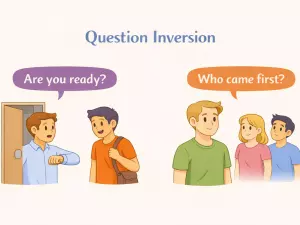
- Inversion (switching verb and subject) is a main marker of English questions.
- “Do” is used to form questions when there’s no other auxiliary.
- Wh-questions (who, what, where, when, why, how) follow the same inversion rule after the wh-word.
- Some questions (especially subject questions like “Who called?”) keep the same order as statements.
Practice recognizing these patterns in everyday conversation, and forming questions will become much more intuitive.
Auxiliary Verb Placement
In English, forming questions often requires shifting the helping verb to a new spot in the sentence. This change is called subject-auxiliary inversion: the auxiliary (helping verb) comes before the subject, rather than after it as in a typical statement. Mastering where to put these verbs is essential for asking clear, grammatically correct questions.
Common Auxiliaries in Questions
Some of the most frequent helping verbs used to build questions include: do, does, did, have, has, had, is, are, was, were, will, would, can, could, shall, should, may, might, and must.
- Do you like pizza?
- Is she coming tonight?
- Have they finished their homework?
- Will it rain tomorrow?
- Should we start now?
- Can you help me?
- Did he call you?
- Has it arrived?
- Are we late?
- Would you like some tea?
Inversion: Statement vs. Question
When constructing a yes/no question, the helper verb moves before the subject. This is a key difference from the usual word order in statements. Wh-questions (like "What," "Where," "Why") follow the same pattern, placing the auxiliary right after the question word and before the subject.
| Statement | Question |
|---|---|
| You are ready. | Are you ready? |
| She has finished. | Has she finished? |
| They will come. | Will they come? |
| He can swim. | Can he swim? |
| We should go. | Should we go? |
| I did understand. | Did I understand? |
Special Notes
- When there is no auxiliary in the statement (for example, present simple or past simple), add do/does/did as the helping verb in the question.
- Negative questions also follow this rule, but include "not": Didn’t you see her?
- With question words (what, where, when, why, how), the order remains: question word + auxiliary + subject + main verb.
Knowing where to place the auxiliary verb is crucial for clear communication. This structure is a foundation for most English questions, so practicing the switch between statement and question word order will help you form correct sentences naturally.
Be Verb Position in Questions
When forming questions in English using the verb “be” (am, is, are, was, were), the word order changes compared to statements. Instead of following the usual subject-verb order, the “be” verb comes before the subject. This inversion is a core rule for both yes/no questions and many wh- questions involving “be.”
Basic Inversion with “Be”
The most important feature of questions with “be” is that the verb moves in front of the subject. For example, the statement “She is happy” becomes “Is she happy?” in question form. This structure is consistent regardless of whether the subject is a noun or pronoun.
- Are you ready?
- Is he home?
- Was the meeting long?
- Were we late?
- Am I correct?
- Is the weather nice?
- Are they friends?
- Was it difficult?
- Is this your bag?
- Are the children outside?
- Were you tired?
- Is there a problem?
- Am I in the right place?
- Was she surprised?
- Are we finished?
“Be” Verb in Wh- Questions
When a question word (who, what, where, when, why, how) is used, it usually comes first, followed by the appropriate form of “be,” then the subject.
- Where is your brother?
- What are the rules?
- Why are you upset?
- How was your trip?
- Who is your teacher?
- When is the party?
- Which is her seat?
Summary Table: Statements vs. Questions with “Be”
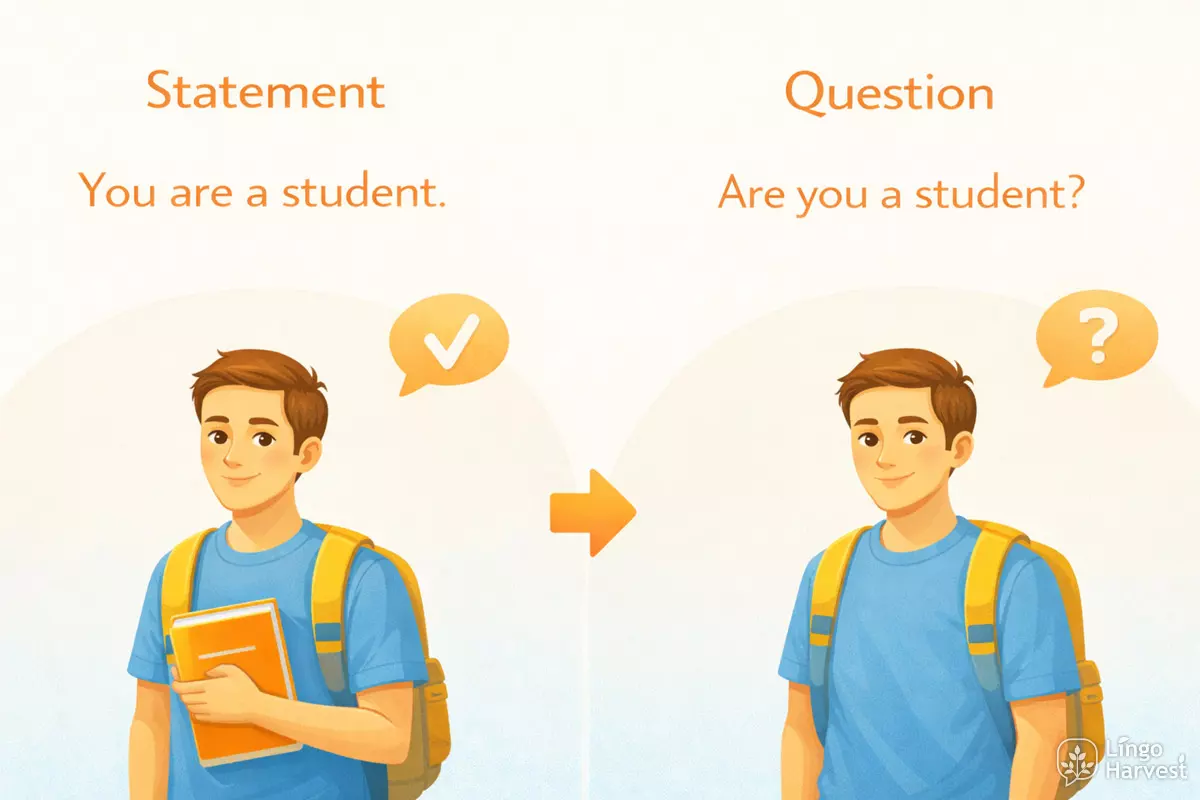
| Statement | Question |
|---|---|
| You are a student. | Are you a student? |
| He is at home. | Is he at home? |
| They were late. | Were they late? |
| It is raining. | Is it raining? |
Common Mistakes to Avoid
Learners often forget to invert the subject and the “be” verb, or they add an extra auxiliary (like “do” or “does”) by mistake. Remember, with “be,” do not use “do/does/did” to make questions. For example:
- ❌ Do you are tired? → ✅ Are you tired?
- ❌ Is the children outside? → ✅ Are the children outside?
Practicing these patterns helps build confidence with question formation and ensures your questions sound natural in conversation.
WH-Word Placement
In English, question words like who, what, where, and why—often called WH-words—almost always come at the very beginning of a question. This placement signals to the listener or reader that a specific piece of information is being requested. Understanding where to put these words is essential for forming clear and natural questions.
Basic Position and Structure
The standard order is: WH-word + auxiliary verb + subject + main verb. For example, “Where are you going?” The WH-word opens the question, followed by the helping verb, then the subject, and finally the main verb or the rest of the predicate.
- What are you doing?
- Who is coming to the party?
- Where did she put the keys?
- When will the meeting start?
- Why did they leave early?
- How do you solve this problem?
- Which dress do you prefer?
- Whose bag is this?
- Whom did you invite?
- How many people are coming?
- How much does it cost?
Special Cases and Exceptions
Sometimes, the WH-word is also the subject of the question. In these cases, the word order changes: there’s no need for subject-auxiliary inversion. For example, “Who called you?” (not “Who did call you?”). Here, who replaces the subject, so the auxiliary verb is not needed.
| WH-Word as Subject | WH-Word as Object |
|---|---|
| Who made this cake? | Who did you see? |
| What happened here? | What did she say? |
| Which arrived first? | Which did you choose? |
| Who wants coffee? | Whom did you call? |
Indirect Questions
When reporting a question or asking politely, the WH-word still comes at the start of the question clause, but the word order after it is like a statement, not a direct question. For example:
- Can you tell me where the station is?
- I wonder who will join us.
- Do you know why she left?
To sum up, placing WH-words correctly is a key step in forming questions that sound natural and are easy to understand. Whether you're asking directly, indirectly, or using the question word as a subject, the placement sets the tone and clarity of your inquiry.
Word Order in Yes/No Questions
Forming yes/no questions in English usually means switching the normal subject-verb order you’d find in statements. Instead of starting with the subject, most questions begin with an auxiliary verb (sometimes called a “helping verb”), followed by the subject, and then the main verb. This structure helps clearly signal that a question is being asked, not a statement.
Basic Structure
The most common pattern is:
- Auxiliary verb + subject + main verb (+ rest of sentence)?
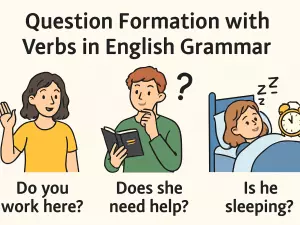
For example: “Do you like coffee?” or “Is she coming?”
Common Auxiliary Verbs Used
- Do/Does/Did (for most verbs): “Do they work here?”
- Is/Are/Was/Were (for “be” verbs): “Is it raining?”
- Have/Has/Had (for perfect tenses): “Have you finished?”
- Modal verbs (can, should, will, etc.): “Can you swim?”
Examples of Statement vs. Question Form
To see the difference, compare these pairs:
| Statement | Yes/No Question |
|---|---|
| You are tired. | Are you tired? |
| She can drive. | Can she drive? |
| They have arrived. | Have they arrived? |
| He likes apples. | Does he like apples? |
| We went home. | Did we go home? |
Key Points to Remember
- Always place the auxiliary verb before the subject.
- If there is no auxiliary in the statement, add “do/does/did” for the question.
- For “be” verbs, invert the verb and subject directly.
- Keep the main verb in its base form after “do/does/did.”
- Modal verbs (can, will, should, etc.) also come before the subject.
Examples for Practice

- Do they understand?
- Is it open?
- Can you help?
- Did she call?
- Have we met?
- Will he come?
- Are we late?
- Does he know?
- Was it easy?
- Should I wait?
- Had they left?
- Could you repeat?
- Were you there?
- May I sit here?
- Has it started?
Mastering this structure makes it easier to ask clear, direct questions in everyday conversations. Practice by changing statements into questions and notice how the verb and subject switch places.
Common Word Order Mistakes
Mixing up the sequence of words in English questions is a frequent stumbling block for learners. Unlike some other languages, English generally follows a strict word order when forming questions. Even advanced students can occasionally slip up, especially when switching between different types of questions or using auxiliary verbs.
Typical Errors When Forming Questions
- Placing the subject before the auxiliary verb (e.g., She is coming? instead of Is she coming?)
- Omitting necessary auxiliary verbs (e.g., You like pizza? instead of Do you like pizza?)
- Incorrectly ordering question words and auxiliaries (e.g., Where you are going? instead of Where are you going?)
- Using statements with rising intonation instead of proper question structure
- Forgetting to invert the subject and auxiliary in yes/no questions
- Adding unnecessary words (e.g., Do you can swim?)
- Confusing direct and indirect question formats
- Using double auxiliaries (e.g., Did you went?)
- Leaving out the subject (e.g., Can go to the party?)
- Mistaking word order in negative questions (e.g., Why you don't come? instead of Why don't you come?)
- Placing adverbs incorrectly within questions
- Using the wrong tense or form of the verb after an auxiliary
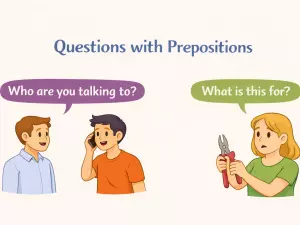
- Misplacing prepositions in question phrases (e.g., What are you talking? instead of What are you talking about?)
Comparison: Correct vs. Incorrect Question Word Order
| Incorrect Form | Correct Form |
|---|---|
| You are coming? | Are you coming? |
| Where you live? | Where do you live? |
| She can drive? | Can she drive? |
| Why you didn't call? | Why didn't you call? |
| What means this word? | What does this word mean? |
| Did you went to school? | Did you go to school? |
| How many children has she? | How many children does she have? |
| Do you can help? | Can you help? |
Quick Tips to Avoid Mistakes
- Always use an auxiliary (do/does/did, is/are, have/has) before the subject in most questions.
- Question words (who, what, where, when, why, how) usually come at the start.
- For simple present and past, remember to use do/does/did with the base form of the verb.
- Check subject–verb inversion in every question you write.
- Review indirect question structures; they do not invert the subject and auxiliary (e.g., Can you tell me where she is?).
By paying close attention to these patterns and practicing regularly, you can minimize errors and form clear, natural-sounding questions in English.
Practice Exercises and Self-Check
Getting comfortable with English question word order takes practice. Below you’ll find varied activities designed to help you check your understanding and improve your skills. Work through the exercises and try to identify common patterns for forming yes/no questions, wh-questions, and questions with auxiliary verbs.
Transform Statements into Questions
Rewrite each statement as a correct English question. Pay attention to the position of the subject and auxiliary verbs.
- She is reading a book.
- You can swim well.
- They have finished their homework.
- He likes pizza.
- Mary went to the park.
- We are watching a movie.
- Tom plays the guitar.
- She has met the manager.
- They will arrive tomorrow.
- You were listening carefully.
Show answers
- Is she reading a book?
- Can you swim well?
- Have they finished their homework?
- Does he like pizza?
- Did Mary go to the park?
- Are we watching a movie?
- Does Tom play the guitar?
- Has she met the manager?
- Will they arrive tomorrow?
- Were you listening carefully?
Form Wh-Questions
Create a question for each answer using an appropriate wh-word (who, what, where, when, why, how). Make sure the word order is correct.
- Answer: At the library.
- Answer: Because he was tired.
- Answer: Sarah called me.
- Answer: By bus.
- Answer: On Sunday.
- Answer: To improve my English.
- Answer: Yesterday evening.
- Answer: In New York.
- Answer: About two hours.
- Answer: With her colleagues.
Show answers
- Where was it?
- Why was he tired?
- Who called you?
- How did you get there?
- When did it happen?
- Why did you do it?
- When did it happen?
- Where did it happen?
- How long did it take?
- Who was she with?
Identify and Correct the Error
Each question below contains a mistake in word order. Rewrite each sentence correctly.
- What you are doing?
- Likes she apples?
- Where you went yesterday?
- Has finished he his work?
- Why you are late?
- Can speaks he English well?
- Did you went home early?
- Where she is working?
- Has they seen the movie?
- What time you will arrive?
Show answers
- What are you doing?
- Does she like apples?
- Where did you go yesterday?
- Has he finished his work?
- Why are you late?
- Can he speak English well?
- Did you go home early?
- Where is she working?
- Have they seen the movie?
- What time will you arrive?
Question Word Order Patterns
The table below summarizes common structures for different types of questions. Use it to review and compare the typical patterns.
| Type | Word Order Pattern | Example |
|---|---|---|
| Yes/No Question (with auxiliary) | Auxiliary + Subject + Main Verb | Are you ready? |
| Yes/No Question (with modal) | Modal + Subject + Main Verb | Can she drive? |
| Wh-Question (with auxiliary) | Wh-word + Auxiliary + Subject + Main Verb | Where did they go? |
| Subject Question (wh-word is subject) | Wh-word + Verb + (Object) | Who called you? |
| Present Simple (no auxiliary) | Do/Does + Subject + Base Verb | Do you like tea? |
Practice: Create Your Own Questions
Now, try making your own questions based on these prompts. Use different tenses and question types:
- Ask about someone’s favorite food.
- Find out when a shop opens.
- Ask if your friend has ever been to London.
- Ask who is calling you right now.
- Find out why someone is learning English.
- Ask where your colleague works.
- Find out how often someone exercises.
- Ask what time the movie starts.
- Ask how long someone has lived here.
- Find out what someone did yesterday.
Show answers
- What is your favorite food?
- When does the shop open?
- Have you ever been to London?
- Who is calling you right now?
- Why are you learning English?
- Where does your colleague work?
- How often do you exercise?
- What time does the movie start?
- How long have you lived here?
- What did you do yesterday?
Review your responses and compare them to the provided examples. Practicing these patterns will help you gain confidence and accuracy when forming questions in English.