Be Verb Questions in English: Am, Is, Are, Was, Were

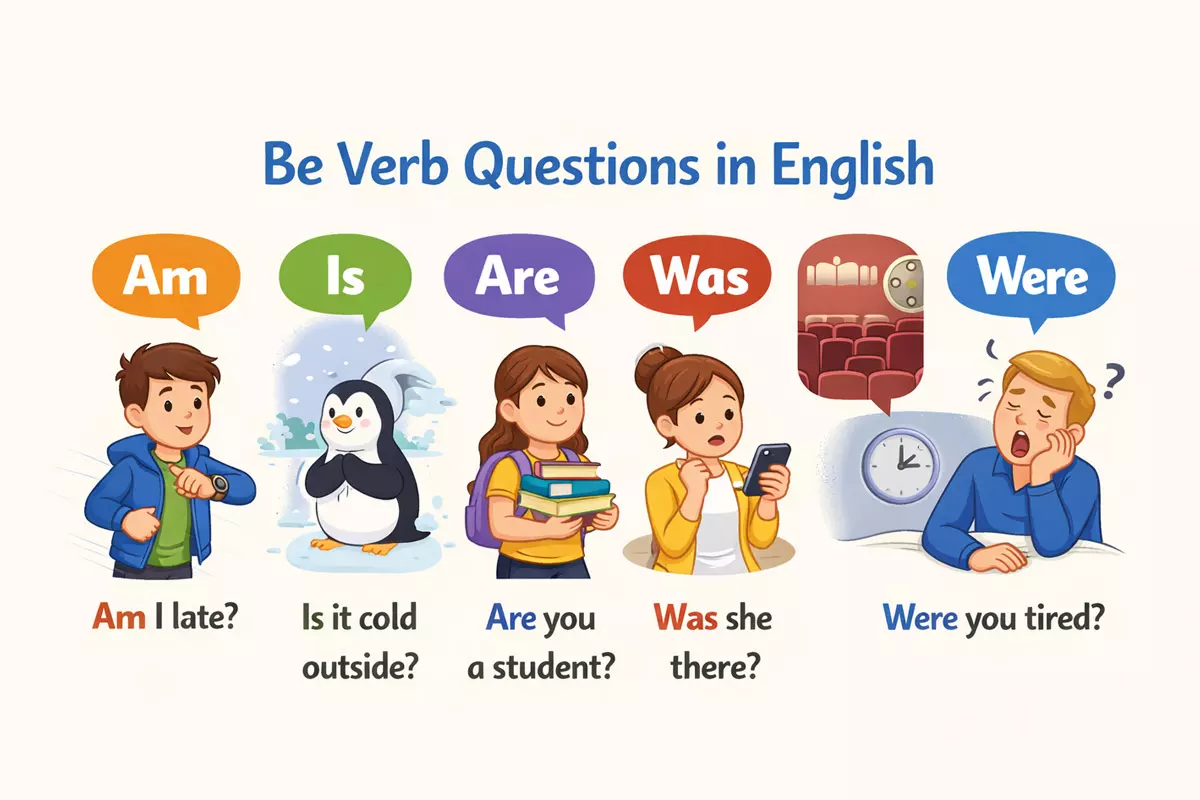 Here we how to make questions using the be verb in both present and past tenses. It explains yes/no and WH-questions, short answers, common mistakes, and provides exercises for practice and self-assessment.
Learning to form simple questions in English with words like am, is, are, was, and were is important for effective communication in everyday situations. To make a question, place the appropriate auxiliary verb at the beginning of the sentence, followed by the subject and the main verb or complement. For example, "Are you ready?" or "Was he at the meeting?" Practicing these structures will help you ask clear questions, whether you are having a conversation, seeking information, or clarifying details.
Be Verb Question Structure
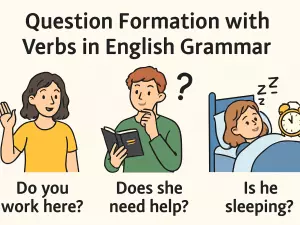
When forming questions in English using “be” verbs, the standard approach is to invert the subject and the verb. This means the verb comes before the subject, unlike in most statements. For example, instead of “She is happy,” you ask, “Is she happy?” This pattern applies to all forms of the “be” verb: am, is, are, was, and were.
Basic Pattern
The core structure for yes/no questions with the “be” verb is:
- Be verb + subject + (rest of the sentence)?
This is true for present and past forms:
- Am I late?
- Is he your brother?
- Are they ready?
- Was she at the meeting?
- Were you tired?
Wh- Questions
When asking questions with words like “what,” “where,” or “why,” put the question word at the beginning, followed by the “be” verb and then the subject.
- Where are you?
- Why is it raining?
- What was the problem?
- Who is your teacher?
- When were they here?
Short Answers
Responding to “be” verb questions often uses short answers. The verb matches the question form:
- Are you hungry? → Yes, I am. / No, I’m not.
- Was it cold? → Yes, it was. / No, it wasn’t.
- Is she coming? → Yes, she is. / No, she isn’t.
Common Mistakes
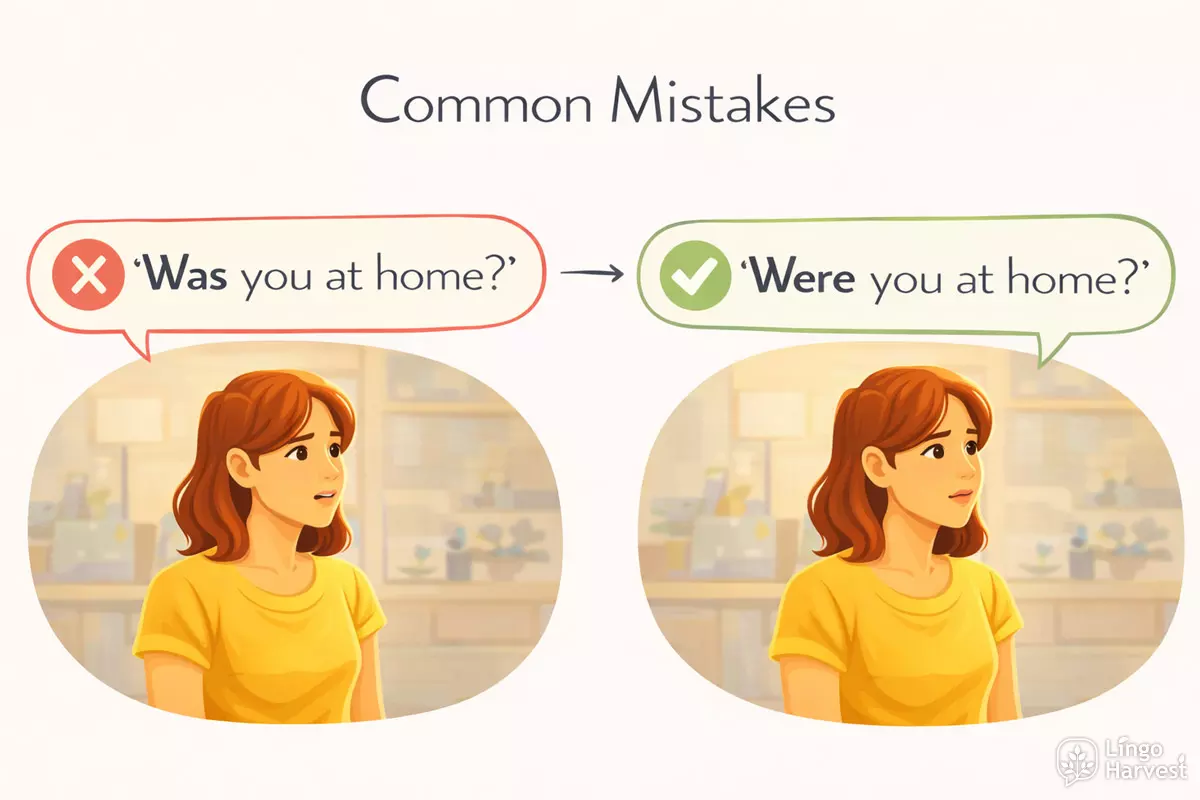
Learners sometimes forget to invert the verb and subject, or they use the wrong verb form. For example:
- ❌ “You are happy?” → ✅ “Are you happy?”
- ❌ “Was you at home?” → ✅ “Were you at home?”
Forms of "Be" in Questions
Below is a summary showing the structure for different subjects and tenses:
| Subject | Present Simple | Past Simple |
|---|---|---|
| I | Am I...? | Was I...? |
| You | Are you...? | Were you...? |
| He/She/It | Is he/she/it...? | Was he/she/it...? |
| We/You/They | Are we/you/they...? | Were we/you/they...? |
Summary of Key Points
- Invert the subject and “be” verb to make questions.
- Add a question word at the beginning for more information.
- Use short answers with the correct verb form.
- Pay special attention to the correct tense and subject-verb agreement.
With practice, forming questions using “be” verbs becomes automatic and helps make your English clearer and more natural.
Present Tense Be Questions
Forming questions with am, is, and are in English is different from creating questions with most other verbs. Instead of using “do/does,” simply invert the subject and the correct form of the be verb. This simple switch is used for both yes/no questions and information questions (using “wh-” words like who, what, where, etc.).
Patterns for Making Questions
To build a question, place the appropriate form of be before the subject. Here are the basic structures:
- Am + I + ...? (Am I late?)
- Is + he/she/it + ...? (Is she ready?)
- Are + you/we/they + ...? (Are they students?)
Examples of Yes/No Questions
Here are some common examples using different subjects:
- Are you tired?
- Is he your brother?
- Am I in the right place?
- Is it raining?
- Are we finished?
- Are they at home?
- Is the movie good?
- Are these seats taken?
- Is this your bag?
- Am I correct?
Wh- Questions with Be
To ask for specific information, start with a question word, then follow the same inversion pattern:
- Where are you from?
- What is your name?
- Why are they upset?
- When is the test?
- Who is your teacher?
- How are you?
- Which is better?
- Whose book is this?
Short Answers
When answering, use the same form of be as in the question. Positive short answers repeat the subject and verb; negatives add “not.”
| Question | Short Answer |
|---|---|
| Are you hungry? | Yes, I am. / No, I’m not. |
| Is she here? | Yes, she is. / No, she isn’t. |
| Am I late? | Yes, you are. / No, you aren’t. |
| Are they ready? | Yes, they are. / No, they aren’t. |
Remember, for these types of questions, the verb always comes before the subject. This structure is unique to the be verb in English and helps avoid confusion with other question forms.
Past Tense Be Questions
When talking about the past in English, the forms “was” and “were” are used to make questions with the verb “be.” The choice between “was” and “were” depends on the subject. “Was” is used with singular subjects like “I,” “he,” “she,” and “it,” while “were” is used with plural subjects, as well as “you” (both singular and plural), “we,” and “they.” To form a question, the structure is simple: place “was” or “were” before the subject, followed by the rest of the sentence.
Basic Structure
The typical pattern for these questions is:
- Was/Were + subject + complement?
For example:
- Was he at home last night?
- Were they happy with the results?
- Was it raining yesterday?
- Were you tired after the game?
Common Examples
Here are some more examples of questions using “was” and “were” in the past:
- Was she your teacher in high school?
- Were you late for class?
- Was the movie interesting?
- Were the doors locked?
- Was I wrong?
- Were we supposed to bring our books?
- Was it cold last winter?
- Were the children asleep at 9 pm?
- Was your brother at the party?
- Were those your keys on the table?
Short Answers
To reply to these questions, short answers are common in English:
- Yes, I was. ✅
- No, he wasn’t. ❌
- Yes, they were. ✅
- No, we weren’t. ❌
Comparison of “Was” and “Were” in Questions
Below is a summary showing the subject and the correct form of “be” for making questions in the past. This helps clarify which form to use with each subject.
| Subject | Be Form (Question) | Example Question |
|---|---|---|
| I | Was | Was I late? |
| He / She / It | Was | Was she at school? |
| You | Were | Were you hungry? |
| We / They | Were | Were they surprised? |
Wh- Questions with “Was” and “Were”
To ask for more information (not just yes or no), use question words like “where,” “when,” “why,” “who,” and “how” in front of “was” or “were.” For example:
- Where was your bag?
- Why were you upset?
- When was the concert?
- Who were your friends at the event?
- How was the food?
In summary, using “was” and “were” correctly in questions helps make your meaning clear when talking about the past. Practice these patterns to become more confident in everyday conversations.
Yes/No Questions with Be
Forming questions using the verb “be” is a core skill in English, and it’s especially useful for getting clear, direct answers. These questions can be answered with “yes” or “no,” and they’re common in everyday conversation, interviews, and written forms. The main pattern is simple: place the correct form of “be” (am, is, are, was, were) before the subject, then follow with the rest of the sentence. This word order signals a question and makes it easy for listeners to respond.
How to Structure Basic Questions
To ask about the present, use “am,” “is,” or “are.” For the past, use “was” or “were.” Here are typical patterns:
- Am + I + (rest)?
- Is + he/she/it + (rest)?
- Are + you/we/they + (rest)?
- Was + I/he/she/it + (rest)?
- Were + you/we/they + (rest)?
Common Examples
These question forms appear in many situations. Notice how the verb comes first:
- Are you ready?
- Is she your sister?
- Am I late?
- Were they at the party?
- Was he surprised?
- Are we meeting today?
- Is it raining?
- Were you tired yesterday?
- Are the keys on the table?
- Is this your book?
- Am I in the right place?
- Were the doors locked?
- Is everything okay?
- Are those your shoes?
- Was the food good?
- Are they coming?
- Is the meeting at 10?
- Was it difficult?
Short Answers
When responding, English speakers usually give a short reply, using the verb “be” again. These answers are polite and direct.
| Question | Short Answer |
|---|---|
| Are you busy? | Yes, I am. No, I’m not. |
| Was it cold? | Yes, it was. No, it wasn’t. |
| Is she at home? | Yes, she is. No, she isn’t. |
| Were they surprised? | Yes, they were. No, they weren’t. |
Tips for Asking and Answering
- Use rising intonation when speaking to signal a question.
- Keep the answer short unless more detail is needed.
- Remember: “am” is only used with “I.”
- “Is” is for singular nouns and “he/she/it.” “Are” is for plural nouns and “you/we/they.”
- For the past, switch to “was” (singular) or “were” (plural/you).
Mastering these simple question forms makes conversation smoother and helps you get information quickly and clearly.
WH-Questions with Be
Understanding how to form questions using "be" verbs—such as am, is, are, was, and were—is essential for clear communication in English. These questions often begin with a WH-word (like what, where, or why), followed by the appropriate form of "be," then the subject, and finally the rest of the sentence. This word order is a key feature that distinguishes these questions from statements.
Common WH-Words Used with "Be"
- Who – asks about a person (Who is your teacher?)
- What – asks about a thing or information (What are your plans?)
- Where – inquires about place or location (Where is the library?)
- When – asks about time (When was the party?)
- Why – asks for reasons or explanations (Why are we late?)
- Which – asks about choices (Which is your bag?)
- Whose – asks about possession (Whose is this umbrella?)
- How – asks about manner or condition (How are you?)
- How old – asks about age (How old are they?)
- How much – asks about price or amount (How much is this?)
Forming WH-Questions with "Be"
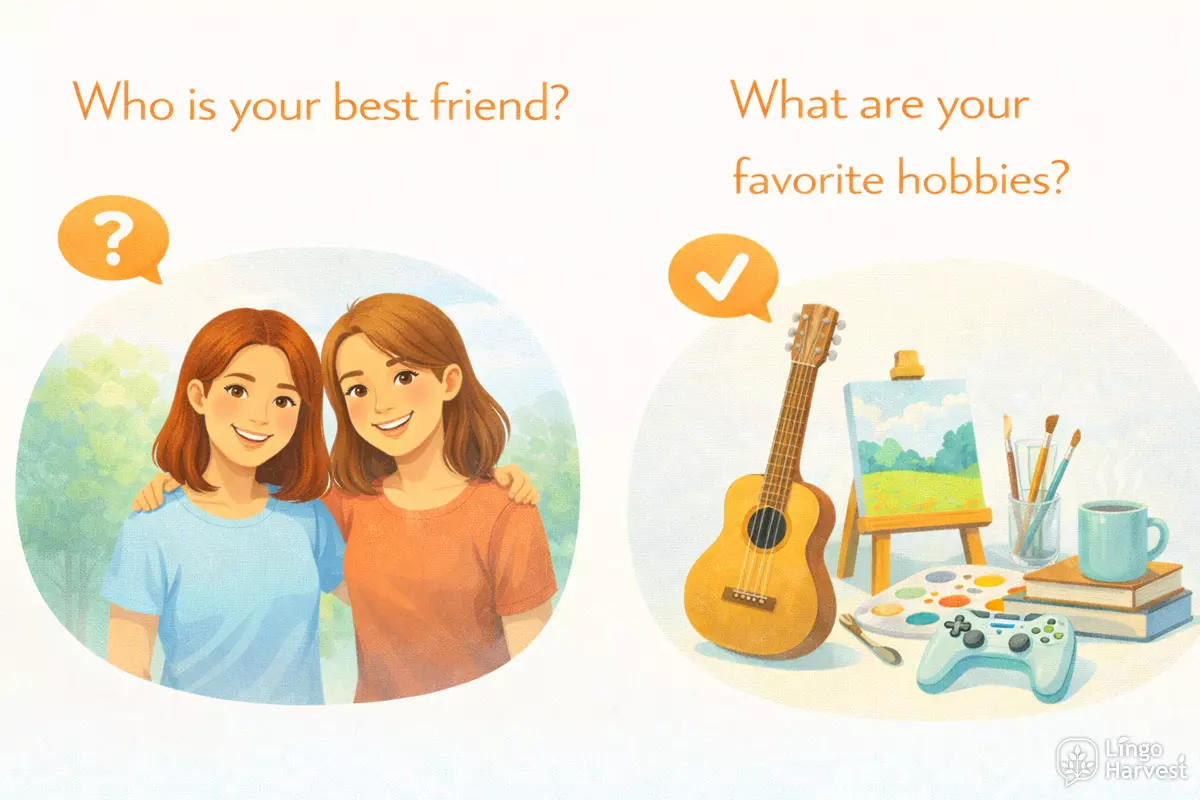
The basic structure is: WH-word + be + subject + (complement)? For example, "Where are they?" or "Why was she upset?" Notice that the verb "be" always comes before the subject in these questions.
| WH-Word | Example Question |
|---|---|
| Who | Who is your best friend? |
| What | What are your favorite hobbies? |
| Where | Where are the keys? |
| When | When was the last meeting? |
| Why | Why are you tired? |
| Which | Which is your seat? |
| Whose | Whose is this notebook? |
| How | How are you today? |
| How old | How old are your children? |
| How much | How much is that shirt? |
Important Notes
- Do not use do/does/did with "be" verbs in these questions. For example, say "Where are you?" ✅ not "Where do you are?" ❌
- With questions about the past, use was or were (e.g., "Why were you absent?").
- For singular subjects, use is or was; for plural, use are or were.
Practicing different WH-question forms with "be" helps you ask for details, clarify information, and have more natural conversations in English. Try combining various WH-words and subjects to create your own questions and improve your fluency.
Short Answers with Be
Giving brief replies to questions with "am," "is," "are," "was," and "were" is an essential part of everyday English. Instead of repeating the full sentence, speakers usually give a concise answer. This approach is common in both formal and informal conversations, helping to keep exchanges clear and efficient.
How Short Answers Work
When someone asks a question using a form of the verb "be," the typical response uses the same verb and, if negative, adds "not" (or the contraction). The subject is usually included as a pronoun. These patterns make it easy to reply quickly without sounding rude or abrupt.
- Are you ready? → Yes, I am. / No, I'm not.
- Is she your friend? → Yes, she is. / No, she isn't.
- Were they at the party? → Yes, they were. / No, they weren't.
- Am I late? → Yes, you are. / No, you aren't.
- Was it difficult? → Yes, it was. / No, it wasn't.
- Are we finished? → Yes, we are. / No, we aren't.
- Is it raining? → Yes, it is. / No, it isn't.
- Were you tired? → Yes, I was. / No, I wasn't.
- Was he at home? → Yes, he was. / No, he wasn't.
- Are they here? → Yes, they are. / No, they aren't.
Positive and Negative Forms
The structure of a short reply depends on whether your answer is positive or negative. Positive answers repeat the verb "be" with the correct subject pronoun. Negative answers use "not," often in the contracted form (isn't, aren't, wasn't, weren't).
| Question | Short Answer (Positive / Negative) |
|---|---|
| Are you a student? | Yes, I am. / No, I'm not. |
| Is he busy? | Yes, he is. / No, he isn't. |
| Were they late? | Yes, they were. / No, they weren't. |
| Was it cold? | Yes, it was. / No, it wasn't. |
| Are we ready? | Yes, we are. / No, we aren't. |
Tips for Natural Short Answers
- Use contractions in spoken English for a more natural sound: "I'm not," "he isn't," "they weren't."
- Always match the pronoun in your answer to the subject in the question.
- Keep replies brief unless you want to add extra information.
- If you want to be polite or formal, you can use the full form: "No, I am not."
Responding efficiently with the correct form of "be" helps conversations flow smoothly and shows your understanding of English question patterns.
Common Learner Mistakes
Learners often find questions with "be" verbs tricky because the word order is different from regular statements. It’s easy to forget to switch the verb and subject, especially if your first language has a different sentence structure. Mixing up "am," "is," "are," "was," and "were" is another frequent issue, especially when talking about different times or people.
Word Order Confusion
The most common challenge is remembering to put the "be" verb before the subject in questions. For example, it’s incorrect to say "You are happy?" in standard English question form; it should be "Are you happy?" This word order can feel unnatural at first.
Mixing Up Forms of "Be"
Choosing the correct form—especially between present (am, is, are) and past (was, were)—can be confusing. Many students also use the wrong form for the subject. For example, saying "Is you ready?" instead of "Are you ready?"
Omitting the "Be" Verb
Sometimes, learners forget to include the "be" verb in a question, especially in short questions or when translating directly from another language. For instance, "You tired?" instead of "Are you tired?"
Negative Questions
Creating negative questions with "be" verbs also causes trouble. Learners might say "Isn’t it raining?" correctly, but sometimes produce errors like "Not it is raining?" or "Isn’t raining it?"
Examples of Frequent Errors
- "Is you a student?" ❌ → "Are you a student?" ✅
- "Are she coming?" ❌ → "Is she coming?" ✅
- "Was they here yesterday?" ❌ → "Were they here yesterday?" ✅
- "Are it cold?" ❌ → "Is it cold?" ✅
- "Am I late?" ✅ (correct form for "I")
- "Were you at the party?" ✅ (correct for past)
- "Is he your brother?" ✅ (correct for singular male)
- "Are we ready?" ✅ (correct for plural first person)
- "Are you was there?" ❌
- "Was you happy?" ❌
- "Are she your friend?" ❌
- "Is they coming?" ❌
- "Was it raining yesterday?" ✅
- "Were you tired?" ✅
- "Is not he here?" ❌ → "Isn’t he here?" ✅
Comparison Table: Correct vs. Incorrect Forms
| ❌ Incorrect Question | ✅ Correct Question |
|---|---|
| She is your teacher? | Is she your teacher? |
| Are he at home? | Is he at home? |
| Was you there? | Were you there? |
| Were it raining? | Was it raining? |
| Is they happy? | Are they happy? |
| Are I late? | Am I late? |
Tips to Avoid Errors
- Always place the "be" verb before the subject in questions.
- Match the verb form to the subject: "am" for "I," "is" for he/she/it, "are" for you/we/they.
- Use "was" with singular subjects and "were" with plural subjects in the past tense.
- Practice with common question patterns to build confidence.
- Remember contractions in negative questions: "isn’t," "aren’t," "wasn’t," "weren’t."
With careful attention to these patterns and frequent practice, you can avoid the most typical pitfalls when forming questions with "be" verbs in English.
Practice Exercises and Self-Check
Understanding how to form and use questions with “am,” “is,” “are,” “was,” and “were” is central for clear English communication. Try the following exercises to reinforce your skills. These activities cover present and past forms, question structure, and common mistakes. Review your answers to see where you can improve.
1. Make Questions: Present and Past Forms
Rewrite each statement as a question, using the correct form of “be.”
- You are ready.
- She was at the party.
- They are students.
- He is your brother.
- We were tired.
- I am late.
- It was cold yesterday.
- You were in the meeting.
- She is busy right now.
- They were happy with the results.
Show answers
- Are you ready?
- Was she at the party?
- Are they students?
- Is he your brother?
- Were we tired?
- Am I late?
- Was it cold yesterday?
- Were you in the meeting?
- Is she busy right now?
- Were they happy with the results?
2. Choose the Right Form
Fill in the blank with the correct “be” verb (“am,” “is,” “are,” “was,” or “were”) to complete each question.
- _____ it raining yesterday?
- _____ you coming to the meeting?
- _____ she your teacher last year?
- _____ they in class now?
- _____ I late?
- _____ he at work today?
- _____ we ready to start?
- _____ it cold last night?
- _____ you online right now?
- _____ they excited about the trip?
Show answers
- Was it raining yesterday?
- Are you coming to the meeting?
- Was she your teacher last year?
- Are they in class now?
- Am I late?
- Is he at work today?
- Are we ready to start?
- Was it cold last night?
- Are you online right now?
- Are they excited about the trip?
3. Common Mistakes: Spot the Error
Each of these questions has a mistake. Find and correct it.
- Is you happy?
- Were she at home?
- Am they your friends?
- Was you there?
- Are he ready?
- Is we late?
- Were it difficult?
- Am she your manager?
- Are I correct?
- Was they tired after work?
Show answers
- Are you happy?
- Was she at home?
- Are they your friends?
- Were you there?
- Is he ready?
- Are we late?
- Was it difficult?
- Is she your manager?
- Am I correct?
- Were they tired after work?
4. Quick Reference Table: “Be” Verb in Questions
Here’s a summary of how “be” verbs change with subject and time. Use this as a guide when forming your own questions.
| Subject | Present Simple Question | Past Simple Question |
|---|---|---|
| I | Am I...? | Was I...? |
| You | Are you...? | Were you...? |
| He / She / It | Is he/she/it...? | Was he/she/it...? |
| We / You (plural) / They | Are we/you/they...? | Were we/you/they...? |
5. Create Your Own
Write three questions about your life using “am,” “is,” “are,” “was,” or “were.” Try to use different subjects and both present and past forms. Practice saying them aloud for extra fluency.
Reviewing your answers and checking the reference table will help you avoid common mistakes and build confidence in using these essential question forms.