Pronoun Changes in Reported Speech Step by Step

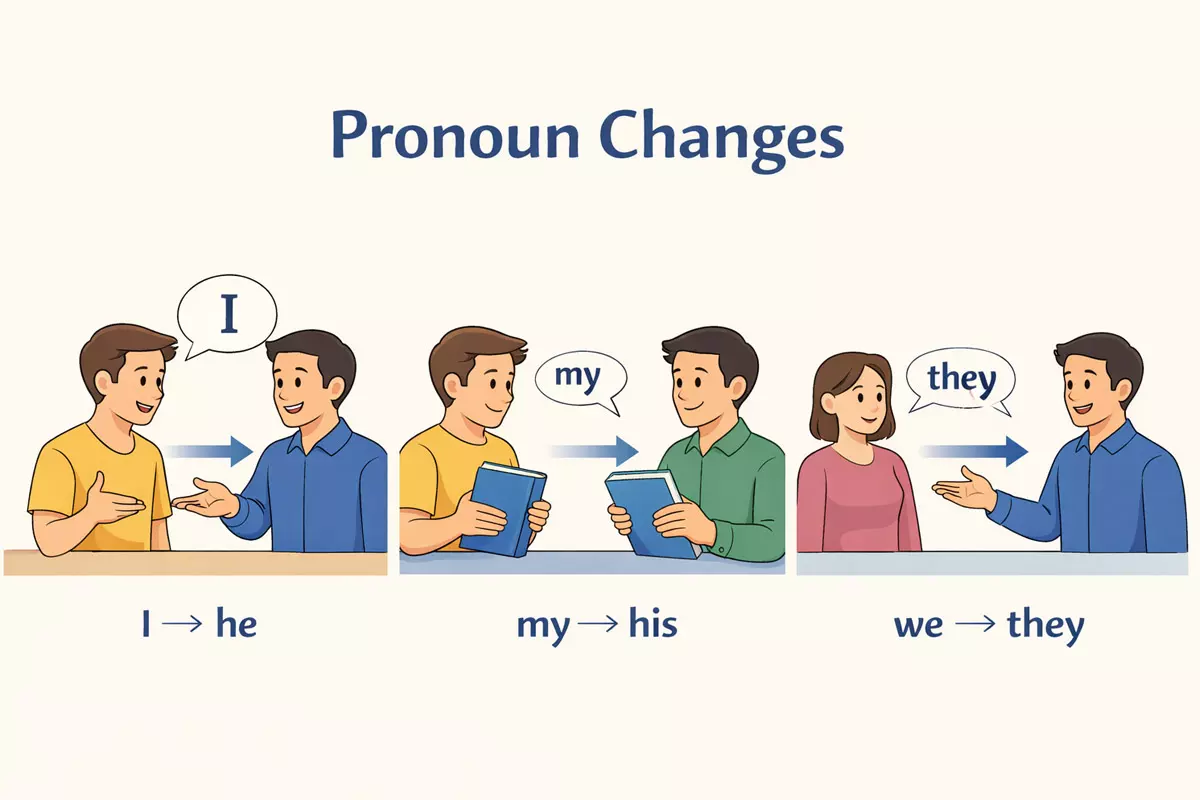 Here we why pronouns change in reported speech, how subject, object, and possessive pronouns shift, and the impact of speaker perspective and context. It also points out typical mistakes people make when changing pronouns.
Transforming direct statements into indirect ones requires changing pronouns such as he, she, or they to fit the new context, which helps ensure the meaning is preserved. By carefully following each step in shifting these references, learners can grasp reported speech more effectively. This process not only clarifies communication but also builds confidence in using indirect speech accurately. Mastering these adjustments is essential for clear and precise expression, especially when retelling conversations or summarizing what others have said.
Why pronouns change in reported speech
When we report what someone else has said, the context often shifts from the original speaker and listener to a new situation. This change in perspective is the main reason pronouns need to be adjusted. The words “I,” “you,” “we,” and so on refer to different people depending on who is speaking and who is listening. So, when you move from direct to indirect speech, the pronouns must be updated to fit the new viewpoint.
Perspective shifts
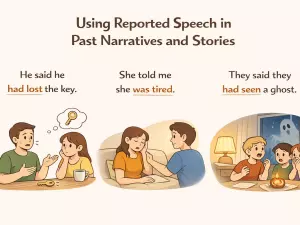
In direct speech, pronouns reflect the original speaker’s point of view. However, indirect speech usually takes the perspective of the reporter, not the original speaker or listener. For example, if John says, “I am tired,” and you report it, you would say, “He said he was tired.” The pronoun “I” (referring to John) becomes “he” in the new context.
Clarifying who is who
Adjusting pronouns avoids confusion about who is being discussed. Without these changes, it might be unclear whether “he,” “she,” or “they” refers to the speaker, listener, or another person. Making the correct switch helps keep the reported message clear and accurate.
Common pronoun shifts in reported speech
Here are several typical changes that happen when converting direct quotes to indirect statements:
- “I” becomes “he” or “she” (depending on the speaker’s gender)
- “We” becomes “they”
- “You” becomes “I,” “we,” “he,” “she,” or “they” (depending on context)
- “My” changes to “his” or “her”
- “Our” changes to “their”
- “Me” turns into “him” or “her”
- “Us” becomes “them”
- “Your” can become “my,” “our,” “his,” “her,” or “their”
- “Mine” becomes “his,” “hers,” or “theirs”
- “Ours” turns into “theirs”
- “Yourself” becomes “myself,” “himself,” “herself,” or “themselves”
Examples: Direct vs. reported speech

| Direct Speech | Reported Speech |
|---|---|
| She said, “I will help you.” | She said that she would help me. |
| He asked, “Can you meet us?” | He asked if I could meet them. |
| They said, “Our car is new.” | They said that their car was new. |
| Anna said, “You broke my vase.” | Anna said that I had broken her vase. |
| John said, “We are leaving now.” | John said that they were leaving then. |
Understanding these shifts is essential for accurately relaying what someone else has said. By matching pronouns to the new speaker and listener, your reported speech becomes both clear and grammatically correct.
Subject and object pronoun changes
When reporting speech, it’s important to adjust pronouns so they match the perspective of the person reporting the information. This helps avoid confusion about who is being referred to in the new sentence. The pronouns often shift because the speaker and listener in direct speech are different from those in reported speech.
How pronouns shift in reported speech
Let’s look at how subject and object pronouns typically change. If someone is speaking about themselves (“I” or “me”), these words usually become “he,” “she,” “him,” or “her” when the reporting verb is used. Similarly, “we” can change to “they,” and “you” often shifts to “I,” “we,” “he,” “she,” or “they,” depending on who is being addressed.
Here are some common changes you’ll see:
- “I” → “he” or “she”
- “me” → “him” or “her”
- “my” → “his” or “her”
- “we” → “they”
- “us” → “them”
- “our” → “their”
- “you” (singular) → “I,” “he,” or “she” (depends on context)
- “you” (plural) → “we,” “they,” or “them”
- “he” → “he”
- “him” → “him”
- “she” → “she”
- “her” → “her”
- “they” → “they”
- “them” → “them”
Typical pronoun changes: direct to reported speech
| Direct Speech | Reported Speech |
|---|---|
| I | he / she |
| me | him / her |
| my | his / her |
| we | they |
| us | them |
| our | their |
| you | I / we / he / she / they |
| your | my / our / his / her / their |
Examples in context
- Direct: She said, “I love this book.”
Reported: She said that she loved that book. - Direct: “We are leaving now,” they told me.
Reported: They told me they were leaving then. - Direct: John said, “You have finished your work.”
Reported: John said that I had finished my work. (If reporting to the person addressed as “you”) - Direct: Mary told us, “He will help you.”
Reported: Mary told us that he would help us.
Making the right pronoun adjustments is essential for clarity when reporting what someone else has said. Always consider who originally said the words and who is now reporting them to choose the correct forms.
Possessive pronoun adjustments
When transforming direct speech into reported speech, it's crucial to modify possessive pronouns to reflect the new perspective. The speaker's point of view often changes, so the words indicating ownership must be updated accordingly. This ensures the reported version accurately represents who owns what in the new context.
How possessive pronouns change in reported speech
Possessive pronouns (like my, your, his, her, our, their) refer to different people based on who is speaking. When reporting what someone else said, you’ll need to shift these pronouns so that the reference makes sense from the reporter’s viewpoint.
| Direct Speech | Reported Speech | Explanation |
|---|---|---|
| “This is my bag.” | He said that it was his bag. | my changes to his (speaker is male) |
| “That’s your idea.” | She told me that it was my idea. | your becomes my (addressed to reporter) |
| “We finished our homework.” | They said they had finished their homework. | our switches to their (refers to the group) |
| “Is this her book?” | He asked if that was her book. | her may remain unchanged if it refers to a third person |
| “Where are my keys?” | She wondered where her keys were. | my becomes her (speaker is female) |
| “This is our project.” | They said that was their project. | our changes to their |
Common patterns for possessive pronoun shifts
- my → his / her / their (depending on the original speaker)
- your → my / our (if the reporter is the addressee), or his / her / their (if referring to someone else)
- our → their
- his / her / their often remain the same unless the reference changes
Tips for making the right changes
Always identify who the original speaker and listener are before changing any possessive pronoun. Consider the context: does the ownership stay with the original speaker, shift to the reporter, or refer to a third party? When in doubt, rephrase the sentence to clarify the owner.
- Check if the pronoun refers to the speaker, the listener, or someone else.
- Adjust for gender: my becomes his or her based on the original speaker’s gender.
- For groups, our becomes their in most cases.
- Maintain clarity so that the new sentence makes sense to the reader or listener.
Getting these substitutions right helps your reported speech sound natural and accurate, avoiding confusion over who owns what in the conversation.
Pronouns and speaker perspective
When changing direct speech into reported speech, it’s essential to adjust pronouns to fit the new context. This usually means shifting the point of view to match the perspective of the original speaker and the reporter. The person reporting the speech must consider who is being referred to in each part of the sentence and choose pronouns accordingly. Failing to do this can lead to confusion about who said what to whom.
How pronoun shifts work in reported speech
To make these changes accurately, identify the original speaker, the listener, and any third parties involved. Then, select the appropriate pronoun for each. For example, “I” often becomes “he” or “she” in reported speech, depending on who the speaker was. Similarly, “you” may become “I,” “we,” “he,” “she,” or “they,” depending on who was being addressed in the original speech.
Common pronoun changes
Here are some typical transformations you’ll encounter when converting direct statements to reported ones:
- “I” → “he” or “she”
- “we” → “they”
- “my” → “his” or “her”
- “our” → “their”
- “you” → “I,” “we,” “he,” “she,” or “they” (depending on context)
- “your” → “my,” “our,” “his,” “her,” or “their”
- “me” → “him” or “her”
- “us” → “them”
- “mine” → “his” or “hers”
- “ours” → “theirs”
- “myself” → “himself” or “herself”
- “yourself” → “myself,” “himself,” “herself,” “themselves,” etc.
Examples of pronoun changes in context

| Direct Speech | Reported Speech |
|---|---|
| He said, “I am tired.” | He said that he was tired. |
| She told me, “You should study.” | She told me that I should study. |
| They asked, “Can we join you?” | They asked if they could join us. |
| I said, “This is my book.” | I said that that was my book. |
| John said to Mary, “I will help you.” | John told Mary that he would help her. |
Tips for getting pronoun perspective right
- Always identify who is speaking and who is being addressed before making any changes.
- Check if the sentence refers to the reporter, the original speaker, or someone else.
- Remember that possessive and reflexive pronouns also need to shift.
- If in doubt, mentally “step into” the roles of the speaker and listener to clarify the correct pronouns.
Mastering these adjustments helps ensure that reported speech remains clear and accurate, reflecting the intended meaning and relationships between all parties involved.
Context-based pronoun choices
When transforming direct speech into reported speech, selecting the appropriate pronouns depends on who is speaking, who is being addressed, and the broader context of the conversation. This process isn’t always straightforward; speakers must consider the original point of view and how relationships shift once the words are retold by someone else.
Understanding perspective shifts
Reported speech often requires you to change the grammatical person—"I" may become "he," "she," or "they," and "you" might shift to "I," "we," "they," or another pronoun depending on the context. The key is to match pronouns with their new referents, making sure the meaning remains clear.
- Direct: Anna said, "I will help you."
- Reported: Anna said that she would help me. (If the reporter is the original "you")
- Reported: Anna said that she would help him. (If "you" refers to a third person)
Common pronoun shifts in reported speech
Below is a table showing frequent pronoun changes depending on the roles of the original speaker, listener, and the person reporting. Adjustments are made to maintain clarity and grammatical accuracy:
| Direct Speech Pronoun | Possible Reported Speech Pronoun(s) | Typical Context |
|---|---|---|
| I | he / she / they | Original speaker ≠ reporter |
| you | I / we / he / she / they | Depends on who "you" referred to |
| my | his / her / their | Possessive of original speaker |
| our | their / our | If group membership changes |
| me | him / her / them / me | Context-dependent |
| we | they / we | Depends on whether reporter is included |
| your | my / our / his / her / their | Possessive based on addressee |
| us | them / us | Depends on inclusion of reporter |
| he / she / they | he / she / they | Usually unchanged |
| his / her / their | his / her / their | Usually unchanged |
Tips for accurate pronoun selection
- Always identify the speaker, the addressee, and the reporter before changing pronouns.
- If "you" refers to the reporter, switch to "I" or "we" as appropriate.
- If the pronoun refers to someone not present, use third-person forms.
- Watch for possessive pronouns—these often change along with subject/object pronouns.
- Context can sometimes require adding names or clarifying phrases for accuracy.
- When in doubt, reread the sentence to check if the meaning is still clear after the change.
Careful attention to who is involved in the conversation ensures that reported speech remains both accurate and natural-sounding. The context of the original exchange always guides these adjustments.
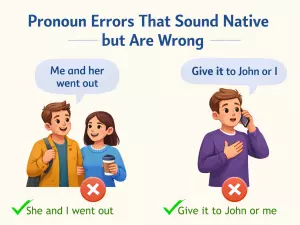
Typical mistakes with pronoun changes
Confusion with pronouns often happens when turning direct speech into reported speech. Learners sometimes forget to adjust pronouns to match the new speaker, listener, or context. This can lead to sentences that are unclear or even misleading. Below are some of the most frequent errors and misunderstandings, along with guidance on how to spot and avoid them.
Common slip-ups with pronouns in reported speech
- Leaving pronouns unchanged, resulting in ambiguous references.
- Switching only some pronouns, but not all, so the sentence mixes perspectives.
- Forgetting to change "my" or "your" to match the new reporting speaker.
- Using "he/she" when "I" or "we" is correct (or vice versa).
- Confusing possessive adjectives ("my", "your") with possessive pronouns ("mine", "yours").
- Applying pronoun changes too mechanically, without considering context.
- Misidentifying the subject or object, especially in longer sentences.
- Not updating reflexive pronouns ("myself", "yourself") to match the new subject.
- Forgetting plural forms, especially with "we" → "they" or "our" → "their".
- Overlooking gender when changing "he/she" or "his/her".
- Mixing up reported questions, where pronouns often flip roles.
- Using "you" inappropriately when reporting what someone else said to a third person.
Examples: pronoun changes gone wrong
To illustrate, here are some classic errors learners make when converting direct to reported speech. The table below shows the original sentence, a common mistake, and the correct form:
| Original Direct Speech | Common Mistake | Correct Reported Speech |
|---|---|---|
| She said, "I lost my keys." | She said that I lost my keys. | She said that she had lost her keys. |
| Tom said to me, "You should finish your homework." | Tom said to me that you should finish your homework. | Tom told me that I should finish my homework. |
| They said, "We will help you." | They said that we would help you. | They said that they would help me. |
| Anna said, "This is mine." | Anna said that this is mine. | Anna said that that was hers. |
How to avoid these pitfalls
- Always identify who is speaking and who is being spoken to in the original sentence.
- Ask yourself: "Whose perspective am I reporting from now?"
- Double-check each pronoun—subject, object, and possessive—for accuracy after making changes.
- Read your reported sentence aloud to see if it makes sense in context.
- If unsure, rewrite the sentence with names instead of pronouns, then substitute the correct pronouns.
Careful attention to these details helps make your reported speech clear and accurate. Practice and review are key to mastering these changes and avoiding common traps.
1. Choose the Correct Pronoun
Rewrite each reported sentence by choosing the correct pronouns based on the context given.
- Anna said, “I will help you.” (You are reporting to a friend.)
- Mark said to me, “You can use my laptop.”
- They said, “We have finished our work.” (You are not part of the group.)
- Lisa said to John, “You should bring your notes.” (You are John.)
- The teacher said, “You need to submit your essays today.” (You are one of the students.)
- Tom said, “I lost my wallet.”
- My parents said, “We will visit you next week.”
- Sarah said to me, “This is my decision.”
- The manager said, “You must update your report.” (Talking to a colleague.)
- They said to us, “We trust you.”
Show answers
- Anna said that she would help me.
- Mark said that I could use his laptop.
- They said that they had finished their work.
- Lisa said that I should bring my notes.
- The teacher said that we needed to submit our essays that day.
- Tom said that he had lost his wallet.
- My parents said that they would visit me the following week.
- Sarah said that it was her decision.
- The manager said that he had to update his report.
- They said that they trusted us.
2. Identify and Correct the Pronoun Mistake
Each reported sentence below contains a pronoun error. Find the mistake and rewrite the sentence correctly.
- She said that I was late. (Original: “I am late.”)
- John told me that you should call him. (Original: “You should call me.”)
- They said that we would help you. (Original: “We will help you.”)
- Anna said that this was mine. (Original: “This is mine.”)
- The teacher said that you needed more practice. (Talking about yourself.)
- He said that your idea was interesting. (Original: “My idea is interesting.”)
- My friend said that I could join us. (Original: “You can join us.”)
- She said that we were ready. (Original: “I am ready.”)
- They said that our plan would work. (Original: “Our plan will work.” Reporter not included.)
- Tom said that me would help later. (Original: “I will help later.”)
Show answers
- She said that she was late.
- John told me that I should call him.
- They said that they would help me.
- Anna said that that was hers.
- The teacher said that I needed more practice.
- He said that his idea was interesting.
- My friend said that I could join them.
- She said that she was ready.
- They said that their plan would work.
- Tom said that he would help later.