Common Grammar Mistakes in Reported Speech Explained

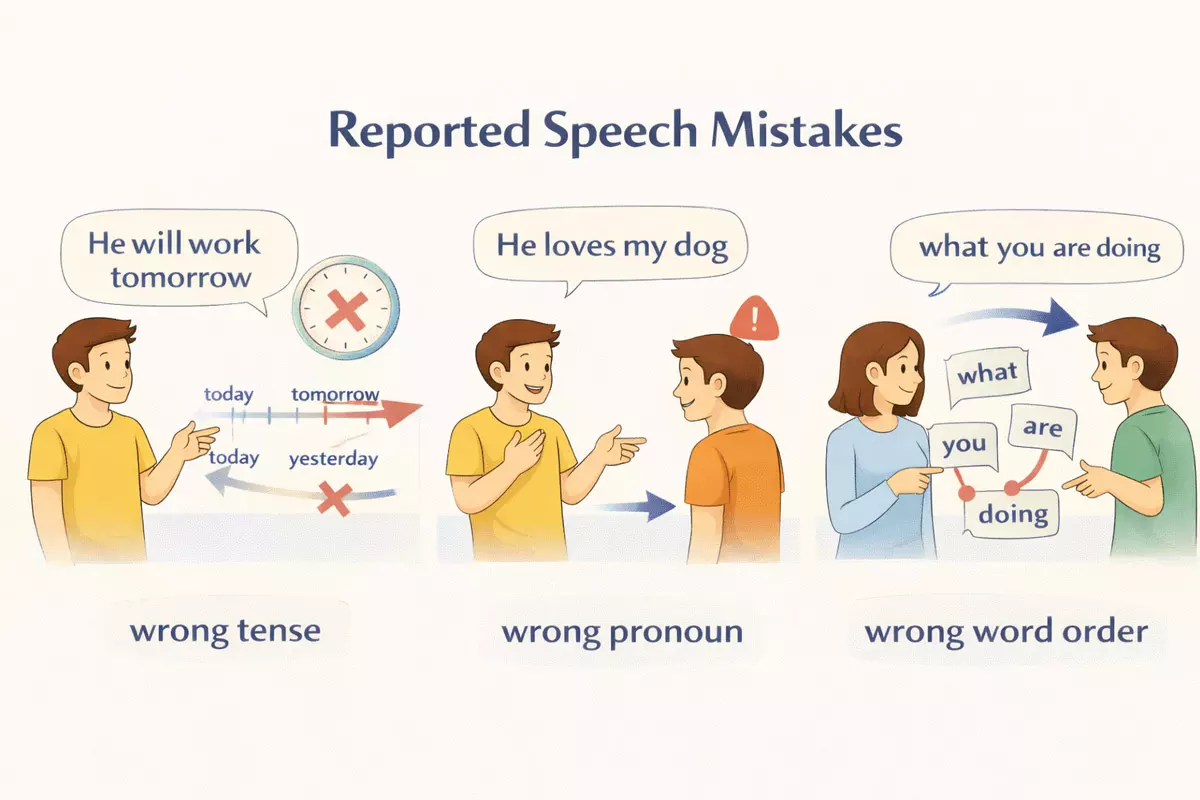 Here we the most common reported speech errors, including incorrect tense changes, pronoun and reference mistakes, word order issues in questions, and overusing backshifting. It also offers practical tips to help you avoid these problems.
Turning direct statements into indirect ones can be challenging, even for experienced English speakers, as subtle mistakes often go unnoticed. Recognizing and understanding these common errors is crucial for maintaining clear and accurate communication in both written and spoken English. By paying close attention to verb tense changes, pronoun shifts, and the correct use of reporting verbs, individuals can avoid miscommunication and improve their overall language skills.
Most frequent reported speech errors
Missteps with reported speech often stem from confusion between direct and indirect forms, especially when it comes to verb tense changes, pronoun use, and word order. Understanding these pitfalls can help learners avoid common mistakes and communicate more clearly.
1. Tense Shifts Mistakes
When switching from direct to indirect speech, incorrect verb tense shifts are among the most widespread issues. English typically requires a "backshift" in tense, but this rule is frequently overlooked or applied inconsistently.
- Forgetting to shift the tense: "He said, 'I am tired.'" → Incorrect: He said he is tired. ❌ Correct: He said he was tired. ✅
- Unnecessary shifting when reporting facts: "She said, 'The sun rises in the east.'" → Incorrect: She said the sun rose in the east. ❌ Correct: She said the sun rises in the east. ✅
2. Pronoun Confusion
Adjusting pronouns to fit the new context is essential, but it's easy to mix up who is being referred to.
- Leaving pronouns unchanged: "Tom said, 'I lost my keys.'" → Incorrect: Tom said I lost my keys. ❌ Correct: Tom said he lost his keys. ✅
- Misidentifying the subject or object due to pronoun errors.
3. Problems with Reporting Verbs
Learners often use the wrong reporting verb or forget to adjust the structure that follows it.
- Using "say" with an object: Incorrect: She said me that she was late. ❌ Correct: She told me that she was late. ✅
- Omitting "that" after reporting verbs (when necessary): Incorrect: He said he would call. (Acceptable in informal speech, but "that" is recommended in formal writing.)
4. Word Order and Question Structure
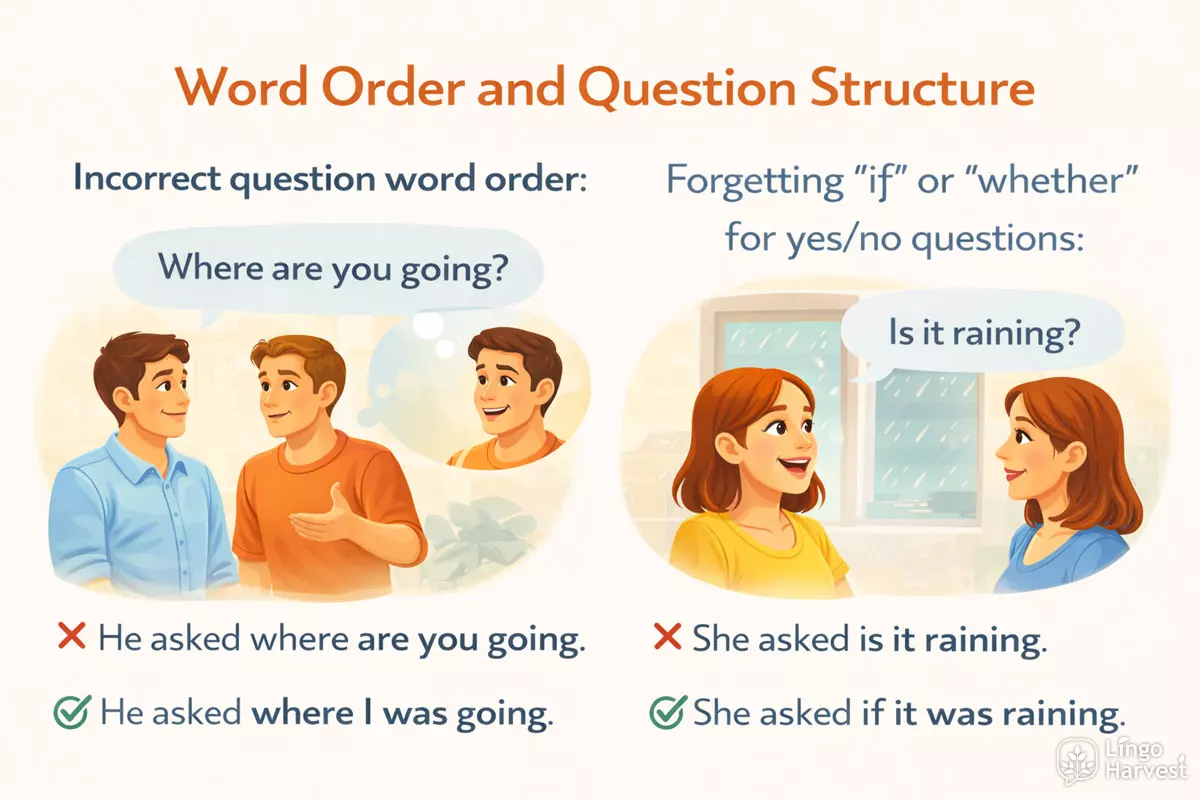
Incorrectly maintaining question word order in indirect speech is a frequent stumbling block.
- Keeping question word order: "He asked, 'Where are you going?'" → Incorrect: He asked where are you going. ❌ Correct: He asked where I was going. ✅
- Forgetting to use "if" or "whether" for yes/no questions: "She asked, 'Is it raining?'" → Incorrect: She asked is it raining. ❌ Correct: She asked if it was raining. ✅
5. Time and Place Reference Errors
Changes to words like "today," "here," and "tomorrow" are often missed, leading to confusion.
| Direct Speech | Reported Speech |
|---|---|
| today | that day |
| tomorrow | the next day / the following day |
| yesterday | the day before / the previous day |
| here | there |
| now | then |
6. Quotation Mark and Punctuation Errors
Improperly using quotation marks or punctuation can blur the difference between direct and indirect speech.
- Leaving quotation marks around reported statements that are not direct quotes.
- Incorrect comma placement before reported clauses.
By recognizing these typical slip-ups—ranging from tense and pronoun errors to mishandling questions and time references—learners can focus their practice and steadily improve their mastery of indirect speech.
Incorrect tense changes
When using reported speech, one of the most frequent stumbling blocks is shifting tenses incorrectly. This usually happens when speakers or writers either forget to change the verb tense after a reporting verb in the past, or they make unnecessary changes that lead to confusion. Mastering these changes is essential for conveying what someone else said accurately.
Why tense shifting matters
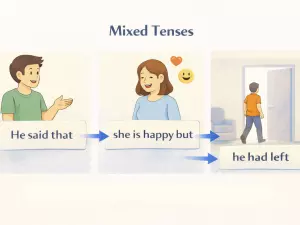
Moving from direct to indirect speech often requires you to backshift the tense of the original statement. For example, present simple typically becomes past simple, and present perfect turns into past perfect. However, mistakes occur when these transformations are skipped or over-applied. Sometimes, no shift is needed—especially when the reporting verb is in the present, or when the information is still true or universally valid.
Common mistakes with tense shifts
- Leaving the original tense unchanged when it should be shifted (e.g., "He said he is tired" instead of "He said he was tired").
- Changing tenses when the reporting verb is in the present (e.g., "She says she went home" instead of "She says she goes home").
- Altering tenses for general truths (e.g., "The teacher said the earth was round" instead of "The teacher said the earth is round").
- Applying tense changes to modal verbs incorrectly (e.g., "can" to "could" when "can" still applies).
- Forgetting to change time expressions alongside verb tenses (e.g., "today" to "that day").
Typical tense changes in reported speech
Below is a summary of the most common tense adjustments you’ll encounter when converting direct statements to indirect ones after a past reporting verb:
| Direct Speech | Reported Speech |
|---|---|
| Present Simple (“I work.”) |
Past Simple (He said he worked.) |
| Present Continuous (“I am working.”) |
Past Continuous (He said he was working.) |
| Present Perfect (“I have finished.”) |
Past Perfect (He said he had finished.) |
| Past Simple (“I saw her.”) |
Past Perfect (He said he had seen her.) |
| Will (“I will help.”) |
Would (He said he would help.) |
| Can (“I can swim.”) |
Could (He said he could swim.) |
Tips for avoiding tense errors
- Always check the reporting verb—tense changes are typically required if it’s in the past.
- Don’t shift tenses for facts or universal truths.
- Watch out for time expressions; they often need to be changed as well (e.g., "now" becomes "then").
- Practice with different reporting verbs and sentence types to build confidence.
- Remember that some modals (like "might," "should," "ought to") usually stay the same.
By staying aware of these patterns and pitfalls, you can report statements accurately and avoid the confusion that comes from inappropriate verb form changes.
Wrong pronoun and reference shifts
Mistakes with pronouns and unclear references are common when transforming direct speech into reported speech. These errors often confuse readers about who or what is being discussed. To accurately report what someone else said, it’s essential to adjust pronouns and references so they match the new perspective.
Why pronoun changes matter
When switching from direct to indirect speech, pronouns must be changed to reflect the speaker and listener correctly. Failing to update them leads to sentences that sound strange or misleading. For example, not changing “I” to “he” or “she” can make it unclear who is being referred to.
- “I am tired,” she said. → She said that she was tired. (not “I was tired”)
- “You need to help,” he told me. → He told me that I needed to help. (not “you needed to help”)
- “We will finish soon,” they said. → They said that they would finish soon. (not “we would finish soon”)
- “My car is new,” John said. → John said that his car was new.
- “Your idea is great,” my boss said. → My boss said that my idea was great.
Common reference shift errors
Besides pronouns, other references can also become unclear when reporting speech. Words like “this,” “that,” “here,” “now,” or names of people and places may need to change so the listener understands what is meant.
- “I’ll do it now,” she said. → She said that she would do it then.
- “We are meeting here,” Tom said. → Tom said that they were meeting there.
- “I love this book,” Anna said. → Anna said that she loved that book.
- “Bring it to me,” the teacher said. → The teacher told me to bring it to her.
- “Can you help us?” they asked. → They asked if I could help them.
Examples of correct and incorrect shifts
The table below shows how errors can occur if references aren’t changed, and how to fix them.
| Incorrect Example | Corrected Reported Speech |
|---|---|
| He said, “I will call you.” → He said he would call you. | He said he would call me. |
| She said, “My mother is coming.” → She said my mother was coming. | She said her mother was coming. |
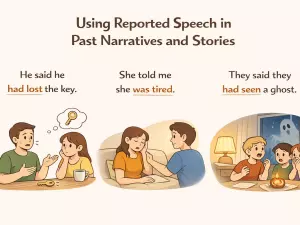
| They said, “We lost our keys.” → They said we lost our keys. | They said they had lost their keys. |
| John said, “I will meet you here.” → John said he would meet you here. | John said he would meet me there. |
Tips to avoid reference confusion
- Always identify who is speaking and who is being spoken to before changing pronouns.
- Adjust time and place references (“now” → “then”, “here” → “there”) to fit the new context.
- Replace possessive pronouns as needed (“my” → “his/her”, “our” → “their”).
- Re-read the sentence to check if the meaning is still clear after the change.
- When in doubt, rephrase to avoid ambiguity.
Paying close attention to these details helps ensure reported speech is accurate and easy to understand. Small errors with pronouns or reference words can change the meaning completely, so it’s worth double-checking every time.
Word order mistakes in reported questions
Learners often get confused by the different word order rules in reported (indirect) questions compared to direct ones. This confusion is especially common when changing from direct speech (questions with question marks) to indirect speech (statements). The main point to remember is that, in reported questions, the subject comes before the verb—unlike in direct questions, where the auxiliary verb usually comes first.
Direct vs. Reported Question Structure
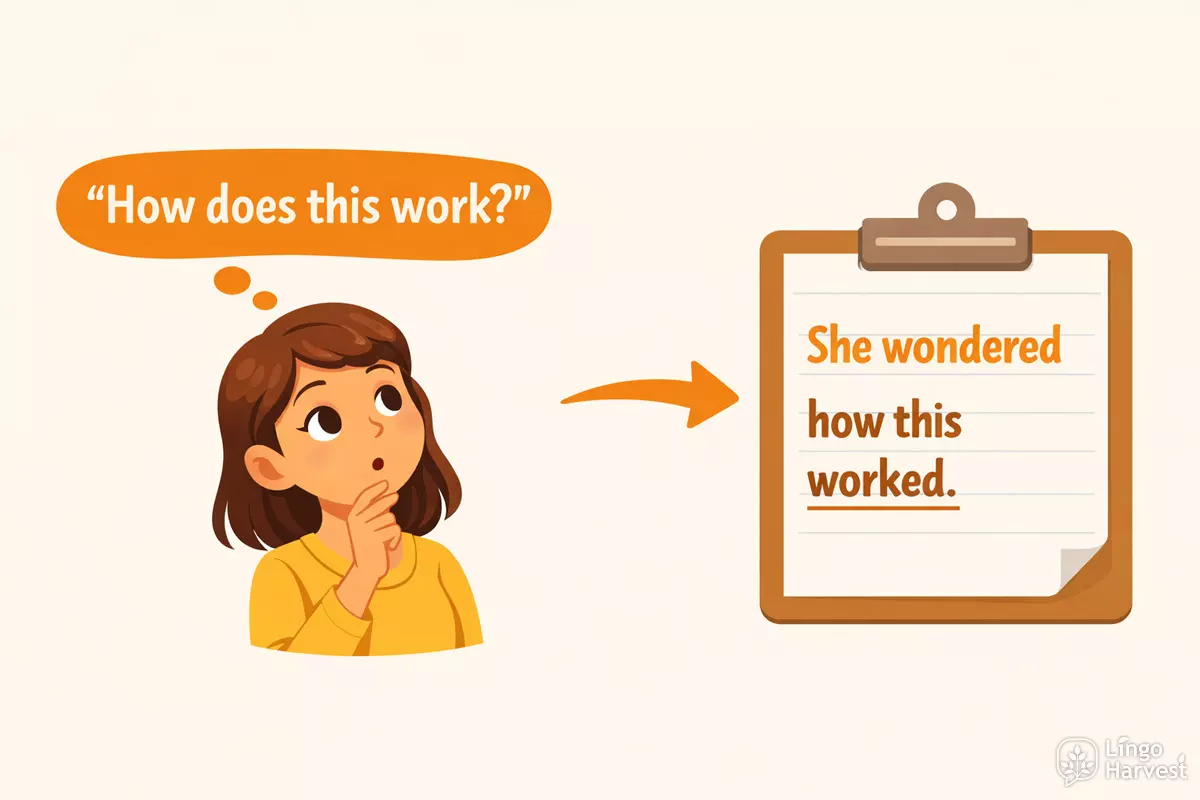
When reporting questions, the sentence structure changes. Instead of using the question word order (auxiliary + subject + verb), we switch to statement word order (subject + verb). Forgetting this leads to unnatural or incorrect sentences. Here are some typical patterns:
| Direct Question | Reported Question |
|---|---|
| Where are you going? | He asked where I was going. |
| What did she say? | He wanted to know what she had said. |
| Can you help me? | She asked if I could help her. |
| Why has he left? | They wondered why he had left. |
| Who are they? | She asked who they were. |
| When will it start? | He asked when it would start. |
| Did you see that? | He asked if I had seen that. |
| How does this work? | She wondered how this worked. |
| Is he coming? | They wanted to know if he was coming. |
| Have you finished? | He asked if I had finished. |
Common Traps to Avoid
- Don’t keep the auxiliary verb before the subject (e.g., He asked where was I going ❌).
- Remember that reported questions do not use a question mark.
- Reported yes/no questions often start with if or whether.
- Use statement word order: subject + verb, not auxiliary + subject + verb.
- Be careful with tense changes, especially after reporting verbs in the past.
Quick Reference: Typical Errors
- She asked what did I want. ❌ → She asked what I wanted. ✅
- He asked where was she. ❌ → He asked where she was. ✅
- They wondered why did we leave. ❌ → They wondered why we left. ✅
Mastering reported question structure is essential for sounding natural in English. Paying close attention to the shift from question to statement word order helps avoid some of the most persistent mistakes in indirect speech.
Overusing backshifting
In reported speech, English learners often apply tense changes too rigidly, even when they're not required. While shifting the verb tense back (for example, from present to past) is a common rule after reporting verbs like "said" or "told," it's not always necessary. The main purpose of changing the tense is to reflect that the original words were spoken in the past, but there are clear exceptions where keeping the original tense is more natural or accurate.
When backshifting is not needed
There are situations where the tense in reported speech should remain the same as in the original statement. Ignoring these exceptions can make your English sound awkward or even change the intended meaning. Some common cases include:
- General truths: Facts that are always true don't require a tense change.
Direct: "Water boils at 100°C."
Reported: She said water boils at 100°C. ✅ - Still-true statements: If the information is still true at the time of reporting, it's fine to keep the present tense.
Direct: "I live in London."
Reported: He said he lives in London. ✅ - Recent speech: When reporting something said moments ago, sometimes backshifting is unnecessary.
- Modal verbs: Some modals (like "should," "might," "could") often stay the same.
Common over-backshifting errors
Applying tense changes without considering context can result in sentences that sound odd or are incorrect. Here are examples of mistakes that happen when tense is pushed back too far:
- "She said she was living in Paris." (when she still lives there)
- "He said the sun rose in the east." (the sun always rises in the east, so present tense is correct)
- "They said water boiled at 100°C." (again, this is a scientific fact)
Guidelines for correct tense usage
To avoid unnecessary changes in tense, use these guiding principles:
- Ask if the original statement is still true or is a general fact.
- If the situation or fact has changed since the original speech, backshift the verb.
- For universal truths or things that haven't changed, retain the original tense.
- With modal verbs, check if the modal can remain unchanged.
| Original Statement | Reported Speech (Correct) |
|---|---|
| "The sky is blue." | She said the sky is blue. |
| "I can swim." | He said he can swim. |
| "Water freezes at 0°C." | They said water freezes at 0°C. |
| "I will call you." | She said she would call me. |
| "I live in Tokyo." | He said he lives in Tokyo. (if still true) |
Quick reference: When not to shift
- General truths and laws of nature
- Facts that haven't changed
- Statements about habitual actions still occurring
- Modal verbs that do not require tense changes
Keeping these patterns in mind will help you avoid awkward or incorrect tense changes in reported speech. Always consider the context and meaning before automatically shifting tenses.
Practical tips to avoid common errors
Mastering reported speech can be tricky, especially when it comes to tense changes, pronoun shifts, and reporting verbs. To help you sidestep the mistakes English learners often make, here are actionable strategies and reminders for everyday writing and conversation.
Watch out for tense backshifting
One of the most frequent mistakes is forgetting to shift the tense when moving from direct to indirect speech. This is especially important if the reporting verb is in the past (e.g., said, told). Always double-check whether the verb tense needs to move back.
| Direct Speech | Reported Speech |
|---|---|
| "I am tired," she said. | She said (that) she was tired. |
| "We will help," they promised. | They promised (that) they would help. |
| "He has finished," John stated. | John stated (that) he had finished. |
| "I can come," Anna replied. | Anna replied (that) she could come. |
Check your pronouns and time expressions
Pronoun confusion is common. Make sure pronouns and possessives refer to the right person. Time expressions often change, too—keep an eye out for these shifts:
- now → then
- today → that day
- yesterday → the day before
- tomorrow → the next day / the following day
- this → that
- these → those
- here → there
- last night → the night before
- last week → the week before / the previous week
- last month → the previous month
- last year → the year before / the previous year
- next week → the following week
- next month → the following month
- next year → the following year
- this morning → that morning
- this evening → that evening
- tonight → that night
- ago → before / earlier
- just → just / a moment before
- right now → at that moment
- currently → at that time
- my → his / her / their
- your → my / his / her / their
- our → their
- me → him / her / them
- us → them
- over here → over there
- in this place → in that place
- from here → from there
- come here → go there
Use the correct reporting verb
Not every reporting verb works for every situation. Choose verbs that match the original speaker’s intention (e.g., ask, advise, warn, suggest). This helps avoid ambiguity and awkward sentences.
Don’t forget about questions and commands
Reported questions need a change in word order and usually drop the question mark. Commands often use to + infinitive or not to + infinitive for negatives. Mistakes here can make sentences confusing.
- Direct: "Where are you going?" → She asked where I was going.
- Direct: "Don’t touch that!" → He told me not to touch that.
- Direct: "Please wait." → She asked me to wait.
Double-check for unnecessary 'that'
While “that” is often used in reported speech, it’s optional in many cases. If a sentence sounds awkward or repetitive, try reading it with and without “that” to see which flows better.
Review before finalizing
Before submitting a report or assignment, review all sentences with indirect speech. Look for tense accuracy, pronoun consistency, and logical time expressions. Reading the sentence aloud can help catch errors you might otherwise miss.
Homework
Practice correcting common mistakes in reported speech. Focus on word order, tense backshifting, pronoun changes, and choosing the correct reporting structure.
Exercise 1: Correct the reported questions
- She asked where was I going.
- He wanted to know did she finish her work.
- They wondered why did we leave early.
- She asked if am I ready.
- He asked what does she want.
- They asked where are the keys.
- She wanted to know will he come.
- He asked if did I see her.
- They wondered where was he born.
- She asked why is he angry.
Show answers
- She asked where I was going.
- He wanted to know if she had finished her work.
- They wondered why we left early.
- She asked if I was ready.
- He asked what she wanted.
- They asked where the keys were.
- She wanted to know if he would come.
- He asked if I had seen her.
- They wondered where he was born.
- She asked why he was angry.
Exercise 2: Choose the correct tense and pronouns
- He said, “I live in Paris.” → He said that he ______ in Paris.
- She said, “We will help you.” → She said that they ______ help me.
- Tom asked, “Are you tired?” → Tom asked if ______ tired.
- Anna said, “My brother is here now.” → Anna said that her brother ______ there then.
- They said, “Water boils at 100°C.” → They said that water ______ at 100°C.
- He asked, “Did you finish today?” → He asked if I had finished ______.
- She said, “I can drive.” → She said that she ______ drive.
- Mark said, “We are meeting tomorrow.” → Mark said that they were meeting ______.
- She asked, “Have you seen my bag?” → She asked if I had seen ______ bag.
- He said, “I am working here.” → He said that he ______ working there.
Show answers
- lives
- would
- I was
- was / was
- boils
- that day
- could
- the next day
- her
- was