Using Modal Verbs in Reported Speech with Clear Examples

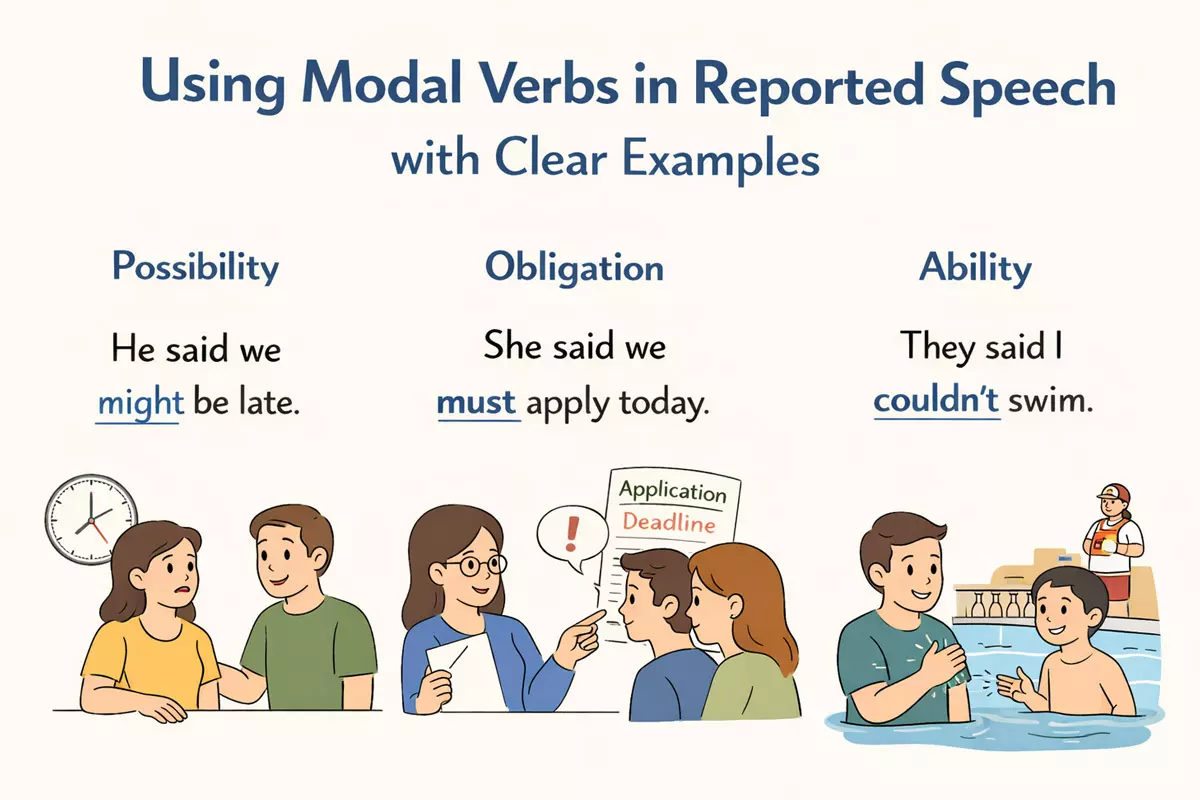 Here we how modal verbs function and change in reported speech, including typical transformations and meaning shifts.
Understanding how auxiliary verbs change when reporting someone else's words can be tricky, particularly in English. This article explains these shifts clearly, providing simple examples to help you grasp the concept with ease. By following the guidance and examples provided, you'll be able to report speech accurately and confidently, making your communication more effective. Whether you're a student or just looking to improve your English skills, mastering these changes is essential for clear and correct reporting.
Function of modal verbs in reported speech
When relaying what someone else has said, modal verbs play a key role in expressing meanings such as possibility, necessity, advice, and permission. In reported speech, modals often change to reflect the shift from direct to indirect communication, and their function can subtly shift depending on context. Understanding these changes helps ensure that the intended meaning is preserved.
How modal verbs convey meaning in indirect speech
Modal verbs such as can, will, may, and must are used to report requests, advice, offers, obligations, and more. Their main role is to indicate the speaker's attitude or the degree of certainty, obligation, or permission in the original statement. When these verbs are used in reported speech, some modals change form while others remain the same. For example, can often becomes could, and will usually changes to would.
Common patterns and examples
Below are typical ways modal verbs are used when reporting speech. Notice the subtle shifts in meaning or form:
- Direct: "I can help you." → Reported: She said she could help me.
- "You must finish this today." → He said I had to finish it that day.
- "Will you be there?" → She asked if I would be there.
- "May I leave early?" → He asked if he might leave early.
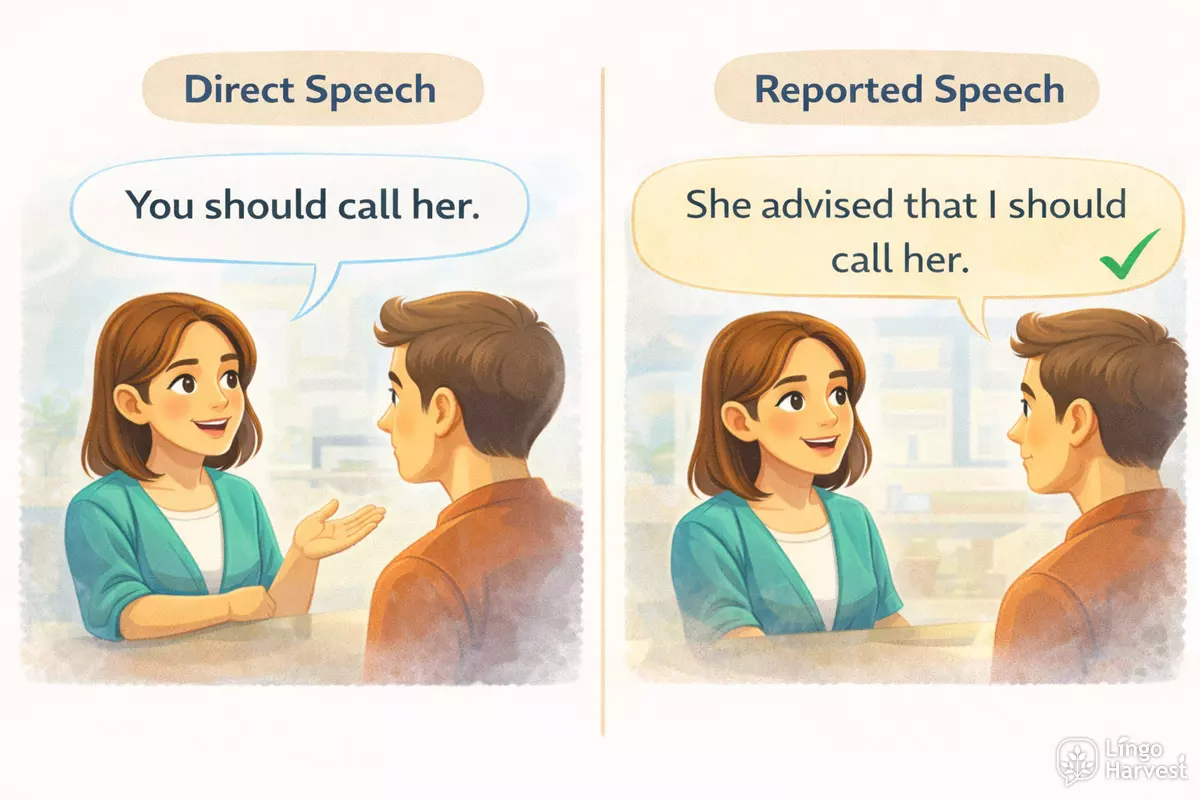
- "You should call her." → She advised that I should call her.
- "I might come later." → He said he might come later.
- "You ought to see a doctor." → She suggested I ought to see a doctor.
- "Could you help me?" → He asked if I could help him.
- "Would you like some tea?" → She asked if I would like some tea.
- "Shall we go now?" → He suggested that we should go then.
- "Must we leave?" → She asked if they had to leave.
- "They will arrive soon." → He said they would arrive soon.
Summary of modal verb changes
| Direct Speech Modal | Reported Speech Equivalent |
|---|---|
| can | could |
| may | might |
| will | would |
| must | had to / must |
| shall | should / would |
| could, would, should, might, ought to | (usually unchanged) |
Some modal verbs remain the same when moving to reported speech, especially those that do not have a distinct past form. However, others change to reflect the shift in time or certainty. The table above provides a quick reference for the most common transformations.
Special notes on meaning and nuance
- Must in reported speech can become had to when expressing obligation, but can remain must when expressing deduction.
- Not all modal verbs have a past form, so sometimes the same word is used in both direct and indirect speech.
- Context often determines whether a modal verb changes or stays the same. Pay attention to the original intent—necessity, advice, permission, or possibility.
In summary, modal verbs in indirect speech help convey the original speaker’s intention while adapting to grammatical rules and the context of the narration. Mastering these shifts allows for accurate and nuanced communication.
Common modal verb transformations
When reporting speech that contains modal verbs, the form of the modal often changes to reflect the shift from direct to indirect speech. These adjustments help clarify meaning, especially when the reporting verb is in the past. Some modals stay the same, while others shift to a different word or phrase to indicate time, possibility, or obligation more accurately.
How modal verbs typically change in reported speech
Most modal verbs have specific patterns when moving from direct to reported statements. The transformation depends on the original modal and the tense of the reporting verb. Here are some of the most frequent changes:
| Direct Speech | Reported Speech |
|---|---|
| will | would |
| can | could |
| may | might |
| shall | should |
| must | had to (obligation) |
| must | must (no change for logical deduction) |
| needn’t | didn’t need to / needn’t have |
| have to | had to |
| should | should (no change) |
| ought to | ought to (no change) |
| could | could (no change) |
| might | might (no change) |
| would | would (no change) |
| used to | used to (usually no change) |
| may not | might not |
| can’t | couldn’t |
| will not / won’t | would not / wouldn’t |
| shall not / shan’t | should not |
| mustn’t | mustn’t / wasn’t allowed to (meaning-dependent) |
| be able to | be able to / was able to (tense-dependent) |
| be going to | was/were going to |
| had better | had better (no change) |
| might have + V3 | might have + V3 (no change) |
| could have + V3 | could have + V3 (no change) |
| should have + V3 | should have + V3 (no change) |
| would have + V3 | would have + V3 (no change) |
Examples of modal verbs in reported speech
To illustrate how these shifts work, here are some typical examples:
- Direct: "I will call you." → Reported: She said she would call me.
- Direct: "He can swim fast." → Reported: She said he could swim fast.
- Direct: "You may leave early." → Reported: The teacher said we might leave early.
- Direct: "We must finish today." → Reported: They said they had to finish that day.
- Direct: "I might come later." → Reported: He said he might come later.
- Direct: "She should study." → Reported: He said she should study.
- Direct: "I would help you." → Reported: She said she would help me.
- Direct: "Shall I open the window?" → Reported: He asked if he should open the window.
- Direct: "Could you explain?" → Reported: She asked if I could explain.
- Direct: "Must I go now?" → Reported: He asked if he had to go then.
Tips for transforming modal verbs
- If the reporting verb is in the present, modal verbs often remain unchanged.
- Some modals (like might, could, should, would) usually stay the same in reported statements.
- For requests and offers, context determines whether a modal or its paraphrase is best in indirect speech.
- Always check for time and subject changes, as these can affect the form of the modal.
Understanding these transformations helps make reported speech accurate and clear, especially in formal or written contexts.
Meaning changes caused by modal shifts
When reporting speech, the choice of modal verb can alter the intention or certainty of the original message. This shift in meaning often depends on the context and the specific modal chosen. For example, using could instead of can in reported speech can make a statement less direct or more tentative. Understanding these shifts is essential for accurately conveying what was said.
Common modal shifts and their effects
Modal verbs such as can, may, must, will, and shall often change form in reported statements. This not only reflects a change in tense but can also affect the strength or nuance of the message. Here are some typical shifts and how they influence meaning:
| Direct Speech | Reported Speech | Meaning Change |
|---|---|---|
| I can help you. | She said she could help me. | Less immediate, more tentative |
| You must finish this. | He said I had to finish it. | From obligation to past necessity |
| We will go tomorrow. | They said they would go the next day. | Future intention becomes conditional or planned |
| She may arrive late. | He said she might arrive late. | Possibility remains, but less certain |
| Shall I open the window? | He asked if he should open the window. | From offering to seeking advice |
| You should study more. | She said I should study more. | Advice remains, but less direct |
| I would like some tea. | He said he would like some tea. | Polite request stays polite |
| Can you help me? | She asked if I could help her. | Direct request becomes more polite |
| Must you leave now? | He asked if I had to leave then. | Urgency replaced by necessity |
| I might join you later. | She said she might join us later. | Possibility preserved |
Modal verbs that rarely change
Some modal verbs, such as should, might, and would, often remain the same in reported speech. However, the level of certainty or advice implied can still be softened or made less direct when moving from direct to reported forms.
- Should: Advice or recommendation, usually unchanged
- Might: Possibility, typically stays the same
- Would: Polite requests or future in the past, form remains but context shifts
Why these shifts matter
Choosing the right modal when reporting speech ensures you represent the speaker’s original intent as closely as possible. Misusing modals can unintentionally change the level of certainty, politeness, or necessity in a statement. Paying attention to these nuances is crucial for clear and accurate communication.
Obligation, permission, and possibility
When reporting speech that involves rules, necessity, allowance, or uncertainty, modal verbs like must, have to, can, may, might, and could are essential. These modals help express what someone was required, permitted, or able to do—or what was possible—according to the original statement. In reported speech, the forms of these modal verbs sometimes change, so it's important to pay attention to the context and the verb that best matches the intended meaning.
Reporting necessity and requirement
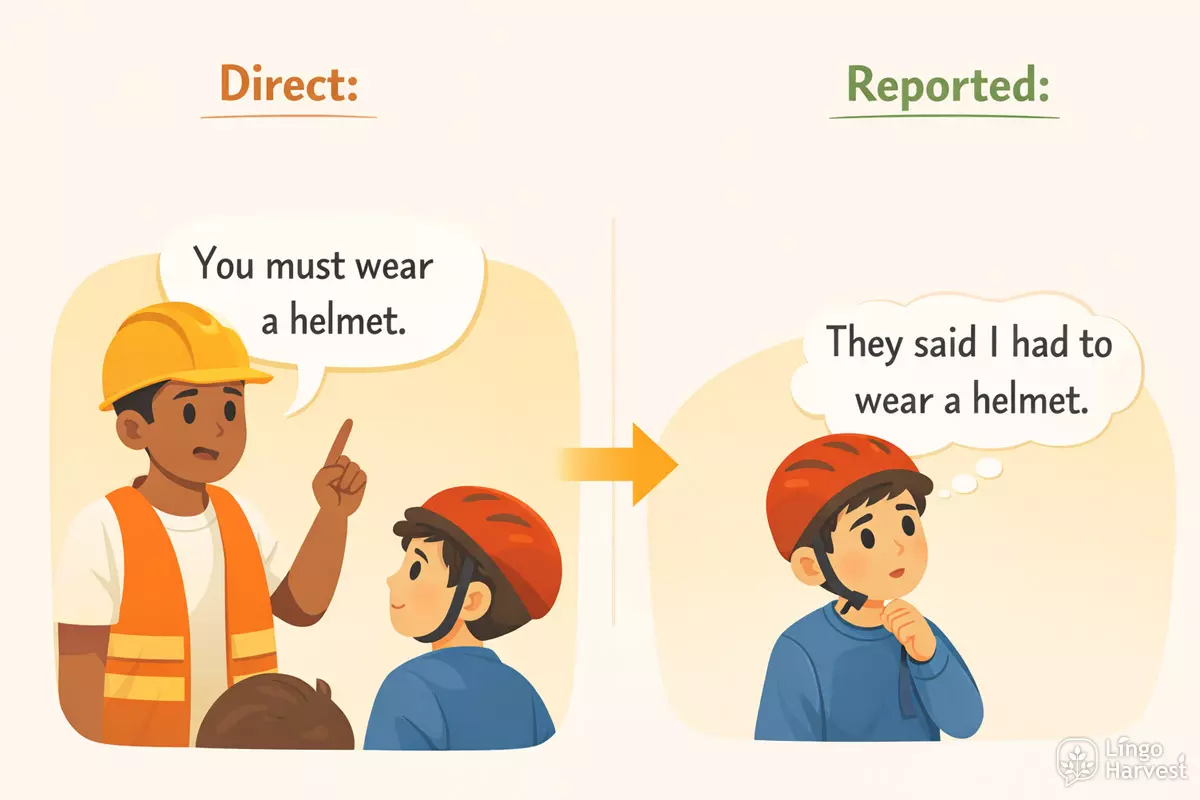
To relay a sense of duty or compulsion, verbs like must and have to are frequently used. In reported speech, must often becomes had to to reflect the shift from present to past. This change makes the timeline clear and avoids confusion.
- Direct: "You must finish the report." → Reported: She said I had to finish the report.
- Direct: "You have to leave early." → Reported: He told me I had to leave early.
- Direct: "You must wear a helmet." → Reported: They said I had to wear a helmet.
Expressing permission in reported speech
When someone is allowed to do something, can and may are commonly used. In reported speech, can usually shifts to could, while may becomes might or was allowed to for clarity.
- Direct: "You can use my phone." → Reported: She said I could use her phone.
- Direct: "You may leave early." → Reported: He said I might leave early.
- Direct: "You can park here." → Reported: They said I could park there.
- Direct: "You may borrow my book." → Reported: She said I was allowed to borrow her book.
Possibility and uncertainty
To talk about what was possible or uncertain, English uses modals like might, could, and may. In reported speech, these often stay the same, but sometimes may changes to might for consistency with past reporting.
| Direct Speech | Reported Speech |
|---|---|
| "It may rain tomorrow." | She said it might rain the next day. |
| "He might be late." | She said he might be late. |
| "I could finish the work." | He said he could finish the work. |
| "You may need help." | She said I might need help. |
| "They can arrive early." | He said they could arrive early. |
Summary of patterns
Modals in reported speech often shift to a past form or a more tentative version. Here are some common transformations:
- must → had to
- have to → had to
- can → could
- may → might or was/were allowed to
- might → might (usually unchanged)
- could → could (usually unchanged)
Understanding these shifts helps you report statements about rules, allowances, and possibilities accurately and naturally.
Context-dependent modal interpretation
How modal verbs are understood in reported speech often depends on the surrounding situation, the speaker’s intentions, and the tense of the reporting verb. Unlike straightforward statements, these forms can subtly shift in meaning when retold, especially as context and time frames change.
How context shapes modal meaning
The exact sense of a modal verb—such as possibility, necessity, or obligation—can change when you report what someone said. For example, “must” might indicate strong necessity in direct speech, but when reported, it could soften to “had to” or “would have to” depending on when the event took place and the speaker’s attitude.
- Direct: She said, “You must finish this today.”
- Reported (past obligation): She said I had to finish it that day.
- Direct: He said, “You may leave early.”
- Reported (permission): He said I could leave early.
- Direct: “I will help you,” he promised.
- Reported (future in the past): He promised he would help me.
- Direct: “You might be right,” she admitted.
- Reported (possibility): She admitted I might be right.
- Direct: “You should study more,” the teacher said.
- Reported (advice): The teacher said I should study more.
- Direct: “I can swim fast,” he said.
- Reported (ability): He said he could swim fast.
Comparing modal shifts in different contexts
The following table illustrates how modal verbs can be interpreted differently in reported speech, depending on the original meaning and the context in which they are used.
| Original Modal | Reported Form & Typical Context |
|---|---|
| must (necessity) | had to (past obligation) → “She said I had to leave early.” |
| can (ability/permission) | could (reported ability or permission) → “He said I could join.” |
| may (permission/possibility) | could/might (reported permission/possibility) → “She said I might be late.” |
| will (future) | would (future in the past) → “He said he would help.” |
| should (advice) | should (advice remains) → “They said I should rest.” |
| might (possibility) | might (possibility remains) → “He said it might rain.” |
Key takeaways
- Modal verbs often shift form and meaning when reported, especially with “must,” “can,” and “will.”
- The intended meaning—obligation, ability, permission, or advice—guides which modal or tense is used in reported speech.
- Some modals, such as “should” and “might,” stay unchanged because their meaning isn’t tied to a specific time.
- Understanding the speaker’s original intent and time reference is crucial for accurate reporting.
Being attentive to these shifts helps ensure that the reported version faithfully reflects both the content and the nuance of the original statement.
Typical errors with reported modals
Many English learners find transferring modal verbs from direct to reported speech tricky. Some modals change form or meaning, while others do not. Misunderstanding these changes often leads to mistakes that affect clarity and accuracy. Below, we’ll look at frequent pitfalls and how to avoid them.
Confusing which modals change in reported speech
Not all modals behave the same way. For example, “can” often becomes “could” in reported speech, but “must” can become “had to” depending on the context. Learners sometimes overgeneralize, changing every modal or leaving them unchanged when a shift is needed.
| Direct Speech | Reported Speech |
|---|---|
| “I can swim.” | He said he could swim. |
| “You must finish.” | She said I had to finish. |
| “I might come.” | He said he might come. |
| “We should go.” | They said we should go. |
Common mistakes to watch for
- Changing modals that should stay the same (e.g., reporting “might” as “mighted” ❌).
- Forgetting to backshift modals where necessary (e.g., “can” → “could”).
- Using the wrong form for “must” (e.g., “She said he musted leave” ❌ instead of “had to leave”).
- Reporting “should” as “shoulded” or “would” as “willed” ❌ (these forms do not exist).
- Mixing up advice and obligation modals (e.g., “must” vs. “should”).
- Leaving out the subject after the modal in reported speech.
- Using present tense modals in reported speech when past is required.
- Adding “to” after modals that don’t take it (e.g., “could to go” ❌).
- Reporting “will” as “will” instead of “would” when the reporting verb is in the past.
- Forgetting that some modals (like “might” and “should”) do not change.
- Using double modals (e.g., “He said he might could go” ❌).
- Confusing necessity and advice (e.g., reporting “must” as “should” instead of “had to”).
- Neglecting negative forms (e.g., “can’t” should become “couldn’t” or “wasn’t able to”).
- Incorrect word order after modals (e.g., “He could swim not” ❌).
- Using “may” in past reported speech when “might” is expected.
How to avoid these errors
To prevent these issues, remember which modals change and which stay the same. Practice converting direct speech to reported speech with different modal verbs. When in doubt, check the rules for each modal, focusing on tricky pairs like “must/had to” and “can/could.” Regular review and example-based practice will help you use modals more accurately in reported speech.
Homework: Reported Speech with Modals
This homework helps you practice how modal verbs change (or stay the same) in reported speech. Focus on the meaning first — obligation, permission, advice, or possibility — and then choose the most natural reported form. Pay special attention to tricky cases like must (often → had to), may (often → might), and negative forms such as mustn’t and can’t. After you finish, compare your answers to the key and check whether your tense, pronouns, and time expressions match the reporting context.
Exercise 1. Rewrite the sentences in reported speech (focus on obligation, permission, and possibility)
- "You must submit the form today," the supervisor said.
- "I have to attend a briefing at noon," he said.
- "You can use the conference room after three," she said.
- "Employees may work remotely on Fridays," the policy states.
- "It may take longer than expected," the technician said.
- "We might need additional funding," the project lead said.
- "I can’t access the database right now," she said.
- "You mustn’t share this link," he warned me.
- "We will have to postpone the launch," they said.
- "You should back up your files regularly," the IT trainer said.
Show answers
- The supervisor said that I had to submit the form that day.
- He said that he had to attend a briefing at noon.
- She said that I could use the conference room after three.
- The policy stated that employees might work remotely on Fridays.
- The technician said that it might take longer than expected.
- The project lead said that they might need additional funding.
- She said that she couldn’t access the database right then.
- He warned me that I mustn’t share that link.
- They said that they would have to postpone the launch.
- The IT trainer said that I should back up my files regularly.
Exercise 2. Fix the errors in reported modals
- He said he musted leave early.
- She told me that I can use her laptop.
- They said we will have to wait.
- He said that I could to join the meeting.
- She said that he mighted be late.
- The manager said that we mustn’t to discuss the project publicly.
- He explained that the report may be finished by Friday.
- She warned that I don’t have to click unknown links.
- They said that the files would been reviewed soon.
- He said that I shoulded update the software.
Show answers
- He said he had to leave early.
- She told me that I could use her laptop.
- They said we would have to wait.
- He said that I could join the meeting.
- She said that he might be late.
- The manager said that we mustn’t discuss the project publicly.
- He explained that the report might be finished by Friday.
- She warned that I didn’t have to click unknown links.
- They said that the files would be reviewed soon.
- He said that I should update the software.