Reporting Short Answers and Ellipsis in Reported Speech

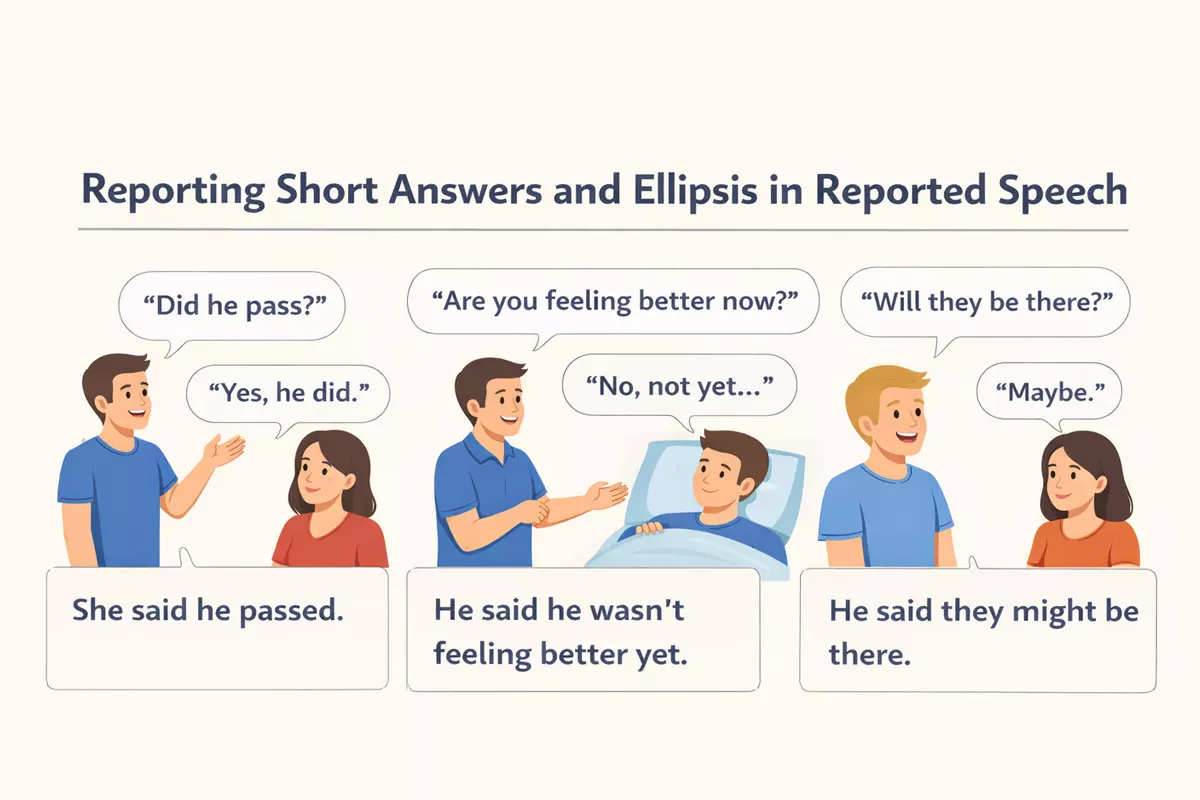 Here we how short answers and ellipsis work in reported speech, restoring omitted information, reporting yes or no answers, and understanding context dependency. It also explains differences in formality and highlights common learner mistakes.
Conveying brief replies or omitting repeated words can make indirect speech smoother, yet it also presents certain challenges. Accurately relaying concise responses and removing unnecessary repetition are important skills for achieving clarity and effectiveness in communication. Mastering these techniques ensures that the intended message is delivered without confusion, while also maintaining the natural flow of conversation. Developing this ability is valuable in both written and spoken interactions.
What short answers and ellipsis are
Short answers and ellipsis are common features in everyday English conversation, especially when responding to questions or repeating information. They help speakers avoid unnecessary repetition, making dialogues more natural and efficient. Instead of repeating the whole question or statement, we often use brief forms or omit parts that are already understood from context.
Understanding Short Answers
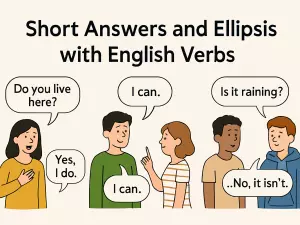
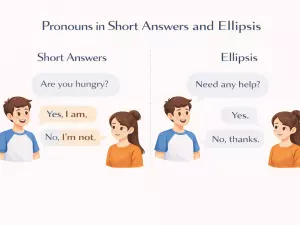
Short answers are concise responses that typically use an auxiliary verb (like "do," "be," or "have") or a modal verb ("can," "will," etc.), often followed by a subject. These responses avoid restating the full question. For example, when asked, "Are you coming?" a simple "Yes, I am" or "No, I'm not" is common instead of repeating the full question in the answer.
- Yes, she does. (instead of "Yes, she likes pizza.")
- No, they haven't. (instead of "No, they haven't finished yet.")
- Yes, we will. (instead of "Yes, we will call you.")
- No, I can't. (instead of "No, I can't swim.")
- Yes, he did. (instead of "Yes, he called.")
- No, it isn't. (instead of "No, it isn't raining.")
- Yes, you may. (instead of "Yes, you may leave early.")
- No, she won't. (instead of "No, she won't join us.")
- Yes, they are. (instead of "Yes, they are coming.")
- No, we don't. (instead of "No, we don't agree.")
What Is Ellipsis?
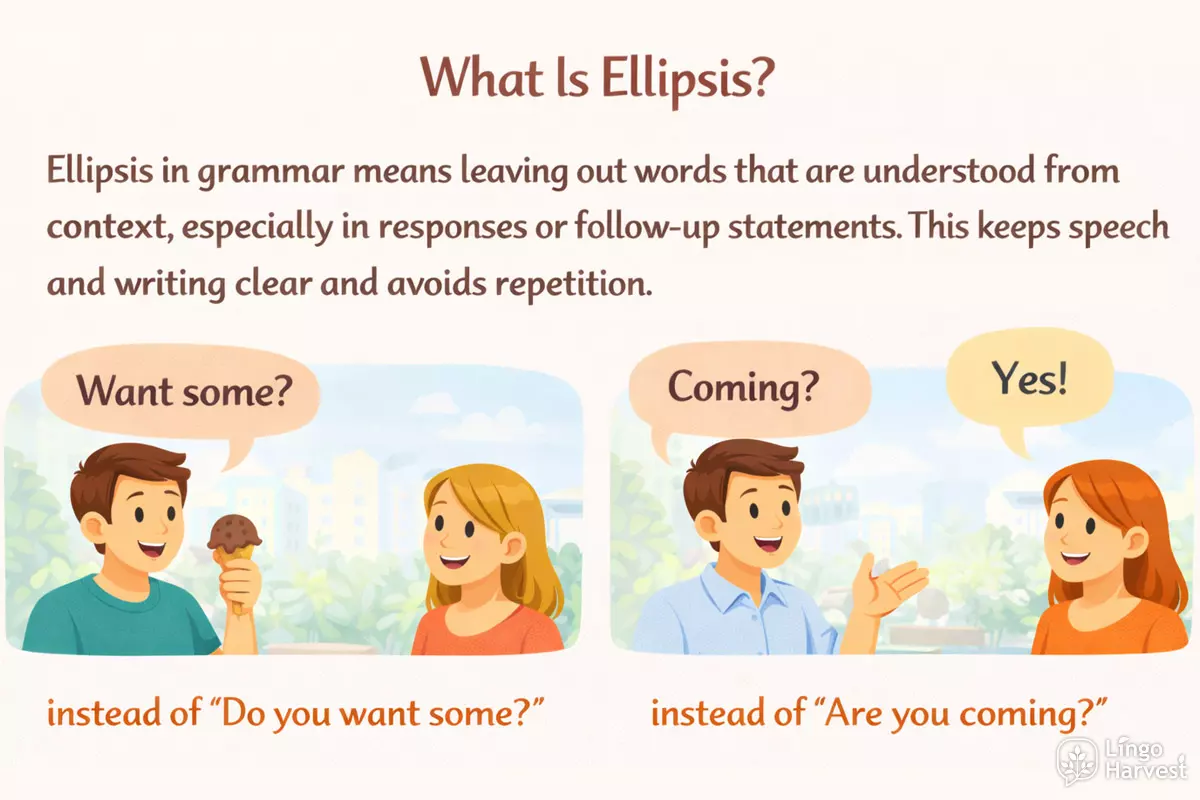
Ellipsis in grammar means leaving out words that are understood from context, especially in responses or follow-up statements. This keeps speech and writing clear and avoids repetition. For example, after someone asks, "Do you want tea or coffee?" you might reply, "Tea, please," omitting the rest of the sentence ("I want tea, please").
- Want some? (instead of "Do you want some?")
- Coming? (instead of "Are you coming?")
- Don't know. (instead of "I don't know.")
- Hope so. (instead of "I hope so.")
- Can't help. (instead of "I can't help.")
- Sounds good. (instead of "That sounds good.")
- Will do. (instead of "I will do it.")
- Guess not. (instead of "I guess not.")
- Me too. (instead of "I do too.")
- Maybe later. (instead of "Maybe I'll do it later.")
Comparing Short Answers and Ellipsis
While both forms aim to make responses more efficient, short answers usually retain the auxiliary or modal verb and subject, whereas ellipsis often omits even more, leaving only what is strictly necessary for understanding. The table below highlights key differences:
| Short Answer | Ellipsis |
|---|---|
| Yes, I do. | Sure. |
| No, she hasn't. | Not yet. |
| Yes, we can. | Can do. |
| No, they won't. | Won't. |
| Yes, he is. | Is he? |
| Yes, I am. | I am. |
| No, I don't. | Don't. |
| Yes, she did. | She did. |
| No, we can't. | Can't. |
| Yes, they have. | They have. |
| No, he isn't. | Isn't. |
| Yes, you should. | You should. |
| No, I wouldn't. | Wouldn't. |
| Yes, she will. | She will. |
| No, they didn't. | Didn't. |
Both short answers and ellipsis are essential for fluent conversation, allowing speakers to respond quickly and naturally without unnecessary repetition. Recognizing and using these forms helps learners sound more like native speakers and understand spoken English with greater ease.
Restoring missing information when reporting
When reporting short answers or sentences with ellipsis, it’s common to encounter gaps in information. The original speaker may have left out words that could be inferred from context, but these omissions can lead to ambiguity when the words are reported to someone else. To make reported speech clear and accurate, it’s often necessary to supply or reconstruct the missing details.
Why add missing elements?
Elliptical responses and short answers rely on shared context, but once that context is removed, listeners may struggle to understand the intended meaning. By filling in what was left unsaid, you help the audience grasp the full message. This is particularly important in formal writing, academic contexts, and situations where misunderstandings could arise.
Typical situations where restoration is needed
- Short answers that omit the subject or auxiliary verb
- Elliptical replies where only a fragment is given
- Commands or requests reported as indirect speech
- Responses relying heavily on previous questions for meaning
- Dialogues where pronouns or references are dropped
How to restore omitted information
To reconstruct the full meaning, consider the original question or context and supply the necessary words. This might involve adding subjects, verbs, or objects that were implicit in the original exchange. Below is a table illustrating common patterns and how they can be expanded when reporting:
| Original (Elliptical/Short) | Restored When Reporting |
|---|---|
| "Yes." | She said that she did. |
| "Not yet." | He replied that he hadn’t finished yet. |
| "Can’t." | They explained that they couldn’t come. |
| "Will do." | She promised that she would do it. |
| "Tomorrow." | He said that he would do it the next day. |
| "Me too." | She added that she liked it as well. |
| "Probably not." | He admitted that he probably wouldn’t come. |
| "Don’t know." | She said that she didn’t know. |
| "Never have." | He replied that he had never done it. |
| "Could be." | She suggested that it could be possible. |
Guidelines for reconstructing meaning
- Use clues from the previous sentence or exchange to determine what’s missing.
- Be cautious not to add information that wasn’t implied or intended by the original speaker.
- Adjust pronouns and verb tenses as needed for reported speech.
- In formal or written contexts, prioritize clarity over brevity.
- When in doubt, clarify with the original speaker if possible.
By thoughtfully restoring omitted words or phrases, you ensure that reported speech remains clear and faithful to the original intent, even when the initial context is no longer available.
Reporting yes and no responses
When relaying someone’s direct “yes” or “no” answer in reported speech, English speakers do not simply repeat the words. Instead, they usually summarize or paraphrase the response to fit the indirect style, often using verbs like “agree,” “confirm,” “deny,” or “refuse.” This helps clarify the meaning and flow of the conversation, especially when the original answer was brief or elliptical.
How to express affirmative and negative replies indirectly
Transforming short answers such as “Yes, I have” or “No, I don’t” into reported speech typically involves reporting verbs and a that-clause or an infinitive. The structure you choose depends on the context and the verb or question type. Here are some common patterns:
- He said (that) he had.
- She confirmed that she would come.
- They denied taking the money.
- He agreed to help.
- She refused to answer.
- He admitted (that) he was wrong.
- She promised (that) she would call.
- They explained (that) they couldn’t attend.
- He assured me (that) everything was fine.
- She insisted (that) she was innocent.
- He replied that he didn’t know.
- They accepted that they needed help.
- She acknowledged (that) she had made a mistake.
- He objected that it was unfair.
- She reminded me (that) the deadline was tomorrow.
- They warned us (that) it would be difficult.
- He volunteered to drive.
- She declined to comment.
Typical transformations: direct to reported
A direct “yes” or “no” is rarely used verbatim in indirect speech. Instead, the reporting verb and clause signal the original reply’s meaning. Below is a structured comparison of how short answers are usually reported:
| Direct Response | Reported Speech |
|---|---|
| “Yes.” | He said (that) he did. / He agreed. |
| “No.” | She said (that) she didn’t. / She denied it. |
| “Yes, I will.” | He promised (that) he would. |
| “No, I can’t.” | She refused to do it. |
| “Yes, I did.” | He confirmed (that) he had. |
| “No, I haven’t.” | She admitted (that) she hadn’t. |
| “Yes, I’ll help.” | He agreed to help. |
| “No, I won’t go.” | She refused to go. |
Omitting “yes” and “no” in indirect statements
In reported speech, the words “yes” and “no” themselves are typically omitted. Instead, the meaning is preserved through the reporting verb and the structure of the sentence. This approach ensures clarity and avoids ambiguity, especially when the conversation is summarized for someone who was not present. By rephrasing replies this way, English maintains the intended meaning of the original answer while smoothly integrating it into indirect speech.
Context dependency in ellipsis
Ellipsis relies heavily on what has already been mentioned or is understood in a conversation. The meaning of an omitted phrase or word is often reconstructed from the surrounding discourse, making shared knowledge between speakers essential. For example, when someone asks, “Are you coming to the meeting?” a simple “I am” or even just “Am” can suffice, as the listener can fill in the missing information from the context.
How context shapes ellipsis
The grammaticality and clarity of elliptical responses depend on prior utterances and the expectations they set. If the context is clear and the omitted material is easily retrievable, ellipsis feels natural. However, if the context is ambiguous or insufficient, elliptical answers may confuse the listener. In reported speech, these dependencies become even more pronounced because the original context may shift or be partially lost.
- Ellipsis is more common in informal or spoken exchanges.
- Clarity depends on how much information remains accessible from the previous discourse.
- Ambiguity increases if multiple referents or interpretations are possible.
- Elliptical forms can differ based on register, dialect, and speaker assumptions.
- Reporting elliptical answers often requires restoring omitted elements for clarity.
- Pronoun reference and verb tense may need adjustment in reported forms.
- Some languages allow more radical ellipsis than others.
- Ellipsis is less likely if the antecedent is not immediately prior.
- Shared situational knowledge can license more reduced responses.
- Misunderstandings can arise if context is incorrectly assumed.
- Ellipsis in answers can be fragmentary (“Probably not,” “Could be”).
- In reporting, the reporter decides which ellipsis is recoverable for the new audience.
Examples: elliptical responses and their dependence on context
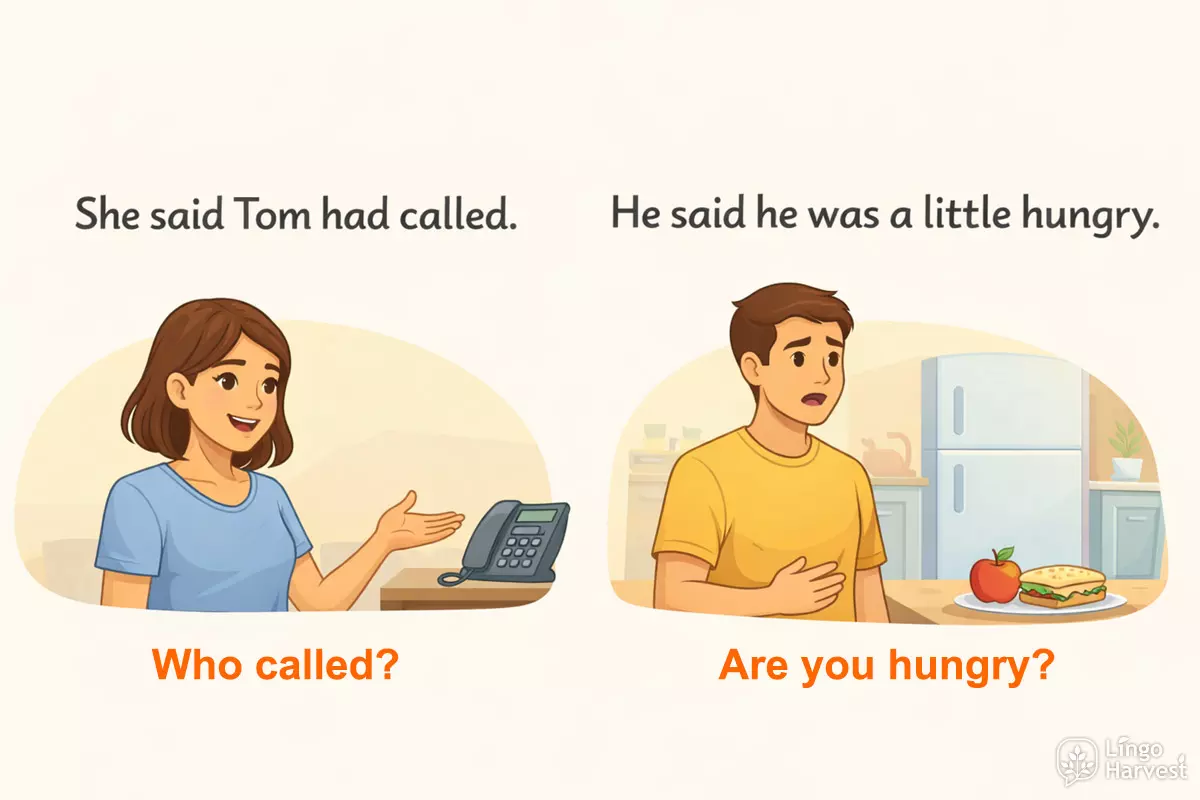
Short answers often omit verbs or objects that are clear from the prior question. The following table shows how context determines what can be left out in a reply and how such forms are reported:
| Original Question | Elliptical Response | Reported Speech | Context Required? |
|---|---|---|---|
| Will you help? | Sure. | She said she would. | ✅ Yes |
| Did you finish? | Not yet. | He replied that he hadn’t (finished) yet. | ✅ Yes |
| Who called? | Tom. | She said Tom had called. | ✅ Yes |
| Are you hungry? | A little. | He said he was a little hungry. | ✅ Yes |
| Is it raining? | It is. | She confirmed that it was raining. | ❌ Less |
Notice how, in each case, the elliptical form only works when the listener can recover the missing information from what was just said. In reporting such exchanges, it’s often necessary to reconstruct the omitted material to ensure clarity for the new audience, especially if the original context is no longer available.
Formal vs informal usage
How we report short answers and ellipsis depends heavily on the context and level of formality. In more official or academic writing, speakers tend to avoid ellipsis and prefer full, explicit sentences when conveying someone’s words indirectly. On the other hand, everyday conversation and informal communication often rely on brevity, omitting repeated elements or using short responses, especially when the meaning is clear from context.
Patterns in formal contexts
In formal reporting, clarity and completeness are prioritized. Ellipsis is generally avoided, and reported speech is expanded to make the meaning unmistakable. For example, instead of reporting “Yes, I have” as simply “He said yes,” a formal style would use: “He replied that he had.” This approach leaves little room for ambiguity, which is especially important in academic, legal, or professional settings.
- Reported answers are made explicit (e.g., “She replied that she would attend.”)
- Ellipsis is minimized or omitted entirely.
- Pronouns and tenses are carefully adjusted for accuracy.
- Short answers are expanded to full clauses.
- Redundant words are included for clarity, not left out.
- Indirect speech markers such as “stated,” “replied,” or “confirmed” are common.
- Rare use of contractions (e.g., “cannot” instead of “can’t”).
- Formality is maintained throughout the response.
Usage in informal communication
Informal speech, by contrast, often favors brevity and relies on shared understanding. Ellipsis is common, and short answers may be reported using minimal words, sometimes just repeating the original phrase or word. The focus is on efficiency rather than exhaustive detail.
- Short answers may be reported nearly verbatim (“He said yes.”)
- Elliptical forms are frequent (“She said she would.”)
- Context fills in omitted information.
- Contractions and colloquial phrases are normal.
- Reporting verbs are basic (“said,” “told me,” “answered”).
- Pronouns may be left implied if the referent is obvious.
- Redundancy is avoided; repeated words are dropped.
- Sometimes just a gesture or single word is reported (“He just nodded.”)
Comparison of formal and informal reporting
| Situation | Typical Reporting Style |
|---|---|
| Formal (written report) | He replied that he had completed the task. |
| Informal (conversation) | He said he had. |
| Formal (academic writing) | She confirmed that she would participate. |
| Informal (chat message) | She said yes. |
| Formal (legal document) | The witness stated that he did not see the event. |
| Informal (storytelling) | He just said no. |
Key points to consider
- Choose the style based on audience and purpose.
- For clarity and precision, expand short answers in formal contexts.
- For speed and natural flow, use ellipsis and concise forms in informal settings.
- Be mindful of ambiguity—what works in speech may confuse in writing.
Typical learner errors
Learners often face challenges when reporting short answers or handling ellipsis in reported speech. These difficulties usually come from misunderstanding how to transform direct responses, especially yes/no answers, or omitting necessary words for clarity. Mistakes can also arise when learners try to apply direct speech rules to reported forms, leading to awkward or incorrect sentences.
Common mistakes in reporting short answers
Many English students try to report short answers exactly as they appear in direct speech, forgetting that indirect speech requires changes in pronouns, tense, and sometimes word order. Another frequent issue is the omission of necessary reporting verbs or connectors, making the sentence incomplete or confusing.
- Using direct short answers without transformation: “He said, ‘Yes, I am.’” → Incorrect: He said yes, I am.
- Forgetting to adjust pronouns: “Are you coming?” “Yes, I am.” → Incorrect: She said yes, I am.
- Omitting reporting verbs: “No, I don’t.” → Incorrect: No, I don’t.
- Incorrect tense shifts: “Did you see it?” “No, I didn’t.” → Incorrect: He said he doesn’t.
- Missing conjunctions: “Yes, I can.” → Incorrect: He yes he could.
Problems with ellipsis in reported speech
Ellipsis means leaving out words that are understood from context. Learners often overuse ellipsis, making their reported sentences unclear, or avoid it entirely, resulting in unnatural repetition. Sometimes, they misunderstand which elements can be safely omitted.
- Omitting essential information: “Will you come?” “Yes.” → Incorrect: He said yes. (Too vague; needs clarification.)
- Repeating unnecessary words: “Are you ready?” “Yes, I am.” → Incorrect: He said that yes, he was ready he was.
- Incorrect use of auxiliary verbs: “Did you finish?” “No, I didn’t.” → Incorrect: He said not finished.
- Leaving out the subject: “Will you help?” “Yes.” → Incorrect: Said yes he would.
Direct vs. reported forms
Learners sometimes get confused between direct and indirect constructions, especially with short, elliptical responses. The table below outlines some typical errors and their corrected forms:
| Direct/Incorrect Form | Correct Reported Version |
|---|---|
| He said, “Yes, I do.” | He said (that) he did. |
| She answered, “No.” | She replied that she didn’t. |
| They said, “Yes.” | They confirmed that they would. |
| He said, “No, I can’t.” | He said (that) he couldn’t. |
| I said, “Yes, I have.” | I said (that) I had. |
| She said, “Yes, I am.” | She said (that) she was. |
| He said, “No, I’m not.” | He said (that) he wasn’t. |
| They said, “Yes, we can.” | They said (that) they could. |
| She said, “No, we won’t.” | She said (that) they wouldn’t. |
| He said, “Yes, I will.” | He said (that) he would. |
| I said, “No, I won’t.” | I said (that) I wouldn’t. |
| She said, “Yes, I did.” | She said (that) she had. |
| They said, “No, we didn’t.” | They said (that) they hadn’t. |
| He said, “Yes, I was.” | He said (that) he had been. |
| She said, “No, I wasn’t.” | She said (that) she hadn’t been. |
Additional points to watch out for
- Using “yes” or “no” alone in reported speech, leading to ambiguity.
- Failing to shift modal verbs (“can” to “could,” “will” to “would,” etc.).
- Ignoring subject-verb agreement after ellipsis.
- Overusing word-for-word reporting rather than paraphrasing as required.
- Not clearly indicating who the speaker is in the reported sentence.
- Directly translating from a learner’s native language, causing unnatural phrasing.
Paying attention to these pitfalls helps learners produce clear, accurate reported speech, especially when answers are brief or some words are omitted.
Homework
Exercise 1: Expand elliptical answers into clear reported speech
Rewrite each mini-dialogue as one sentence in reported speech. Restore what is missing from the short answer and adjust pronouns and tense where needed.
- "Will you help?" — "Sure." (report it)
- "Did you finish the report?" — "Not yet." (report it)
- "Are you coming to the meeting?" — "I am." (report it)
- "Who called you?" — "Tom." (report it)
- "Can you drive?" — "I can’t." (report it)
- "Have you seen my keys?" — "I have." (report it)
- "Do you need help?" — "Probably not." (report it)
- "Were you upset?" — "A little." (report it)
- "Will you be there tonight?" — "Maybe." (report it)
- "Did she accept the offer?" — "She didn’t." (report it)
Show answers
- She said she would help.
- He said he hadn’t finished the report yet.
- She said she was coming to the meeting.
- He said Tom had called him.
- She said she couldn’t drive.
- He said he had seen her keys.
- She said she probably didn’t need help.
- He said he had been a little upset.
- She said she might be there that night.
- He said she hadn’t accepted the offer.
Exercise 2: Formal vs informal reporting
Rewrite each item in two ways: (1) more formal, explicit reporting, (2) more informal, conversational reporting. Keep the meaning the same.
- Q: "Did you finish?" A: "Not yet."
- Q: "Will you join us?" A: "Sure."
- Q: "Are you hungry?" A: "A little."
- Q: "Can you come tomorrow?" A: "Probably not."
- Q: "Have you paid?" A: "I have."
- Q: "Who told you?" A: "Sarah."
- Q: "Do you agree?" A: "I do."
- Q: "Is it raining?" A: "It is."
Show answers
- Formal: He replied that he had not finished yet. Informal: He said he hadn’t yet.
- Formal: She said that she would join them. Informal: She said she would.
- Formal: He said that he was a little hungry. Informal: He said he was a bit hungry.
- Formal: She replied that she probably could not come the next day. Informal: She said probably not.
- Formal: He confirmed that he had paid. Informal: He said he had.
- Formal: She stated that Sarah had told her. Informal: She said it was Sarah.
- Formal: He confirmed that he agreed. Informal: He said he did.
- Formal: She confirmed that it was raining. Informal: She said it was.