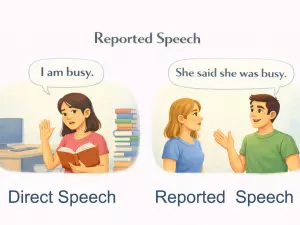
Backshifting in Reported Speech (B1-B2 review)

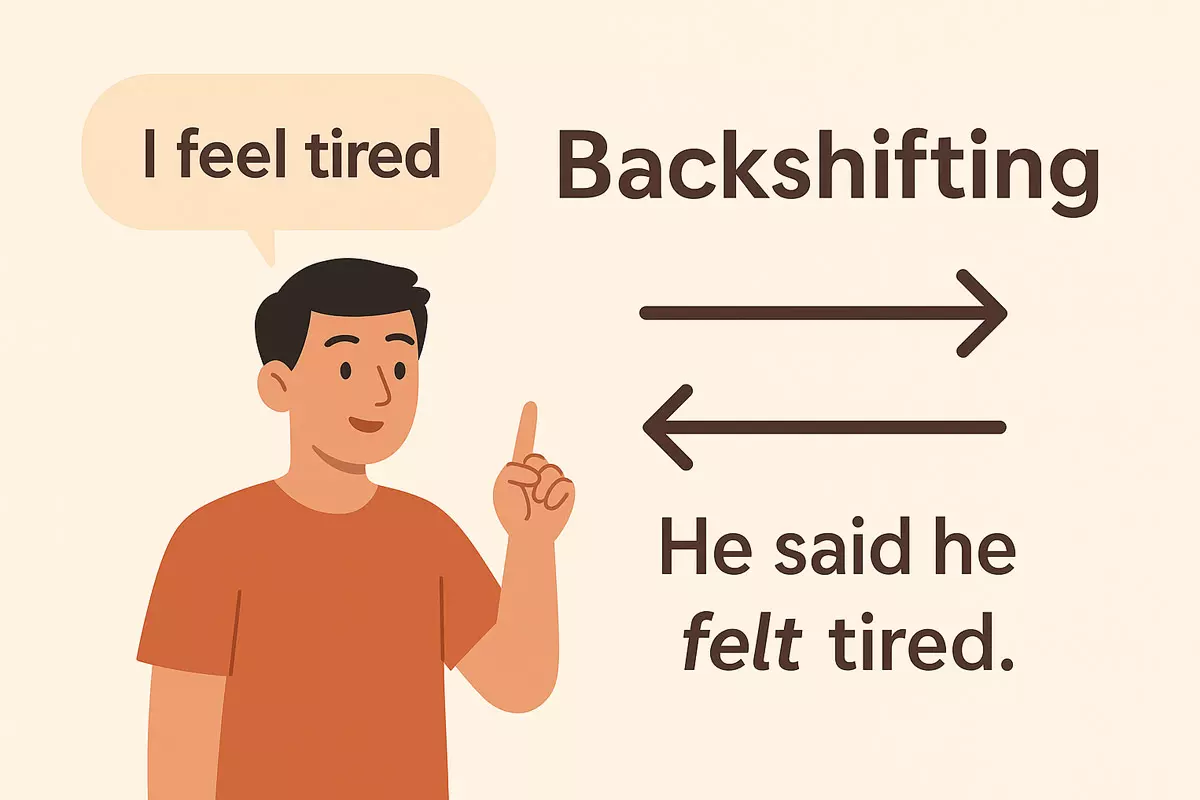 Here we what backshifting in reported speech means, when to use it, typical tense and modal changes, exceptions where tenses do not shift, common backshift errors, and provides practice turning direct speech into reported speech.
Transforming direct statements into indirect ones often requires adjusting verb tenses, which can be confusing for English learners. Understanding how to shift tenses in reported speech is essential, especially for students at the B1-B2 level. This article provides clear explanations and practical tips to help learners master this skill, ensuring they can report what others have said accurately and confidently. By focusing on common patterns and offering useful examples, the article aims to make tense changes in indirect speech easier to grasp and apply in everyday communication.
What Backshifting Means in Reported Speech
When we report what someone said, we often need to change the verb tense. This process is called backshifting. It usually means moving the tense one step back into the past. For example, if the original statement is in the present simple, it typically changes to past simple in reported speech. This shift helps show that the statement was made before the moment of reporting.
Why Use Backshifting?
Backshifting is used to make it clear that the information was said earlier and is being repeated or summarized. It also helps keep the timeline of events logical, especially when reporting conversations or stories.
Common Backshifting Patterns
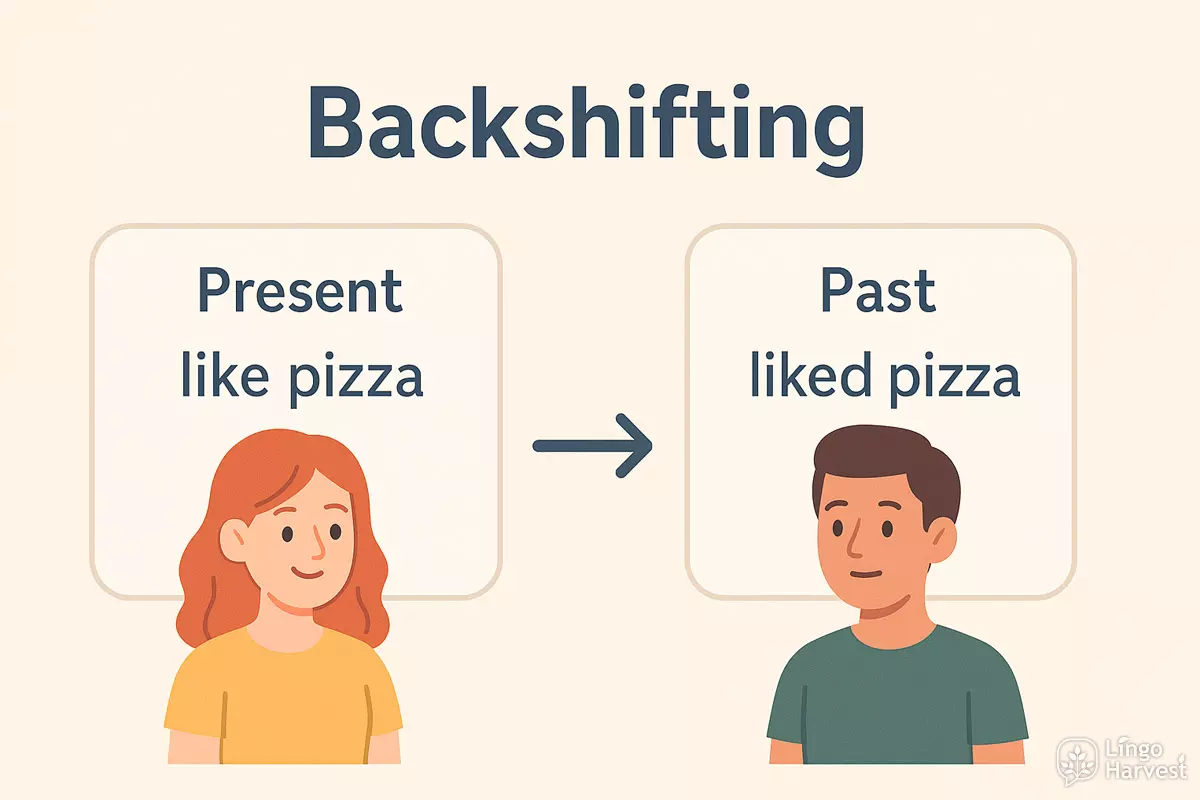
Here are some typical changes that happen when you report speech:
- Present Simple → Past Simple
Example: "I like pizza." → She said she liked pizza. - Present Continuous → Past Continuous
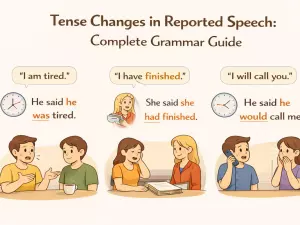
Example: "I am watching TV." → He said he was watching TV. - Present Perfect → Past Perfect
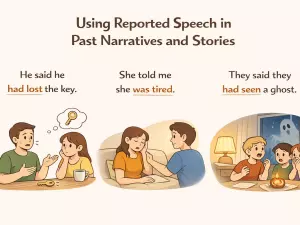
Example: "I have finished." → She said she had finished. - Past Simple → Past Perfect
Example: "I went home." → He said he had gone home. - Will → Would
Example: "I will call you." → She said she would call me. - Can → Could
Example: "I can help." → He said he could help. - May → Might
Example: "I may come." → She said she might come. - Must → Had to
Example: "I must leave." → He said he had to leave. - Past Continuous → Past Perfect Continuous
Example: "I was waiting." → She said she had been waiting. - Present Perfect Continuous → Past Perfect Continuous
Example: "I have been working." → He said he had been working.
Backshifting Table: Common Tense Changes
| Direct Speech (Original) | Reported Speech (Backshifted) |
|---|---|
| Present Simple "I eat breakfast." |
Past Simple He said he ate breakfast. |
| Present Continuous "She is studying." |
Past Continuous He said she was studying. |
| Present Perfect "They have left." |
Past Perfect He said they had left. |
| Past Simple "I saw her." |
Past Perfect He said he had seen her. |
| Will "I will call." |
Would He said he would call. |
| Can "I can swim." |
Could He said he could swim. |
| May "She may come." |
Might He said she might come. |
| Must "You must go." |
Had to He said I had to go. |
When Backshifting Is Not Needed
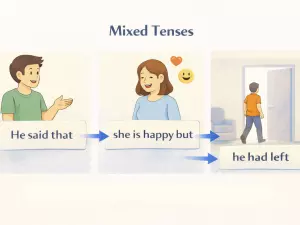
Sometimes, you don’t need to move the tense back. For example, if the reporting verb is in the present, or if the information is still true, you can often keep the original tense. For example: She says, "I live in London." → She says she lives in London. But when the reporting verb is in the past, backshifting is usually expected.
In summary, backshifting is a key part of turning direct speech into reported speech in English. It helps listeners and readers understand when something was said and keeps the meaning clear.
When Backshifting Is Required
Backshifting in reported speech typically occurs when you report what someone said in the past. The verb tense in the reported clause usually moves one step back into the past. This shift helps signal that the statement is being reported and is no longer direct speech. Understanding exactly when to apply this change is key for clear and accurate communication.
Situations That Call for Backshifting
Backshifting is needed in reported speech when:
- The reporting verb (such as said, told, explained) is in the past simple.
- The original statement contains present or past tenses that need to reflect the time difference.
- You want to show that the information was true at the time of speaking, but may not be true now.
- You are reporting questions, commands, or requests that were made in the past.
- The context requires clarity about when something was said versus when it is being reported.
Examples of Common Backshifting Patterns
Here are some frequent tense changes when reporting speech:
| Direct Speech | Reported Speech (After Backshifting) |
|---|---|
| I am tired. | She said (that) she was tired. |
| We have finished. | They said (that) they had finished. |
| He will call me. | She said (that) he would call her. |
| I can help you. | He said (that) he could help me. |
| They are coming. | She said (that) they were coming. |
| I saw her yesterday. | He said (that) he had seen her the day before. |
| We will go tomorrow. | She said (that) they would go the next day. |
Key Points to Remember
- Do not backshift if the reporting verb is in the present (says, tells).
- Some modal verbs (like might, should, could) do not change.
- Backshifting is not always required if the situation is still true or is a general fact.
- Time expressions often change (e.g., today → that day, now → then).
- If the original statement was already in the past perfect, the tense usually stays the same.
Recognizing when to shift tenses helps you report statements, questions, and requests accurately. Practice with varied examples to build confidence in using these patterns naturally.
Typical Tense Changes After Reporting Verbs
When we use reported speech in English, we often need to change the verb tense from the original sentence. This is called "backshifting." The tense usually moves one step back into the past, especially when the reporting verb (like "said" or "told") is in the past tense. Understanding these shifts helps you report what others have said accurately.
Common Patterns for Tense Backshift
Here are some frequent changes you’ll see when turning direct speech into reported speech:
- Present Simple → Past Simple
“I live in London,” she said. → She said she lived in London. - Present Continuous → Past Continuous
“I am working,” he said. → He said he was working. - Present Perfect → Past Perfect
“I have finished,” she said. → She said she had finished. - Present Perfect Continuous → Past Perfect Continuous
“I have been waiting,” he said. → He said he had been waiting. - Past Simple → Past Perfect
“I saw the movie,” she said. → She said she had seen the movie. - Past Continuous → Past Perfect Continuous
“I was reading,” he said. → He said he had been reading. - Will → Would
“I will help you,” she said. → She said she would help me. - Can → Could
“I can swim,” he said. → He said he could swim. - May → Might
“I may come,” she said. → She said she might come. - Must → Had to
“I must leave,” he said. → He said he had to leave. - Past Perfect → No change
“I had eaten,” she said. → She said she had eaten. - Would, Could, Might, Should → No change
“I would go,” he said. → He said he would go.
Summary Table: Direct to Reported Speech Tense Changes
| Direct Speech Tense | Reported Speech Tense |
|---|---|
| Present Simple | Past Simple |
| Present Continuous | Past Continuous |
| Present Perfect | Past Perfect |
| Past Simple | Past Perfect |
| Will | Would |
| Can | Could |
| May | Might |
| Must | Had to |
| Past Perfect / Would / Could / Might / Should | (No change) |
Notes on Exceptions and Usage
Sometimes, tense changes are not necessary. For example, if the reporting verb is in the present (e.g., "He says..."), or if the information is still true or universal, we often keep the original tense. Also, modal verbs like "would," "could," and "might" usually remain the same when reported. Understanding these backshifts is essential for clear reported speech and helps avoid common learner mistakes. Pay attention to the context and the time frame of the original statement to choose the correct form.
Backshifting with Modals
When reporting speech that includes modal verbs, English often requires changes to the modal verb used, depending on the time relationship. Some modals stay the same, while others shift to a more "past" form. This helps to show that the reporting is happening after the original statement.
How Modal Verbs Change in Reported Speech
Not all modal verbs behave the same way in indirect speech. Here are some key points:
- Can usually becomes could.
- Will typically changes to would.
- May often shifts to might.
- Must can either stay the same or become had to, depending on the meaning.
- Shall usually turns into should or would.
- Could, would, should, might, ought to usually remain unchanged.
Examples of Modal Changes
The examples below show how sentences with modal verbs are transformed when reporting what someone said in the past.
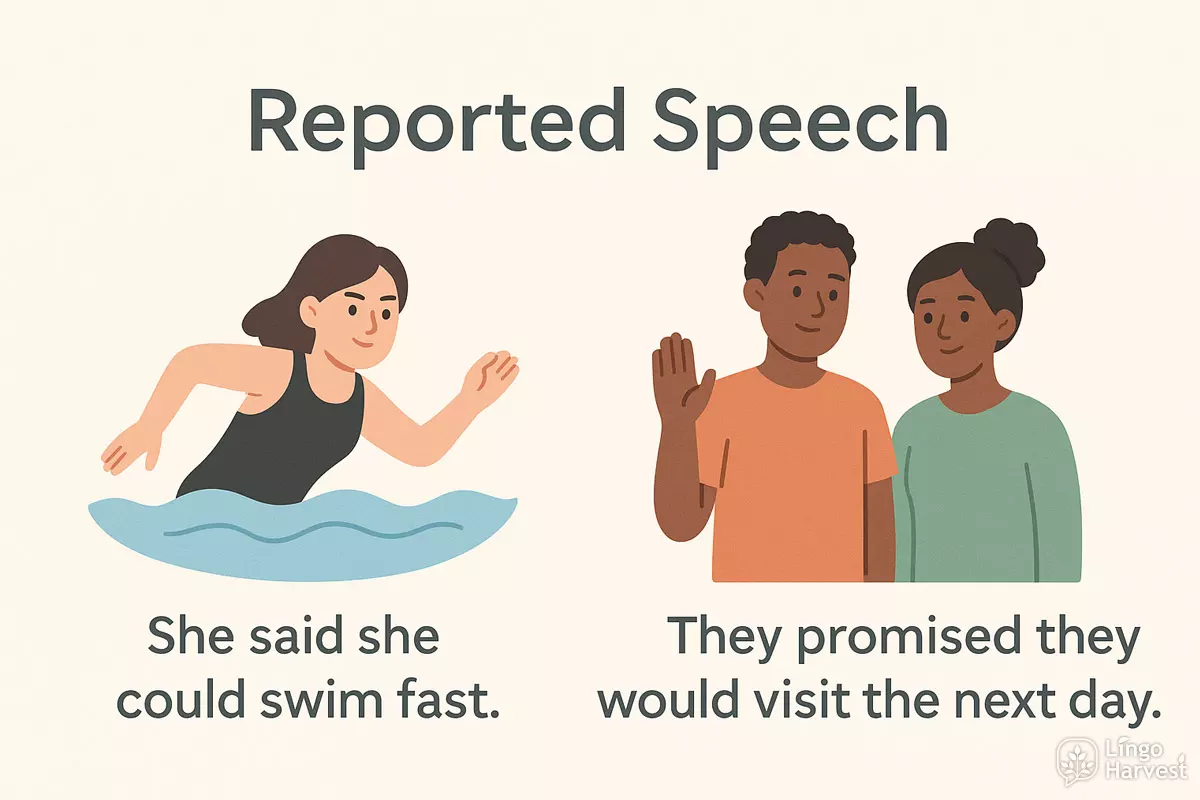
| Direct Speech | Reported Speech |
|---|---|
| “I can swim fast.” | She said she could swim fast. |
| “We will visit you tomorrow.” | They promised they would visit the next day. |
| “You may leave now.” | He told me I might leave then. |
| “I must finish this today.” | She said she had to finish it that day. |
| “You should see a doctor.” | He advised me I should see a doctor. |
| “I could help you.” | She said she could help me. |
| “You would like this book.” | He told me I would like the book. |
| “We might be late.” | They said they might be late. |
| “You ought to rest.” | She said I ought to rest. |
| “Shall we start?” | He asked if they should start. |
Notes on Special Cases
- Must for obligation often shifts to had to in reported speech, but for deduction it usually stays as must.
- Some modals (like could, might, should) do not have a more "past" form, so they remain the same.
- If the reporting verb is in the present or the situation is still true, sometimes the modal does not change.
Understanding how modals shift (or don’t) in indirect speech helps make your English clearer and more accurate, especially in conversations and writing about what others have said.
Exceptions: When Tenses Do Not Change
Although backshifting is standard in reported speech, there are important situations where the verb tense remains the same as in the original direct statement. These exceptions help keep the meaning accurate and avoid unnecessary changes. Understanding when to keep the tense unchanged can make your reported speech sound more natural and precise.
General Rules for Keeping the Original Tense
- General truths and facts: If the original statement expresses a fact that is always true, the tense is not shifted. For example, “The sun rises in the east.” becomes He said (that) the sun rises in the east.
- Present or future situations that are still true: When the situation described is still relevant or unchanged at the time of reporting, the tense often stays the same.
- Reporting verbs in the present, future, or present perfect: If the reporting verb is not in the past, backshifting is usually unnecessary. For example, She says, “I am tired.” → She says (that) she is tired.
- Conditional sentences and modal verbs: Some structures, like conditionals or modal verbs (might, could, would, should, ought to), often do not change in reported speech.
Common Cases Where Tense Stays the Same
- Universal truths
- Scientific facts
- Timetables and schedules
- Permanent states
- Current plans or intentions (if still true)
- Direct speech with present, future, or present perfect reporting verbs
- First and second conditionals
- Modal verbs: might, could, would, should, ought to, must (sometimes)
- Unchanged situations since the original statement
- Instructions or rules that haven’t changed
- Habitual actions (if still true)
- Predictions about the future (if still possible or relevant)
- Statements about abilities or preferences (if unchanged)
Examples: Unchanged Tenses in Reported Speech
- She said, “Water boils at 100°C.” → She said (that) water boils at 100°C. ✅
- He says, “I love pizza.” → He says (that) he loves pizza. ✅
- They told us, “The train leaves at 6.” → They told us (that) the train leaves at 6. ✅
- She said, “If it rains, we will stay inside.” → She said (that) if it rains, we will stay inside. ✅
- He said, “You must be quiet.” → He said (that) you must be quiet. ✅
- She said, “I might come later.” → She said (that) she might come later. ✅
- He tells me, “I need help.” → He tells me (that) he needs help. ✅
- He said, “I could swim when I was five.” → He said (that) he could swim when he was five. ✅
- She said, “We would go if we had time.” → She said (that) they would go if they had time. ✅
- She said, “The shop opens at 9.” → She said (that) the shop opens at 9. ✅
Summary Table: When to Keep the Same Tense
| Situation | Example (Direct → Reported) |
|---|---|
| General truth | “Dogs bark.” → He said dogs bark. |
| Still true now | “I live in London.” → She said she lives in London. |
| Present reporting verb | “I am happy.” → He says he is happy. |
| Modal verb (might, could, would, should) | “I might come.” → She said she might come. |
In summary, knowing when not to backshift helps you report speech accurately, especially when facts, truths, and ongoing situations are involved. It’s an essential part of mastering reported speech at the B1–B2 level.
Common Errors with Backshift Forms
Learners often run into trouble when changing direct speech into reported speech, especially with verb tense shifts. These issues can cause misunderstandings or make sentences sound unnatural. Below are some typical mistakes, why they happen, and how to avoid them.
Mixing Up Tenses
A frequent challenge is not shifting the verb tense at all, or choosing the wrong tense. For example, students sometimes keep the present tense when they should use the past. Another error is making unnecessary changes when backshift isn’t needed, such as with universal truths.
- ❌ He said, “I am tired.” → He said he is tired. (should be: was)
- ❌ She said, “The sun rises in the east.” → She said the sun rose in the east. (should stay: rises)
Confusing Modal Verbs
Modal verbs like can, will, and may often cause confusion. Learners might forget to change them or change modals that should stay the same.
| Direct Speech | ❌ Incorrect Reported | ✅ Correct Reported |
|---|---|---|
| I can swim. | He said he can swim. | He said he could swim. |
| I might come. | She said she might come. | She said she might come. |
| I will help. | He said he will help. | He said he would help. |
| I must go. | She said she must go. | She said she had to go. |
Forgetting to Change Time and Place Words
Students sometimes overlook words like today, tomorrow, or here. These need to be adjusted to fit the new context.
- ❌ “I will call you tomorrow.” → He said he would call me tomorrow. (should be: the next day)
- ❌ “She is here.” → He said she was here. (should be: there)
Overusing Backshift
Not all reporting situations require a tense change. When the reporting verb is in the present, or when the information is still true, no backshift is needed. Over-applying the rule is a common pitfall.
- ❌ Teacher says, “Water boils at 100°C.” → Teacher says water boiled at 100°C. (should be: boils)
Summary of Typical Mistakes
- Leaving verbs in the present when the past is needed
- Changing tenses for facts or general truths unnecessarily
- Incorrectly shifting or not shifting modal verbs
- Forgetting to update words like now, today, yesterday, here
- Backshifting when the reporting verb is present (e.g., He says…)
- Ignoring context: not considering if the information is still true
- Directly copying pronouns or time expressions without adjustment
- Mixing up perfect and simple past (e.g., had gone vs went)
- Not using had to for must in reported speech
- Omitting “that” where it clarifies meaning (optional, but helpful)
Mastering these details helps make reported statements clear and accurate, and prevents common misunderstandings when reporting what someone else has said.
Practice: Convert Direct Speech to Reported Speech
Understanding how to change direct quotations into reported speech is essential for accuracy in English communication. This practice section will help you review and apply the rules of backshifting, especially important for B1-B2 learners. You will convert sentences from direct to indirect forms, paying attention to the necessary changes in verb tense, pronouns, and time expressions.
Common Patterns for Backshifting
When moving from direct to reported speech, remember these frequent changes:
- Present Simple → Past Simple
- Present Continuous → Past Continuous
- Present Perfect → Past Perfect
- Will → Would
- Can → Could
- Must → Had to
- Past Simple → Past Perfect (sometimes optional)
- Here → There
- Today → That day
- Tomorrow → The next day / the following day
- Yesterday → The day before / the previous day
- Now → Then
- This → That
- These → Those
Task: Change the Sentences
Convert these direct quotes into reported speech. Pay close attention to verbs and time words.
- She said, "I am tired."
- Tom said, "I will call you tomorrow."
- They said, "We have finished our homework."
- Anna said, "I can't find my keys."
- He said, "My friends are coming here today."
- Lisa said, "I went to the cinema yesterday."
- Paul said, "I must leave now."
- The teacher said, "Open your books."
- Dad said, "Don't touch that!"
- Maria said, "I will help you."
Show answers
- She said (that) she was tired.
- Tom said (that) he would call me the next day / the following day.
- They said (that) they had finished their homework.
- Anna said (that) she couldn't find her keys.
- He said (that) his friends were coming there that day.
- Lisa said (that) she had gone to the cinema the day before / the previous day.
- Paul said (that) he had to leave then.
- The teacher told us to open our books.
- Dad told me not to touch that.
- Maria said (that) she would help me.
Quick Reference Table: Backshifting Verb Changes
| Direct Speech | Reported Speech |
|---|---|
| Present Simple ("I eat") |
Past Simple ("He said he ate") |
| Present Continuous ("I am eating") |
Past Continuous ("He said he was eating") |
| Present Perfect ("I have eaten") |
Past Perfect ("He said he had eaten") |
| Will ("I will go") |
Would ("He said he would go") |
| Can ("I can come") |
Could ("He said he could come") |
| Must ("I must leave") |
Had to ("He said he had to leave") |
| Past Simple ("I saw") |
Past Perfect ("He said he had seen") |
Tips for Success
Always check which tense the direct quote uses and make sure to adjust pronouns and time expressions accordingly. For example, "now" usually changes to "then", and "today" becomes "that day". Practice regularly to build confidence and fluency in converting between direct and indirect forms.