Reporting Requests: tell sb to / ask sb to

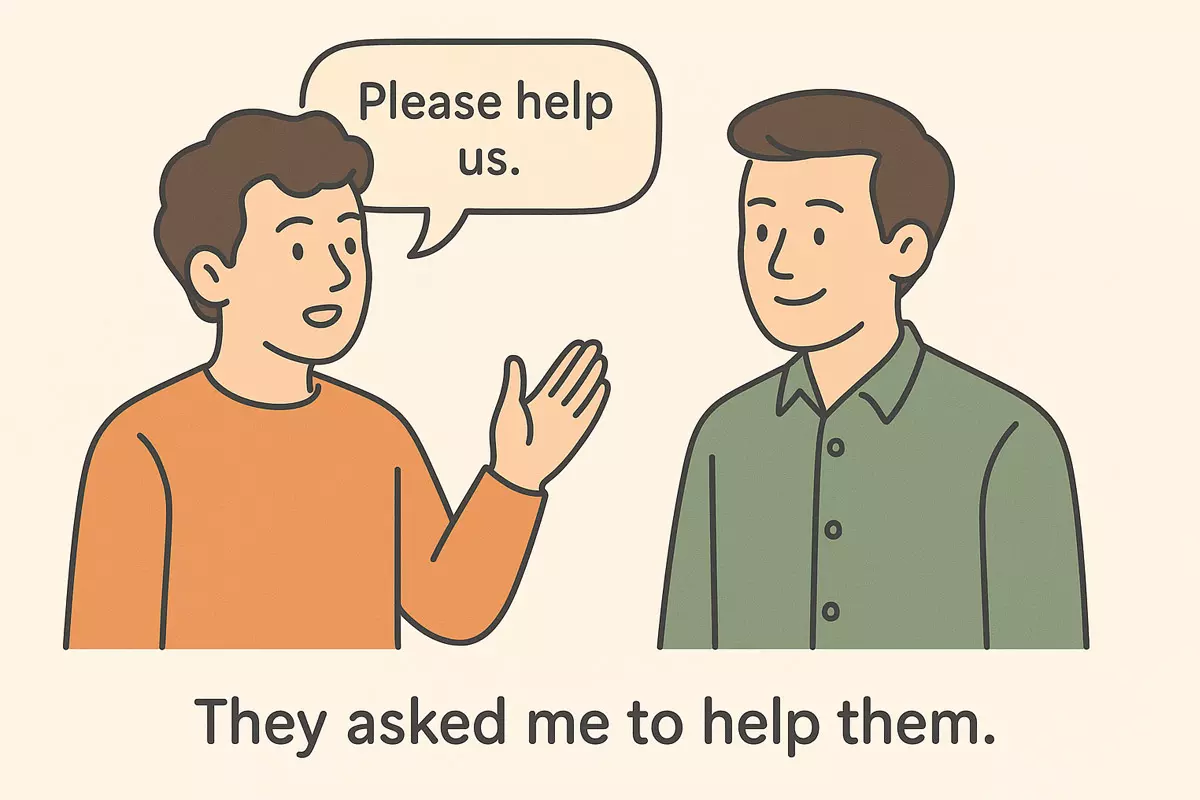 This article explains how to report requests in English, the key difference between telling and asking, and how to form both positive and negative reported requests. It also covers polite reporting verbs, common mistakes, and includes practice exercises.
Effectively relaying the requests or instructions of others is an important skill in English communication, as it ensures clarity and helps you sound more fluent and natural. This article examines practical ways to report what someone else has asked or told you to do, focusing on how to accurately convey both requests and instructions. By understanding the structures and vocabulary commonly used to report speech, you can communicate information more precisely and avoid misunderstandings in everyday interactions.
How Reporting Requests Works
When we want to share what someone else asked or told another person to do, English uses specific reporting structures. Rather than repeating the original words, we often summarize the request or instruction using verbs like "tell" or "ask" followed by an infinitive form. This approach helps us clearly communicate who was involved and what action was requested.
Basic Structure
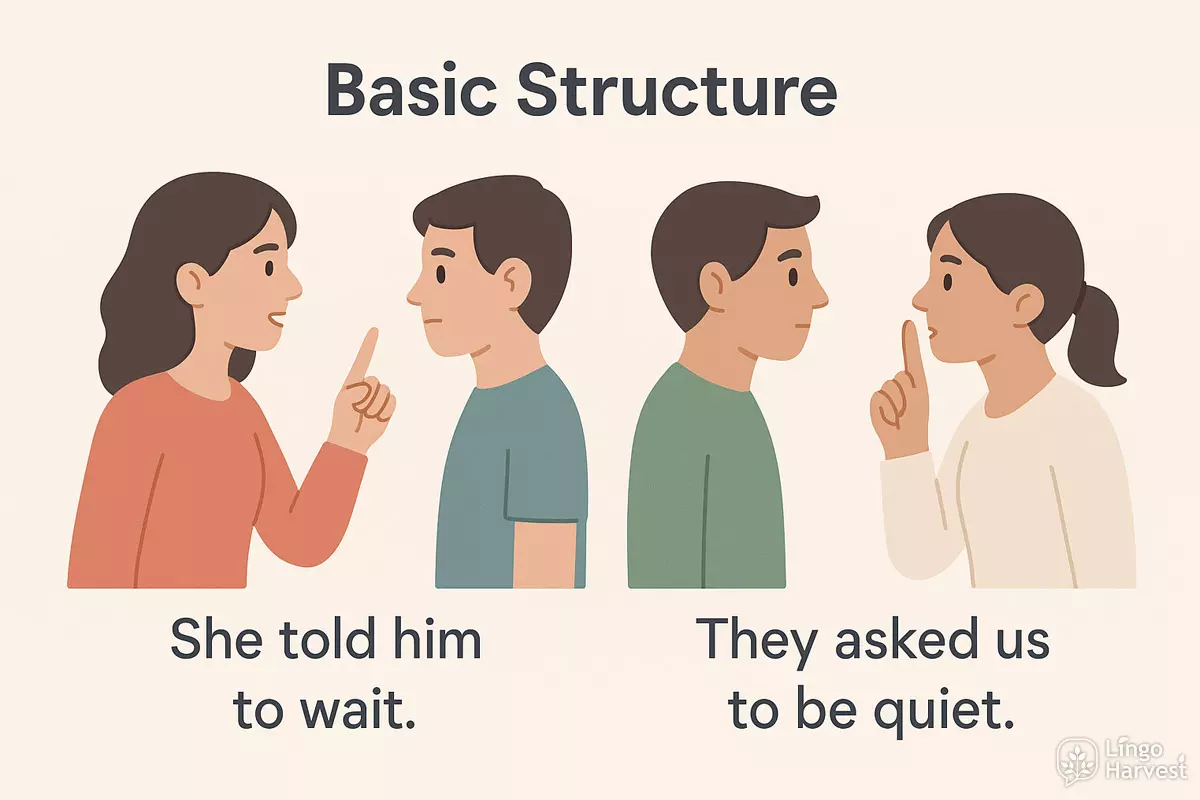
The typical format involves a reporting verb ("ask" or "tell"), the person receiving the request, and the action in its base form with "to". For example:
- She told him to wait.
- They asked us to be quiet.
- He told me to call later.
This pattern makes it easy to indicate both the person making the request and the person expected to act.
Choosing Between "Ask" and "Tell"
"Ask" is generally used for polite or neutral requests, while "tell" often suggests a stronger, more direct instruction or command. The difference can change the tone and meaning:
- My boss told me to finish the report. (stronger, more like an order)
- My boss asked me to finish the report. (more polite, less forceful)
Common Patterns and Examples
To help visualize how these forms work, here’s a range of practical examples:
- She asked me to help her.
- He told them to leave early.
- They asked us to join the meeting.
- I told Sam to lock the door.
- We asked you to send the files.
- He told her to stop talking.
- She asked John to wait outside.
- The teacher told us to open our books.
- My friend asked me to call her.
- He told me to be careful.
- She asked me to remind her later.
- The manager told them to start now.
- They asked me to explain the rules.
- He told us to sit down.
- She asked him to write it down.
- I told you to check your email.
Negative Requests
To report a negative request or instruction, insert "not" before the infinitive:
- She told me not to touch anything.
- They asked us not to be late.
- He told them not to worry.
Summary Table: Reporting Requests Structure
| Direct Request | Reported Form |
|---|---|
| "Please wait here." | She asked me to wait here. |
| "Don’t open the window." | He told us not to open the window. |
| "Call me later." | She told him to call her later. |
| "Be quiet." | The teacher told us to be quiet. |
| "Could you help me?" | He asked me to help him. |
Understanding this method lets you accurately convey what others have asked or instructed, keeping your communication clear and precise. This structure is widely used in both spoken and written English for relaying requests and commands.
Tell Someone To vs Ask Someone To: Key Difference
When reporting requests or instructions, it’s important to distinguish between “tell someone to” and “ask someone to.” These two reporting verbs are not interchangeable, as they reflect different levels of authority, intent, and politeness. Understanding when and how to use each will help you convey the original speaker’s meaning more accurately.
Directness and Authority
“Telling” someone to do something usually implies authority or command. It’s direct and often used when the speaker expects obedience or compliance. In contrast, “asking” someone to do something is more polite and suggests a request or suggestion rather than an order.
- Tell: Used for orders, instructions, or strong advice.
- Ask: Used for requests, permissions, or polite suggestions.
Verb Patterns and Examples
Both verbs are followed by an object (the person) and the infinitive form of the action verb, but the implied tone is different. Here are some common reporting structures and sample sentences:
- He told me to close the window. ✅ (order/instruction)
- She asked him to help her with her homework. ✅ (request)
- The teacher told the students to be quiet. ✅
- My friend asked me to wait for her. ✅
- The boss told us to finish the report by Friday. ✅
- I asked them to send me the details. ✅
- She told her son to clean his room. ✅
- He asked the waiter to bring the bill. ✅
- They told us to leave immediately. ✅
- We asked the neighbors to turn down the music. ✅
Nuances in Use
Choosing between these structures depends on the situation and the relationship between the speakers. “Tell” is more forceful and may sound rude if used inappropriately, especially with people you do not know well. “Ask” is preferred in formal or polite contexts.
Summary Table: Tell vs Ask in Indirect Speech
| Form | Function & Example |
|---|---|
| tell + object + to-infinitive | Used for commands or instructions. Example: “She told him to sit down.” |
| ask + object + to-infinitive | Used for polite requests or asking for permission. Example: “He asked her to call him later.” |
| tell not to / ask not to | Negative forms to report prohibitions or negative requests. Example: “They told us not to worry.” “She asked me not to be late.” |
| Context/Relationship | Tell: More direct, sometimes impolite. Ask: Polite, less authoritative. |
Understanding these distinctions helps you choose the right reporting verb in English, making your speech and writing clearer and more appropriate for each situation.
Forming Reported Requests Correctly
When you want to report what someone else asked or told you to do, English uses specific patterns. These typically involve verbs like "tell" or "ask" followed by an object (the person) and an infinitive (to do something). Understanding the structure helps avoid mistakes and makes your reported requests clear and natural.
Basic Structure
The most common way to report a request is:
- tell/ask + person + to + base verb
For example:
- Direct: "Please open the window."
- Reported: She asked me to open the window.
- Direct: "Don’t forget your keys!"
- Reported: He told her not to forget her keys.
Step-by-Step Guide
- Identify the reporting verb (ask, tell, order, etc.).
- Include the person receiving the request (me, him, us, etc.).
- Use to + base form of the main verb.
- For negative requests, use not to + base verb.
Common Variations
There are several verbs besides "tell" and "ask" that can be used for reporting requests. Here are some examples:
- ask
- tell
- advise
- remind
- warn
- invite
- encourage
- instruct
- order
- beg
- urge
- forbid
- persuade
- permit
- allow
- promise
- command
Examples of Reported Requests
- They told us to wait outside.
- The teacher asked him to answer the question.
- Mom reminded me to lock the door.
- He warned me not to touch the wire.
- She encouraged her friend to try again.
- The manager instructed the staff to arrive early.
- We invited them to join us.
- The doctor advised her to rest.
- His parents ordered him not to be late.
- The sign forbids people to enter.
Direct vs. Reported Requests
| Direct Request | Reported Request |
|---|---|
| "Could you help me?" | She asked me to help her. |
| "Please don’t be late." | He told us not to be late. |
| "Remember to call me." | He reminded me to call him. |
| "Don’t touch that!" | The teacher warned the children not to touch that. |
| "Join us for dinner." | They invited us to join them for dinner. |
Quick Tips
- Always include the person who receives the request in reported speech.
- Use "not to" for negative requests (e.g., told me not to run).
- Change pronouns and time expressions as needed (e.g., "today" becomes "that day").
- Don’t use quotation marks in reported requests.
By mastering these patterns, you can accurately and confidently report what others have asked or told you to do.
Negative Requests: Tell Someone Not To
When you want to report that someone was asked or told not to do something, English uses a specific structure. Instead of the usual “to + verb” after “tell” or “ask,” you add “not” before the verb. This is a common way to express prohibitions, warnings, or polite refusals in reported speech.
How to Form Negative Requests in Reported Speech
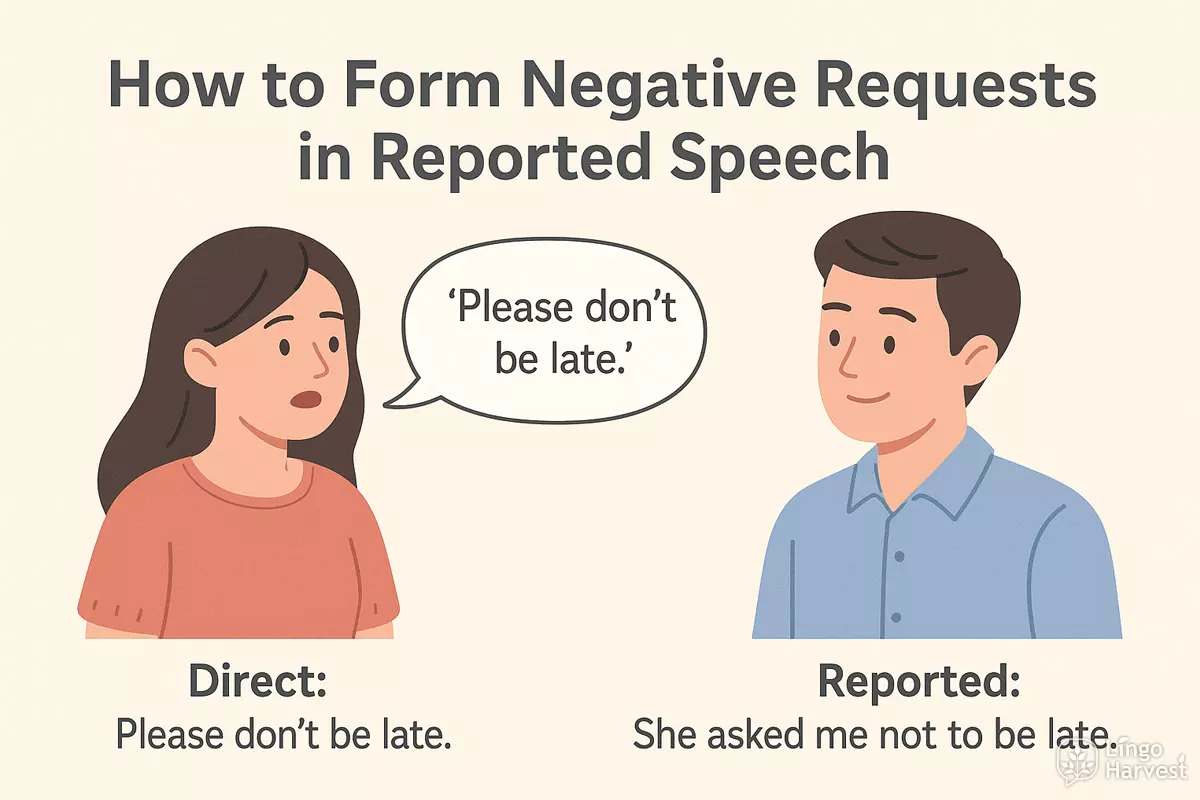
The standard pattern is: tell/ask someone not to + verb. This keeps the negative sense of the original direct request or command. For example, if someone says, “Don’t touch that!”, you would report it as “He told me not to touch that.”
- Direct: “Please don’t be late.”
Reported: She asked me not to be late. - Direct: “Don’t open the window.”
Reported: He told her not to open the window. - Direct: “Don’t forget your homework.”
Reported: The teacher reminded us not to forget our homework. - Direct: “Don’t make a mess.”
Reported: Mom told us not to make a mess. - Direct: “Please don’t shout.”
Reported: The librarian asked them not to shout. - Direct: “Don’t use your phone.”
Reported: The coach told the players not to use their phones. - Direct: “Don’t worry.”
Reported: He told me not to worry. - Direct: “Don’t forget to call.”
Reported: She reminded him not to forget to call. - Direct: “Don’t leave the door open.”
Reported: Dad told us not to leave the door open. - Direct: “Don’t eat in class.”
Reported: The teacher asked us not to eat in class. - Direct: “Don’t touch my laptop.”
Reported: He told me not to touch his laptop. - Direct: “Don’t make noise.”
Reported: The neighbor asked them not to make noise. - Direct: “Please don’t interrupt.”
Reported: She asked him not to interrupt. - Direct: “Don’t forget your keys.”
Reported: He reminded me not to forget my keys. - Direct: “Don’t speak to strangers.”
Reported: The mother told her child not to speak to strangers. - Direct: “Don’t be late.”
Reported: He told me not to be late. - Direct: “Don’t go outside.”
Reported: She told the kids not to go outside. - Direct: “Don’t turn off the lights.”
Reported: He asked us not to turn off the lights. - Direct: “Don’t skip breakfast.”
Reported: Mom told me not to skip breakfast. - Direct: “Don’t park here.”
Reported: The guard told him not to park there.
Pattern Summary
This structure is simple and consistent. Just remember to place “not” before the infinitive verb:
- tell/ask/remind/warn + object + not to + base verb
Using this pattern helps you clearly report instructions or requests that involve avoiding certain actions. This is especially useful in both formal and informal situations, from classroom rules to workplace instructions.
Using Polite or Formal Reporting Verbs
When relaying requests made by others, choosing the right reporting verb can make your message sound more diplomatic or suitable for formal situations. Instead of always using "tell" or "ask," there are several alternatives that help convey politeness or maintain a professional tone. Selecting appropriate verbs depends on the context, the relationship between speakers, and the level of formality required.
Common Polite and Formal Reporting Verbs
- advise
- request
- urge
- instruct
- remind
- encourage
- invite
- recommend
- warn
- persuade
- suggest
- implore
- propose
- direct
- appeal to
- authorize
- mandate
Choosing the Right Reporting Verb
Selecting among these verbs depends on how strong or gentle you want the request to sound. For example, "advise" and "recommend" are softer and more indirect, while "order" or "command" are more forceful and usually reserved for authority figures. "Request" and "urge" can express a strong desire, but still remain polite.
| Reporting Verb | Example in Reported Speech |
|---|---|
| advise | She advised me to check the details carefully. |
| request | He requested us to arrive early. |
| urge | They urged the team to submit the report on time. |
| remind | I reminded her to call the client. |
| encourage | The teacher encouraged the students to participate. |
| warn | He warned me not to touch the wires. |
| instruct | The manager instructed staff to update the records. |
| beg | She begged him to stay longer. |
Tips for Politeness in Reported Requests
- Prefer verbs like "request," "advise," or "recommend" when you want to soften the message.
- Use "remind" or "encourage" to add a supportive or positive tone.
- For formal writing, avoid direct imperatives; choose reporting verbs that sound courteous.
- Match the reporting verb to the original speaker’s intention and to the relationship between the parties.
- Selecting the right verb not only clarifies the request but also shows respect toward both the original speaker and the listener.
- This approach ensures your reported speech remains appropriate in any situation.
Common Mistakes with Reported Requests
When changing direct requests into reported speech, learners often run into avoidable problems. Most issues come from misunderstanding the sentence structure, confusing reporting verbs, or forgetting to change pronouns and time expressions. By being aware of these frequent pitfalls, you can make your reported requests sound natural and accurate.
Mixing Up Reporting Verbs
A frequent source of errors is using the wrong reporting verb. "Tell" and "ask" are not interchangeable in this context: "tell" is used for commands or instructions, while "ask" is for requests or polite orders. For example, "She told me to close the window" (instruction) is not the same as "She asked me to close the window" (request).
Omitting 'to' + Infinitive
Reported requests require the "to" + base verb after the object. Forgetting "to" is a classic mistake:
- ❌ He asked me close the door.
- ✅ He asked me to close the door.
Incorrect Pronoun and Time Changes
Adjusting pronouns and time expressions is essential. Failing to do so can make the sentence confusing or grammatically incorrect:
- ❌ She told me to bring my book. (if reporting for another person)
- ✅ She told him to bring his book.
Similarly, remember to shift time expressions where needed (e.g., "today" to "that day").
Forgetting the Object
Every reported request needs an object (the person being addressed). Skipping this step leads to incomplete sentences.
- ❌ She told to open the window.
- ✅ She told me to open the window.
Using the Wrong Reporting Structure
Some learners mistakenly use "that" clauses instead of the "to" infinitive structure. This is incorrect for requests and commands.
- ❌ He told me that I close the door.
- ✅ He told me to close the door.
Quick Reference: Direct vs. Reported Requests
| Direct Request | Reported Request |
|---|---|
| Please help me. | She asked me to help her. |
| Close the window, please. | He told me to close the window. |
| Can you turn off the lights? | They asked us to turn off the lights. |
| Don’t forget your keys. | She told me not to forget my keys. |
| Could you be quiet? | He asked them to be quiet. |
Checklist: Avoiding Common Errors
- Choose "tell" for orders/instructions, "ask" for requests.
- Always use "to" + infinitive after the object.
- Include the object (who is being addressed).
- Change pronouns and time expressions as needed.
- Use "not to" for negative requests.
- Never use "that" clauses with reported requests/commands.
- Don’t drop the reporting verb in indirect speech.
- Keep the sentence logical and clear; check meaning after changing the structure.
- Practice with a variety of verbs and requests to build confidence.
Paying attention to these details will help you avoid the most common traps when turning direct requests into reported speech.
Practice: Rewrite Requests in Reported Form
To master reporting requests, it's essential to practice changing direct requests into indirect or reported forms using structures like "tell sb to" and "ask sb to." This skill is practical for both formal and informal communication, especially when summarizing conversations or giving instructions.
How to Transform Direct Requests
When you report a request, the main verb in the direct speech (often an imperative like "please open" or "don’t forget") changes to an infinitive phrase. Use verbs such as "tell," "ask," "order," or "advise," followed by the object (the person) and "to + verb." For negative requests, use "not to + verb."
- Direct: "Please sit down." → Reported: She asked me to sit down.
- Direct: "Don’t touch that!" → Reported: He told me not to touch that.
- Direct: "Could you call me later?" → Reported: She asked him to call her later.
- Direct: "Remember to lock the door." → Reported: He told me to remember to lock the door.
- Direct: "Don’t be late." → Reported: She told him not to be late.
- Direct: "Please help me with this." → Reported: He asked me to help him with that.
- Direct: "Don’t forget your passport." → Reported: She reminded him not to forget his passport.
- Direct: "Write your name here." → Reported: He told her to write her name there.
- Direct: "Please, don’t make any noise." → Reported: She asked us not to make any noise.
- Direct: "Send me the documents." → Reported: He told her to send him the documents.
- Direct: "Don’t open the window." → Reported: She told them not to open the window.
- Direct: "Please stand in line." → Reported: He asked us to stand in line.
- Direct: "Call your mother." → Reported: She told him to call his mother.
- Direct: "Don’t use your phone." → Reported: He told her not to use her phone.
- Direct: "Bring your ID." → Reported: They told me to bring my ID.
- Direct: "Please check your answers." → Reported: The teacher asked us to check our answers.
- Direct: "Don’t leave the room." → Reported: He told her not to leave the room.
- Direct: "Take a seat." → Reported: She told me to take a seat.
- Direct: "Please be quiet." → Reported: The librarian asked us to be quiet.
- Direct: "Don’t park here." → Reported: The officer told him not to park there.
Exercise: Change the Requests Below
Rewrite these direct requests using reported speech. Use the correct reporting verb ("tell" or "ask") and adjust pronouns as needed.
- He said, "Please call me tonight."
- She said, "Don’t forget to send the email."
- The teacher said, "Open your books."
- Mother said, "Don’t eat too many sweets."
- The manager said, "Finish this report by Friday."
Show answers
- He asked me to call him tonight.
- She told me not to forget to send the email.
- The teacher told us to open our books.
- Mother told me not to eat too many sweets.
- The manager told me to finish the report by Friday.
Common Reporting Patterns
- ask sb to + verb (for polite requests): She asked me to help her.
- tell sb to + verb (for direct instructions): He told us to wait outside.
- tell/ask sb not to + verb (for negative requests): They told me not to worry.
- remind sb to + verb (when reminding): She reminded him to call his mother.
Quick Check: Identify the Correct Reporting Structure
Which reporting verb would you use for each situation?
- A parent reminding a child to do homework: ___________
- A boss giving an instruction: ___________
- A friend politely asking for help: ___________
- A teacher telling students not to run: ___________
Show answers
- remind
- tell
- ask
- tell