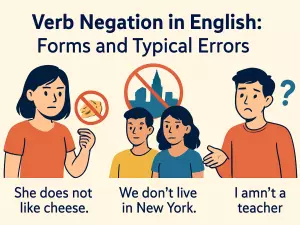
Infinitive with To: Form, Meaning, and Common Uses

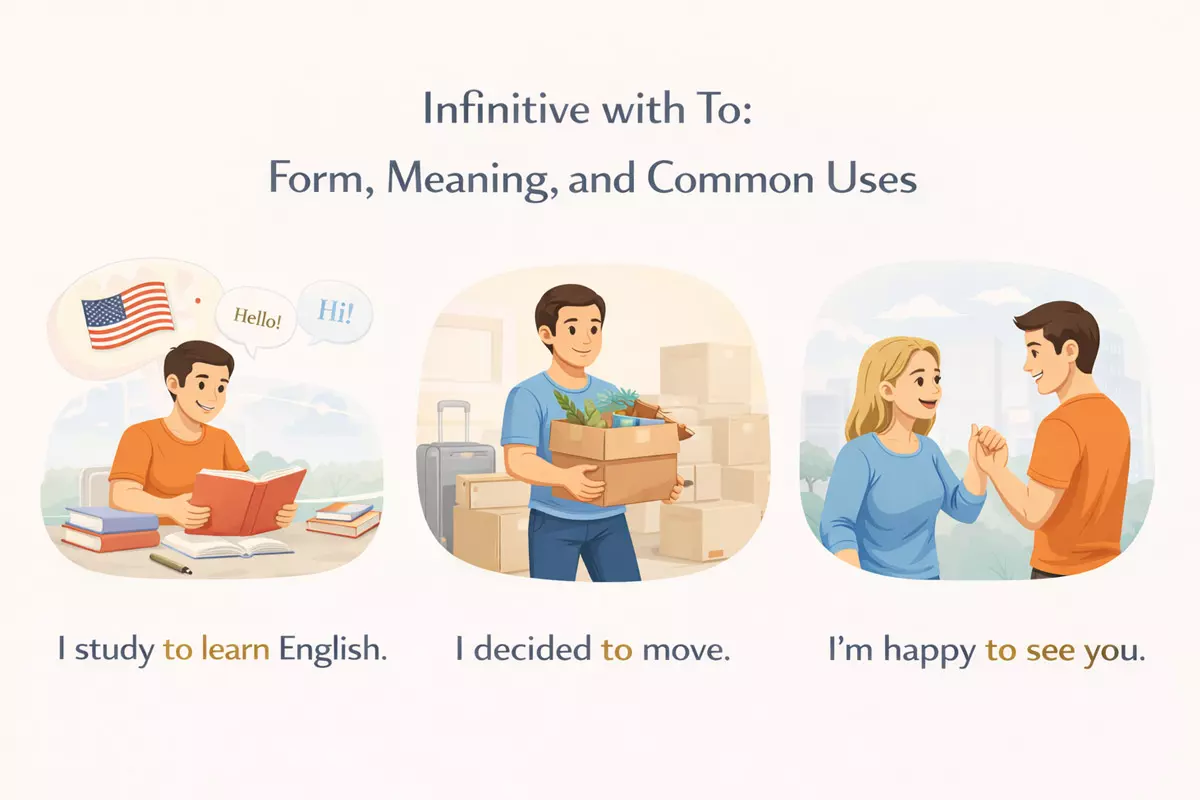 Learn what the to-infinitive is, how to form it and make negatives, and which verbs take it. See it after adjectives and nouns, use it for purpose and result, compare it with the bare infinitive, fix common mistakes, and do homework exercises.
To plus a base verb is a simple pattern that carries a lot of meaning in English. You will see it after many verbs, adjectives, and nouns to express purpose, plans, intentions, or what someone wants. In this lesson we will practice it with clear, everyday examples, so you can recognize it quickly and use it naturally in your own speaking and writing.
What the to-infinitive is
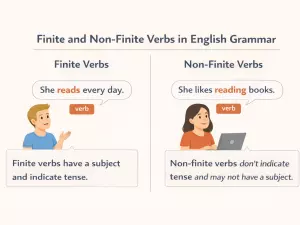
The to + base verb structure is a non-finite verb form used to express an action or state without marking tense (no past/present ending). It often points to an action as an idea, goal, plan, or result rather than an action happening at a specific time.
Form and key features
This form is built with to + the base form of the verb (the dictionary form). It does not change for person or number, so it stays the same with I/you/he/we/they.
- Basic form: to + verb (to work, to study, to leave)
- Negative: not + to + verb (not to worry, not to touch)
- Question word + to: what to do, where to go, how to explain, when to call
- No subject agreement: She wants to go. / They want to go.
- Not a tense: to go does not show past or present by itself; time is understood from context
Meaning: how it functions in a sentence
In grammar terms, this structure can act like a noun, an adjective, or an adverb. That is why it appears in many positions: after verbs, after adjectives, after nouns, and to show purpose.
- Noun-like: It can be the subject or object of a clause (To travel is expensive. / I want to travel.)
- Adjective-like: It can describe a noun (a plan to improve, something to eat, the first person to arrive)
- Adverb-like: It can explain purpose or reason (She went out to buy milk.)
To-infinitive vs. bare infinitive (quick contrast)
English also uses the base verb without to (often called the bare infinitive). The choice depends on the grammar pattern, especially which verb comes before it.
| Pattern | Typical use | Example |
|---|---|---|
| to + base verb | Common after many verbs, adjectives, and nouns; also for purpose | I decided to leave early. |
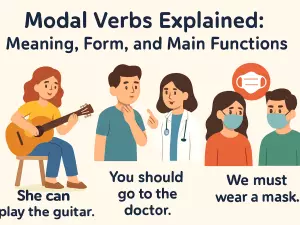
| bare infinitive (base verb) | After modal verbs (can, must, should, etc.) | You must leave now. |
| bare infinitive after certain verbs | After let, make, help (help can also take to in some contexts) | They made me wait. |
| bare infinitive after perception verbs | After see/hear/feel + object (often for a complete action) | I saw her cross the street. |
Common building blocks you will see
Many everyday patterns rely on this form. The items below are not “rules,” but frequent frames that help you recognize it quickly in real sentences.
- Verb + to + verb: agree to, decide to, hope to, plan to, refuse to, want to
- Adjective + to + verb: happy to, ready to, afraid to, likely to, surprised to
- Noun + to + verb: a chance to, a way to, a reason to, time to
- Too/enough + to + verb: too tired to drive, old enough to vote
- Wh-word + to + verb: where to park, how to solve it, what to say
- Purpose: to + verb meaning “in order to” (He called to confirm.)
- Negative instruction: not to + verb (Please remember not to share your password.)
Basic form and negative forms
The to-infinitive is built from to + the base verb (the dictionary form). The base verb does not change for person or number, so the same structure works with I, she, they, and any subject.
Affirmative pattern: to + base verb
Use to + verb when you want to name an action in a general way, often after another verb, adjective, or noun.
- to go
- to learn
- to understand
- to help
- to meet
- to decide
- to explain
- to improve
- to remember
- to forget
- to call
- to wait
- to share
- to finish
- to start
- to change
Negative pattern: not to + base verb
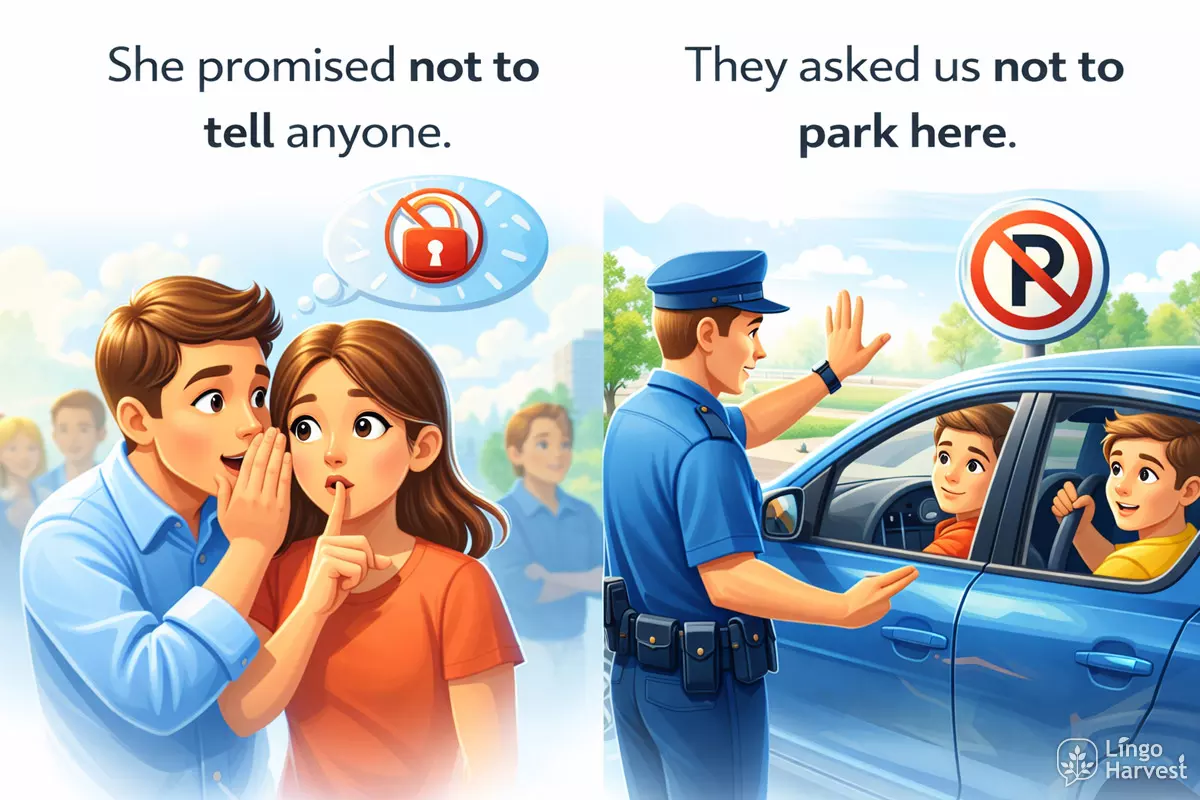
To make a negative, place not directly before the infinitive: not to + verb. This keeps the negation tightly connected to the action itself, not to the main verb of the sentence.
- I decided not to go.
- She promised not to tell anyone.
- They asked us not to park here.
- He tried not to interrupt.
- We agreed not to change the plan.
- Please remember not to touch the screen.
- It is important not to rush.
- I was careful not to offend anyone.
- She chose not to reply immediately.
- He warned me not to leave the door open.
- We arranged not to meet too early.
- Try not to worry.
Common form notes and frequent learner issues
- Do not drop “to” in this structure: ❌ “I want go” → ✅ “I want to go.”
- Do not add -s/-ed/-ing after to: ❌ “to goes / to went / to going” → ✅ “to go.”
- Place “not” before the infinitive when the action is what you are negating: “I told him not to call.”
- Avoid double negatives unless you mean a special emphasis: prefer “I decided not to” rather than “I didn’t decide to not…” in neutral writing.
- Split infinitives (putting an adverb between to and the verb) are possible in modern English when they sound clearer: “to carefully check,” “to fully understand.” Use them when they improve meaning, and avoid them if they feel awkward in formal style.
Common verbs followed by to-infinitive
Many English verbs are typically followed by to + base verb. This pattern is especially common when the main verb expresses an intention, a decision, a plan, a request, or a reaction to a situation. The to-infinitive often answers the question “what?” or “why?” after the verb.
Core pattern
Verb + to-infinitive → I decided to leave. / She promised to call.
In these sentences, the to-infinitive acts like the verb’s complement: it completes the meaning by naming the action that follows from the decision, promise, plan, or attempt.
High-frequency verbs that take to-infinitive
- agree: They agreed to meet after work.
- aim: We aim to reduce costs this year.
- arrange: I arranged to see the doctor on Friday.
- ask: He asked to speak to the manager.
- attempt: She attempted to fix the printer.
- choose: You can choose to stay or leave.
- decide: I decided to take the earlier train.
- expect: They expect to finish by noon.
- fail: He failed to notice the warning sign.
- forget: Don’t forget to lock the door.
- hope: We hope to hear from you soon.
- learn: She learned to drive at 30.
- manage: I managed to find a seat.
- need: You need to update the app.
- offer: They offered to help with the move.
- plan: I plan to study abroad next year.
- pretend: He pretended to understand.
- promise: She promised to send the file.
- refuse: The customer refused to pay.
- seem: It seems to work fine now.
- tend: I tend to wake up early.
- threaten: The storm threatened to cancel the event.
- want: I want to improve my pronunciation.
- would like: I’d like to ask a question.
Verb + object + to-infinitive (a common extension)
Some verbs frequently add an object before the to-infinitive. This structure shows who is expected, advised, or allowed to do the action.
- advise + object + to: She advised me to apply early.
- allow + object + to: They allowed us to bring one guest.
- ask + object + to: I asked him to email the details.
- encourage + object + to: The teacher encouraged students to participate.
- expect + object + to: We expect everyone to arrive on time.
- invite + object + to: They invited me to join the meeting.
- need + object + to: I need you to sign here.
- order + object + to: The officer ordered them to stop.
- remind + object + to: Please remind me to call her.
- teach + object + to: He taught his son to swim.
- tell + object + to: She told us to wait outside.
- want + object + to: I want you to be honest.
Usage notes and common pitfalls
- Don’t drop “to” after these verbs: ❌ I decided leave → ✅ I decided to leave.
- Don’t add -ing when the verb normally takes a to-infinitive: ❌ She promised calling → ✅ She promised to call.
- Be careful with meaning changes in a few verbs that can take different complements (for example, remember, forget, stop): the choice can change the meaning, so check the intended time reference.
Infinitive after adjectives and nouns
After many adjectives and some nouns, English often uses to + base verb to explain what someone feels, what is possible, or what purpose something has. This structure is common when the adjective or noun needs a complement: it answers “in what way?” or “for what action?”
Common patterns with adjectives
Use adjective + to-infinitive to describe a person’s reaction, a situation’s difficulty, or what is appropriate/necessary.
- easy / difficult / hard / impossible to understand: “This diagram is hard to follow.”
- safe / dangerous to touch: “It isn’t safe to swim here.”
- ready to leave: “We’re ready to go.”
- happy / glad / pleased to help: “I’m glad to hear that.”
- surprised / shocked to learn: “She was surprised to see him.”
- proud / ashamed to admit: “He’s proud to represent the team.”
- careful to check: “Be careful to save your work.”
- likely / unlikely to happen: “It’s likely to rain later.”
- free to choose: “You’re free to decide.”
- able / unable to attend: “I’m unable to join the meeting.”
- eager / keen to start: “They’re eager to begin.”
- relieved to know: “I was relieved to find my keys.”
- important / essential / necessary to remember: “It’s important to back up files.”
- wrong / right to say: “It was wrong to lie.”
- nice / kind / rude to do: “It was kind of you to call.”
Adjectives with a person/object: “for” and “of”
When you want to name who the action relates to, two common frames appear:
- It + be + adjective + for + person + to-infinitive (judges the action/situation): “It’s difficult for me to concentrate.”
- It + be + adjective + of + person + to-infinitive (judges the person’s behavior/character): “It was generous of you to donate.”
- ✅ “It’s unusual for him to be late.” (unusual situation)
- ✅ “It’s thoughtful of her to remember birthdays.” (thoughtful person)
- ❌ “It’s thoughtful for her to remember…” (use of for character judgments)
Common patterns with nouns
Certain nouns are frequently followed by a to-infinitive to express intention, need, plan, or possibility. The infinitive often functions like a complement that completes the noun’s meaning.
- a decision to postpone: “They made a decision to delay the launch.”
- a plan to expand: “We have a plan to reduce costs.”
- an attempt to fix: “It was an attempt to solve the problem quickly.”
- a chance / an opportunity to learn: “You’ll get a chance to practice.”
- a need to improve: “There’s a need to update the policy.”
- a way to do something: “Is there a way to reset the password?”
- time to leave: “It’s time to go.”
- permission to enter: “Do I have permission to record?”
- an invitation to speak: “She received an invitation to present.”
- a refusal to cooperate: “His refusal to answer raised concerns.”
- the ability to adapt: “The ability to adapt matters.”
- a promise to help: “He made a promise to call.”
- a request to reschedule: “I sent a request to move the meeting.”
- a decision to not do something: “It was a decision to not respond publicly.”
Meaning: what the to-infinitive adds
- Purpose: “I need a tool to open this.” (what the tool is for)
- Reaction or evaluation: “It’s nice to hear from you.” (speaker’s feeling)
- Difficulty/possibility: “This problem is impossible to solve quickly.”
- Future-oriented plan: “Our goal is to improve quality.”
- Required action: “It’s necessary to wear a helmet.”
Purpose and result with to-infinitive
Use to + infinitive to explain why someone does something (the goal) or what a preceding action achieves (the outcome). This structure is common after verbs of movement, preparation, and effort, and it often answers the question “What for?”
Purpose: “in order to” meaning
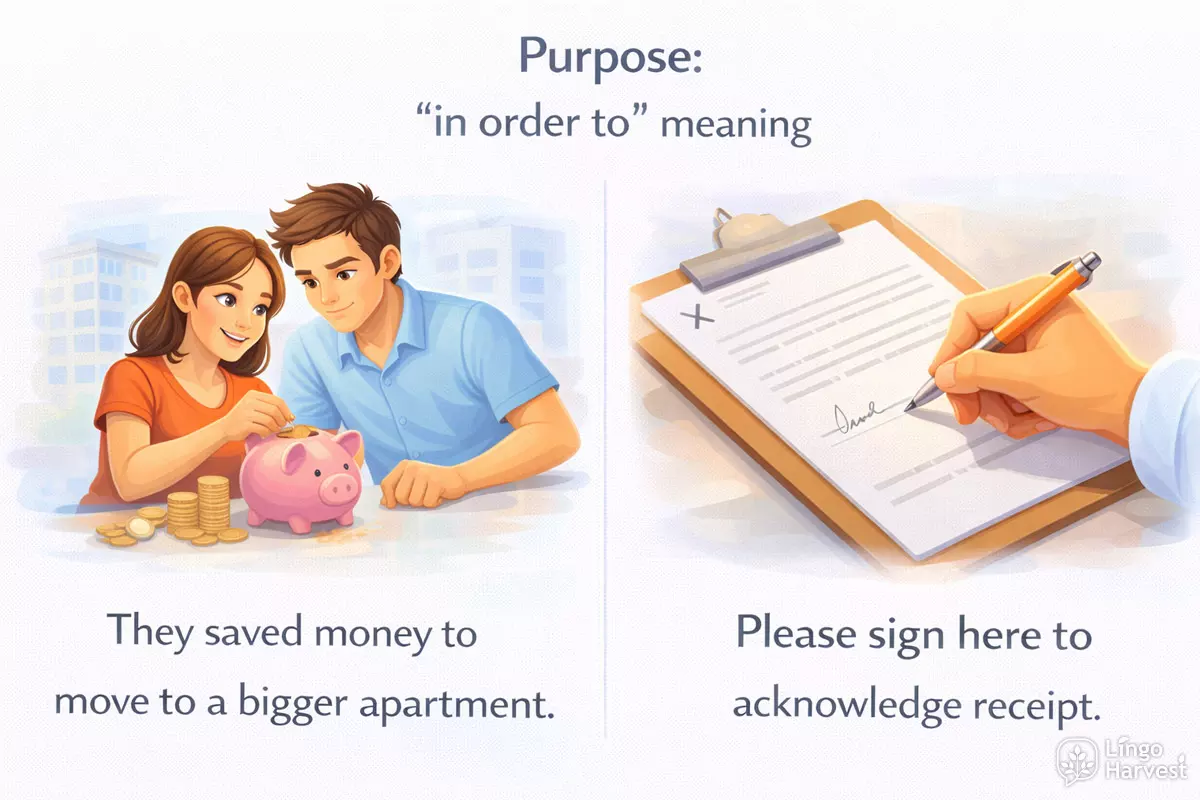
When the infinitive expresses an intended goal, it usually refers to a planned or desired action. You can often replace it with in order to (more explicit) or so as to (more formal).
- She went to the pharmacy to buy some medicine.
- I’m calling to confirm your appointment.
- He studied all weekend to pass the exam.
- We left early to avoid traffic.
- They saved money to move to a bigger apartment.
- Please sign here to acknowledge receipt.
- She lowered her voice to not wake the baby.
- I opened the window to let in some fresh air.
- He paused to think before answering.
- We met to discuss the budget.
- She took notes to remember the key points.
- I’m writing to apologize for the delay.
- He wore gloves to protect his hands.
- They hired a tutor to help with math.
- I set an alarm to wake up on time.
Negative purpose: “not to”
To express a goal you want to avoid, place not before the infinitive. This is usually more natural than using to avoid when the meaning is simply “so that something doesn’t happen.”
- I whispered not to disturb anyone.
- She double-checked the address not to make a mistake.
- He kept the receipt not to lose proof of purchase.
- We turned off notifications not to get distracted.
Result: what an action leads to
Sometimes to + infinitive highlights an outcome that follows from the previous clause. This often appears with expressions like only or enough, and it can suggest surprise, disappointment, or an unintended consequence.
- He arrived at the station only to find the train had been cancelled.
- I opened the file only to realize it was the wrong version.
- She worked hard, only to be overlooked for the promotion.
- They rushed to the venue only to discover the event was postponed.
- He trained for months only to injure his knee the day before the race.
- The box was light enough to carry with one hand.
- The water was too hot to drink.
- She spoke loudly enough to be heard at the back.
- The explanation was clear enough to understand quickly.
Common pattern notes
Keep these usage points in mind when choosing an infinitive for goal or outcome:
- One subject: When the doer is the same in both parts, the infinitive is straightforward: “I went out to buy milk.”
- Different subjects: Use for + noun/pronoun + to-infinitive: “I arranged for her to meet the manager.”
- Purpose vs. reason: Infinitives typically show intention; because clauses often show cause: “I went to the doctor to get advice” (goal) vs. “because I felt ill” (cause).
- Avoiding ambiguity: If the meaning could be misunderstood, use in order to for clarity: “He stopped in order to rest” (not “stopped” as in “quit”).
Infinitive vs bare infinitive overview
English has two closely related verb patterns: the to-infinitive (to + base verb) and the bare infinitive (base verb without to). Both use the base form (go, be, see), but the choice depends on the verb before it, the structure of the sentence, and what meaning you want to express.
Quick form check
- To-infinitive: to + verb → to leave, to be, to understand
- Bare infinitive: verb only → leave, be, understand
Core usage differences
| Pattern | Typical triggers | Meaning focus | Examples |
|---|---|---|---|
| To-infinitive (to + verb) | Many main verbs (want, decide, hope), adjectives (ready, happy), nouns (a plan, a chance), purpose clauses | Intention, goal, plan, choice, or purpose | I decided to call. / She is ready to start. / I came to help. |
| Bare infinitive (verb only) | Modal verbs (can, must, should), make/let/help (often), perception verbs (see/hear/feel + object) | Ability/obligation/permission; direct causation; observed action | You must leave. / They made me wait. / I saw him cross the street. |
| Verb + object + to-infinitive | Verbs of advising/asking/telling/wanting (tell, ask, encourage, allow, want) | One person influences another person’s action | She told him to sit. / We encouraged them to apply. |
| Verb + object + bare infinitive | Make/let; perception verbs (see/hear/feel/watch + object) | Cause someone to act, or witness an action as a whole | They let us enter. / I heard her sing. |
| To-infinitive after question words | what/where/how/who/which + to (when the subject is understood) | Instruction, choice, or next step | I don’t know what to say. / Can you show me how to do it? |
| Bare infinitive after “do” support | Do/does/did in questions and negatives | Grammar support for tense/negation; main verb stays base form | Did you call? / I don’t agree. |
Common patterns learners mix up
Some structures look similar but follow different rules. These contrasts help you choose the correct form in real sentences.
- Modal + verb ✅ She can drive. ❌ She can to drive.
- Want/need/hope + to ✅ We hope to finish today. ❌ We hope finish today.
- Make + object + verb ✅ The noise made me jump.
- Tell/ask + object + to ✅ He asked me to wait. ❌ He asked me wait.
- Let + object + verb ✅ They let us leave. (No to.)
- Help + (to) + verb ✅ She helped me (to) carry the boxes. (Both are common; bare form is frequent in informal English.)
Meaning note: perception verbs and “whole action” vs “in progress”
With verbs like see, hear, and watch, the bare infinitive often presents the action as complete or viewed as a whole. The -ing form emphasizes the action in progress. This is not the same as choosing to vs no to, but it often appears in the same sentence patterns.
- ✅ I saw him cross the road. (the full action)
- ✅ I saw him crossing the road. (in progress)
Typical learner mistakes and fixes
Errors with the to-infinitive usually come from mixing it with the bare infinitive, using it after the wrong verb pattern, or confusing it with an -ing form. Focus on common triggers (modal verbs, let/make/help, prepositions, and adjectives) and you can correct most problems quickly.
Frequent problems and reliable corrections
- Using “to” after a modal verb
❌ I can to drive. → ✅ I can drive.
Rule: Modals (can, could, may, might, must, should, will, would) take the bare infinitive. - Forgetting “to” after “want/need/plan/decide/hope”
❌ I want go now. → ✅ I want to go now.
Rule: Many common verbs are followed by to + base verb. - Using the wrong pattern after “make/let”
❌ She made me to apologize. → ✅ She made me apologize.
❌ They let us to enter. → ✅ They let us enter.
Rule: make/let + object + bare infinitive. - Overusing the bare infinitive after “help”
✅ She helped me (to) finish. (both possible)
Fix: With help, both forms are common, but be consistent within a text. - Using “to” after prepositions
❌ I’m interested in to learn French. → ✅ I’m interested in learning French.
Rule: After a preposition (in, at, about, for, of, without), use -ing, not an infinitive. - Confusing “to” as a preposition vs. “to” in an infinitive
❌ I look forward to meet you. → ✅ I look forward to meeting you.
Rule: In “look forward to,” to is a preposition, so it must be followed by -ing or a noun. - Choosing -ing when the verb requires “to + verb”
❌ I decided going home. → ✅ I decided to go home.
Tip: Learn verbs in patterns: decide to, agree to, refuse to, promise to. - Using “to” after “suggest/recommend”
❌ She suggested to take a taxi. → ✅ She suggested taking a taxi.
✅ She suggested that we take a taxi. (also correct)
Rule: suggest/recommend usually take -ing or a that-clause, not “to + verb.” - Wrong form after adjectives
❌ It’s easy do. → ✅ It’s easy to do.
Rule: adjective + to-infinitive is a very common structure: hard to understand, ready to leave, happy to help. - Adding “to” after “why”
❌ Why to wait? → ✅ Why wait?
Rule: After why, use the bare infinitive in questions and suggestions. - Misplacing the negative
❌ I decided to not go. (possible, but often less natural)
✅ I decided not to go.
Rule: The usual pattern is not to + verb. - Wrong subject with “for + person + to…”
❌ It’s important you to arrive early. → ✅ It’s important for you to arrive early.
Rule: Use for + noun/pronoun + to-infinitive to show who should do the action. - Using “to” after “because”
❌ I stayed home because to study. → ✅ I stayed home to study. / I stayed home because I had to study.
Fix: Use to + verb for purpose, or use a full clause after because. - Mixing “too/enough” patterns
❌ It’s too cold for go out. → ✅ It’s too cold to go out.
❌ I’m old enough go. → ✅ I’m old enough to go.
Rule: too + adjective + to; adjective + enough + to. - Confusing “stop to do” and “stop doing”
❌ I stopped to smoke. (means: I stopped in order to smoke)
✅ I stopped smoking. (means: I quit the habit)
Rule: Some verbs change meaning depending on to-infinitive vs -ing (stop, remember, try, forget). - Using an infinitive after “enjoy/avoid/finish”
❌ I enjoy to read. → ✅ I enjoy reading.
Rule: Many “activity” verbs prefer -ing: enjoy, avoid, finish, consider, keep. - Forgetting the base form after “to”
❌ I want to goes. → ✅ I want to go.
Rule: After to, use the base verb (no -s, no -ed). - Overusing “to” where an object is required
❌ I explained to do it. → ✅ I explained how to do it. / I explained it.
Rule: Some verbs need a different structure (explain + noun / explain + wh-word + to-infinitive).
When you’re unsure, check what comes immediately before the verb: a modal usually signals the bare infinitive; a preposition usually signals -ing; and many common verbs and adjectives signal to + base form. Learning these as fixed patterns prevents most repeat mistakes.
Homework: to-infinitive practice exercises
Use these tasks to build accuracy with to + base verb after common verbs, adjectives, and nouns, and to practice purpose and meaning. Focus on the pattern (what comes before the infinitive) and on whether the subject of the action stays the same or changes.
1) Fill in the blank: add to + the correct verb
Complete each sentence with to + a verb from the box. Use each verb once.
Verb box: call, finish, help, learn, meet, move, pay, remember, send, stop, take, wait
- I need ________ the bill before Friday.
- She decided ________ to a quieter neighborhood.
- We arranged ________ at 6:30 outside the station.
- He promised ________ me after the interview.
- They agreed ________ the documents by email.
- Please don’t forget ________ your ID with you.
- I’m trying ________ Spanish pronunciation more clearly.
- It’s important ________ for your turn and not interrupt.
- He managed ________ the report on time.
- Do you want me ________ you with those bags?
- We stopped ________ a short break.
- She refused ________ the extra fee.
Show answers
- to pay
- to move
- to meet
- to call
- to send
- to take
- to learn
- to wait
- to finish
- to help
- to stop
- to pay
Note: If you used to pay in #1, you may need a different verb for #12. A natural alternative is: She refused to pay the extra fee, and #1 can be to pay as well only if the verb box allows repetition. If your teacher requires “use each verb once,” replace #1 with to finish (e.g., “I need to finish the payment process…”) and keep #12 as to pay.
2) Choose the correct option (meaning and pattern)
Select the best completion. Pay attention to whether you need an infinitive, and whether the sentence needs an object before it.
- She asked me ________ early. (to arrive / arrive)
- It was nice ________ you again. (to see / seeing)
- They made him ________ the form twice. (to fill in / fill in)
- I’m not sure what ________. (to do / do)
- We went to the shop ________ some milk. (to buy / buying)
- He suggested ________ a taxi. (to take / taking)
- My goal this month is ________ more consistently. (to study / studying)
- There’s no need ________ so fast. (to drive / driving)
- She let me ________ her laptop. (to use / use)
- I can’t afford ________ a new phone right now. (to get / getting)
Show answers
- to arrive
- to see
- fill in
- to do
- to buy
- taking
- to study
- to drive
- use
- to get
3) Rewrite: keep the meaning, use a to-infinitive structure
Rewrite each sentence using to + base verb. Keep the meaning as close as possible.
- I’m happy that I can help. → I’m happy ________.
- He went to the library because he wanted quiet. → He went to the library ________.
- It’s important that you check the details. → It’s important ________.
- She has a plan: she will start earlier. → She has a plan ________.
- I was surprised when I heard the news. → I was surprised ________.
- They gave us instructions: we should wear helmets. → They told us ________.
- He doesn’t have enough money, so he can’t travel. → He can’t afford ________.
- We opened the window so that we could get fresh air. → We opened the window ________.
- She stayed up late because she wanted to finish the report. → She stayed up late ________.
- I turned on the lights so that I could see better. → I turned on the lights ________.
- He was relieved when he saw the results. → He was relieved ________.
- We went to the store because we needed some bread. → We went to the store ________.
Show answers
- to help
- to have some quiet
- to check the details
- to start earlier
- to hear the news
- to wear helmets
- to travel
- to get fresh air
- to finish the report
- to see better
- to see the results
- to buy some bread
4) Error correction: find and fix the mistake
Each sentence has one problem with the infinitive pattern (missing to, wrong verb form, or wrong structure). Rewrite correctly.
- She wants go now.
- I suggested to meet at noon.
- He told me call him later.
- It’s difficult understand this accent.
- They made us to wait outside.
- I’m looking forward to see you.
- We decided going by train.
- There’s no point to argue.
- She let me to borrow her notes.
- I hope seeing you soon.
Show answers
- She wants to go now.
- I suggested meeting at noon.
- He told me to call him later.
- It’s difficult to understand this accent.
- They made us wait outside.
- I’m looking forward to seeing you.
- We decided to go by train.
- There’s no point arguing.
- She let me borrow her notes.
- I hope to see you soon.
5) Short production task (write your own sentences)
Write one sentence for each prompt. Use a different to-infinitive pattern each time (verb + infinitive, adjective + infinitive, noun + infinitive, or purpose).
- Use plan + infinitive.
- Use easy/difficult + infinitive.
- Use the decision + infinitive.
- Use an infinitive of purpose (answer “Why?”).
- Use ask/tell + object + infinitive.
- Use too/enough + infinitive.