Core Verbs for Daily Communication in English

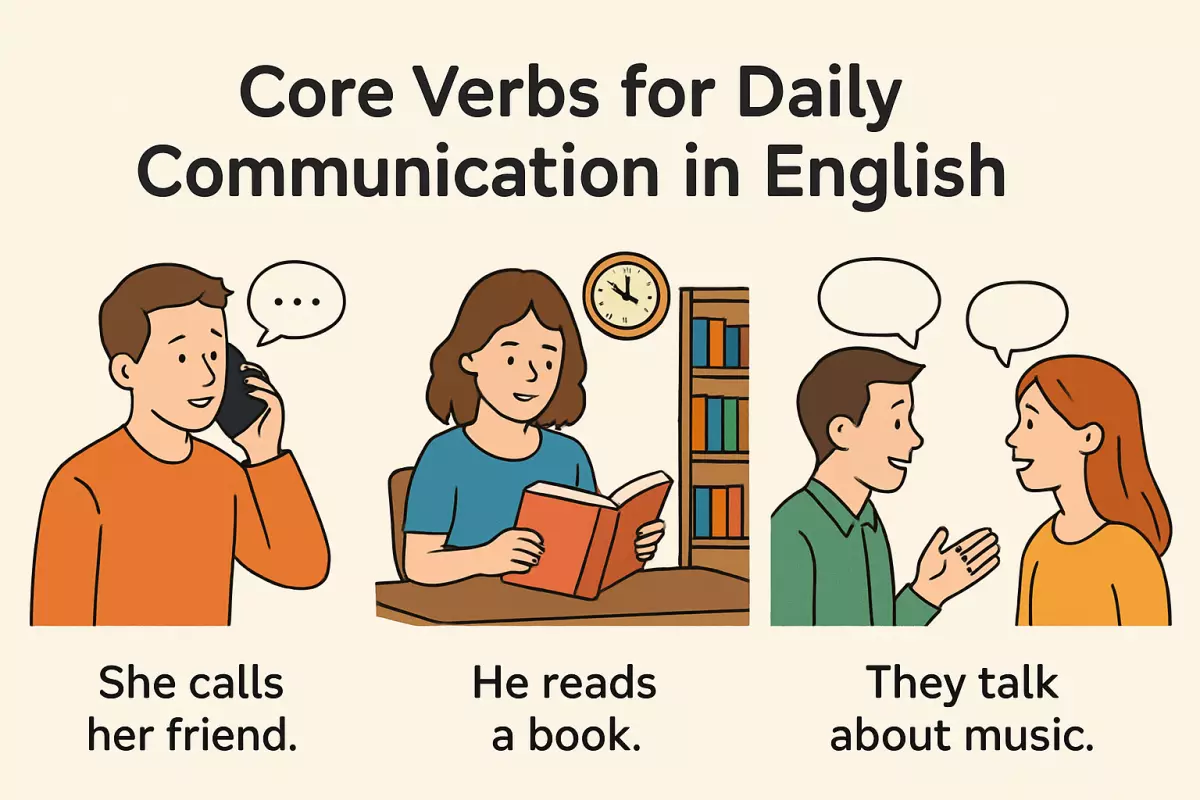 Learn the core verbs you need first, focusing on high-frequency everyday ones. See common patterns, typical collocations and phrases, and how to use them in real situations. Avoid basic mistakes, build fluency, and follow daily homework practice.
Everyday English feels much easier when you master a small set of essential action words that show up in real conversations. This article explains how common verbs work in context, with clear examples you can copy, so you can speak more smoothly, understand others faster, and sound natural in daily situations at work, at home, and with friends.
What core verbs learners need first
Start with verbs that let you build many everyday messages using simple patterns: subject + verb, subject + verb + object, and subject + verb + place/time. The goal is to cover needs (requests, plans, problems) and basic social interaction (greetings, thanks, apologies) with a small set you can reuse in different situations.
High-utility verbs to learn early
- be (am/is/are): identity, descriptions, location. I am tired. She is at work.
- have: possession, relationships, experiences. I have a question. We have time.
- do: actions in general; questions and emphasis. I do my homework. Do you work here?
- go: movement, routines, plans. I go to school. We’re going home.
- get: receive, obtain, become, arrive. I got an email. It’s getting late.
- make: create, prepare, decisions. I made dinner. Let’s make a plan.
- take: grab, bring, transport, time. Take this. It takes 10 minutes.
- give: provide, hand over, offer. Can you give me a hand?
- say: report speech, communicate. She said yes.
- tell: inform someone; needs an object person. Tell me the address.
- see: perception, meeting. I see the problem. See you tomorrow.
- know: information and familiarity. I know the answer. Do you know him?
- think: opinions, decisions. I think it’s fine.
- want: needs and preferences. I want water. I want to leave.
- need: essentials and urgency. I need help. We need to talk.
- like: preferences; polite softening. I like this. I’d like a coffee.
- use: tools, systems, language. How do I use this?
- work: jobs, function. I work nights. It doesn’t work.
Patterns that make these verbs more flexible
- Verb + noun for clear actions: make a reservation, take a taxi, give advice, do the dishes.
- Verb + to + base verb for goals and plans: want to go, need to call, like to read, have to leave.
- Verb + someone + noun/infinitive for communication: tell me the time, tell him to wait, ask her to help.
- Be + adjective/prep phrase for states and location: be ready, be late, be on the way, be at the station.
- Common question frames to get information quickly: Do you have…? Can you…? Where do I…? What does this mean?
Small accuracy rules that prevent common mistakes
- Say vs. tell: say does not require a person; tell usually does. ✅ She said “hi.” ✅ She told me “hi.” ❌ She told “hi.”
- Do vs. make: use do for tasks/activities; use make for creating/producing. ✅ do homework ✅ make a cake
- Have vs. have got: both are common for possession. ✅ I have a car. ✅ I’ve got a car. (avoid mixing: ❌ I have gotting…)
- Get has several meanings; learn it in chunks: get home, get a message, get better, get to work.
High-frequency everyday verbs
These are the verbs you reach for in routine conversations: making plans, describing habits, asking for help, and reacting to what happens. The key is not only meaning, but also the patterns they prefer (common objects, prepositions, and typical sentence frames).
Core verbs and the patterns they follow
- get + noun: “get a coffee,” “get a message,” “get a ticket.” Also get + adjective: “get tired,” “get ready.”
- make + noun (create/prepare): “make dinner,” “make a plan,” “make a mistake.”
- do + activity/task: “do homework,” “do the dishes,” “do some work.”
- go + to + place: “go to work,” “go to the store.” Also go + -ing: “go shopping,” “go running.”
- come + to + place: “come to my office.” With particles: “come back,” “come in,” “come over.”
- take + noun (carry/consume/time): “take a seat,” “take a break,” “take a photo,” “take 10 minutes.”
- give + person + thing: “give me a minute,” “give her the keys.”
- put + object + place: “put it on the table,” “put your phone away.”
- use + tool/thing: “use this app,” “use my charger.”
- need + noun / to + verb: “need help,” “need to leave early.”
- want + noun / to + verb: “want water,” “want to talk.”
- know + noun/wh-clause: “know the answer,” “know where it is.” (Not usually “know about” for basic facts.)
- think + (that) clause: “think it’s fine,” “think we should wait.” For opinions: “What do you think about it?”
- say + words; tell + person + information: “say hello,” “tell me the truth.”
- ask + person + question / ask for + noun: “ask her,” “ask for a receipt.”
- work (no object) or work on + project: “It works,” “work on a report.”
- call + person / call back: “call you later,” “call me back.”
- help + (person) + (to) verb: “help me (to) carry this,” “help her understand.”
Useful sentence frames you can reuse
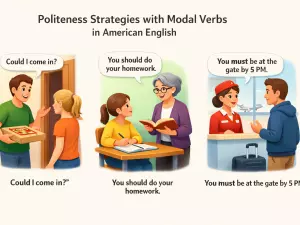
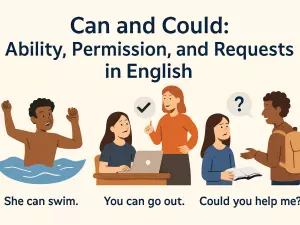
- Requests: “Can you help me with this?” / “Could you give me a minute?”
- Plans: “I’m going to go after work.” / “Let’s make a plan.”
- Needs and wants: “I need to leave soon.” / “Do you want to come?”
- Opinions: “I think it’s a good idea.” / “What do you think?”
- Information: “Do you know where it is?” / “I don’t know the time.”
- Movement and arrival: “I’ll come by at 6.” / “We went to the bank.”
Common mix-ups to avoid
- ✅ “make dinner” ❌ “do dinner” (use do for tasks, make for creating/preparing)
- ✅ “do the dishes” ❌ “make the dishes”
- ✅ “tell me” ❌ “say me” (use tell with a person as the indirect object)
- ✅ “ask for help” ❌ “ask help” (both exist, but “ask for + noun” is the safer default)
- ✅ “go shopping” ❌ “go to shopping” (use go + -ing for activities)
Common patterns with core verbs
Many everyday verbs become much easier to use when you learn the grammar “frames” they commonly appear in. The patterns below show how meaning changes with small shifts in structure, especially with objects, infinitives, and -ing forms.
1) Verb + object (who/what receives the action)
This is the most common frame for daily communication. It answers “Do what?” or “To whom?” and often supports quick, clear sentences.
- need + noun: “I need help.” / “We need more time.”
- want + noun: “I want a coffee.”
- get + noun (receive/obtain): “I got your message.”
- make + noun (create): “I made dinner.”
- take + noun (grab/consume): “Take a seat.” / “I’ll take the salad.”
- give + person + noun: “Give me a minute.”
- tell + person + noun: “Tell him the truth.”
- show + person + noun: “Show me the photo.”
- send + person + noun: “Send me the file.”
- call + person: “Call me later.”
- help + person: “Can you help me?”
- meet + person: “I’m meeting Anna at 6.”
2) Verb + to-infinitive (plans, decisions, intentions)
Use to + base verb after many core verbs to express a goal, plan, or choice.
- want to + verb: “I want to leave early.”
- need to + verb: “We need to talk.”
- have to + verb (obligation): “I have to work tonight.”
- plan to + verb: “They plan to move.”
- decide to + verb: “I decided to wait.”
- try to + verb: “Try to listen.”
- hope to + verb: “I hope to see you soon.”
- learn to + verb: “She’s learning to drive.”
- remember to + verb (don’t forget): “Remember to lock the door.”
3) Verb + -ing (activities, experiences, ongoing actions)
The -ing form often highlights the activity itself, not just the result. It is common after verbs about liking, avoiding, or continuing.
- like/love/hate + -ing: “I like cooking.”
- enjoy + -ing: “We enjoy walking here.”
- keep + -ing: “He kept asking questions.”
- finish + -ing: “I finished cleaning.”
- avoid + -ing: “Avoid touching your face.”
- stop + -ing (end the activity): “Stop talking for a second.”
4) Verb + object + to-infinitive (asking, telling, allowing)
This structure is useful when one person influences another person’s action.
- ask + person + to + verb: “I asked her to call me.”
- tell + person + to + verb: “Tell them to wait.”
- need + person + to + verb: “I need you to check this.”
- want + person + to + verb: “I want you to be honest.”
- help + person + (to) + verb: “Help me (to) carry this.”
- allow + person + to + verb: “They allowed us to enter.”
5) Verb + preposition (fixed pairings you can reuse)
Many high-frequency verbs rely on a specific preposition. Treat these as set combinations and practice them as chunks.
- listen to + noun: “Listen to this.”
- look at + noun: “Look at the screen.”
- wait for + noun: “I’m waiting for the bus.”
- talk about + noun: “Let’s talk about tomorrow.”
- think about + noun: “I’m thinking about it.”
- ask for + noun: “Ask for help.”
- pay for + noun: “I’ll pay for lunch.”
- belong to + noun: “This belongs to me.”
- depend on + noun: “It depends on the price.”
- agree with + person: “I agree with you.”
6) Small pattern shifts that change meaning
Some core verbs change meaning depending on the structure that follows. These contrasts prevent common mistakes.
- stop + -ing (end an activity) vs. stop + to + verb (pause to do something): “I stopped smoking.” vs. “I stopped to answer the phone.”
- remember + -ing (memory) vs. remember + to + verb (don’t forget): “I remember meeting him.” vs. “Remember to email me.”
- try + -ing (experiment) vs. try + to + verb (effort): “Try restarting it.” vs. “Try to stay calm.”
- help + -ing (contribute) vs. help + (to) + verb (assist directly): “This helps reduce stress.” vs. “Help me (to) find it.”
Typical collocations and phrases
Core everyday verbs become easier to use when you learn the word partners they commonly take (objects, prepositions, and fixed chunks). The patterns below show natural combinations you can reuse in speaking and writing.
Get
- get up (wake and rise): “I get up at 7.”
- get home / get to work: “What time do you get home?”
- get back (return): “I’ll get back at 6.”
- get ready (prepare): “Get ready—we’re leaving.”
- get a job / get a raise: “She got a raise.”
- get a message / get an email: “Did you get my email?”
- get help / get support: “Get help if you need it.”
- get better / get worse: “It’s getting better.”
- get sick / get tired: “I got sick last week.”
- get used to + noun/-ing: “I’m getting used to commuting.”
Go
- go out (socially): “We’re going out tonight.”
- go in / go inside: “Go in and wait.”
- go back: “Let’s go back to the office.”
- go away: “The pain went away.”
- go shopping / go running / go swimming: “I go running on weekends.”
- go to bed: “I go to bed early.”
- go on a trip / go on vacation: “They went on vacation.”
- go for a walk / go for coffee: “Do you want to go for coffee?”
Make
- make a decision: “We need to make a decision.”
- make plans: “Let’s make plans for Friday.”
- make a mistake: “I made a mistake.”
- make an effort: “Make an effort to be on time.”
- make progress: “You’re making progress.”
- make money: “He makes good money.”
- make a call / make a reservation: “I’ll make a reservation.”
- make a difference: “Your help makes a difference.”
Take
- take a break: “Let’s take a break.”
- take a seat: “Please take a seat.”
- take a shower / take a bath: “I took a shower.”
- take a bus/train: “I take the train to work.”
- take notes: “Take notes during the meeting.”
- take a photo: “Can you take a photo?”
- take time: “It takes time to learn.”
- take care of + noun: “She takes care of her brother.”
Do
- do homework / do housework: “I have to do homework.”
- do the dishes / do the laundry: “He’s doing the laundry.”
- do a job / do work: “She does great work.”
- do your best: “Just do your best.”
- do well / do badly: “He did well on the test.”
- do someone a favor: “Can you do me a favor?”
- do business: “They do business internationally.”
Have
- have time / have a moment: “Do you have a moment?”
- have a meeting: “We have a meeting at 2.”
- have an appointment: “I have an appointment tomorrow.”
- have a problem / have an issue: “We have a problem.”
- have an idea: “I have an idea.”
- have fun: “Have fun tonight.”
- have a look: “Have a look at this.”
Give
- give advice: “She gave me advice.”
- give someone a hand (help): “Can you give me a hand?”
- give a presentation / give a speech: “He gave a presentation.”
- give feedback: “Please give feedback.”
- give permission: “They gave permission.”
- give someone a call: “Give me a call later.”
Say / Tell / Speak / Talk (common patterns)
- say + words: “Say hello,” “Say sorry,” “What did you say?”
- tell + person + information: “Tell me the truth,” “Tell her the time.”
- tell someone to + verb: “Tell him to wait.”
- speak + language / formally: “She speaks English,” “Speak to the manager.”
- talk about + topic: “Let’s talk about work.”
- talk to + person: “I need to talk to you.”
- ✅ “Tell me” ❌ “Say me” (use tell with an object person)
Preposition pairings that sound natural
- ask for help / information: “Ask for help.”
- wait for someone/something: “Wait for me.”
- look for keys / a job: “I’m looking for my keys.”
- listen to music / a person: “Listen to this.”
- think about a problem / a plan: “Think about it.”
- depend on the situation: “It depends on the weather.”
- agree with a person / agree on a plan: “I agree with you,” “We agreed on a time.”
Using core verbs in real situations
Strong daily communication comes from choosing a simple verb and pairing it with the right object, time phrase, and follow-up detail. The patterns below show how common verbs behave in typical contexts such as requests, plans, problems, and quick updates.
High-frequency patterns you can reuse
- Verb + noun (do, make, get, take): “I made a mistake.” / “I took a break.”
- Verb + to + base verb (want, need, plan, try): “I need to leave early.”
- Verb + -ing (enjoy, keep, stop): “I stopped talking.” / “I keep forgetting.”
- Verb + object + to + base verb (ask, tell, help): “She told me to wait.”
- Verb + preposition + noun (listen to, look for, talk about): “I’m looking for my keys.”
- Linking verb + adjective (be, feel, seem): “I feel ready.” / “It seems fine.”
- There is/are + noun (be): “There is a problem.”
- Have + noun for experiences/needs: “I have a question.” / “I have time.”
- Go + to + place and go + -ing: “I’m going to work.” / “We went shopping.”
- Come + to + place or come back: “Can you come here?” / “I’ll come back later.”
- Get + adjective (change): “It’s getting late.” / “I got tired.”
- Give + person + thing: “Can you give me a minute?”
Ready-to-use examples for common situations
- Asking for help: “Can you help me with this?” / “Could you show me how it works?”
- Making a request: “Please send the file.” / “Can you tell me the time?”
- Sharing a plan: “I’m going to call her later.” / “We plan to meet at 6.”
- Giving an update: “I finished the report.” / “I’m working on it now.”
- Explaining a problem: “I lost my card.” / “The app isn’t working.”
- Offering a solution: “I can fix it.” / “Let’s try again.”
- Polite refusal: “I can’t make it today.” / “I need to pass.”
- Agreeing and confirming: “That sounds good.” / “I agree.” / “So we meet at 6, right?”
- Clarifying: “What do you mean?” / “Can you repeat that?”
- Giving directions: “Go straight.” / “Turn left.” / “Take the second exit.”
- Talking about preferences: “I like tea.” / “I prefer email.”
- Talking about routines: “I get up at 7.” / “I go to bed early.”
- Talking about feelings: “I feel stressed.” / “I hope it’s okay.”
- Making a quick apology: “I’m sorry I’m late.” / “I forgot.”
- Ending a conversation: “I have to go.” / “Let’s talk later.”
Common verb choices that sound natural
- ✅ “I made a mistake.” → ❌ “I did a mistake.”
- ✅ “Please take a seat.” → ❌ “Please sit a seat.”
- ✅ “I’m looking for my phone.” → ❌ “I’m searching my phone.”
- ✅ “Can you tell me?” → ❌ “Can you say me?”
- ✅ “I have an idea.” → ❌ “I know an idea.”
- ✅ “I got an email.” → ❌ “I received an email” (correct but more formal; choose based on context).
Avoiding basic usage mistakes
Many errors with everyday verbs come from mixing up verb patterns (verb + object, verb + preposition, verb + infinitive/gerund) or choosing the wrong tense for the situation. The fixes are usually simple: learn the common structure each verb prefers and keep your sentence built around that structure.
Common verb-pattern errors (and the correct pattern)
- Say vs. tell: use say without an indirect object, and tell with a person. ❌ “She said me…” → ✅ “She told me…” / ✅ “She said it was late.”
- Explain doesn’t take a direct person object: ❌ “Explain me this.” → ✅ “Explain this to me.”
- Discuss is transitive (no “about”): ❌ “Discuss about the plan.” → ✅ “Discuss the plan.”
- Ask pattern: ask someone + to do / ask for + thing. ❌ “Ask to him…” → ✅ “Ask him…” / ✅ “Ask for help.”
- Listen needs to: ❌ “Listen music.” → ✅ “Listen to music.”
- Wait often needs for: ❌ “Wait me.” → ✅ “Wait for me.”
- Marry usually has no “with”: ❌ “She married with him.” → ✅ “She married him.”
- Arrive uses at/in (not “to”): ❌ “Arrive to the airport.” → ✅ “Arrive at the airport.” / “Arrive in London.”
- Reach takes no preposition: ❌ “Reach to the station.” → ✅ “Reach the station.”
- Enter takes no preposition: ❌ “Enter to the room.” → ✅ “Enter the room.”
- Go + place (no “to” before home): ❌ “Go to home.” → ✅ “Go home.”
- Come vs. go depends on the listener’s location: ✅ “I’ll come to your office.” / ✅ “I’ll go to his office.”
- Bring vs. take: bring toward the speaker/meeting point; take away from it. ✅ “Bring your ID (to this place).” / ✅ “Take this file to the manager (away from here).”
- Lend vs. borrow: lend = give temporarily; borrow = receive temporarily. ❌ “Can you borrow me $10?” → ✅ “Can you lend me $10?”
- Teach / learn: ❌ “He learned me English.” → ✅ “He taught me English.”
Gerund vs. infinitive: choose the form the verb requires
- Enjoy + -ing: ❌ “I enjoy to cook.” → ✅ “I enjoy cooking.”
- Want + to: ❌ “I want going.” → ✅ “I want to go.”
- Decide + to: ✅ “We decided to leave early.”
- Finish + -ing: ✅ “She finished writing the email.”
- Stop + -ing (quit an activity): ✅ “Stop talking.”
- Stop + to (pause to do something else): ✅ “Stop to talk to your teacher.”
- Remember + to (don’t forget): ✅ “Remember to call.”
- Remember + -ing (recall a past action): ✅ “I remember meeting her.”
Tense and form slips that change meaning
- Simple present for routines and facts: ✅ “I work on Mondays.” (not “I am work…”)
- Present continuous for actions happening now/around now: ✅ “I’m working right now.”
- State verbs usually avoid continuous: ❌ “I’m knowing him.” → ✅ “I know him.” (also: believe, like, need, understand)
- Have for possession vs. actions: ✅ “I have a car.” / ✅ “I’m having lunch.”
- Past simple for finished past time: ✅ “I went yesterday.”
- Present perfect for life experience/unfinished time: ✅ “I’ve been there.” / “I’ve worked here since June.”
- Make + object + base verb: ❌ “He made me to wait.” → ✅ “He made me wait.”
- Let + object + base verb: ❌ “Let me to explain.” → ✅ “Let me explain.”
Quick self-check before you speak
- Ask: “Does this verb need a preposition?” (listen to, wait for, arrive at/in).
- Ask: “Do I need a person object?” (tell someone, ask someone; but explain something to someone).
- Ask: “Does the verb prefer to or -ing?” (want to, enjoy -ing).
- Check direction: “toward me/us” (bring/come) vs. “away from me/us” (take/go).
Building fluency with key verbs
Fluency improves fastest when you stop treating verbs as isolated vocabulary and start using them in repeatable patterns. Focus on a small set of high-frequency verbs, practice them with the same sentence frames, and swap in new subjects, times, and objects. This builds automaticity for everyday speaking and writing.
1) Practice verbs in sentence frames (not single words)
Use a few reliable structures and recycle them across many situations. Keep the verb stable and change the details.
- Present routine: “I verb + (object) + (time).” → “I take the bus in the morning.”
- Right now: “I’m verb-ing + (object).” → “I’m looking for my keys.”
- Past event: “I verb-ed + (object) + (yesterday/last…).” → “I called her yesterday.”
- Future plan: “I’m going to verb + (object).” → “I’m going to buy groceries.”
- Need/want: “I need/want to verb + (object).” → “I need to send an email.”
- Polite request: “Could you verb + (object), please?” → “Could you open the window, please?”
- Suggestion: “Let’s verb + (place/activity).” → “Let’s meet after work.”
2) Learn each verb with its common partners
Many “errors” are really collocation problems: the verb is correct, but the noun or preposition is unnatural. Memorize short chunks.
- make a decision, a mistake, a plan
- do homework, the dishes, exercise
- take a break, a shower, a photo
- get home, ready, a message
- have time, a problem, an idea
- give advice, a call, a hand (help)
- keep a promise, quiet, in touch
- leave a message, early, the house
- meet a friend, a deadline, someone for lunch
- spend time, money, the weekend
- pay attention, by card, for parking
- wait for the bus, for a reply
- listen to music, to a podcast
- look for your phone, at the screen, after a child
- talk about work, to your manager
3) Use “verb + preposition” patterns accurately
Prepositions carry meaning, so treat them as part of the verb pattern. Learn them as a unit rather than translating word-by-word.
- ✅ “I’m looking for my wallet.” ❌ “I’m looking my wallet.”
- ✅ “Can you listen to this?” ❌ “Can you listen this?”
- ✅ “We talked about the schedule.” ❌ “We talked the schedule.”
- ✅ “I’ll wait for you outside.” ❌ “I’ll wait you outside.”
- ✅ “Please pay for the tickets online.” ❌ “Please pay the tickets online.”
- ✅ “I agree with you.” / “I agree on the plan.” (person vs. topic)
4) Build speed with small substitutions
To speak more smoothly, repeat the same core structure and swap one element at a time. This reduces thinking load and strengthens grammar control.
- Change the subject: “I need to call…” → “She needs to call…” → “They need to call…”
- Change the time: “I’m meeting him today.” → “I met him yesterday.” → “I’ll meet him tomorrow.”
- Change the object: “I’ll send the email.” → “I’ll send the file.” → “I’ll send the address.”
- Change the reason: “I left early because…” → “I stayed late because…”
- Change the place: “We’re going to the office.” → “We’re going to the station.”
- Change the level of politeness: “Open the door.” → “Could you open the door, please?”
5) Add common verb “helpers” for natural meaning
Modal verbs and short additions make everyday English sound more precise. Practice them with your core verbs.
- can/can’t + verb: “I can’t find it.”
- should + verb: “You should check the time.”
- have to + verb: “I have to leave now.”
- might + verb: “I might be late.”
- used to + verb: “I used to work nights.”
- be able to + verb: “I won’t be able to join.”
- need to + verb: “We need to talk.”
- want to + verb: “I want to try again.”
When you practice, aim for accuracy first, then increase speed. Repeating short, correct patterns with the same core verbs creates the kind of automatic language control that supports real daily communication.
Homework: daily verb usage practice
Build fluency by using a small set of core verbs in realistic, repeated patterns. The goal is not to memorize long lists, but to practice the same verbs across common situations (requests, plans, habits, problems, and opinions) until the forms feel automatic.
1) Daily routine: 10 sentences (present simple)
Write 10 true sentences about a normal day. Use at least 8 different verbs from this set: go, get, make, take, have, do, need, want, use, work, start, finish, eat, drink, sleep.
- Include at least 3 time expressions: usually, often, every day, on weekdays, at night.
- Include at least 2 negatives with don’t/doesn’t.
- Include at least 2 questions (yes/no or wh-).
2) Today’s actions: 8 sentences (present continuous)
Describe what is happening today or this week. Use the pattern am/is/are + verb-ing with these verbs: work, study, learn, try, plan, wait, look, talk.
- Add 2 sentences with right now or at the moment.
- Add 2 sentences with this week or these days.
- Add 2 sentences that contrast routine vs. temporary: I usually…, but today I’m…
3) Past review: 10 sentences (past simple)
Write 10 sentences about yesterday or last weekend using did/went/had/made/took/got/saw/met and other past forms. Focus on clear time markers: yesterday, last night, two days ago, on Saturday.
- Include 3 sentences with because to explain reasons.
- Include 2 negatives with didn’t + base verb.
- Include 2 questions with Did you…? or What did you…?
4) Pattern drills (short, high-frequency)
Complete each line by adding a natural ending. Keep the verb pattern correct. Write one completion per line.
- I need to ______ before ______.
- I want to ______, but I have to ______.
- I’m trying to ______, so I’m not ______.
- I decided to ______ because ______.
- I usually ______ at ______, but today I’m ______.
- I had to ______, so I didn’t ______.
- Can you help me ______?
- Let’s ______ after we ______.
- I’m looking for ______ because I lost ______.
- I’m waiting for ______ to ______.
- I’m going to ______ this weekend.
- I used to ______, but now I ______.
5) Error check (focus on verb forms)
Correct the verb usage in each sentence. Rewrite the full sentence.
- She go to work at 9.
- I am agree with you.
- He didn’t went yesterday.
- We are want to leave now.
- Do you can help me?
- I look forward to meet you.
- I’m interesting in this topic.
- They have finish the task.
Show answers
- She goes to work at 9.
- I agree with you.
- He didn’t go yesterday.
- We want to leave now.
- Can you help me?
- I look forward to meeting you.
- I’m interested in this topic.
- They have finished the task.
6) Mini-dialogues (use verbs in context)
Write short responses (1–2 lines) to each prompt. Use at least one target verb in each reply: need, want, have to, can, should, think, know, feel, make, take.
- Your friend says: “I’m tired.”
- Someone asks: “Why are you late?”
- A coworker asks: “Can you join the meeting?”
- You can’t find your keys.
- You disagree politely with an opinion.
- You want to suggest a plan for tonight.
7) Quick self-check (accuracy targets)
- Third-person -s: he/she/it + verb-s (works, needs, wants).
- Past negative: didn’t + base verb (didn’t go, didn’t make).
- Continuous: am/is/are + verb-ing (I’m working, they’re waiting).
- After to: base verb (to go, to get, to make).
- After prepositions: verb-ing (interested in learning, look forward to meeting).