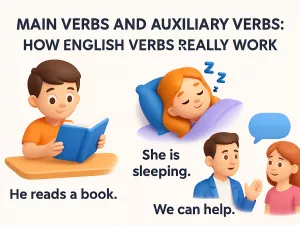
Bare Infinitive: When and Why To Is Not Used

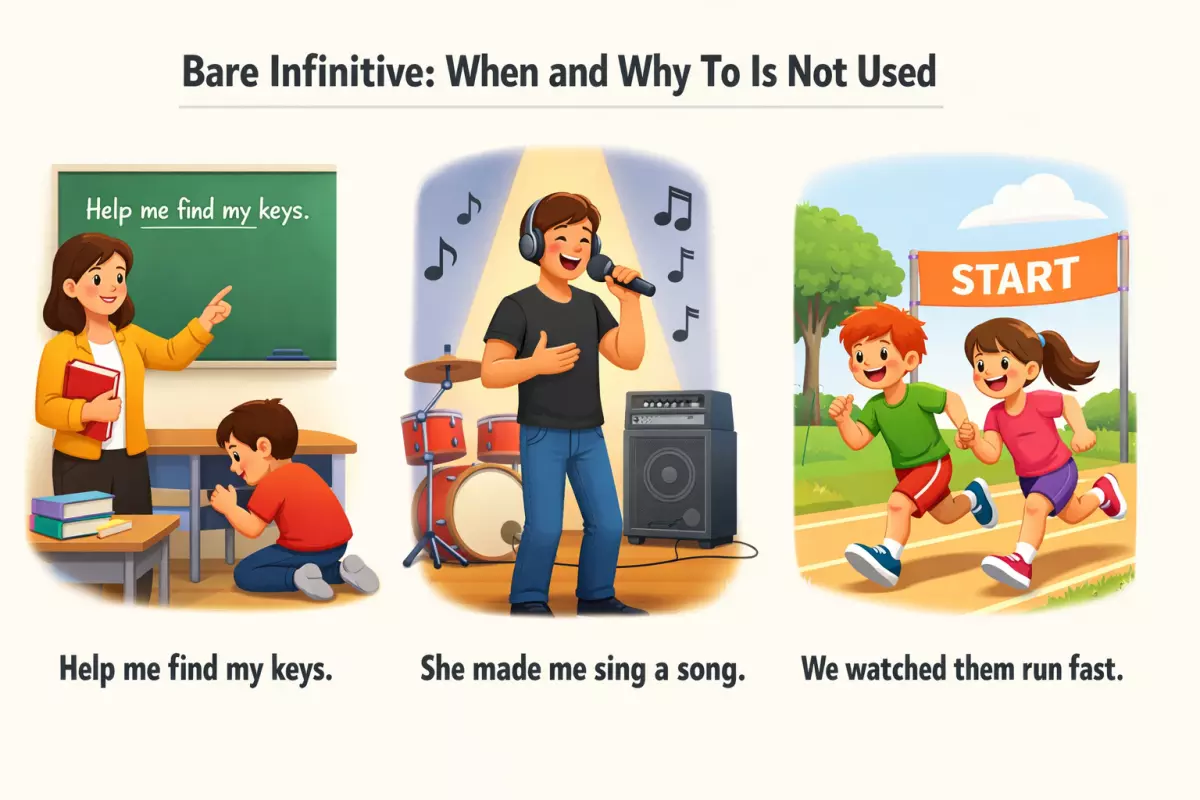 This article explains what a bare infinitive is and where to use it: after modal verbs, make and let, help, and perception verbs. It also covers do as a dummy verb with the base form, common learner mistakes with fixes, and homework practice tasks.
In everyday English, you can use a verb in its plain form without to, which often sounds more natural and confident. This is common after modal verbs like can, must, and should, after make and let, and in set patterns such as why bother or had better. Learn when this form is expected and how to notice it in real conversations and writing.
What a bare infinitive is
A bare infinitive is the base form of a verb used without to. It looks the same as the dictionary form (for most verbs) and is used in specific grammar patterns where English normally drops to and keeps the verb “naked.”
It is not a tense by itself. Instead, it works as part of another structure (after certain verbs, after modals, or in fixed patterns). The meaning comes from the surrounding words, not from the verb form alone.
How it looks
- Base form: go, come, eat, help, see, make, let, hear, feel
- Negative form: not + base form (common after modals): cannot go, should not speak
- Passive is not formed here: you do not make a passive bare infinitive by itself; passive meaning is built with be + past participle (and be may itself be bare after a modal): It must be done
Core usage patterns (where “to” is normally missing)
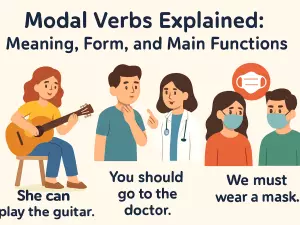
- After modal verbs (can, could, may, might, must, shall, should, will, would): She can drive; You must leave.
- After “do/does/did” in questions and negatives: Do you know?; He did not answer.
- After “let”: Let me explain; They let him go.
- After “make” (meaning “force/cause”): The noise made me jump.
- After perception verbs (often with an object): I saw her cross the street; We heard them sing.
- After “help” (both forms are possible): Help me carry this / Help me to carry this.
- In “had better”: You had better tell the truth.
- In “would rather / would sooner”: I’d rather stay home.
- In short answers with modals: Yes, I can; No, she won’t.
- In some fixed expressions: Why not try?; All I did was wait.
Quick contrasts to keep the form clear
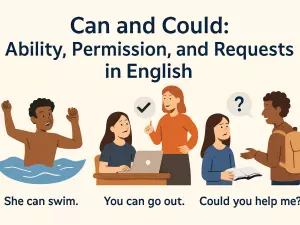
- ✅ She can swim. → modal + base form
❌ She can to swim. - ✅ They made him apologize. → make + object + base form
❌ They made him to apologize. - ✅ I saw him leave. → saw + object + base form (complete action)
✅ I saw him leaving. → -ing form (action in progress)
Because this verb form is tied to patterns, the key skill is recognizing the trigger before it (a modal, do-support, let, make, or a perception verb). Once you spot that trigger, the next verb normally stays in the base form without to.
Bare infinitive after modal verbs
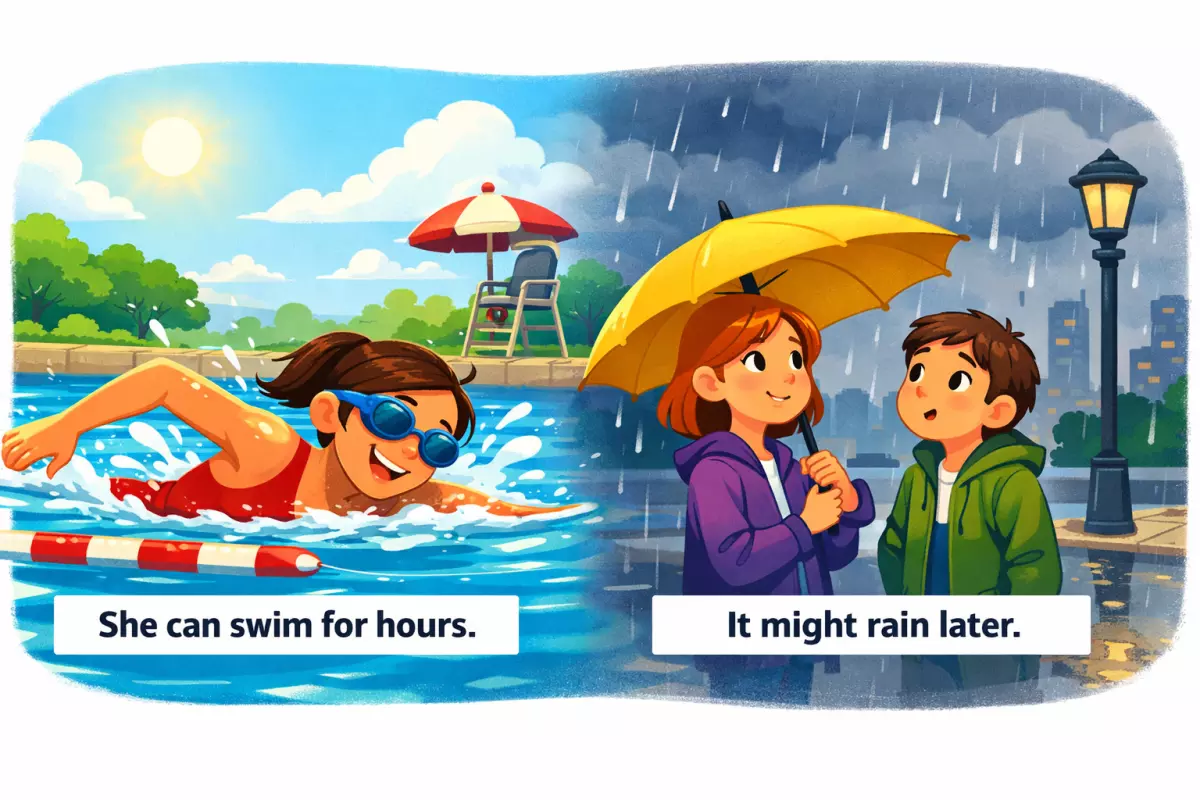
After a modal verb, English normally uses the base form of the main verb (the infinitive without to). This pattern is very stable in modern English and applies in statements, questions, negatives, and short answers.
Core pattern
The structure is:
modal + base verb
Common modals include: can, could, may, might, must, shall, should, will, would. The main verb that follows stays in its plain form (no to, no -s, no -ing).
- Ability: She can swim for hours.
- Possibility: It might rain later.
- Permission: You may leave early.
- Advice: You should rest.
- Obligation: You must wear a helmet.
- Future/intent: I will call you tonight.
- Polite request: Would you open the window?
Negatives and questions
Negatives are formed by adding not after the modal; the main verb still remains a bare form.
- ✅ She cannot drive. → (not: ❌ cannot to drive)
- ✅ You should not worry.
- ✅ He might not agree.
In questions, the modal typically comes before the subject; the following verb stays unchanged.
- ✅ Can you help me?
- ✅ Should we start now?
- ✅ Might they arrive late?
- ✅ Would she join us?
Modal + have + past participle (still no “to”)
When talking about the past, modals often combine with have plus a past participle. The key point is that the verb after the modal is still a bare form: have (not to have).
- ✅ You should have told me earlier.
- ✅ He might have missed the train.
- ✅ They could have won the match.
- ✅ She must have forgotten.
- ✅ I would have helped if I’d known.
Common mistakes to avoid
- Adding to after a modal: ❌ She can to swim → ✅ She can swim.
- Conjugating the main verb after a modal: ❌ He must goes → ✅ He must go.
- Using -ing after a modal in simple structures: ❌ We should going now → ✅ We should go now.
One practical check: if the first verb is a true modal (can/could/may/might/must/shall/should/will/would), the next verb is almost always the bare infinitive, even when the sentence is negative or a question.
Bare infinitive after make and let
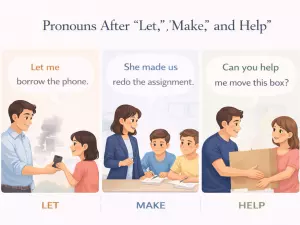
After certain verbs of causation and permission, English commonly uses the infinitive without to. The most important patterns are with make (force/require) and let (allow). In both cases, the structure is straightforward: verb + object + base verb.
Core pattern
- make + object + base verb: “make” means someone causes another person to do something (often not willingly).
- let + object + base verb: “let” means someone allows another person to do something.
- Object can be a noun or object pronoun: me, you, him, her, us, them.
- The base verb stays in its plain form (no to, no -ing, no past form).
Examples (correct vs. incorrect)
- ✅ They made him apologize. ❌ They made him to apologize.
- ✅ Don’t let it happen. ❌ Don’t let it to happen.
- ✅ The teacher made us rewrite the essay. ❌ The teacher made us to rewrite the essay.
- ✅ She let me borrow her notes. ❌ She let me to borrow her notes.
- ✅ The joke made everyone laugh. ❌ The joke made everyone to laugh.
- ✅ Let them speak. ❌ Let them to speak.
More ready-to-use sentence patterns
- My parents didn’t let me stay out late.
- The manager made the team work overtime.
- Let her finish her sentence.
- The loud music made me feel tired.
- They let the kids choose the movie.
- The rules made us wait outside.
- Let’s let him explain first.
- The mistake made the system crash.
- Don’t let anyone tell you it’s impossible.
- Her comment made me think twice.
- They made him pay for the damage.
- Let me check the schedule.
- The film made her cry.
- We let the guests use the kitchen.
- The pressure made him quit.
Important exception: passive voice with make
When make is used in the passive, English typically adds to. This is one of the main places where learners notice a change in form.
- ✅ Active: They made him leave.
- ✅ Passive: He was made to leave.
- ✅ Active: The noise made me wake up.
- ✅ Passive: I was made to wake up early.
Notes on meaning and common learner issues
- make is stronger than “ask” or “tell”: it focuses on the result (the person did it), often with pressure or necessity.
- let is about permission or not stopping someone; it often suggests the action is the other person’s choice.
- Don’t confuse let (allow) with “leave” (go away): “Let him go” usually means “allow him to go,” not “go away.”
- With both verbs, the object is required in this pattern: “They made him leave,” not “They made leave.”
Bare infinitive after help
After help, English often allows the infinitive without to. This is common in everyday speech and writing, especially when the focus is on the action that becomes easier or possible. In many contexts, you can also use to after help with little or no change in meaning, but the version without to is a well-established pattern.
Core pattern
- help + object + base verb: “She helped me carry the boxes.”
- help + base verb (no object): “This guide will help reduce mistakes.”
Common examples (natural, everyday uses)
- Can you help me move this table?
- He helped her find a new apartment.
- They helped us set up the room for the meeting.
- This app helps you track your spending.
- Her advice helped me decide what to do.
- Could you help clean the kitchen?
- The instructions help users install the software.
- My colleague helped me write the report.
- That shortcut helps save time.
- The nurse helped him walk to the waiting area.
- Practice helps you speak more confidently.
- The tutorial helped me fix the error.
- We helped our neighbors carry groceries upstairs.
- Good lighting helps prevent eye strain.
- His explanation helped everyone understand the rule.
- Can this tool help remove the stain?
With or without “to”: what changes?
- In most cases, both forms are acceptable: ✅ “She helped me carry the boxes.” / ✅ “She helped me to carry the boxes.”
- The version without to often sounds slightly more direct and conversational.
- The version with to can sound a bit more formal or careful in tone, but it is not required by grammar in many modern uses.
Common mistakes to avoid
- Don’t use an -ing form after help when you mean the infinitive: ❌ “She helped me carrying the boxes.” → ✅ “She helped me carry the boxes.”
- Keep the verb in the base form after the object: ❌ “He helped her finds a place.” → ✅ “He helped her find a place.”
- Don’t add extra words that break the pattern: ❌ “They helped us to can finish.” → ✅ “They helped us finish.”
As a practical rule, if you can say “help someone do something,” the base verb is usually the cleanest choice. If you prefer, you can add to in many sentences, but you don’t need it for the structure to be correct.
Bare infinitive with perception verbs
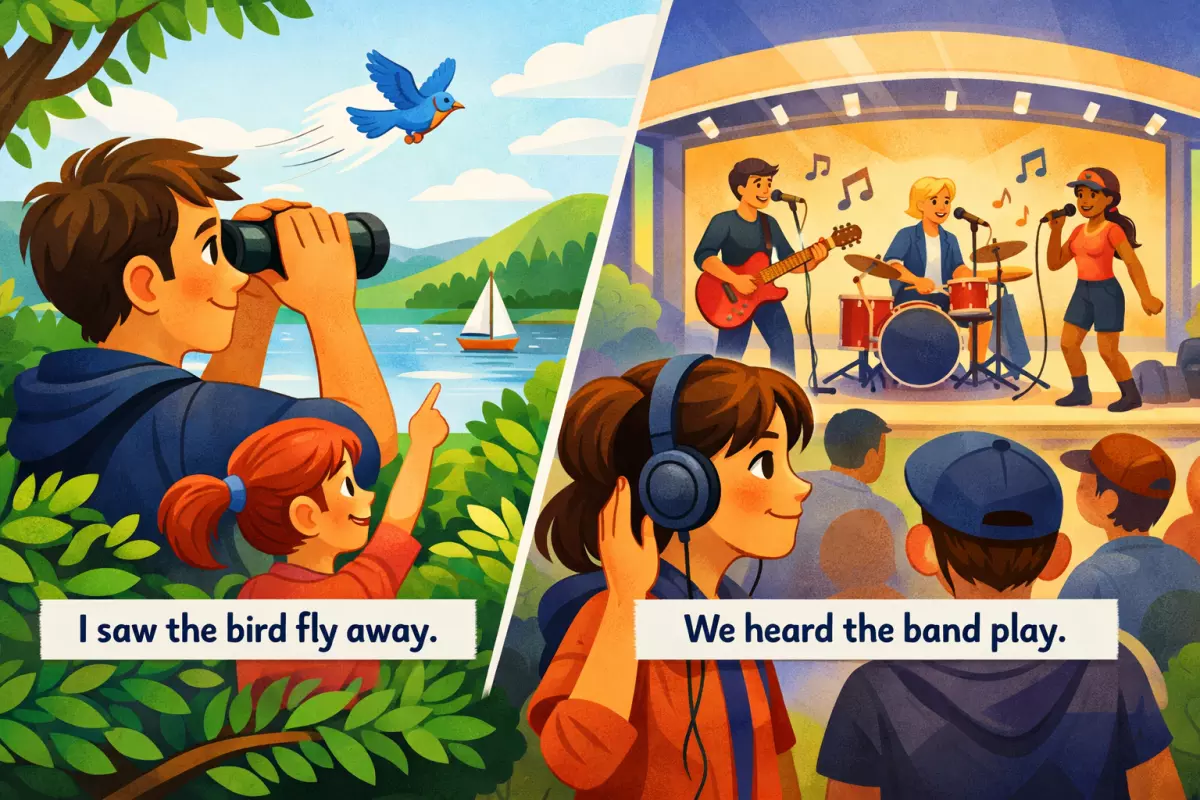
After verbs of sensing (seeing, hearing, feeling, noticing), English often uses an object + base verb (no to) to show that you perceived an action directly. This pattern is most common with see, hear, feel, watch, notice, and observe.
Core pattern
- Pattern: subject + perception verb + object + bare infinitive
- Meaning: you perceived the action as a whole (often from start to finish, or as a complete event)
- Typical verbs: see, hear, feel, watch, notice, observe
Common examples (object + base verb)
- I saw him leave the building.
- We heard the baby cry.
- She felt her phone vibrate.
- They watched the plane land.
- He noticed her hands shake.
- I observed the students work in pairs.
- Did you see the cat jump onto the table?
- She heard someone knock at the door.
- We felt the floor move slightly.
- He watched the kids cross the street.
- I noticed the lights flicker.
- She saw him pick up the wallet.
- We heard them argue in the next room.
- He felt the wind push the door open.
- They observed the engine stall twice.
Bare infinitive vs -ing with perception verbs
Many perception verbs allow either the base verb or the -ing form. The choice changes the focus:
- bare infinitive: the action is viewed as a complete event (or as a single whole)
- -ing form: the action is viewed as in progress (you “caught it happening”)
- ✅ I saw her cross the road. (complete event)
- ✅ I saw her crossing the road. (in progress)
- ✅ We heard him sing the anthem. (the performance as a whole)
- ✅ We heard him singing in the shower. (ongoing sound)
Negatives and passive forms
- Negative with the bare infinitive: put not before the base verb: ✅ I saw him not react.
- More natural alternative: use a negative clause: ✅ I saw that he didn’t react.
- Passive: when the object becomes the subject, English usually uses to: ✅ He was seen to leave the building.
- ❌ He was seen leave the building. (not standard in modern English)
Typical learner errors to avoid
- ❌ I saw him to leave. → ✅ I saw him leave.
- ❌ We heard her to sing. → ✅ We heard her sing.
- ❌ They watched the dog to run away. → ✅ They watched the dog run away.
- ❌ She was heard sing. → ✅ She was heard to sing.
Do as a dummy verb and base form
When do is used as an “empty” helper (not with the meaning of “perform”), it is followed by the base form of the main verb. In these patterns, English does not use to because the auxiliary already carries tense, agreement, and (in negatives/questions) the grammar needed to build the sentence.
Core patterns
- Questions: Do/Does/Did + subject + base verb
✅ Do you know the answer? ❌ Do you to know the answer? - Negatives: Do/Does/Did + not + base verb
✅ She does not agree. ❌ She does not to agree. - Negative questions: Don’t/Doesn’t/Didn’t + subject + base verb
✅ Didn’t they call you? ❌ Didn’t they to call you? - Short answers: Yes/No + do/does/did (the main verb is understood)
✅ “Do you drive?” “Yes, I do.” - Tag questions: statement + do/does/did tag
✅ You live nearby, don’t you?
Choosing do, does, or did
- do for present tense with I/you/we/they: Do we need tickets?
- does for present tense with he/she/it: Does it work?
- did for past tense with all subjects: Did you see it?
Emphatic do (affirmative emphasis)
Do/does/did can also appear in affirmative sentences to add contrast or emphasis. The main verb still stays in the bare infinitive form (base verb), without to.
- ✅ I do understand your point.
- ✅ She does try hard.
- ✅ They did finish on time.
- ✅ We do need to talk about this (note: need is bare; to talk is a separate infinitive after need).
Common base-verb examples after do
- Do you remember his name?
- Does she play tennis?
- Did they arrive early?
- I don’t mind.
- He doesn’t eat meat.
- We didn’t expect that.
- Do you want coffee?
- Does it matter?
- Did you hear the news?
- Don’t touch that.
- Does anyone know the code?
- Why did you leave so soon?
- Where do they live?
- When did it start?
- How does this help?
A frequent confusion: do as a main verb
When do is the main verb meaning “perform” or “carry out,” it still behaves like a normal verb and can take objects (and sometimes an infinitive after another verb). This is different from auxiliary do, but it does not change the rule: you still don’t put to directly after auxiliary do.
- ✅ What did you do yesterday? (main verb: “do”)
- ✅ What did you do to fix it? (main verb + infinitive of purpose)
- ✅ Did you do your homework? (main verb + object)
- ✅ Did you do it? (main verb; no extra verb follows)
Common learner mistakes and corrections
Errors with the bare infinitive usually come from overusing to, mixing patterns after certain verbs, or forgetting that some structures require a base verb form. The fixes become straightforward when you learn which triggers take the base form and which require the full infinitive or a gerund.
Frequent pattern errors (and the corrected form)
- ❌ He can to swim. → ✅ He can swim. (modal + base verb)
- ❌ We must to leave now. → ✅ We must leave now. (must + base verb)
- ❌ Do you can drive? → ✅ Can you drive? (no do-support with modals)
- ❌ She doesn’t can come. → ✅ She can’t come. (negate the modal, not the main verb)
- ❌ He made me to apologize. → ✅ He made me apologize. (make + object + base verb)
- ❌ They let us to enter. → ✅ They let us enter. (let + object + base verb)
- ❌ I heard him to sing. → ✅ I heard him sing. (perception verb + object + base verb)
- ❌ We watched them to play. → ✅ We watched them play. (watch/see/hear + base verb for the whole action)
- ❌ She helped me do my homework. → ✅ She helped me do my homework. / ✅ She helped me to do my homework. (both are possible; don’t “correct” one into an error)
- ❌ He dared to say nothing. → ✅ He didn’t dare say anything. / ✅ He didn’t dare to say anything. (both exist; keep the negative pattern consistent)
- ❌ I had better to go. → ✅ I had better go. (had better + base verb)
- ❌ You would rather to stay. → ✅ You would rather stay. (would rather + base verb)
- ❌ Why you not go? → ✅ Why not go? (fixed suggestion pattern)
- ❌ We saw him to cross the street. → ✅ We saw him cross the street. (base verb after saw + object)
- ❌ She can sings well. → ✅ She can sing well. (after a modal, no -s/-ed/-ing)
Confusing bare infinitive with other verb forms
- Mixing up “make/let” with “allow/permit”: ❌ They allowed us enter. → ✅ They allowed us to enter. (allow/permit require to)
- Using a base verb after “want/need/hope”: ❌ I want go. → ✅ I want to go. (these normally take the full infinitive)
- Using “to” after “do/does/did” questions: ❌ Did you to call her? → ✅ Did you call her? (did already marks tense; main verb stays base)
- Adding -ing after a modal: ❌ He might going. → ✅ He might go. / ✅ He might be going. (use base verb, or add be for a continuous meaning)
- Forgetting the passive exception with “make”: ❌ I was made apologize. → ✅ I was made to apologize. (passive uses to)
- Choosing the wrong perception structure for meaning: ✅ I saw him cross the road. (complete action) vs ✅ I saw him crossing the road. (action in progress)
Quick checks to self-correct
- If there is a modal (can, could, may, might, must, shall, should, will, would), use the base verb right after it.
- If you use do/does/did for questions or negatives, the next verb is the base form (no to, no -s).
- After make/let + object, use the base verb; but in the passive, switch to to (was made to…).
- After see/hear/watch/feel + object, the base verb describes a complete event; the -ing form focuses on the action in progress.
- When unsure, test the sentence by removing to: if the verb still fits after a modal or after do-support, the base form is likely required.
Homework: bare infinitive practice tasks
These tasks focus on choosing the correct infinitive form (with or without to) and spotting the patterns that trigger the zero infinitive. Complete the exercises in order; later items recycle the same structures in new contexts.
Task 1: Choose the correct form (to + verb or bare verb)
- I saw her (cross / to cross) the street.
- They made us (wait / to wait) outside.
- He decided (leave / to leave) early.
- Can you (help / to help) me carry this box?
- We let the kids (stay / to stay) up late.
- She promised (call / to call) after lunch.
- You should (tell / to tell) the truth.
- I heard him (sing / to sing) in the shower.
- My parents encouraged me (apply / to apply) for the course.
- Would you rather (walk / to walk) or take the bus?
- She had better (go / to go) now.
- They want (join / to join) the meeting.
- Did you notice the lights (flicker / to flicker)?
- He helped me (find / to find) my keys.
- The teacher made the class (rewrite / to rewrite) the essay.
- I’d like (check / to check) one detail.
Show answers
- cross
- wait
- to leave
- help
- stay
- to call
- tell
- sing
- to apply
- walk
- go
- to join
- flicker
- find (both are possible, but bare is common)
- rewrite
- to check
Task 2: Correct the sentence (remove or add to)
- ❌ She made me to apologize.
- ❌ I can to swim very well.
- ❌ We decided go by train.
- ❌ They let us to use their phone.
- ❌ I heard her to say my name.
- ❌ You should to check the date.
- ❌ He wants join the team.
- ❌ I’d rather to stay home tonight.
- ❌ Did you see him to leave?
- ❌ She promised call me later.
Show answers
- ✅ She made me apologize.
- ✅ I can swim very well.
- ✅ We decided to go by train.
- ✅ They let us use their phone.
- ✅ I heard her say my name.
- ✅ You should check the date.
- ✅ He wants to join the team.
- ✅ I’d rather stay home tonight.
- ✅ Did you see him leave?
- ✅ She promised to call me later.
Task 3: Rewrite using a bare infinitive pattern
Rewrite each sentence using the cue in brackets. Keep the meaning as close as possible.
- It would be better if you left now. (had better)
- I prefer tea to coffee. (would rather)
- They forced him to sign the form. (make)
- She allowed me to borrow her notes. (let)
- I noticed that he opened the window. (notice + object)
- It’s not necessary for you to bring anything. (needn’t)
- He watched as the plane landed. (watch + object)
- My boss required us to work late. (make)
Show answers
- You had better leave now.
- I would rather have tea than coffee.
- They made him sign the form.
- She let me borrow her notes.
- I noticed him open the window.
- You needn’t bring anything.
- He watched the plane land.
- My boss made us work late.
Task 4: Pattern sorting (group the triggers)
Put each item into the correct group: (A) modal/semimodal, (B) perception verb + object, (C) make/let/help, (D) verb that takes to.
- must
- decide
- see
- let
- want
- should
- hear
- make
- promise
- watch
- help
- plan
- can
- encourage
- had better
- notice
Show answers
- A: must
- D: decide
- B: see
- C: let
- D: want
- A: should
- B: hear
- C: make
- D: promise
- B: watch
- C: help
- D: plan
- A: can
- D: encourage
- A: had better
- B: notice
Task 5: Mixed production (write your own)
Write one original sentence for each prompt. Use the structure given and keep the verb after it in the correct form.
- Modal + verb: “might …”
- Would rather + verb: “I’d rather …”
- Had better + verb: “You’d better …”
- Make + object + verb: “They made him …”
- Let + object + verb: “She let us …”
- See + object + verb: “I saw them …”
- Hear + object + verb: “We heard her …”
- Verb + to-infinitive: “He decided to …”
- Verb + to-infinitive: “They want to …”
- Help + object + (to) verb: “Can you help me …?”