Verb Choice and Precision in English Writing

 Covers why precise verb choice matters, how to swap vague verbs for specific ones, match verbs to tone and register, cut wordy verb phrases, and use strong verbs in descriptions. Also flags common learner mistakes, gives editing strategies, and ends with homework rewriting tasks.
Choosing the right verbs and using them precisely can instantly sharpen your English writing. In everyday situations, swapping walk for hurry or say for admit shows not only what happened, but the tone, intent, and importance behind it. This article helps you notice vague actions, choose stronger, clearer alternatives, and build sentences that sound confident and natural without adding unnecessary complexity.
Why precise verb choice matters
Choosing the right verb shapes how readers understand actions, causes, and responsibility. A vague or mismatched verb can blur meaning, weaken evidence, or accidentally change the level of certainty. A well-chosen verb, by contrast, makes sentences more specific without adding extra words.
Precision controls meaning, not just style
Verbs carry the core of a clause: what happened, who did it, and how strongly you claim it happened. Small shifts in wording can change the implied timeline, intensity, or intent. Compare how different verbs frame the same situation:
- Degree of certainty: “suggests” is weaker than “shows,” which is weaker than “proves.”
- Strength of action: “touched” is lighter than “pushed,” which is lighter than “shoved.”
- Speed and duration: “glanced” differs from “watched”; “paused” differs from “stopped.”
- Intent: “forgot” differs from “ignored”; “misread” differs from “distorted.”
- Scope: “changed” is broad; “reduced,” “expanded,” and “replaced” specify the direction.
Better verbs reduce clutter
Weak verbs often force writers to compensate with extra adjectives, adverbs, or explanatory phrases. A more exact action word can carry that information directly, making the sentence shorter and clearer.
- ✅ “The policy limits refunds to 30 days.” → ❌ “The policy is very strict about refunds.”
- ✅ “The app crashed during checkout.” → ❌ “The app had a problem during checkout.”
- ✅ “The committee rejected the proposal.” → ❌ “The committee did not accept the proposal.”
- ✅ “Sales fell by 12%.” → ❌ “Sales went down by 12%.”
Verb choice signals responsibility and agency
Writers can highlight or hide who performed an action. This matters in reports, instructions, and any writing where accountability is important. Passive voice is not automatically wrong, but it should be a deliberate choice.
- Clear agent: “The vendor missed the deadline.”
- Agent hidden: “The deadline was missed.”
- Accident vs. decision: “The file was deleted” (unclear) vs. “Jordan deleted the file” (clear) vs. “The system purged the file” (mechanism implied).
- Responsibility softened: “Mistakes occurred” often avoids naming who acted; “The team entered the wrong value” states the action.
Common patterns that improve specificity
When revising, look for broad verbs (especially “be,” “do,” “get,” “have,” “make,” “put,” “go,” “take”) and ask what action is actually happening. Often the sentence contains a hidden verb in a noun phrase; converting it into a strong verb clarifies the structure.
- Replace “be” + adjective with a concrete action: “is helpful” → “helps,” “is visible” → “appears,” “is available” → “can be accessed.”
- Turn nominalizations into verbs: “made a decision” → “decided”; “gave an explanation” → “explained”; “performed an analysis” → “analyzed.”
- Choose verbs that match evidence: “indicates,” “implies,” “supports,” “demonstrates,” “confirms” each fits a different level of proof.
- Use directional verbs for change: “increased,” “decreased,” “stabilized,” “shifted,” “converted,” “merged,” “split.”
- Prefer specific reporting verbs: “argues,” “claims,” “concedes,” “acknowledges,” “warns,” “recommends,” “requests,” “instructs.”
- Match tone to context: “stated” vs. “insisted” vs. “admitted” changes the implied stance of the speaker.
- Use process verbs for systems and workflows: “routes,” “queues,” “validates,” “encrypts,” “indexes,” “syncs,” “archives.”
- Distinguish observation from interpretation: “observed” vs. “concluded”; “measured” vs. “estimated.”
In practice, the goal is not to sound dramatic but to match the verb to the real action and the strength of your claim. When verbs are accurate, readers spend less time decoding what you mean and more time following your reasoning.
Replacing vague verbs with specific ones
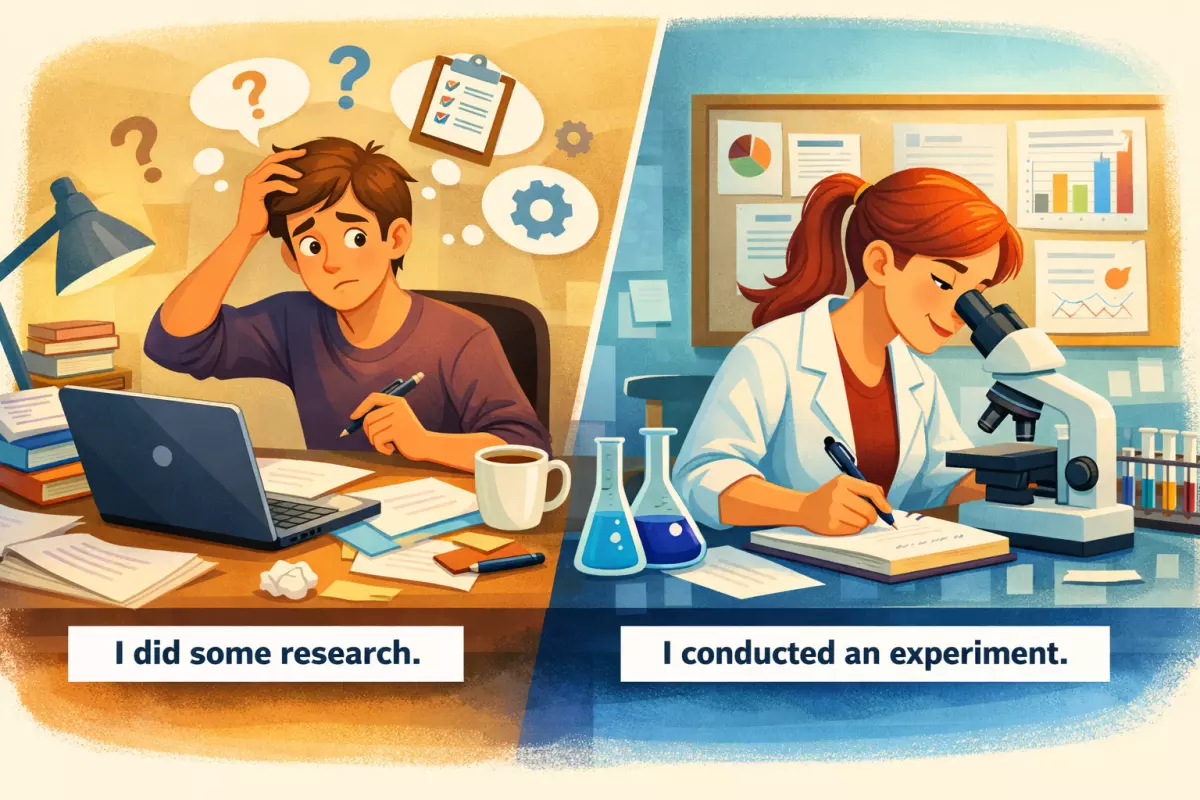
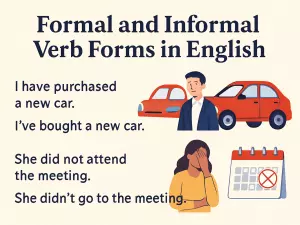
Specific verbs carry the action on their own, so the sentence needs fewer extra adjectives and fewer “helper” phrases. When a verb like do, make, get, go, or put feels like it could fit almost any context, it often signals that a more precise choice would clarify who did what, how, and with what result.
Common vague-verb patterns and what to do instead
- “Do + noun” (do research, do a review) → choose a verb that names the action: research, review, evaluate, audit, investigate.
- “Make + noun” (make a decision, make improvements) → decide, improve, refine, revise, strengthen, streamline.
- “Give + noun” (give an explanation, give feedback) → explain, clarify, justify, critique, comment, advise.
- “Get + adjective” (get better, get worse) → improve, recover, deteriorate, decline, intensify.
- “Have + noun” (have a discussion, have an impact) → discuss, debate, influence, affect, shape.
- “Put + preposition” (put into place, put on hold) → implement, establish, postpone, suspend, pause.
- “Go + adjective” (go missing, go bad) → disappear, spoil, fail, malfunction.
- “Take + noun” (take a look, take a step) → examine, inspect, review, proceed, advance.
- “Set + noun” (set a plan, set rules) → draft, design, outline, define, enforce.
- “Work on” (work on the report) → draft, edit, compile, finalize, proofread.
- “Deal with” (deal with complaints) → address, resolve, investigate, respond to, mediate.
- “Help” (help the process) → support, enable, facilitate, accelerate, simplify.
High-precision replacements you can reuse
- Change → adjust, modify, revise, transform, convert, reconfigure.
- Show → demonstrate, illustrate, reveal, indicate, display, highlight.
- Say → state, argue, claim, note, emphasize, concede.
- Think → believe, suspect, infer, conclude, anticipate, assume.
- Look at → examine, analyze, review, assess, monitor, scan.
- Use → apply, employ, leverage, operate, consume, adopt.
- Start → begin, initiate, launch, introduce, trigger, activate.
- End → finish, conclude, terminate, cease, wrap up, finalize.
- Fix → repair, correct, resolve, troubleshoot, restore, patch.
- Move → shift, relocate, transfer, advance, slide, rotate.
- Put → place, position, insert, install, store, deposit.
- Get → obtain, receive, acquire, retrieve, secure, achieve.
- Make → build, create, produce, generate, compose, assemble.
- Tell → inform, notify, instruct, warn, remind, brief.
A simple test for stronger verb choice
- Name the action, not the container. If the verb is mainly holding a noun (“make a recommendation”), try the verb form (“recommend”).
- Prefer verbs that imply method. “Investigate” suggests a process; “look into” is looser and can sound evasive.
- Prefer verbs that imply outcome. “Reduce” signals a measurable change; “deal with” does not.
- Match the verb to the subject’s role. A policy can “require” or “permit,” but it usually cannot “try” or “want.”
- Check for hidden passives. “There was an increase” often becomes clearer as “Costs increased” or “We increased capacity.”
- Avoid over-specificity when you lack evidence. If you cannot support “proved,” use “suggested” or “indicated.”
Matching verbs to tone and register
Verb choice signals how formal, technical, or personal a piece of writing is. A verb that fits the context makes the sentence feel natural; a mismatch can sound blunt, chatty, or overly academic even when the grammar is correct. The goal is to pick verbs whose level of formality and attitude match the audience, purpose, and genre.
Common registers and the verbs that typically fit
- Academic and analytical writing: prefer verbs that describe reasoning and evidence (for example, argues, indicates, demonstrates, suggests, supports).
- Professional and business writing: use clear action verbs that show decisions and outcomes (for example, approve, schedule, confirm, deliver, resolve).
- Technical documentation: choose precise process verbs and avoid vague ones (for example, install, configure, initialize, validate, terminate).
- Journalism and reporting: use attribution verbs carefully to avoid bias (for example, said, stated, reported, confirmed, denied).
- Customer support and service: select verbs that sound helpful and non-accusatory (for example, assist, guide, recommend, replace, refund).
- Everyday conversation: contractions and simpler verbs are normal (for example, get, need, help, fix, talk), but they may feel too casual in formal contexts.
Verb families that shift tone
Many meanings have “families” of near-synonyms that differ mainly in register. Swapping within a family is a quick way to adjust tone without changing the message.
- Start → begin → commence (increasing formality; commence can sound legalistic).
- Help → assist → facilitate (from plain to more institutional/technical).
- Show → demonstrate → substantiate (from general to evidence-focused).
- Use → employ → utilize (avoid utilize when use is accurate; it can sound inflated).
- Think → believe → contend (from personal to argumentative stance).
- Talk about → discuss → address (more formal and goal-directed).
- Look at → examine → evaluate (more method and judgment).
- Find out → determine → ascertain (more formal; ascertain can feel old-fashioned).
- Deal with → handle → mitigate (from general to risk-focused).
- End → conclude → terminate (from neutral to legal/technical).
Attribution verbs: neutral vs. loaded
When describing what someone communicated, the verb can quietly add judgment. In neutral reporting, pick verbs that match what is known and avoid implying motives or credibility unless the evidence supports it.
- ✅ Neutral: said, stated, noted, explained, added.
- ❌ Potentially loaded: claimed (can imply doubt), insisted (can imply stubbornness), admitted (implies fault), boasted (implies arrogance), confessed (implies wrongdoing).
- Use stronger verbs when the context warrants them: testified (legal setting), announced (official release), retracted (formal withdrawal), clarified (fixing ambiguity).
Politeness and directness in requests
In emails and workplace messages, verbs often carry the “pressure level” of a request. Adjusting the verb can make a sentence collaborative rather than demanding, without becoming vague.
- More direct: Send the file by 3 p.m.; Fix the issue today; Explain the delay.
- More tactful: Please send the file by 3 p.m.; Could you look into the issue today?; Can you clarify the delay?
- More formal/structured: Provide the file by 3 p.m.; Investigate the issue; Clarify the cause of the delay.
A quick check for register fit
- Ask what the verb implies about attitude: does it sound skeptical (claimed) or neutral (said)?
- Prefer specific action verbs over vague ones when precision matters: measured, calculated, verified instead of did or handled.
- Avoid “thesaurus upgrades” that add formality without meaning: use is often better than utilize.
- Match the genre’s expectations: technical steps often need imperative verbs (click, select, enter), while analysis prefers interpretive verbs (implies, suggests).
- Keep consistency within a document: mixing chatty verbs (grab, stuff) with formal ones (facilitate, commence) can feel uneven unless done for deliberate voice.
Avoiding wordy verb phrases
Long verb constructions often hide the main action inside extra nouns, prepositions, and helper verbs. Tightening them usually means choosing a single, specific verb and removing “filler” structures that add length without adding meaning.
A practical test is to underline the real action in the sentence. If the action appears as a noun (often ending in -tion, -ment, or -ance) and the verb is something general like “make,” “do,” “give,” “have,” or “take,” you can often replace the whole phrase with a stronger verb.
Common patterns that create unnecessary length
- General verb + abstract noun: “make a recommendation,” “give an explanation,” “take a look.”
- “There is/are” + nominalization: “There is a need for…” often becomes “We need…” or “The team needs…”.
- “Be” + prepositional pile-up: “is in agreement with,” “is in violation of,” “is in possession of.”
- “Have” + noun: “have an impact,” “have a preference,” “have an understanding.”
- “Do” + noun: “do an analysis,” “do a review,” “do a search.”
- “Provide” + noun: “provide assistance,” “provide guidance,” “provide an explanation.”
- “Carry out/perform/conduct” + noun: “conduct an investigation,” “perform an assessment.”
- “Make use of” / “utilize” as padding: “make use of the tool” often becomes “use the tool.”
- “In order to” when simple “to” works: “in order to reduce” → “to reduce.”
- Redundant verb pairs: “plan and organize,” “each and every,” “final outcome” (trim to the essential idea).
Concise rewrites you can apply immediately
| Wordy verb phrase | More direct verb |
|---|---|
| make a decision | decide |
| give an explanation | explain |
| conduct an analysis | analyze |
| perform an assessment | assess |
| provide assistance | assist |
| make an improvement | improve |
| have an impact on | affect |
| take into consideration | consider |
| is in agreement with | agrees with |
| is in violation of | violates |
| make a recommendation | recommend |
| carry out an investigation | investigate |
| reach a conclusion | conclude |
| take action | act |
When not to shorten
- When the longer phrase is a fixed term: legal or technical writing may require established wording (for example, a named procedure or policy label).
- When the noun adds needed detail: “make a payment” may be clearer than “pay” if the object or method is the focus (payment schedule, payment type).
- When tone matters: “provide assistance” can sound more formal than “help,” which may suit some contexts.
Conciseness is not about using shorter words at all costs; it is about keeping the verb phrase focused so the reader meets the action quickly and understands who is doing what.
Using strong verbs in descriptions

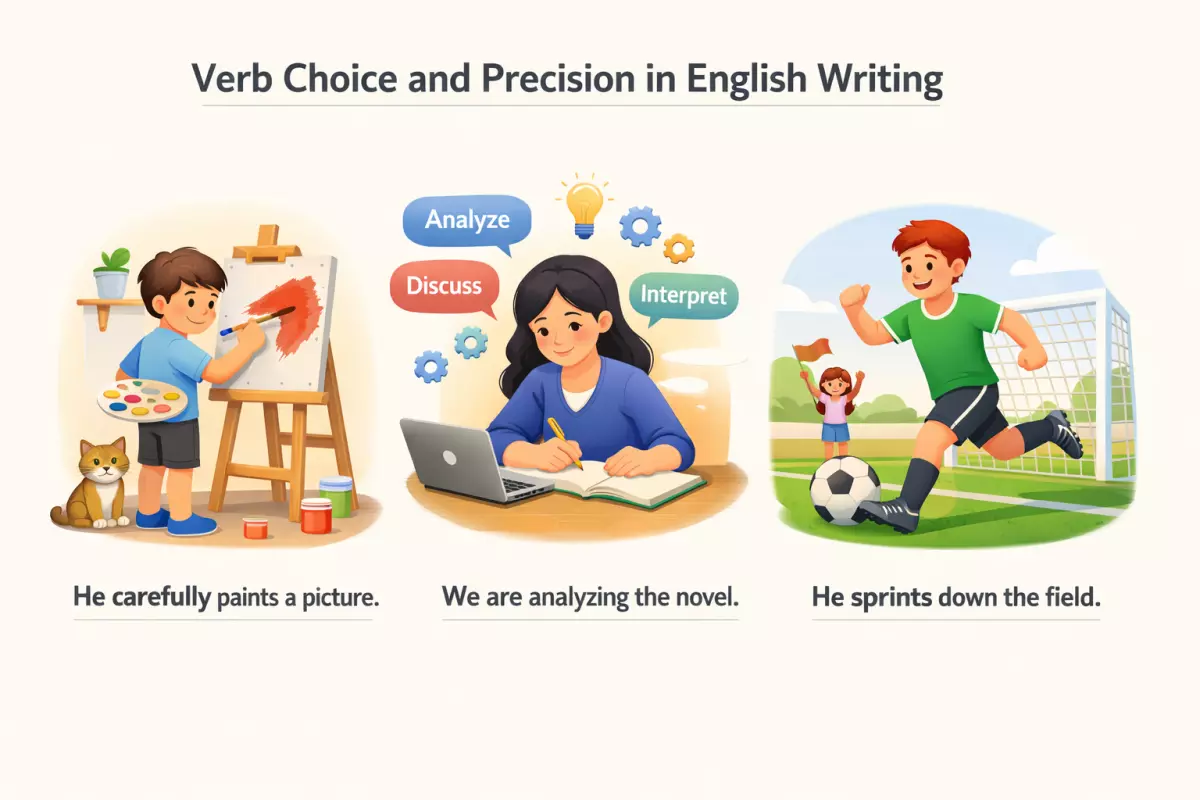
Vivid description often depends less on extra adjectives and more on choosing verbs that carry specific action, speed, and attitude. A precise verb can show what is happening and how it happens, reducing the need for intensifiers and making sentences easier to picture.
Common patterns for choosing more specific verbs
- Replace “be” + adjective with an action verb: “The room was noisy” → “The room hummed with chatter.”
- Swap a weak verb + adverb for one exact verb: “She walked quickly” → “She hurried / rushed / darted.”
- Prefer concrete physical verbs for movement: shuffle, stagger, glide, lurch, stride.
- Use sensory verbs to “show” experience: reek, glimmer, throb, crackle, sting.
- Choose verbs that imply emotion without naming it: “He was angry” → “He snapped,” “He seethed,” “He bristled.”
- Pick verbs that encode intensity: tap → pound; look → stare; say → insist.
- Let the verb carry the metaphor: “The wind was strong” → “The wind lashed the windows.”
- Use precise verbs for sound: murmur, whisper, yell, boom, rattle, clatter.
- Use precise verbs for light: glow, flicker, flare, shimmer, gleam.
- Use precise verbs for texture/pressure: scrape, grip, crush, press, brush.
- Prefer active constructions when the actor matters: “The vase was broken” → “He knocked the vase off the shelf.”
- Keep “get” verbs from doing all the work: “She got better” → “She recovered.” “He got tired” → “He flagged.”
Quick verb upgrades for clearer imagery
- look → glance, peer, squint, scan, gape, stare
- walk → stroll, march, trudge, limp, pace, tiptoe
- run → sprint, bolt, jog, race, dash
- say → whisper, mutter, reply, argue, confess, announce
- eat → nibble, chew, gulp, devour, savor
- drink → sip, gulp, swig
- laugh → chuckle, snicker, cackle, howl
- cry → sob, weep, wail, sniffle
- hold → grip, clutch, cradle, grasp
- hit → slap, strike, punch, slam, smack
- open → unlatch, pry, swing, crack (open)
- close → shut, seal, slam, snap (shut)
- move → shift, slide, creep, sway, jolt
- make → craft, assemble, forge, compose, build
- help → assist, support, guide, steady, rescue
Accuracy checks: keep strong verbs from becoming misleading
- Match the verb to the subject’s ability: “The report argued…” is fine; “The report complained…” may feel off unless you want personification.
- Watch for unintended exaggeration: “He staggered to the kitchen” implies imbalance; if he is merely tired, “He dragged himself” or “He shuffled” may fit better.
- Use adverbs only when they add new information: ❌ “She whispered quietly” (already implied) ✅ “She whispered urgently.”
- Prefer verbs that clarify cause: “The door opened” (neutral) vs. “The door swung open” (movement) vs. “The door creaked open” (sound + movement).
- Keep register consistent: a formal paragraph may prefer “observed” over “gawked,” unless the tone is intentionally blunt.
Common learner mistakes with verb choice
Many writing problems come from choosing a verb that is too general, too informal for the context, or mismatched with the grammar pattern it requires. The result is often a sentence that is technically understandable but less precise, less natural, or unintentionally confusing.
Frequent patterns to watch for
- Overusing vague “all-purpose” verbs (do, make, get, have, put) when a more specific action is needed. Example: ❌ “We did a decision” → ✅ “We made a decision” or “We decided.”
- Using the wrong verb–noun collocation (common pairings that native usage strongly prefers). ❌ “take a mistake” → ✅ “make a mistake.”
- Choosing a verb with the wrong level of formality. ❌ “The report talks about the findings” (informal) → ✅ “The report discusses the findings.”
- Mixing up near-synonyms with different meanings. “Borrow” vs “lend,” “raise” vs “rise,” “refuse” vs “deny,” “discover” vs “invent.”
- Using “say/tell/speak/talk” interchangeably and missing the required structure. ❌ “He said me the answer” → ✅ “He told me the answer.”
- Forgetting that some verbs require an object (transitive) while others typically do not (intransitive). ❌ “He explained me the rule” → ✅ “He explained the rule to me.”
- Using a verb pattern that the verb does not allow (verb + to-infinitive vs verb + -ing vs verb + object + to-infinitive). ❌ “I suggest to go” → ✅ “I suggest going” or “I suggest that we go.”
- Choosing a verb that clashes with the intended meaning (especially with academic verbs). “Claim” can imply doubt; “prove” is stronger than “show”; “argue” implies a developed position, not just a mention.
- Overusing passive verbs that hide the agent when clarity needs an actor. ❌ “Mistakes were made” → ✅ “The team made mistakes” (when responsibility matters).
- Relying on “be” + adjective where an action verb is clearer. ❌ “The solution is good for reducing costs” → ✅ “The solution reduces costs effectively.”
- Using “give” constructions that dilute meaning. ❌ “give an explanation” → ✅ “explain”; ❌ “give a suggestion” → ✅ “suggest.”
- Confusing “make” and “do” in fixed expressions. ✅ “do homework / do research / do business” vs ✅ “make progress / make a plan / make an effort.”
- Misusing “happen” for planned events. ❌ “The meeting happened at 3” → ✅ “The meeting took place at 3” or “The meeting was held at 3.”
- Choosing “cause” when the relationship is weaker. If the link is indirect, “contribute to,” “lead to,” or “is associated with” may be more accurate than “cause.”
- Using “allow” when “enable” or “let” is the better fit. “Let” is informal and personal; “enable” often suggests making something possible through support or resources.
- Confusing “affect” and “effect” (verb vs noun in most uses). ✅ “X affects Y” vs ✅ “X has an effect on Y.”
High-value fixes: replace vague verbs with precise actions
- ❌ “get better” → ✅ “improve,” “recover,” “strengthen” (choose the exact change)
- ❌ “get” (receive) → ✅ “receive,” “obtain,” “collect”
- ❌ “get” (become) → ✅ “become,” “grow,” “turn” (as in “turn red”)
- ❌ “make” (create) → ✅ “create,” “produce,” “develop,” “design”
- ❌ “make” (force) → ✅ “require,” “compel,” “pressure”
- ❌ “do” (perform) → ✅ “perform,” “conduct,” “carry out,” “execute”
- ❌ “have” (possess) → ✅ “possess,” “own”
- ❌ “have” (experience) → ✅ “experience,” “undergo,” “encounter”
- ❌ “put” (place) → ✅ “place,” “position,” “insert,” “store”
- ❌ “say” → ✅ “state,” “mention,” “argue,” “claim,” “announce” (match intent)
- ❌ “show” → ✅ “demonstrate,” “illustrate,” “indicate,” “reveal”
- ❌ “think” → ✅ “believe,” “assume,” “consider,” “suspect”
Grammar mismatches that often signal a verb problem
- Verb + preposition errors: ❌ “discuss about” → ✅ “discuss”; ❌ “marry with” → ✅ “marry” (or “get married to”).
- Verb + object placement: ❌ “describe me it” → ✅ “describe it to me.”
- Missing object after a transitive verb: ❌ “They emphasized” (emphasized what?) → ✅ “They emphasized the risks.”
- Using a reporting verb without the right structure: ❌ “He advised me do it” → ✅ “He advised me to do it.”
- Confusing “stop to do” vs “stop doing”: “stop doing” = quit the activity; “stop to do” = pause another activity in order to do something.
When revising, check whether the verb expresses the exact action, fits the register, and matches the pattern it controls (object, preposition, or clause). Small changes in verb selection often produce the biggest gains in clarity and precision.
Editing strategies for clearer sentences
Clarity improves fastest when you edit for verb strength, direct structure, and concrete meaning. A practical approach is to scan each sentence for the main action, then revise so the verb carries that action without extra scaffolding.
1) Find the real action and put it in the verb
- Underline the sentence’s main action; make sure it appears as a verb, not buried in a noun.
- Replace noun-heavy phrases with a single verb: ❌ “made a recommendation” → ✅ “recommended.”
- Watch for abstract “container” nouns (process, approach, situation, issue) that hide what is happening; rewrite with a specific action.
- Convert “the fact that…” and similar padding into a direct clause: “We found that…” or “The data show…”
- When a sentence has two actions, consider two verbs (or two sentences) rather than one overloaded noun phrase.
2) Reduce weak verb structures that dilute meaning
- Limit “to be” + abstract complement when a stronger verb exists: ❌ “is a cause of” → ✅ “causes.”
- Trim “there is/there are” openers when they delay the subject: ❌ “There are several factors that affect…” → ✅ “Several factors affect…”
- Replace “do/make/get/give” when they carry little meaning: “do an analysis” → “analyze”; “give a description” → “describe.”
- Check for “have/has” as a placeholder: “has an impact on” → “affects,” “shapes,” “reduces,” “improves” (choose the precise effect).
- Prefer one clear verb over a verb + vague preposition chain: “look into” → “investigate”; “go over” → “review.”
3) Choose verbs that match the intended relationship
- Use cause-and-effect verbs only when you can support causation: “correlates with,” “is associated with,” “predicts,” “contributes to,” “leads to.”
- Match strength to evidence: “suggests” vs. “shows” vs. “demonstrates.”
- Prefer concrete process verbs for explanations: “mix,” “separate,” “expand,” “compress,” “rotate,” “filter,” “compile.”
- Use accurate reporting verbs for sources: “argues,” “notes,” “reports,” “concedes,” “questions,” “proposes.”
- Avoid “prove” unless the context truly supports proof (often it does not outside math/logic).
4) Tighten sentences by cutting predictable clutter
- Remove empty lead-ins: “It is important to note that…” → delete or state the point directly.
- Cut redundant pairs: “each and every,” “basic fundamentals,” “future plans.”
- Replace long prepositional stacks with a clearer structure: “the report on the results of the survey” → “the survey results report.”
- Delete “in order to” when “to” works.
- Swap wordy adverbs for a more precise verb: “walked quickly” → “hurried.”
5) Check subject–verb alignment for readability
- Keep the subject close to its verb; avoid inserting long clauses between them.
- Make the grammatical subject the “doer” when possible: ❌ “The policy was implemented by the team” → ✅ “The team implemented the policy.”
- Use passive voice intentionally (to emphasize the receiver, to omit an unknown actor, or to maintain topic continuity), not by default.
- Ensure the first verb in the sentence signals the main move (claim, compare, explain), not a warm-up phrase.
6) Run a quick “verb audit” pass
- Circle every verb; if many are forms of “be,” look for places to add more specific actions.
- Flag repeated verbs (especially “is/are,” “have,” “get,” “do”) and vary only where meaning improves, not for variety alone.
- Test precision by asking: “What exactly happens?” “Who does it?” “To what?” “Under what conditions?” Then revise the verb choice to answer those questions.
- Read aloud to catch where the sentence stalls before the main verb; revise so the action arrives earlier.
Homework: verb precision rewriting tasks
These rewriting exercises train you to replace broad, low-information verbs (such as do, make, get, put, go, have, be) with choices that name the action more exactly. Aim for verbs that show method, direction, change, and impact, while keeping the sentence’s tense, meaning, and level of formality consistent.
How to revise (a repeatable pattern)
- Identify the “placeholder” verb and ask: what action is really happening (measure, reduce, assemble, approve, argue, discover)?
- Keep the same tense and subject-verb agreement; change only what you need.
- Prefer one strong verb over a weak verb + abstract noun (for example, “made an improvement” → “improved”).
- Check the object: a more precise verb often needs a clearer object (data, costs, timeline, symptoms, access).
- Match register: choose neutral verbs for academic/professional writing and more vivid verbs for narrative, unless the context requires restraint.
Task set A: Replace vague verbs with specific ones
Rewrite each sentence by replacing the underlined verb with a more precise option. Keep the overall meaning and tense.
- We did a review of the customer complaints.
- The team made a decision about the launch date.
- She got better results after changing the method.
- They put pressure on the supplier to lower prices.
- The new policy had an effect on attendance.
- He went through the documents before the meeting.
- The manager gave feedback on the proposal.
- The update made the app faster.
- We did changes to the schedule.
- The speaker said that the plan would work.
- The researchers found out that the sample was contaminated.
- The company got rid of unnecessary steps.
Show answers
- We reviewed the customer complaints.
- The team decided on the launch date.
- She achieved better results after changing the method.
- They pressed the supplier to lower prices.
- The new policy affected attendance.
- He examined the documents before the meeting.
- The manager critiqued the proposal. (Or: commented on the proposal.)
- The update accelerated the app.
- We revised the schedule.
- The speaker argued that the plan would work.
- The researchers discovered that the sample was contaminated.
- The company eliminated unnecessary steps.
Task set B: Convert “verb + noun” into a single precise verb
Rewrite each sentence to reduce wordiness. Replace the underlined phrase with one accurate verb (or a tighter verb phrase) without changing meaning.
- We made an assessment of the risks.
- The committee made a recommendation to delay the vote.
- The team did an investigation into the outage.
- She gave a description of the process.
- They had a discussion about the budget.
- The lab performed an analysis of the water samples.
- He made an apology for the mistake.
- We took a look at the draft.
Show answers
- We assessed the risks.
- The committee recommended delaying the vote.
- The team investigated the outage.
- She described the process.
- They discussed the budget.
- The lab analyzed the water samples.
- He apologized for the mistake.
- We reviewed the draft.
Task set C: Choose verbs that show the right kind of change
Rewrite each sentence by swapping the underlined verb for one that better matches the direction and intensity of change. Keep the sentence structure unless a small adjustment is necessary.
- After the patch, memory usage went down.
- During the storm, the river level went up.
- Over the year, demand went up and down.
- After the training, error rates went down a lot.
- In the final week, participation went up a little.
- When the new rule started, complaints went up quickly.
Show answers
- After the patch, memory usage decreased.
- During the storm, the river level rose.
- Over the year, demand fluctuated.
- After the training, error rates plummeted. (Or: dropped sharply.)
- In the final week, participation inched up. (Or: increased slightly.)
- When the new rule started, complaints spiked.
Task set D: Replace “be” and “have” with action verbs where appropriate
Not every form of “be” or “have” is a problem, but many sentences become clearer when you name the action. Rewrite each sentence to reduce reliance on the underlined verb while keeping the meaning.
- The report is a summary of the findings.
- The new interface is an improvement over the old one.
- The proposal has several weaknesses.
- The policy is in conflict with the guidelines.
- The device has a tendency to overheat.
- Her explanation was unclear.
Show answers
- The report summarizes the findings.
- The new interface improves on the old one.
- The proposal contains several weaknesses.
- The policy conflicts with the guidelines.
- The device tends to overheat.
- Her explanation confused the audience. (Or: lacked clarity.)
Quick verb bank for common rewriting moves
- do → conduct, perform, complete, draft, revise, implement
- make → create, build, produce, formulate, compile, generate
- get → obtain, receive, achieve, secure, regain, retrieve
- put → place, insert, position, allocate, impose, deposit
- go → travel, proceed, move, shift, transition, deteriorate
- have → possess, contain, experience, require, exhibit, face
- give → provide, deliver, grant, assign, offer, issue
- say → state, claim, argue, explain, note, emphasize
- show → demonstrate, indicate, reveal, display, illustrate
- help → assist, enable, support, facilitate, strengthen
- fix → repair, resolve, correct, stabilize, troubleshoot
- change → adjust, modify, revise, transform, convert