Metaphorical Verb Extensions (grasp an idea, tackle a problem)

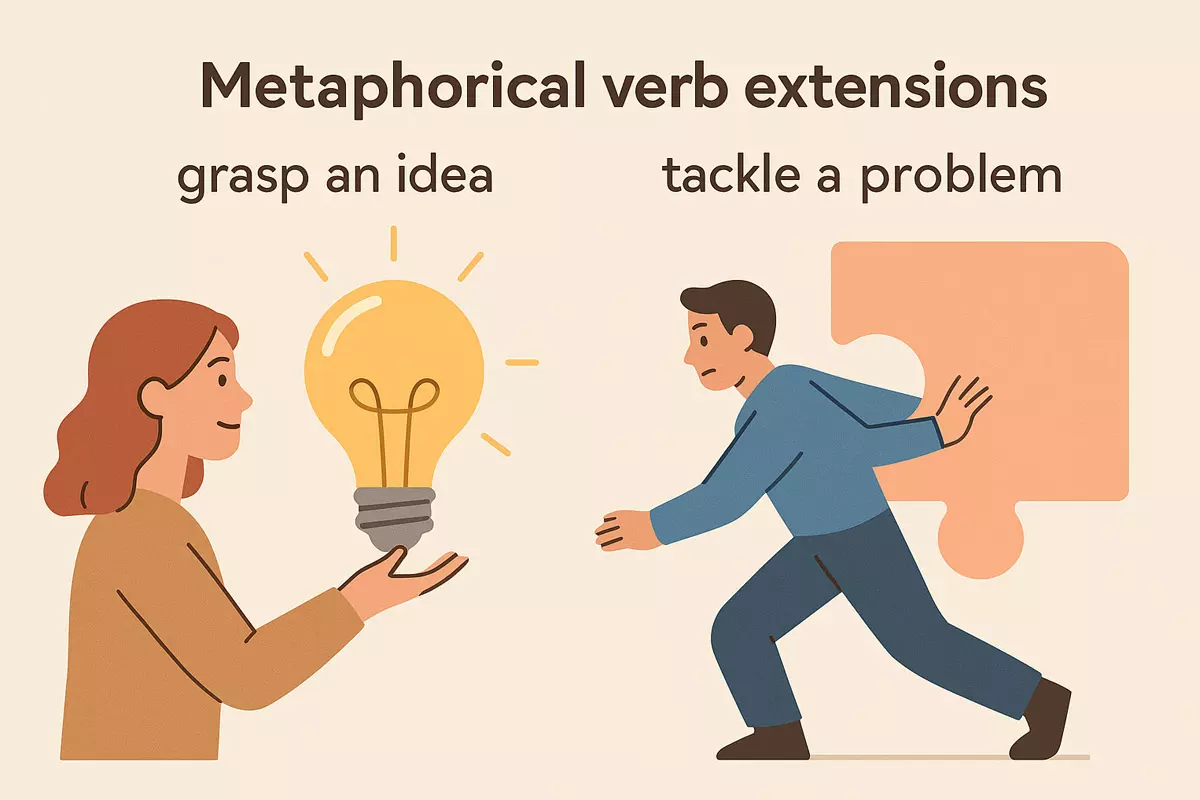 The article defines metaphorical verb extensions, explains why English uses them, highlights patterns with verbs like grasp and tackle, discusses how metaphors affect verb strength, gives academic examples, advises on avoiding confusion, and offers practice identifying…
Language enables us to carry actions from the physical world into the realm of thought, allowing us to grasp concepts or tackle challenges in our minds. By examining the ways we use movement-based verbs to describe abstract ideas, we can better appreciate the inventive nature of everyday communication. This practice shows how people draw on familiar experiences to make sense of complex or intangible topics, highlighting the flexibility and expressiveness that language brings to our daily lives.
What Metaphorical Verb Extensions Are
Metaphorical verb extensions occur when a verb that originally describes a physical or concrete action is used to express an abstract or non-literal meaning. In everyday language, this means taking a verb you might use for a real-world activity—like "grasp" for holding something—and applying it to something intangible, such as "grasping an idea." These extensions help speakers communicate complex, nuanced thoughts by borrowing familiar actions and mapping them onto new, less tangible domains.
How Metaphorical Verb Extensions Work
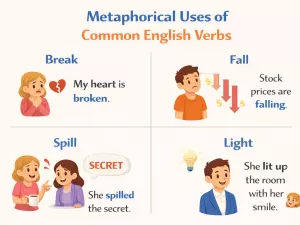
This linguistic phenomenon relies on our ability to recognize patterns and make connections between different experiences. For example, physical actions like "tackling," "holding," or "breaking" can be mapped onto mental or social processes: you can "tackle a problem," "hold a belief," or "break a habit." These mappings are not random; they often reflect cultural ways of understanding abstract concepts through more concrete experiences.
Common Patterns and Examples
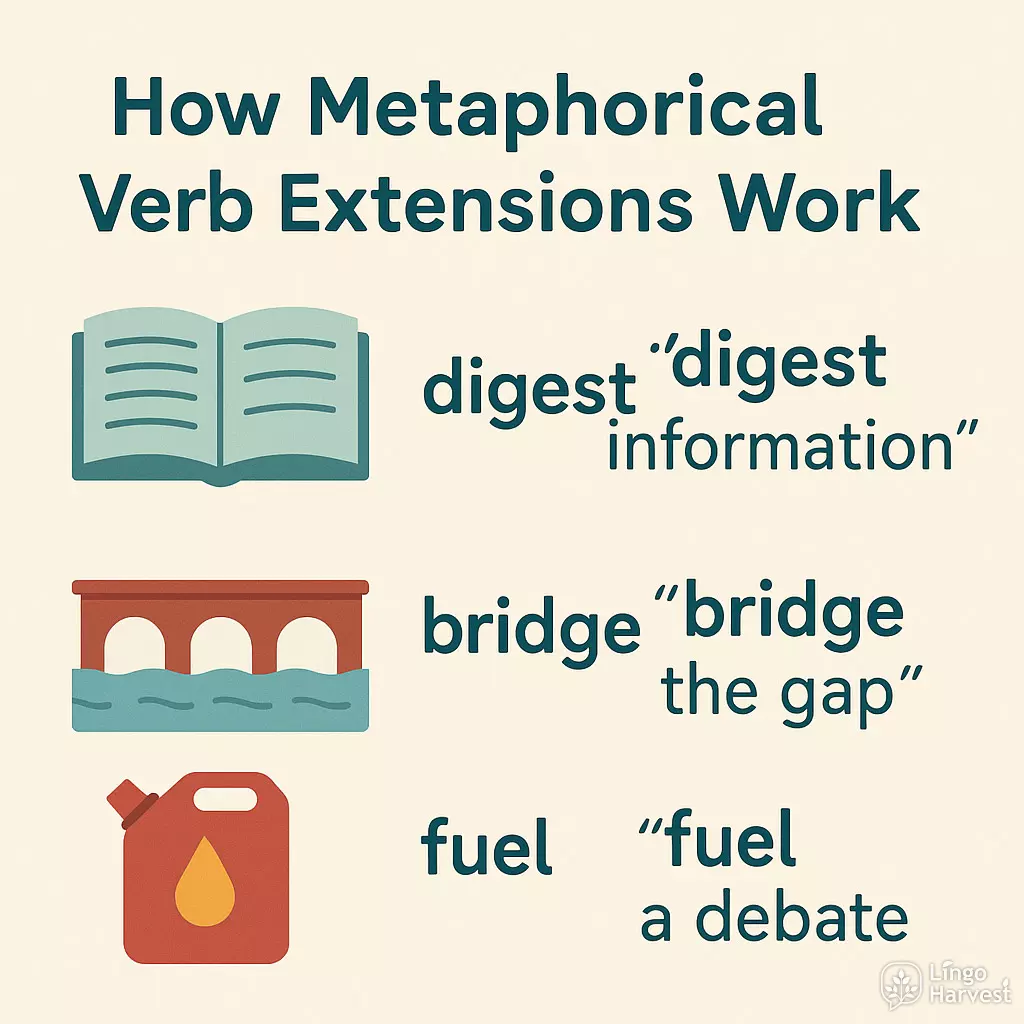
Here are several verbs frequently extended in metaphorical ways, along with typical examples:
- grasp — "grasp an idea"
- tackle — "tackle a problem"
- break — "break the news"
- hold — "hold a belief"
- shed — "shed light on an issue"
- navigate — "navigate a situation"
- shoulder — "shoulder responsibility"
- digest — "digest information"
- plant — "plant a suggestion"
- spark — "spark interest"
- unpack — "unpack a concept"
- bridge — "bridge the gap"
- fuel — "fuel a debate"
- hammer — "hammer out an agreement"
- launch — "launch an initiative"
- open — "open a discussion"
- shoot — "shoot down an argument"
- steer — "steer the conversation"
- trigger — "trigger a response"
- capture — "capture attention"
Why Speakers Use These Extensions
Using metaphorical verbs makes language more vivid, relatable, and efficient. They allow us to convey complex or unfamiliar ideas using the structure of familiar actions. This not only aids understanding but also adds color and nuance to communication.
Literal vs. Metaphorical Use
Below is a comparison of a few verbs in both their concrete (literal) and figurative (metaphorical) uses:
| Literal Use | Metaphorical Extension |
|---|---|
| grasp a rope | grasp a concept |
| tackle an opponent | tackle a challenge |
| break a stick | break a habit |
| hold a cup | hold an opinion |
Overall, these figurative uses of verbs are not only common but essential to expressive and effective language. They reflect the human tendency to understand new or abstract domains by relating them to concrete experiences.
Why English Uses Metaphorical Meaning
English speakers often rely on metaphorical extensions of verbs to express abstract ideas in a clear and relatable way. Everyday actions—like grasping, tackling, or shedding—are mapped onto mental or social processes, making complex or intangible concepts easier to discuss. This habit is not random; it reflects how people naturally understand unfamiliar or abstract things using familiar, physical experiences.
Making the Abstract Concrete
When English borrows the language of the physical world to talk about thoughts, problems, or emotions, it helps listeners visualize and engage with non-physical concepts. For instance, saying "grasp an idea" lets us imagine holding something in our hands, which makes understanding seem more tangible. Similarly, "tackle a problem" conjures the image of physically confronting an obstacle, emphasizing effort and action.
Reasons for Metaphorical Extensions
- They simplify communication about complex issues.
- Metaphors add vividness and emotional impact to speech.
- They allow for creative expression and nuance.
- Physical actions are universally understood, making abstract ideas more accessible.
- Such usage is efficient—one verb can serve many functions.
Common Verbs with Metaphorical Uses
- grasp (an idea)
- tackle (a problem)
- shed (light on an issue)
- break (the news)
- draw (a conclusion)
- hit (a snag)
- navigate (a situation)
- bridge (a gap)
- dig (into a topic)
- fuel (a debate)
- plant (an idea)
- spark (interest)
- hammer (a point home)
- unpack (a concept)
- weather (a crisis)
- swallow (the truth)
- shoot (down an argument)
- unlock (potential)
- face (a challenge)
- weigh (options)
How Metaphorical Verbs Shape Thought
The use of action-based verbs in non-literal ways can subtly guide how people think about challenges, ideas, and relationships. By framing a debate as something to "fuel," for example, it suggests energy and escalation. When you "bridge a gap," it implies connection and resolution. This shaping of thought patterns is one reason why such expressions are so pervasive in English.
Common Patterns: grasp, tackle, handle
Understanding how verbs like "grasp," "tackle," and "handle" extend beyond their literal meanings sheds light on the ways English speakers conceptualize abstract ideas. These verbs often move from describing physical actions to representing mental or emotional processes. For example, "grasp" no longer refers only to physically seizing something; it frequently means to comprehend or understand a concept.
Metaphorical Extensions in Everyday Language
These action verbs appear in a variety of metaphorical expressions, especially when discussing challenges, ideas, or tasks. Here are some common patterns and contexts where these verbs are used figuratively:
- Grasp an idea → to understand something complex
- Grasp the concept → to fully comprehend a theory or notion
- Fail to grasp → to not understand
- Tackle a problem → to take active steps to solve an issue
- Tackle a project → to begin and deal with a challenging task
- Tackle the question → to address or answer a difficult question
- Handle a situation → to manage or deal with circumstances
- Handle criticism → to respond appropriately to negative feedback
- Handle pressure → to cope with stressful conditions
- Handle a tool/handle a task → to use or manage effectively
- Grasp the opportunity → to take advantage of a chance
- Tackle an assignment → to start working on a given task
- Handle negotiations → to conduct or oversee discussions
- Grasp the basics → to understand fundamental principles
- Tackle an issue head-on → to confront a problem directly
- Handle a complaint → to address customer or client concerns
- Grasp the significance → to recognize the importance of something
Comparison of Metaphorical Uses
The following table highlights differences in metaphorical application, typical objects, and example contexts for these verbs:
| Verb | Metaphorical Focus | Typical Collocations | Example Sentence |
|---|---|---|---|
| grasp | Understanding or insight | idea, concept, principle, opportunity | She quickly grasped the main point of the lecture. |
| tackle | Active problem-solving or addressing tasks | problem, challenge, project, question | We need to tackle the budget issue before moving forward. |
| handle | Managing or coping with situations | pressure, situation, responsibility, criticism | He handled the unexpected news very calmly. |
Summary
In summary, these verbs illustrate how concrete physical actions become powerful metaphors for mental and emotional activities. Recognizing these patterns can help learners use English more naturally and flexibly in both spoken and written communication.
How Metaphors Change Verb Strength
Metaphorical extensions often boost the impact and vividness of familiar verbs. When a verb like "grasp" moves beyond its physical sense to describe thinking—such as in "grasp an idea"—it adds a sense of effort and intensity to abstract actions. This transfer from the concrete to the abstract can make otherwise subtle processes feel more dynamic or forceful.
From Physical to Abstract: Shifting Force
Physical verbs typically convey clear, measurable actions. Through metaphor, these verbs can suggest new shades of meaning or emotional weight. For example, "tackle a problem" borrows the forceful, direct nature of a physical tackle and applies it to problem-solving, implying determination and energy.
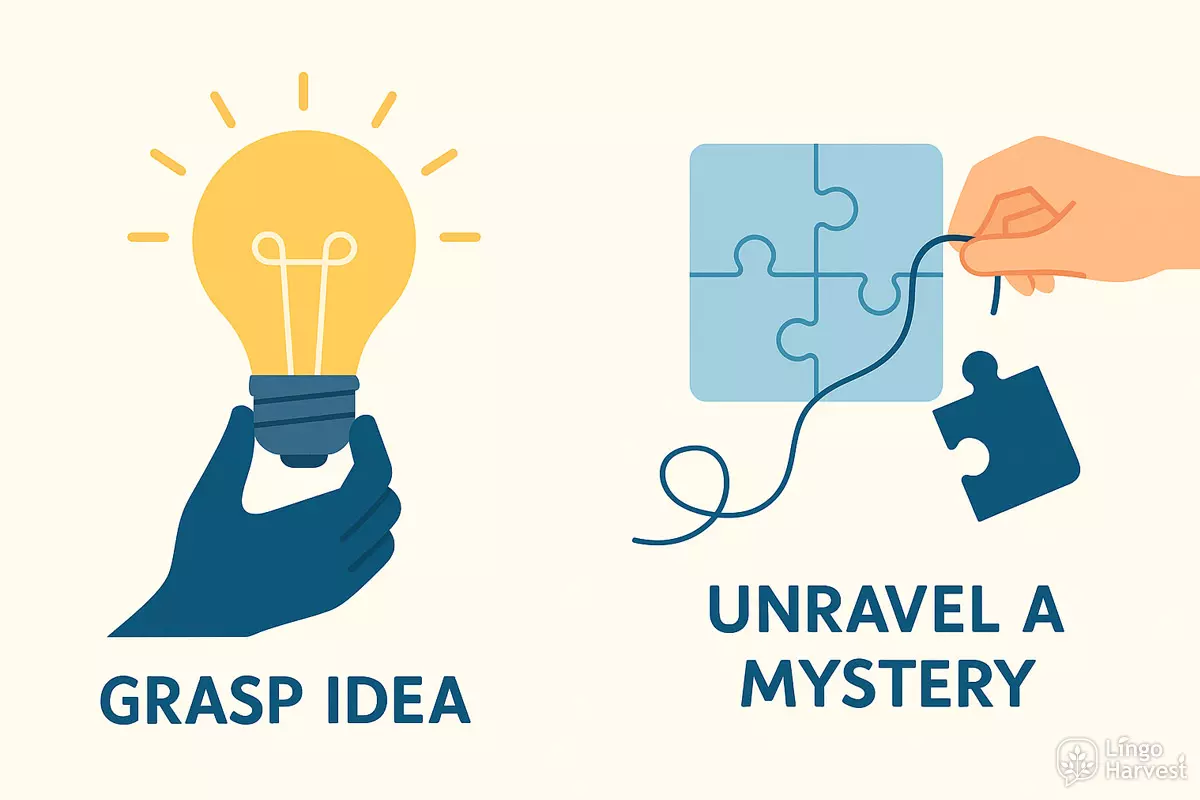
- Grasp an idea: Implies active engagement and success in understanding.
- Tackle a problem: Suggests facing difficulties head-on with vigor.
- Pin down a concept: Conveys precision and control over abstract notions.
- Chew over a question: Highlights slow, thoughtful consideration.
- Unravel a mystery: Evokes careful, step-by-step analysis.
- Wrestle with uncertainty: Implies an ongoing, strenuous mental effort.
- Shed light on an issue: Brings clarity and insight.
- Navigate a challenge: Suggests skillful, adaptive action.
- Fuel a debate: Adds energy or intensity to a discussion.
- Hammer out a solution: Conveys persistence and hard work.
- Bridge a gap: Implies connection and resolution.
- Plant an idea: Suggests initiating thought that will grow over time.
- Shoulder responsibility: Implies taking on a burden willingly.
- Sift through evidence: Conveys careful examination.
- Unlock potential: Implies releasing hidden abilities.
- Map out a strategy: Suggests deliberate planning.
- Climb the ladder: Implies striving for advancement.
- Break new ground: Suggests innovation and bold action.
Comparing Literal and Metaphorical Uses
The strength or energy of a verb can shift dramatically when used metaphorically. Direct actions often feel stronger or more immediate, while their metaphorical uses can either amplify or soften the effect depending on context.
| Literal Verb Use | Metaphorical Extension |
|---|---|
| Grasp the rope | Grasp an idea |
| Tackle an opponent | Tackle a problem |
| Wrestle a rival | Wrestle with doubt |
| Break the ice | Break the silence |
| Fuel a fire | Fuel a debate |
Why Verb Strength Matters
Choosing a metaphorically extended verb can subtly shift the perceived intensity or urgency of a statement. These choices affect how listeners or readers interpret the speaker’s attitude, involvement, and even the seriousness of the situation. In everyday speech and writing, such metaphors are tools to engage, persuade, or clarify, making language not just descriptive but also evocative.
Typical Academic and Formal Examples
Metaphorical uses of verbs are common in scholarly writing and professional communication. These expressions help convey abstract concepts clearly by drawing on familiar physical actions. In academic texts, such figurative language often frames complex reasoning or analysis, making arguments more vivid and accessible.
Frequent Patterns in Academic Writing
Writers in formal contexts often extend the meaning of action verbs to describe intellectual or organizational activities. Here are several commonly used metaphorical verb phrases found in research papers, lectures, and business reports:
- Grasp an idea → understand or comprehend a concept
- Tackle a problem → address or attempt to solve an issue
- Shed light on a topic → clarify or explain something
- Bridge the gap → connect two areas or resolve differences
- Lay the foundation for research → establish basic principles
- Draw a conclusion → infer or deduce an outcome
- Build a theory → develop a conceptual framework
- Pinpoint the cause → identify the exact reason
- Map out a strategy → plan or organize a course of action
- Fuel debate → provoke or intensify discussion
- Navigate a challenge → manage or deal with difficulties
- Weigh the evidence → assess or evaluate information
- Unpack a concept → analyze or explore in detail
- Advance an argument → put forward reasoning
- Open the door to possibilities → make new options available
- Frame an issue → present or define a problem
- Highlight a result → emphasize a finding
- Trigger a reaction → cause a response
- Anchor a discussion → ground or stabilize ideas
- Illuminate a question → shed understanding on a topic
Comparing Literal and Figurative Uses
Understanding how these verbs shift from physical to abstract contexts is useful for precise academic writing. The table below illustrates this transition:
| Literal Action | Metaphorical Use in Academia |
|---|---|
| Grasp (hold something physically) | Grasp an idea (comprehend a concept) |
| Tackle (physically engage with something) | Tackle a problem (try to solve a challenge) |
| Bridge (construct a physical bridge) | Bridge the gap (connect two fields or ideas) |
| Map (draw a geographic map) | Map out a plan (organize a strategy or approach) |
These metaphorical shifts are not just stylistic choices; they serve to make abstract reasoning more relatable and memorable. Using such language can help readers visualize complex processes, thus improving clarity and engagement in formal texts.
Avoiding Literal-Meaning Confusion
Learners often stumble when verbs that usually describe physical actions are used in a figurative sense. Words like “grasp,” “tackle,” or “shed” can bewilder those expecting only concrete meanings. Recognizing these metaphorical uses is crucial for clear understanding and effective communication.
Recognizing Figurative Uses
Many verbs extend their meanings beyond the physical. For instance, “grasp” doesn’t always mean to hold something with your hand; it can mean to understand a concept. To spot these shifts, look for clues in context—abstract objects (like “idea” or “problem”) often signal non-literal intent.
- Grasp an idea → understand
- Tackle a problem → address or deal with
- Shed light on an issue → clarify
- Break the ice → initiate conversation
- Face a challenge → confront
- Bridge a gap → connect differences
- Dig into a topic → investigate
- Hit a wall → encounter a difficulty
- Navigate a situation → manage
- Catch someone’s meaning → understand
- Fuel a debate → provoke discussion
- Plant an idea → introduce a thought
- Hammer out a plan → negotiate details
- Lay the groundwork → establish a foundation
- Float a proposal → suggest
- Run into trouble → encounter problems
- Kick off a project → start
- Weigh options → consider choices
- Shoulder responsibility → accept duty
- Draw a conclusion → decide
Common Pitfalls & Strategies
Mixing up literal and metaphorical meanings can lead to confusion or awkward phrasing. Here are practical tips to avoid this:
- Check if the object of the verb is abstract (e.g., “idea,” “problem,” “responsibility”).
- Ask yourself if the action is physically possible. If not, a non-literal meaning is likely.
- Compare with your native language—many metaphors are similar, but not all transfer directly.
- Notice collocations: some verbs almost always appear in figurative expressions in English.
Literal vs. Metaphorical: Quick Reference
| Physical Use | Metaphorical Use |
|---|---|
| Grasp a rope | Grasp an idea |
| Tackle an opponent | Tackle a problem |
| Break a stick | Break the ice |
| Plant a tree | Plant an idea |
| Shed a tear | Shed light on a topic |
By being alert to context and practicing with common verb extensions, you’ll become more comfortable navigating both literal and figurative language. This awareness will help you interpret meaning accurately and avoid miscommunication.
Practice: Identify the Metaphorical Verb
Understanding how verbs acquire metaphorical meanings is key to mastering nuanced English. In the following exercises, you’ll examine sentences and spot which verb is used metaphorically. These verbs typically come from concrete actions but are used to describe abstract concepts or processes.
Exercise: Spot the Metaphorical Usage
Read each sentence below. Identify the verb that’s being used in a figurative way—that is, not to describe a literal, physical action, but to express an idea, feeling, or process.
- She grasped the concept quickly.
- We need to tackle this issue before it grows.
- He launched a new initiative last month.
- They unveiled their plan at the meeting.
- Let's address the problem one step at a time.
- The news sparked a heated debate.
- She navigated the conversation skillfully.
- The idea caught on quickly among the team.
- He shed light on the confusing topic.
- We build trust through honesty.
- The discussion went off track after that comment.
- The team must bridge the gap between departments.
- She harbored doubts about the plan.
- He weathered the criticism with patience.
- They planted the seeds of change.
- The project stalled due to lack of funding.
- She poured her heart into the work.
- He mapped out the strategy for success.
- The company absorbed the smaller competitor.
- The announcement triggered concern among investors.
Show answers
- 1. grasped
- 2. tackle
- 3. launched
- 4. unveiled
- 5. address
- 6. sparked
- 7. navigated
- 8. caught
- 9. shed
- 10. build
- 11. went off track
- 12. bridge
- 13. harbored
- 14. weathered
- 15. planted
- 16. stalled
- 17. poured
- 18. mapped out
- 19. absorbed
- 20. triggered
Tips for Recognizing Figurative Verbs
- Ask yourself if the verb describes a physical action or an abstract idea.
- Look for verbs that commonly relate to movement, handling, or physical change, but are used for mental or social processes.
- Notice if the subject or object is not something you can literally touch or move.
Practicing with examples like these helps reinforce your ability to detect when verbs are used metaphorically. This awareness is especially useful for reading, writing, and understanding more advanced English texts.