Base Form, -s, -ing, -ed: Verb Forms Explained Simply

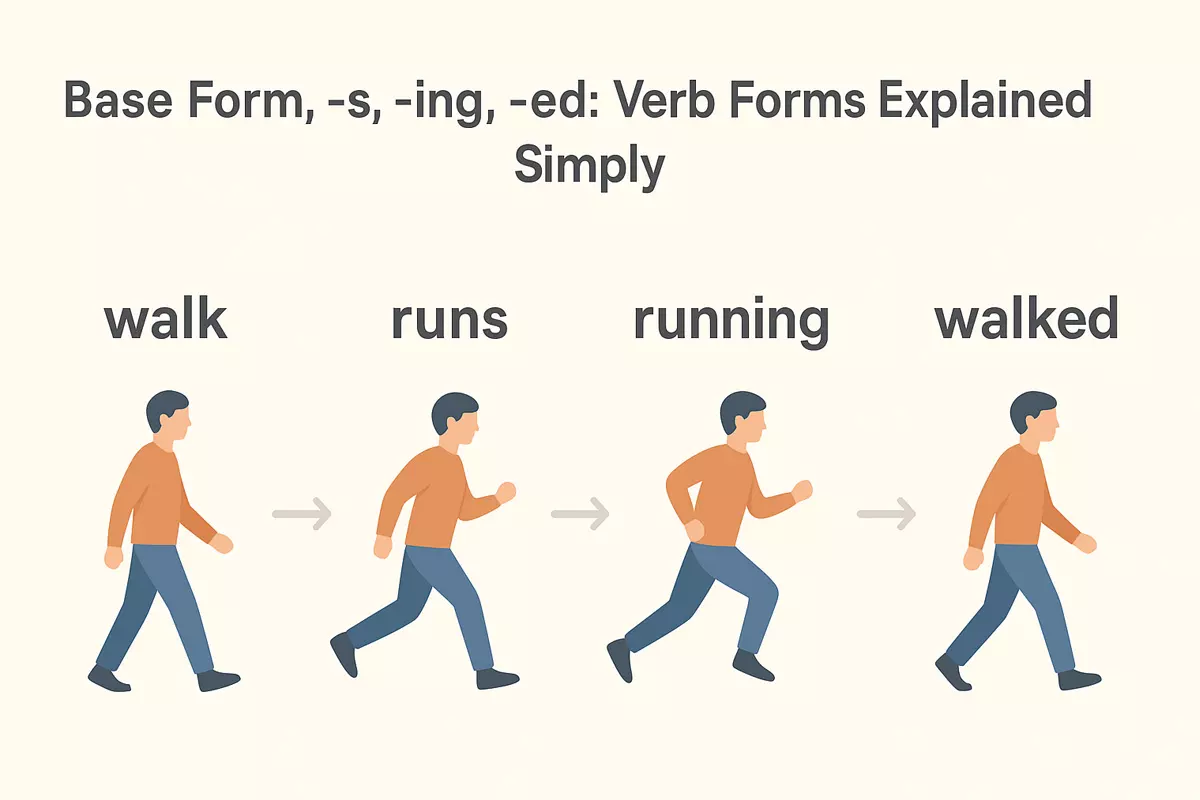 Here we why verb forms matter at A1, explains using the base, -s, -ing, and -ed forms, covers spelling patterns, highlights common mistakes, and provides practice converting and using verbs correctly in sentences.
Have you ever wondered why verbs change their forms in English? Learning how verbs shift depending on tense—such as present, past, or continuous—helps you express yourself more clearly and accurately. For example, adding -ed often signals the past tense, while adding -ing shows an ongoing action. By paying attention to these endings, you can make your sentences easier to understand and ensure you are using the correct verb form for each situation.
Why Verb Forms Matter at A1
Understanding different verb endings is essential for beginners because it helps you build correct sentences from the start. At the A1 level, you often need to talk about simple actions, routines, and things happening now. Knowing which verb form to use means you can say what you mean and be understood in everyday conversations.
How Verb Forms Help in Real Communication
Using the right verb form lets you:
- Describe daily routines (e.g., I work, She plays).
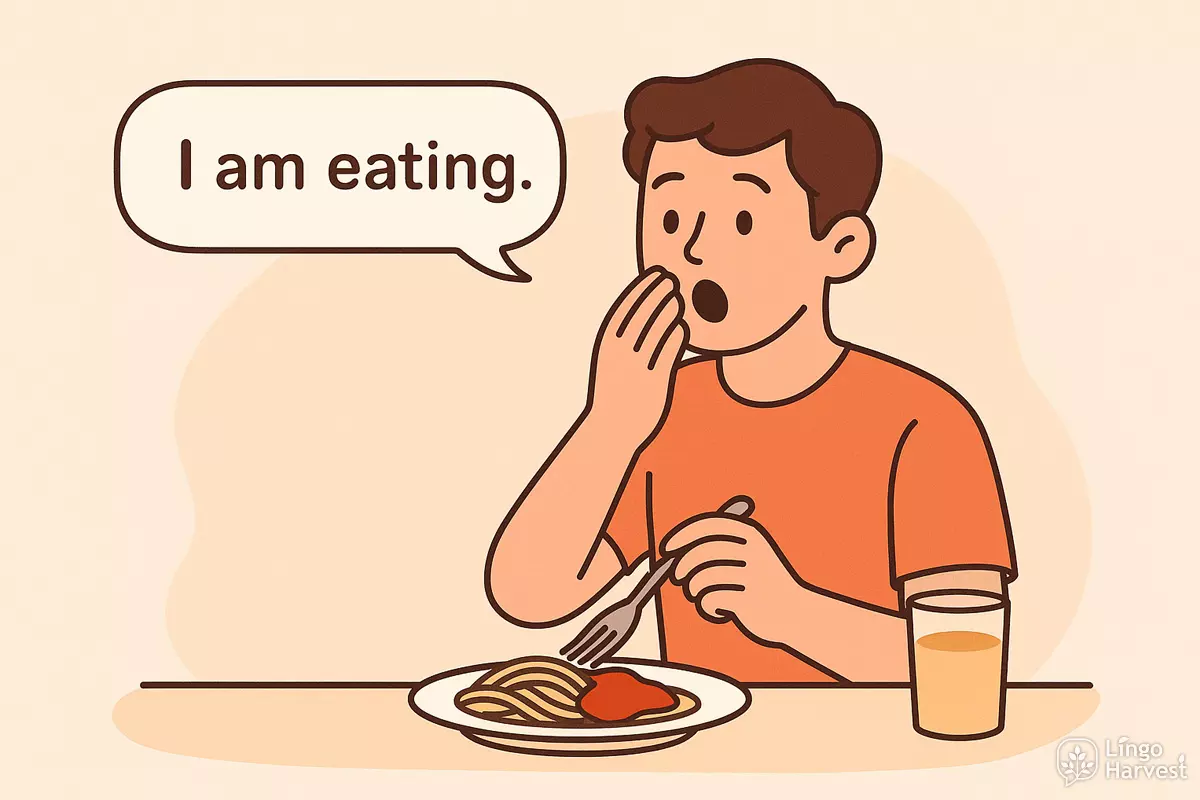
- Talk about what’s happening now (I am eating).
- Express past actions (He walked).
- Ask and answer simple questions.
- Make basic negative sentences (I don’t like).
- Use polite requests and offers.
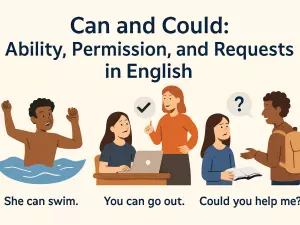
- Talk about abilities (She can swim).
- Describe likes and dislikes.
- Give instructions (Open the window).
- Connect ideas with simple conjunctions (and, but).
- Form short dialogues in shops, cafes, or with friends.
- Write simple notes and messages.
Common Verb Endings at Beginner Level
At this stage, you mainly use four forms: the base verb, the third person -s form, the -ing form, and the past -ed form. Each one has a clear purpose in basic grammar.
| Form | Use in Simple Sentences |
|---|---|
| Base (work, play) | I work every day. They play football. |
| -s (works, plays) | She works at a bank. He plays chess. |
| -ing (working, playing) | I am working now. She is playing outside. |
| -ed (worked, played) | We worked yesterday. He played last week. |
Why Accuracy Matters from the Start
Using the wrong verb form can cause confusion or lead to misunderstandings. For example, saying She go to school instead of She goes to school is a common error, but it can make your English sound less clear. Getting comfortable with these endings early helps you feel more confident and ready for real-life situations.
Base Form and Subject Agreement
Understanding how the plain form of verbs works with different subjects is essential for correct English sentences. The base form, like walk or play, is the version you find in a dictionary, without any endings. In most present tense sentences, this form is used with all subjects except the third person singular.
When to Use the Base Form
- With the subjects I, you, we, and they in the present tense: I walk, you walk, we walk, they walk.
- After modal verbs: can go, should eat, will see.
- In imperatives (commands): Go! Stop! Listen!
- With the verb do in questions and negatives: Do you like apples? I do not know.
The Exception: Third Person Singular
For he, she, or it in the present simple tense, add -s or -es to the verb (e.g., he runs, she watches). This is the main point where subject-verb agreement changes the verb form.
| Subject | Verb Form Example |
|---|---|
| I | I play |
| You | You play |
| He/She/It | He plays |
| We | We play |
| They | They play |
Common Base Form Patterns
- run → I run every day.
- eat → They eat lunch at noon.
- read → We read before bed.
- make → You make good coffee.
- see → I see the mountains.
- like → We like music.
- drive → They drive to work.
- help → You help your friends.
- learn → I learn quickly.
- study → They study hard.
- watch → We watch movies.
- jump → I jump high.
Paying attention to which subject you use helps you choose the correct verb form. Most mistakes happen with the third person singular, so double-check if you need to add -s or use the unchanged base form. This distinction is a foundation for building accurate English sentences.
-s Form for He/She/It: When and Why
In English, verbs often change form depending on the subject and the tense. For the present simple tense, third-person singular subjects (he, she, it, or any singular noun) require a special ending: -s or -es. This is a core rule for making sentences about what someone or something does habitually or generally.
Why Do We Add -s or -es?
The main reason for this change is subject-verb agreement. English verbs must match the subject in number and person. When talking about one person or thing in the present simple, the verb receives this extra ending to show the agreement. For example:
- She works late.
- He likes pizza.
- It rains often in April.
When to Use the -s Ending
The -s or -es ending is used only in the present simple tense and only with third-person singular subjects. Avoid using it with I, you, we, they, or plural nouns. Here are some common verbs with their third-person singular present forms:
- run → runs
- play → plays
- read → reads
- study → studies
- watch → watches
- go → goes
- fix → fixes
- teach → teaches
- carry → carries
- enjoy → enjoys
- catch → catches
- cry → cries
- miss → misses
- pass → passes
- wash → washes
- kiss → kisses
How Does the Spelling Change?
There are some simple spelling rules for this verb ending:
| Verb Ending | Third-Person Singular Form | Example |
|---|---|---|
| Most verbs | Add -s | eat → eats |
| Verbs ending in -ch, -sh, -x, -s, -z, -o | Add -es | watch → watches |
| Verbs ending in a consonant + -y | Change -y to -ies | study → studies |
| Verbs ending in a vowel + -y | Add -s | play → plays |
Common Mistakes to Avoid
Using the wrong verb form is a frequent error for learners. Remember:
- ❌ She like chocolate. ✅ She likes chocolate.
- ❌ My brother go to school. ✅ My brother goes to school.
- ❌ The cat sleep on the bed. ✅ The cat sleeps on the bed.
Paying attention to the subject will help you use the correct verb ending and make your sentences sound natural and accurate.
-ing Form: Continuous and Everyday Use
The -ing ending, also known as the present participle or gerund form, appears frequently in English. It serves multiple roles, from forming continuous tenses to acting as a noun or adjective. Understanding when and how to use this form helps you describe ongoing actions, daily routines, and even abstract ideas.
Continuous Tenses
One of the most common uses of the -ing verb is to build progressive (continuous) tenses. These tenses describe actions happening right now, around the present moment, or over a period of time. The structure is usually: be (am/is/are/was/were) + verb-ing.
- I am reading a book. ✅
- She was cooking when you called.
- They are studying for exams.
- We were walking in the park.
Everyday Uses: Gerunds and More
Besides continuous tenses, -ing verbs often act as nouns (gerunds) or adjectives. As gerunds, they can be subjects or objects in sentences. As adjectives, they describe nouns by showing what something does or what is happening.
- Swimming is good exercise. (subject)
- I enjoy listening to music. (object)
- This is an exciting movie. (adjective)
- He has an interesting job. (adjective)
Common Verbs Followed by -ing
Some verbs are naturally followed by another verb in the -ing form. Here are several examples:
- admit: She admitted cheating.
- avoid: He avoids driving at night.
- enjoy: We enjoy traveling.
- imagine: Imagine living abroad.
- finish: They finished painting the house.
- suggest: I suggest taking a break.
- consider: Have you considered moving?
- deny: She denied breaking the vase.
- dislike: He dislikes waiting in lines.
- risk: Don’t risk losing your keys.
Forming the -ing Verb
Most verbs simply add -ing to the base form, but a few spelling changes are needed:
- run → running
- write → writing
- make → making
- swim → swimming
- lie → lying
| Use | Example |
|---|---|
| Present Continuous | I am eating. |
| Past Continuous | They were playing. |
| Gerund (Noun) | Running helps me relax. |
| Adjective | That was a boring lecture. |
| After Certain Verbs | She suggested meeting earlier. |
In summary, the -ing ending is flexible and essential in English, helping you express ongoing actions, routines, habits, and even ideas or feelings. Mastering its uses makes your speech and writing more fluent and natural.
-ed Form: Past Simple and Pronunciation Rules
When you want to talk about something that happened in the past, you usually use the regular verb ending -ed. This form is used for both the past simple tense (e.g., “walked,” “played”) and the past participle (e.g., “She has finished her work”). Understanding how to form, spell, and pronounce these verbs correctly helps your English sound natural and clear.
How to Form Regular Past Simple Verbs
- Add -ed to most base verbs: talk → talked
- If the verb ends in e, just add -d: love → loved
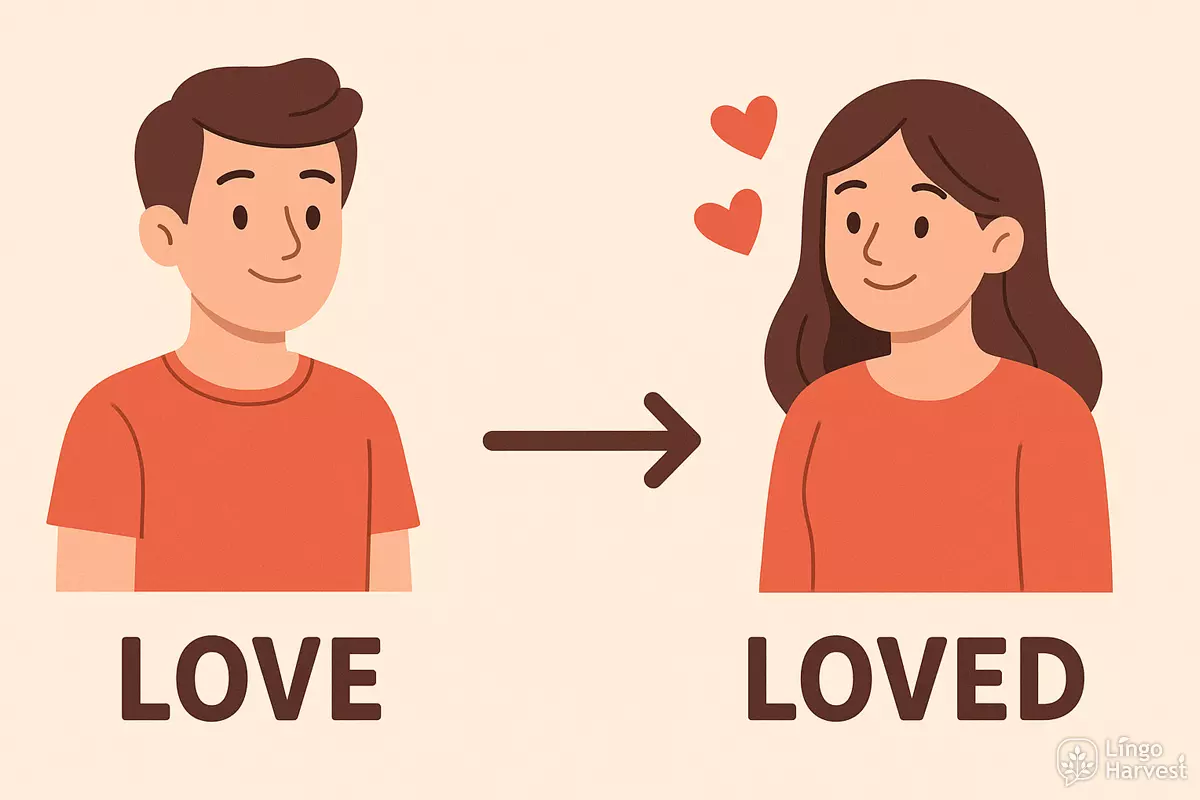
- For verbs ending with a consonant + y, change y to i and add -ed: carry → carried
- Double the final consonant if the verb is short and ends in consonant-vowel-consonant: stop → stopped
Pronouncing the -ed Ending
The -ed ending can be pronounced in three different ways, depending on the final sound of the verb. The rules are simple once you know what to listen for.
| Ending Sound of Verb | Pronunciation of -ed | Examples |
|---|---|---|
| Voiceless sounds (e.g., p, k, f, s, sh, ch) | /t/ | walked, laughed, missed, watched |
| Voiced sounds (e.g., b, g, v, z, m, n, l, r, vowels) | /d/ | cleaned, lived, played, called |
| Ends with t or d sound | /ɪd/ or /əd/ | wanted, needed, started, decided |
Common Regular Verbs and Their -ed Forms
- ask → asked
- jump → jumped
- dance → danced
- open → opened
- finish → finished
- plan → planned
- enjoy → enjoyed
- show → showed
- visit → visited
- rain → rained
- want → wanted
- start → started
- climb → climbed
- study → studied
- cry → cried
- help → helped
Spelling Patterns (drop e, double consonants)
When verbs change form, their spelling sometimes shifts in predictable ways. Two of the most common changes are removing a final “e” and doubling a consonant before adding endings like -ing or -ed. Understanding these rules helps you avoid common mistakes and spell verbs correctly as their forms change.
Dropping the Final “e”
Many verbs ending in a silent “e” lose that letter before taking on -ing or -ed. This prevents awkward spellings and makes pronunciation easier. For example:
- make → making, made
- dance → dancing, danced
- hope → hoping, hoped
- live → living, lived
- move → moving, moved
- smile → smiling, smiled
- use → using, used
- write → writing, written
- invite → inviting, invited
- drive → driving, drove
Notice that for the -s ending, the “e” usually stays: makes, dances, hopes.
Doubling the Final Consonant
For some verbs, the last consonant doubles before adding -ing or -ed. This typically happens when all three of these conditions are met:
- The verb ends with a single vowel + single consonant (not w, x, or y).
- The stress falls on the last syllable (for multi-syllable words).
- The ending being added begins with a vowel (like -ing or -ed).
| Base Verb | Doubled Consonant Forms |
|---|---|
| stop | stopping, stopped |
| plan | planning, planned |
| begin | beginning |
| prefer | preferred, preferring |
| admit | admitted, admitting |
| occur | occurred, occurring |
| refer | referred, referring |
| travel (British) | travelled, travelling |
| permit | permitted, permitting |
| rob | robbed, robbing |
Some verbs don’t double the consonant, especially when the stress isn’t on the last syllable or the word ends in two vowels. For example: open – opened, opening; visit – visited, visiting.
Quick Tips
- If a verb ends with “e,” drop it before -ing or -ed (but not -s).
- If a verb ends with a single vowel + consonant, double the last letter before -ing or -ed (if the stress is on the last syllable).
- Don’t double consonants for verbs ending in “w,” “x,” or “y.”
- British and American English sometimes differ (e.g., “travelled” vs. “traveled”).
Knowing these spelling rules makes changing verb forms much more predictable and helps you communicate clearly in writing.
Common Learner Mistakes and Fixes
Mixing up verb forms is a frequent hurdle for English learners, especially when deciding between the base form, -s, -ing, and -ed endings. Accurate verb usage depends on understanding tense, subject, and context. Below, we highlight typical problems and offer clear advice to help you avoid these pitfalls.
Confusing Present Simple and Present Continuous
Learners often use the -ing form instead of the base or -s form for habits and routines. Remember, use the base (or -s for he/she/it) for regular actions, and -ing for actions happening right now.
- ❌ She going to school every day.<→ < She goes to school every day.
- ❌ I am eat breakfast every morning.<→ < I eat breakfast every morning.
Forgetting the -s in Third Person Singular
It's easy to forget to add -s or -es after he, she, or it in the present simple.
- ❌ He play football. → ✅ He plays football.
- ❌ She like pizza. → ✅ She likes pizza.
Incorrect Use of Past Simple (-ed) and Past Participles
Confusing the simple past with the past participle is common, especially with irregular verbs. Be sure to check the correct form for each verb.
- ❌ I have went to the store. → ✅ I have gone to the store.
- ❌ She did played yesterday. → ✅ She played yesterday.
Base Form vs. -ing After Certain Verbs
Some verbs are followed by the base form (infinitive), others by the -ing form. Pay attention to common patterns.
- ❌ I enjoy to read. → ✅ I enjoy reading.
- ❌ She wants going home. → ✅ She wants to go home.
Comparison of Verb Forms
| Form | Example Usage | Common Error | Correction |
|---|---|---|---|
| Base Form | They walk to school. | They walks to school. | They walk to school. |
| -s Form | She runs fast. | She run fast. | She runs fast. |
| -ing Form | We are playing. | We are play. | We are playing. |
| -ed Form | He walked home. | He walk home yesterday. | He walked home yesterday. |
Quick Fixes for Common Issues
- Always add -s or -es for he/she/it in the present simple.
- Use -ing for continuous actions (am/is/are + verb-ing).
- Check if a verb is irregular before using -ed in the past.
- After "to" use the base form: "to eat", "to go".
- After enjoy/like/love, use -ing: "enjoy reading".
- Read example sentences to reinforce patterns.
By paying attention to these patterns and reviewing your sentences, you can quickly improve your accuracy with verb forms.
Practice: Convert and Use in Sentences
Understanding verb forms is much easier when you try using them in context. Below, you'll find exercises and examples to help you recognize, convert, and apply the base form, -s, -ing, and -ed endings correctly. Practice by transforming verbs and building sentences to see how each form works in real-life situations.
Verb Form Conversion Table
| Base Form | -s Form | -ing Form | -ed Form |
|---|---|---|---|
| play | plays | playing | played |
| work | works | working | worked |
| study | studies | studying | studied |
| watch | watches | watching | watched |
| go | goes | going | went |
| make | makes | making | made |
| read | reads | reading | read |
| run | runs | running | ran |
| eat | eats | eating | ate |
| write | writes | writing | wrote |
Task 1: Identify and Convert
Take each verb below and write it in the requested forms:
- Base: talk → -s, -ing, -ed forms
- Base: finish → -s, -ing, -ed forms
- Base: try → -s, -ing, -ed forms
- Base: drive → -s, -ing, -ed forms
- Base: begin → -s, -ing, -ed forms
Show answers
- talk → talks, talking, talked
- finish → finishes, finishing, finished
- try → tries, trying, tried
- drive → drives, driving, drove
- begin → begins, beginning, began
Task 2: Fill in the Blanks
Choose the correct verb form to complete each sentence:
- She always ______ (walk) to school.
- We are ______ (plan) a trip.
- Yesterday, I ______ (call) my friend.
- He ______ (study) every morning.
- They ______ (enjoy) the movie last night.
Show answers
- walks
- planning
- called
- studies
- enjoyed
Task 3: Create Your Own Sentences
Using the verbs below, write one sentence for each form: base, -s, -ing, and -ed. Try with these verbs:
- open
- read
- play
- cook
- swim
Show answers
- open: I open the window. / She opens the door. / They are opening the box. / He opened the letter.
- read: I read every day. / She reads at night. / We are reading now. / He read the story yesterday.
- play: They play soccer. / He plays chess. / I am playing guitar. / She played tennis last week.
- cook: I cook dinner. / She cooks pasta. / They are cooking now. / He cooked soup yesterday.
- swim: We swim in summer. / She swims fast. / He is swimming now. / They swam last weekend.
Practicing these transformations and sentence patterns will help you use English verbs more confidently in everyday conversation and writing.