Like, Want, Need: Everyday Verbs with Examples

 Here we the core meanings and differences between like, want, and need, explains their verb patterns, and shows how to soften requests. It includes real-life dialogues, common mistakes, and practice exercises for better usage.
Navigating daily conversations requires selecting the right verbs to express your desires, preferences, and necessities effectively. By mastering the use of these common action words, you can communicate your thoughts and feelings with greater clarity and confidence. Whether you are expressing a wish, stating a preference, or indicating a need, choosing the appropriate verbs ensures your message is understood as intended. Practicing these language skills regularly will help you become a more fluent and self-assured communicator in everyday situations.
Core Meanings and Differences
Understanding the verbs “like,” “want,” and “need” is essential for clear everyday communication, as each one expresses a distinct level of desire or requirement. These verbs often appear simple, but they carry important differences in meaning and usage, shaping the tone and intent of your sentences. Let’s explore how they contrast and when to use each one.
What Each Verb Expresses
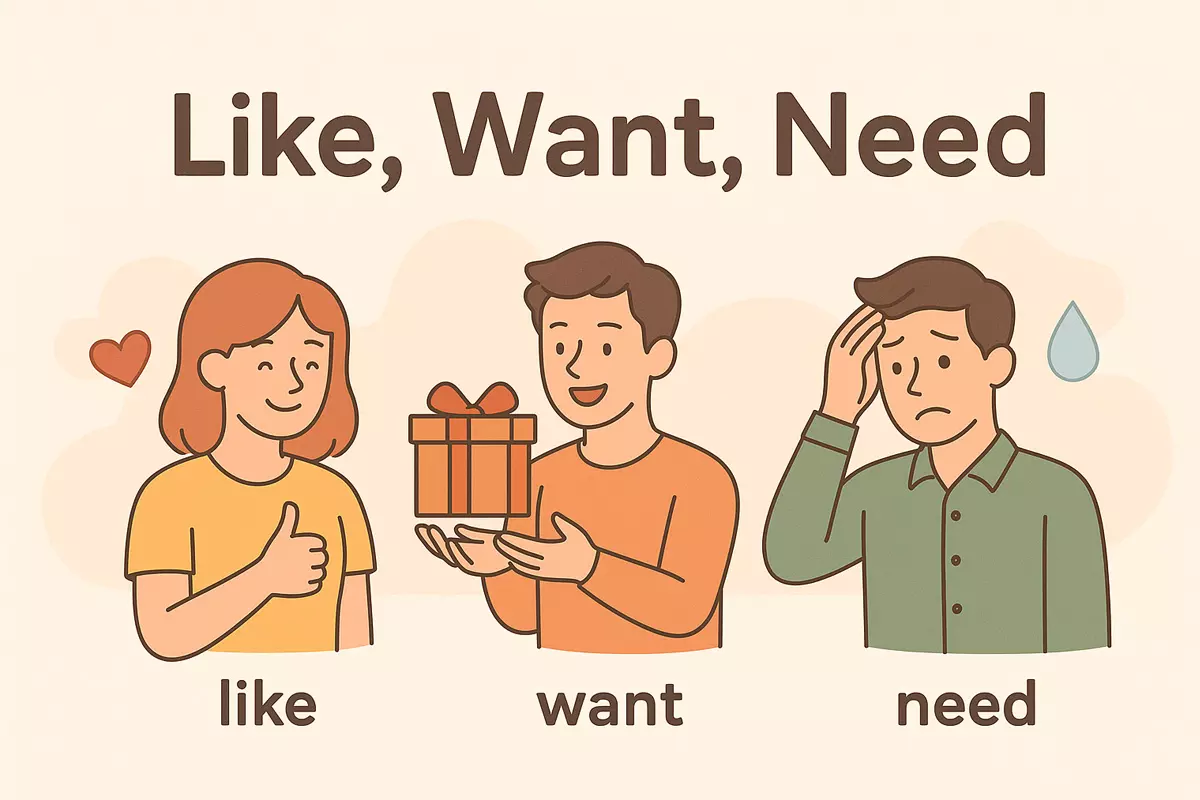
- Like shows enjoyment or preference. It is used for things, activities, or people that bring pleasure, but there is no sense of necessity.
- Want communicates a wish or desire. It’s stronger than “like” and suggests you are thinking about getting or doing something, but it is not essential.
- Need signals necessity or requirement. When you use “need,” you mean something is important for comfort, health, or function.
When to Use Each Verb
| Verb | Typical Usage | Example Sentence |
|---|---|---|
| Like | Expressing pleasure or positive feeling toward something | I like chocolate ice cream. |
| Want | Showing a wish or desire for something (not essential) | I want a new phone. |
| Need | Indicating something is necessary or required | I need to finish my homework. |
Common Patterns and Example Phrases
These verbs are used in simple patterns, making them easy to use in conversation. Here are some typical ways to use them:
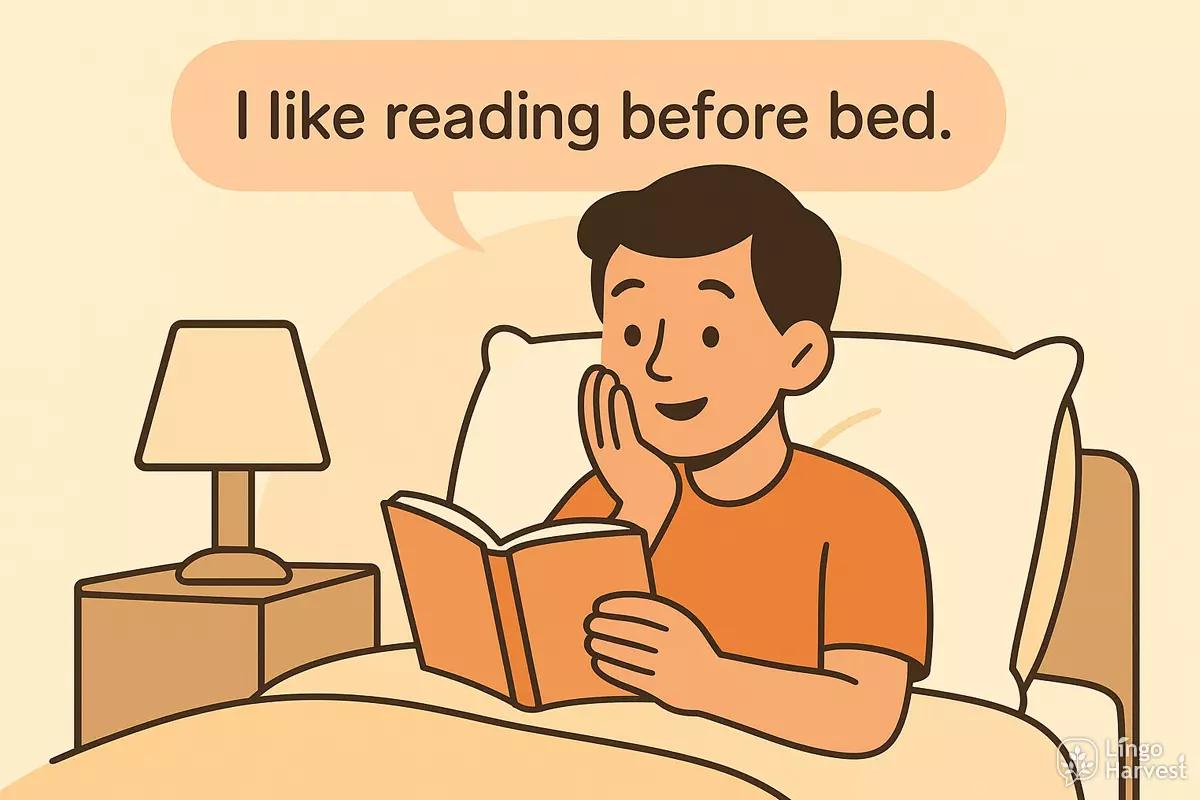
- I like reading before bed.
- She likes going for walks in the park.
- Do you like pizza?
- He wants to travel abroad next year.
- They want more information about the event.
- We want to try that new restaurant.
- You need to call your doctor.
- We need more time to finish the project.
- Does he need help with his homework?
- I need some water, please.
- Do you want a cup of tea?
- She needs to rest after work.
- They like listening to music together.
- I want to learn another language.
- You need to bring your passport.
In summary, choosing between “like,” “want,” and “need” depends on whether you are talking about enjoyment, desire, or necessity. Selecting the right verb helps make your meaning clear and your English sound natural.
Like + Noun vs Like + Verb-ing
Understanding how "like" works with nouns and verbs is essential for expressing preferences in English. When we use "like" with a noun, we usually talk about general interests or things we enjoy. On the other hand, pairing "like" with a verb ending in -ing describes activities or actions we find enjoyable. Both patterns are common, but the nuance can change based on which structure you choose.
Talking About Things or Activities
If you say "I like pizza," you’re referring to the food itself. But if you say "I like eating pizza," you focus on the action or experience. Sometimes, both forms are correct, but they highlight different aspects of your preference.
- I like music. → (music in general, a thing)
- I like listening to music. → (the activity, the process of listening)
- She likes books. (objects, not the act of reading)
- She likes reading books. (the activity itself)
- We like movies. (refers to films as things or a genre)
- We like watching movies. (focuses on the action of watching)
- He likes coffee. (the drink itself)
- He likes drinking coffee. (the act of drinking it)
- They like sports. (sports in general)
- They like playing sports. (the action, participating in sports)
- I like art. (a general interest)
- I like making art. (the process of creating)
- Do you like chocolate? (the food)
- Do you like eating chocolate? (the action)
- She likes dogs. (the animals themselves)
- She likes walking dogs. (the activity)
- He likes travel. (the concept)
- He likes traveling. (the experience)
- We like parties. (events)
- We like going to parties. (the activity of attending)
Choosing Between Nouns and -ing Forms
Often, both noun and -ing forms are possible, but the focus shifts. Use the noun when you mean the thing or category, and the -ing form for the action. For many hobbies and daily routines, the -ing pattern sounds more natural.
| Like + Noun | Like + Verb-ing |
|---|---|
| I like soccer. | I like playing soccer. |
| She likes tea. | She likes drinking tea. |
| We like animals. | We like taking care of animals. |
| They like photography. | They like taking photos. |
| He likes music. | He likes composing music. |
Tips for Everyday English
Remember, using the -ing form can make your sentences clearer, especially when talking about activities. Both patterns are widely used, so pay attention to what you really want to say: the object or the action. Over time, you’ll notice which forms native speakers prefer in different situations.
Want/Need + Noun vs Want/Need + to + Verb
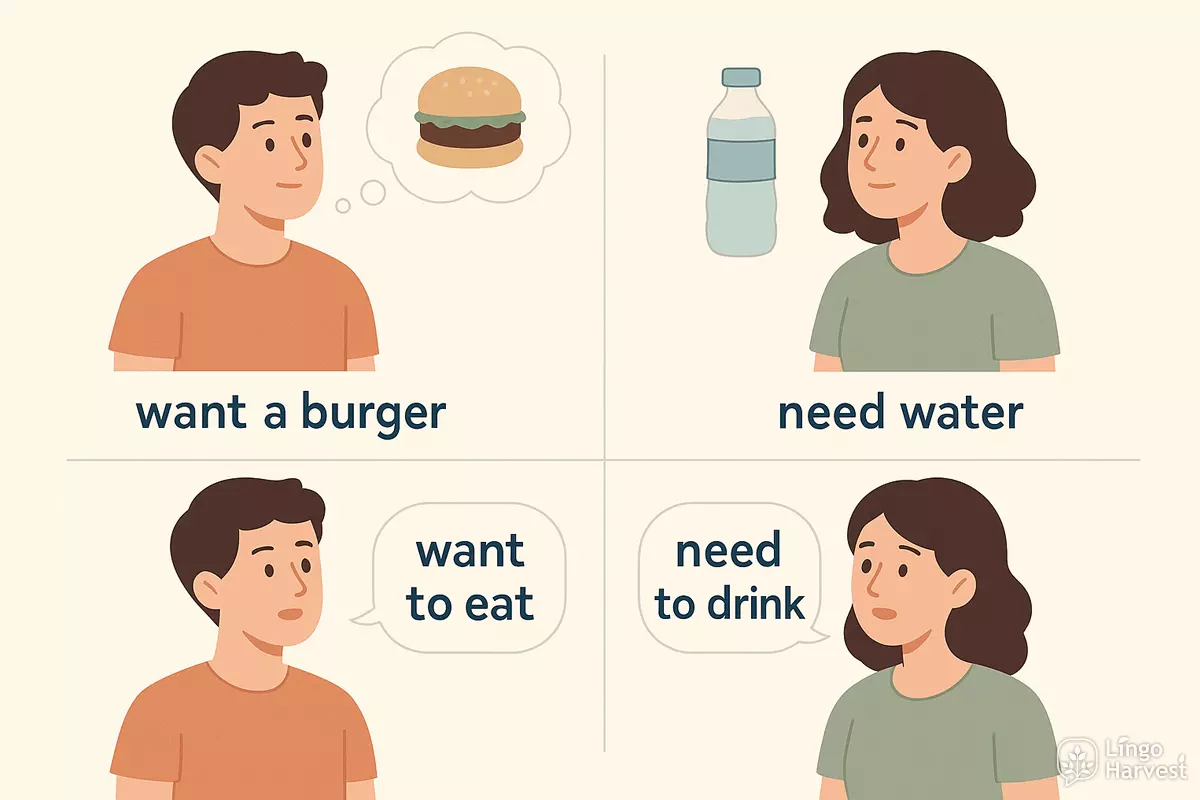
Understanding how to use "want" and "need" with nouns and verbs is essential for clear communication. The structure changes slightly depending on whether you’re talking about a thing (noun) or an action (verb). When you use "want" or "need" followed by a noun, you are talking about a specific object or thing. For example, "I want a coffee" means you would like to have a coffee. On the other hand, if you follow "want" or "need" with "to" + verb, you are expressing a desire or necessity to do something: "I want to drink coffee" means you would like to perform the action of drinking coffee.
Examples in Everyday Contexts
- I want a new phone. → (Desire for an object)
- I want to call my friend. → (Desire to perform an action)
- She needs help. → (Necessity for something)
- She needs to study. → (Necessity to do something)
- They want a vacation.
- They want to travel.
- We need some water.
- We need to buy water.
- He wants a job.
- He wants to work.
- You need a break.
- You need to relax.
- The dog wants food.
- The dog wants to eat.
- Do you want a ticket?
- Do you want to go to the concert?
- I need a pen.
- I need to write a note.
Quick Comparison
| Form | Example Sentence |
|---|---|
| Want/Need + Noun | I want a sandwich. |
| Want/Need + to + Verb | I want to eat a sandwich. |
| Need + Noun | She needs help. |
| Need + to + Verb | She needs to call her friend. |
When to Use Each Structure
Use the noun form when referring to a thing, object, or person. Choose the "to + verb" form when talking about actions or activities. Both structures are common in daily conversation, but using the correct pattern helps you sound natural and clear.
Common Mistakes to Avoid
- ❌ Incorrect: I want go home.
✅ Correct: I want to go home. - ❌ Incorrect: She needs to a doctor.
✅ Correct: She needs a doctor.
By practicing these patterns, you’ll improve both your grammar and your ability to express needs and desires in English.
Softening Requests and Preferences
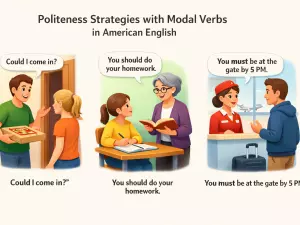
When using verbs like "want," "need," and "like" in daily conversation, it’s common to make your requests or preferences sound more polite or less direct. This approach helps maintain friendliness and respect, especially in English-speaking cultures where being too blunt can seem rude. Using softer language can make your communication smoother and more effective.
Common Ways to Make Requests Sound Polite
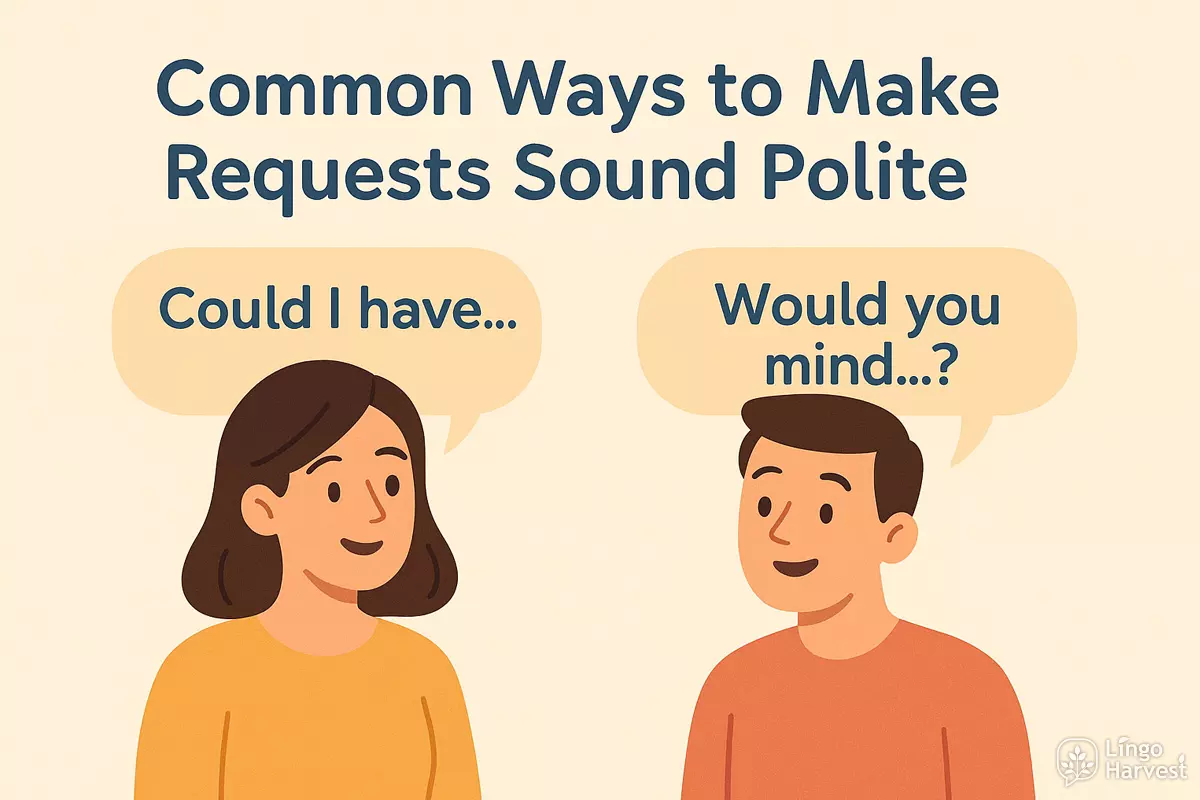
Instead of stating what you want or need directly, you can soften your statements by adding certain phrases, modal verbs, or changing the sentence structure. Here are some popular patterns:
- Could I have…?
- Would you mind…?
- I’d like to…
- I was wondering if…
- Is it possible to…?
- Do you think you could…?
- I was hoping to…
- May I…?
- If it’s not too much trouble, could you…?
- Would it be okay if…?
- Can I get…?
- I’d appreciate it if…
- Would you be able to…?
- Might I…?
- It would be great if…
- Perhaps you could…
Comparing Direct and Softened Forms
Sometimes, the difference between sounding demanding and sounding considerate is just a few words. Here’s a comparison of common direct and softened expressions:
| Direct Expression | Softened Version |
|---|---|
| I want some water. | Could I have some water, please? |
| I need your help. | I was wondering if you could help me. |
| Close the window. | Would you mind closing the window? |
| Give me a minute. | Could you give me a minute? |
| I like this seat. | I’d like to sit here, if that’s okay. |
Tips for Everyday Speech
Choosing a softer form isn’t just about grammar—it’s about social awareness. Use these strategies especially with strangers, colleagues, or in formal situations. In casual settings, directness is often fine among friends or family, but even then, softening can help avoid misunderstandings. Remember to use "please" and "thank you" to further show politeness. By practicing these patterns and being mindful of your word choice, you can express your wishes and preferences clearly while also showing respect for others.
Real-Life Dialogues
Understanding how to use "like," "want," and "need" in daily conversations helps you sound more natural and confident in English. Below, you'll find sample exchanges that show how these common verbs appear in various situations, whether you're at a café, making plans, or talking about preferences. Each example reflects practical, everyday speech.
Sample Conversations Using "Like," "Want," and "Need"
- Ordering at a café:
Customer: I’d like a cappuccino, please.
Barista: Would you like anything to eat?
Customer: No, I just want the coffee. Thanks! - Shopping for clothes:
Shop assistant: Can I help you?
Customer: Yes, I need a new jacket for winter.
Shop assistant: What style do you like?
Customer: I like something casual. - Making weekend plans:
Alex: Do you want to go hiking on Saturday?
Sam: I’d like to, but I need to finish my homework first. - Talking about food preferences:
Anna: Do you like spicy food?
Ben: Not really. I prefer mild dishes. - Asking for help:
Lucy: I need some help with my project.
Tom: Sure! What do you want me to do? - Expressing a wish:
Jane: I want to travel to Japan someday.
Mike: Me too! I like Japanese culture. - At the grocery store:
Parent: What do we need for dinner?
Child: I want pizza!
Parent: Let’s see if we have what we need at home. - Discussing hobbies:
Lisa: What do you like to do in your free time?
Mark: I like painting and playing guitar. - Making a polite request:
Guest: I’d like some water, please.
Host: Of course! Do you want ice with that? - Expressing necessity:
Teacher: You need to submit your assignment by Friday.
Student: I know. I want to finish it early.
How These Verbs Change Based on Situation
The choice between these verbs often depends on context and politeness. "Need" expresses necessity or obligation, "want" shows desire, and "like" indicates preference or enjoyment. To compare how they fit into real speech, see the table below:
| Verb | Example in Dialogue | Meaning/Use |
|---|---|---|
| like | I like your idea. | Expresses enjoyment or preference |
| want | I want a new phone. | Shows a desire for something |
| need | I need more time. | States a necessity or requirement |
| would like | I would like a window seat. | Polite way to express a wish or preference |
| don’t like | I don’t like waiting. | Expresses dislike or lack of enjoyment |
| don’t want | I don’t want dessert. | Indicates no desire for something |
| don’t need | I don’t need help. | States that something is unnecessary |
Using these verbs correctly in conversation helps you express your feelings, wishes, and necessities clearly. Try practicing with different scenarios to get more comfortable using them in context.
Common Mistakes and Corrections
Misusing "like," "want," and "need" is a typical challenge for English learners. These verbs seem simple, but their grammar and usage differ in subtle ways. Let’s look at frequent errors and how to fix them.
Mixing Up Verb Patterns
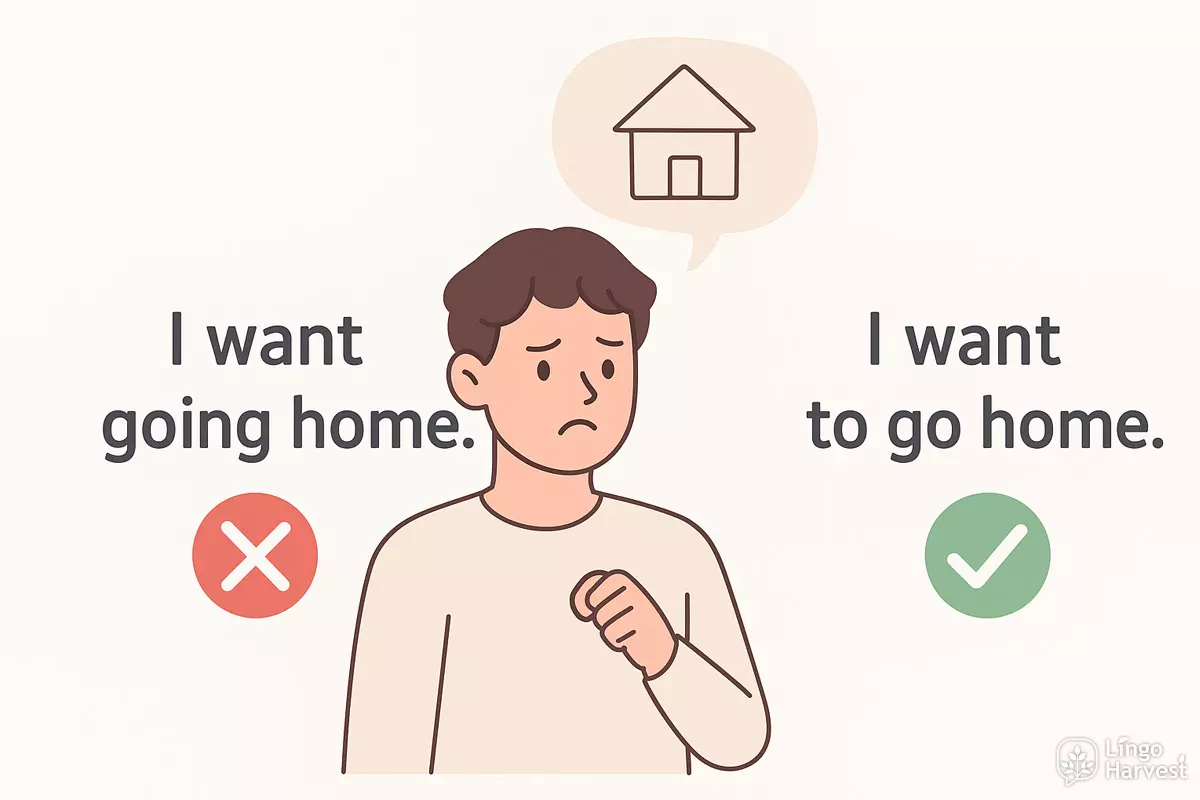
Learners often confuse which verbs take a gerund (-ing form), an infinitive (to + verb), or a direct object. This can lead to awkward or incorrect sentences.
- I want going home. ❌ Incorrect verb form after "want".
- I want to go home. ✅ Correct: "want" + to-infinitive.
- I like to swim. ✅ Correct: "like" can use to-infinitive or -ing.
- I like swimming. ✅ Also correct.
- I need going to the store. ❌ Incorrect pattern.
- I need to go to the store. ✅ Correct: "need" + to-infinitive.
Confusing "Like," "Want," and "Need"
Sometimes, learners use one verb when another is more appropriate, changing the meaning of a sentence.
- I need a coffee. ✅ Expresses necessity.
- I want a coffee. ✅ Expresses desire.
- I like a coffee. ❌ Unnatural; use "I like coffee" for general preference.
Omitting "To" with Infinitives
A common slip is forgetting "to" after "want" and "need."
- I want eat lunch. ❌ Missing "to".
- I want to eat lunch. ✅ Correct.
- I need call her. ❌ Should be "need to call".
- I need to call her. ✅ Correct.
Comparison Table: Verb Patterns
| Verb | Correct Pattern | Example |
|---|---|---|
| like | verb + to-infinitive or verb + -ing |
I like to read. I like reading. |
| want | verb + to-infinitive | I want to sleep. |
| need | verb + to-infinitive | I need to finish. |
| like (general) | verb + noun (for general likes) | I like chocolate. |
Other Frequent Errors
- Adding "to" after "like" with -ing: I like to swimming. ❌
- Using "want" or "need" without an object: I want. ❌ (Incomplete; say, "I want a sandwich.")
- Confusing necessity and desire: I need to watch TV. (Is it essential, or do you just want to?)
- Using "need" for polite offers: Do you need tea? (Better: "Would you like some tea?")
- Using "like" for one-time actions: I like go to the cinema tonight. ❌ (Should be "I would like to go...")
Paying attention to these patterns and distinctions will help you use "like," "want," and "need" naturally and clearly in everyday English.
Practice: Fill In and Create Sentences
To build confidence with everyday verbs like “like,” “want,” and “need,” it’s helpful to work with real-life sentence patterns and try making your own. Below, you’ll find different activities to help you use these verbs correctly. Read the instructions for each exercise, and try to complete them before checking the answers.
1. Fill in the Blanks
Choose the correct verb (“like,” “want,” or “need”) to complete each sentence. Try to focus on the meaning of each verb in context.
- I __________ to drink some water. I am thirsty.
- She __________ to go to the park because she enjoys walking.
- They __________ a new phone because their old one is broken.
- Do you __________ coffee in the morning?
- We __________ to finish our homework before dinner.
- He doesn’t __________ to eat pizza tonight.
Show answers
- need
- likes
- need
- like
- want
- want
2. Sentence Creation Challenge
Make your own sentences using the verbs below. Try to use different subjects and objects for variety.
- like
- want
- need
Here are some ideas to get you started:
- I like reading books at night.
- They want to visit the museum.
- We need more time to finish the project.
Now, write three more sentences (one with each verb) about yourself or someone you know.
Show answers
- Example: My brother likes to play soccer every weekend.
- Example: I want a cup of tea right now.
- Example: She needs a new backpack for school.
3. Comparing “Like,” “Want,” and “Need”
Notice the difference in meaning and use for each verb. Here’s a table with sample sentences and explanations:
| Verb | Example Sentence | Meaning |
|---|---|---|
| like | I like chocolate ice cream. | Shows enjoyment or preference. |
| want | She wants a new bike. | Expresses a desire for something. |
| need | We need water to live. | Indicates necessity or requirement. |
4. Make It Negative
Rewrite the following sentences in the negative form:
- I want to go outside.
- They like spicy food.
- She needs help with her homework.
Show answers
- I do not want to go outside.
- They do not like spicy food.
- She does not need help with her homework.
Practicing these sentence patterns will help you express preferences, desires, and necessities clearly in everyday English.