Verb + Noun Collocations for Daily Routines

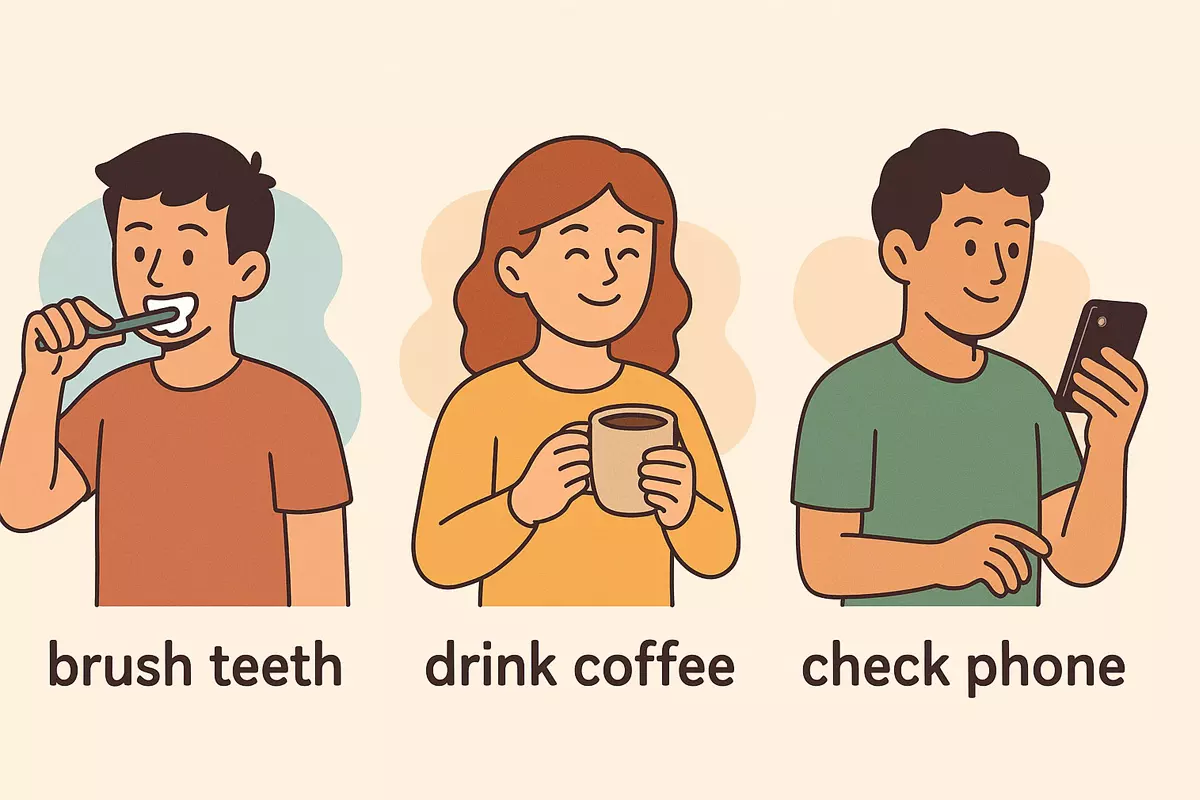 The article defines collocations and gives common examples for morning routines, study and work, shopping, travel, and free time. It also highlights common translation mistakes, offers mini dialogues, and includes practice for describing routines.
Learning how verbs naturally combine with specific objects, known as collocations, is crucial for achieving fluency in everyday English conversation. These common word pairings, such as make a decision or take a break, enable you to express your daily activities and routines more naturally and confidently. By practicing and using these combinations regularly, you will improve both your understanding and your ability to communicate clearly, making your English sound more authentic and effortless in various situations.
What Collocations Are
When learning a language, it’s important not only to study individual words, but also to notice how certain words naturally appear together. These familiar combinations are called collocations. In English, a collocation refers to a pair or group of words that sound “right” when used together. For example, we say “make the bed,” not “do the bed.” These word partnerships develop over time and are used by native speakers without thinking.
Why Collocations Matter
Using natural word combinations helps your speech and writing sound more fluent and authentic. When you use the right verb with the right noun, your language will be more understandable and less awkward. This is especially true for describing daily habits and routines, where certain verbs are almost always paired with specific nouns.
Common Features of Collocations
- They are predictable combinations, not random word pairings.
- They help you avoid common mistakes and unnatural phrasing.
- They can include verbs, nouns, adjectives, adverbs, or prepositions.
- They often cannot be directly translated word-for-word from other languages.
Examples of Verb + Noun Pairs in Everyday Life
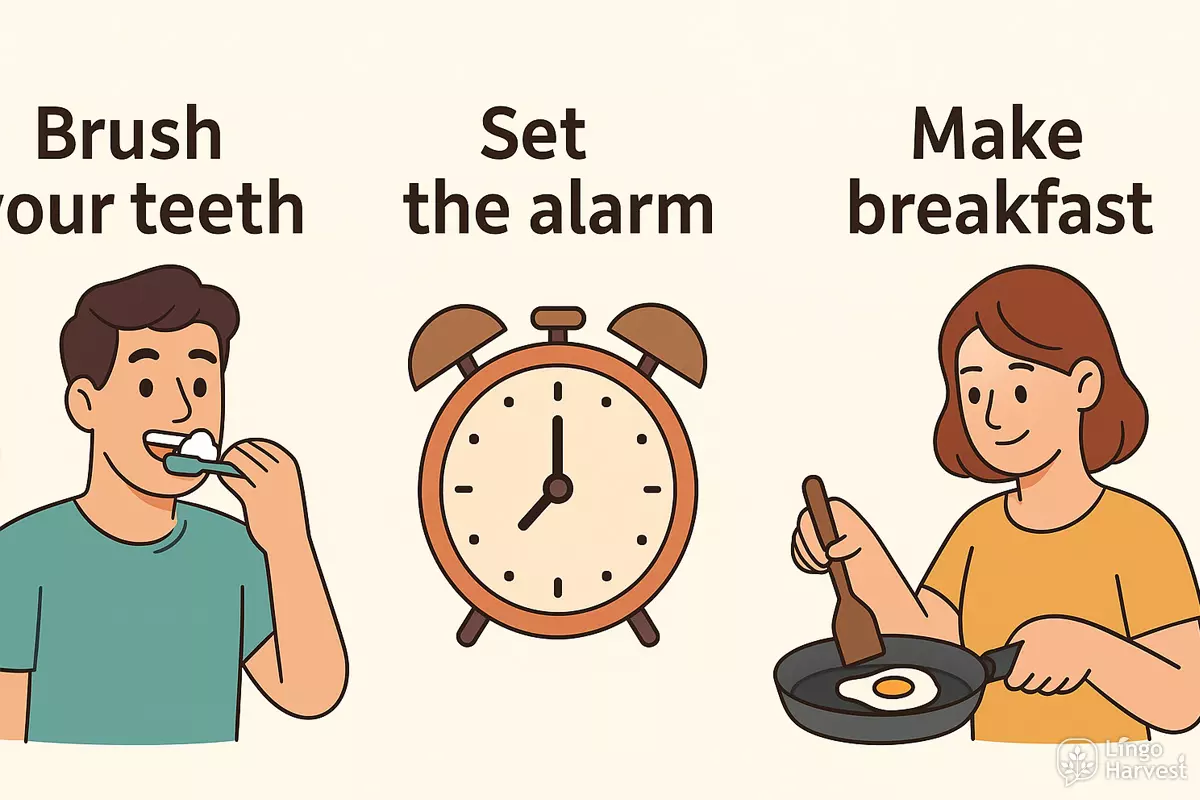
- Brush your teeth
- Set the alarm
- Make breakfast
- Take a shower
- Catch the bus
- Do homework
- Read a book
- Wash the dishes
- Check emails
- Take a nap
- Lock the door
- Feed the dog
- Fold the laundry
- Answer the phone
- Write a report
- Turn off the lights
- Buy groceries
- Have lunch
- Clean the room
- Pay the bills
How Collocations Differ from Random Word Combinations
Some verb and noun pairs just don’t work in English, even if they make sense in your native language. For example, while you can “make breakfast,” saying “do breakfast” or “create breakfast” would sound strange to a native speaker. Recognizing which verbs go with which nouns is a key part of sounding natural.
| Natural Combination ✅ | Unnatural or Incorrect ❌ |
|---|---|
| Take a shower | Do a shower |
| Make the bed | Do the bed |
| Catch the bus | Take the bus (for “catch” meaning “not miss”) |
| Brush your teeth | Clean your teeth (less common) |
| Have lunch | Eat lunch (possible, but “have lunch” is more natural) |
By learning these natural pairings, you’ll find it easier to talk about your everyday activities in English, and you’ll avoid awkward phrasing.
Morning and Home Routine Collocations
Starting your day often involves a set of familiar actions paired with specific nouns. These combinations are called collocations, and they help express daily habits naturally and clearly in English. Knowing which verbs typically go with which nouns makes your language sound more fluent and native-like.
Common Actions for Starting the Day
When describing what people do after waking up, certain verb-noun pairs are much more common than others. Here are some typical combinations you might use when talking about getting ready in the morning:
- Set an alarm
- Wake up early/late
- Turn off the alarm
- Make the bed
- Brush your teeth
- Take a shower
- Get dressed
- Have breakfast
- Prepare coffee/tea
- Pack your bag/lunch
- Leave the house
Typical Home Activities
Daily routines at home often involve repetitive tasks. Here are some frequent verb-noun pairs used to describe these activities:
- Do the dishes
- Clean the kitchen
- Vacuum the floor
- Feed the pets
- Water the plants
- Take out the trash
- Wash the clothes
- Fold the laundry
- Make dinner
- Set the table
Comparing Morning and Evening Collocations
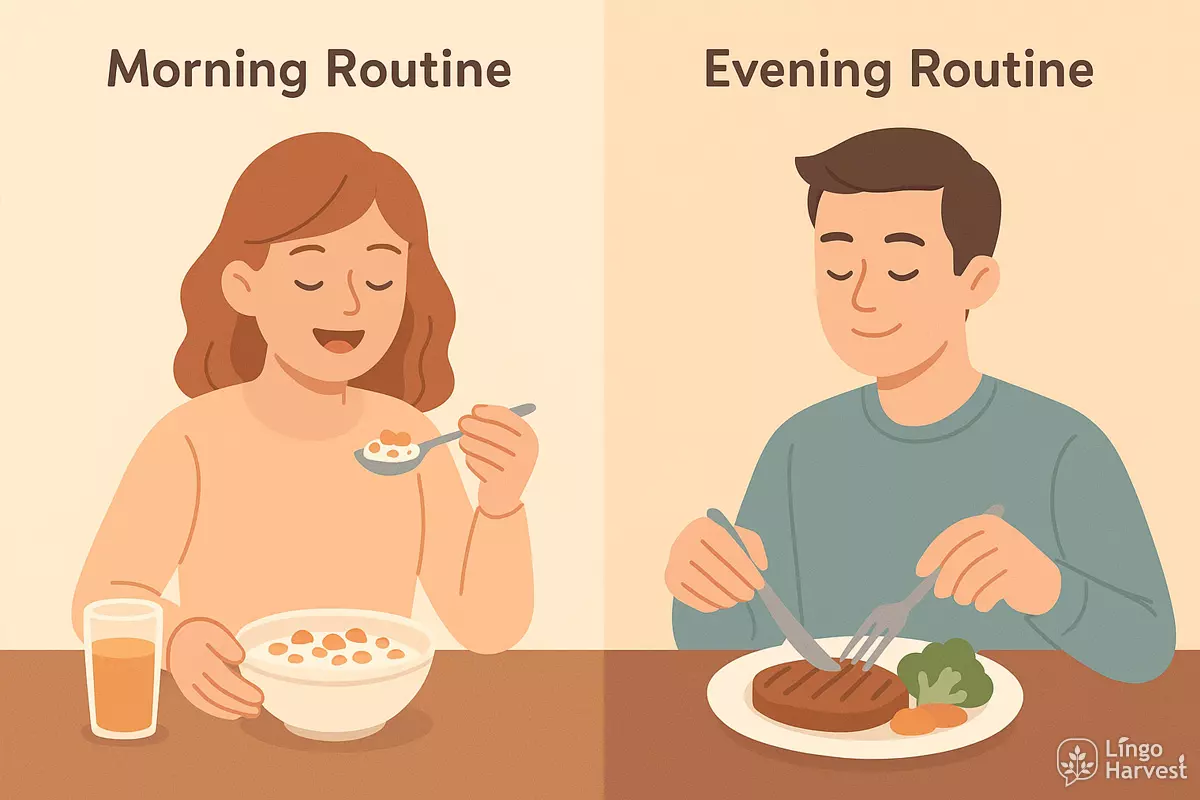
Sometimes, different verbs are used with similar nouns depending on the time of day. The table below highlights a few examples of how morning and evening routines use different collocations:
| Morning Routine | Evening Routine |
|---|---|
| Have breakfast | Have dinner |
| Get dressed | Change clothes |
| Make the bed | Go to bed |
| Pack your bag | Unpack your bag |
Knowing these collocations makes it easier to describe your daily life accurately and naturally. Practice using them in your own sentences to build confidence and fluency.
Study and Work Activity Collocations
When describing daily routines related to learning and professional life, English relies on common verb + noun combinations. Mastering these patterns helps your speech sound more natural and fluent, especially when talking about habits, responsibilities, or achievements.
Common Collocations for Studying
Many daily activities for students involve specific verb-noun pairs. Here are some typical ways to talk about academic tasks and routines:
- do homework
- take notes
- attend a lecture
- study for an exam
- submit an assignment
- read a textbook
- review material
- join a study group
- ask a question
- make a presentation
- pass a test
- fail a quiz
- finish a project
- write an essay
- memorize vocabulary
Common Collocations for Work Routines
In the workplace, certain verb-noun phrases are used to describe tasks, duties, and actions throughout the day:
- attend a meeting
- send an email
- make a phone call
- meet a deadline
- prepare a report
- take a break
- work overtime
- schedule an appointment
- delegate a task
- solve a problem
- handle a complaint
- lead a team
- organize a workshop
- update records
- approve a request
Comparing Study and Work Collocations
Some verbs can be used with different nouns in both academic and professional contexts. The table below gives examples of how the same verb pairs with different nouns in each setting.
| Study Context | Work Context |
|---|---|
| submit an assignment | submit a report |
| attend a lecture | attend a meeting |
| make a presentation | make a phone call |
| finish a project | finish a task |
| take notes | take a break |
Practice: Choose the Correct Collocation
For each blank, select the correct verb to complete the collocation:
- ______ an assignment (a) make (b) submit (c) do
- ______ a meeting (a) attend (b) join (c) write
- ______ a report (a) prepare (b) study (c) take
- ______ a question (a) ask (b) give (c) pass
- ______ a deadline (a) meet (b) pass (c) read
Show answers
- (b) submit an assignment
- (a) attend a meeting
- (a) prepare a report
- (a) ask a question
- (a) meet a deadline
Shopping, Travel, and Free-Time Phrases
When learning verb + noun combinations for everyday activities, it's especially helpful to focus on expressions we use while buying things, navigating trips, or enjoying leisure moments. Familiar phrases make conversations smoother and help you sound more natural in real-life situations.
Useful Collocations in Stores and Markets

- make a purchase
- try on clothes
- ask for a refund
- pay by card
- return an item
- check the price
- compare products
- ask for assistance
- choose a size
- receive a discount
Common Travel Expressions
- book a ticket
- catch a train
- miss a flight
- pack a suitcase
- rent a car
- ask for directions
- check in at a hotel
- cancel a reservation
- plan a route
- visit a landmark
Leisure and Free Time Activities
- watch a movie
- read a book
- play a game
- listen to music
- go for a walk
- meet friends
- cook dinner
- take photos
- join a club
- attend an event
Comparing Collocations Across Contexts
| Shopping | Travel | Free Time |
|---|---|---|
| try on clothes | book a ticket | watch a movie |
| pay by card | catch a train | read a book |
| return an item | pack a suitcase | meet friends |
| ask for assistance | ask for directions | take photos |
Mastering these verb + noun patterns not only improves your vocabulary but also builds confidence for handling everyday scenarios, from shopping errands to planning trips or unwinding after a busy day. Try using these combinations in your next conversation to sound more fluent and natural.
Avoiding Literal Translation Errors
When learning verb + noun collocations for daily routines, translating word-for-word from your native language can result in unnatural or confusing English. Many everyday expressions rely on set combinations that don’t follow predictable logic if translated directly. For instance, English speakers “make the bed” and “take a shower,” while other languages might use “do the bed” or “have a shower.” Picking the right verb for each action is crucial for sounding natural.
Common Pitfalls of Direct Translation
Translating expressions literally can lead to mistakes that native speakers will immediately notice. Here are some typical errors:
- Saying “do homework” instead of “make homework” (the correct form is “do homework”)
- Using “take breakfast” instead of “have breakfast”
- Saying “open the light” instead of “turn on the light”
- Translating “close the television” instead of “turn off the television”
- Using “make a shower” instead of “take a shower”
Correct Collocations for Daily Activities
Here are typical verb + noun combinations used for everyday actions. Learning these as fixed expressions will help you avoid awkward or incorrect constructions:
- brush your teeth
- wash your face
- make the bed
- do the laundry
- take a nap
- have lunch
- catch the bus
- set the alarm
- prepare dinner
- check emails
- read the newspaper
- feed the cat
- lock the door
- water the plants
- go shopping
- do the dishes
- make a phone call
- take a break
- hang the clothes
- clean the room
Comparing Literal and Correct Expressions
Below is a comparison of common literal translations versus the natural English collocations. Notice how the verbs change even if the noun stays the same.
| Literal Translation | Natural English Collocation |
|---|---|
| do a shower | take a shower |
| make homework | do homework |
| open the light | turn on the light |
| take breakfast | have breakfast |
| close the TV | turn off the TV |
| put the alarm | set the alarm |
| make a photo | take a photo |
| do sport | play sports |
| make a party | have a party |
| take a decision | make a decision |
Tips for Mastering Collocations
Pay attention to how native speakers talk about daily routines. Make a habit of noting down full phrases, not just single words. Practice with real-life examples and review lists of common collocations in context. Over time, your usage will feel more natural and automatic.
Mini Dialogues with Collocations
Short, realistic exchanges are a practical way to see verb and noun combinations in context. These sample dialogues demonstrate how typical actions are described in everyday situations. Each conversation highlights natural expressions for daily activities, helping learners notice patterns and build fluency.
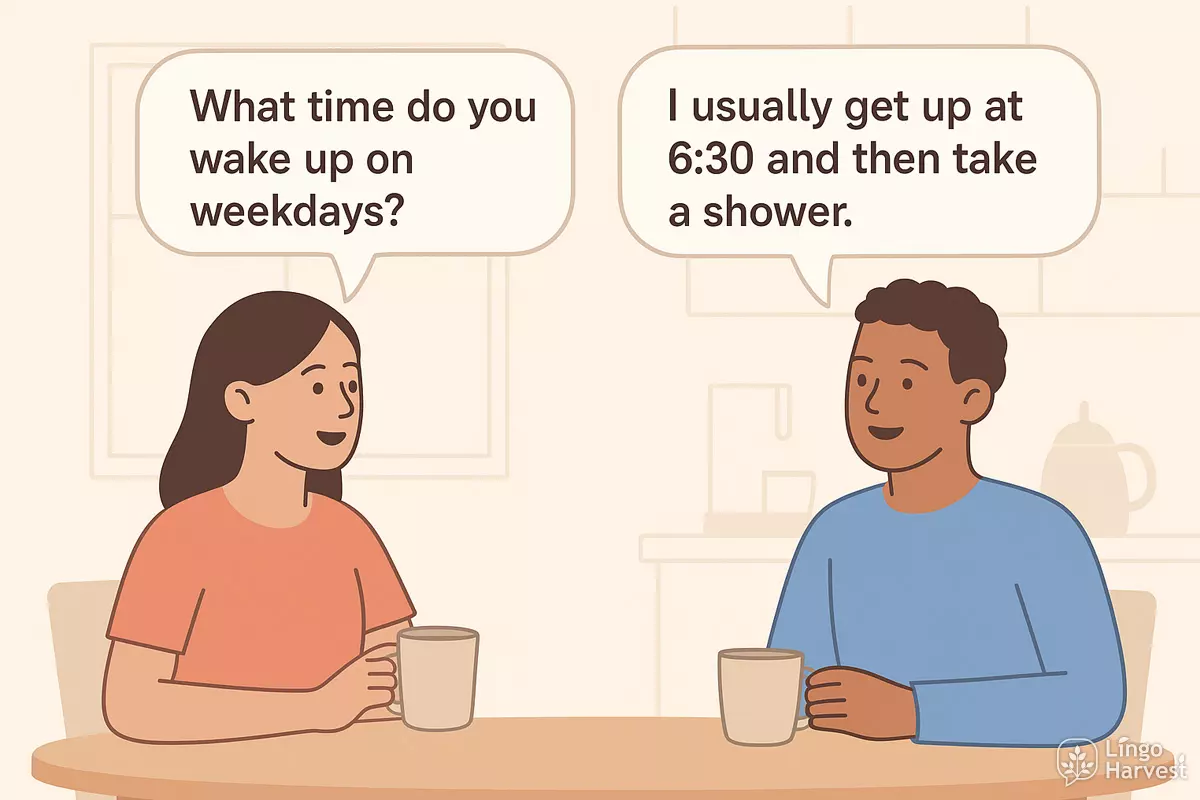
Sample Dialogues Using Common Daily Routine Collocations
- Anna: What time do you wake up on weekdays?
Ben: I usually get up at 6:30 and then take a shower. - Lisa: Do you make breakfast every morning?
Tom: Yes, I prepare coffee and eat toast before work. - David: How do you get to work?
Emma: I catch the bus at 8:00. - Sam: When do you start work?
Jill: I begin my shift at 9:00 sharp. - Alex: Do you take a break during the day?
Sara: I usually have lunch at noon. - Mike: What do you do after work?
Nina: I go to the gym or meet friends. - Chris: Do you cook dinner at home?
Olga: Most nights, I make dinner for my family. - Rita: How do you relax in the evening?
Leo: I like to watch TV or read a book. - Helen: What time do you go to bed?
Paul: I usually fall asleep around 11. - Ella: Do you set an alarm every night?
Steve: Yes, I set my alarm for 6:00 every morning.
Quick Reference: Typical Verb + Noun Collocations for Routines
| Action | Example Collocation |
|---|---|
| Starting the day | wake up, get up, make the bed |
| Morning activities | brush teeth, take a shower, get dressed |
| Meals | have breakfast, make coffee, eat lunch |
| Commuting | catch the bus, drive to work, ride a bike |
| Work/Study | start work, check emails, attend meetings |
| Evening | cook dinner, watch a movie, go for a walk |
| Night routine | set an alarm, read a book, go to sleep |
These examples and the reference list provide a variety of collocations for describing typical daily habits. Practicing with these real-life phrases can make your conversations about routines more natural and expressive.
Practice: Build Routine Descriptions
Creating detailed descriptions of everyday habits helps you master common verb and noun combinations. Using accurate collocations makes your language sound more natural and fluent. Below, you’ll find guided tasks and example phrases to help you describe typical daily actions with the right word pairings.
Common Actions for Daily Life
Start by reviewing these frequent verb + noun collocations. They are the building blocks for describing routines:
- wake up early
- make the bed
- brush your teeth
- take a shower
- have breakfast
- drink coffee
- pack a bag
- leave the house
- catch a bus
- start work
- check emails
- attend a meeting
- eat lunch
- finish work
- go grocery shopping
- cook dinner
- do the dishes
- watch TV
- read a book
- go to bed
Task 1: Describe Your Morning
Write 3–5 sentences about your morning using at least four different collocations from the list above. Try to use the correct verb + noun combinations.
Show answers
- I wake up early and make the bed. Then I brush my teeth and take a shower. After that, I have breakfast and drink coffee before leaving the house.
- Every morning, I pack a bag and catch a bus to work. I start work by checking emails.
Task 2: Identify the Correct Collocation
Choose the best verb for each noun. Write the correct verb + noun phrase.
- ______ a shower
- ______ a meeting
- ______ the dishes
- ______ breakfast
- ______ TV
Show answers
- take a shower
- attend a meeting
- do the dishes
- have breakfast
- watch TV
Comparison Table: Sample Sentences
Below is a table showing correct and incorrect examples of collocations for routines. Notice how the verb choice affects the naturalness of the phrase.
| Correct Collocation | Incorrect Collocation |
|---|---|
| make the bed | do the bed |
| catch a bus | take a bus (when you mean to board, not drive) |
| do the dishes | make the dishes |
| have breakfast | eat a breakfast |
| go grocery shopping | make grocery shopping |
Task 3: Expand Your Routine
Now, add two more sentences to your description. Use new collocations from the list or invent your own based on the pattern (verb + noun).
Show answers
- After work, I go grocery shopping and cook dinner. Later, I watch TV to relax before I go to bed.
- In the evening, I do the dishes and read a book.
Use these activities to strengthen your ability to describe daily routines in accurate, natural English. Try combining different collocations to reflect your personal habits.