50 Common Verbs Every Beginner Should Learn

 The article explains how to learn verbs efficiently, presents the top 50 verbs with meanings, gives examples in different forms, includes mini phrases, a quiz, tips for common mistakes, and sentence practice to reinforce learning.
Learning a new language can seem daunting at first, particularly when it comes to expanding your vocabulary. Focusing on the most common action words is an effective strategy to quickly improve your communication skills and gain confidence early in your language journey. By prioritizing these essential verbs, you lay a strong foundation for everyday conversations and make it easier to understand and express yourself in various situations. This approach not only accelerates your progress but also helps you stay motivated as you notice your ability to interact growing steadily.
How to Learn Verbs Efficiently
Learning verbs is a core skill for language beginners. Focusing on the words you’ll actually use daily helps you communicate faster and with more confidence. The best approach is to mix different learning methods and practice regularly, rather than memorizing long lists out of context.
Group Similar Verbs Together
Organizing verbs by themes—like movement, thinking, or daily routines—makes them easier to remember. For example, group “go,” “come,” and “leave” together since they all relate to movement. This method highlights patterns and differences, which can speed up the learning process.
Practice with Real Sentences
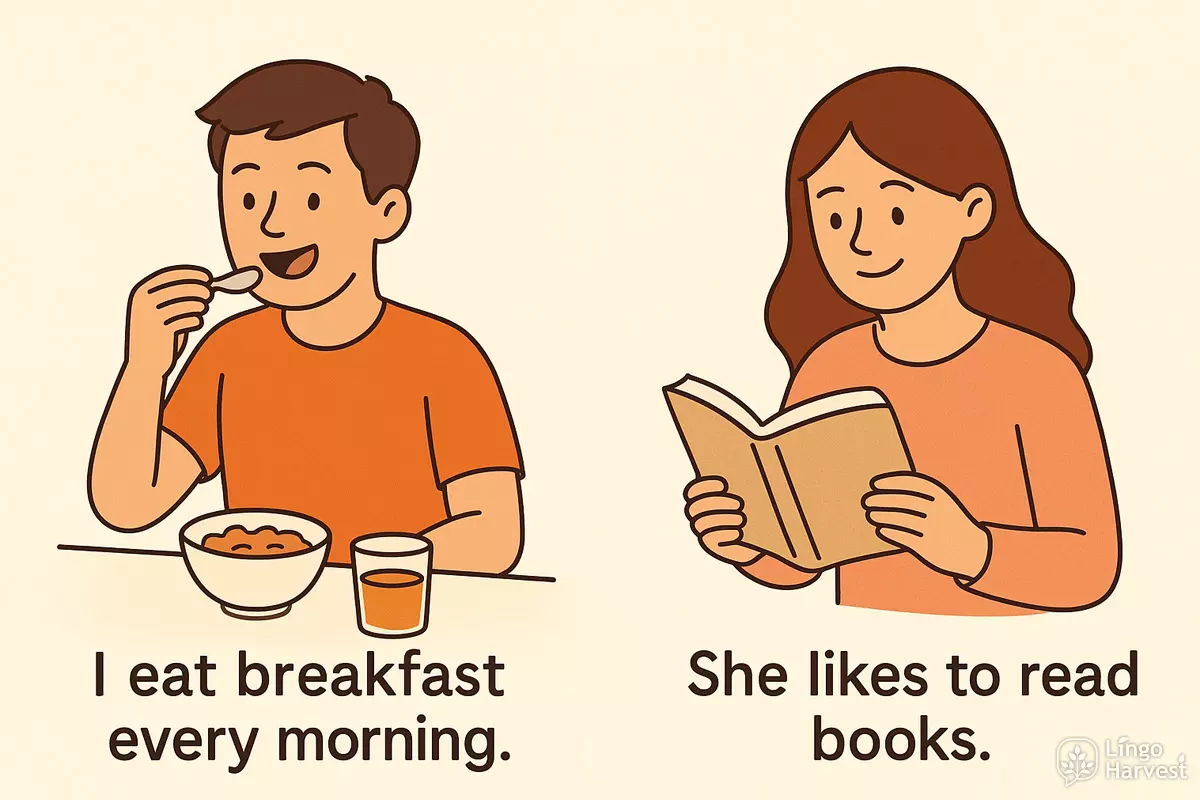
Don’t just study verbs in isolation. Use them in short, simple sentences that reflect real-life situations. Here are some sample sentences using common verbs:
- I eat breakfast every morning.
- She likes to read books.
- We live in the city.
- They work at a hospital.
- He plays the guitar.
- The dog runs fast.
- You need help?
- I write emails every day.
- She studies English.
- We watch movies together.
Review Verb Forms Systematically
Many verbs change form depending on tense or subject. Creating a simple chart helps you compare and remember these changes. Here’s an example with three common English verbs:
| Verb | Present | Past | Past Participle |
|---|---|---|---|
| go | go / goes | went | gone |
| eat | eat / eats | ate | eaten |
| make | make / makes | made | made |
| see | see / sees | saw | seen |
Use Spaced Repetition and Active Recall
Regularly test yourself on verbs you’ve learned, spacing out your review sessions. Apps, flashcards, or simple paper lists can help. Try to recall a verb from memory before checking the answer—this strengthens long-term retention.
Tips for Faster Progress
- Listen for verbs in conversations, songs, and videos.
- Write short stories or diary entries using new verbs.
- Practice speaking aloud, even if you’re alone.
- Pair verbs with common objects or actions for clearer associations.
- Focus on the most frequent verbs first; these cover most everyday situations.
- Check your understanding by explaining a verb’s meaning in your own words.
Combining these techniques will help you remember new verbs, use them correctly, and develop your speaking and writing skills more naturally.
Top 50 Verbs with Meanings
Learning the most frequently used verbs is one of the most effective ways to build a solid foundation in any language. Verbs are essential because they describe actions, states, and occurrences, helping you express yourself in countless everyday situations. Below, you’ll find a list of common action words along with their meanings—ideal for beginners looking to expand their vocabulary quickly and confidently.
Essential Everyday Verbs and Their Meanings
- Be – to exist or to have a particular quality
- Have – to own, possess, or experience
- Do – to perform or carry out an action
- Go – to move from one place to another
- Say – to speak or express in words
- Get – to receive, obtain, or become
- Make – to create or form something
- Know – to have knowledge or be aware of something
- Think – to use your mind to form ideas or opinions
- Take – to acquire or move something from one place to another
- See – to perceive with the eyes
- Come – to move towards the speaker or a place
- Want – to desire or wish for something
- Use – to employ for a purpose
- Find – to discover or locate
- Give – to hand over or present
- Tell – to communicate information to someone
- Work – to perform a job or task
- Call – to name or contact by phone
- Try – to make an attempt or effort
More Useful Verbs for Daily Conversation
- Ask – to request information
- Need – to require something
- Feel – to experience an emotion or sensation
- Leave – to go away from a place
- Put – to place something somewhere
- Mean – to signify or represent
- Keep – to retain or continue to have
- Let – to allow or permit
- Begin – to start or commence
- Show – to display or allow to be seen
- Hear – to perceive sound
- Play – to engage in an activity for enjoyment
- Run – to move quickly on foot
- Move – to change position or place
- Live – to be alive or reside
- Believe – to accept as true
- Hold – to grasp or carry
- Bring – to take or carry to a place
- Write – to form letters or words, usually on paper
- Sit – to be in a seated position
Common Verbs in Context
| Verb | Example Sentence |
|---|---|
| Eat | I eat breakfast every morning. |
| Drink | She drinks water after running. |
| Read | They read books in the library. |
| Sleep | He sleeps eight hours every night. |
| Speak | We speak English in class. |
| Buy | You buy groceries on Sundays. |
| Listen | I listen to music after work. |
| Open | Please open the window. |
| Close | He closes the door quietly. |
| Send | She sends an email every day. |
By practicing these widely used verbs with their meanings and context examples, you’ll be able to understand and communicate basic ideas with greater confidence. As you continue learning, pay attention to how these verbs appear in real-life conversations and practice forming your own sentences to reinforce your skills.
Base / 3rd Person / Past Examples
Understanding how verbs change forms is essential for building correct sentences. English verbs often have three important forms: the base (infinitive), the third person singular (used with he, she, it in the present), and the past simple. Recognizing these patterns helps you communicate clearly and avoid common mistakes.
How Verb Forms Change
Most regular verbs simply add -s for the third person singular, and -ed for the past. However, many common verbs are irregular and must be memorized. Here are some typical patterns and exceptions:
| Base Form | 3rd Person (he/she/it) | Past Simple |
|---|---|---|
| play | plays | played |
| go | goes | went |
| have | has | had |
| make | makes | made |
| read | reads | read (pronounced “red”) |
| eat | eats | ate |
| see | sees | saw |
| write | writes | wrote |
| come | comes | came |
| take | takes | took |
| give | gives | gave |
| find | finds | found |
| think | thinks | thought |
| feel | feels | felt |
| run | runs | ran |
| sit | sits | sat |
| say | says | said |
| know | knows | knew |
| begin | begins | began |
| bring | brings | brought |
Quick Reference Table: Verb Forms
| Base Form | 3rd Person Singular | Past Simple |
|---|---|---|
| work | works | worked |
| see | sees | saw |
| go | goes | went |
| take | takes | took |
| make | makes | made |
| read | reads | read |
| give | gives | gave |
| find | finds | found |
| play | plays | played |
| eat | eats | ate |
Using these examples, you can begin to spot patterns and exceptions, making it easier to remember how to form correct sentences. Practice with a variety of verbs to reinforce your understanding and build confidence in your English skills.
Mini Phrases with Each Verb
Learning verbs in isolation can be challenging, so seeing them in short, everyday phrases makes them much easier to remember and use. By connecting each action word to a real-life context, you’ll start to recognize patterns and understand how verbs function in daily conversation. Below, you’ll find practical expressions with some of the most common verbs for beginners. These examples can help you build your confidence and start forming your own sentences.
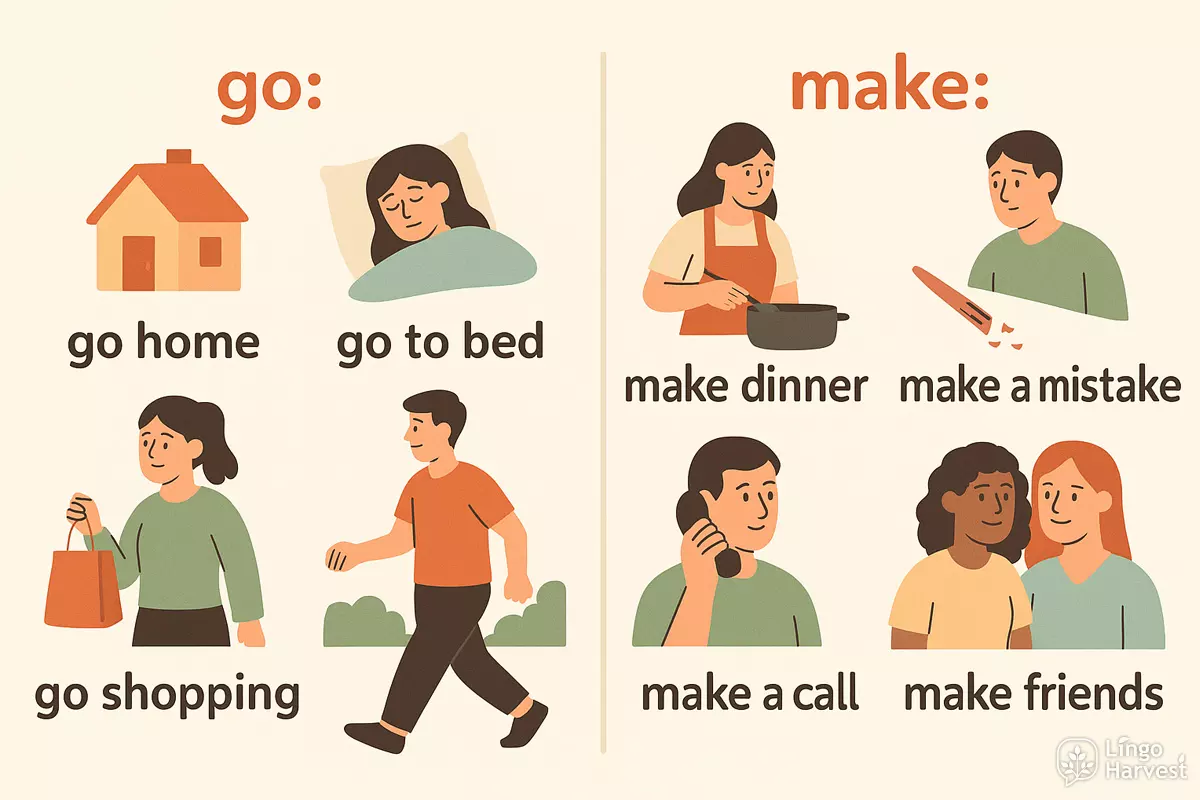
Everyday Expressions for Common Verbs
- go: go home, go to bed, go shopping, go outside
- make: make dinner, make a mistake, make a call, make friends
- take: take a break, take a photo, take notes, take medicine
- get: get up, get ready, get lost, get better
- see: see a movie, see the doctor, see the difference, see you later
- come: come in, come back, come with me, come early
- give: give advice, give a gift, give a hand, give up
- find: find out, find a job, find the answer, find time
- think: think about it, think twice, think fast, think big
- ask: ask a question, ask for help, ask permission, ask around
- work: work hard, work late, work from home, work together
- call: call me, call back, call the police, call for help
- feel: feel better, feel tired, feel free, feel sorry
- try: try again, try it on, try your best, try new things
- need: need help, need a break, need to eat, need more time
- help: help me, help out, help with homework, help each other
- like: like chocolate, like to read, like this song, like you
- use: use a pen, use the phone, use your time, use the stairs
- start: start now, start again, start the car, start a conversation
- play: play soccer, play music, play with friends, play games
Comparing Phrase Patterns
Many verbs form short phrases using similar patterns. Here’s a comparison of how a few high-frequency verbs work in common contexts:
| Verb | Typical Phrases |
|---|---|
| take | take a seat, take a chance, take a shower, take your time |
| get | get dressed, get home, get a job, get angry |
| make | make money, make a plan, make noise, make an effort |
| give | give up, give a speech, give a ride, give information |
By practicing these ready-made expressions, you’ll quickly sound more natural and fluent. Try to notice how these short combinations appear in real conversations, and don’t hesitate to create your own using the verbs you’re learning.
Check-Yourself Quiz
Ready to see how well you’ve learned the essential action words? Use these exercises to reinforce your understanding of common verbs. Try to answer each question before revealing the solutions below.
Fill in the Blank
Complete each sentence by choosing the correct verb from the list in parentheses.
- Every morning, I ________ a cup of coffee. (drink / write / read)
- She always ________ her homework before dinner. (open / do / play)
- They ________ TV in the evening. (watch / close / sleep)
- We ________ to music while working. (listen / eat / make)
- He ________ the door before leaving. (close / find / give)
Show answers
- drink
- does
- watch
- listen
- closes
Match the Verb to Its Meaning
Link each verb with its definition:
- to eat
- to run
- to read
- to speak
- to write
- a. to move quickly on foot
- b. to say words aloud
- c. to use a pen or pencil to make words
- d. to consume food
- e. to look at and understand written words
Show answers
- to eat – d
- to run – a
- to read – e
- to speak – b
- to write – c
Verb Forms Table
Many fundamental verbs change form. Review the base, past, and -ing forms below. Can you recall others with similar patterns?
| Base Form | Past Simple | -ing Form |
|---|---|---|
| go | went | going |
| see | saw | seeing |
| make | made | making |
| take | took | taking |
| write | wrote | writing |
| eat | ate | eating |
Show answers
- go – went – going
- see – saw – seeing
- make – made – making
- take – took – taking
- write – wrote – writing
- eat – ate – eating
Quick Practice: Choose the Correct Verb
Select the best action word for each situation:
- ✅ If you want to remember something, you usually ________ it down.
- ✅ When you finish a meal, you often ________ the dishes.
- ✅ To communicate with a friend far away, you might ________ them an email.
- ✅ If you are tired, you need to ________.
Show answers
- write
- wash
- send
- sleep
Test yourself regularly to master these fundamental verbs. Practicing in context helps you remember the right word when you need it.
Common Confusions and Fixes
Many beginners stumble over similar issues when learning essential verbs. The most frequent mix-ups involve irregular forms, false friends, and subtle differences in meaning or usage. By noticing these patterns early, learners can avoid common mistakes and communicate more clearly.
Irregular Verb Forms
Some frequently used verbs don’t follow the standard pattern for past tense or participles. For example, “go” becomes “went,” not “goed.” It’s helpful to memorize these exceptions as you encounter them.
- Go → went (not "goed")
- See → saw (not "seed")
- Take → took
- Come → came
- Eat → ate
- Give → gave
- Find → found
- Begin → began
- Drink → drank
- Write → wrote
Look-Alike Verbs
Words that seem similar can have very different meanings. It’s easy to confuse them, especially when their forms are close.
| Verb | Common Confusion / How to Fix |
|---|---|
| Make vs. Do | Use “make” for creating or producing something (“make a cake”), and “do” for activities or tasks (“do homework”). |
| Say vs. Tell | “Say” doesn’t require a listener (“She said hello”). “Tell” needs a person (“She told me a story”). |
| Take vs. Bring | “Take” is away from you (“take this to school”); “bring” is towards you (“bring it here”). |
| Come vs. Go | “Come” means moving towards the speaker (“come here”), “go” means moving away (“go there”). |
| Hear vs. Listen | “Hear” is passive (sound reaches you), “listen” is active (you focus on sounds). |
| Watch vs. Look | “Watch” is for things that move (watch TV), “look” is for attention (look at this). |
| Win vs. Earn | “Win” is for competitions (“win a race”), “earn” for getting something through effort (“earn money”). |
| Borrow vs. Lend | “Borrow” means to take for a time (“borrow a book”), “lend” means to give for a time (“lend you a book”). |
False Friends and Misleading Translations
Some verbs look similar to words in other languages but mean something different in English. Always double-check these to avoid awkward mistakes.
- Assist means to help, not to attend.
- Actual (adjective) means real, not current.
- Pretend means to act as if, not to claim.
- Sympathize means to share feelings, not to congratulate.
Quick Fixes for Typical Mistakes
To avoid repeating errors, try these strategies:
- Memorize irregular verb forms with flashcards.
- Practice using confusing pairs in context.
- Listen to native speakers to hear verbs in real conversations.
- Double-check verb meanings before using them in writing or speech.
- Review your mistakes regularly and note any patterns.
With a bit of attention to these trouble spots, you’ll build confidence and accuracy as you master the most useful verbs.
Practice: Create Short Sentences
Writing basic sentences is a practical way to master essential verbs. By focusing on simple structures, beginners can quickly build confidence and recognize how verbs function in real communication. Here, you’ll find short sample sentences using common action words, plus exercises to help you practice making your own phrases.
Examples of Simple Sentences with Common Verbs
- I eat.
- You run.
- She reads.
- We play.
- They sleep.
- He drinks.
- I write.
- You listen.
- She cooks.
- We walk.
- They jump.
- He opens the door.
- I call my friend.
- You watch TV.
- She learns English.
- We start now.
- They finish early.
- He helps me.
- I close the window.
- You drive fast.
Practice: Make Your Own Short Sentences
Try creating new sentences using the verbs below. Use “I”, “you”, “he”, “she”, “we”, or “they” as the subject. Keep each sentence 3–5 words long.
- go
- find
- like
- need
- see
- make
- talk
- read
- give
- take
- Write a sentence with “go”.
- Make a sentence with “like”.
- Use “give” in a short sentence.
- Write a sentence with “see”.
- Make a sentence with “need”.
Show answers
- I go home.
- They like pizza.
- We give gifts.
- She sees birds.
- You need help.
Compare: Subject + Verb Patterns
| Subject | Short Sentence Example |
|---|---|
| I | I run. |
| You | You read. |
| He | He eats. |
| We | We play. |
| They | They jump. |
Practice making your own simple statements by mixing different subjects and verbs from the lists above. Short, clear sentences will help you remember the most useful verbs and how to use them in daily conversation.