Verbs You'll Use Today: Speak, Go, Get - Learn the Real Basics Fast

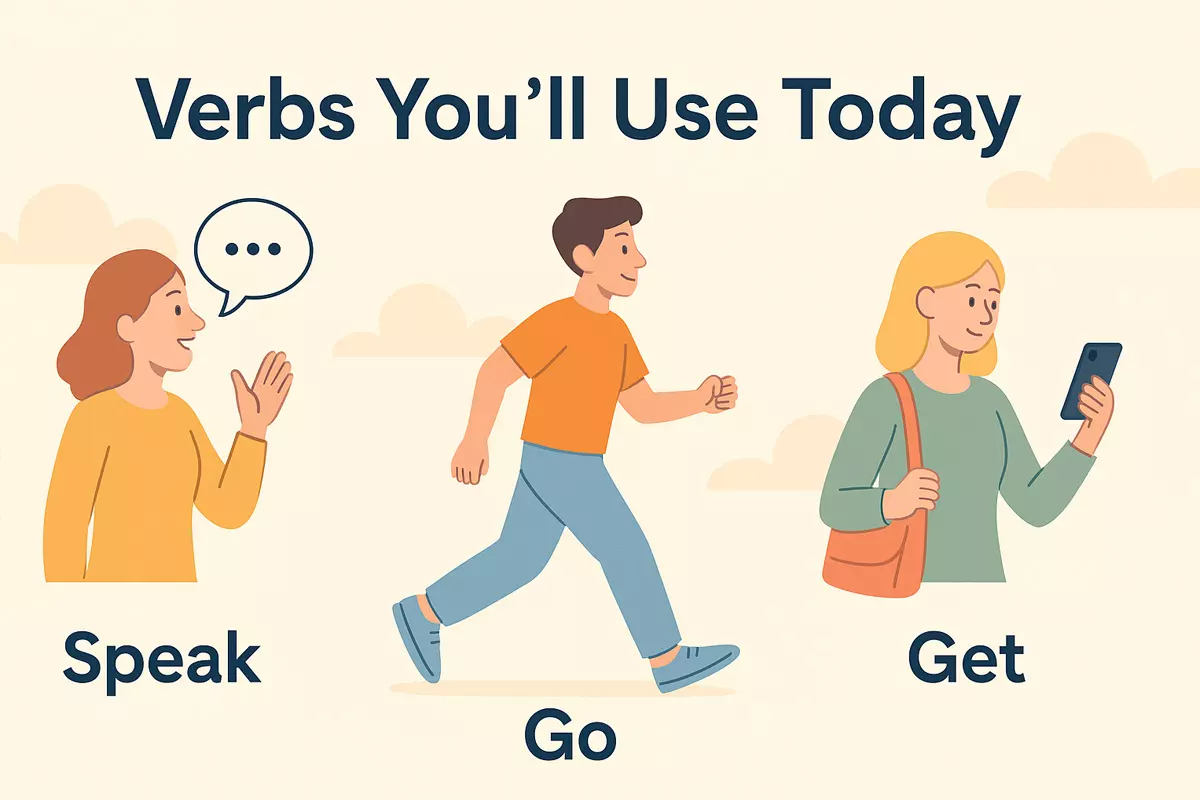 This article explains why speak, go, and get are essential verbs. It covers communication phrases, travel and planning, core meanings, short questions, common mistakes with fixes, and includes practice mini dialogues for daily English use.
We use basic action words every day to communicate, travel, and get what we need, making them essential for clear and effective English. By mastering these fundamental verbs, you can express yourself more smoothly and naturally, whether you are having a conversation, navigating new places, or requesting something. Focusing on these core words will help you build confidence and improve your fluency, making it easier to handle daily situations in English starting right now.
Why These Verbs Are Essential
Mastering “speak,” “go,” and “get” gives you a foundation for everyday conversations. These verbs appear constantly in real-life situations, whether you’re making plans, asking for help, or sharing your thoughts. By understanding how to use them naturally, you unlock the ability to express yourself in countless contexts—from simple questions to more complex ideas.
Everyday Communication
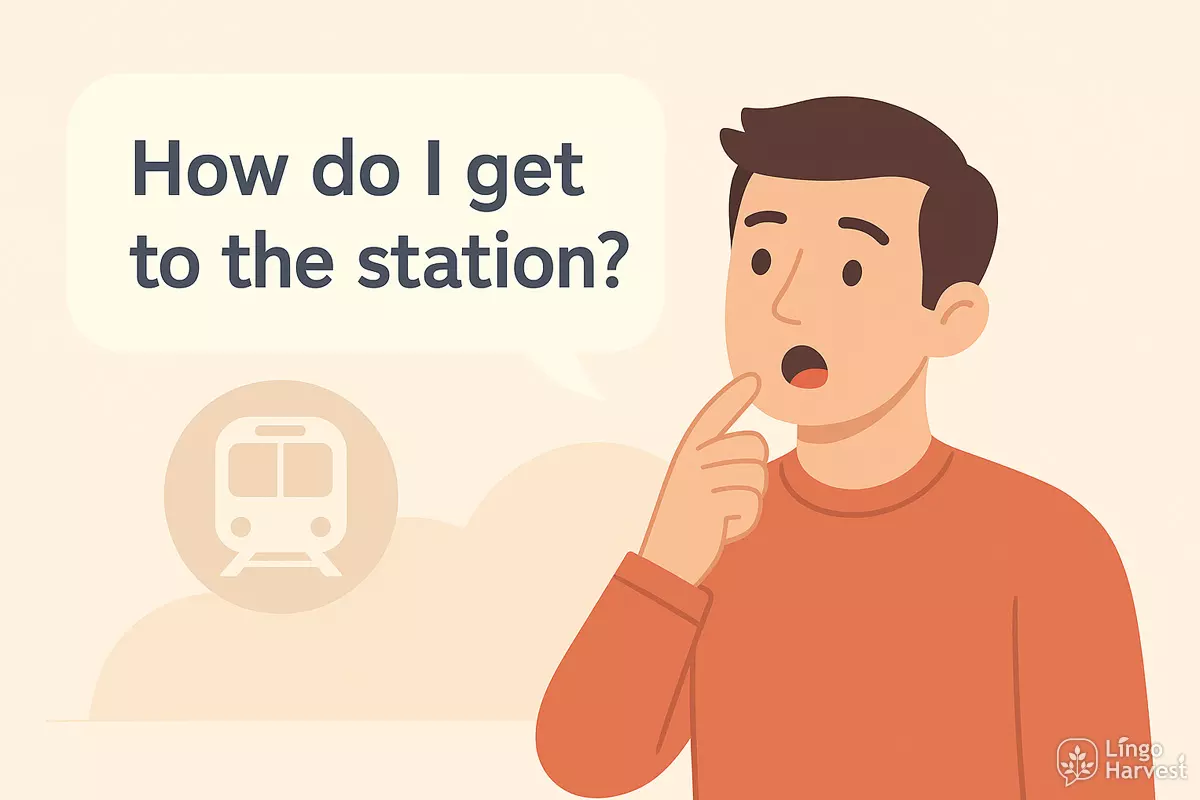
Consider how often you need to talk about movement, communication, or obtaining something. These actions are at the heart of daily life. Knowing how to use these words smoothly helps you:
- Ask for directions (“How do I get to the station?”)
- Discuss plans (“Are you going to the meeting?”)
- Make requests (“Can you get me a glass of water?”)
- Express intentions (“I’m going to learn English.”)
- Share experiences (“I spoke with my friend yesterday.”)
- Offer help (“I can get that for you.”)
- Talk about routines (“I go to work every day.”)
- Describe abilities (“I can speak three languages.”)
- Report news (“He got a new job.”)
- Clarify meaning (“What does that word mean?” / “Let me speak to the manager.”)
Flexibility in Expression
These verbs adapt to many situations. For example, “get” can mean to receive, become, or fetch. “Go” covers both physical movement and changes in state (“go home,” “go crazy”). “Speak” is used for general communication and specific languages (“speak loudly,” “speak French”). Their versatility makes them vital building blocks as you progress.
Core Verb Forms and Uses
Recognizing the patterns and forms of these verbs helps you build sentences quickly. Here’s a comparison of their most common forms:
| Verb | Base Form | Past Simple | Past Participle | Common Uses |
|---|---|---|---|---|
| Speak | Speak | Spoke | Spoken | To talk, to use a language |
| Go | Go | Went | Gone | To move, to travel, to become |
| Get | Get | Got | Got/Gotten | To receive, to become, to obtain |
Focusing on these three action words gives you the tools to ask questions, share information, and describe your world. As you use them more, you’ll notice your confidence and fluency improving in practical, meaningful ways.
Speak: Communication and Conversation Phrases
Finding the right words to express yourself is essential in daily interactions. Whether you’re chatting with friends, asking for help, or sharing ideas at work, knowing practical ways to start, maintain, and end a conversation helps you feel more confident and understood. Here are some common expressions and questions that can make your speaking more natural and effective.
Starting a Conversation
- Hi, how’s it going?
- Excuse me, can I ask you something?
- Do you have a moment?
- I wanted to talk to you about…
- Can we chat for a second?
Keeping the Conversation Moving
- That’s interesting. Tell me more.
- What do you think about this?
- I see what you mean.
- Could you explain that?
- How did that happen?
- Really? Why is that?
- Can you give me an example?
- Let me check if I understand.
Expressing Opinions and Feelings
- In my opinion, …
- I feel that …
- To be honest, …
- Personally, I think …
- I’m not sure, but …
Ending a Conversation Politely
- It was nice talking to you.
- I have to go now, but let’s talk again soon.
- Thanks for your time.
- Let’s keep in touch.
- Take care!
Useful Verbs for Speaking
| Verb | Example Phrase |
|---|---|
| say | She said hello. |
| tell | Can you tell me the time? |
| ask | He asked a question. |
| talk | Let’s talk about it. |
| discuss | We discussed the plan. |
| explain | Please explain this to me. |
| mention | Did he mention the date? |
| reply | I’ll reply soon. |
Mastering these expressions and action words helps you communicate clearly and connect with others in a variety of situations. Practice using them in real conversations to build fluency and confidence.
Go: Movement, Travel, and Plans
When you want to talk about moving from one place to another, or making plans for the future, the verb "go" is your essential tool. It's used for physical movement, but also for discussing intentions, routines, and even events in your schedule.
Everyday Uses of "Go"
"Go" appears in many basic sentences and questions. Here are some common ways native speakers use it:
- I go to work at 9 AM.
- She goes to the gym after school.
- Let’s go for a walk.
- Are you going to the party tonight?
- They went home early.
- We’re going shopping tomorrow.
- He goes by train.
- Go straight and turn left.
- Can you go upstairs?
- We went on vacation last month.
- Are you going out now?
- It’s time to go.
- Go ahead!
- I need to go soon.
- Let’s go together.
- Don’t go alone.
- Where do you go on weekends?
- She’s going to be late.
- We go to the same café every week.
- He went to see his friend.
Making Plans and Intentions
"Go" is often used with "to" and an activity to talk about intentions or plans. For example, "I'm going to study tonight" or "We're going to eat out." In these cases, "going to" introduces a future action, not just physical movement.
Forms of "Go": Present, Past, and Future
It’s helpful to see how "go" changes based on tense and subject. Here’s a quick overview:
| Subject | Present | Past | Future (with 'going to') |
|---|---|---|---|
| I / You / We / They | go | went | am / are going to go |
| He / She / It | goes | went | is going to go |
Common Expressions with "Go"
The verb "go" is found in many everyday phrases:
- Go home
- Go out
- Go for a run
- Go shopping
- Go on holiday
- Go to bed
- Go crazy
- Go missing
- Go wrong
- Go well
Learning these patterns will help you communicate clearly about movement, travel, and future plans in English. Use "go" confidently to talk about where you’re headed and what you’ll do next!
Get: Core Everyday Meanings
When you use "get" in daily English, it almost always signals an action or a change—receiving, becoming, or reaching. This verb is everywhere because it's flexible and fits into many situations, from picking up a package to understanding a joke. If you want to master the basics, focus on the most common ways native speakers use "get" in conversation.
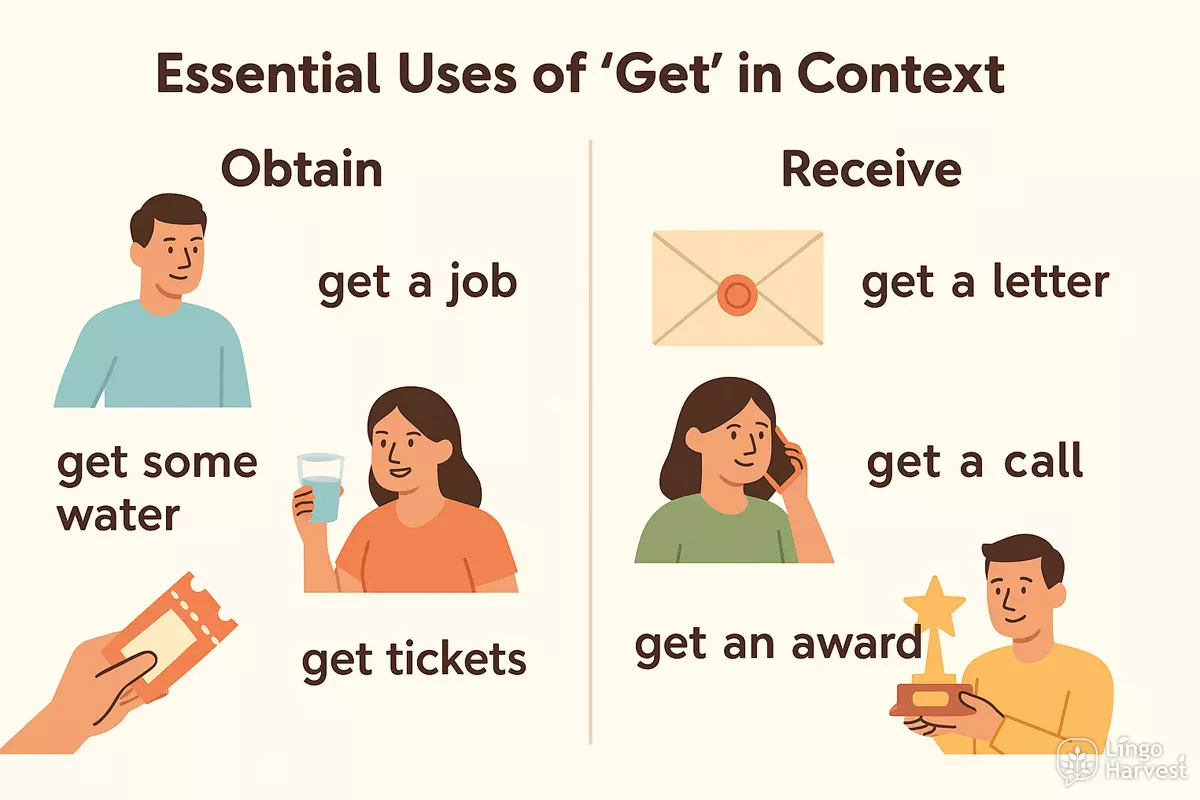
Essential Uses of "Get" in Context
- Obtain: "get a job," "get some water," "get tickets"
- Receive: "get a letter," "get a call," "get an award"
- Become: "get tired," "get angry," "get better"
- Arrive/Reach: "get home," "get to work," "get there"
- Understand: "get the joke," "get what you mean"
- Bring: "get me my bag," "get the keys"
- Catch (transport): "get the bus," "get a taxi"
- Experience: "get a shock," "get a chance"
- Have (in certain phrases): "get your hair cut," "get something done"
- Persuade or cause: "get someone to help," "get it fixed"
Common Patterns and Phrases
You’ll often find "get" paired with prepositions or adjectives to create new meanings. These combinations are called phrasal verbs. Here are some you’ll likely hear today:
- get up (wake up and leave your bed)
- get on (board transport, or have a good relationship: "get on with someone")
- get off (leave transport, or avoid punishment: "get off lightly")
- get by (manage, survive: "get by on little money")
- get over (recover from: "get over a cold")
- get along (have a friendly relationship)
- get back (return: "get back home")
- get out (leave, escape: "get out of the house")
- get together (meet: "let’s get together soon")
- get through (finish or survive: "get through a tough day")
Quick Reference: Forms of "Get"
| Form | Example |
|---|---|
| Base | I get up early. |
| Past Simple | She got a present. |
| Past Participle | They have gotten better. (US) / They have got better. (UK) |
| Present Participle | He is getting ready. |
Tips for Natural Use
Notice how "get" often replaces more formal verbs. Instead of "receive an email," people say "get an email." This makes your speech sound more natural. Also, remember that "get" changes meaning with context, so always check what comes after it. By focusing on these high-frequency uses and patterns, you’ll quickly understand and use "get" the way native speakers do.
Short Questions and Natural Replies
When you’re learning the basics of everyday verbs like “speak,” “go,” and “get,” it’s helpful to practice how these verbs appear in real conversations. In daily English, people often use short questions and quick, simple replies. These patterns are essential for smooth, natural exchanges, especially when you want to sound friendly and confident.
Common Short Questions Using Basic Verbs
Short questions often use the verbs you’ll need most. Here are some typical examples you might hear or use:
- Do you speak English?
- Can you go now?
- Did you get my message?
- Will you go with me?
- Have you spoken to her?
- Are you going out?
- Did you get it?
- Can I go?
- Did you speak to the manager?
- Will you get that for me?
- Did he go home?
- Have you got a minute?
- Are you getting lunch?
Natural Replies in Real Life
Native speakers usually answer with very short, direct phrases instead of repeating the full sentence. These replies help keep the conversation flowing and sound more relaxed.
- Yes, a little.
- No, not yet.
- Sure, let’s go.
- I did.
- No, I haven’t.
- Of course.
- Sorry, I can’t.
- Just a second.
- Yes, I got it.
- No problem.
- Maybe later.
- Yes, I am.
- Not today.
Patterns for Everyday Use
Notice how the structure of these questions and replies is simple and to the point. Mastering these patterns will help you join conversations and respond quickly without overthinking.
| Short Question | Natural Reply |
|---|---|
| Do you speak English? | Yes, a bit. |
| Can you go now? | Not right now. |
| Did you get it? | Got it! |
| Are you going out? | In a minute. |
| Will you get that? | On it! |
| Have you spoken to her? | Not yet. |
Practicing these concise exchanges helps you sound more natural and keeps conversations moving. Try using them in your daily interactions—soon, you’ll find your confidence and fluency growing.
Typical Mistakes and Simplified Fixes
Many learners run into predictable problems when using basic verbs like "speak," "go," and "get." Understanding these issues is the first step toward using them naturally in everyday conversation. Below are some of the most frequent slip-ups, along with easy ways to correct them.
Common Errors with "Speak," "Go," and "Get"
- Using "speak" instead of "say" or "tell" (e.g., She speak me the answer ❌ instead of She told me the answer ✅).
- Forgetting to add "to" after "speak" when needed (I want speak you ❌ → I want to speak to you ✅).
- Confusing past and present forms: I go yesterday ❌ vs. I went yesterday ✅.
- Using "get" incorrectly for "become" or "receive": I get cold can mean I become cold or I receive cold; context matters.
- Mixing up "go to home" vs. "go home" (no "to" needed).
- Trying to use "get" for all situations: I get a shower instead of I take a shower.
- Omitting "to" after "go": I go school ❌ → I go to school ✅.
- Using "speaked" or "goed" as past forms (should be "spoke" and "went").
- Adding extra words: Go to outside ❌ vs. Go outside ✅.
- Confusing "get" with "give": Can you get me this? vs. Can you give me this?.
- Using "speaking" instead of "talking" in casual settings: We are speaking (formal) vs. We are talking (informal).
- Forgetting subject-verb agreement: He go ❌ vs. He goes ✅.
Quick Reference: Correct Forms and Uses
| Verb | Common Mistake ❌ / Correct Usage ✅ |
|---|---|
| Speak | Mistake: She speak English. Correct: She speaks English. |
| Go | Mistake: I go to home. Correct: I go home. |
| Get | Mistake: I get a cold (when meaning "catch a cold" is intended). Correct: I caught a cold. |
| Go (Past) | Mistake: Yesterday I go. Correct: Yesterday I went. |
Tips for Avoiding These Errors
Double-check verb forms, especially in the past tense. When in doubt, look up common phrases or listen to how native speakers use these verbs in context. Practice forming sentences with each verb to build your confidence and accuracy. Remember, simple corrections can make your English sound much more natural and clear.
Practice: Mini Dialogues
Engaging in short exchanges is one of the fastest ways to internalize the usage of essential verbs like "speak," "go," and "get." Below, you'll find sample mini dialogues that show real-life scenarios, plus tasks to help you build confidence using these words every day.
Everyday Conversations Using “Speak,” “Go,” and “Get”
- Speak
A: Do you speak English?
B: Yes, but only a little. - Go
A: Where do you go after work?
B: I go to the gym. - Get
A: Can you get me some water?
B: Sure, just a moment. - A: Who will speak at the meeting?
B: Anna will speak first. - A: When do you go shopping?
B: I usually go on Saturdays. - A: How do I get to the station?
B: Go straight and turn left. - A: Did you get my message?
B: Yes, I got it this morning. - A: Can we speak now?
B: Of course, what’s up? - A: Where did you go last weekend?
B: I went to the beach. - A: What time did you get home?
B: I got home at 8 PM. - A: Who do you speak with at work?
B: I speak with my manager every day. - A: Are you going to the party?
B: Yes, I’m going tonight. - A: Did you get a new phone?
B: Not yet, but I will soon.
Fill in the Blanks
Complete each mini dialogue with the correct form of “speak,” “go,” or “get.”
- A: Can you _____ slower, please?
B: Sure, no problem. - A: Where did you _____ on holiday?
B: I _____ to Italy. - A: What time do you usually _____ up?
B: I _____ up at 6 AM. - A: When do you _____ to the office?
B: I _____ every Monday. - A: Did you _____ my email?
B: Yes, I did.
Show answers
- speak
- go; went
- get; get
- go; go
- get
Quick Challenge: Matching Responses
Match each question to the best answer:
- 1. Where do you go after class?
- 2. Can you speak French?
- 3. Did you get the tickets?
- 4. Who do you speak with at lunch?
- A. Yes, I got them yesterday.
- B. I go to the library.
- C. My friends from work.
- D. Only a little.
Show answers
- 1 – B
- 2 – D
- 3 – A
- 4 – C
Use these short exchanges as models to create your own dialogues. Practicing with a partner or out loud helps you become more comfortable with these high-frequency verbs in daily interactions.