Expressing Surprise and Joy: Oh!, Great!, Awesome!

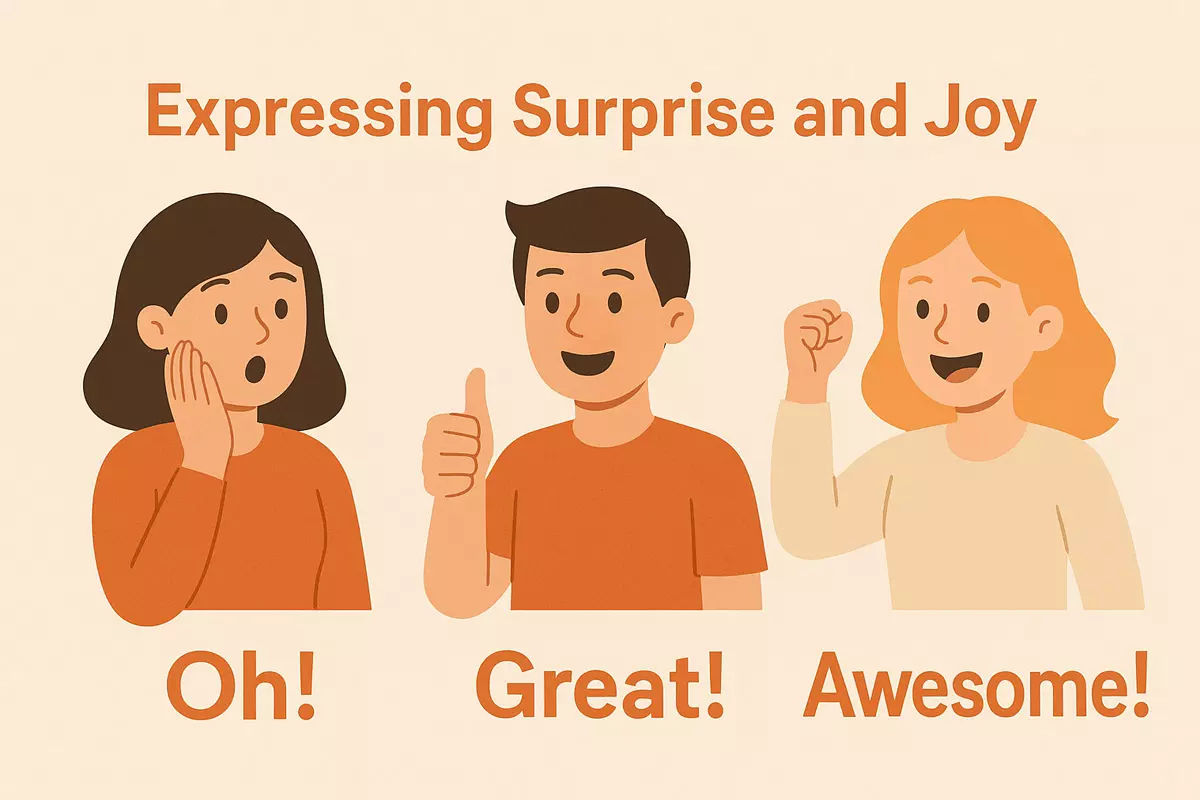 The article explains how to use positive exclamations like Oh!, Great!, and Awesome! in English, covering their meanings, strength, context, tone, punctuation, pronunciation, and when to use casual or neutral choices, with practice examples.
Each day presents unexpected moments or bursts of happiness, and English offers a vibrant range of expressions to convey these emotions. Whether we’re amazed by something surprising or delighted by good news, the words and phrases we choose reflect our personal style and the richness of the language. Exploring how we communicate astonishment and joy highlights the creativity woven into our daily conversations, showing how language helps us share our feelings in lively and memorable ways.
Meaning and Strength Scale
When reacting to unexpected or delightful situations, English speakers have a range of expressions that communicate both surprise and positive emotion. Words like "Oh!", "Great!", and "Awesome!" each carry their own nuance and intensity. It's helpful to understand how these exclamations differ in terms of what they express and how strongly they do so.
Degrees of Emotion and Use
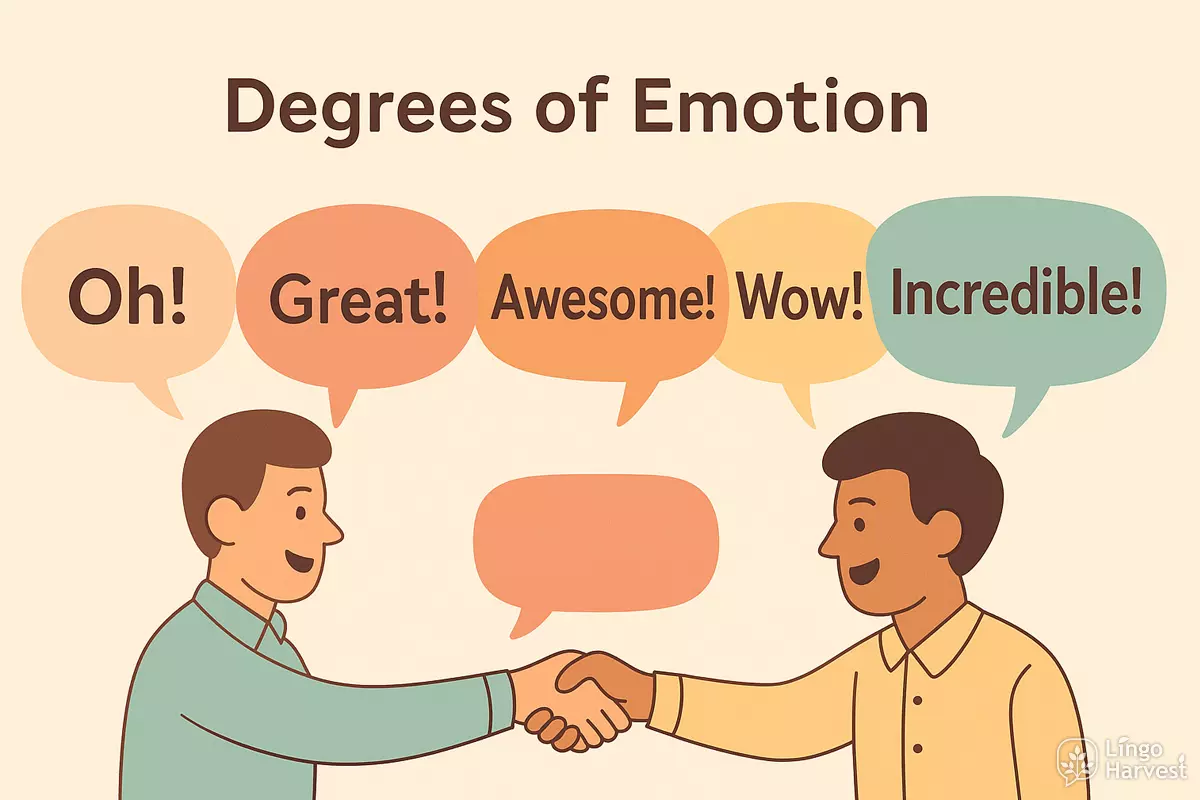
Some phrases are milder, showing gentle surprise or simple happiness, while others are much stronger, signaling excitement or amazement. Choosing the right word helps you match your emotional response to the situation and avoid sounding insincere or exaggerated.
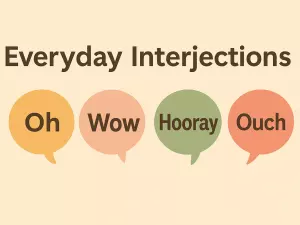
- Oh! – A quick response to something unexpected or surprising, often neutral or mildly positive.
- Great! – Used for good news or approval, expressing moderate satisfaction or happiness.
- Awesome! – Very enthusiastic, for impressive or exciting events; much stronger than "Great!".
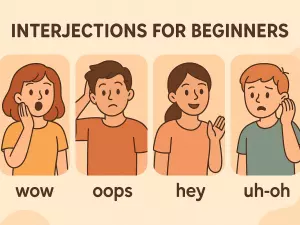
- Wow! – Indicates amazement or astonishment, good for both positive and neutral surprises.
- Fantastic! – Signals strong delight or admiration.
- Incredible! – For something hard to believe, usually very positive.
- Wonderful! – Warm, genuine happiness about something pleasing.
- Unbelievable! – For shock or amazement, sometimes positive or just surprising.
- No way! – Shows disbelief, often in a fun or informal way.
- Excellent! – For high praise or approval, less enthusiastic than "Awesome!".
- Superb! – Formal way to praise something outstanding.
- Sweet! – Slang, expressing pleasure or approval, especially among younger speakers.
- Terrific! – Strongly positive, similar to "Great!" but more energetic.
- Amazing! – Used for things that impress or surprise in a positive way.
- Cool! – Casual approval or admiration, often for something trendy or impressive.
- Brilliant! – More common in British English, for cleverness or excellent results.
- Splendid! – Formal and enthusiastic, often used for impressive achievements.
- Marvelous! – Indicates strong admiration or pleasure.
- Yay! – Expresses pure joy or celebration, often informal.
- Hooray! – Used for collective celebration or shared joy.
Comparing Intensity and Context
To help visualize how these words stack up in terms of emotional strength and usage, here’s a comparison:
| Expression | Typical Strength & Common Contexts |
|---|---|
| Oh! | Low to medium; basic surprise, neutral or positive situations |
| Great! | Medium; approval, satisfaction, reacting to good news |
| Awesome! | High; excitement, amazement, strong positive reaction, informal |
| Wow! | Medium to high; astonishment or admiration, broad use |
| Fantastic! | High; delight, strong positive response |
| Wonderful! | Medium to high; genuine happiness, polite or warm situations |
| No way! | Medium; disbelief or surprise, often informal |
| Excellent! | Medium; strong approval, sometimes formal |
| Cool! | Medium; casual approval, often among friends |
| Yay! | Medium to high; celebration, informal, joyful moments |
By choosing the right exclamation, you can fine-tune your response to match the occasion, whether you want to simply acknowledge a surprise or celebrate something truly special. Understanding these subtle differences helps you sound more natural and expressive in conversation.
Positive Exclamations in Context
Understanding how to use words like “Oh!”, “Great!”, and “Awesome!” naturally is essential for effective communication, especially when expressing surprise or happiness. These exclamations often appear in daily conversation, movies, and informal writing, giving emotional color to statements. The choice of exclamation depends on both the situation and the speaker’s personality or intent.
Common Situations for Positive Exclamations
- Reacting to unexpected good news: “Oh! You got the job!”
- Expressing delight over a pleasant surprise: “Awesome! You remembered my birthday!”
- Responding to someone’s achievement: “Great! You finished the project ahead of time!”
- Showing appreciation: “Oh! That’s so thoughtful of you.”
- Cheering someone on: “Awesome! Keep it up!”
- Celebrating results: “Great! We did it!”
- Noticing something impressive: “Oh! That’s amazing artwork!”
- Reacting to a positive change: “Awesome! The weather is perfect today.”
- Encouraging further effort: “Great! Let’s do even better next time.”
- Expressing surprise at an unexpected offer: “Oh! Are you sure you don’t mind?”
- Responding to a kind gesture: “Awesome! Thanks so much for your help.”
- Reacting to a positive outcome: “Great! That’s exactly what I hoped for.”
Subtle Differences and Usage
While all three expressions convey positivity, they differ slightly in tone and context. “Oh!” often signals genuine surprise or realization, sometimes paired with other words. “Great!” is straightforward praise, used for achievements or good news. “Awesome!” is more informal and enthusiastic, popular in casual conversation.
| Exclamation | Typical Scenario |
|---|---|
| Oh! | Discovering something unexpectedly: “Oh! I didn’t know you were here.” |
| Great! | Responding to good progress or results: “Great! You’ve finished your work.” |
| Awesome! | Reacting enthusiastically to impressive news: “Awesome! You won the contest!” |
| Oh, great! | Note: Can be sarcastic in some contexts, but with positive tone it means genuine approval: “Oh, great! You brought dessert.” |
Tips for Natural Usage
- Match your exclamation to the level of surprise or joy you feel.
- Consider the formality of the situation; “Awesome!” is less formal than “Great!”
- Pair with body language—smiles or gestures—to reinforce sincerity.
- Be mindful of tone; context and delivery can change the meaning from genuine to sarcastic.
Practicing these expressions in real conversations will help you sound more natural and emotionally engaged. Whether you’re congratulating a friend, reacting to news, or simply showing enthusiasm, choosing the right exclamation makes your response more vivid and memorable.
Avoiding Over-the-Top Reactions
When sharing excitement or astonishment in English, it’s easy to get carried away with dramatic words or exaggerated responses. However, using too many intense expressions like "Oh my gosh!" or "That’s unbelievably awesome!" in everyday conversation can sound insincere or even awkward. Matching your reaction to the situation helps keep communication genuine and relatable.
Why Moderation Matters
Overusing enthusiastic phrases can dilute their impact. If every small surprise earns a "Wow, that’s incredible!", listeners might question your sincerity. Instead, reserving stronger reactions for truly special moments makes your words more meaningful.
Practical Alternatives for Everyday Situations
Consider these milder ways to show surprise or happiness without going overboard:
- Oh, really?
- Nice!
- That’s good to hear.
- Interesting!
- No way!
- Hey, that’s cool.
- Not bad!
- That’s something!
- Good for you.
- Look at that!
- How about that?
- Well done.
- That’s great news.
- Impressive.
- Really?
- Wow, okay.
- That’s a surprise.
- Oh, I didn’t expect that.
Reading the Room
Pay attention to the tone and mood of the conversation. For example, a simple "Oh!" or "Great!" can be just right for a colleague’s minor achievement, while "Awesome!" might fit better for bigger news, such as a promotion or winning a prize. Adapting your language based on context shows emotional intelligence.
Common Pitfalls to Avoid
- Using "Awesome!" or "Amazing!" for every small event ❌
- Relying on dramatic intonation for minor news ❌
- Repeating the same strong reaction phrase too often ❌
- Reacting with too much volume or excitement in formal settings ❌
Careful word choice helps your reactions feel authentic and appropriate, making your conversations more effective and pleasant for everyone involved.
Punctuation and Spacing Rules
When expressing emotions like surprise or joy with interjections such as "Oh!", "Great!", or "Awesome!", correct punctuation and spacing help convey the intended tone. Using exclamation marks can intensify the feeling, while commas and spaces help the sentence flow naturally.
Exclamation Mark Placement
Interjections often end with an exclamation mark to show strong emotion. Place the exclamation mark directly after the interjection, with no space:
- Oh!
- Great!
- Awesome!
Never add a space between the word and the punctuation.
Comma Usage with Interjections
If the interjection starts a sentence, follow it with a comma when the emotion is milder or when the sentence continues:
- Oh, I didn't expect that.
- Great, let's get started.
- Awesome, you finished early.
For stronger emotion, use an exclamation mark and start a new sentence, or continue after the exclamation with a capital letter:
- Oh! I didn't expect that.
- Great! Let's get started.
- Awesome! You finished early.
Spacing Guidelines
No space comes before the exclamation mark or comma. Always add a single space after punctuation before starting the next word or sentence. For example:
- Correct: Oh! That was amazing.
- Incorrect: Oh !That was amazing.
- Correct: Great, you made it!
- Incorrect: Great ,you made it!
Multiple Exclamations and Tone
One exclamation mark is standard. Using more than one (e.g., "Oh!!") can appear informal or overly dramatic. Stick to a single mark in most writing unless mimicking speech or texting style.
Quick Reference: Examples in Context
- Oh! You remembered my birthday.
- Great, we finished on time.
- Awesome! Let's celebrate.
- Oh, that makes sense now.
- Great! I’m glad you enjoyed it.
- Awesome, thanks for your help.
- Oh! That was unexpected.
- Great, see you tomorrow.
- Awesome! You did it!
- Oh, I see what you mean.
Summary Table: Punctuation Patterns
| Pattern | Example |
|---|---|
| Interjection + Exclamation | Oh! Great! Awesome! |
| Interjection + Comma + Sentence | Oh, that’s wonderful. |
| Interjection + Exclamation + New Sentence | Great! You arrived early. |
| Interjection in the middle of a sentence | That was, oh, quite a surprise. |
Clear punctuation and proper spacing make your expressions of surprise and joy easy to read and understand. Following these conventions ensures your writing remains polished and effective.
Pronunciation and Rhythm Cues
How you say expressions like “Oh!”, “Great!”, and “Awesome!” often matters as much as the words themselves. These interjections rely on tone, pitch, and timing to communicate genuine surprise or joy. Subtle differences in stress, intonation, and pace can completely change the emotional impact.
Intonation Patterns for Expressing Surprise and Joy
Rising intonation is a hallmark of surprise. When you exclaim “Oh!”, letting your pitch rise sharply signals genuine astonishment. In contrast, a falling or flat tone can make the same word sound disappointed or sarcastic. “Great!” and “Awesome!” typically use a strong, energetic delivery, with the main stress on the first syllable.
- Oh! — Short and sharp, often with a noticeable rise in pitch.
- Great! — Stressed on the first sound, with open, positive energy.
- Awesome! — Drawn out, sometimes with a slight upward lilt at the end for added excitement.
Rhythm and Pausing
The rhythm of these words can add meaning:
- Pausing before “Oh!” increases suspense or dramatic effect.
- Clipping “Great!” quickly can feel sarcastic; stretching it conveys enthusiasm.
- Adding a pause after “Awesome!” can let the excitement linger.
Common Variations and Emotional Nuances
The same word, spoken with different rhythm and melody, can express a variety of feelings. Here’s a quick reference to help you recognize or practice these cues:
| Expression | Typical Sound Pattern | Emotion Conveyed | Example Context |
|---|---|---|---|
| Oh! | Rising pitch, short | Surprise, amazement | Hearing unexpected news |
| Oh... | Falling pitch, drawn out | Disappointment, realization | Learning something sad |
| Great! | Stressed, upbeat | Genuine joy, approval | Receiving good results |
| Great. | Flat, clipped | Sarcasm, annoyance | Reacting to bad luck |
| Awesome! | Rising then falling, energetic | Excitement, admiration | Seeing something impressive |
| Awesome... | Falling, slow | Disbelief, irony | Reacting to an unfortunate event |
Tips for Practicing Natural Sound
- Record yourself and listen for pitch and rhythm.
- Watch native speakers and note their facial expressions and pauses.
- Experiment with exaggerating intonation to feel the emotional range.
- Pair gestures or facial cues with your voice for authenticity.
Mastering these subtle cues helps your English sound more expressive and authentic, making your reactions feel natural in conversation.
Situational Dialogues (news, gifts)
Reacting to unexpected news or delightful presents often brings out spontaneous expressions like "Oh!", "Great!", or "Awesome!". These words help convey genuine emotion in everyday conversations, whether you're hearing about someone's achievement or receiving a thoughtful surprise. The way you respond can strengthen relationships and show appreciation or amazement.
Common Expressions for Surprising News
- Oh! I can’t believe it!
- Wow, that’s fantastic!
- No way! Seriously?
- You’re kidding!
- That’s awesome news!
- Great job!
- That’s unbelievable!
- How wonderful!
- Really? That’s amazing!
- Oh wow, congratulations!
Typical Responses When Receiving Gifts
- Oh, thank you! This is lovely!
- Wow, you shouldn’t have!
- This is so thoughtful of you!
- Awesome! I love it!
- Great choice!
- How did you know?
- I’m so surprised—thank you!
- This made my day!
- I appreciate it so much!
- What a wonderful surprise!
Mini Dialogues: Reacting to News and Presents
- A: I got the job!
B: Oh, that’s awesome! Congratulations! - A: Here’s a little something for you.
B: Wow, thank you so much! This is great! - A: Did you hear? We’re going on vacation next month.
B: Really? That’s fantastic news! - A: I baked your favorite cookies.
B: Oh wow! You remembered—thank you!
Comparing Reactions: Tone and Context
| Expression | Common Use |
|---|---|
| Oh! | General surprise, positive or neutral reaction |
| Great! | Enthusiastic approval, happiness for someone |
| Awesome! | Strong excitement, often informal and friendly |
| Wow! | Impressed, amazed by news or a gift |
| No way! | Disbelief, often for unexpected good news |
Choosing the right phrase depends on your relationship with the other person and the situation. Using these reactions naturally in conversations about news or gifts helps you sound authentic and engaged.
Register: Casual vs Neutral Choices
How you express surprise or joy often depends on the setting and your relationship with the listener. Some exclamations naturally sound informal and spontaneous, while others are more restrained and suitable for wider audiences, including work or public situations.
Casual Expressions
In friendly conversations, people tend to use short, energetic words or phrases. These usually convey strong feelings and are common among friends or family. Here are some everyday ways to show excitement or astonishment:
- Oh!
- Wow!
- Awesome!
- No way!
- Seriously?
- Cool!
- Sweet!
- Great!
- Yay!
- Whoa!
- Unbelievable!
- That’s crazy!
- Get out!
- Shut up! (used playfully)
- What?!
- No kidding!
- For real?
- Are you kidding me?
Neutral or More Formal Alternatives
Sometimes, you need expressions that fit a wider range of listeners—like colleagues, acquaintances, or mixed-age groups—without sounding too casual. These options are less intense and more universally acceptable:
- That’s interesting.
- Really?
- I’m impressed.
- That’s surprising.
- How wonderful!
- That’s great news.
- Impressive!
- That’s unexpected.
- Is that so?
- Oh, I see.
- How nice!
- I didn’t expect that.
- That’s remarkable.
- Very good!
Direct Comparison
To help you choose the right expression for the moment, here’s a quick comparison of some common phrases and their typical use:
| Casual Example | Neutral/Formal Alternative |
|---|---|
| Awesome! | Impressive! |
| Oh! | Oh, I see. |
| Wow! | That’s surprising. |
| No way! | Really? |
| Great! | That’s great news. |
| Cool! | Very good! |
| What?! | Is that so? |
| No kidding! | I didn’t expect that. |
Choosing between casual and neutral vocabulary depends on your audience and the effect you want. Using lively, informal words can strengthen personal bonds, while more reserved phrases are safer in unfamiliar or professional contexts.
Practice: Choose the Best Exclamation
Understanding when to use different exclamations helps you sound more natural in English. Below, you’ll find scenarios that call for an exclamation of surprise, happiness, or excitement. Read each situation and select the most fitting response from “Oh!”, “Great!”, or “Awesome!”—or occasionally, none of the above.
Exercise: Match the Exclamation to the Situation
Choose the option that best completes each sentence or dialogue. This will help you get comfortable with real-life usage.
- Your friend just told you they got a promotion at work.
a) Oh!
b) Great!
c) Awesome! - You unexpectedly see your old classmate on the street.
a) Oh!
b) Great!
c) Awesome! - Someone tells you they finished their project just before the deadline.
a) Oh!
b) Great!
c) Awesome! - You find out the test is postponed to next week.
a) Oh!
b) Great!
c) Awesome! - Your sibling surprises you with your favorite meal.
a) Oh!
b) Great!
c) Awesome!
Show answers
- 1. c) Awesome!
- 2. a) Oh!
- 3. b) Great!
- 4. b) Great!
- 5. c) Awesome!
Quick Reference: When to Use Each Exclamation
These words are often chosen based on the intensity or type of emotion. Here’s a brief guide:
- Oh! — Used for surprise, sudden realization, or when you notice something unexpected.
- Great! — Shows satisfaction, approval, or when something turns out well.
- Awesome! — Used for strong enthusiasm, excitement, or when something is particularly impressive.
More Example Scenarios
- Your friend passed their driving test. → Awesome!
- You forgot your keys at home. → Oh!
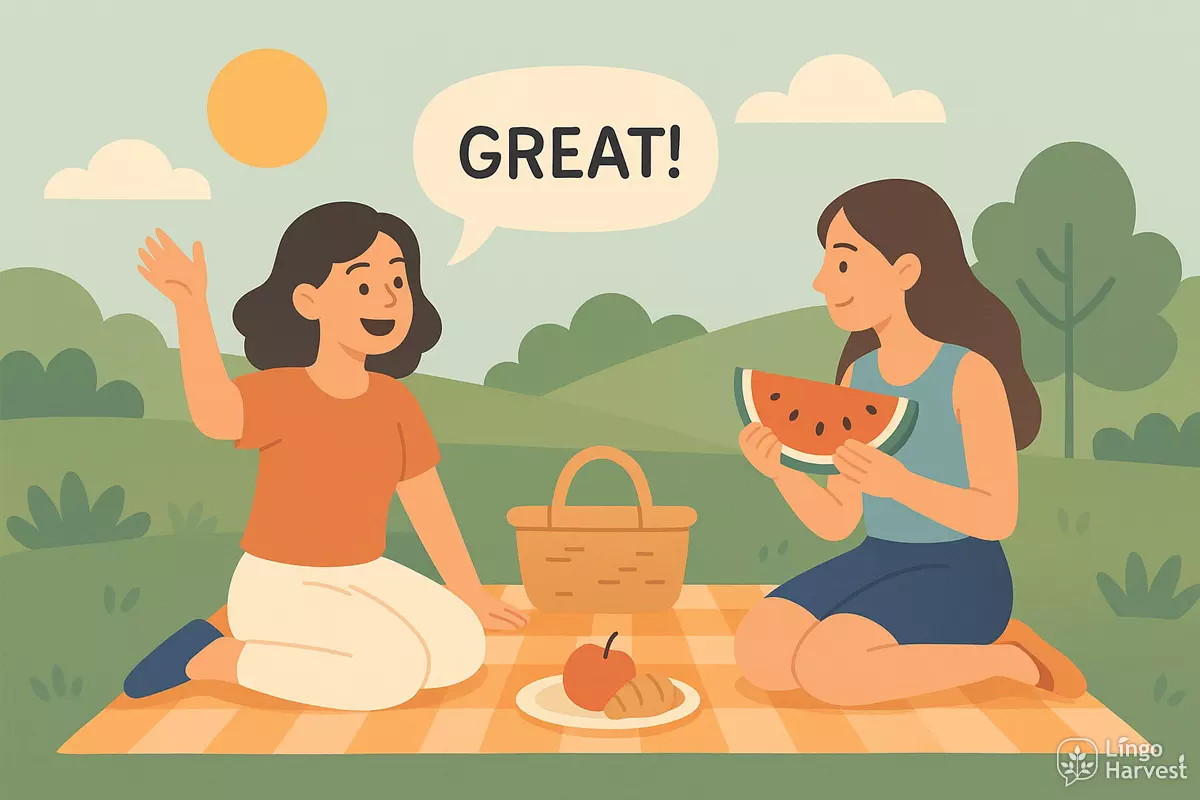
- The weather is perfect for your picnic. → Great!
- Your favorite band is coming to town. → Awesome!
- You realized you made a mistake in your homework. → Oh!
- Your team won the match. → Great!
- You received an unexpected gift. → Oh!
- Your colleague finished the report early. → Great!
- Your favorite show got renewed for another season. → Awesome!
- You spilled coffee on your shirt. → Oh!
Tips for Choosing the Right Exclamation
Consider the context and your relationship with the person. “Awesome!” is more informal and enthusiastic, while “Great!” is friendly and neutral. “Oh!” can be positive, negative, or neutral, depending on your tone and facial expression. Practice using each in different scenarios to build confidence.