Greetings and Farewells: Hello, Hi, Bye, See You

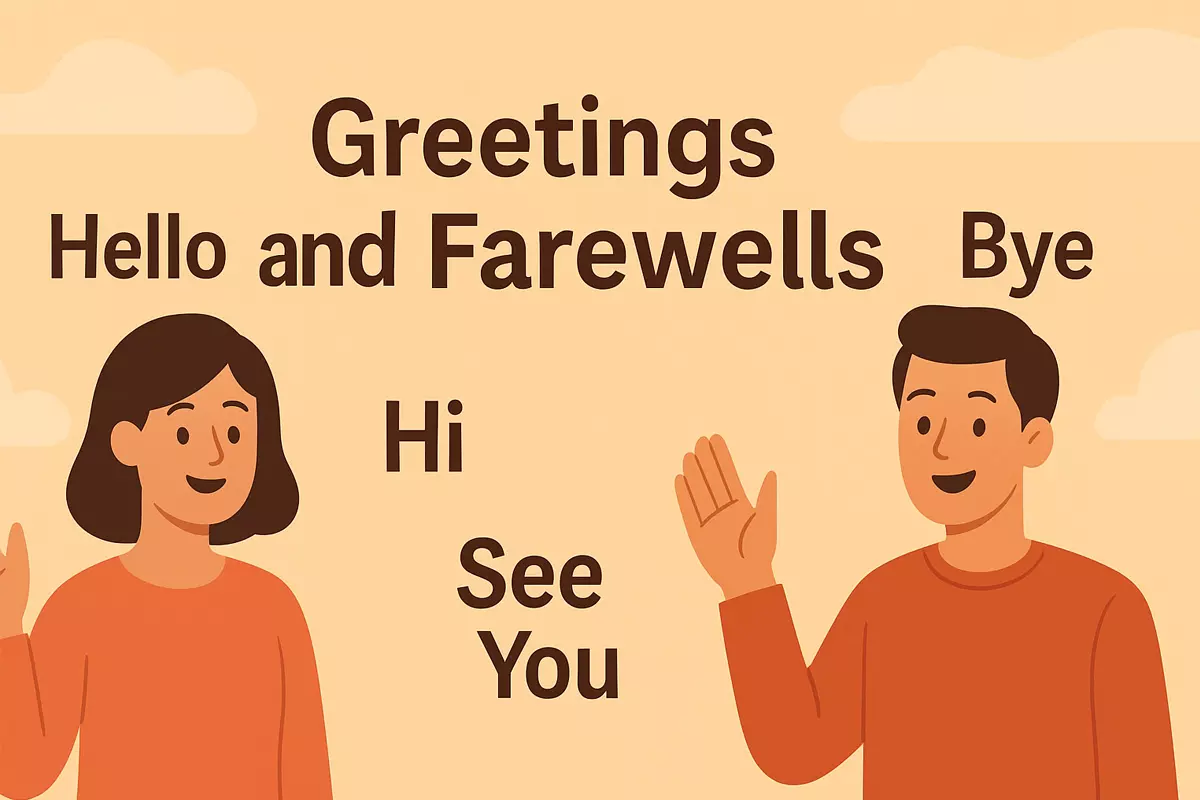 Here we how to use formal and informal greetings, start friendly conversations, and choose phrases for different times of day.
Starting a conversation or saying goodbye is a daily occurrence, whether it involves a simple wave, a friendly greeting, or a casual farewell. The variety of ways people say hello and goodbye reflects the different ways we relate to one another and express our feelings. These small moments of interaction, from brief acknowledgments to more meaningful exchanges, help build connections and show respect. Exploring these rituals reveals much about our social habits and the importance we place on communication in everyday life.
Formal vs Informal Greetings
Choosing the right way to say hello or goodbye depends a lot on who you’re talking to and the situation. In professional settings, or when addressing someone you don’t know well, it’s best to use more polite, structured expressions. Among friends or in relaxed environments, casual language is not only acceptable but expected.
When to Use Formal Language

Formal greetings are common in workplaces, during business meetings, or when talking to elders and people in authority. These expressions show respect and maintain a certain level of decorum. For example, starting an email to a colleague you haven’t met before with “Good morning” or “Dear Mr. Smith” is appropriate. Similarly, when you leave, saying “Goodbye” or “Have a nice day” sounds polite and professional.
Informal Expressions for Everyday Situations
Casual greetings are used with friends, family, classmates, or anyone you know well. They help create a friendly, comfortable atmosphere. Instead of “Hello,” you might just say “Hi” or “Hey.” Parting words like “See you,” “Later,” or “Catch you soon” are all common in informal conversations.
| Formal Examples | Informal Examples |
|---|---|
| Good morning | Morning! |
| Good afternoon | Hey |
| Hello | Hi |
| How do you do? | What’s up? |
| Pleased to meet you | Nice to meet you |
| Goodbye | Bye |
| Farewell | See ya |
| It was a pleasure meeting you | Catch you later |
| Take care | Later! |
| Have a pleasant evening | See you soon |
Tips for Choosing the Right Greeting
- Consider your relationship with the person: acquaintances and superiors often expect more polite forms.
- Think about the setting: workplaces or formal events call for more structured language.
- Listen to how others greet you and mirror their level of formality if in doubt.
- Remember that informal expressions can sound rude if used in the wrong context.
Adapting your greeting or farewell to the situation helps you sound both natural and respectful, whether you’re meeting someone new or chatting with a friend.
Starting Friendly Conversations
When meeting someone, the way you greet them can set the tone for the entire interaction. People often use simple words like "Hello" or "Hi" to open discussions, but choosing the right phrase and following up with a friendly question helps turn a basic greeting into a genuine conversation. Tone, body language, and cultural context can all influence how your words are received.
Common Ways to Begin a Conversation
Initiating small talk often starts with a standard greeting, followed by an open-ended question or comment. Here are some popular options:
- "Hi, how are you?"
- "Hello! Nice to see you."
- "Hey, what’s new with you?"
- "Good morning! How’s your day going?"
- "Hi there! What have you been up to lately?"
- "Hey! Did you do anything interesting this weekend?"
- "Hello, how’s everything?"
- "Hi! How have you been?"
- "Hey, is it your first time here?"
- "Hello! Anything exciting happening today?"
- "Hi, do you come here often?"
- "Hey! How’s work (or school) treating you?"
- "Hello, what brings you here?"
- "Hi! Enjoying the weather?"
- "Hey, have you tried the food here?"
Tips for Natural Conversation Openers
Starting a chat doesn't have to feel awkward. Keep these points in mind to make your approach smoother:
- Smile and make eye contact for a welcoming vibe.
- Use the person's name if you know it—it feels more personal.
- Ask open-ended questions that encourage more than a yes/no answer.
- Listen actively and respond to what the other person says.
- Adjust your greeting to match the time of day or setting.
Comparing Formal and Informal Greetings
In different settings, greetings can vary in formality. Here’s a comparison to help you choose the right style:
| Type | Example Greeting | Typical Situation |
|---|---|---|
| Formal | Good afternoon, how do you do? | Job interviews, meeting someone for the first time in a business context |
| Neutral | Hello, how are you? | General social situations, acquaintances |
| Informal | Hey! What’s up? | Friends, peers, casual settings |
| Very Informal | Yo! How’s it going? | Close friends, relaxed environments |
Making Your Greeting Count
A warm opener can encourage others to respond in kind, making the conversation flow more easily. Adjust your words and tone for the person and the context. Whether you’re reconnecting with a friend or meeting a colleague for the first time, a thoughtful greeting is the first step to a great exchange.
Time-of-Day Variants (morning/evening)
Specific greetings and farewells often change based on the time of day. Instead of a simple “hello” or “bye,” people use more tailored phrases to acknowledge whether it’s morning, afternoon, or night. These expressions help set the tone for the interaction and can make conversations feel warmer or more polite.
Common Phrases by Time of Day
When greeting someone, the time can influence your word choice. Here are several commonly used options for different parts of the day:
- Good morning – used from early morning until noon
- Morning! – informal, often between friends or colleagues
- Good afternoon – typically used after noon until about 5 or 6 PM
- Good evening – said from late afternoon or early evening onwards
- Evening! – casual, friendly variant
- Hi, how’s your morning? – combines greeting with small talk
- Hope you have a great day! – a parting phrase in the morning
- Enjoy your evening! – a polite way to say goodbye later in the day
- See you tomorrow morning – used when parting and expecting to meet again soon
- Catch you this evening – informal, when plans are set for later
- Have a good night – often used when saying goodbye at night
- Sleep well – a warm farewell before bedtime
Choosing the Right Expression
Selecting the appropriate phrase depends on context and familiarity. Formal settings often require the full expressions (“Good morning,” “Good evening”), while informal contexts allow for shorter forms (“Morning!” or “Evening!”). Tone, relationship, and even regional habits can influence which version feels most natural.
Comparing Greetings and Farewells by Time
Below is a table that contrasts common ways to greet and say goodbye depending on the time of day.
| Time | Greeting | Farewell |
|---|---|---|
| Morning | Good morning / Morning! | Have a great day / See you later |
| Afternoon | Good afternoon | Enjoy your afternoon / See you soon |
| Evening | Good evening / Evening! | Enjoy your evening / Good night |
| Night | Hello (rare); less common | Good night / Sleep well |
Adapting your language to the time of day shows attention to detail and courtesy. Whether you’re starting a conversation or ending one, using these variants can help you sound more natural and considerate.
Ending Naturally: Bye vs See You
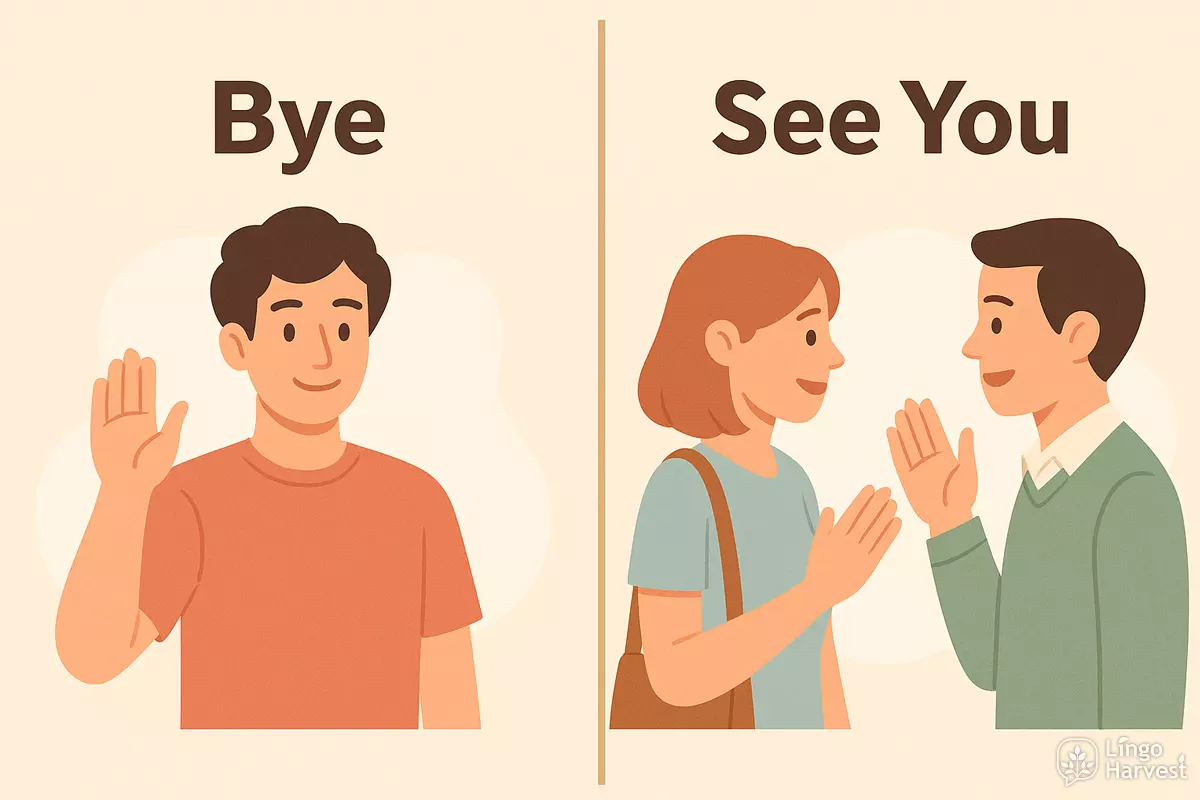
Saying goodbye is just as important as greeting someone. The way you end a conversation can leave a lasting impression, whether it’s a quick chat or a more formal meeting. Choosing between “bye” and “see you” depends on context, relationship, and the mood you want to set at the end.
When to Use "Bye"
“Bye” is a straightforward, universal way to part. It works in almost any situation: with friends, colleagues, or even strangers. It’s neutral and doesn’t imply any expectation of meeting again soon. You might use it after a phone call, at the end of a class, or when leaving a store. For more formal situations, people sometimes add “Goodbye,” but “Bye” is the most common in daily English.
When "See You" Feels Right
“See you” (often followed by “soon,” “later,” or a specific day) is a bit warmer and suggests you expect to meet again. It’s friendly and casual, often used among friends, classmates, or coworkers. This phrase creates a sense of ongoing connection, even if you don’t know exactly when you’ll meet again.
Comparing "Bye" and "See You"
The main difference comes down to intent and tone. “Bye” is neutral and final, while “See you” carries a hint of anticipation for the next meeting. Here’s a side-by-side look:
| Phrase | Typical Use & Feeling |
|---|---|
| Bye | Neutral, quick parting; suitable for anyone, anytime |
| See you | Friendly, implies future contact; often with friends or colleagues |
| See you soon | Suggests you expect to meet again relatively soon |
| See you later | Casual; often used for informal settings or among peers |
| Goodbye | More formal or emotional; can signal a longer separation |
Popular Ways to Say Farewell
There’s more than one way to end a conversation naturally. Here are some common options, each fitting a slightly different situation:
- Bye
- See you
- See you soon
- See you later
- See ya
- Catch you later
- Take care
- Have a good one
- Talk to you later
- Goodbye
- Later
- I’ve got to go
- Until next time
- Have a nice day
- Enjoy your evening
- Safe travels
Tips for Natural Closings
Choosing the right way to end depends on your relationship and the setting. For formal meetings, “Goodbye” or “Have a nice day” feels appropriate. With friends, “See you” or “Catch you later” sounds relaxed and friendly. If you’re unsure, keep it simple—“Bye” works almost everywhere. Remember, a friendly smile or wave can make any farewell warmer.
Polite Add-Ons (Have a nice day)
Adding a friendly phrase after saying hello or goodbye helps conversations feel warmer and more thoughtful. These polite extras, such as wishing someone a good day or safe travels, show consideration and can leave a positive impression. People often use them in both casual chats and formal exchanges, especially when ending an interaction.
Common Phrases to Enhance Greetings and Farewells
- Have a nice day!
- Take care!
- Enjoy your evening!
- See you soon!
- All the best!
- Good luck!
- Hope you have a great weekend!
- Stay safe!
- Catch you later!
- Have a good one!
- See you around!
- Wish you a wonderful afternoon!
- Hope everything goes well!
- Have fun!
- Take it easy!
- Safe travels!
- Enjoy your day!
- Hope to see you again soon!
- Don’t work too hard!
- Good seeing you!
When and How to Use These Phrases
Extra polite phrases are most natural at the end of conversations, after a simple "bye" or "see you." They can soften a quick departure or make a casual chat feel more genuine. In written messages (like emails or texts), these additions can also help maintain a friendly tone.
Comparing Formal and Informal Polite Add-Ons
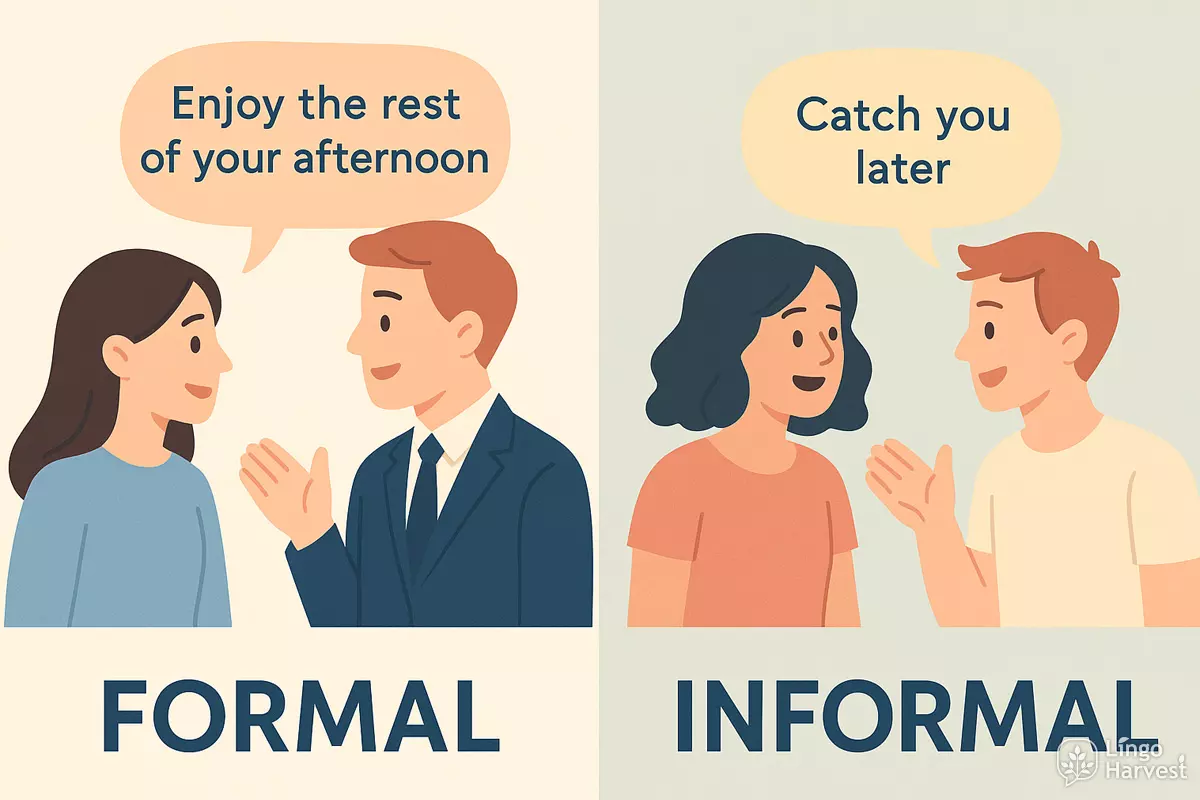
| Formal | Informal |
|---|---|
| Have a wonderful day | See ya! |
| Wishing you all the best | Take it easy! |
| Enjoy the rest of your afternoon | Catch you later! |
| Hope everything goes well for you | Have a good one! |
| Safe travels | Don’t work too hard! |
Using these expressions thoughtfully helps build rapport and keeps conversations friendly, whether you’re meeting someone for the first time or saying goodbye to an old friend.
Intonation and Body Language Tips
Using the right tone and gestures is just as important as the words themselves when greeting or saying goodbye. The way you say "hello" or "bye" can change the mood of an entire conversation. Intonation, or the rise and fall of your voice, helps show friendliness, enthusiasm, or respect. Similarly, body language—like smiling or waving—makes your message feel natural and warm.
How Intonation Affects Greetings and Farewells
A cheerful, slightly rising tone is common when you greet someone ("Hi!"), while a falling tone can make a farewell sound more final ("Goodbye."). Changing your pitch or volume can signal different emotions or levels of formality. For example, a soft, lower tone might show politeness or respect, while a loud, energetic "Hey!" feels informal and friendly.
- High and rising tone: Used for friendly hellos ("Hello!"), showing excitement or happiness.
- Neutral or steady tone: Common in professional settings ("Good morning.").
- Falling tone: Indicates the end of a conversation ("Bye."), or adds seriousness.
- Volume: Louder greetings are informal; softer ones are more reserved.
- Pace: Slower pace can show calmness or formality; quick greetings feel casual.
Common Body Language for Greetings and Goodbyes
Non-verbal cues often speak louder than words. Using the right gestures helps you connect and avoid misunderstandings.
- Smile: Universally signals warmth and friendliness.
- Wave: Simple and effective for both arrivals and departures.
- Nod: Shows acknowledgment, often used in brief or distant greetings.
- Handshake: Formal and professional, common in business settings.
- Eye contact: Indicates attention; avoid staring, but don’t look away entirely.
- Open posture: Facing the person, relaxed arms, and uncrossed legs show openness.
- Hug: Used among friends or family, depending on culture.
- Salute: Used in military or formal contexts.
- Thumbs up: Friendly, informal way to say goodbye or agree.
- Bow: Polite gesture in some cultures (e.g., Japan, Korea).
Comparing Greetings and Farewells: Intonation & Gesture Examples
| Expression | Typical Intonation & Body Language |
|---|---|
| Hi / Hello | Rising tone, smile, wave or nod ✅ |
| Good morning / Good afternoon | Neutral tone, polite smile, handshake (formal) |
| Hey | Lively tone, wide smile, casual wave |
| Bye / See you | Falling or neutral tone, smile, wave or thumbs up |
| Goodbye | Falling tone, formal nod, sometimes handshake |
| Take care | Gentle tone, warm smile, soft wave |
When learning greetings and farewells, practice both your voice and your gestures. Try to match your tone and body language to the situation—formal with colleagues, relaxed with friends. Observing native speakers or practicing in front of a mirror can help you feel more confident and natural in real conversations.
Regional/Global Variations
How people greet or bid farewell can differ widely depending on where you are in the world. Local customs, language, and even social norms shape the words and gestures we use to say hello or goodbye. Sometimes, what sounds casual or polite in one place might seem odd or even rude elsewhere.
Common Greetings Around the World
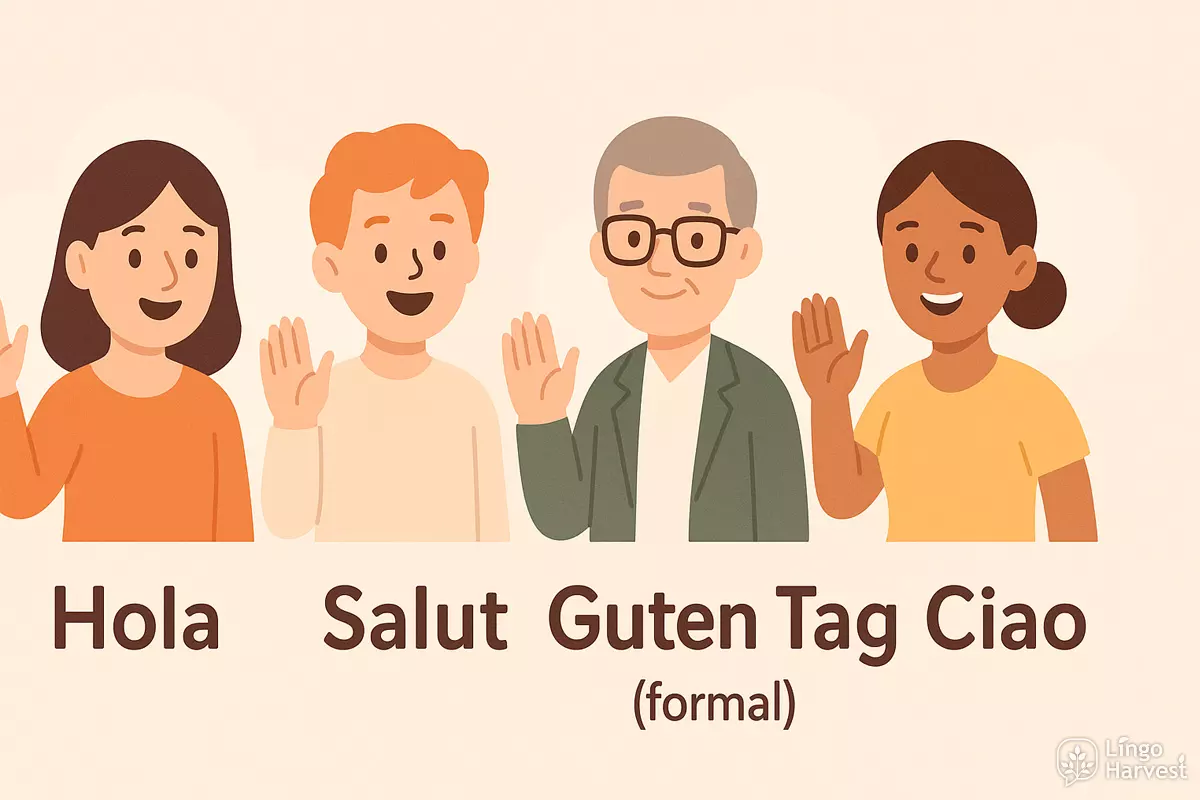
While “hello” and “hi” are standard in many English-speaking countries, other regions have their own unique expressions. Here are some everyday ways to greet someone in different languages and cultures:
- Hola (Spanish-speaking countries)
- Salut (France, informal)
- Guten Tag (Germany, formal)
- Ciao (Italy, informal; both greeting and farewell)
- Konnichiwa (Japan, daytime greeting)
- Namaste (India, Nepal)
- Hei (Norway, Finland)
- Olá (Portugal, Brazil)
- Merhaba (Turkey)
- Annyeong (Korea, informal)
- As-salamu alaykum (Arabic-speaking regions)
- Sawubona (South Africa, Zulu greeting)
Farewells: Local Expressions
Goodbyes also take many forms. Some regions prefer quick departures, while others linger over parting words. Here are some examples:
- Goodbye, Bye (English-speaking countries)
- Adiós (Spanish-speaking countries)
- Au revoir (France)
- Arrivederci (Italy)
- Sayonara (Japan, more formal/final)
- Tot ziens (Netherlands)
- Do svidaniya (Russia)
- Annyeonghi gaseyo (Korea, polite)
- Khuda hafiz (Pakistan, Iran)
- Hamba kahle (South Africa, Zulu farewell)
Comparing Formality and Usage
Some cultures have strict rules about when to use formal or informal greetings and farewells. For example, in German or Japanese, choosing between formal and casual expressions depends on the relationship and context. Here’s a look at some typical variations:
| Language/Region | Formal vs Informal Examples |
|---|---|
| German | Formal: Guten Tag ✅ Informal: Hallo → |
| Japanese | Formal: Konnichiwa ✅ Informal: Ya! → |
| French | Formal: Bonjour ✅ Informal: Salut → |
| Spanish | Formal: Buenos días ✅ Informal: Hola → |
| Russian | Formal: Zdravstvuyte ✅ Informal: Privet → |
Nonverbal Elements
It’s not just about words—gestures and tone play a big role. In some places, a handshake or bow accompanies a greeting; elsewhere, a nod or a wave is common. In Latin America, cheek kisses are popular for both greetings and farewells, while in East Asia, bows often show respect. Always observe local customs to avoid misunderstandings. In summary, the ways people greet and say goodbye reveal much about their culture and values. Whether it’s a warm “hi,” a formal “good day,” or a quick wave, context and location shape these simple yet meaningful exchanges.
Practice: Build Mini Conversations
Building short dialogues is a practical way to get comfortable with common greetings and goodbyes. By mixing and matching simple phrases, you can quickly gain confidence in starting and ending conversations in English.
Step 1: Learn Core Expressions
First, review some typical words and phrases used to say hello and goodbye. Here’s a useful selection:
- Hello!
- Hi!
- Hey!
- Good morning!
- Good afternoon!
- Good evening!
- How are you?
- I’m fine, thank you.
- See you!
- Bye!
- Goodbye!
- See you later!
- Take care!
- Have a nice day!
- Catch you later!
- See you soon!
- What’s up?
- Not much.
- How’s it going?
- All right, thanks.
Step 2: Combine Phrases for Short Dialogues
Practice making your own mini exchanges. You can mix phrases from the list above to create realistic situations. Here are a few examples:
- A: Hi!
B: Hello! How are you? - A: Good morning!
B: Good morning! Ready for class? - A: Hey!
B: Hey! What’s up? - A: Bye!
B: See you later! - A: Have a nice day!
B: Thanks, you too!
Step 3: Mini Conversation Patterns
Try to recognize and use simple patterns when you greet and say farewell. Here is a table showing a few flexible templates you can follow:
| Greeting | Farewell |
|---|---|
| Hi! How are you? | Bye! See you tomorrow! |
| Hello! Good to see you. | Take care! Have a great day! |
| Good morning! How’s it going? | Goodbye! See you later! |
| Hey! What’s up? | Catch you later! |
Step 4: Try It Yourself
Use these prompts to create your own mini dialogues. Write or say a reply for each situation:
- Someone says: "Hi! How are you?"
- Your friend says: "See you soon!"
- A colleague greets you: "Good afternoon!"
- A neighbor says: "Bye! Have a nice day!"
Show answers
- "I’m fine, thank you. And you?"
- "See you!" or "Bye!"
- "Good afternoon!" or "Hello!"
- "Thank you! You too!"
Tips for Effective Mini Conversations
- Keep your responses friendly and simple.
- Use appropriate greetings for the time of day.
- Match the level of formality to the situation.
- Don’t rush—take a moment to listen and answer naturally.
Regular practice with these short exchanges will help you feel more at ease in everyday English interactions.