Softening Your Speech: Hmm, Maybe, Kind of

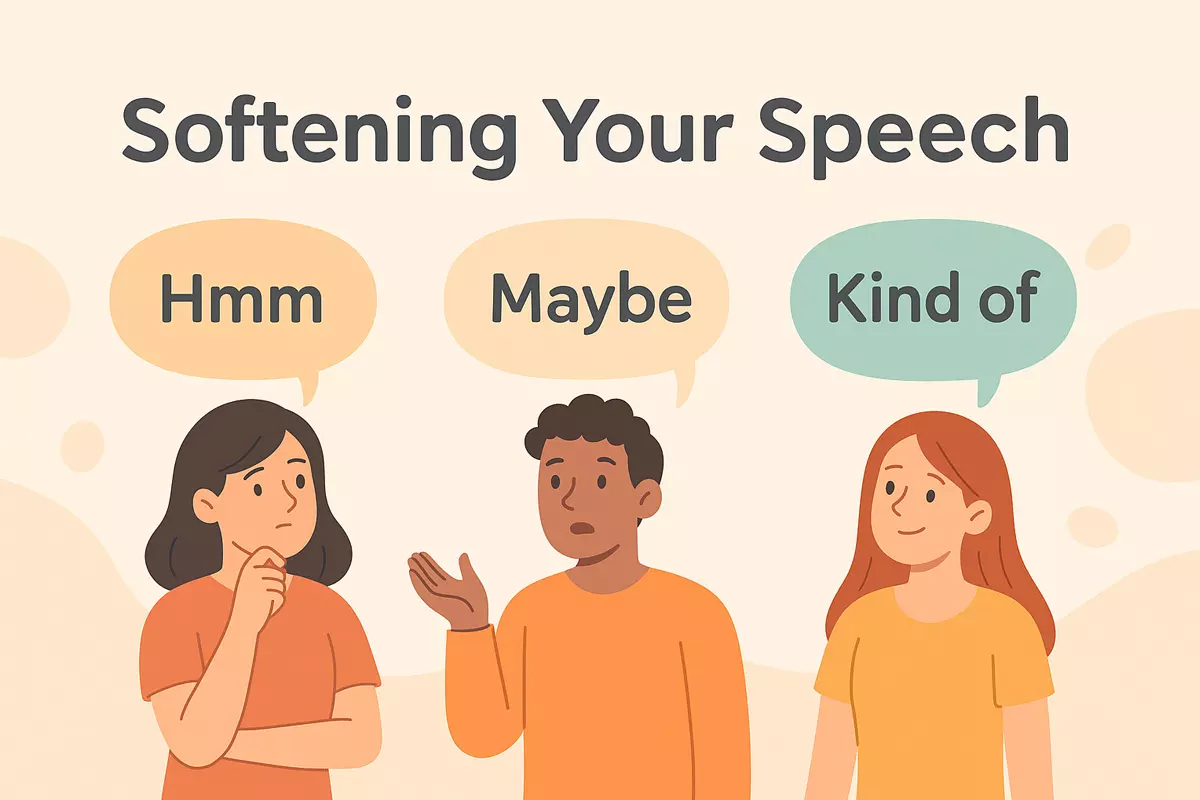 This article explains why we soften messages in English, how words like maybe and sort of add nuance, and how to stay clear yet polite. It covers pros and cons, typical mistakes, examples, and practice rewriting for softer tone.
We often adjust how we express ourselves by using gentle phrases such as perhaps, sort of, or even pausing briefly to say hmm. These small changes in our language can have a significant impact on conversations, as they reveal our uncertainty, demonstrate politeness, or show a wish to avoid conflict. By softening our statements, we make our opinions less forceful and more approachable, which can help maintain harmony in discussions and encourage others to share their perspectives openly.
Why We Soften Messages (Pragmatics)
People often choose gentler language in conversation to manage social relationships and avoid conflict. Instead of making statements sound too direct or blunt, we use hedging words, vague phrases, or question-like intonation to make our speech less forceful. This is especially common in English, where directness can sometimes come across as rude or overly assertive.
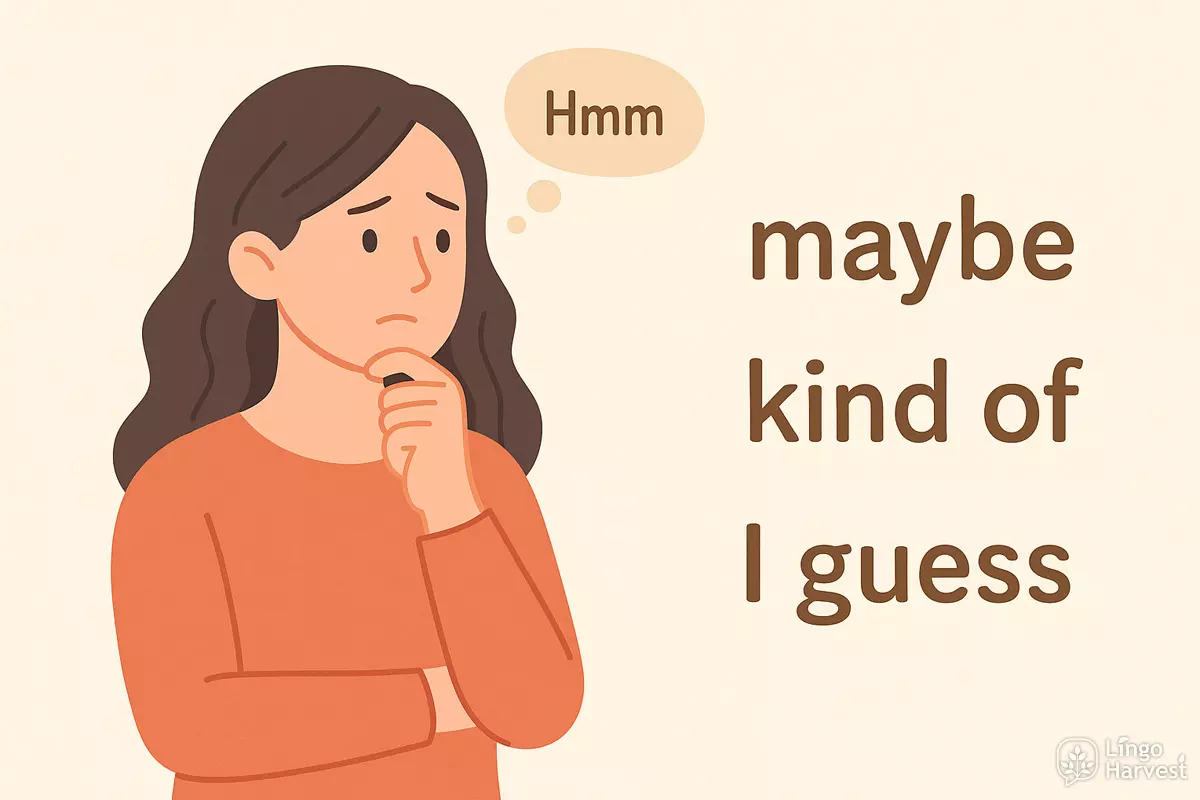
Softeners like “maybe,” “kind of,” or “I guess” help speakers express uncertainty, show politeness, or invite others to share their opinions. Using these pragmatic strategies can signal respect for the listener’s feelings or position, and they help conversations flow more smoothly. For example, saying “Hmm, maybe we could try…” feels less pushy than “Let’s do this.” This can be particularly important in group discussions, with superiors, or when giving feedback.
Common Reasons for Softening Speech
- Politeness: Lessens the chance of sounding demanding or critical.
- Uncertainty: Communicates doubt or openness to other ideas.
- Indirectness: Avoids confrontation or disagreement.
- Inviting Collaboration: Encourages others to participate or share thoughts.
- Maintaining Harmony: Reduces the risk of offending or embarrassing someone.
- Social Distance: Adapts tone based on familiarity or hierarchy.
- Mitigating Responsibility: Makes statements less absolute in case of mistakes.
- Testing Reactions: Gauges how listeners feel before committing.
- Expressing Tentativeness: Shows that a view or suggestion is not final.
- Softening Criticism: Frames negative feedback more gently.
Typical Softeners and Their Effects
- Maybe
- Kind of / Sort of
- I think
- I guess
- Hmm
- Perhaps
- It seems (like)
- Could / Might
- Would you mind…?
- Just
- A little
- Possibly
- Not sure, but…
- Do you think…?
- Maybe we could…
- I’m not an expert, but…
Softening language is not just about being vague; it’s a practical tool for navigating the complexities of social interaction. By adjusting how direct we are, we can build rapport, prevent misunderstandings, and make our communication more effective in diverse settings.
Hedging with Maybe/Perhaps
Using words like "maybe" and "perhaps" helps speakers make their statements less direct or less certain. This approach is common in English when people want to avoid sounding too definite, soften suggestions, or leave room for other possibilities. Such language can make interactions feel more polite, especially in situations where being too blunt might seem rude or dismissive.
Common Ways to Use "Maybe" and "Perhaps"
Both "maybe" and "perhaps" are flexible and can appear at the beginning, middle, or end of a sentence. They signal uncertainty or a tentative opinion. Here are some typical patterns:
- Maybe we should try a different approach.
- Perhaps it's better to wait until tomorrow.
- We could maybe ask for more time.
- It’s not the best solution, perhaps, but it could work.
- Maybe that's not the right answer.
- Perhaps you could explain it again?
- He’ll maybe call later.
- That’s not quite clear, perhaps?
- They maybe forgot about the meeting.
- We should, perhaps, double-check the results.
Nuances and Differences
While "maybe" and "perhaps" are often interchangeable, "perhaps" can sound slightly more formal or traditional. "Maybe" is more common in everyday conversation. There are also subtle differences in tone and context depending on which word you choose.
| Expression | Typical Context or Effect |
|---|---|
| Maybe you could explain that again? | Casual suggestion; less formal, friendly tone |
| Perhaps it would be better to wait. | Polite advice; slightly more formal or careful |
| Maybe she’s right about the timing. | Uncertain opinion; open to alternatives |
| Perhaps there’s another solution. | Gentle proposal; inviting discussion |
| Maybe we should check again. | Tentative suggestion; avoids imposing |
| Perhaps, if you have time, you could help? | Very polite, less direct request |
Why Use These Hedges?
Choosing softer language with "maybe" or "perhaps" can:
- Reduce the risk of offending someone
- Show respect for other opinions
- Invite further conversation or suggestions
- Express uncertainty or humility
- Make refusals or disagreements less harsh
Overall, these small words play a big role in creating a cooperative and respectful tone, especially in group discussions, feedback, or when sharing ideas that may not be final.
Kind of/Sort of: Nuance and Caution
When people want to express uncertainty or soften a statement, they often reach for phrases like “kind of” or “sort of.” These expressions help speakers avoid sounding too direct or absolute, especially in English conversation. They allow you to introduce nuance, show hesitation, or gently hedge your opinion. This can be useful in social situations, teamwork, or when discussing sensitive topics.
Why Use "Kind of" and "Sort of"?
Both expressions signal that what follows is not a firm declaration. Instead, you are suggesting something is true to a degree, but not entirely. This reflects caution or politeness. For example, saying “I’m kind of tired” sounds less blunt than “I’m tired.” It leaves room for interpretation and invites a softer response.
- Softens criticism: “That movie was sort of boring.”
- Expresses uncertainty: “I kind of remember her from school.”
- Shows politeness: “This food is kind of spicy for me.”
- Avoids commitment: “He’s sort of interested in the project.”
- Invites discussion: “It’s kind of complicated, don’t you think?”
- Describes ambiguity: “She’s sort of a manager here.”
- Minimizes disagreement: “I kind of disagree with that idea.”
- Signals partial agreement: “I sort of see your point.”
- Reduces certainty: “They kind of look alike.”
- Lightens statements: “We’re kind of late, but it’s okay.”
- Softens requests: “Could you kind of help me with this?”
- Makes opinions less harsh: “It’s sort of disappointing.”
- Expresses mixed feelings: “I kind of want to go, but I’m tired.”
- Gives yourself an out: “I sort of promised I’d be there.”
- Describes incomplete actions: “I’ve kind of finished my homework.”
Comparing "Kind of" and "Sort of"
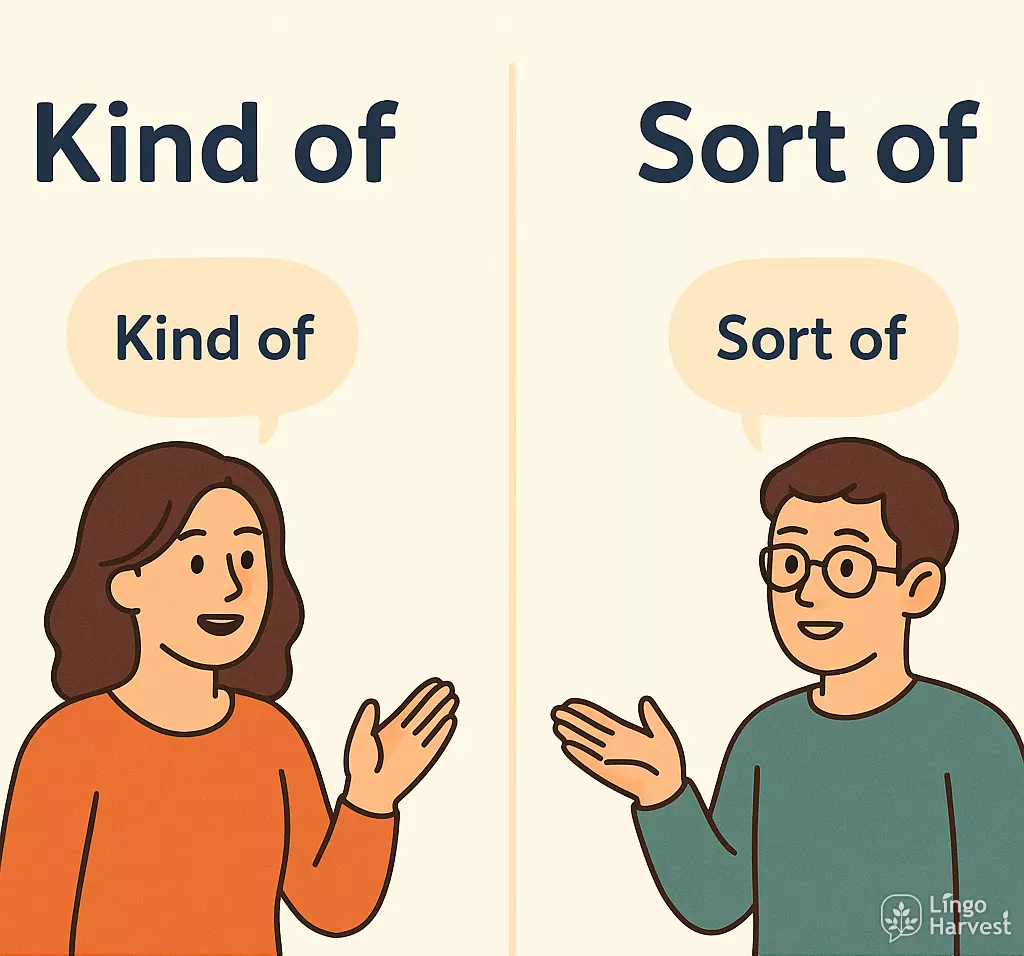
While both phrases are used interchangeably in many cases, there are subtle differences in tone and frequency based on region and context. Here’s a quick comparison:
| Usage | Typical Context |
|---|---|
| Kind of | More common in American English; slightly more informal |
| Sort of | Common in British English; can sound a bit more formal or tentative |
| Both | Used to soften statements, express uncertainty, or describe partial qualities |
| Examples | “I’m kind of tired.” / “It was sort of interesting.” |
When to Avoid Overusing Softening Language
While adding nuance is useful, relying too much on “kind of” or “sort of” can make your message unclear or undermine your confidence. In situations where clarity and decisiveness are important—such as in instructions or formal writing—use these phrases sparingly. Balance is key: soften where appropriate, but don’t hide your real opinion or intention.
Keeping Clarity While Polite
Striking a balance between sounding considerate and being understood clearly can be challenging, especially when using softening phrases like "hmm," "maybe," or "kind of." While these expressions help make language gentler and less direct, overusing them can lead to misunderstandings or vagueness. It's important to know when and how to soften your words without sacrificing your message.
Common Softening Expressions and Their Effects
Softening language can create a friendlier tone, but each phrase carries its own nuance. Here’s a list of frequent hedges and what they typically signal:
- Hmm – hesitation, uncertainty, or politeness before disagreeing
- Maybe – lack of commitment, open possibilities
- Kind of – partial agreement or softening a statement
- Sort of – similar to "kind of," slightly vague
- I guess – tentative opinion, not fully assertive
- It seems – impression rather than fact
- Perhaps – formal alternative to "maybe"
- Could be – open to other options or ideas
- Possibly – indicates uncertainty
- Not sure, but… – signals uncertainty before offering input
- Just – downplays the importance or strength of the statement
- A little – minimizes criticism or negative feedback
- In a way – suggests partial agreement or nuanced view
- More or less – approximate, not exact
- Would you mind… – polite request, indirect
- If possible – adds flexibility, avoids imposing
- Maybe we could… – collaborative, avoids direct suggestion
- I was wondering if… – gentle way to make a request
When Politeness Blurs the Message
Polite language should never obscure your main point. If you notice responses like "I'm not sure what you mean" or "Could you clarify?", it might be a sign that your words are too softened. To prevent confusion, consider these tips:
- State your main idea clearly, then add a softener if needed.
- Use hedging sparingly when giving important information or instructions.
- Be direct when clarity is more valuable than diplomacy, such as in safety or urgent matters.
- Check for understanding by asking, "Does that make sense?" or "Is that clear?"
Clear Yet Considerate: Sample Phrases
Choosing your words thoughtfully can help maintain both tact and transparency. Here are examples of how to rephrase softened statements for more precision:
- Instead of "Maybe we could start at 2?", try "Let's start at 2, if that works for everyone."
- Swap "It's kind of late" with "It's getting late."
- Rather than "I guess that's a problem," say "That seems to be a problem."
- Replace "Hmm, I don't know" with "I'm not sure, but I can find out."
- Change "Sort of finished" to "Mostly finished, just a few details left."
- Use "Could you send the report by Friday?" instead of "Maybe you could send it by Friday?"
- Say "Would you please clarify your point?" in place of "Hmm, I kind of didn't get that."
Politeness vs. Precision: A Comparison
| Polite Softened Phrase | Clear Direct Alternative |
|---|---|
| Maybe we should try a different approach? | Let's try a different approach. |
| It's kind of urgent. | This is urgent. |
| I guess that's not ideal. | That's not ideal. |
| Perhaps you could join us later. | Please join us later. |
| Hmm, I'm not sure this works. | This doesn't work. |
| Could be an issue. | This is an issue. |
Finding the right level of politeness and clarity is situational. Adjust your phrasing based on your audience, the context, and the importance of your message. With practice, you can soften your speech to sound considerate without losing your point.
Pros and Cons of Softeners
Choosing whether to use hedging phrases like "maybe," "kind of," or "hmm" depends on your goals and the context. These expressions can serve a useful function in conversation, but they’re not always the best choice. Understanding the benefits and drawbacks can help you decide when to use them thoughtfully.
Benefits: When Softeners Help
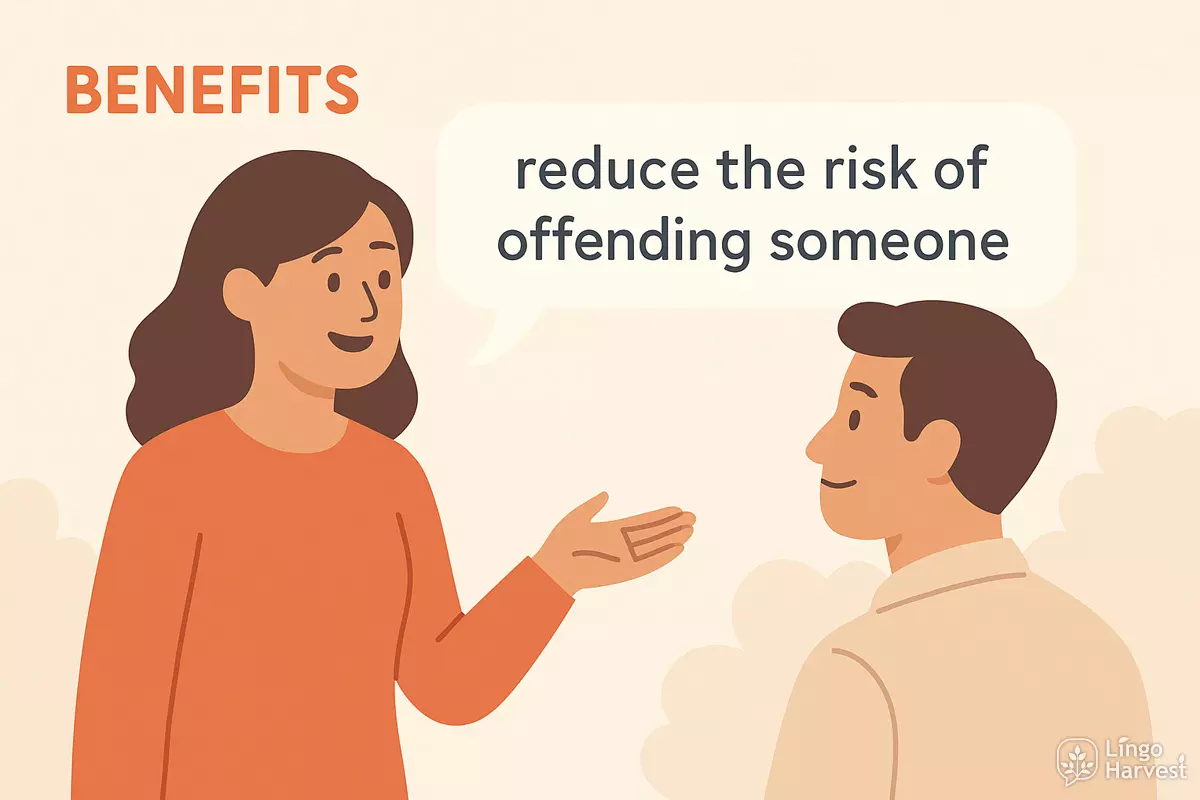
Using tentative language can make your speech sound more polite, open, or less confrontational. For example, softeners can:
- Reduce the risk of offending someone
- Invite others to share their opinions
- Signal humility or flexibility
- Help ease into difficult topics
- Show that you’re open to alternative ideas
- Make requests less demanding
- Encourage a collaborative tone in discussions
- Minimize the impact of criticism
- Allow space for disagreement
- Promote a non-judgmental atmosphere
Drawbacks: Possible Downsides
However, relying on such language too much can backfire. Some potential negatives include:
- Making your statements sound uncertain or weak
- Reducing your credibility or authority
- Causing confusion about your true intentions
- Undermining assertiveness in professional settings
- Leading listeners to overlook your main point
- Giving the impression you lack confidence
- Encouraging others to dismiss your ideas
- Complicating decision-making
Common Examples of Softeners
Some typical expressions that soften the impact of what you say include:
- Maybe
- Kind of
- Sort of
- Hmm
- I guess
- It seems
- Possibly
- Could be
- Perhaps
- I suppose
- Not sure, but...
- Just
- A bit
- Somewhat
- In a way
- Maybe we could...
- I wonder if...
- I'm not an expert, but...
Situational Comparison
The best choice depends on your purpose and relationship with your audience. Here’s a quick comparison of when hedging language is useful, and when it might be better to avoid it:
| Effective Use | When to Limit Use |
|---|---|
| Facilitating group discussions | Delivering clear instructions |
| Managing sensitive feedback | Making authoritative decisions |
| Expressing personal uncertainty | Negotiating or advocating strongly |
| Building rapport in informal chats | Establishing expertise |
Finding the right balance is key. Softeners can help you sound approachable and considerate, but using them too often may dilute your message. Tailor your approach to the situation and your communication goals.
Real-Life Examples (requests, feedback)
When people want to sound less direct, especially in English, they often soften their speech using words and phrases like “hmm,” “maybe,” or “kind of.” This is especially common when making requests or giving feedback, as it helps the speaker come across as more polite, tentative, or open to discussion.
Softened Requests in Everyday Conversation
Using hedging language can make requests feel less like commands and more like suggestions. Here are some common ways people soften requests:
- “Could you maybe help me with this?”
- “I was wondering if you might have a minute to talk?”
- “Do you think you could possibly send me that file?”
- “Hmm, would it be okay if I left a bit early today?”
- “Is there any chance you could take a look at this?”
- “Would you mind kind of explaining that again?”
- “I’m not sure, but maybe we could try a different approach?”
- “If it’s not too much trouble, could you help?”
- “Would it be alright if I joined the meeting later?”
- “I was hoping you might have some time to help out.”
Polite Feedback Using Softening Phrases
When offering feedback, especially criticism, people often choose gentler wording. This can help avoid sounding harsh or overly critical:
- “Hmm, I kind of feel like this section could use a bit more detail.”
- “Maybe we could consider another option?”
- “It’s just a thought, but perhaps this part is a little confusing.”
- “I’m not sure, but do you think this color works?”
- “You might want to sort of check the numbers again.”
- “I guess it could be improved a little here.”
- “Is it possible that this might be a bit too long?”
- “I wonder if we could maybe shorten this slide.”
- “It’s kind of hard to follow, maybe a summary would help?”
- “Do you think it’s possible to make this clearer?”
Direct vs. Softened Speech Patterns
The difference between direct and softened language is often subtle but important. Here is a comparison of typical forms:
| Direct | Softened |
|---|---|
| Send me the report. | Could you maybe send me the report? |
| This is wrong. | Hmm, I think this might be a bit off. |
| Do it now. | Would you mind doing it now? |
| Change this. | Maybe we could change this? |
Using hedging language like “hmm,” “maybe,” and “kind of” can help maintain positive relationships and encourage open communication, especially in professional or sensitive situations. These subtle shifts in speech can make conversations feel more collaborative and less confrontational.
Typical Errors and Fixes
When people try to soften their speech in English, certain missteps are common. Overusing hedging phrases, misplacing them, or choosing the wrong context can make speech sound uncertain or even confusing. Recognizing these pitfalls helps speakers sound more natural and confident, even when aiming for a gentle or indirect tone.
Common Mistakes When Softening Speech
- Using too many fillers (e.g., “um,” “hmm,” “well”) in a single sentence, making ideas unclear.
- Relying on “maybe” or “kind of” so much that statements lose their meaning.
- Placing hedging words in the wrong part of the sentence, which can confuse listeners.
- Mixing softeners with direct language, causing mixed signals (e.g., “I absolutely think it’s kind of wrong”).
- Choosing polite language in situations that require clarity or firmness, such as giving instructions.
- Forgetting to match tone with context: being too indirect in formal writing, or too direct in sensitive conversations.
- Translating softening phrases directly from another language, leading to awkward or unnatural expressions.
- Using “just” or “only” excessively, unintentionally minimizing important points.
- Failing to adjust register, so informal softeners appear in professional emails.
- Overusing questions instead of statements; for example, “Maybe you could, like, try this?” instead of “Could you try this?”
How to Fix These Issues
- Limit hedging words to one or two per sentence for clarity.
- Choose softeners appropriate to the relationship and situation (e.g., “perhaps” in formal, “maybe” in casual).
- Practice placing softeners at natural points in sentences, usually before the main verb or at the start.
- Balance gentle language with clear meaning: if something is important, don’t hedge too much.
- Review written communication for unnecessary fillers and remove them.
- Listen to native speakers for natural patterns of softening and imitate those in your own speech.
Comparison of Common Softening Phrases
| Phrase | Typical Use & Cautions |
|---|---|
| Hmm | Signals hesitation or thinking; overuse may seem indecisive. |
| Maybe | Suggests uncertainty or possibility; too frequent use weakens statements. |
| Kind of / Sort of | Makes statements less direct; can sound vague if not used carefully. |
| Just | Softens requests (“Could you just…”); excessive use minimizes impact. |
| Actually | Can clarify or gently correct; may sound abrupt if stressed or misplaced. |
| I think | Shows opinion; overuse makes arguments seem weak. |
| I guess | Conveys uncertainty; use sparingly for important points. |
| Perhaps | Formal softener in suggestions; less common in casual speech. |
Mastering these nuances takes practice. Pay attention to how often and where you use hedging language, and aim for a balance that suits your context. With time, your speech will sound both polite and purposeful.
Practice: Rewrite to Soften
Learning to temper your language helps conversations feel more collaborative and less confrontational. This exercise invites you to practice transforming direct or blunt statements into softer, more tentative forms using strategies discussed earlier, such as adding hedges, modal verbs, or gentle fillers.
Common Direct Phrases and Softer Alternatives
Below is a list of straightforward statements frequently encountered at work, school, or in daily interactions. Try rewriting each one to reduce the risk of sounding too abrupt or demanding. Use phrases like “maybe,” “I think,” “kind of,” “perhaps,” or “could you.”
- Finish this report by tomorrow.
- You made a mistake in this calculation.
- That idea won’t work.
- I don’t agree with your plan.
- Send me the files now.
- This is wrong.
- We need to change everything.
- Your explanation is unclear.
- Rewrite this section.
- You’re late.
Show answers
- Could you try to finish this report by tomorrow, maybe?
- I think there might be a small mistake in this calculation.
- Hmm, I’m not sure that idea would work.
- I kind of see things differently from your plan.
- Would you mind sending me the files when you can?
- This might not be quite right.
- Maybe we should consider changing a few things.
- Your explanation is a little unclear, I think.
- Would it be possible to rewrite this section?
- It seems like you might be a bit late.
Quick Reference: Softening Strategies
- Add “maybe,” “perhaps,” or “I think” to show uncertainty or openness.
- Use modal verbs (“could,” “might,” “would”) instead of imperatives.
- Insert fillers like “kind of,” “sort of,” or “a little” for nuance.
- Start statements with “Hmm,” “Well,” or “It seems…” to sound less blunt.
- Turn direct orders into polite questions.
Comparison of Direct vs. Softened Speech
| Direct Statement | Softened Version |
|---|---|
| Please fix this. | Could you maybe take a look at this? |
| This is incorrect. | I think this might not be quite right. |
| Give me feedback. | Would you mind giving me some feedback? |
| That’s not possible. | Hmm, I’m not sure if that’s possible. |
| I disagree. | I kind of see it differently. |
| You should do this now. | Maybe you could do this when you have a moment? |
Try It Yourself
Pick three phrases you often use and experiment with softening them. Notice how your tone changes and how others respond in conversation. With practice, using gentler language becomes natural and can make your interactions smoother and more effective.