Everyday Sounds in English: Uh, Um, Er - How They're Used

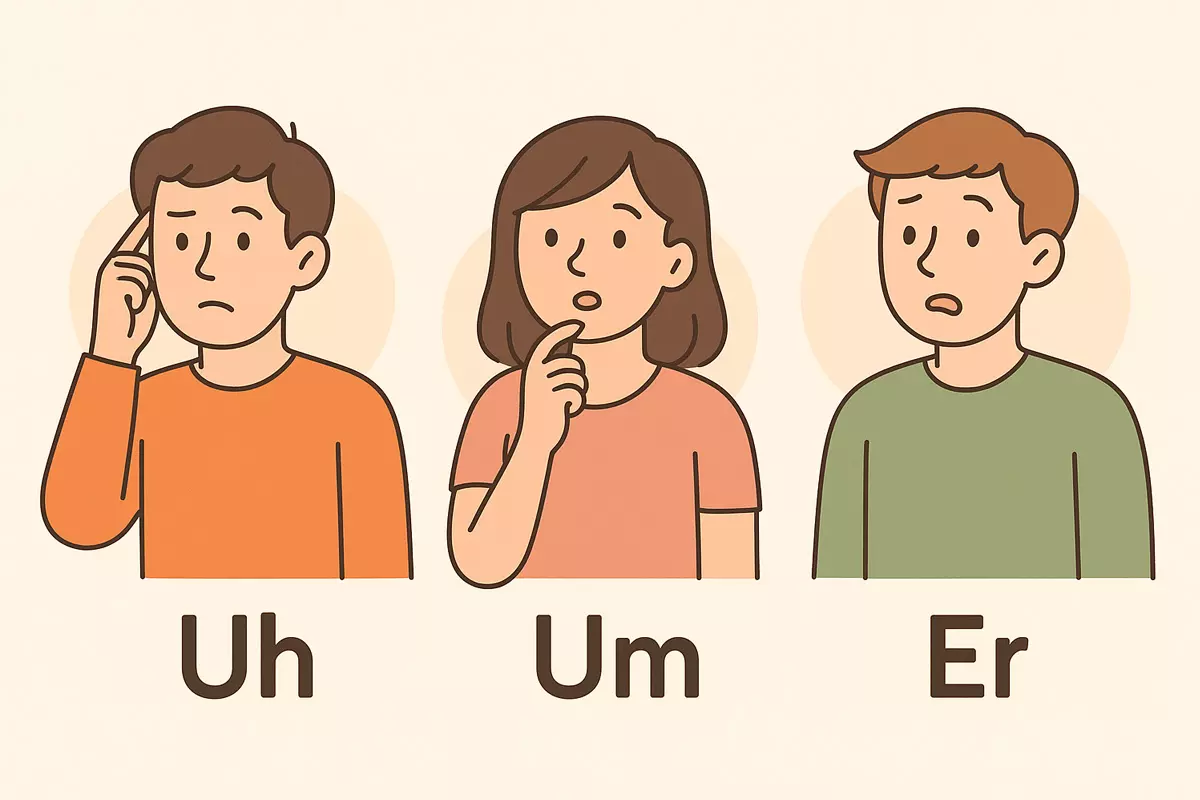 Here we how fillers such as uh and um show thinking or help speakers hold their turn, when they are useful or distracting, how they're spelled and placed, effects from other languages, and practical ways to notice and reduce their use.
Have you ever noticed how people often fill pauses in conversation with small sounds such as uh, um, or er? These vocal fillers are actually quite common in everyday English and serve several important functions. They give speakers a moment to think about what they want to say next, signal hesitation or uncertainty, and help maintain the flow of conversation so that it doesn’t become awkwardly silent. While sometimes seen as a sign of nervousness, these sounds are a natural part of spoken language.
What Fillers Signal (Thinking, Turn-Holding)
When people use fillers like "uh," "um," or "er" in English, these little sounds do more than just fill silence. They play a key role in spoken interaction, helping speakers manage the flow of conversation. Often, these noises signal that a person is pausing to think, searching for the right word, or organizing their thoughts. Instead of leaving a gap, which could be misinterpreted as the end of a turn, fillers tell listeners that the speaker hasn't finished yet.
Thinking Aloud and Planning Speech
Fillers often show that someone is processing or hesitating. They can mean the speaker:
- Is unsure of the next word
- Needs a moment to recall information
- Wants to soften a statement
- Is considering several options
- Is about to change direction in the conversation
- Is searching for the right phrase
- Doesn’t want to sound too abrupt or direct
- Is about to say something sensitive or delicate
- Wants to show politeness or hesitation
- Is preparing the listener for a complex or unexpected answer
Keeping the Floor: Turn-Holding
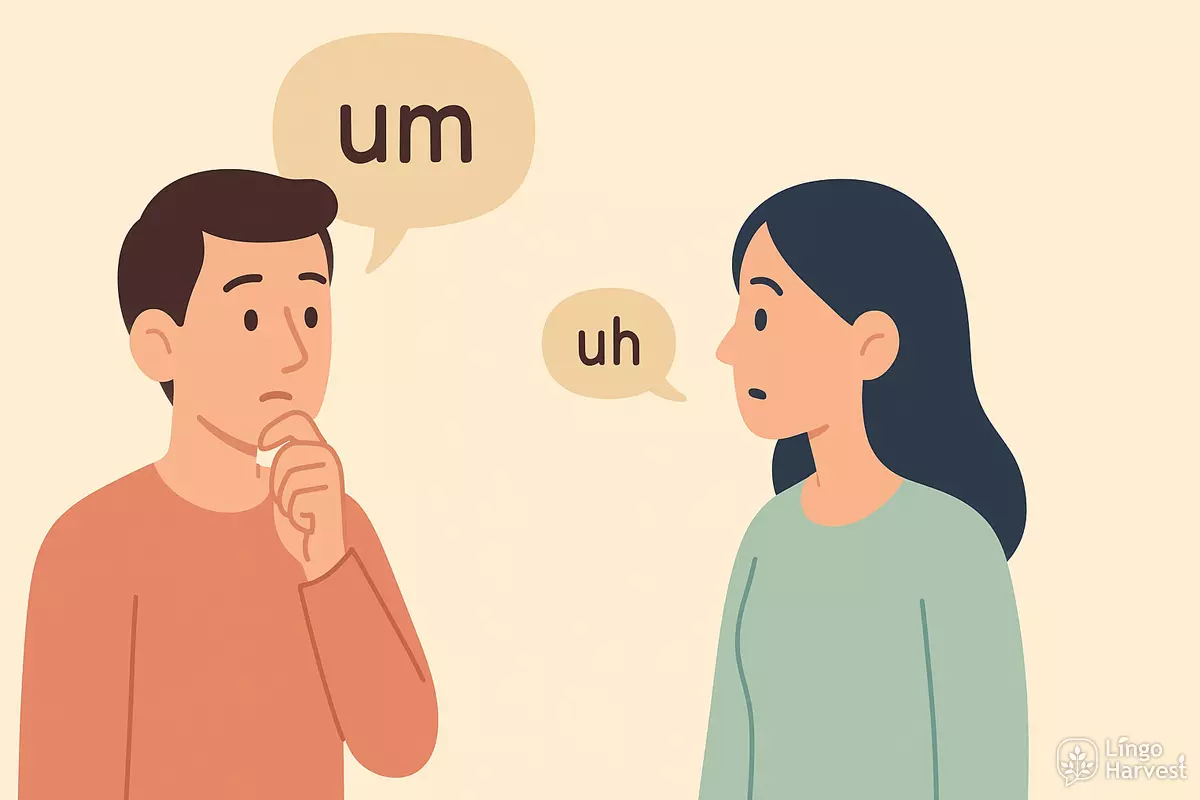
In group discussions or fast-paced conversations, these vocal pauses are vital tools for holding onto your speaking turn. Instead of someone else jumping in, a well-timed "um" or "uh" signals you’re not done. This is especially important in English, where interrupting can be seen as rude or confusing.
- Preventing interruptions by indicating more is coming
- Buying time to organize thoughts without losing the chance to speak
- Marking boundaries between ideas within your own speech
- Showing that silence isn’t an invitation for others to start talking
Common English Fillers and Their Nuances
While "uh," "um," and "er" are the most recognized, English speakers use a variety of hesitation sounds and words. Each can have slightly different effects, depending on context, accent, and personal speaking style. Here’s a list of commonly used fillers and hesitation markers:
- uh
- um
- er
- well
- like
- you know
- I mean
- so
- actually
- right
- sort of
- kind of
- hmm
- let me see
- let’s see
- okay
- basically
- alright
- ah
- mm
How Listeners Interpret Fillers
Listeners don’t usually focus on these sounds consciously, but they pick up on their meaning. Fillers can indicate the speaker’s honesty (not rushing an answer), nervousness, or a need for patience. In some situations, overusing them can suggest uncertainty, but in everyday speech, they’re a normal part of spontaneous communication.
Summary Table: Filler Functions
| Filler Use | Typical Signal |
|---|---|
| Pausing to Think | Speaker is searching for words or ideas |
| Turn-Holding | Speaker wants to keep talking, not finished yet |
| Softening Remarks | Reduces directness, adds politeness |
| Signaling Uncertainty | Speaker lacks confidence or is unsure |
| Organizing Speech | Marks transitions or separates ideas |
Strategically used, these ordinary sounds help conversations run smoothly. They give speakers a tool for managing both their own speech and the expectations of their listeners.
Good vs Distracting Amounts
Using words like "uh," "um," or "er" can sound natural and help speakers manage their thoughts, but the frequency matters a lot. Sprinkle these expressions lightly in conversation, and they can make speech seem more thoughtful or authentic. However, overusing them can quickly distract listeners and even make communication less clear.
Native speakers often use these sounds without realizing it, especially when pausing to think or soften a statement. Listeners generally accept a few of these in casual speech. If they occur every few sentences, they help the speaker sound real and spontaneous. But if every phrase is packed with hesitation noises, it becomes hard to follow the main message.
When Fillers Are Helpful
- Pausing to think before an important point
- Signaling uncertainty or searching for the right word
- Softening a direct answer
- Showing you’re still speaking and not finished
- Making speech less abrupt in informal settings
When They Distract or Annoy
- Interrupting every sentence or phrase
- Appearing in nearly every response
- Making it hard for listeners to follow the main idea
- Suggesting the speaker is unprepared or nervous
- Distracting from the actual content
The difference between effective and problematic use is often about balance and context. In a relaxed conversation, a few "ums" are perfectly normal. In a job interview, speech full of hesitation can sound unsure or unprofessional.
| Acceptable Use | Distracting Overuse |
|---|---|
| Once every few sentences | Several times per sentence |
| Used for natural pauses | Used as a crutch for every pause |
| Helps organize thoughts briefly | Breaks up the flow and confuses listeners |
| Adds authenticity to speech | Makes the speaker sound unsure or unprepared |
Finding the right balance helps keep speech natural and easy to follow. If you notice you’re using “uh,” “um,” or “er” too often, try pausing silently instead. This small change can make your English sound smoother and more confident.
Spelling Conventions and Pauses
When it comes to writing out hesitation sounds like "uh," "um," and "er," English doesn’t have strict rules, but some clear patterns have emerged. These filler words are usually written as short, simple letter combinations that mimic their spoken sound. You’ll often see them in dialogue, transcripts, or informal writing to show a natural pause or uncertainty in speech.
Common Spellings of Filler Sounds
Writers generally choose spellings that match how these noises are pronounced. The most frequent forms include:
- uh – used for a neutral, short hesitation
- um – a longer, more thoughtful pause
- er – common in British English, especially in formal or public speaking
- hmm – for thinking or considering
- ah – sometimes signals realization or a different kind of pause
- mm – often a short, low sound for agreement or pause
- eh – more common in Canadian or informal UK English
- oh – sometimes a pause, sometimes an exclamation
- mmm – longer sound, often for thinking or enjoying
- uh-huh – agreement, but also a pause in conversation
- uh-uh – disagreement, but can act as a hesitation
- ummm – extended hesitation, often when searching for words
- erm – British variant of "um/er"
- huh – questioning pause or confusion
- aha – realization (not a pause, but related in writing speech sounds)
How Pauses Are Written

Pauses in written English are often shown through these filler words, but punctuation also plays a role. Ellipses (…) and dashes (—) are frequently used to represent a break or hesitation. Sometimes, writers combine fillers and punctuation for a more realistic effect:
- “I… um, I’m not sure.”
- “Er—well, I suppose so.”
- “Uh… do you know what time it is?”
Comparison: Spelling, Context, and Usage
| Spelling | Typical Context | Example Sentence |
|---|---|---|
| uh | Short pause, uncertainty | “Uh, can you repeat that?” |
| um | Longer pause, searching for words | “Um, I think it’s over there.” |
| er | British English, formal hesitancy | “Er, pardon me, but…” |
| hmm | Thinking, considering | “Hmm, let me see.” |
| erm | British English, informal pause | “Erm, I’m not sure about that.” |
| uh-huh | Agreement, conversational pause | “Uh-huh, I get it.” |
| uh-uh | Disagreement or hesitation | “Uh-uh, that’s not right.” |
| mmm | Thinking or savoring | “Mmm, maybe…” |
Tips for Using These Sounds in Writing
Writers use these expressions to make dialogue feel realistic and to capture the rhythm of spoken English. Overusing them, however, can make text hard to read. It’s best to include just enough to convey natural speech without distracting from the meaning. If you’re transcribing speech, try to match the speaker’s actual sounds, but in creative writing, a little goes a long way.
Where They Appear in Sentences
Fillers like "uh," "um," and "er" usually show up at specific points in spoken English, often reflecting hesitation, uncertainty, or a brief pause to think. These sounds aren’t random; speakers tend to use them in certain places to manage the flow of conversation or signal a need for more time to respond.
Common Positions for Fillers
You’ll most often hear these hesitation sounds in the following spots:
- Before answering a question: “Uh, I think it’s next week.”
- Between thoughts or clauses: “I was going to, um, call you, but I forgot.”
- When searching for a word: “Can you pass me the… uh… the remote?”
- At the start of a sentence: “Um, I’m not sure.”
- When correcting oneself: “It’s on the left—er, right, sorry!”
- During lists or explanations: “First, uh, we need to check in. Then, um, find our seats.”
- In the middle of a sentence: “She’s, um, really talented at drawing.”
- When feeling nervous or uncertain: “Er, I don’t really know the answer.”
- As a way to hold the floor in conversation: “So, uh, what I was saying is…”
- Replacing a pause instead of silence: “Could you, um, explain that again?”
Patterns in Spoken English
Generally, these vocal pauses appear more in informal speech than in formal presentations or written English. They help speakers organize thoughts or soften statements, and often occur at the beginning of sentences, just before key information, or when the speaker is unsure.
Examples of Fillers in Different Sentence Positions
| Position in Sentence | Example with Filler |
|---|---|
| Sentence Start | Um, can I ask a question? |
| Before a Key Word | She’s the, uh, manager of the project. |
| Mid-Sentence Pause | I wanted to—er—say something important. |
| Self-Correction | Turn left—uh, I mean right—at the light. |
| Between Ideas | We finished the first step, um, what’s next? |
Noticing how these expressions are used helps listeners follow the speaker’s train of thought. For learners, understanding typical spots for "uh," "um," and "er" can make both listening and speaking in English feel more natural and less stressful.
Cross-Language Interference
For English learners, using filler sounds like "uh," "um," or "er" can be surprisingly tricky. These hesitation noises often work differently in other languages, which sometimes leads to confusion or awkwardness in conversation. Many people instinctively use the hesitation sounds from their native tongue, which might not carry the same meaning—or might even sound odd—to English speakers.
How Native Language Habits Influence English Fillers
Speakers often transfer their own language’s filler words into English, especially under stress or when searching for the right word. While this is a natural part of language learning, it can affect how clearly others understand you. In some cases, these transferred sounds may not be recognized as fillers at all, or they might be interpreted as words or noises with different meanings.
- Spanish speakers might say "eh" or "este" instead of "uh" or "um".
- French speakers often use "euh" in place of English fillers.
- Japanese speakers may use "ano" or "eto" when pausing for thought.
- Mandarin speakers sometimes add "ne" or "nage" (那个).
- German speakers might use "äh".
- Russian speakers often say "э-э" or "ну".
- Arabic speakers may use "yaʕni" (يعني) or "emm".
- Portuguese speakers tend to use "é" or "tipo".
- Korean speakers sometimes use "geu" (그) or "eum".
- Italian speakers might say "ehm" or "cioè".
- Hindi speakers may use "matlab" or "voh".
- Turkish speakers often say "şey" or "ııı".
- Dutch speakers might use "eh" or "uhm".
- Polish speakers sometimes use "yyy" or "no".
- Hebrew speakers might say "em" or "ke'ilu".
- Thai speakers may use "เอ่อ" (oe)."
- Vietnamese speakers often use "ờ" or "à".
- Greek speakers might say "em" or "diladi".
- Swedish speakers sometimes use "öh" or "alltså".
- Finnish speakers might say "öö" or "niinku".
Confusion and Social Signals
What’s considered a neutral pause in one language might be interpreted differently in another. For instance, English "uh" and "um" simply show hesitation, but imported fillers can seem distracting or even change the tone of a conversation. Sometimes, unfamiliar hesitation sounds might be mistaken for an actual word or even an error by English listeners.

Comparing Fillers in English and Other Languages
| Language | Common Filler Sounds | Notes / English Listener's Reaction |
|---|---|---|
| English | uh, um, er | Standard and widely recognized as hesitation markers. |
| Spanish | eh, este | May sound unfamiliar or distracting to native English speakers. |
| French | euh | Can be mistaken for a stutter or misunderstood. |
| Japanese | ano, eto | Not recognized as hesitation by English listeners; may cause confusion. |
| Mandarin | ne, nage (那个) | Can sound like a word rather than a pause; may puzzle listeners. |
| German | äh | May be interpreted as a mispronunciation. |
| Russian | э-э, ну | Might seem abrupt or unclear to English ears. |
Adapting to English Conversation
To sound more natural in English, it helps to notice and practice the local hesitation sounds. Over time, swapping native fillers for "uh," "um," or "er" becomes easier. Listening to native speakers and mimicking their patterns is a practical way to adjust. If you catch yourself using fillers from your first language, don’t worry—awareness and gentle correction will help you blend in more smoothly during English chats.
Samples from Natural Speech
Everyday conversation in English is filled with little words and sounds like “uh,” “um,” and “er.” These are known as hesitation markers or fillers. They often appear when speakers are pausing to think, searching for the right word, or smoothing over a moment of uncertainty. Unlike formal writing, real-life talk is rarely perfectly fluent; these vocal pauses help keep the flow and signal that the speaker has not finished their thought.
Common Contexts for Fillers
- Starting to answer a question: “Um, I think it’s over there.”
- Changing topics: “Uh, by the way, did you see the news?”
- Remembering details: “She arrived at, er, around five o’clock.”
- Softening disagreement: “Uh, I’m not sure that’s right.”
- Stalling for more time: “Um… let me check.”
Natural Speech Examples
- “Uh, can you repeat that?”
- “Um, I’m not sure what you mean.”
- “Er, it depends on the situation.”
- “So, um, what do you think?”
- “Uh, well, I guess I could try.”
- “Um, let’s see… maybe next week?”
- “Er, I forgot my keys.”
- “Uh, yeah, that’s right.”
- “Um, actually, I have a question.”
- “Er, sorry, can you say that again?”
- “Uh… I’m thinking of a different example.”
- “Um, I’ll have the chicken, please.”
Patterns in Usage
Speakers may use these fillers at the start of sentences, in the middle when searching for a word, or to signal hesitation before giving an answer. Sometimes, more than one can appear together: “Uh, um, let me see…” The choice of which sound to use can depend on region, age, or individual habit.
| Filler | Typical Use in Spoken English |
|---|---|
| Uh | Quick hesitation, often at the start of a response or when pausing briefly. |
| Um | Longer pause, often when thinking or searching for words. |
| Er | Frequently used in British English, especially when correcting oneself or hesitating mid-sentence. |
| Well | Sometimes used with fillers to soften responses or introduce an explanation. |
Using these sounds is a normal part of English conversation. They help speakers manage the flow of talk and can make speech sound more natural and approachable. Recognizing them can also help listeners understand when someone is thinking, unsure, or about to continue.
Trim or Replace Strategies
When speaking English, many people use filler sounds like "uh," "um," and "er" to buy time or signal hesitation. However, trimming these sounds or replacing them with more effective pauses can help your speech sound clearer and more confident. There are several practical approaches to reducing reliance on these common fillers, especially in formal situations, presentations, or interviews.
Simple Ways to Cut Down on Fillers
- Pause silently: Replace "uh" or "um" with a brief silence. This gives you time to think without distracting your listener.
- Slow down: Speaking a bit more slowly can help you organize your thoughts and reduce the urge to fill gaps with sounds.
- Plan ahead: Before you speak, take a moment to consider your main points, which can help you avoid unnecessary fillers.
- Use transition words: Words like "well," "so," "let’s see," or "actually" can connect ideas smoothly and serve as more meaningful placeholders.
- Practice: Recording yourself and reviewing your speech can help you notice patterns and work on eliminating extra sounds.
Alternative Phrases and Expressions
Sometimes, instead of relying on a filler, you can use short, natural expressions that signal you’re thinking or organizing your response. Here are some effective alternatives:
- Let me think…
- That’s a good question.
- I’m not sure, but…
- Let’s see…
- Well…
- Actually…
- To be honest…
- What I mean is…
- It depends…
- Can I add something?
- For example…
- In other words…
- On the other hand…
- Just a moment…
- Let me explain…
- That reminds me…
- I suppose…
- Maybe…
- To sum up…
- Anyway…
Comparison: Filler Sounds vs. Replacement Techniques
| Common Filler | Effective Replacement |
|---|---|
| "Uh" | Short pause → Let me think… |
| "Um" | Transition word → Well… |
| "Er" | Clarifying phrase → What I mean is… |
| Repeated filler (e.g., "uh, um") | Silent pause or "That’s a good question." |
Learning to reduce or exchange filler sounds takes practice, but these approaches can make your English sound more natural and engaging. Try using a mix of pauses, transitional phrases, and thoughtful expressions to keep your speech smooth and listener-friendly.
Practice: Transcribe and Improve
Understanding how native speakers use fillers like "uh," "um," and "er" can help you become a more confident listener and speaker. Below, you'll find exercises and techniques to develop your skills in recognizing and using these everyday sounds naturally.
1. Listen and Write: Spot the Fillers
Try listening to short audio clips or real conversations, and write down exactly what you hear, including all the hesitation sounds. This will sharpen your ear for authentic speech patterns.
- Listen to a short interview or podcast segment.
- Pause after each sentence and transcribe everything, including "uh," "um," "er," and other hesitation markers.
- Compare your transcription to the audio. Did you catch every filler sound?
Show answers
- Answers will vary, but should include all hesitation sounds; for example: "I, um, think that, uh, we should go."
2. Improve: Replace or Reduce Fillers
Native speakers often use fewer fillers in formal situations. Practice rephrasing sentences to sound more fluent.
- Original: "I, um, wanted to ask if you, uh, have time tomorrow?"
- Improved: "I wanted to ask if you have time tomorrow."
- Original: "So, er, I guess we could, um, start now."
- Improved: "So, I guess we could start now."
Show answers
- Remove unnecessary fillers for a clearer sentence.
- Use pauses instead of hesitation sounds.
3. Common Fillers and Their Contexts
Fillers serve different purposes depending on the situation. Below is a comparative overview of when and why these sounds appear in English conversations:
| Filler Sound | Typical Use | Example Sentence |
|---|---|---|
| um | Pausing to think; uncertainty | "Um, can I ask a question?" |
| uh | Hesitation before responding | "Uh, I’m not sure." |
| er | Searching for the right word | "It was, er, interesting." |
| like | Informal pause or emphasis | "It was, like, amazing!" |
| well | Starting an answer thoughtfully | "Well, I think so." |
| so | Transitioning between ideas | "So, what do you think?" |
4. Challenge: Edit These Sentences
Read the sentences below and identify where fillers are used. Then, try to rewrite the sentences to sound more fluent, as if speaking in a formal setting.
- "Uh, I think, um, we should start now."
- "Er, can you, uh, repeat the question?"
- "So, um, what time does it, uh, begin?"
Show answers
- "I think we should start now."
- "Can you repeat the question?"
- "What time does it begin?"
5. Tips for Natural Use
- Notice how often native speakers use fillers in casual speech but rarely in formal talks.
- Practice pausing silently instead of filling every gap with "uh" or "um."
- Record yourself and listen for patterns in your own speech.
- Try role-playing both casual and formal conversations to adjust your use of hesitation sounds.
By practicing transcription and editing, you’ll become more aware of how these small sounds shape real English conversations and how you can control them to sound more fluent and confident.