Polite Reactions for Beginners: Really?, I See, That's Nice

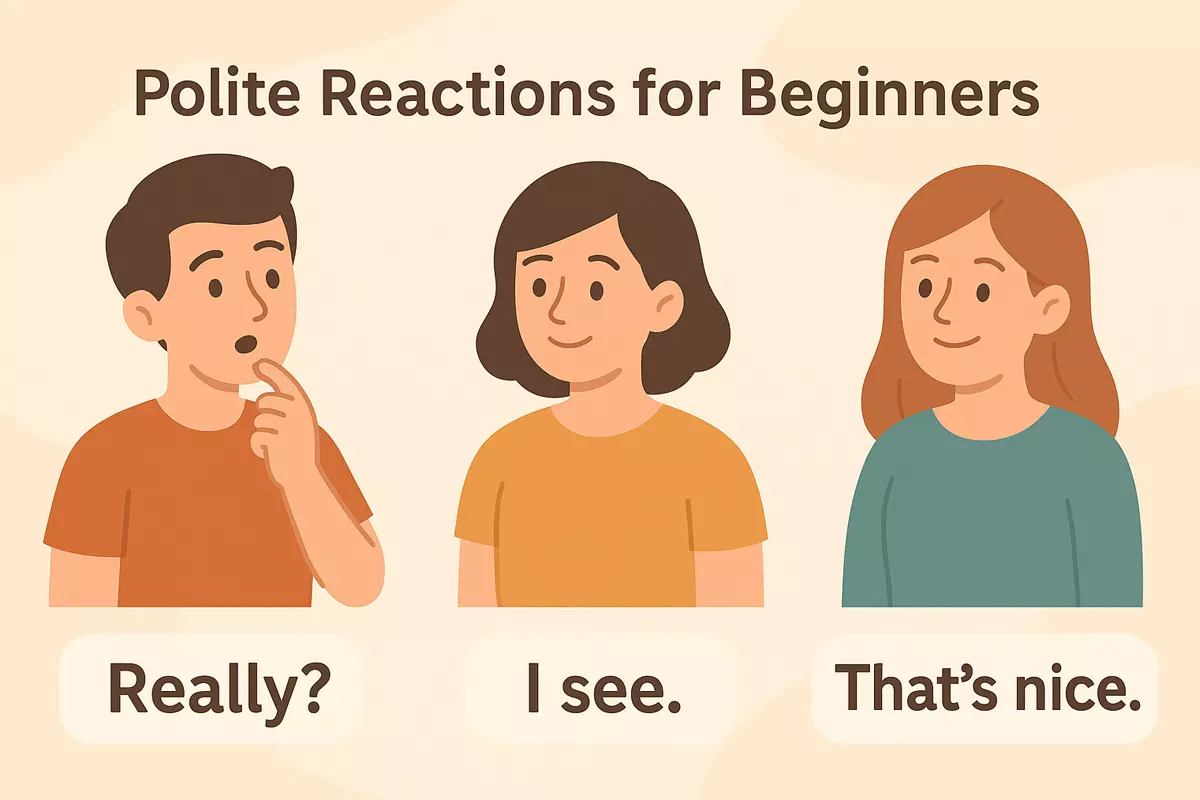 Here we polite reactions in English, such as showing interest without interrupting, agreeing or disagreeing gently, reacting to good or bad news, using sincere intonation, and avoiding empty phrases.
Developing the ability to respond thoughtfully in everyday conversations can make interactions more enjoyable and meaningful. For those new to social exchanges, practicing simple and polite replies helps foster connection and demonstrates genuine interest in others. By listening carefully and responding with kindness, you can build stronger relationships and make people feel valued during your conversations. Over time, these skills become second nature, making social situations more comfortable and rewarding for everyone involved.
Showing Interest Without Interrupting
Listening actively doesn’t always mean jumping in with your own thoughts. Sometimes, responding with simple, polite phrases lets the other person know you care about what they’re saying—without cutting them off. Beginners often worry about how to react, but there are plenty of ways to express engagement that don’t disrupt the flow of conversation.
Polite Short Reactions
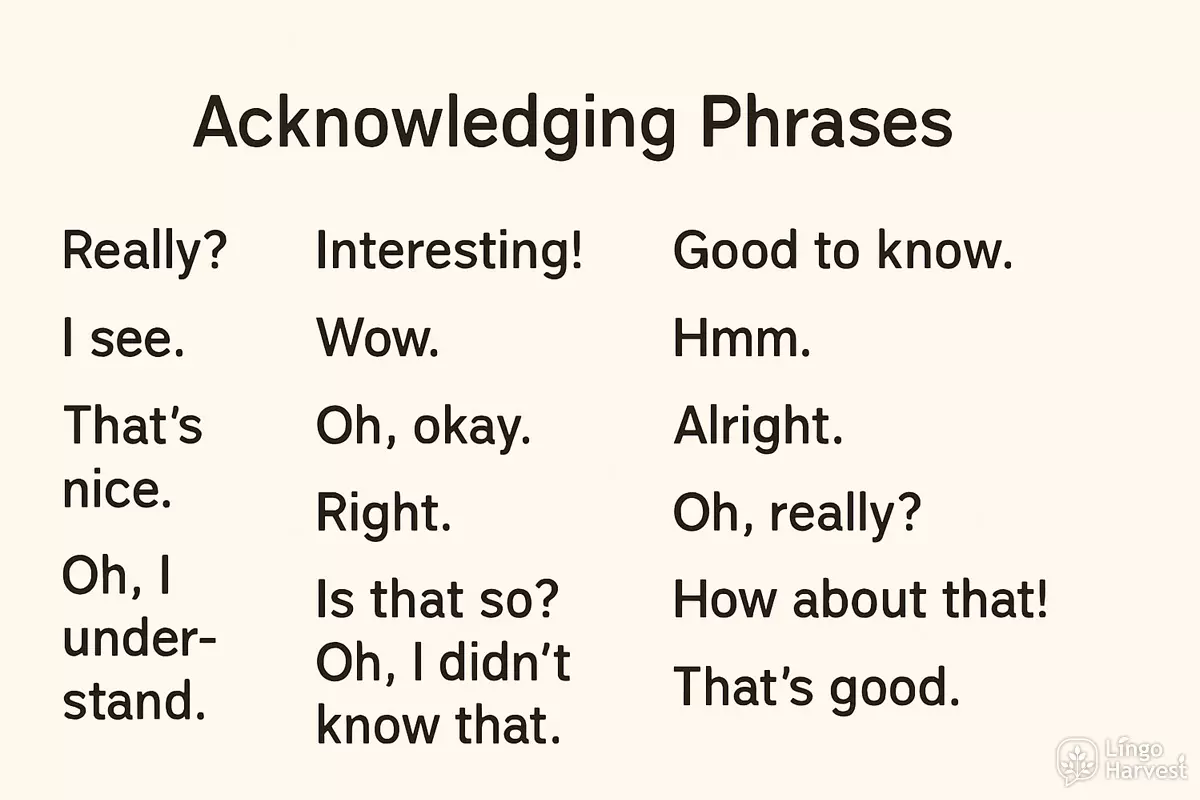
Using brief, neutral responses helps keep the conversation smooth. These phrases show you’re following along, even if you’re unsure what to say next. Here are some common examples you can use in everyday situations:
- Really?
- I see.
- That's nice.
- Oh, I understand.
- Interesting!
- Wow.
- Oh, okay.
- Right.
- Uh-huh.
- Is that so?
- Oh, I didn't know that.
- That makes sense.
- Good to know.
- Hmm.
- Alright.
- Oh, really?
- How about that!
- That’s good.
Tips for Non-Verbal Feedback
Sometimes, a simple nod or smile can be just as effective as words. Non-verbal cues like eye contact, nodding, or even a small smile show you’re attentive. These silent signals encourage the speaker to continue, and they help keep the conversation natural and comfortable.
When to Use Which Reaction
Choosing the right phrase depends on the situation and your relationship with the speaker. For example, “Really?” works well when you’re surprised, while “That’s nice” fits positive news. If you want to show understanding, “I see” or “Oh, I understand” are good options.
| Situation | Suggested Polite Reaction |
|---|---|
| Hearing surprising news | Really? / Wow. |
| Receiving good news | That's nice. / That’s good. |
| Learning something new | Oh, I didn't know that. / Interesting! |
| Showing understanding | I see. / That makes sense. |
| General acknowledgment | Right. / Uh-huh. / Okay. |
Practice Makes Perfect
It’s normal to feel unsure at first. Try practicing these responses in low-pressure settings, like with friends or classmates. Over time, reacting in a courteous, unobtrusive way will feel much more natural. Remember, you don’t always need to add your own story—sometimes, a simple, well-timed comment is all it takes to show you’re truly listening.
Agreeing/Disagreeing Softly
When you want to express your opinion without sounding too direct or harsh, using gentle language is helpful. In conversations, especially when learning a new language, it’s important to show understanding or a different point of view in a way that keeps things friendly. Phrases like “Really?” or “I see” are useful, but there are more ways to agree or disagree politely.
Polite Ways to Agree
Simple expressions can help you show support or understanding without sounding overenthusiastic. Here are some common phrases:
- That makes sense.
- I agree with you.
- Exactly.
- That’s true.
- I think so too.
- Absolutely.
- Sure.
- Good point.
- Definitely.
- You’re right.
Gentle Ways to Disagree
Disagreeing can feel awkward, but there are many soft expressions that help you share your opinion politely:
- I’m not sure about that.
- I see what you mean, but…
- That’s interesting, though I think…
- Maybe, but I’m not convinced.
- That could be true, however…
- I understand, but I feel differently.
- Perhaps, but in my opinion…
- I get your point, yet…
- That’s one way to look at it.
- I see your point, but I also think…
Comparison: Agreeing vs. Disagreeing Softly
| Soft Agreement | Soft Disagreement |
|---|---|
| That’s true. | I’m not sure about that. |
| Exactly. | I see what you mean, but… |
| Absolutely. | That’s interesting, though I think… |
| You’re right. | Perhaps, but in my opinion… |
| Good point. | I understand, but I feel differently. |
Tips for Softer Communication
Choosing your words carefully can help you avoid misunderstandings. Pausing before you answer gives you a moment to think. Adding phrases like “I think” or “maybe” can soften your opinion. Remember, the goal is to share your thoughts and keep the conversation comfortable for everyone involved.
Reacting to Good vs Bad News
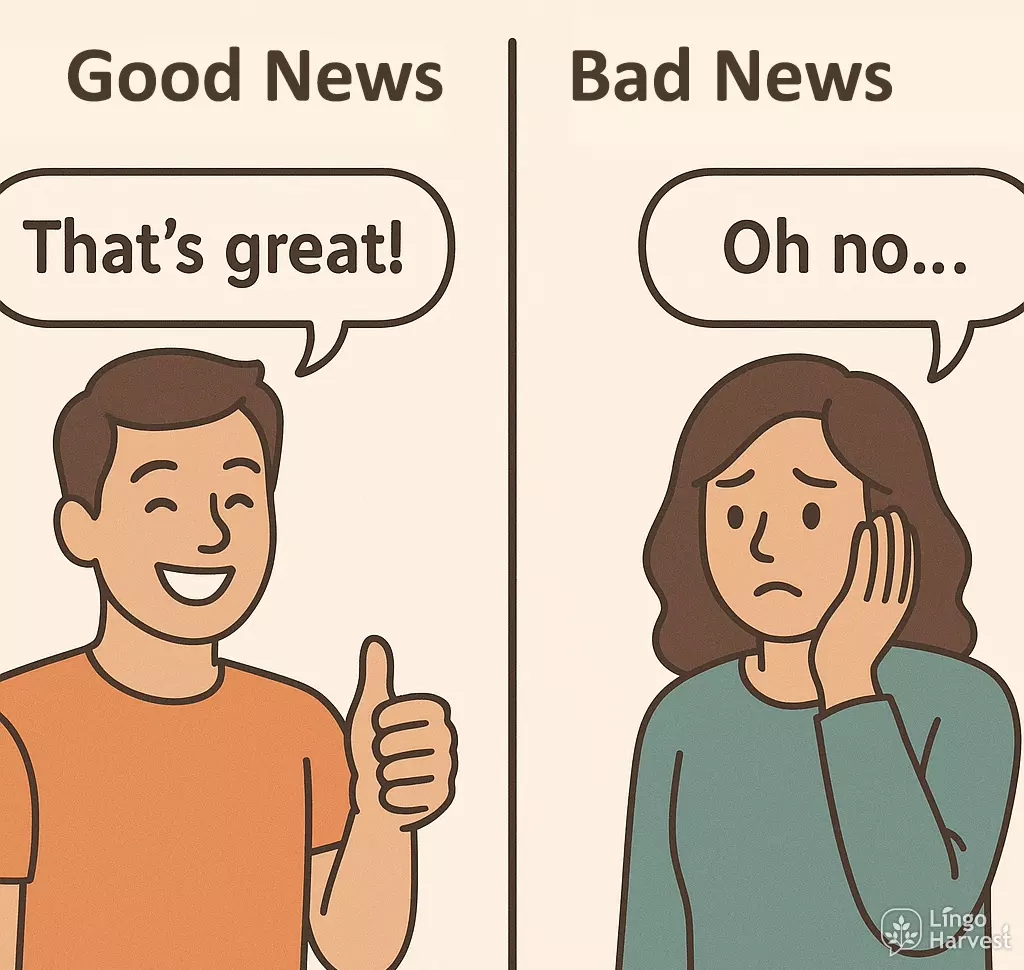
Understanding how to respond appropriately to both positive and negative updates is essential for polite conversation. The way you reply can show your empathy, interest, or support, even with simple phrases. Choosing the right words—whether the news is cheerful or disappointing—helps you connect better and avoid misunderstandings.
Responses to Positive News
When someone shares something good, it’s common to express happiness or interest. You don’t need to be overly enthusiastic; even beginners can use short, polite phrases to sound natural. Here are some simple ways to react when you hear good news:
- Really? That’s great!
- Wow, congratulations!
- I see, that’s nice.
- Oh, good for you!
- That’s wonderful.
- How exciting!
- Sounds amazing.
- Glad to hear that.
- That’s awesome!
- Nice job!
Replies to Negative News
Responding to bad news politely means showing concern or sympathy without prying too much. It’s important not to ignore the other person’s feelings. These expressions are useful for beginners:
- Oh, really? I’m sorry to hear that.
- That’s too bad.
- I see. That must be hard.
- Oh no, what happened?
- That’s unfortunate.
- I hope things get better.
- Let me know if you need anything.
- That sounds tough.
- I understand.
- Oh, I see. Take care.
Comparison of Polite Reactions
| Good News ✅ | Bad News ❌ |
|---|---|
| That’s nice! | I’m sorry to hear that. |
| Really? Congratulations! | Oh, really? That’s too bad. |
| How wonderful! | I see. That must be hard. |
| Good for you! | That’s unfortunate. |
| Glad to hear that. | Let me know if you need anything. |
Politeness in conversation is often about tone and timing as much as word choice. For beginners, using these short, clear responses can make interactions smoother and more comfortable, no matter what kind of news you’re reacting to.
Intonation for Sincerity
How you say something often matters more than the actual words. When using polite reactions like "Really?", "I see," or "That's nice," your tone of voice gives listeners clues about your true feelings. A friendly, interested voice helps make your responses sound genuine, while a flat or sarcastic tone can unintentionally sound insincere or uninterested.
Why Tone Matters in Polite Responses
Listeners pay close attention to your pitch, volume, and rhythm. A warm, rising intonation usually signals curiosity or surprise ("Really?"), while a gentle, steady tone for "I see" communicates understanding. Using the wrong intonation may lead to misunderstandings. For beginners, practicing different ways to say these phrases helps build confidence and ensures your reactions come across as honest.
Common Intonation Patterns
- Rising tone: Indicates surprise or a question. Example: "Really?" with a pitch that goes up at the end.
- Falling tone: Shows certainty or finality. Example: "I see." said with a steady, downward pitch.
- Neutral tone: Used for simple acknowledgment, but can sound uninterested if overused.
- Enthusiastic tone: Slightly louder and more expressive, perfect for "That's nice!" when you genuinely want to show happiness for someone.
How to Practice Sounding Genuine
Try recording yourself saying common reactions and listen back to notice any monotone or accidental sarcasm. You can also practice with a language partner. Focus on these aspects:
- Smile while speaking; it naturally lifts your tone.
- Match your volume to the situation—too loud can seem forced, too quiet may appear disinterested.
- Keep your pitch lively but not exaggerated.
Examples of Natural-Sounding Reactions
- "Really?" (with a curious, rising pitch)
- "Oh, I see." (gentle, falling tone)
- "That's nice!" (enthusiastic, slightly higher pitch)
- "Wow!" (surprised and bright)
- "Oh, okay." (neutral, but polite)
- "Interesting!" (engaged, friendly tone)
- "No way!" (amused, playful intonation)
- "Good for you." (warm, supportive voice)
- "I understand." (steady, empathetic tone)
- "Oh, really?" (combination: rising then falling pitch)
Tips to Avoid Unintentional Sarcasm ❌
- Don’t let your voice go flat at the end of a phrase.
- Avoid exaggerated pauses or drawn-out syllables.
- Watch your facial expressions—confused or bored faces can undermine your spoken sincerity.
Practicing the right vocal patterns can help your polite reactions sound authentic and friendly, making everyday conversations more comfortable and effective.
Avoiding Empty or Overused Phrases
When learning to respond politely in conversation, it’s easy to fall back on generic replies like “Really?”, “I see”, or “That’s nice.” While these can be useful in some situations, using them too often can make your responses sound automatic and insincere. Listeners may feel you are not truly engaged, so it’s important to learn alternative ways to react that show genuine interest and understanding.
Why Relying on Commonplace Responses Can Be a Problem
Default expressions are convenient, but if you repeat them too much, your speech may come across as flat or uninterested. Overused phrases can also limit your ability to express different emotions or levels of enthusiasm. To sound more natural and involved, try to match your reaction to the context and vary your language.
Alternative Ways to Show Interest or Surprise
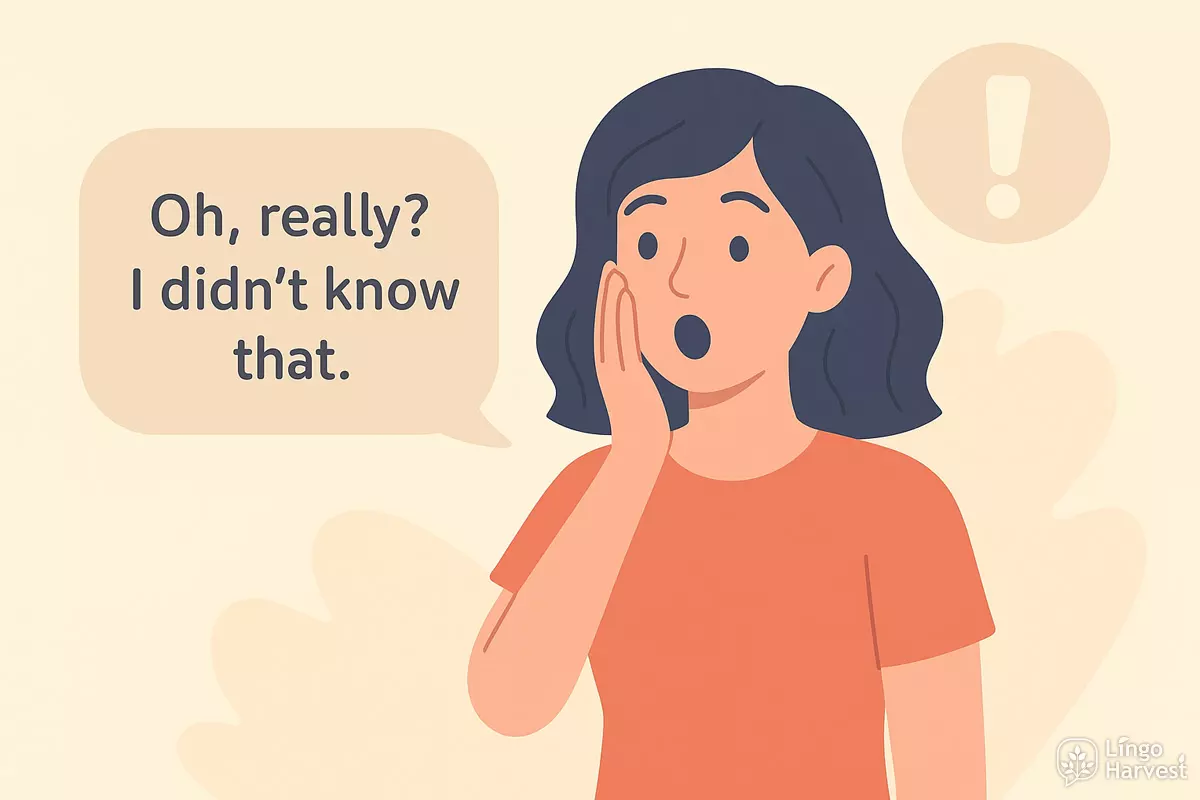
Instead of repeating the same short responses, consider these alternatives to keep the conversation lively and polite:
- That’s interesting!
- Oh, really? I didn’t know that.
- Wow, that’s impressive.
- No way! Tell me more.
- That must have been exciting.
- I can imagine how you felt.
- How did you manage that?
- That sounds challenging.
- Is that so? Fascinating.
- What happened next?
- I hadn’t heard about that before.
- Good for you!
- That’s quite an experience.
- Oh, that’s unexpected.
- Thanks for sharing that with me.
- That’s a new one for me!
- Wow, I’m surprised.
- How interesting!
- That’s a nice way to look at it.
- I see what you mean now.
Comparing Basic and Enriched Reactions
To highlight the difference, here’s a comparison showing simple versus more engaging responses:
| Commonplace Reply | More Expressive Alternative |
|---|---|
| Really? | Oh, really? I didn’t realize that! |
| I see. | That makes sense. Thanks for explaining. |
| That’s nice. | That sounds wonderful! How did it go? |
| Okay. | Alright, I understand. Let’s continue. |
| Oh. | Oh, that’s unexpected! What happened next? |
| Hmm. | Hmm, I hadn’t thought about it that way. |
Tips to Sound More Engaged
- Listen actively and adapt your response to the topic.
- Ask follow-up questions to show you care.
- Paraphrase what you heard to confirm understanding.
- Use tone and facial expressions along with your words.
- Practice varying your language to build confidence.
By diversifying your reactions, you’ll make conversations more enjoyable and meaningful for both you and your conversation partner.
Model Exchanges in Daily Situations
Polite reactions are essential for smooth, friendly conversations, especially for those new to a language or culture. Whether you’re chatting with classmates, meeting someone new, or responding to small talk, knowing simple and appropriate replies like “Really?”, “I see,” and “That’s nice” can help you show interest and respect.
Common Scenarios and Sample Replies
In everyday interactions, these expressions fit naturally in various situations. Here are some examples of when and how you might use them:
- When someone tells you about their weekend plans:
“I’m going hiking on Saturday.”
— “Really? That sounds fun!” - After hearing good news:
“I got a new job.”
— “That’s nice! Congratulations!” - If a friend shares something surprising:
“I’ve never eaten sushi before.”
— “Really? I didn’t know that!” - When someone explains something to you:
“The meeting is at 3 PM.”
— “I see, thank you.” - Reacting to a simple fact:
“It’s raining today.”
— “Oh, I see.” - Responding to a compliment:
“You speak English well.”
— “That’s nice of you to say!” - After hearing about someone’s hobby:
“I play the guitar.”
— “That’s nice. How long have you played?” - When someone mentions a trip:
“I went to Paris last year.”
— “Really? How was it?” - Reacting to a minor complaint:
“The bus was late again.”
— “Oh, I see.” - After listening to a story:
“And then I lost my keys.”
— “Really? That must have been frustrating.”
Patterns for Polite Responses
Mixing these expressions with short follow-up questions or comments can make your replies sound more natural. Here are some useful combinations:
- “Really? When did that happen?”
- “I see. Thanks for letting me know.”
- “That’s nice. Do you enjoy it?”
- “Really? Tell me more.”
- “I see, that makes sense.”
- “That’s nice! Was it exciting?”
- “Really? I never knew that.”
Summary Table: Example Situations and Suitable Replies
| Situation | Possible Polite Reply |
|---|---|
| Someone shares a personal achievement | “That’s nice! Well done.” |
| You hear surprising information | “Really? That’s interesting.” |
| A friend explains a plan or schedule | “I see, thanks for explaining.” |
| Someone mentions a new experience | “Really? How was it?” |
| Receiving casual news or updates | “Oh, I see.” |
By practicing these short, friendly responses, you can make conversations smoother and show that you care about the other person’s experience. Try combining these phrases with your own questions to keep the dialogue going.
Common Mistakes and Repairs
Many beginners struggle with using phrases like "Really?", "I see," and "That's nice" appropriately in conversation. These expressions can sound unnatural or even impolite if used incorrectly. Understanding the pitfalls and learning how to adjust your replies will help you sound more genuine and engaged.
Frequent Issues with Polite Reactions
- Overusing one phrase: Relying on "Really?" for every situation can make your responses seem mechanical or uninterested.
- Monotone delivery: Saying these phrases without emotion or intonation may come off as sarcastic or bored.
- Wrong context: Using "That's nice" when someone shares bad news can appear insensitive.
- Interrupting: Reacting too quickly with "I see" can interrupt the speaker's flow.
- Lack of follow-up: Stopping the conversation after a polite reaction instead of asking questions or adding comments.
- Inappropriate formality: Using these expressions in very formal or professional settings may not always fit.
- Translating directly: Trying to translate reactions from your native language can result in unnatural English responses.
- Ignoring tone: Forgetting to adjust your tone for positive or negative news may create misunderstandings.
- Repeating within one conversation: Using the same reaction multiple times in a short dialogue can sound repetitive.
- Non-verbal mismatch: Saying "That's nice" with a flat face or crossed arms can confuse your listener.
How to Repair and Improve Your Reactions
- Vary your phrases: Mix in alternatives such as "Oh, really?", "Interesting!", "Wow!", "Oh, I didn't know that", "Is that so?", "That's great!", "Sorry to hear that," or "Tell me more."
- Match your intonation: Use a rising tone for surprise, a gentle tone for sympathy, and enthusiasm for positive news.
- Listen for context: Choose a reaction that fits what the other person is saying.
- Add follow-up: After your reaction, ask a simple question or make a related comment to show engagement.
- Practice with real situations: Try responding to news clips or stories to get comfortable with different scenarios.
- Observe native speakers: Notice how they react in casual and formal conversations to broaden your options.
- Use body language: Smile, nod, or show appropriate facial expressions to support your words.
- Self-check: Record yourself and listen for monotone or repetitive reactions.
Examples of Common Mistakes and Suggested Repairs
| Common Problem | Better Alternative |
|---|---|
| Responding "That's nice" to sad news | Say "Oh, I'm sorry to hear that" or "That sounds tough" |
| Repeating "Really?" every time | Alternate with "Is that so?", "Wow!", or "Interesting!" |
| Monotone "I see" | Add appropriate tone and follow-up: "I see, can you tell me more?" |
| Ending with a reaction only | Continue: "That's great! How did that happen?" |
| Using a reaction without matching facial expression | Smile or nod when reacting to good news |
| Using "That's nice" in formal context | Try "That's very interesting" or "Thank you for sharing" |
By paying attention to context, tone, and variety, you can avoid awkward moments and become more confident in your conversational skills. Try to notice which reactions feel most natural to you and practice them in different situations to build a more flexible and polite speaking style.
Practice: Choose the Best Reaction
Understanding when and how to use polite responses like "Really?", "I see", and "That's nice" can make conversations smoother and more pleasant. Below, you'll find a series of short dialogues and tasks to help you practice selecting the most suitable reaction in different situations. These exercises are designed to help beginners become comfortable with basic conversational English.
Task 1: Match the Situation to the Polite Response
Read each situation and choose the most appropriate response from the options provided.
- Your friend tells you they just got a new job.
a) Really?
b) I see.
c) That's nice. - Someone explains why they were late.
a) That's nice.
b) I see.
c) Really? - A classmate says they visited their grandmother last weekend.
a) That's nice.
b) I see.
c) Really? - Your colleague says it will rain tomorrow.
a) Really?
b) That's nice.
c) I see.
Show answers
- c) That's nice.
- b) I see.
- a) That's nice.
- a) Really?
Useful Polite Reactions List
Here is a list of common polite reactions and the situations where they fit best:
- Really? – Use when you are surprised or want to show interest.
- I see. – Use when you understand or acknowledge information.
- That's nice. – Use when someone shares good news or something pleasant.
- Oh, I didn't know that. – Use when learning something new.
- Wow! – Use for something impressive or exciting.
- Oh, I see. – Use for clarification or understanding.
- Good for you! – Use to congratulate.
- Thanks for telling me. – Use to show appreciation for information.
- Interesting. – Use for facts or stories that catch your attention.
- Oh, really? – Use to express mild surprise.
- That sounds great. – Use when someone shares plans or ideas.
- That's too bad. – Use for unfortunate news (not always "nice").
- How nice! – Use for especially pleasant news.
- That must be exciting. – Use for big events or achievements.
- That makes sense. – Use to show you understand the reason.
Task 2: Choose the Correct Response
For each statement below, select the best reaction:
- "I passed my exam!"
a) I see.
b) That's nice.
c) Really? - "I'm moving to a new apartment next week."
a) That's nice.
b) I see.
c) Really? - "My train was delayed because of the weather."
a) Really?
b) That's nice.
c) I see. - "I adopted a puppy yesterday!"
a) I see.
b) That's nice.
c) Really?
Show answers
- b) That's nice.
- c) Really?
- c) I see.
- b) That's nice.
Quick Reference: When to Use Each Reaction
| Reaction | Best Situation |
|---|---|
| Really? | When you are surprised or want to show interest in something unexpected. |
| I see. | When you acknowledge or understand information or an explanation. |
| That's nice. | When someone shares positive news, experiences, or achievements. |
| Good for you! | When you want to congratulate someone for their success. |
Practicing these expressions in real conversations will help you sound more natural and polite. Try to notice how native speakers respond in different situations and use these patterns in your own dialogues.