Common English Verbs Used in Daily Conversation

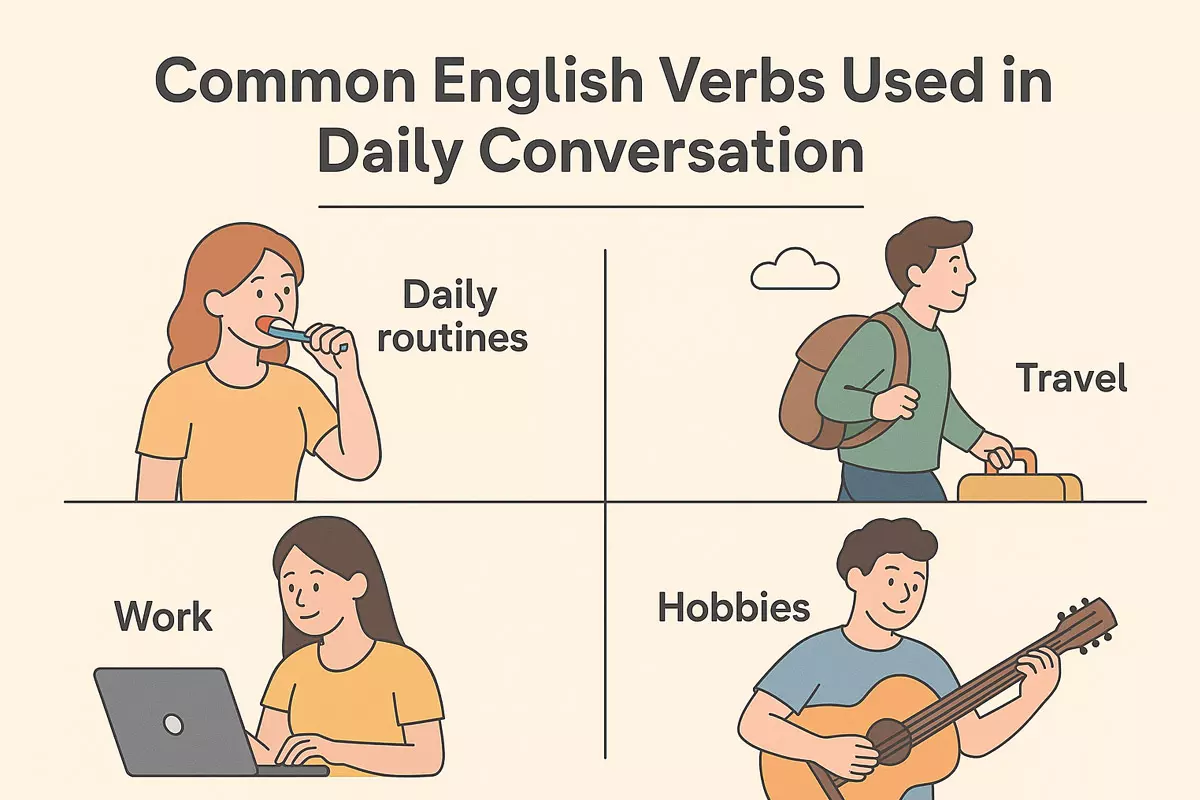 Here we essential English action verbs for daily routines, travel, work, and hobbies. It also lists common verb collocations and includes a practice section where you match verbs to typical activities to reinforce your learning.
Gaining confidence in speaking English largely relies on your familiarity with the most common action words used in daily conversations. By learning and practicing these essential verbs, you can communicate your thoughts and feelings more effectively, making interactions smoother and more enjoyable. Expanding your verb vocabulary not only helps you understand others better but also enables you to participate actively in various situations, from casual chats to more formal discussions. Ultimately, mastering these verbs is a key step toward achieving fluency and expressing yourself with ease in everyday English.
Essential Action Verbs
Understanding the most commonly used verbs can make daily communication in English much easier. These words are the backbone of spoken exchanges, whether you're making plans, describing your day, or asking for help. Mastering them not only builds your confidence but also helps you express yourself more naturally in various situations.
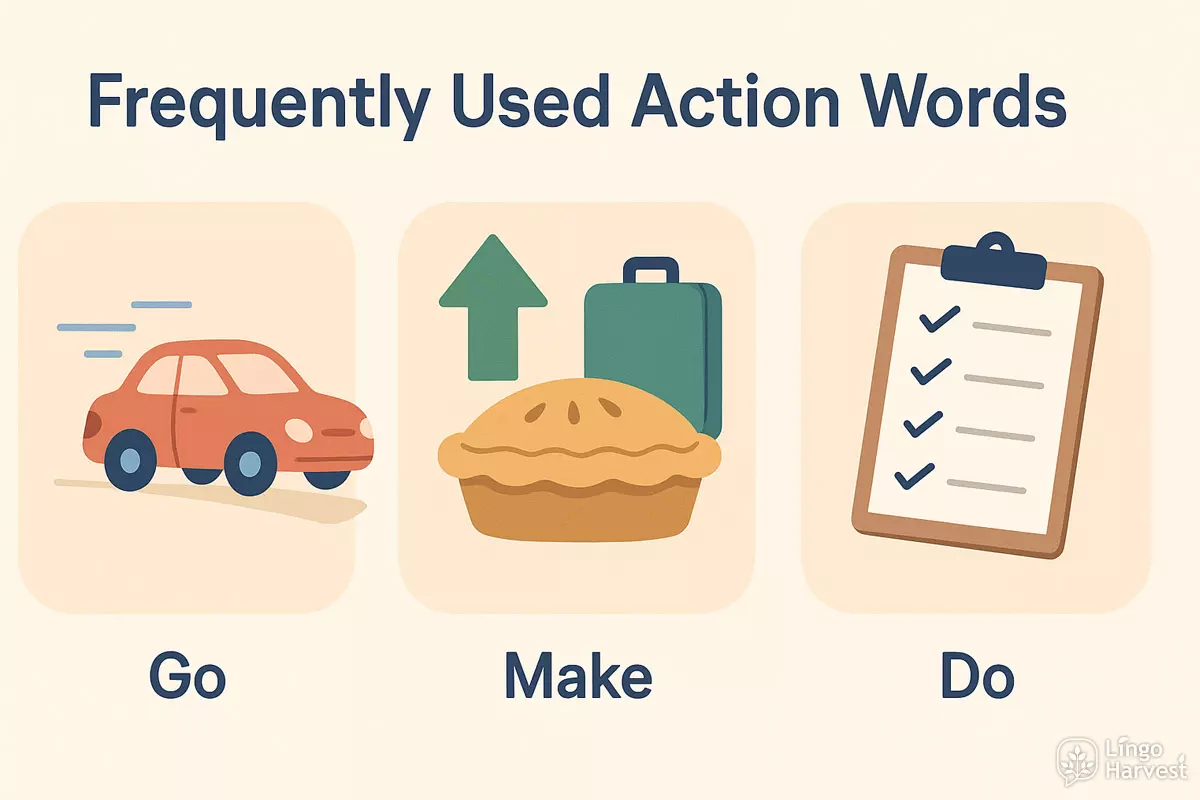
Frequently Used Action Words in Everyday Life
- Go
- Come
- Make
- Do
- Take
- Get
- Give
- See
- Know
- Think
- Say
- Ask
- Tell
- Want
- Need
- Feel
- Find
- Use
- Work
- Call
These verbs are versatile and appear in a variety of sentence patterns. For example, "go" is used for movement or travel, while "make" and "do" often describe actions or tasks. It's helpful to learn how these verbs change with tense and subject.
Common Forms: Present, Past, and Participle
| Base Form | Past Simple | Past Participle | Example Sentence |
|---|---|---|---|
| Go | went | gone | I have gone to the store. |
| Do | did | done | She has done her homework. |
| Get | got | got/gotten | They have gotten better. |
| See | saw | seen | We have seen that movie. |
| Take | took | taken | He has taken the keys. |
Regular practice with these core words helps you use English more fluently. Try forming simple sentences with each verb to build your confidence, and pay attention to how native speakers use them in conversations. Over time, you'll notice these common verbs forming the foundation of most exchanges.
Verbs for Daily Routines
Talking about your everyday activities in English means knowing the right action words. These verbs describe what people typically do from morning until night. By using them, conversations about schedules, habits, or plans become clearer and more natural.
Useful Action Words for Everyday Activities
Below are common verbs that help you talk about routines at home, work, or school. They’re simple, practical, and appear often in spoken English:
- wake up
- get up
- brush (teeth/hair)
- wash (face/hands)
- take a shower
- have breakfast
- go (to work/school)
- drive
- walk
- catch (the bus/train)
- arrive
- start (work/class)
- study
- work
- eat (lunch/dinner)
- finish (work/class)
- return (home)
- cook
- relax
- watch (TV/a movie)
- read
- go to bed
- sleep
Sample Daily Routine Sentences
Using these verbs in sentences helps you communicate your schedule smoothly. Here are some basic examples:
- I wake up at 7 a.m.
- She brushes her teeth after breakfast.
- We take the bus to work.
- He cooks dinner every evening.
- They go to bed before midnight.
Comparing Simple Present and Present Continuous
To talk about habits or things happening now, English uses two main verb forms. Here’s a quick comparison:
| Form | Example |
|---|---|
| Simple Present | I eat breakfast at 8 a.m. ✅ (habit) |
| Present Continuous | I am eating breakfast now. ✅ (right now) |
| Simple Present | She goes to school every day. ✅ (routine) |
| Present Continuous | She is going to school at the moment. ✅ (currently happening) |
Knowing these verbs and their forms lets you talk about your day confidently and understand others when they share their own routines.
Travel and Work Verbs
When talking about getting around or discussing your job, certain English verbs appear again and again. Knowing these can help you describe routines, share experiences, and ask useful questions. Whether you’re explaining how you commute or what you do at the office, these action words are essential for clear communication.
Common Verbs for Getting Around
- go – "I go to school by bus."
- travel – "She travels abroad every summer."
- drive – "He drives to work."
- ride – "We ride our bikes on weekends."
- walk – "They walk to the park."
- fly – "I fly to London for meetings."
- leave – "We leave at 8 AM."
- arrive – "The train arrives at noon."
- catch – "Did you catch the bus?"
- miss – "I missed my flight."
- return – "She returns home late."
- stay – "We stay at hotels during trips."
- visit – "They visit new places every year."
Typical Verbs Used at Work
- work – "I work in an office."
- meet – "We meet every Monday."
- manage – "She manages a team."
- organize – "He organizes events."
- plan – "They plan projects together."
- attend – "Do you attend conferences?"
- present – "I present reports monthly."
- send – "She sends emails daily."
- receive – "We receive feedback."
- report – "He reports to his manager."
- hire – "They hire new staff."
- train – "We train new employees."
- lead – "She leads meetings."
- assist – "I assist my colleagues."
Verb Forms: Simple Past and Present
Knowing the basic forms of these verbs helps you talk about past and present actions. Here’s a quick reference for several key examples:
| Verb | Past Simple | Present Simple | Example Sentence |
|---|---|---|---|
| go | went | go/goes | I went to work yesterday. |
| drive | drove | drive/drives | She drives to school. |
| work | worked | work/works | He worked from home last week. |
| meet | met | meet/meets | We meet every Friday. |
| travel | traveled | travel/travels | They traveled to Spain. |
| arrive | arrived | arrive/arrives | The train arrives soon. |
| send | sent | send/sends | I sent the email yesterday. |
| lead | led | lead/leads | She leads the team. |
Using these verbs, you can express how you move from place to place and describe your daily responsibilities. Pay attention to irregular past forms, as they often come up in conversation. Practice sentences with these verbs to build fluency and confidence in everyday English.
Social and Hobby Verbs
Many verbs in English describe how people interact with others or spend their free time. These action words are essential for talking about relationships, group activities, and favorite pastimes. Whether you’re inviting someone to join you or describing your weekend plans, knowing the right vocabulary helps you communicate clearly and naturally.
Common Verbs for Social Activities

When meeting with friends or participating in group events, these verbs often come up in conversation:
- invite
- join
- meet
- chat
- visit
- call
- text
- celebrate
- greet
- share
- plan
- arrange
- host
- attend
Verbs for Hobbies and Free Time
Describing what you do in your leisure time often involves these verbs. They help you talk about what you enjoy, your routines, or new interests:
- paint
- draw
- cook
- read
- watch
- play
- listen
- travel
- exercise
- garden
- collect
- write
- hike
- swim
- photograph
Example Sentences
Here are some ways these verbs are used in daily conversation:
- Let’s meet for coffee after work.
- I often play tennis on weekends.
- She likes to paint landscapes in her free time.
- We celebrated his birthday last night.
- Do you want to join our book club?
- He hosts a game night every Friday.
- They travel abroad every summer.
Comparing Social vs. Hobby Verbs
| Social Actions | Hobby Actions |
|---|---|
| invite (to a party) | cook (a new recipe) |
| call (a friend) | read (a novel) |
| arrange (a meeting) | paint (a picture) |
| attend (a wedding) | play (the guitar) |
| host (a dinner) | collect (stamps) |
Using a mix of these verbs makes your English sound more natural and helps you express daily routines, social plans, and interests with confidence.
Common Collocations
Understanding how verbs naturally combine with other words can make your spoken English sound much more fluent and authentic. These typical word pairings, or set phrases, often come up in daily conversation. Mastering them helps you avoid awkward phrasing and communicate more easily.
Typical Pairings with Everyday Verbs
Some verbs frequently appear alongside specific nouns, adjectives, or prepositions. Here are some of the most useful and widely-used groupings for everyday interaction:
- Make a decision, a mistake, a phone call, an effort
- Take a break, a seat, a shower, responsibility
- Get ready, lost, married, home, along (with someone)
- Do homework, the dishes, business, your best
- Have lunch, a look, a good time, an idea
- Give advice, a hand, a speech, permission
- Go shopping, for a walk, home, crazy
- Keep in touch, a promise, calm, a secret
- Come prepared, close, true, on time
- Set the table, a goal, an example, a record
- Break the news, a habit, a promise, the ice
- Catch a cold, a bus, someone’s attention, fire
- Pay attention, a visit, the bill, respect
- Run a business, late, out of time, errands
- Turn on/off the lights, a page, a corner, down an offer
Patterns with Prepositions
Certain verbs are almost always followed by specific prepositions, creating fixed expressions you’ll hear all the time. These combinations can be tricky for learners, but they’re essential for natural speech.
| Verb + Preposition | Example in Context |
|---|---|
| Listen to | Please listen to the instructions. |
| Wait for | I’ll wait for your call. |
| Depend on | It depends on the weather. |
| Agree with | I agree with your opinion. |
| Look after | Can you look after my bag? |
| Apologize for | He apologized for being late. |
| Believe in | They believe in hard work. |
| Belong to | That bag belongs to me. |
Why These Word Combinations Matter
Learning these typical combinations not only saves time but also helps you avoid common mistakes. Instead of translating word-for-word, you’ll start to recognize and use chunks of language, making your speech smoother and more understandable. Over time, you’ll find these patterns become second nature, allowing you to focus more on expressing your ideas and less on searching for the right words.
Practice: Match Verbs to Activities
Connecting verbs to their typical daily uses helps you remember and use them correctly in conversation. Below, you'll find practical exercises to check your understanding of how common English action words fit into real-life situations.
Activity: Which Verb Goes Where?
Look at each activity below and choose the most natural verb to complete the sentence. This will help you see how these words appear in everyday speech.
- ______ breakfast every morning.
- ______ to music when you relax.
- ______ your homework after school.
- ______ the bus to work.
- ______ TV in the evening.
- ______ your hands before eating.
- ______ your friends on weekends.
- ______ English every day.
- ______ your room on Saturday.
- ______ your name on the form.
Choose from: eat, listen, do, take, watch, wash, meet, study, clean, write.
Show answers
- Eat breakfast every morning.
- Listen to music when you relax.
- Do your homework after school.
- Take the bus to work.
- Watch TV in the evening.
- Wash your hands before eating.
- Meet your friends on weekends.
- Study English every day.
- Clean your room on Saturday.
- Write your name on the form.
Common Verbs and Activities: Quick Reference
Here’s a handy overview matching frequent verbs to their usual activities. Use this as a guide when practicing or reviewing new vocabulary.
| Verb | Typical Activity |
|---|---|
| eat | breakfast, lunch, dinner, a snack |
| go | to school, to work, home, shopping |
| make | coffee, a cake, a phone call, plans |
| take | a shower, a taxi, a break, photos |
| read | a book, emails, a newspaper, instructions |
| call | a friend, your family, the doctor, a taxi |
| play | football, a game, the piano, cards |
| write | a letter, a report, an email, notes |
| watch | TV, a movie, a match, the news |
| clean | the kitchen, your room, the car, the house |
Task: Match the Pairs
Match each verb to the activity that makes the most sense:
- write
- read
- play
- call
- go
- a letter
- a book
- football
- your friend
- to the store
Show answers
- write – a letter
- read – a book
- play – football
- call – your friend
- go – to the store
Practicing these matches helps you become more comfortable with everyday English verbs and their typical uses. Try making your own examples using similar combinations for even more practice.