Adjectives to Describe Yourself for Beginners

 This article lists common self-description words, positive and neutral adjectives, and phrases to describe your personality and appearance. It also includes useful job interview phrases and a practice exercise to help you write about yourself.
Describing your own personality can be challenging, particularly if English is not your first language. However, building your confidence starts with learning straightforward ways to talk about yourself. By practicing simple vocabulary and phrases to express your qualities, you can share information about who you are more clearly and comfortably. This not only helps others understand you better but also boosts your self-assurance when communicating in different situations, such as interviews, classrooms, or social gatherings.
Common Self-Description Words
Describing yourself effectively starts with knowing the right vocabulary. For beginners, using simple but clear adjectives helps you communicate your personality, skills, or mood in everyday situations. This can be useful for introductions, interviews, or meeting new people.
Basic Positive Adjectives
Many people prefer to start with positive terms when talking about themselves. Here is a list of popular words you might use:
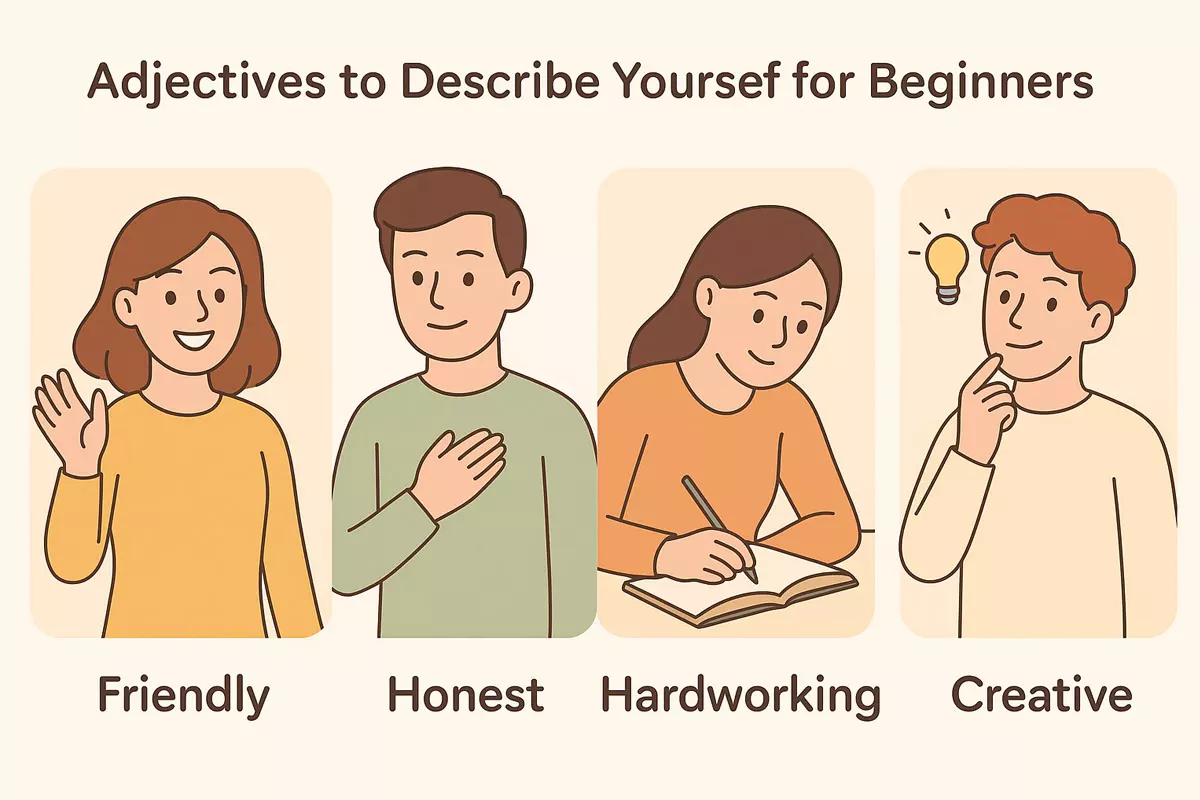
- Friendly (kind and pleasant)
- Honest (tells the truth)
- Hardworking (puts in a lot of effort)
- Creative (full of new ideas)
- Calm (relaxed and not stressed)
- Curious (wants to learn more)
- Patient (can wait without frustration)
- Reliable (can be trusted)
- Polite (shows good manners)
- Helpful (likes to assist others)
- Energetic (active and lively)
- Organized (keeps things in order)
- Optimistic (expects good outcomes)
- Flexible (can adapt easily)
- Cheerful (happy and positive)
Neutral and Realistic Options
Not every self-description needs to be positive. Sometimes, being realistic or neutral is more honest. Here are some adjectives that fit a variety of situations:
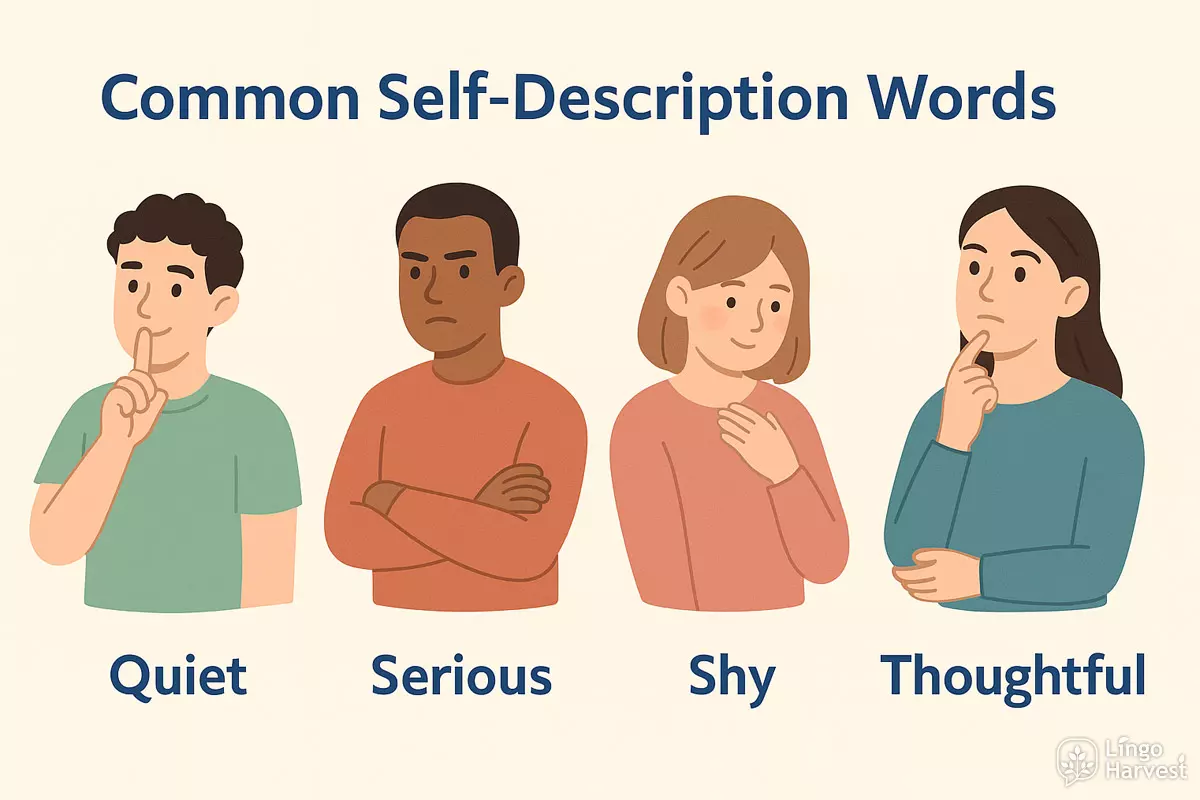
- Quiet (doesn’t speak much)
- Serious (not playful; focused)
- Shy (timid with new people)
- Thoughtful (thinks carefully; considerate)
- Independent (can do things alone)
- Simple (not complicated; easy-going)
- Careful (avoids mistakes; pays attention)
- Direct (speaks clearly and honestly)
- Reserved (keeps feelings private)
Comparing Positive and Negative Forms
Understanding both positive and negative adjectives can help you describe strengths and areas for growth. See the comparison below for reference.
| Positive | Negative |
|---|---|
| Confident | Insecure |
| Patient | Impatient |
| Optimistic | Pessimistic |
| Organized | Disorganized |
| Reliable | Unreliable |
Using these words helps you express your character and feelings clearly, whether you’re filling out a profile or having a simple conversation. As you grow more confident, try combining adjectives or adding details for more natural self-expression.
Positive and Neutral Adjectives
When describing yourself, it’s helpful to start with words that express good qualities or simply provide information without a strong positive or negative feeling. Such words make conversations friendlier and clearer, especially for beginners learning to share information about themselves in a new language. These terms are practical for introductions, interviews, or classroom activities.
Common Positive Words for Self-Description
Positive descriptors help show your strengths and make a good impression. Here are some useful words you can use to talk about yourself:
- Friendly – easy to talk to, kind
- Hardworking – puts effort into tasks
- Honest – tells the truth
- Helpful – likes to assist others
- Creative – has new ideas
- Patient – stays calm while waiting
- Polite – uses good manners
- Reliable – can be trusted
- Energetic – full of energy
- Curious – wants to learn new things
- Organized – keeps things in order
- Positive – has a good attitude
Neutral Adjectives for Everyday Use
Neutral terms are neither strongly good nor bad; they simply provide information. These words are useful when you want to describe basic facts about yourself.
- Tall – has a high height
- Quiet – does not talk a lot
- Young – not old
- Serious – not joking often
- Shy – not comfortable talking to new people
- Calm – not easily upset
- Active – moves or does things often
- Careful – pays attention to details
How to Use These Words in Sentences
Putting these descriptive words into simple sentences makes it easier to introduce yourself. Here are some basic patterns:
- I am friendly.
- I am a hardworking person.
- I am quiet but curious.
- My friends say I am helpful.
- I am organized and reliable.
Quick Comparison: Positive vs. Neutral Words
| Positive Word | Neutral Word |
|---|---|
| Helpful | Quiet |
| Creative | Serious |
| Energetic | Calm |
| Organized | Tall |
Using a mix of these descriptive words helps you share more about yourself in a clear and friendly way. As you practice, try combining both upbeat and neutral terms to give a fuller picture of your personality and background.
Talking About Personality and Appearance
Describing yourself is a helpful skill when meeting new people or introducing yourself in English. To do this, you need words for both what you are like (personality) and how you look (appearance). Using simple adjectives makes it easier for others to understand you and helps your conversations flow.
Common Personality Adjectives
Words for personality talk about your character or how you behave. Here are some basic adjectives you can use:
- friendly (kind and pleasant to others)
- kind (helpful and caring)
- shy (quiet and uncomfortable with new people)
- funny (makes others laugh)
- honest (always tells the truth)
- serious (focused, not playful)
- hardworking (works with effort and dedication)
- lazy (does not like to work or do tasks)
- polite (shows good manners)
- brave (not afraid to face danger)
- talkative (likes to speak a lot)
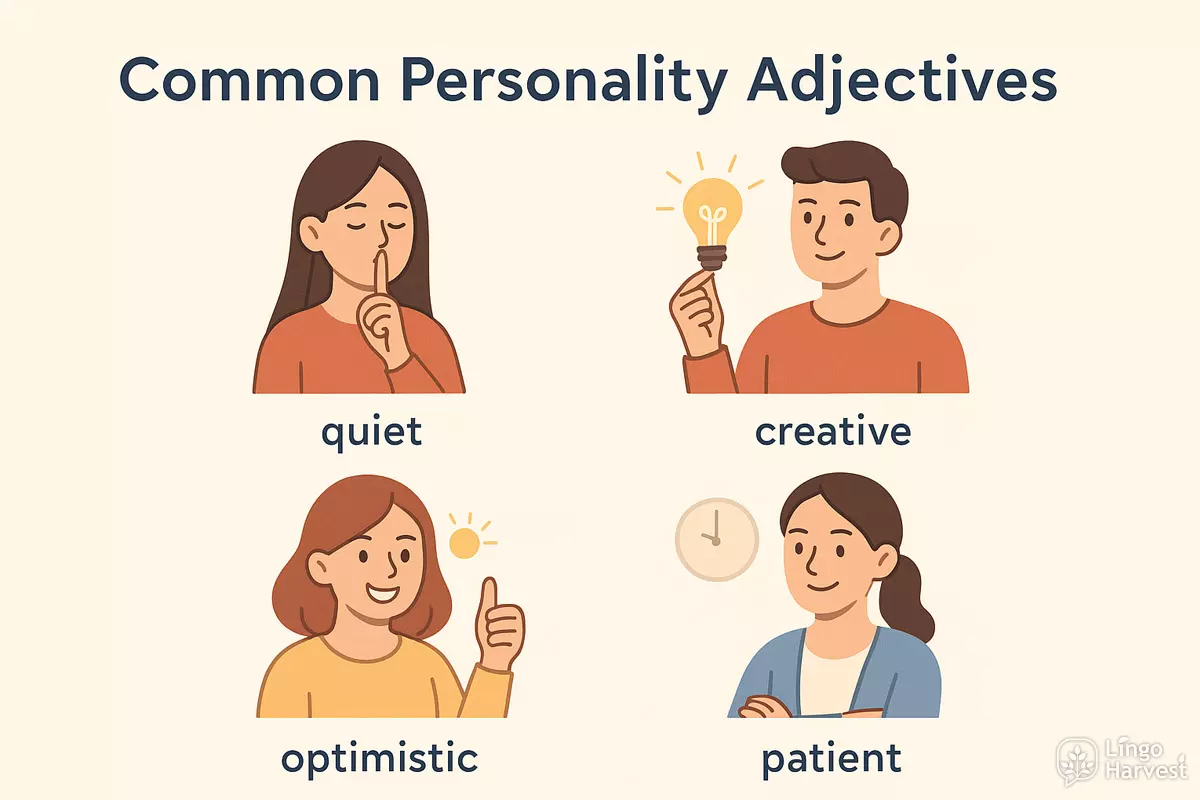
- quiet (does not speak much)
- creative (can think of new and original ideas)
- optimistic (expects good things to happen)
- patient (can wait without getting angry)
- generous (likes to give and share)
- calm (relaxed and not stressed)
- curious (wants to learn and know more)
These words help others understand how you act or feel in different situations.
Useful Appearance Adjectives
When you want to describe how you look, choose simple and clear words. Here are some options:
- tall
- short
- slim
- chubby
- young
- old
- handsome
- pretty
- beautiful
- cute
- strong
- weak
- dark-haired
- blonde
- curly-haired
- long-haired
These words can be mixed and matched to give a more complete picture of yourself.
How to Combine Adjectives in Sentences
To describe yourself, you can use the verb "to be" with one or more adjectives. For example:
- I am friendly and hardworking.
- I am tall and have curly hair.
- I am shy but creative.
You can also add more detail by using "have" for features, such as "I have blue eyes" or "I have short hair."
Examples: Personality vs. Appearance
| Personality Adjective | Appearance Adjective |
|---|---|
| friendly | tall |
| shy | slim |
| honest | curly-haired |
| funny | young |
| hardworking | blonde |
| polite | strong |
| creative | pretty |
| patient | old |
Knowing these basic adjectives will help you share information about yourself more easily and make conversations friendlier. Practice using them in simple sentences to feel more confident in everyday situations.
Useful Job Interview Phrases
Preparing for an interview can feel challenging, especially when English isn’t your first language. Knowing how to describe yourself clearly and confidently is important. Here are practical phrases and sentence starters you can use to talk about your skills and qualities during a job interview.
Simple Ways to Describe Yourself
- I am an organized person.
- I am very responsible.
- I am friendly and like working with people.
- I am hardworking and always do my best.
- I am creative and like solving problems.
- I am punctual and value being on time.
- I am positive and have a good attitude.
- I am flexible and can adapt to new situations.
- I am honest and trustworthy.
- I am motivated to learn new things.
Useful Patterns for Job Interviews
- I have experience in customer service.
- I enjoy working in a team.
- I am good at communicating with others.
- I handle stress well.
- I pay attention to details.
- I am eager to learn.
- I am proud of my reliability.
- I always finish what I start.
- I like to help my colleagues.
- I am quick to adapt to change.
Comparing Adjectives for Stronger Answers
| Basic Adjective | Stronger Alternative |
|---|---|
| hardworking | diligent |
| friendly | approachable |
| organized | methodical |
| motivated | driven |
| honest | trustworthy |
| creative | innovative |
| flexible | adaptable |
| positive | optimistic |
Extra Tips
When using these words, try to give a short example or reason. For instance, “I am organized; I always keep my workspace neat.” This helps the interviewer understand your strengths and makes your answers more personal. Practice these phrases to feel more comfortable and confident in your next interview.
Practice: Write About Yourself
Learning to describe yourself in English is a great way to build confidence and express your personality. To get started, think about simple words that tell others what you are like. Try using different adjectives to talk about your qualities and interests.
Useful Adjectives for Self-Description
- friendly (kind and pleasant)
- hardworking (puts in a lot of effort)
- creative (good at new ideas)
- curious (wants to learn more)
- honest (tells the truth)
- funny (makes people laugh)
- quiet (doesn’t speak much)
- helpful (likes to help others)
- organized (keeps things in order)
- active (likes moving and doing things)
- kind (caring and gentle)
- polite (shows good manners)
- brave (not afraid to face danger)
- patient (can wait calmly)
- cheerful (happy and positive)
- shy (nervous with new people)
- generous (likes to give and share)
- optimistic (expects good things)
- serious (focused; not playful)
- calm (relaxed and not stressed)
Sample Sentences
Try making your own sentences using the adjectives above. Here are some examples to help you:
- I am friendly and like meeting new people.
- My friends say I am very creative.
- I am hardworking and always finish my homework.
- I am sometimes shy, but I enjoy talking to my classmates.
- I am patient and do not get angry easily.
Task: Describe Yourself
Write three sentences about yourself. Use at least two different adjectives in each sentence. If you need help, look at the example sentences above or choose from the list of adjectives.
- Sentence 1: ________________________________
- Sentence 2: ________________________________
- Sentence 3: ________________________________
Show answers
- I am curious and like learning new things.
- I am organized and always keep my desk clean.
- I am cheerful and try to make my friends smile.
Adjectives: Positive and Negative
Some words describe good qualities, while others can describe things we want to improve. Try matching each adjective to the correct group:
| Positive | Negative |
|---|---|
| cheerful | lazy |
| organized | impatient |
| kind | selfish |
| brave | noisy |
| helpful | rude |
Show answers
- Positive: cheerful, organized, kind, brave, helpful
- Negative: lazy, impatient, selfish, noisy, rude
Tips for Practicing
- Practice saying your sentences out loud.
- Write about yourself in a notebook using new adjectives.
- Ask a friend to describe you using three adjectives.
- Listen to how others introduce themselves and notice which words they use.
With regular practice, you will feel more comfortable talking about yourself and using different adjectives to express who you are.