Better Words Than Good and Nice for Beginners

 Here we why good and nice are weak word choices, recommends stronger alternatives for people, things, and feelings, provides expressive examples, and offers practice to help you replace these words in everyday sentences.
Expressing yourself clearly in English can be challenging if you often use basic words like good or nice. Expanding your vocabulary with more specific and expressive terms allows you to communicate your thoughts and feelings more accurately. By practicing new words and phrases, you not only make your speech and writing more interesting but also help others understand you better. Even if you are a beginner, taking small steps to learn and use richer vocabulary can significantly improve your confidence and effectiveness in English.
Why Avoid Good and Nice
Words like “good” and “nice” are very common in beginner vocabulary, but they can make your sentences vague and less interesting. When you always use these simple adjectives, your speech or writing misses out on details. For example, calling a meal “good” doesn’t explain if it was tasty, healthy, or beautifully presented. Using more specific words helps others understand exactly what you mean.
They Don’t Add Much Meaning
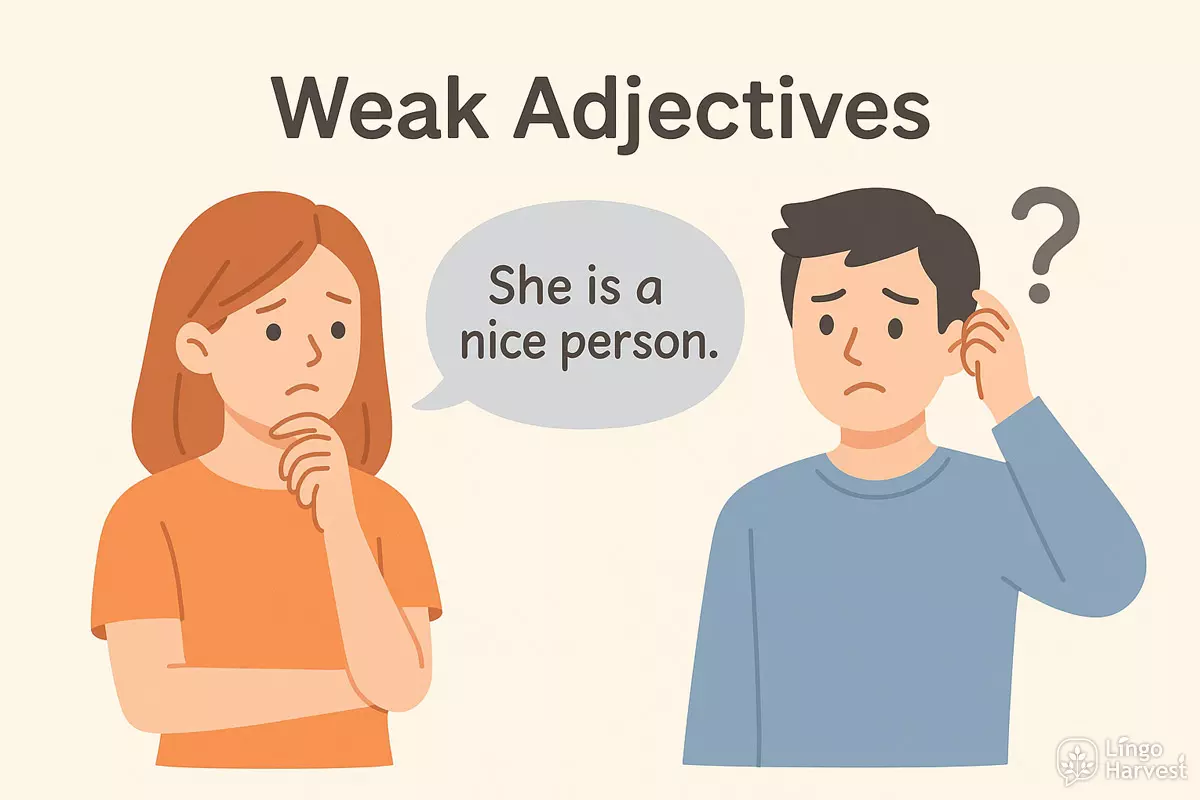
Many learners use these adjectives as a default, but they don’t communicate much about what you’re describing. Instead of helping your listener or reader imagine the situation, these words leave things unclear. If you say, “She is a nice person,” it’s hard to know if you mean she is friendly, generous, patient, or something else entirely.
Better Communication With Specific Words
Choosing more descriptive vocabulary makes your ideas clearer and more memorable. Specific adjectives can show feelings, qualities, or opinions in a more precise way. This helps you express yourself better and makes conversations more engaging.
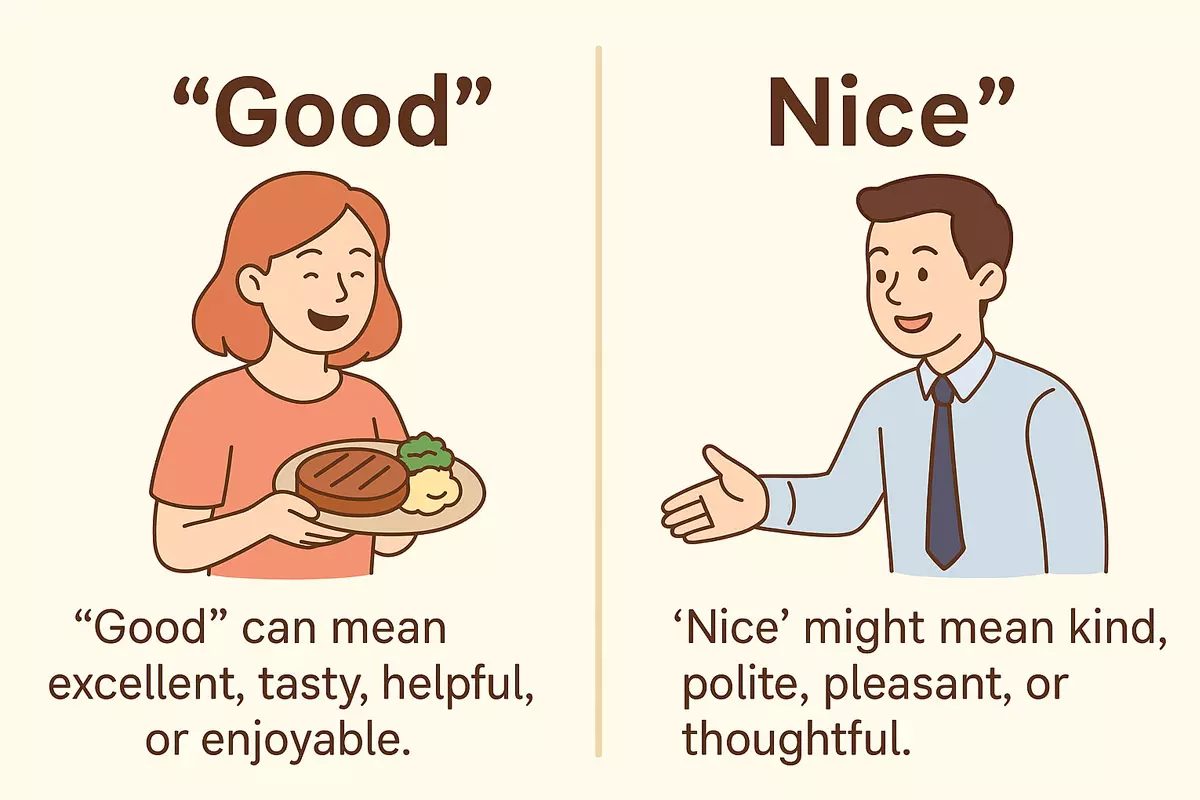
- “Good” can mean excellent, tasty, helpful, or enjoyable.
- “Nice” might mean kind, polite, pleasant, or thoughtful.
- Being more exact helps your language sound natural and confident.
- Listeners or readers appreciate clear, detailed descriptions.
Common Problems With Overusing Basic Adjectives
- Sentences sound repetitive or boring.
- Your real opinion or feeling is hidden.
- People may need to ask follow-up questions to understand you.
- It’s harder to show your personality or style in English.
Examples: How “Good” and “Nice” Can Be Replaced
| Basic Word | More Precise Alternatives |
|---|---|
| good movie | exciting, touching, entertaining, funny, inspiring |
| nice weather | sunny, clear, warm, pleasant, refreshing |
| good job | well done, skillful, impressive, careful, thorough |
| nice person | friendly, helpful, generous, considerate, cheerful |
| good food | delicious, tasty, flavorful, fresh, satisfying |
By learning and using more varied adjectives, you can make your English richer, more precise, and more engaging for everyone you speak or write to. This small change leads to big improvements in communication and confidence.
Alternatives for People
When describing individuals, “good” and “nice” are often the first words learners use. However, richer vocabulary can make your speech or writing clearer and more interesting. Choosing more specific adjectives helps express exactly what you mean, especially when talking about someone’s personality, behavior, or skills.
Describing Positive Traits
Instead of always saying someone is “good” or “nice,” try these words to show what you really mean:
- Friendly – easy to talk to, welcoming
- Helpful – ready to assist others
- Polite – shows good manners
- Kind – caring, considerate
- Honest – tells the truth
- Brave – faces danger or fear
- Generous – likes to give or share
- Cheerful – happy and positive
- Patient – stays calm, even when waiting
- Thoughtful – thinks of others’ needs
- Hardworking – puts in a lot of effort
- Reliable – can be trusted to do what is needed
- Creative – full of new ideas
- Respectful – shows respect to others
- Supportive – helps and encourages others
Words for Negative or Neutral Traits
Sometimes, you might want to describe someone honestly but politely. Here are some words that are still simple but more precise than “good” or “nice”:
- Shy – quiet around people
- Serious – not playful, focused
- Curious – likes to learn or ask questions
- Sensible – makes good decisions
- Calm – not easily upset
- Tidy – keeps things neat
- Polite – uses good manners
Comparing Common Alternatives
Below is a table comparing some basic adjectives you can use instead of “good” or “nice” to describe people, along with their meanings.
| Adjective | Meaning / Example |
|---|---|
| Friendly | Someone who is easy to talk to and kind to others. |
| Honest | A person who tells the truth and does not lie. |
| Hardworking | Someone who puts a lot of effort into what they do. |
| Generous | A person who likes to give to others or share what they have. |
| Polite | Shows respect and good manners in their behavior. |
Expanding your vocabulary with these words lets you be more exact and expressive when you talk about people. Try to notice which traits fit best and practice using these alternatives in your conversations and writing.
Alternatives for Things and Feelings
Choosing specific words helps new English speakers express themselves more clearly. Instead of using vague terms like “thing” or “feeling,” try words that describe exactly what you mean. This habit makes your communication stronger and more interesting.
Better Words for “Thing”
“Thing” is often too general. Whenever possible, pick a noun that tells the listener what you really mean. Here are some suggestions:
- object
- item
- tool
- device
- gadget
- part
- piece
- material
- equipment
- product
- ingredient
- belonging
- gift
- document
- substance
- element
- factor
- component
Picking a more precise word makes your sentence clearer. For example, instead of “Pass me that thing,” you could say, “Pass me that tool” or “Can you hand me the document?”
More Expressive Words for “Feeling”
When talking about emotions or moods, “feeling” is sometimes too broad. Try using the actual name of the emotion or state. Here are some alternatives:
- happiness
- sadness
- anger
- excitement
- fear
- surprise
- confusion
- disappointment
- pride
- hope
- relief
- worry
- gratitude
- curiosity
- love
- nervousness
- trust
- joy
Instead of saying, “I have a feeling,” you could say, “I feel nervous” or “I am full of hope.” This helps your listener understand you better.
Quick Comparison: General vs. Specific Words
| General Word | More Specific Alternative |
|---|---|
| thing | object, tool, device, ingredient |
| feeling | happiness, anger, pride, curiosity |
| stuff | materials, equipment, belongings |
| emotion | joy, relief, worry, excitement |
Choosing the right word makes your speech and writing more vivid. As you practice, notice when you use general terms and try replacing them with a more descriptive choice. This small change can make a big difference in how easily others understand and connect with you.
Stronger and More Expressive Words
Choosing vocabulary that is more precise or colorful than basic adjectives like "good" or "nice" helps learners communicate their thoughts more clearly. Instead of relying on simple, overused words, try using alternatives that show exactly what you mean. This not only makes your speech or writing more interesting, but also helps listeners or readers understand your feelings or opinions better.
Why Use More Specific Adjectives?
Words such as "excellent," "wonderful," or "pleasant" paint a clearer picture than just "good." They show the degree or type of positivity you want to express. Replacing "nice" with alternatives like "friendly," "thoughtful," or "generous" gives your language more depth.
Examples of Alternatives for "Good" and "Nice"
- Excellent – for something of very high quality or performance
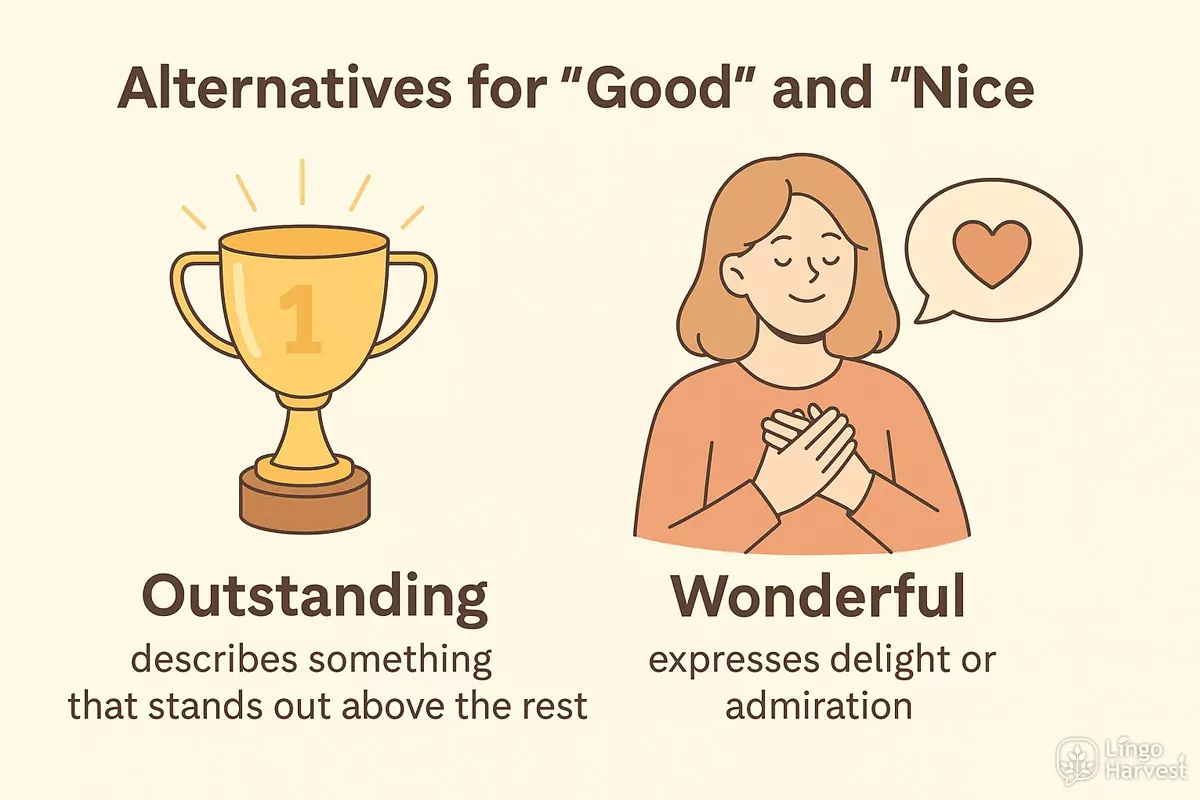
- Outstanding – describes something that stands out above the rest
- Wonderful – expresses delight or admiration
- Fantastic – for something surprisingly impressive or enjoyable
- Brilliant – used for clever ideas or remarkable achievements
- Superb – means extremely good, often used for food or skills
- Pleasant – describes something enjoyable or agreeable
- Delightful – for things that give great pleasure
- Charming – often used for people who are likable or places that are attractive
- Friendly – for people who are kind and easy to talk to
- Thoughtful – describes someone who considers others’ needs
- Generous – for those who give time or resources freely
- Lovely – can describe people, places, or things that are very attractive or enjoyable
- Impressive – for actions or results that make you admire someone
- Splendid – means magnificent or very impressive
- Gracious – polite, kind, and pleasant, especially to those of lower status
- Admirable – worthy of respect or approval
- Enjoyable – something that gives pleasure or satisfaction
- Respectful – when someone treats others with consideration
- Affectionate – showing fondness or tenderness
How to Choose the Right Word
Think about the situation and what exactly you want to express. For example, if you’re talking about a meal, "delicious" or "tasty" works better than "good." If you’re describing a person, "kind" or "considerate" can be more accurate than "nice." The more specific your word, the clearer your meaning.
Examples in Everyday Sentences
Choosing richer vocabulary makes your English more colorful and precise. Instead of always using basic words like "good" or "nice," you can express your meaning more clearly. Here are practical sentences showing how alternative words fit into daily conversation.
Using More Specific Words Than "Good"
- The soup was delicious, and everyone wanted seconds.
- Her piano performance was truly impressive.
- He gave a thoughtful answer to the question.
- That was a wonderful surprise!
- The weather is pleasant today.
- Your drawing is fantastic!
- The teacher said my project was excellent.
- She is a talented singer.
- The movie had an exciting ending.
- He’s a reliable friend.
Better Ways to Say "Nice"
- You have a lovely smile.
- They live in a charming house.
- Thank you for your kind help.
- It was generous of you to share.
- She wore an elegant dress to the party.
- That was a thoughtful gift.
- He is always friendly to new students.
- The park is a peaceful place to walk.
- This café has a welcoming atmosphere.
- Your handwriting is neat and clear.
Comparison Table: "Good" and "Nice" vs. Better Alternatives
| Basic Word | Stronger Alternative | Sentence Example |
|---|---|---|
| Good | Excellent | Your idea was excellent. |
| Good | Outstanding | She did an outstanding job on the report. |
| Nice | Charming | He has a charming personality. |
| Nice | Gracious | Thank you for your gracious invitation. |
| Good | Delightful | We had a delightful afternoon together. |
| Nice | Pleasant | It was a pleasant conversation. |
As you can see, replacing basic adjectives with more exact words helps your sentences stand out and sound more natural. Try using these alternatives in your speaking and writing to express yourself more vividly.
Practice: Replace Good/Nice in Sentences
Trying different words is an effective way to expand your vocabulary and make your English sound more natural. Below, you'll find practice tasks to help you switch out “good” and “nice” for more precise or lively alternatives in real sentences. This helps you understand the context where each word fits best.
Task 1: Choose a Better Word
Read the following sentences. Replace “good” or “nice” with a more specific word from the list provided. Each word can be used only once.
- excellent
- pleasant
- delicious
- friendly
- helpful
- brilliant
- enjoyable
- lovely
- fantastic
- polite
- She gave me some good advice.
- The weather was nice yesterday.
- This cake tastes good.
- He is a nice person to talk to.
- That was a good movie!
- The staff were nice and answered all my questions.
- You did a good job on your project.
- We had a nice time at the park.
- She is always nice to everyone.
- This is a good solution to the problem.
Show answers
- helpful
- pleasant
- delicious
- friendly
- fantastic
- polite
- brilliant
- enjoyable
- lovely
- excellent
Task 2: Which Word is Best?
Sometimes, more than one word could work. For each sentence, pick the word that fits best from the options. Think about the meaning and tone of each alternative.
- That was a good meal. (delicious / pleasant / brilliant)
- He is a nice neighbor. (friendly / enjoyable / excellent)
- Your idea is good. (fantastic / tasty / polite)
- We had a nice walk in the garden. (lovely / helpful / brilliant)
Show answers
- delicious
- friendly
- fantastic
- lovely
Common Alternatives at a Glance
Here's a quick reference for some of the most common alternatives you can use instead of "good" and "nice" in different situations:
| Context | Suggested Words |
|---|---|
| Food | delicious, tasty, flavorful, appetizing |
| People | kind, friendly, polite, helpful, caring |
| Experience | enjoyable, pleasant, fun, memorable |
| Results/Ideas | excellent, brilliant, outstanding, effective |
| Weather | beautiful, lovely, perfect, mild |
Try using these alternatives in your daily conversations, emails, or writing exercises. The more you practice, the easier it will become to choose the most accurate and expressive word for any situation.