Household Object Nouns: Everyday Vocabulary for Beginners

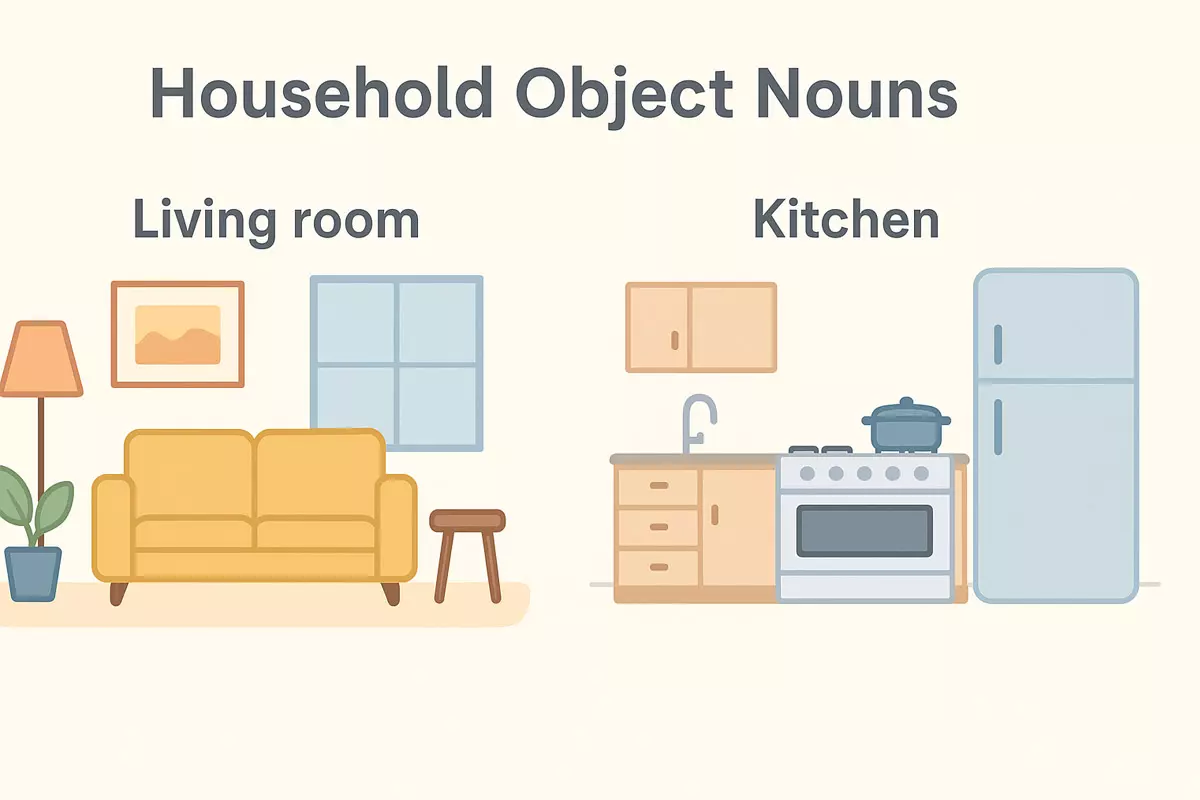 The article reviews key objects found in the kitchen, bedroom, bathroom, and living room. It discusses tools, small appliances, spelling, articles, and offers a practice section where readers name different household items.
Learning the names of common household items is an effective way to begin acquiring a new language, as it helps you describe your environment and daily activities with confidence. Becoming familiar with these everyday terms not only boosts your vocabulary but also makes it easier to communicate about practical matters at home. This foundational knowledge supports smoother conversations and helps you feel more comfortable in real-life situations, making your language learning experience more engaging and useful from the start.
Rooms and Items Overview
Understanding the names of different spaces in a typical home and the objects found in them is a practical step for language learners. Knowing what to call everyday things like “sofa” or “kitchen” helps beginners describe their environment and communicate basic needs more easily.
Common Rooms in a House
- Bedroom
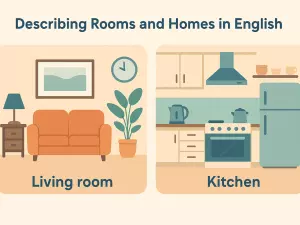
- Living room
- Kitchen
- Bathroom
- Dining room
- Hallway
- Garage
- Basement
- Attic
- Laundry room
Each area in a home usually has specific items associated with it. For beginners, connecting rooms with their typical contents is a useful way to organize new vocabulary.
Typical Items by Room
| Room | Common Objects |
|---|---|
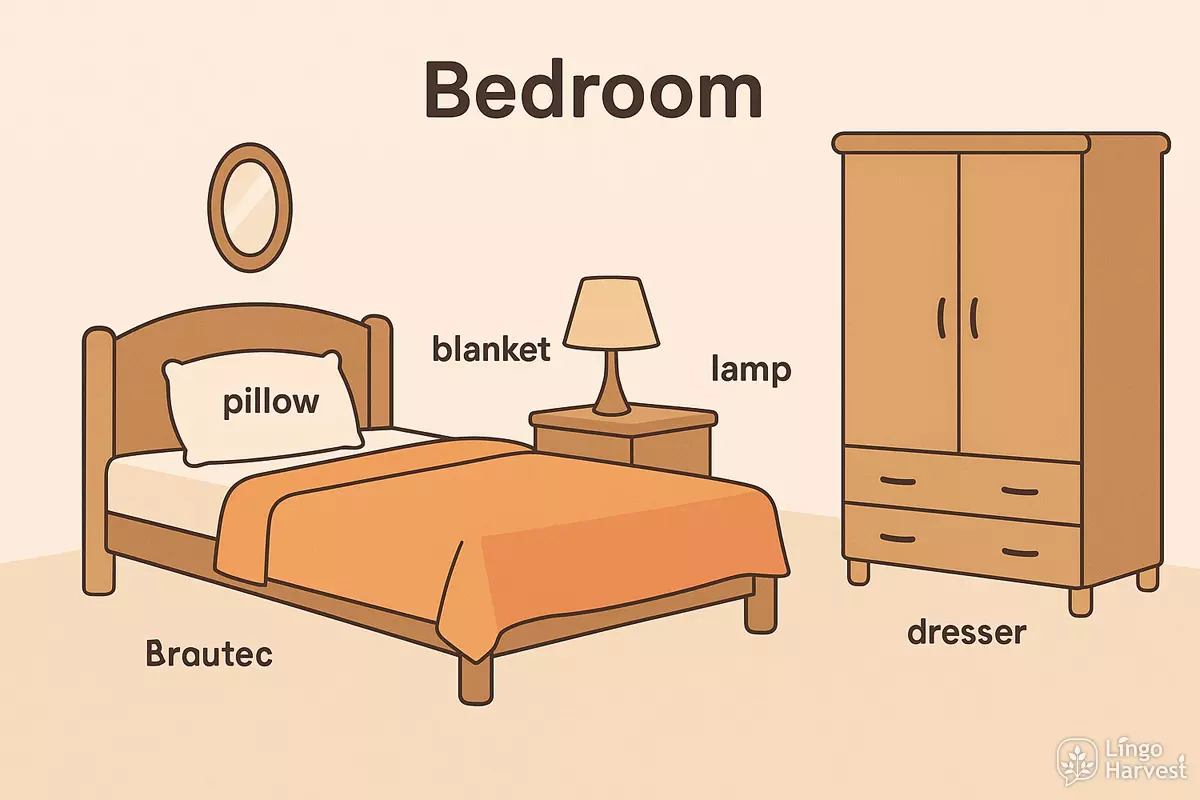
| Bedroom | Bed, pillow, blanket, wardrobe, lamp, dresser |
| Kitchen | Table, chair, fridge, stove, sink, spoon, fork, cup |
| Bathroom | Toilet, shower, bathtub, towel, toothbrush, mirror |
| Living room | Sofa, armchair, coffee table, television, bookshelf, rug |
| Dining room | Dining table, chairs, plate, glass, napkin |
| Laundry room | Washing machine, dryer, laundry basket, detergent |
| Garage | Car, toolbox, bicycle, shelves, ladder |
Tips for Learning Household Vocabulary
- Label items in your home with sticky notes to reinforce word associations.
- Practice by describing your own living space using new nouns.
- Group words by room to make memorization easier.
- Pay attention to plural forms: for example, “tables” or “chairs.”
Getting familiar with everyday nouns for household objects gives you a strong foundation for daily conversation and helps you describe your surroundings with confidence. Whether you’re talking about a kitchen utensil or the part of the house you’re in, this vocabulary is useful right from the start.
Kitchen Objects
Learning the words for things you find in the kitchen helps you talk about daily routines, cooking, and cleaning. Here are some of the most common items you might see or use while preparing food or eating meals at home. Knowing these terms makes it easier to follow recipes, describe your surroundings, and ask for what you need.
Essential Items for Cooking and Eating
- Plate
- Bowl
- Cup
- Glass
- Spoon
- Fork
- Knife
- Pan
- Pot
- Kettle
- Cutting board
- Measuring cup
- Whisk
- Ladle
- Colander
- Grater
- Peeler
- Tray
- Oven mitt
- Tongs
Storage and Cleaning Tools
- Fridge
- Freezer
- Cabinet
- Drawer
- Sink
- Dish rack
- Sponge
- Dish soap
- Trash can
- Recycling bin
Comparison: Utensils vs. Appliances
| Utensils | Appliances |
|---|---|
| Spoon, fork, knife | Toaster, blender |
| Ladle, whisk, peeler | Microwave, kettle |
| Grater, tongs | Oven, fridge |
| Cutting board, tray | Coffee maker, dishwasher |
Familiarity with these labels helps you describe actions in the kitchen, such as "chop vegetables on the cutting board" or "heat water in the kettle." Try naming the tools you use when preparing a meal to practice these words in context.
Bedroom and Bathroom Items
When learning the names of everyday objects, it’s helpful to start with the spaces where you begin and end your day. These rooms are full of common items you’ll use often, making them essential vocabulary for beginners. Many of these words also appear in simple conversations, so practicing them builds your confidence.
Typical Objects Found in the Bedroom
Most people’s sleeping spaces contain a variety of useful things. Here are some of the most common items you’ll find:
- bed
- pillow
- blanket
- sheet
- mattress
- nightstand
- lamp
- alarm clock
- closet
- drawer
- hanger
- mirror
- curtain
- carpet
- desk
- chair
Essential Bathroom Vocabulary
Washing and grooming spaces have their own set of important nouns. Here are examples of what you might find:
- towel
- soap
- shampoo
- toothbrush
- toothpaste
- sink
- bathtub
- shower
- toilet
- toilet paper
- comb
- razor
- mirror
- bath mat
- hair dryer
- laundry basket
Comparing Bedroom and Bathroom Objects
Some items are unique to one space, while others can appear in both. The table below contrasts a few examples to help you remember which objects belong where.
| Bedroom Example | Bathroom Example |
|---|---|
| pillow | towel |
| wardrobe | sink |
| lamp | mirror |
| blanket | shampoo |
| alarm clock | toothbrush |
Noticing which objects are used in each room helps you remember their names and functions. Practice saying these words aloud and identifying them in your daily routine for better recall.
Living Room Essentials
For language learners, getting familiar with the most common objects in a shared home space is a practical way to build everyday vocabulary. The area where people relax, entertain guests, and spend time with family is filled with useful nouns you’ll encounter often. Below, you’ll find typical items you might see, along with brief descriptions to help you remember their purpose.
Sofa and Seating
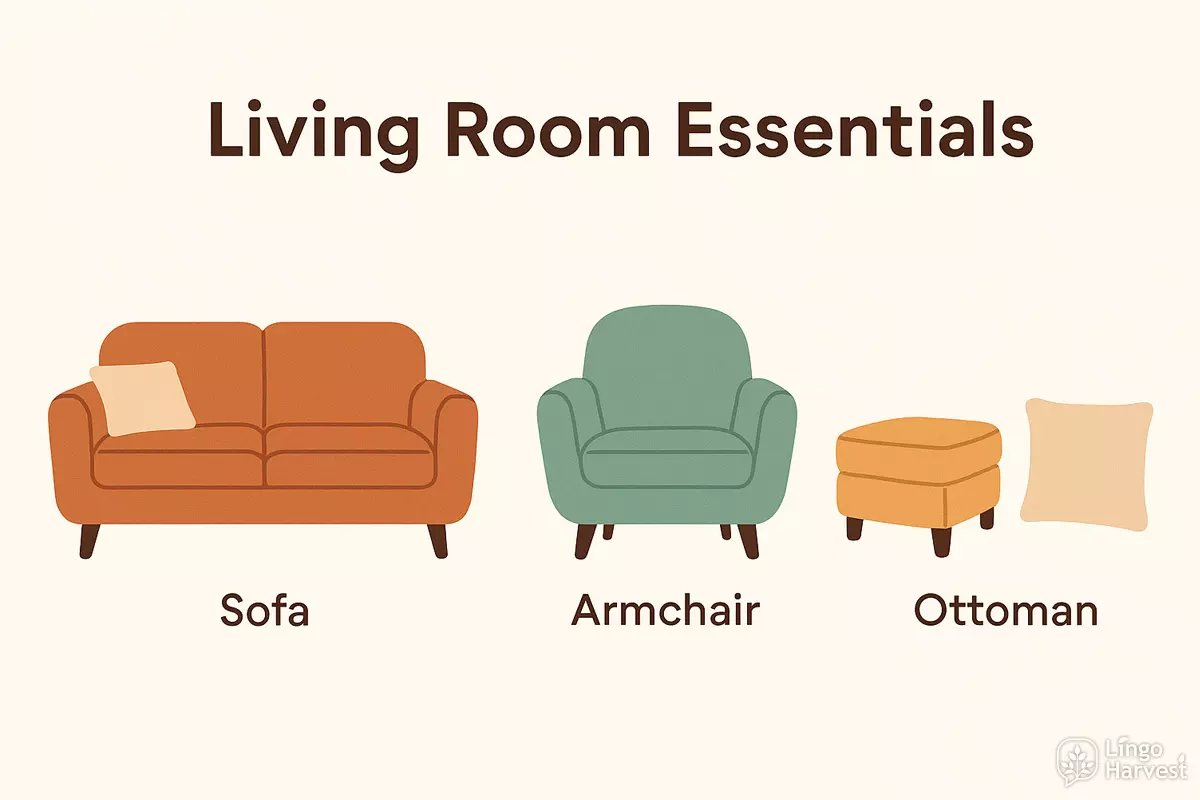
- Sofa – a long, comfortable seat for several people.
- Armchair – a cushioned chair with supports for your arms.
- Ottoman – a low seat or footrest, sometimes with storage inside.
- Cushion – a soft pillow for sitting or leaning against.
Entertainment and Electronics
- Television – a device for watching shows and movies.
- Remote control – a handheld device to operate electronics from a distance.
- Speaker – equipment that plays audio or music.
- Lamp – a light source, often placed on tables or floors.
Surface and Storage Items
- Coffee table – a low table in front of a sofa for drinks or magazines.
- Bookshelf – shelves for storing books or displaying decorations.
- Cabinet – a piece of furniture with doors for storage.
- Rug – a piece of carpet covering part of the floor.
Decor and Everyday Objects
- Picture frame – holds photos or artwork for display.
- Clock – shows the time, often hung on the wall.
- Plant – a potted green addition for decoration and air quality.
- Curtains – fabric panels for windows, providing privacy or shade.
- Candle – a wax object that gives light when lit.
- Blanket – a soft covering for warmth.
| Object | Typical Use | Location Example |
|---|---|---|
| Sofa | Sitting, relaxing, socializing | Against the main wall |
| Coffee table | Placing drinks, magazines | In front of the sofa |
| Bookshelf | Storing books, decorations | Beside the television |
| Lamp | Lighting, reading | Next to an armchair |
| Rug | Comfort, decoration | On the floor, under the table |
| Remote control | Operating electronics | On the coffee table |
Learning these nouns will help you confidently describe your surroundings, ask for objects, and understand simple instructions in daily life. Try labeling items in your own living area or using these words in short sentences to reinforce your memory.
Tools and Small Appliances
Many everyday objects around the home are designed to help with practical tasks, repairs, or making life more comfortable. Learning the names of these items can be useful for describing your surroundings, asking for help, or following instructions. Below are some common vocabulary words for basic hand tools and smaller electric gadgets that you might see or use at home.
Common Hand Tools
- Hammer – used for driving nails into wood or walls
- Screwdriver – turns screws in or out
- Pliers – grips and bends objects
- Wrench – tightens or loosens nuts and bolts
- Tape measure – measures length or distance
- Utility knife – cuts through cardboard, rope, or plastic
- Level – checks if something is straight or even
- Flashlight – portable light source for dark areas
- Drill – makes holes in walls, wood, or metal
- Sandpaper – smooths rough surfaces
Popular Small Appliances
- Toaster – browns bread slices
- Kettle – boils water quickly
- Microwave – heats or cooks food fast
- Blender – mixes or purees food and drinks
- Coffee maker – prepares hot coffee
- Iron – removes wrinkles from clothes
- Vacuum cleaner – cleans dust and dirt from floors
- Hair dryer – dries wet hair with warm air
- Rice cooker – steams or cooks rice automatically
- Electric fan – moves air to cool a room
- Food processor – chops, slices, or grates ingredients
- Electric mixer – blends or whips ingredients for baking
Differences: Tools vs. Small Appliances
| Hand Tools | Small Appliances |
|---|---|
| Usually manual, no electricity needed | Powered by electricity |
| Used for repairs, building, measuring | Used for cooking, cleaning, or comfort |
| Examples: hammer, screwdriver, pliers | Examples: toaster, kettle, vacuum cleaner |
| Often stored in a toolbox or garage | Usually found in the kitchen or living areas |
Knowing the names of these items can help you describe your home, ask for something you need, or follow instructions more easily. Practice saying and recognizing these objects to build your everyday vocabulary.
Spelling and Articles
When learning the names of everyday items found at home, it's important to pay attention to both how each word is spelled and which article—“a,” “an,” or “the”—is used with it. Many object names in English are simple, but some can be confusing, especially for beginners. Articles help us specify whether we mean any item of that type or a particular one. Spelling, meanwhile, can be tricky due to silent letters or unusual letter combinations.
Common Spelling Patterns
Household vocabulary often follows regular spelling patterns, but watch out for exceptions. Here are some tips:
- Words ending in -ch (like bench or couch) are usually pronounced with a "ch" sound.
- Items with a silent b (like comb) may trip you up—remember not to pronounce the “b.”
- Double consonants often appear in words borrowed from other languages, e.g., mirror.
- Some names, such as scissors or curtain, may be tricky due to their unique endings and double letters.
Choosing the Right Article
Use “a” before words that start with a consonant sound, and “an” before those starting with a vowel sound. “The” is used when you’re talking about a specific object already mentioned or known to the listener.
| Object | Correct Article Usage | Spelling Note |
|---|---|---|
| armchair | a | Compound word; both parts are common |
| umbrella | an | Starts with vowel sound |
| oven | an | Silent “v” not present; simple spelling |
| table | a | Basic, regular spelling |
| hourglass | an | Silent “h”; pronounced “our-glass” |
| mirror | a | Double “r”; watch the ending |
| iron | an | “Ir” pronounced as “eye” |
| sofa | a | Ends with “a” but starts with consonant sound |
| alarm clock | an | Begins with vowel sound |
| comb | a | Silent “b” at the end |
Quick Reminders
- Use “the” when you and the listener both know which item is meant: “the lamp by the bed.”
- “A” and “an” are for any single, non-specific object: “a chair,” “an oven.”
- Some item names are always plural, like “scissors”; use “some” or “the” with them.
- Watch out for silent letters and double consonants, which are common in basic household terms.
Mastering these small details—how to spell each word and which article to use—will help you sound more natural and confident when describing your home and the objects in it.
Practice: Name the Object
Let’s put your knowledge of common household item vocabulary to the test. Below, you’ll find a variety of everyday items you might see at home. Try to recall the correct word for each description or image. This exercise helps reinforce recall and improve your ability to recognize these nouns in real-life situations.
Which object fits the description?
- This is something you use to eat soup. It has a round bowl and a handle.
- You need this to turn on a lamp or a fan; it’s usually on the wall.
- This item keeps your food cold and fresh until you need it.
- You rest your head on this soft object when you sleep.
- It’s used to clean the floor by sucking up dust and dirt.
- This object tells you the time and hangs on the wall.
- You use this to boil water quickly for tea or coffee.
- This is a piece of furniture where you sit, often with a back and four legs.
- It covers the floor and makes the room feel cozy; people often walk on it barefoot.
- You use this to write or draw on paper.
Show answers
- Spoon
- Light switch
- Refrigerator
- Pillow
- Vacuum cleaner
- Clock
- Kettle
- Chair
- Rug
- Pencil
Match the object to its room
For each household object below, decide which room it most often belongs to:
- Toothbrush
- Oven
- Curtains
- Desk
- Shampoo
- Mug
- Sofa
- Blanket
- Mirror
- Wardrobe
Show answers
- Toothbrush – Bathroom
- Oven – Kitchen
- Curtains – Living room/Bedroom
- Desk – Study/Office
- Shampoo – Bathroom
- Mug – Kitchen
- Sofa – Living room
- Blanket – Bedroom/Living room
- Mirror – Bathroom/Bedroom
- Wardrobe – Bedroom
Common household objects: Visual guide
Here’s a quick reference chart to help you remember some basic items and their typical uses at home.
| Object | Typical Use |
|---|---|
| Plate | Eating meals |
| Remote control | Changing TV channels |
| Iron | Smoothing clothes |
| Trash can | Disposing of waste |
| Alarm clock | Waking up on time |
| Bookshelf | Storing books |
| Soap | Cleaning hands or body |
| Key | Locking or unlocking doors |
Practicing these names and their uses will help you feel more comfortable talking about your home and understanding others when they mention everyday items.