Classroom Nouns: Essential Vocabulary for English Learners

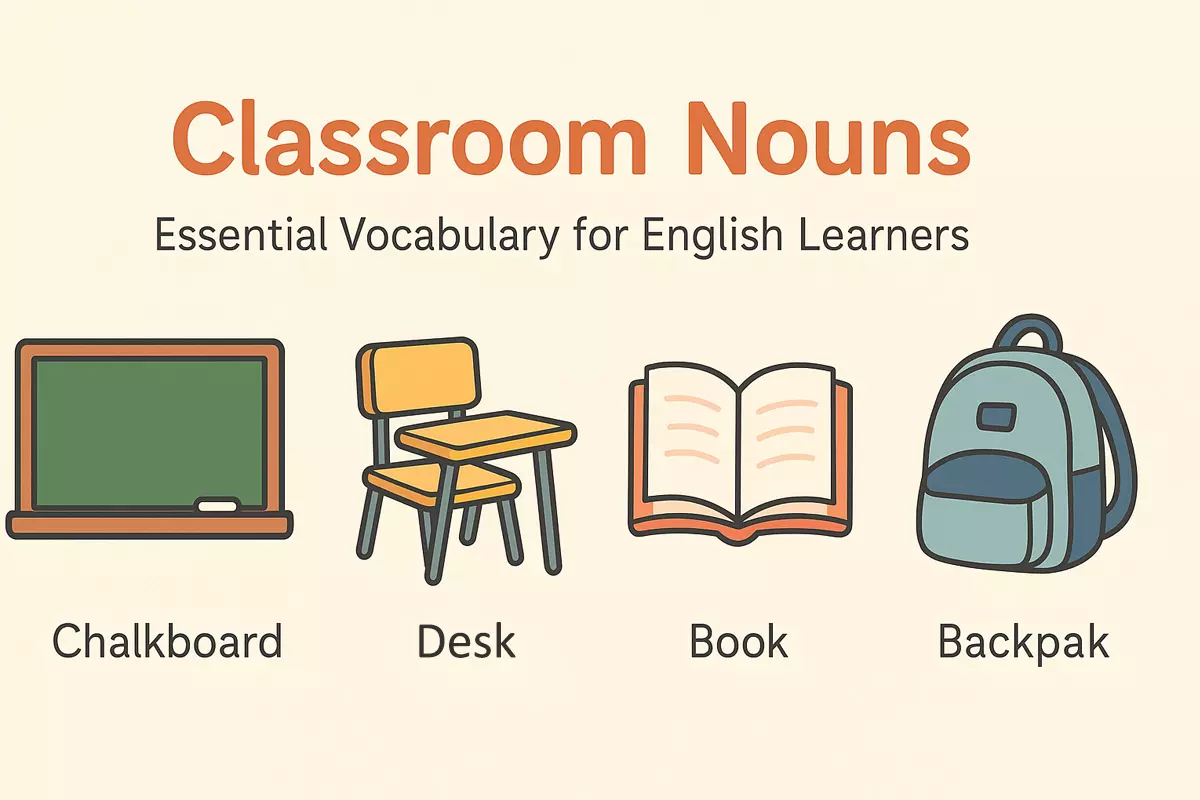 Here we essential classroom vocabulary, focusing on key objects like furniture, equipment, and school supplies. It also identifies people present in classrooms and describes typical actions and situations.
For newcomers, navigating the world of English can be challenging, particularly with the terminology found in educational settings. Understanding basic classroom vocabulary is vital for learners to effectively engage in their studies. This essential lexicon provides a foundation that aids students in comprehending instructions, participating in discussions, and building confidence in their language skills. By mastering these terms, learners can better integrate into academic environments, enhancing their overall educational experience and fostering a more inclusive atmosphere for all students.
Key Objects in the Classroom
Understanding the essential items found in a classroom is crucial for English learners as they navigate educational settings. These objects not only serve functional purposes but also play a significant role in the learning process. Here, we explore some of the most common items you will encounter in a classroom environment.
Furniture and Equipment
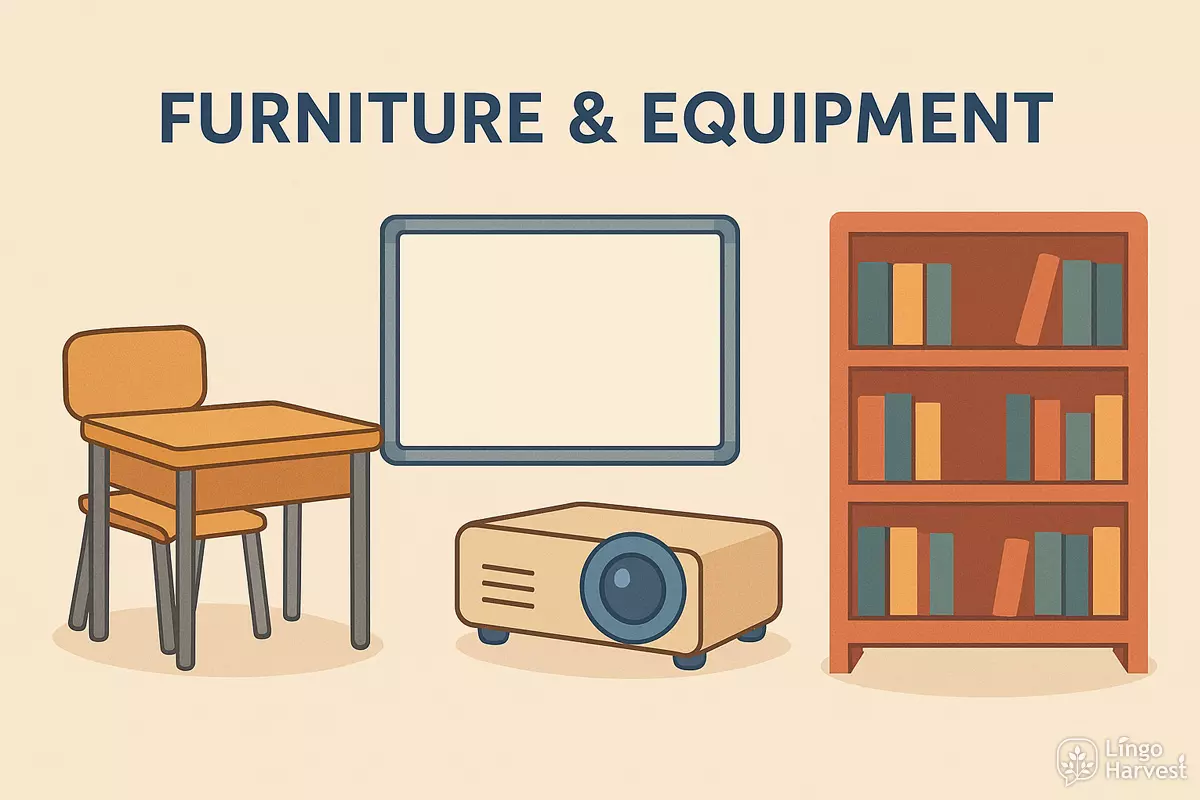
Classrooms are equipped with various types of furniture and equipment that facilitate learning. Here are some of the most common:
- Desks and Chairs: These provide a space for students to sit and work comfortably.
- Whiteboard: Used by teachers to write notes and display information during lessons.
- Projector: Projects visual content onto a screen or wall to enhance teaching.
- Bookshelves: Store textbooks and other reading materials for easy access.
Learning Materials
Effective learning is supported by a variety of materials designed to engage students and reinforce concepts.
- Textbooks: Provide structured information and exercises on specific subjects.
- Notebooks: Allow students to take notes and complete assignments.
- Art Supplies: Include items like crayons, markers, and paint for creative projects.
- Calculators: Essential for solving mathematical problems and equations.
Technological Tools
Modern classrooms often incorporate technology to enhance learning experiences. Here are some common tools:
- Computers: Used for research, assignments, and accessing digital resources.
- Tablets: Portable devices that support interactive learning apps.
- Smartboards: Interactive whiteboards that integrate computer technology for dynamic lessons.
| Object | Purpose |
|---|---|
| Desks | Provide a space for writing and using learning materials |
| Whiteboard | Displays information and facilitates visual learning |
| Projector | Enhances lessons with multimedia presentations |
| Computers | Access digital resources and complete assignments |
| Chairs | Provide seating to support focus and comfort during lessons |
| Bookshelves | Store textbooks, reference books, and learning materials |
| Speakers | Improve audio quality for listening activities and videos |
| Printer | Allows printing worksheets, tests, and handouts |
In summary, familiarizing yourself with these common classroom items can greatly enhance your ability to participate fully in educational activities. Whether it's understanding the purpose of a whiteboard or utilizing a computer for research, each object contributes to a more interactive and effective learning experience.
Furniture and Equipment
Understanding the various items found in a classroom is essential for English learners who are looking to expand their vocabulary. These items are not just limited to desks and chairs but also include a variety of tools and devices that facilitate learning. Familiarity with these terms can enhance one's ability to communicate effectively in an educational setting.
Common Classroom Items
- Desk: The primary workspace for students, often equipped with drawers for storage.
- Chair: Used by students to sit comfortably during lessons.
- Whiteboard: A smooth, glossy surface where teachers write with markers to illustrate lessons.
- Projector: A device used to display images or videos onto a screen, enhancing visual learning.
- Bookshelf: A piece of furniture to store books and educational materials.
- Computer: A vital tool for research and interactive learning activities.
Additional Equipment
Beyond the basics, classrooms are equipped with a range of tools designed to support various teaching methods. These include:
- Smartboard: An interactive board that combines the functionalities of a whiteboard and a computer.
- Document Camera: Allows teachers to project documents or objects onto a screen for the class to see.
- Printer: Used for producing hard copies of documents and assignments.
- Speakers: Facilitate audio learning by amplifying sound from multimedia presentations.
Comparison of Traditional and Modern Classroom Tools
| Traditional Tool | Modern Equivalent |
|---|---|
| Chalkboard | Whiteboard/Smartboard |
| Overhead Projector | Document Camera |
| Printed Textbooks | e-Books/Tablets |
| Paper Notebooks | Laptops/Chromebooks |
Each piece of furniture and equipment in a classroom serves a specific purpose, contributing to a conducive learning environment. As educational tools continue to evolve, understanding the vocabulary associated with these items remains crucial for effective communication and learning in English-speaking educational settings.
School Supplies
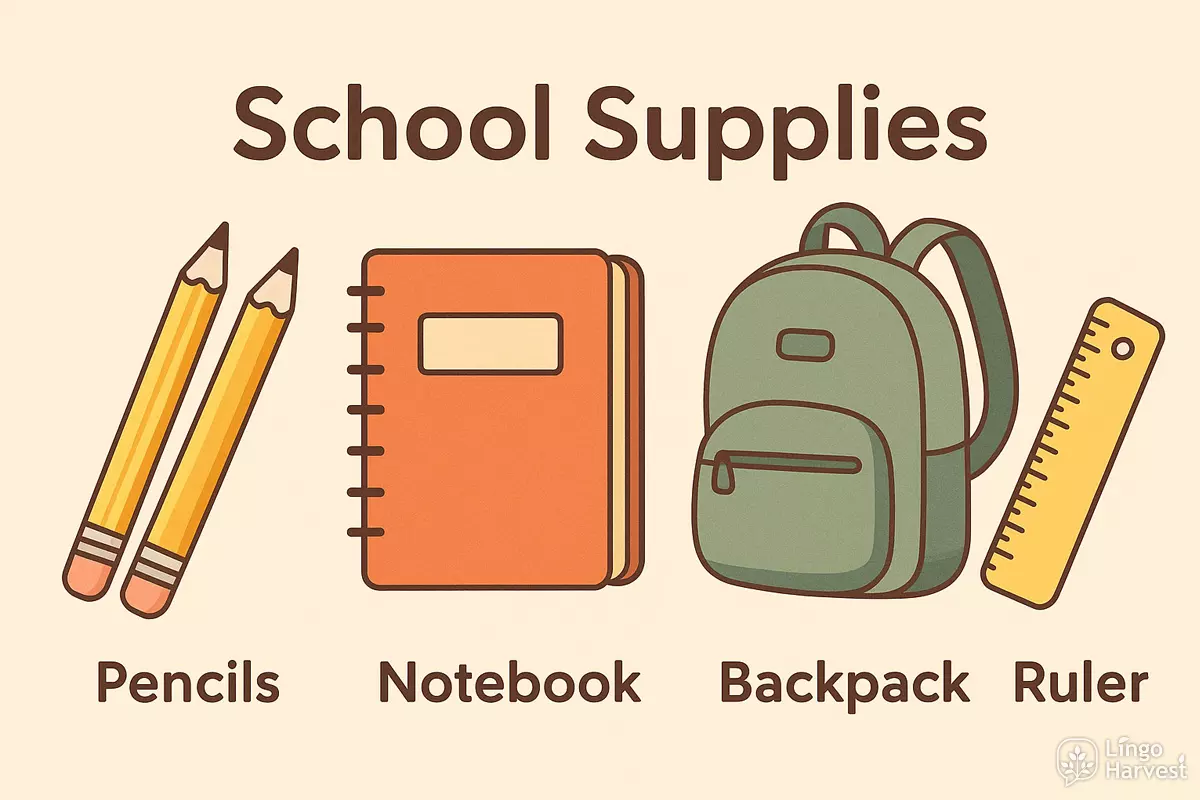
When starting a new school year, students often need a variety of materials to help them succeed in their educational journey. These items are essential for completing assignments, staying organized, and participating in classroom activities.
Basic Items
Every student typically requires some basic items to begin their studies effectively. These include:
- Pencils and Erasers: Necessary for writing and making corrections.
- Notebooks: Used for taking notes during lessons and organizing thoughts.
- Backpack: A convenient way to carry books and supplies to and from school.
- Ruler: Useful for drawing straight lines and measuring.
Art and Creativity Supplies
For subjects involving creativity and art, students may also need specialized materials:
- Colored Pencils or Crayons: Perfect for adding color to projects and drawings.
- Scissors: Essential for cutting paper and crafting.
- Glue Stick: Used for attaching paper and other materials together.
Organizational Tools
Staying organized is crucial for academic success. Here are a few tools that can help:
- Binders: Ideal for organizing papers and assignments by subject.
- Folders: Helpful for keeping loose papers tidy and accessible.
- Planner: A great tool for tracking homework, projects, and important dates.
Technology Aids
In modern classrooms, technology plays an increasingly important role in education. Some high-tech aids include:
- Calculator: Useful for math classes and calculations.
- Tablet or Laptop: Often required for accessing digital resources and completing online assignments.
- USB Drive: Handy for storing and transferring digital files.
These supplies, though varied, contribute significantly to a student's ability to succeed in their educational endeavors. Having the right tools at hand ensures that students can engage fully with their learning environment.
When studying classroom vocabulary lists and example sentences, it’s useful to keep the text length comfortable for focused learning. You can check reading time for study notes to plan short, effective sessions without overload.
People in the Classroom
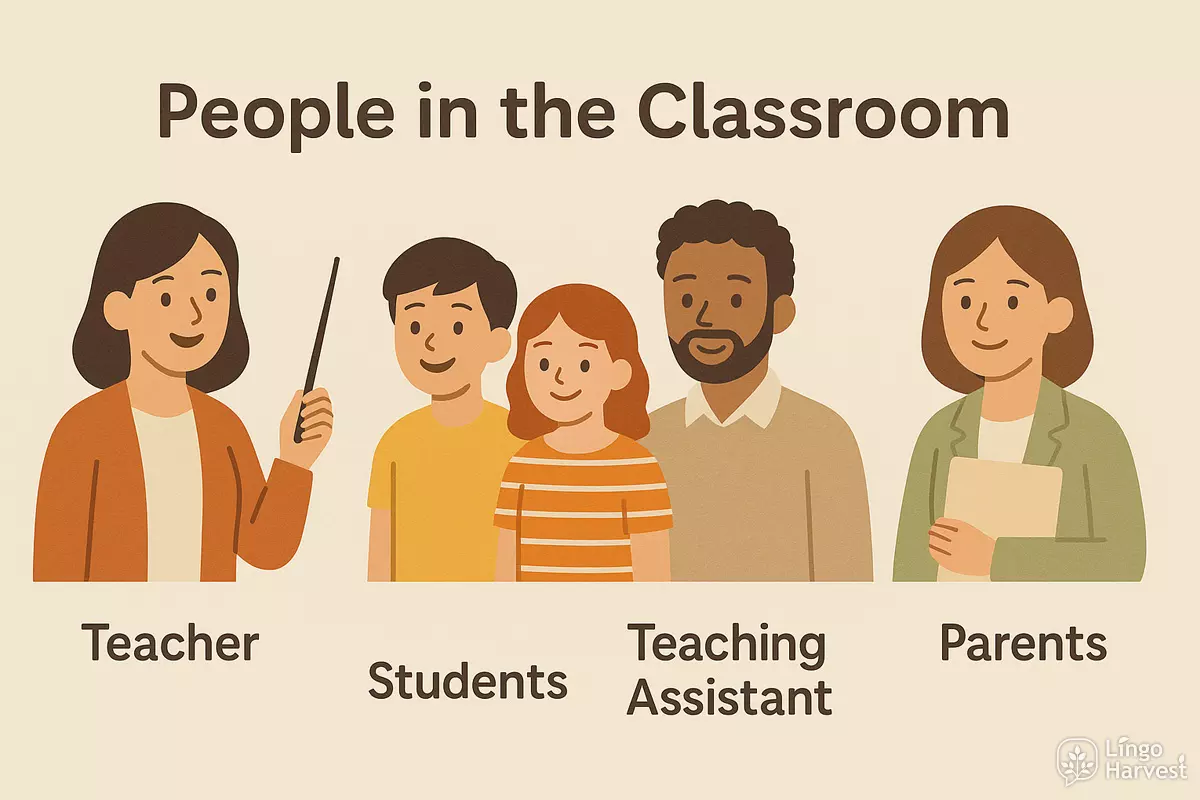
Understanding the different roles of individuals in an educational setting is crucial for effective learning and communication. These roles help define the structure and dynamics of the classroom environment. Here we explore the essential people you will encounter in most classrooms.
Teacher
The teacher is the primary guide for students, responsible for delivering lessons and facilitating learning. Teachers plan and execute educational activities, assess student progress, and provide feedback. They play a pivotal role in shaping the learning experience and fostering an inclusive atmosphere.
Students
Students are the learners, engaging with the material presented by the teacher. They participate in discussions, complete assignments, and collaborate with peers. Students are encouraged to ask questions and contribute to the classroom dialogue, making them active participants in their own education.
Teaching Assistant
Teaching assistants support the teacher by helping with instructional responsibilities. They may assist with preparing materials, managing the classroom, and providing additional support to students who need it. Their role is vital in ensuring that all students receive the attention they need to succeed.
Parents
While not physically present in the classroom, parents play a significant role in a student's educational journey. They provide support at home, communicate with teachers, and help reinforce the importance of education. Their involvement can greatly impact a student's motivation and success.
Administrator
School administrators, such as principals and vice-principals, oversee the overall functioning of the school. They ensure that the educational environment is safe and conducive to learning. Administrators also handle policy implementation and support teachers and students alike.
Classroom Vocabulary
- Instructor: Another term for a teacher, often used in higher education or specialized training.
- Pupil: A synonym for student, commonly used in primary education.
- Mentor: An experienced individual who provides guidance and support to a learner.
- Peer: A fellow student or colleague in the educational setting.
Actions and Situations Related to Classrooms
Understanding the various actions and scenarios that occur in a classroom setting is crucial for English learners. These activities not only enhance vocabulary but also provide insights into the dynamics of classroom interactions.
Common Classroom Activities
Classrooms are bustling with a variety of activities that facilitate learning. Here are some common actions you might encounter:
- Lecturing: The teacher provides information on a specific topic to the students in a structured format.
- Group Work: Students collaborate in small groups to complete tasks or projects, encouraging teamwork and communication.
- Discussions: Open conversations between students and teachers about a topic, fostering critical thinking and perspective sharing.
- Examinations: Tests or quizzes designed to evaluate students' understanding and retention of the material.
Classroom Management Situations
Managing a classroom involves various situations that require attention and action. Here are a few examples:
- Maintaining Discipline: Ensuring that students follow rules and behave appropriately during class.
- Addressing Questions: Teachers respond to students' questions to clarify doubts and facilitate understanding.
- Providing Feedback: Offering constructive criticism or praise to help students improve their performance.
- Handling Conflicts: Resolving disagreements or issues that arise between students in a fair and effective manner.
Structured Classroom Interactions
To better understand the structured interactions within a classroom, consider the following table that compares different roles and their typical responsibilities:
| Role | Responsibilities |
|---|---|
| Teacher | Planning lessons, delivering lectures, assessing student progress |
| Student | Attending classes, participating in activities, completing assignments |
| Class Monitor | Assisting the teacher, maintaining order, helping classmates |
| School Counselor | Providing guidance, addressing personal and academic concerns |
Practice: Label the Classroom
Enhance your understanding of classroom-related vocabulary by engaging in this labeling activity. This exercise will help you become familiar with common nouns found in an educational environment. It’s a practical way to reinforce your learning and ensure you can identify these objects confidently.
Common Classroom Items
Below is a list of typical classroom items. Try to memorize these terms and their uses:
- Desk: A piece of furniture with a flat top used for writing, reading, or working.
- Chair: A seat for one person, typically with a back and four legs.
- Blackboard: A large board with a dark surface on which you can write with chalk.
- Whiteboard: A smooth, white surface on which you can write with markers.
- Projector: A device that projects an image or video onto a screen.
- Bookshelf: A piece of furniture with shelves for storing books.
Labeling Exercise
Use the words from the list above to label the following classroom diagram. Imagine a typical classroom and identify where each item might be located.
- Where would you find the teacher’s desk?
- Identify the location of the blackboard or whiteboard.
- Place the bookshelf in a suitable corner of the room.
- Determine the best spot for the projector to ensure visibility for all students.
- Decide where the students’ desks should be arranged.
- Choose an appropriate place for the computer or laptop.
- Identify the location of the printer in the classroom.
- Determine where the speakers should be placed for clear sound.
- Select a suitable area for the storage cabinet.
- Decide where to put the notice board for announcements.
Show answers
- The teacher’s desk is typically at the front of the classroom, facing the students.
- The blackboard or whiteboard is usually on the front wall, near the teacher’s desk.
- The bookshelf can be placed against a side or back wall for easy access to books.
- The projector is often mounted on the ceiling or placed on a stand to project onto a screen or the whiteboard.
- The students’ desks are commonly arranged in rows or groups, facing the board.
- The computer or laptop is usually placed on the teacher’s desk or a dedicated workstation.
- The printer is often located near the teacher’s area or along a side wall.
- The speakers should be placed near the front or mounted on walls for even sound distribution.
- The storage cabinet is typically placed along a back or side wall to save space.
- The notice board is usually positioned near the entrance so students can easily see announcements.
This practice helps solidify your understanding of essential classroom vocabulary by placing these items in context. Try to visualize a classroom setting to make the learning process more engaging and effective.