Picture Vocabulary Match: Learn Words Visually

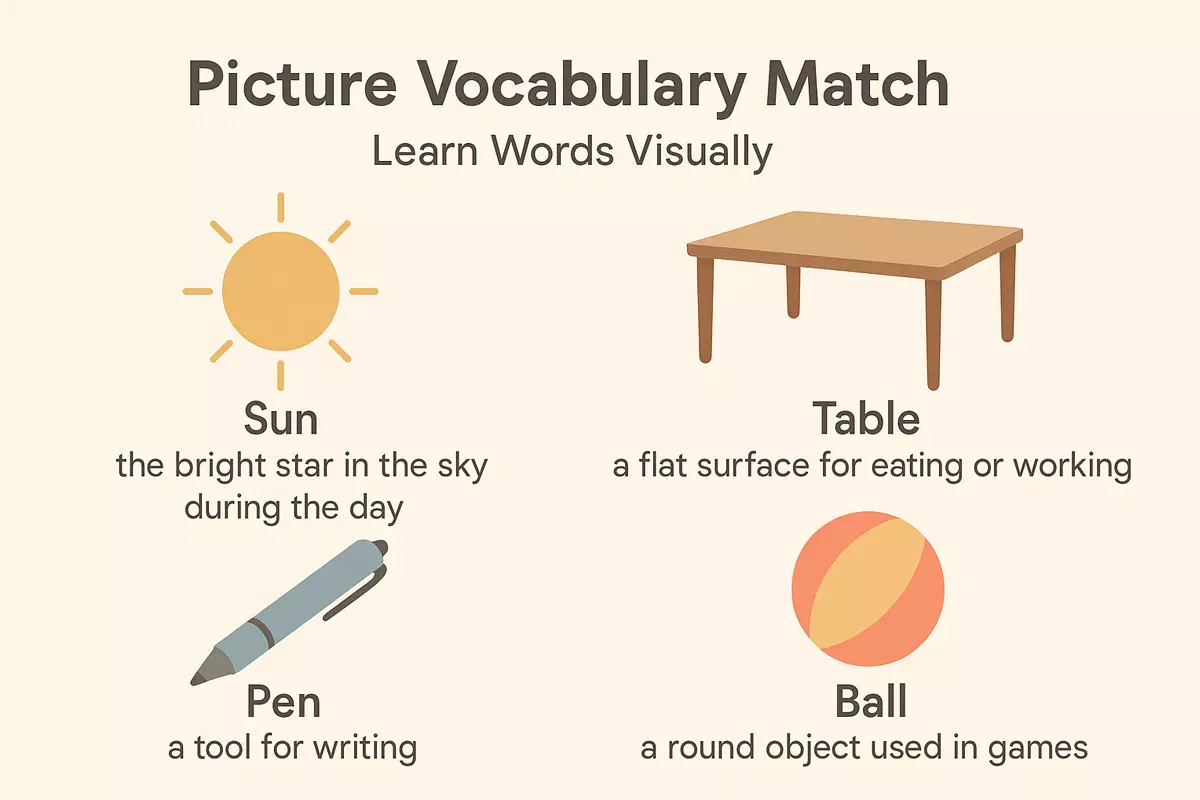 This article explains how visual learning boosts vocabulary by matching words with images. It covers useful topics, common classroom activities, and practical exercises to help learners connect everyday words with pictures.
Learning new words becomes more enjoyable and effective when you connect images to language, as visual associations help you expand your vocabulary and remember terms more easily. This interactive approach not only makes studying more engaging but also reinforces your understanding by linking words with memorable visuals. By integrating pictures into your language practice, you can boost retention and make the process of acquiring new vocabulary both fun and efficient.
Visual Learning Benefits
Seeing words paired with images can make it much easier to remember new vocabulary. When learners connect a term to a meaningful picture, they create mental associations that reinforce recall. This technique is especially helpful for visual thinkers, but almost everyone can benefit from linking language and imagery.
How Images Support Memory
Our brains process visuals faster than text, so matching a word with a picture often leads to quicker recognition. Images provide context and make abstract concepts more concrete. This is why visual strategies are widely used in classrooms and language apps alike.
- Improves long-term retention by creating mental "anchors"
- Reduces confusion between similar-sounding words
- Helps learners quickly grasp word meaning without translation
- Encourages active engagement through matching games and quizzes
- Supports learners of all ages, including children and adults
- Assists with spelling and pronunciation by associating form and sound with an image
- Breaks down language barriers for beginners
- Motivates learners with instant feedback and visible progress
- Facilitates learning in groups or individually
- Enhances understanding of cultural context through authentic pictures
Comparison: Visual vs. Text-Only Learning
| Aspect | With Images | Text Only |
|---|---|---|
| Memory Retention | High ✅ | Moderate |
| Engagement Level | Active | Passive |
| Understanding Abstract Words | Easier with context | Harder without support |
| Learning Speed | Faster | Slower |
| Accessibility for Beginners | Very Accessible | Challenging |
Everyday Situations Where Visual Matching Helps
- Shopping: associating product names with items
- Travel: recognizing signs and menus
- Workplace: understanding tool or equipment labels
- Socializing: connecting names to faces in a new group
- Hobbies: learning vocabulary for sports or crafts
In summary, matching words with pictures goes beyond memorization. It makes learning active, relevant, and more enjoyable, giving language learners practical tools for everyday use.
Matching Words with Images
Understanding new vocabulary becomes much easier when words are paired with visuals. Connecting a term to a picture provides context, triggers memory, and helps learners grasp meaning intuitively. This approach is especially helpful for visual learners, but anyone can benefit from associating new language with images.
How Visual Pairing Strengthens Vocabulary
When you see an object and its name at the same time, your brain forms a direct link. This method reduces the need for translation and builds recognition skills. For example, seeing a photo of an apple labeled “apple” creates a stronger memory than reading the word alone.
Common Examples of Visual Vocabulary
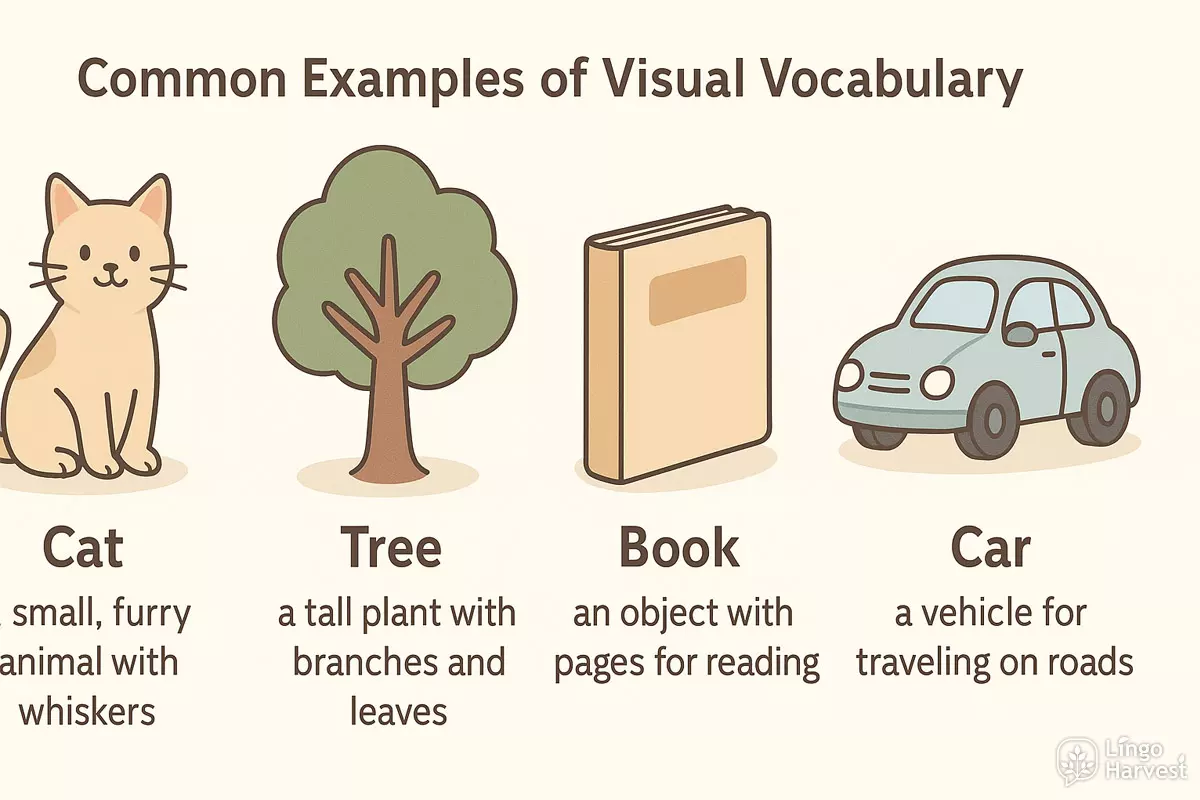
Here are some typical items that are easy to connect with their pictures, making them ideal for this learning technique:
- Cat → a small, furry animal with whiskers
- Tree → a tall plant with branches and leaves
- Book → an object with pages for reading
- Car → a vehicle for traveling on roads
- Chair → a seat with a back, often found at tables
- Dog → a loyal pet with a wagging tail
- Sun → the bright star in the sky during the day
- Table → a flat surface for eating or working
- Pen → a tool for writing
- Ball → a round object used in games
- Bird → an animal with feathers and wings
- House → a building where people live
- Tree → a large plant with a trunk and branches
- Fish → a creature living in water
- Flower → a colorful plant part, often with petals
- Shoe → something you wear on your feet
- Hat → clothing worn on the head
- Phone → a device for talking to others
- Clock → shows the time
- Cup → used for drinking liquids
Tips for Practicing with Pictures
To get the most out of visual vocabulary learning, try these strategies:
- Label objects around your home in your target language.
- Use flashcards with a picture on one side and the word on the other.
- Group similar items together (e.g., kitchen tools, animals).
- Draw your own sketches if photos aren’t available.
- Test yourself by covering the word or the image and recalling the other.
Benefits of Visual Word Association
Pairing terms with illustrations helps with:
- Quicker recall and stronger memory retention
- Better pronunciation (when spoken aloud together)
- Reduced confusion between similar-sounding words
- Increased enjoyment and engagement in learning
Practicing with images transforms vocabulary study from a dry memorization task into an interactive experience. This method not only supports language growth but also builds confidence in real-world situations.
Everyday Vocabulary Topics
Building a strong foundation in a new language starts with the words we use daily. Focusing on practical themes helps learners connect images and terms, making it easier to remember and use them in real life. Visual matching can be especially effective for common subjects encountered at home, school, or out in the community.
Common Themes for Visual Word Learning
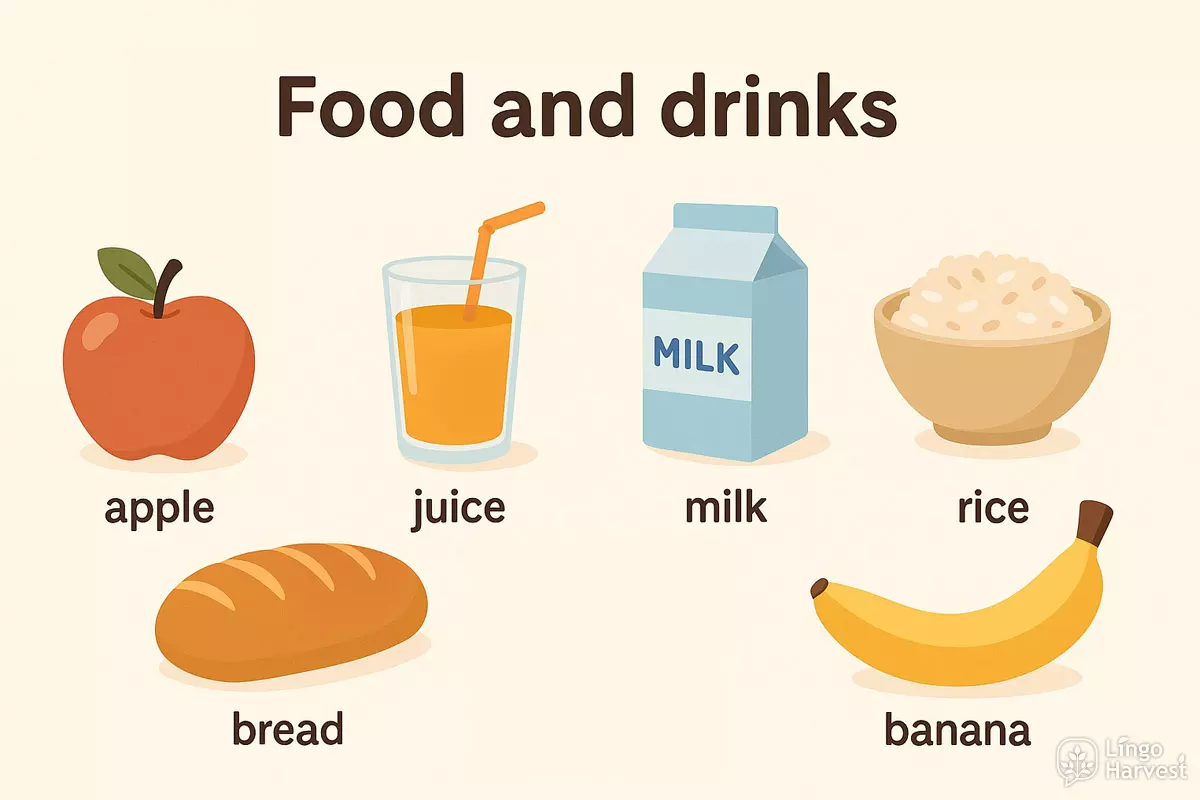
To make vocabulary stick, it’s best to start with groups of words you’ll encounter most often. Here are some of the most useful categories for visual vocabulary practice:
- Food and drinks (apple, bread, juice, milk, rice)
- Clothing (shirt, shoes, jacket, socks, dress)
- Rooms and furniture (bed, chair, table, lamp, sofa)
- Family members (mother, father, sister, brother, grandmother)
- School supplies (pen, pencil, notebook, eraser, ruler)
- Weather (rain, sun, snow, wind, cloud)
- Transportation (bus, car, bicycle, train, airplane)
- Animals (dog, cat, bird, fish, horse)
- Colors (red, blue, green, yellow, black)
- Numbers (one, two, three, four, five)
- Days of the week (Monday, Tuesday, Wednesday, Thursday, Friday)
- Basic actions (run, walk, eat, read, write)
- Emotions (happy, sad, angry, surprised, tired)
Sample Vocabulary Matching Table
Matching pictures to words is especially helpful when similar items might be confused. Here’s an example showing clothing items with their descriptions to support visual learning:
| Clothing Item | Description/Use |
|---|---|
| T-shirt | Casual top with short sleeves |
| Jacket | Outerwear for warmth or style |
| Sneakers | Comfortable shoes for walking or sports |
| Scarf | Cloth worn around the neck for warmth |
| Hat | Headwear for sun protection or fashion |
Tips for Expanding Your Visual Word Bank
Try grouping new terms by theme and practicing with real-life objects or images whenever possible. Reviewing words in context—like labeling items around your home or matching flashcards to photos—can reinforce memory and make language learning more enjoyable. Don’t hesitate to revisit familiar topics and add new words as your skills grow.
Common Classroom Exercises
Visual matching activities are a staple in language learning environments, especially for introducing new vocabulary. These exercises encourage learners to associate words with corresponding images, reinforcing both recognition and recall. Educators often adapt these tasks for various age groups and proficiency levels, making them highly versatile and engaging.
Classic Picture-Word Matching
In this familiar activity, students receive a set of pictures and a separate list of words. The goal is to correctly pair each word with its corresponding image. This method works well for concrete nouns—objects, animals, foods, and clothing—where visual cues are clear.
- Match a series of fruit images to their names.
- Connect animal illustrations with their written forms.
- Link classroom objects (e.g., desk, chair, board) to pictures.
- Pair weather icons (sun, rain, snow) with appropriate terms.
- Assign color swatches to color words.
Interactive Board Games
Teachers often use board games that incorporate picture cards and vocabulary tiles. Players draw a card, say the word aloud, and place it on the correct spot on the board. This approach gamifies repetition, making practice more enjoyable.
Charades with Visual Prompts
For a more dynamic approach, students act out words depicted in images while classmates guess the term. This not only reinforces vocabulary but also encourages movement and peer interaction.
Sorting and Categorizing Tasks
Sorting activities help learners recognize relationships between words. Students are given a mix of images and asked to group them by category, such as food, animals, or transportation.
- Group pictures of apple, banana, and orange under "Fruits."
- Place images of car, bus, and bike in the "Transport" category.
- Sort dog, cat, and rabbit as "Pets."
Matching Patterns Table
| Image Example | Vocabulary Word |
|---|---|
| 🐱 | Cat |
| 🍎 | Apple |
| 🚗 | Car |
| ☀️ | Sun |
| 📋 | Notebook |
Quick Quiz: Match the Word to the Picture
- Which image matches the word "Bus"? 🚌 or 📖
- Find the correct picture for "Dog": 🐶 or 🐙
- Choose the image for "Banana": 🍌 or 🍇
- Which icon means "Rain"? ☁️ or ☀️
Show answers
- 1. 🚌
- 2. 🐶
- 3. 🍌
- 4. ☁️
Tips for Effective Practice
- Rotate visuals regularly to expose students to new words.
- Encourage learners to create their own picture-word cards.
- Use both individual and group formats for variety.
- Include feedback sessions to discuss tricky matches.
Practice: Match Pictures to Words
Learning new vocabulary is often easier when you connect images to the words you’re studying. Below, you’ll find engaging activities that help you associate visual cues with their corresponding terms. This approach can boost memory and make language learning more interactive.
Vocabulary Matching Activity
Try to pair each description with the correct word based on an imaginary picture you might see in a vocabulary workbook. Think about common items or actions you might recognize visually.
- A round, yellow fruit with a thick skin.
- An animal that barks and wags its tail.
- A piece of furniture you sleep on.
- A vehicle with two wheels and pedals.
- Something you wear on your feet inside the house.
- A tool used to write or draw, usually with ink.
- A small insect that makes honey.
- A device that shows the time.
- A sweet, frozen dessert on a stick.
- A plant with thorns and colorful petals.
- A round object used in many sports.
- A container for carrying books and supplies to school.
- A tall structure with rungs, used for climbing up or down.
- A bright object in the sky during the day.
- A soft, stuffed toy animal.
- An instrument with black and white keys.
- A large body of salt water.
- A fruit that keeps the doctor away.
- A utensil for eating soup.
- A bird often kept as a pet, known for repeating sounds.
Show answers
- Lemon
- Dog
- Bed
- Bicycle
- Slippers
- Pen
- Bee
- Clock
- Popsicle
- Rose
- Ball
- Backpack
- Ladder
- Sun
- Teddy bear
- Piano
- Ocean
- Apple
- Spoon
- Parrot
Tips for Visual Word Learning
- Look for pictures that clearly show the meaning of a word.
- Say the word out loud as you view its image to reinforce memory.
- Group related items (e.g., fruits, animals, objects) to see patterns.
- Try drawing your own simple sketches for new terms.
Common Mistakes to Watch For
- Confusing similar-looking items, such as lemon and orange.
- Assuming all animals shown are pets—think about wild versus domestic.
- Mixing up action words (verbs) with objects (nouns) in picture tasks.
Practice with different sets of images and words can help you build a strong visual vocabulary foundation. Return to these activities regularly to test your progress and expand your word knowledge.