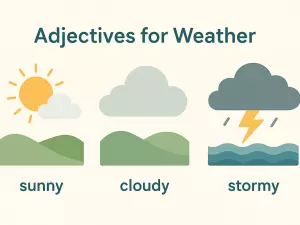
Describing Weather with Adjectives and Examples

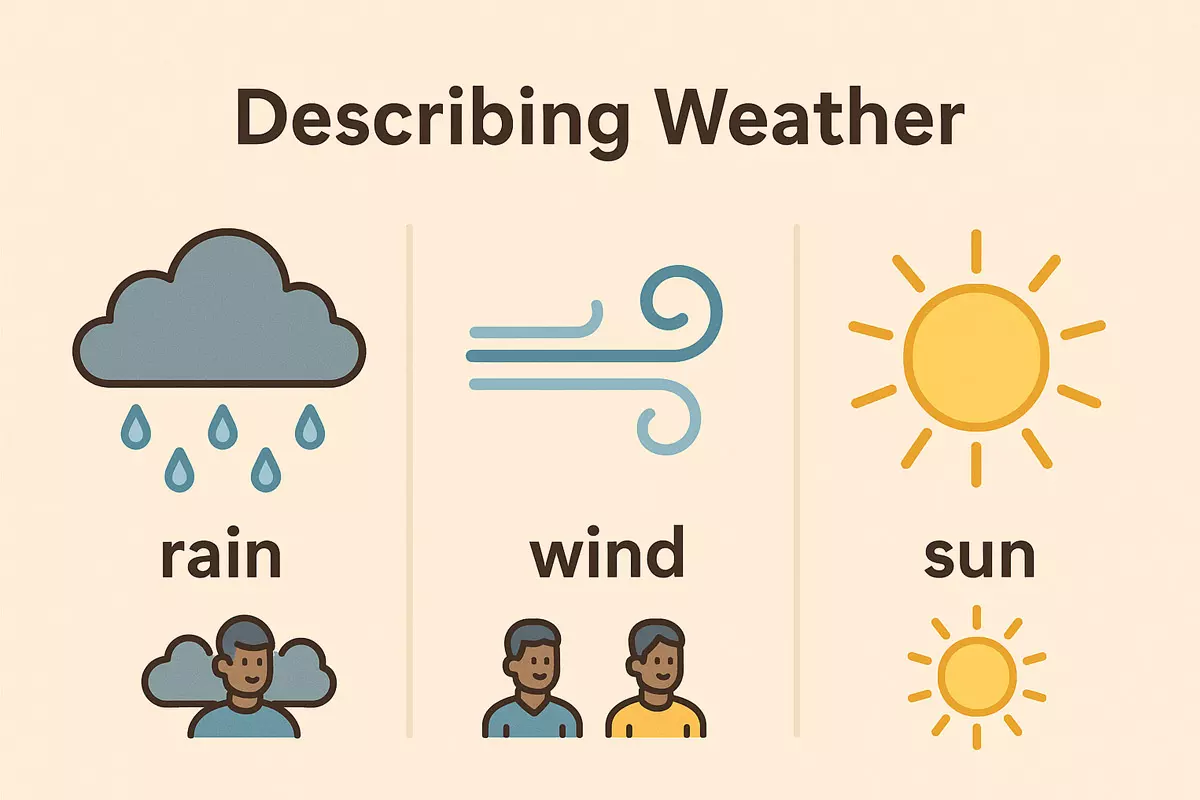 The article explains common weather adjectives, how to describe temperature, and ways to talk about rain, wind, and sun. It also covers adjective-noun combinations, useful expressions for conversations, and includes practice for describing today's weather.
Describing the mood of the sky can be enjoyable and practical, whether you’re sharing your observations with friends or adding atmosphere to your writing. Using expressive language and drawing on real-life examples allows you to create a clear and vivid picture for your audience. For instance, calling the sky brooding, tranquil, or radiant can convey different feelings and set the scene effectively. By carefully choosing your words, you can turn an ordinary description into something memorable and engaging.
Common Weather Adjectives
Describing the weather accurately helps create a vivid picture in conversation or writing. There are many adjectives that can capture the mood, temperature, and overall feeling of the atmosphere. Some words refer to temperature, while others describe moisture, wind, or the sky’s appearance.
Describing Temperature
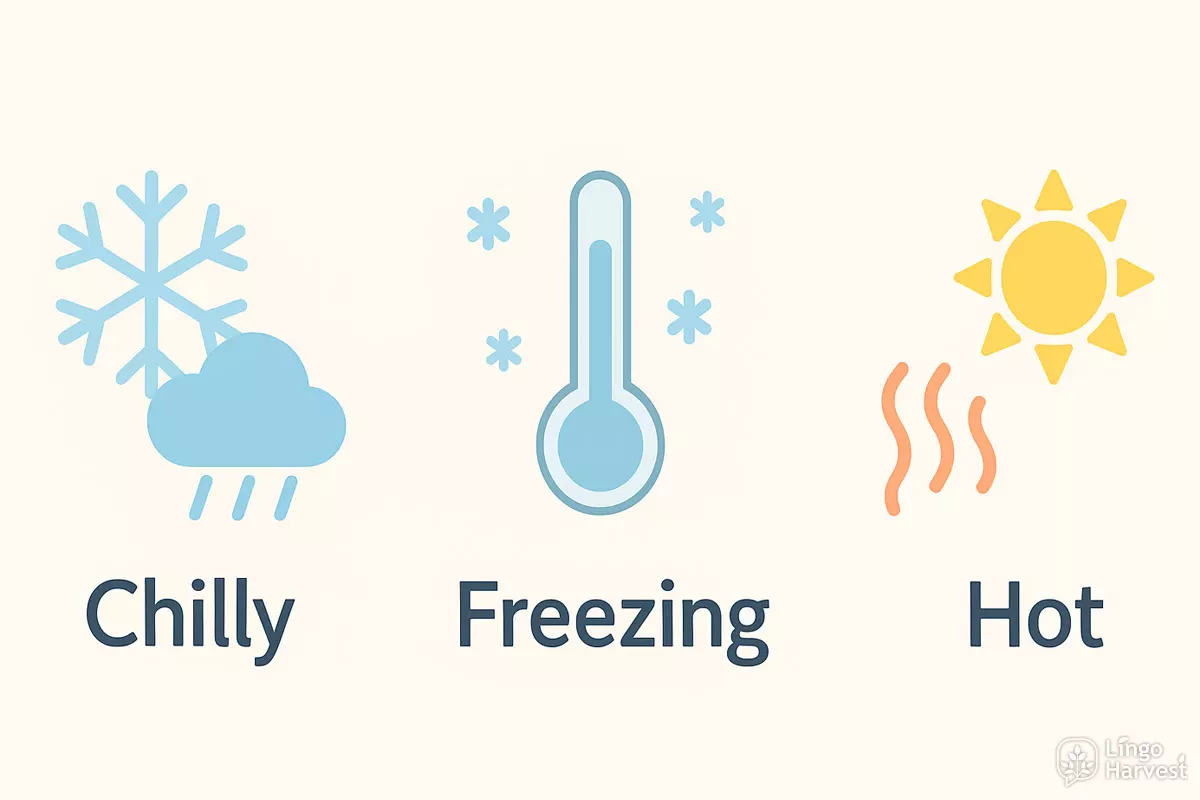
When talking about how warm or cold it feels, a few adjectives are especially useful:
- Chilly – a little cold, but not freezing
- Freezing – extremely cold; below 0°C/32°F
- Hot – very warm, sometimes uncomfortably so
- Mild – neither hot nor cold; pleasantly moderate
- Warm – comfortably or pleasantly hot
- Cool – slightly cold, but not uncomfortable
Talking About Precipitation
Conditions involving rain, snow, or other precipitation often require their own set of words:
- Rainy – frequent or continuous rain
- Drizzly – light rain, often misty
- Snowy – with snow falling or on the ground
- Showery – with short bursts of rain
- Stormy – with strong winds, thunder, or heavy precipitation
Describing the Sky and Visibility
The appearance of the sky and air can also be described with specific adjectives:
- Cloudy – covered with clouds, little direct sunlight
- Clear – no clouds, bright and visible sky
- Foggy – thick mist, reduced visibility
- Overcast – completely covered with clouds, no sun visible
- Hazy – air is not clear, often due to dust or mist
Wind and Other Conditions
Wind can change the feel of the weather dramatically. Here are some adjectives to express this:
- Breezy – pleasantly windy, gentle wind
- Windy – strong, noticeable air movement
- Humid – high moisture in the air, feels heavy or sticky
- Dry – little or no moisture, often with low humidity
To help compare these adjectives and see them in context, check out the table below.
| Adjective | Example Sentence |
|---|---|
| Chilly | It's a bit chilly this morning, so bring a jacket. |
| Humid | The air feels humid, making it uncomfortable outside. |
| Overcast | Today is overcast, with thick clouds blocking the sun. |
| Stormy | It looks stormy—better stay indoors for now. |
| Breezy | It's breezy at the beach, perfect for flying a kite. |
| Snowy | The streets are snowy and covered in white. |
With these descriptive words, you can express a wide variety of weather conditions in English, making your communication more precise and engaging.
Describing Temperature
When talking about how hot or cold the weather feels, we often rely on adjectives that capture the sensation or degree of warmth or chill in the air. These words help us be specific, whether we’re discussing a mild spring day or an icy winter night. Using the right descriptive terms makes conversations about the climate clearer and more vivid.
Common Temperature Adjectives
We use a variety of adjectives to express different levels of heat or cold. Some are very general, while others are more precise or expressive. Here are several commonly used terms:
- Freezing – extremely cold, often below 0°C/32°F
- Chilly – noticeably cold, but not severe
- Cool – slightly cold in a refreshing or comfortable way
- Mild – neither hot nor cold; pleasantly moderate
- Warm – comfortably or agreeably hot
- Hot – high in temperature, often uncomfortably so
- Boiling – extremely hot, as if at the boiling point
- Sweltering – oppressively hot and humid
- Frosty – very cold, often with frost present
- Bitter (as in "bitter cold") – intensely and unpleasantly cold
- Scorching – extremely hot, usually from the sun
- Crisp – cool and fresh, often used for autumn air
- Brisk – cool and invigorating, often with a breeze
- Stifling – uncomfortably hot or suffocating
- Glacial – extremely cold, like ice or glaciers
Examples of Temperature Descriptions in Sentences
Applying these adjectives in context helps to paint a clear picture. Consider these example sentences:
- The morning was chilly, so I wore a jacket.
- It’s scorching outside—don’t forget your sunscreen!
- We enjoyed a mild evening on the patio.
- The wind felt brisk as we walked by the lake.
- After sunset, the air turned frosty.
Comparing Temperature Adjectives
Some terms can overlap, but they often have subtle differences in meaning. Here’s a comparison of several adjectives and their typical usage:
| Adjective | Typical Use / Degree |
|---|---|
| Freezing | Very cold, often at or below the freezing point of water |
| Chilly | Noticeably cold, but not extreme; may require a light jacket |
| Warm | Pleasantly hot, comfortable for most people |
| Sweltering | Extremely hot and often humid; can feel overwhelming |
| Crisp | Cool, fresh, and invigorating; often used for autumn weather |
| Stifling | Uncomfortably hot, sometimes with a lack of air movement |
Choosing the right word depends on both the actual temperature and how it feels to you. Using specific adjectives allows you to communicate more precisely about the weather and your experience of it.
Talking About Rain, Wind, and Sun
Describing precipitation, breezes, and sunshine accurately helps convey the mood and setting of any conversation or story. English offers a variety of adjectives to capture everything from a light drizzle to blazing heat. Understanding these terms makes it easier to share how the weather feels or changes throughout the day.
Rain-Related Adjectives and Examples
When discussing rainfall, the choice of adjective depends on the amount and intensity:
- Drizzly – “It’s a drizzly morning; you might need a light jacket.”
- Showery – “The forecast says it’ll be showery all afternoon.”
- Pouring – “It’s pouring outside, so bring an umbrella.”
- Soaked – “I got soaked on my way home.”
- Damp – “The ground is damp from last night’s rain.”
- Thunderous – “A thunderous storm rolled in after midnight.”
- Misty – “A misty rain made the park look mysterious.”
- Overcast – “It’s overcast; the sun hasn’t come out all day.”
Wind Descriptions
Wind is often described by its strength, temperature, or effect:
- Breezy – “It’s breezy today, perfect for flying kites.”
- Gusty – “Gusty winds knocked over some bins.”
- Blustery – “The weather turned blustery in the afternoon.”
- Calm – “The lake is calm, with barely a ripple.”
- Chilly – “A chilly wind made it feel colder than it was.”
- Howling – “The wind was howling all night.”
- Stiff – “A stiff breeze came in from the ocean.”
Describing Sunshine and Brightness
Different words highlight the intensity and character of sunlight:
- Sunny – “It’s a bright, sunny day.”
- Blazing – “The sun was blazing down at noon.”
- Scorching – “It’s scorching; don’t forget sunscreen.”
- Glorious – “We enjoyed a glorious afternoon in the park.”
- Sweltering – “The sweltering heat made it hard to work.”
- Brilliant – “Brilliant sunshine lit up the valley.”
- Clear – “The sky is clear with not a cloud in sight.”
- Radiant – “The garden looked radiant in the morning sun.”
Comparing Common Adjectives for Rain, Wind, and Sun
| Rain | Wind | Sun |
|---|---|---|
| Light (drizzly, misty) | Breezy | Sunny |
| Moderate (showery, damp) | Gusty | Bright |
| Heavy (pouring, thunderous) | Blustery, howling | Scorching, blazing |
| Overcast | Calm | Clear, radiant |
Choosing the right adjective can make your weather descriptions much more vivid and precise. Try combining these words for even richer detail, such as “a blustery, overcast afternoon” or “a radiant, calm morning.” This variety can help express not just the physical conditions but also the atmosphere or mood created by different types of weather.
Adjective + Noun Combinations
Understanding how to pair descriptive words with weather terms helps you express conditions more vividly. Instead of simply saying "the weather is bad," you can specify what makes it unpleasant by choosing the right descriptive word and weather term together. These pairings make your language more precise and colorful.
Common Weather Descriptors and Their Pairings
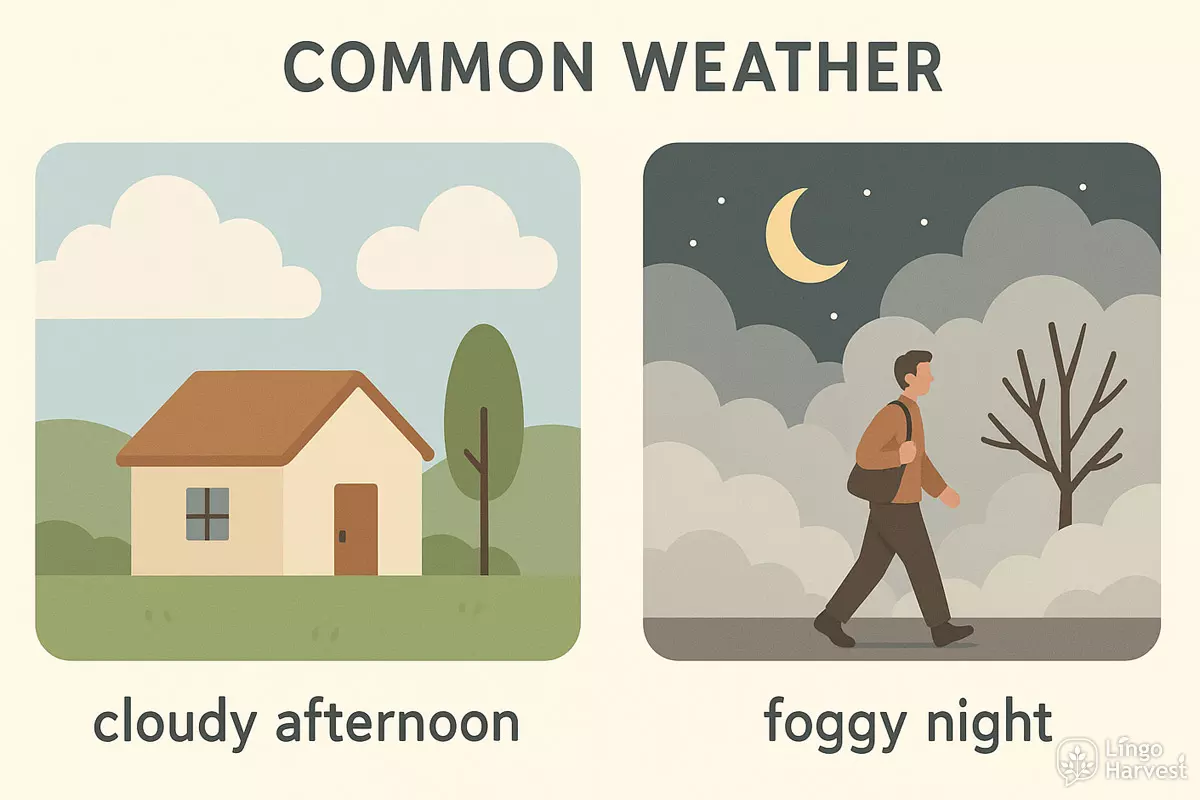
Adjectives such as "sunny," "stormy," or "humid" are often used before nouns to create clear images of the atmosphere. Here are some frequent combinations you might hear or use in conversation:
- chilly morning
- cloudy afternoon
- foggy night
- scorching sun
- gentle breeze
- heavy rain
- blistering heat
- crisp air
- freezing temperature
- mild wind
- overcast sky
- thunderous storm
- drizzling rain
- humid weather
- icy roads
- torrential downpour
- refreshing shower
- sweltering afternoon
- calm evening
- gusty wind
Patterns for Describing Weather
To describe weather effectively, place the adjective before the noun. For example, say "windy day" rather than "day windy." This order is standard in English and helps listeners quickly understand the condition being described.
Comparing Descriptive Choices
Selecting the right modifier can completely change the impression of a situation. Consider the following table, which shows how different adjectives paired with the same noun can create distinct meanings:
| Adjective | Noun | Example Sentence |
|---|---|---|
| gentle | breeze | The gentle breeze made the afternoon pleasant. |
| strong | breeze | A strong breeze rattled the windows. |
| light | rain | A light rain began to fall as we left. |
| torrential | rain | Torrential rain flooded the streets. |
| thick | fog | Thick fog covered the valley in the morning. |
| patchy | fog | Patchy fog made driving tricky. |
| bright | sunshine | We enjoyed the bright sunshine at the park. |
| harsh | sunshine | The harsh sunshine forced us to seek shade. |
By mixing and matching different adjectives and nouns, you can give your descriptions a unique flavor and communicate the exact kind of weather you’re experiencing. This approach is useful in both everyday conversation and creative writing.
Useful Expressions for Conversation
When talking about the weather, having a range of descriptive words and sentence patterns helps make your conversations smoother and more engaging. Below are some practical expressions and ways to share your thoughts about the weather in everyday situations. These examples can be tailored for casual chats, travel, or even more formal discussions.
Common Ways to Ask About the Weather
- What’s it like outside?
- How’s the weather today?
- Is it still raining?
- Do you think it’ll get warmer later?
- Has it been sunny all week?
Describing Weather with Adjectives
- It’s sunny and bright.
- The sky is cloudy.
- It feels humid this afternoon.
- It’s a bit chilly today.
- The air is crisp and cool.
- It’s sweltering in here!
- The wind is gusty.
- It’s foggy this morning.
- The weather is dreary and gray.
- It’s freezing outside.
- It’s pouring rain.
- It’s surprisingly mild for December.
Sample Conversation Starters and Responses
- “What a beautiful day, isn’t it?”
- “Looks like it might snow later.”
- “I didn’t expect it to be so windy.”
- “Do you mind the heat, or do you prefer cooler weather?”
- “Perfect weather for a walk, don’t you think?”
- “I hope the rain stops before the evening.”
- “This fog makes it hard to see anything.”
- “The forecast said it would be warmer.”
Comparing Weather Conditions
| Adjective | Example in Conversation |
|---|---|
| Sunny | “It’s sunny today, unlike yesterday when it was cloudy.” |
| Windy | “It’s much windier than it was this morning.” |
| Humid | “Today feels more humid compared to last week.” |
| Chilly | “It’s chilly tonight, but at least it’s not freezing.” |
| Stormy | “The weather’s turned stormy; it was calm earlier.” |
| Foggy | “It’s foggy this morning, which wasn’t the case yesterday.” |
With these phrases and sentence patterns, you can confidently describe weather conditions and compare them, making your conversations more specific and natural. Try using different adjectives and expressions to add variety and clarity when discussing the climate around you.
Practice: Describe the Weather Today
Observing and talking about current weather is a practical way to reinforce your understanding of descriptive adjectives. Consider what you see outside your window: is the sky clear, cloudy, or overcast? Is there a breeze, or is it still? Use these observations to create specific and vivid descriptions.
Common Adjectives for Weather Conditions
- Sunny
- Cloudy
- Overcast
- Windy
- Breezy
- Humid
- Dry
- Rainy
- Stormy
- Misty
- Foggy
- Chilly
- Warm
- Hot
- Cool
- Freezing
- Muggy
- Crisp
- Blustery
- Calm
Examples: Describing Today’s Weather
- It’s a bright and sunny morning with hardly any clouds.
- The sky is overcast, and there’s a chilly wind blowing.
- Today feels muggy and humid, with occasional light rain.
- There’s a gentle breeze and the temperature is pleasantly warm.
- It’s foggy outside, making it hard to see very far.
- The air is crisp and cool, perfect for a walk.
Practice Tasks
- Look out your window or step outside. Write 2–3 sentences describing the current weather using at least three different adjectives from the list above.
- Match the description to the correct weather adjective:
a) The air feels heavy and wet, and you might sweat easily.
b) The wind is strong and noisy.
c) There are thick clouds covering the sky, blocking the sun.
d) The temperature is low, and you need a warm coat.
Show answers
- Task 1: Answers will vary. Example: "It’s cloudy and breezy, and the air feels chilly."
- Task 2:
- a) Humid
- b) Blustery
- c) Overcast
- d) Freezing / Chilly
Useful Phrases for Talking About the Weather
- The sky is completely clear today.
- It looks like it might rain soon.
- The wind is picking up this afternoon.
- It’s unusually warm for this time of year.
- The air feels fresh and crisp this morning.
- There’s a thick fog covering the city.
- It’s a perfect day for staying indoors.
- The sun is shining brightly.
- It’s too hot to go outside right now.
- There’s a light drizzle, but it’s not too cold.
Try combining several adjectives and phrases to create richer, more accurate weather descriptions. Observing and discussing real conditions will help you remember new words and use them confidently in daily conversation.