Punctuation with Conjunctions: Commas for Beginners

 Here we when to use commas with and, but, or, avoiding comma splices, comma use with because and so, and listing rules. It also compares speaking pauses to writing rules and includes practice fixing sentences.
Understanding when to add a comma before words such as and, but, or so can greatly improve the clarity and flow of your writing. A comma is generally needed before these conjunctions when they connect two independent clauses, meaning each part could stand alone as a complete sentence. However, if the conjunction links two parts that are not complete sentences, a comma is usually unnecessary. Mastering this rule will help make your sentences both clearer and more professional.
When to Use a Comma (and, but, or)
Understanding when to insert a comma before conjunctions like "and," "but," or "or" is essential for clarity in English writing. The main guideline is to use a comma when these words join two complete sentences (independent clauses). This helps avoid confusion and keeps your writing smooth.
Commas with Coordinating Conjunctions
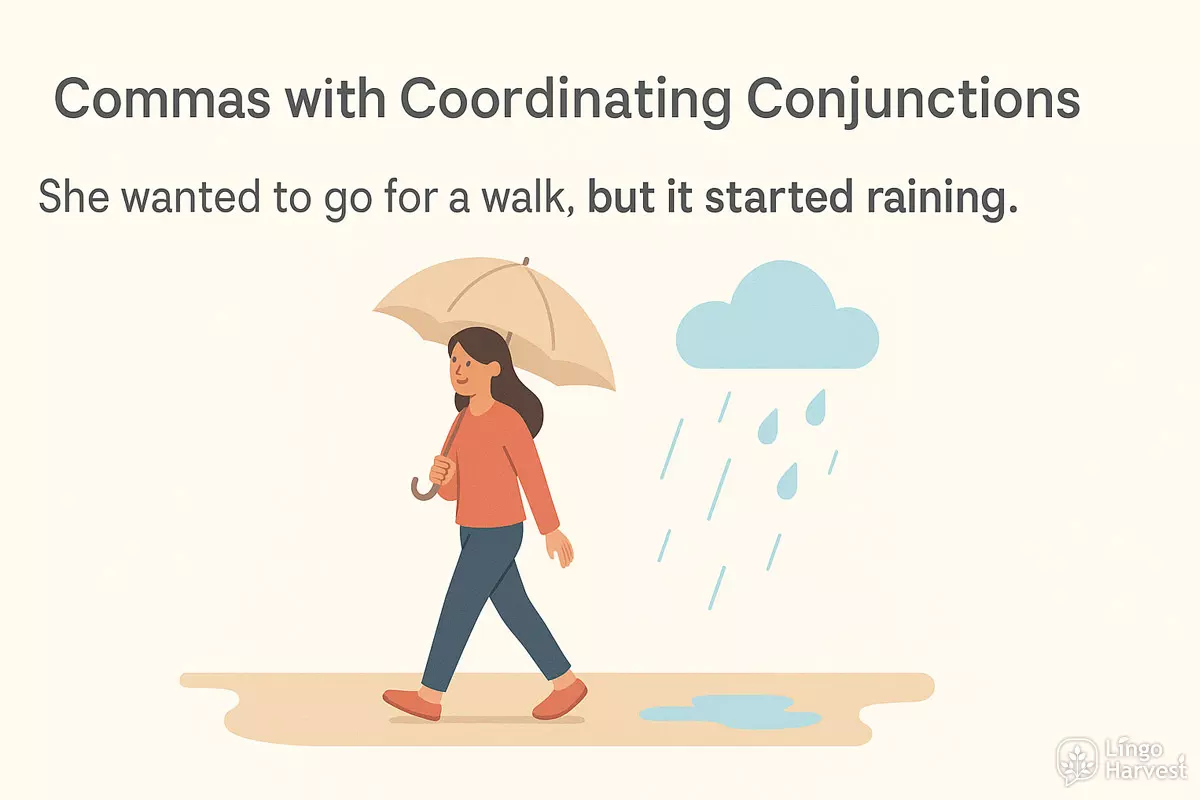
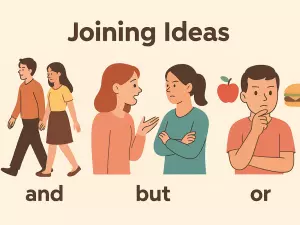
When "and," "but," or "or" connect two full thoughts, add a comma before the conjunction. If the second part is not a complete sentence, no comma is needed. This rule is simple but easy to overlook.
- She wanted to go for a walk, but it started raining.
- I can make pasta, or we can order pizza.
- He studied all night, and he finally finished his project.
- We can leave now or wait until later. ✅ No comma needed—second part isn't a full sentence.
- She likes apples and oranges. ✅ No comma—simple list, not full sentences.
Quick Reference: Comma Usage with "and," "but," "or"
| Example Sentence | Comma Needed? |
|---|---|
| He loves to read, and he writes every day. | Yes (joins two independent clauses) |
| She called but nobody answered. | No (second part not a full sentence) |
| It was raining, so we stayed inside. | Yes (so = coordinating conjunction) |
| We can stay here or go home. | No (not two full sentences) |
| She wanted coffee, but she had no money. | Yes |
Common Mistakes to Avoid
Writers often add unnecessary commas before "and," "but," or "or" in simple lists or short phrases. Only use the comma if both sides are complete sentences. Remember: if you can split the sentence into two stand-alone sentences, you likely need a comma.
- Incorrect: She likes to swim, and dances. ❌ Not two full sentences.
- Correct: She likes to swim and dances. ✅
- Correct: She likes to swim, and she dances, too. ✅ Both sides are independent clauses.
Summary
To sum up, place a comma before "and," "but," or "or" only when joining two independent clauses. Skipping the comma in compound sentences can confuse readers, while adding it in simple lists or phrases can make your writing unnecessarily choppy. Practice spotting independent clauses to master this punctuation skill.
Avoiding Comma Splices
Combining two complete sentences with just a comma is a common mistake in English writing. This error is called a "comma splice." To write clear sentences, it's important to connect independent clauses correctly. A comma alone is not strong enough to join two separate thoughts.
What Is a Comma Splice?
When you use only a comma to link two independent clauses (each with its own subject and verb), the result is a comma splice. This can make your writing confusing or choppy. Learning to spot this problem helps you write more effectively.
Ways to Fix a Comma Splice
There are several reliable ways to connect two complete sentences. Here are the most common solutions:
- Use a period: Make two separate sentences.
Incorrect: She was tired, she went to bed.
Correct: She was tired. She went to bed. - Add a coordinating conjunction: Use words like and, but, or, so, for, nor, yet after the comma.
Correct: She was tired, so she went to bed. - Use a semicolon: A semicolon can link two closely related sentences.
Correct: She was tired; she went to bed. - Restructure the sentence: Change the wording so only one independent clause remains.
Correct: Being tired, she went to bed.
Common Coordinating Conjunctions
These seven words—often remembered by the acronym FANBOYS—can be used with a comma to join two independent clauses:
- for
- and
- nor
- but
- or
- yet
- so
Examples: Correcting Comma Splices
- It was raining, we stayed inside. ❌
- It was raining, so we stayed inside. ✅
- I finished my homework, I went out. ❌
- I finished my homework; I went out. ✅
- He likes pizza, he dislikes pasta. ❌
- He likes pizza but dislikes pasta. ✅
- She called me, I didn’t answer. ❌
- She called me. I didn’t answer. ✅
- The sun set, the sky turned orange. ❌
- The sun set and the sky turned orange. ✅
Quick Tips to Prevent This Error
- Read your sentences aloud; if you pause naturally, check the punctuation.
- Look for two complete thoughts joined by a comma—this signals a possible splice.
- Remember that a comma alone is not enough to join full sentences.
- When in doubt, split long sentences into shorter ones.
because and so: Comma or No Comma?
Understanding when to use a comma with "because" and "so" is a common stumbling block for beginners. These conjunctions connect ideas, but the rules for punctuation depend on sentence structure and clarity. Here’s what you need to know to avoid confusion and polish your writing.
Using Commas with "because"
Usually, you do not need a comma before "because." The reason is that "because" introduces essential information explaining why something happened. Adding a comma can sometimes make the meaning unclear or even change it.
- I stayed home because it was raining. ✅ (No comma needed)
- I didn’t call you, because I lost my phone. ❌ (Comma can create ambiguity: was not calling caused by losing the phone, or is it an extra detail?)
However, if the sentence could be misunderstood, a comma may help clarify:
- She didn’t win, because she didn’t try. (Implies the reason for not winning is not trying.)
- She didn’t win because she didn’t try. (Implies she did win, but not for lack of trying.)
In most cases, skip the comma before "because" unless you really need to separate ideas for clarity.
Commas with "so"
"So" can function as a coordinating conjunction (connecting two independent clauses) or as a subordinating conjunction (less common). If you are joining two complete sentences with "so," use a comma before it.
- It was late, so we went home. ✅
- I was tired so I went to bed. ❌ (Comma is needed)
But if "so" means "so that," you generally don’t use a comma:
- I left early so I could catch the bus. ✅
Quick Comparison: "because" vs. "so" and Comma Use
| Conjunction | Comma Rule |
|---|---|
| because | Usually no comma unless needed for clarity or to avoid confusion. |
| so (meaning "therefore") | Use a comma when joining two independent clauses. |
| so (meaning "so that") | No comma needed; "so that" introduces purpose, not a separate sentence. |
Common Patterns and Examples
Here are some practical examples to help you spot when to use commas with these words:
- I brought an umbrella because it looked like rain.
- He didn’t come because he was sick.
- We missed the bus, so we took a taxi instead.
- She hurried so she wouldn’t be late.
- The concert was canceled because the singer was ill.
- It started to snow, so we stayed inside.
- I didn’t eat breakfast because I woke up late.
- He left early so he could finish his project.
- The road was closed, so we had to find another route.
- She smiled because she passed the test.
- I called you, so you wouldn’t worry.
- He didn’t answer because he was asleep.
In summary, most of the time you won’t need a comma with "because," but you do with "so" when it connects two full sentences. When in doubt, check if the sentence is clear and whether the parts joined by the conjunction could stand alone. This approach helps keep your punctuation accurate and your writing easy to follow.
Series and Listing Patterns
When listing three or more items in a sentence, commas help clarify meaning and prevent confusion. The standard approach involves placing commas between all items, with a final comma (the Oxford comma) before the last conjunction, though this last comma is sometimes optional in modern usage.
Using Commas in Lists
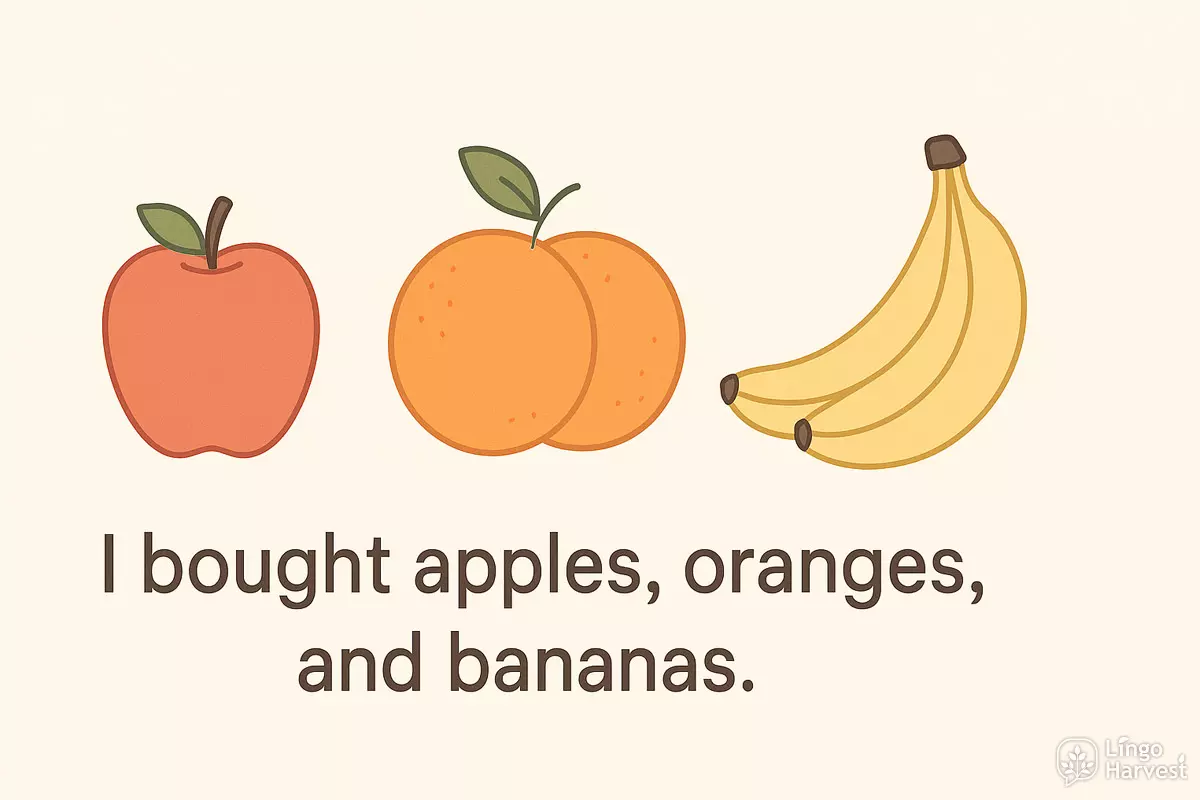
A comma is placed after each item except the last one, which is typically followed by a conjunction such as and or or. This pattern is common in both formal and informal writing.
- I bought apples, oranges, and bananas.
- She needs pens, paper, erasers, and markers.
- We will visit Paris, Rome, or Berlin this summer.
- He likes running, swimming, biking, and hiking.
- For breakfast, I had eggs, toast, and juice.
- The colors available are red, blue, green, and yellow.
- Students must bring notebooks, calculators, and rulers.
- Our meeting covers planning, budgeting, and scheduling.
- The cake includes flour, sugar, eggs, and butter.
- She studied biology, chemistry, and physics at school.
- You can choose pizza, salad, pasta, or soup.
- My pets are a dog, a cat, and a rabbit.
- The team has doctors, nurses, and technicians.
- He packed shirts, pants, socks, and shoes.
- We need to buy milk, bread, cheese, and fruit.
Omitting the Oxford Comma
Writers sometimes leave out the comma before the final conjunction, especially in journalistic styles. However, this can occasionally cause ambiguity, so clarity should guide your choice.
- She invited her parents, Anna and Tom. ✅ (clear if Anna and Tom are her parents)
- She invited her parents, Anna, and Tom. ✅ (clear if Anna and Tom are separate guests)
Commas with Multiple Conjunctions
When a series uses more than one conjunction (polysyndeton), commas are typically used before each one:
- He bought apples and oranges and bananas.
- We sang and danced and laughed all night.
Common Patterns Compared
| Pattern | Example |
|---|---|
| Standard list with Oxford comma | I need bread, milk, and eggs. |
| List without Oxford comma | I need bread, milk and eggs. |
| Series with multiple conjunctions | We played and talked and laughed. |
| Ambiguous list (missing comma) | I dedicate this to my parents, Oprah and God. ❌ |
Remember, consistency is key. Choose a listing style that suits your context, and apply it throughout your writing for maximum clarity and readability.
Clear Speaking Pauses vs Writing Rules
When you speak, you might naturally pause before or after words like "and," "but," or "so." These pauses make your speech easier to follow, but in writing, punctuation follows specific guidelines rather than just matching the way we talk. Writers often wonder if they should add a comma wherever they pause in speech. However, the rules for punctuating conjunctions are more precise and sometimes differ from what feels natural in conversation.
Why Pauses in Speech Don’t Always Mean a Comma in Writing
It’s common to insert a brief pause before a conjunction while speaking, especially to add emphasis or clarify meaning. But in written English, commas are not placed simply because you feel a pause. Instead, commas are used according to patterns and structural rules. For example, you use a comma before "and" when joining two independent clauses, but not when connecting just two items in a list.
Common Mistakes: Pausing vs. Punctuating
- Adding commas before every "and" just because you pause when reading aloud.
- Leaving out commas in compound sentences, leading to run-on sentences.
- Inserting unnecessary commas after conjunctions like "but" or "so" at the start of a sentence.
- Confusing spoken emphasis with written punctuation rules.
Examples: Spoken Pauses vs. Correct Comma Use
Here are some examples showing how pauses in speech do not always match the comma rules in writing:
- Spoken: "I wanted to go (pause) but I was too tired."
Written: "I wanted to go, but I was too tired." (Comma needed—two complete clauses.) - Spoken: "She bought apples (pause) and oranges."
Written: "She bought apples and oranges." (No comma—just two items.) - Spoken: "You can stay here (pause) or leave now."
Written: "You can stay here or leave now." (No comma—simple sentence.) - Spoken: "We can eat now (pause) or (pause) wait for them."
Written: "We can eat now or wait for them." (No comma needed.)
Quick Comparison: Speech vs. Writing
| How We Speak | How We Write |
|---|---|
| Pause before "and" in a list | No comma needed unless using the Oxford comma |
| Pause before "but" in a sentence | Comma needed only if joining two full clauses |
| Pause at the start of a sentence after "so" | Usually no comma after "so" at the beginning |
| Pausing for emphasis with any conjunction | Follow standard punctuation rules, not speech rhythm |
In summary, while natural pauses can guide your intuition, written punctuation depends on sentence structure rather than the way you say things aloud. Paying attention to the rules for commas with conjunctions leads to clearer, more precise writing.
Practice: Fix the Sentences
Let's put your comma skills to the test by editing sentences with conjunctions. Each example below is missing a comma, has an extra one, or uses conjunctions incorrectly. Review each sentence and rewrite it using the correct punctuation. Remember, coordinating conjunctions (like and, but, or) often require a comma when joining two independent clauses.
Exercise: Edit the Sentences
- She wanted to go to the park but it was raining.
- I finished my homework, and then I watched TV.
- We can have pizza or we can order sushi.
- The cat is sleeping on the sofa and the dog is chewing a toy.
- He was tired, but he kept working.
- Mia likes apples but, she doesn’t like pears.
- Call me when you arrive or if you get lost.
- They studied hard yet they didn’t pass the test.
- We can leave now, or wait for Sarah.
- It’s cold outside so wear your coat.
- He wanted to stay home, but his friends convinced him to go out.
- Bring your umbrella for it might rain later.
- The team played well and, they won the match.
- We can go to the movies or, we can stay home.
- I want to visit Paris but my brother wants to go to Rome.
Show answers
- She wanted to go to the park, but it was raining.
- I finished my homework and then I watched TV.
Or, if both are independent clauses: I finished my homework, and then I watched TV. - We can have pizza, or we can order sushi.
- The cat is sleeping on the sofa, and the dog is chewing a toy.
- He was tired, but he kept working.
- Mia likes apples, but she doesn’t like pears.
- Call me when you arrive or if you get lost.
(No comma needed; both are dependent clauses.) - They studied hard, yet they didn’t pass the test.
- We can leave now or wait for Sarah.
(No comma needed; second part is not a full clause.) - It’s cold outside, so wear your coat.
- He wanted to stay home, but his friends convinced him to go out.
- Bring your umbrella, for it might rain later.
- The team played well, and they won the match.
- We can go to the movies or we can stay home.
(No comma needed if the clauses are short and closely connected, but a comma is acceptable: We can go to the movies, or we can stay home.) - I want to visit Paris, but my brother wants to go to Rome.
Common Comma Pitfalls with Conjunctions
- Forgetting the comma before a coordinating conjunction joining two independent clauses.
- Adding an unnecessary comma when the conjunction does not join two full sentences.
- Using a comma after the conjunction instead of before it.
- Confusing coordinating (and, but, or, nor, for, so, yet) and subordinating conjunctions (because, although, since).
Careful attention to these frequent mistakes can make your writing clearer and more professional. Practice helps you internalize the rules, so try revising your own sentences using these guidelines.