Word Order with Adverbs: Where Do They Go?

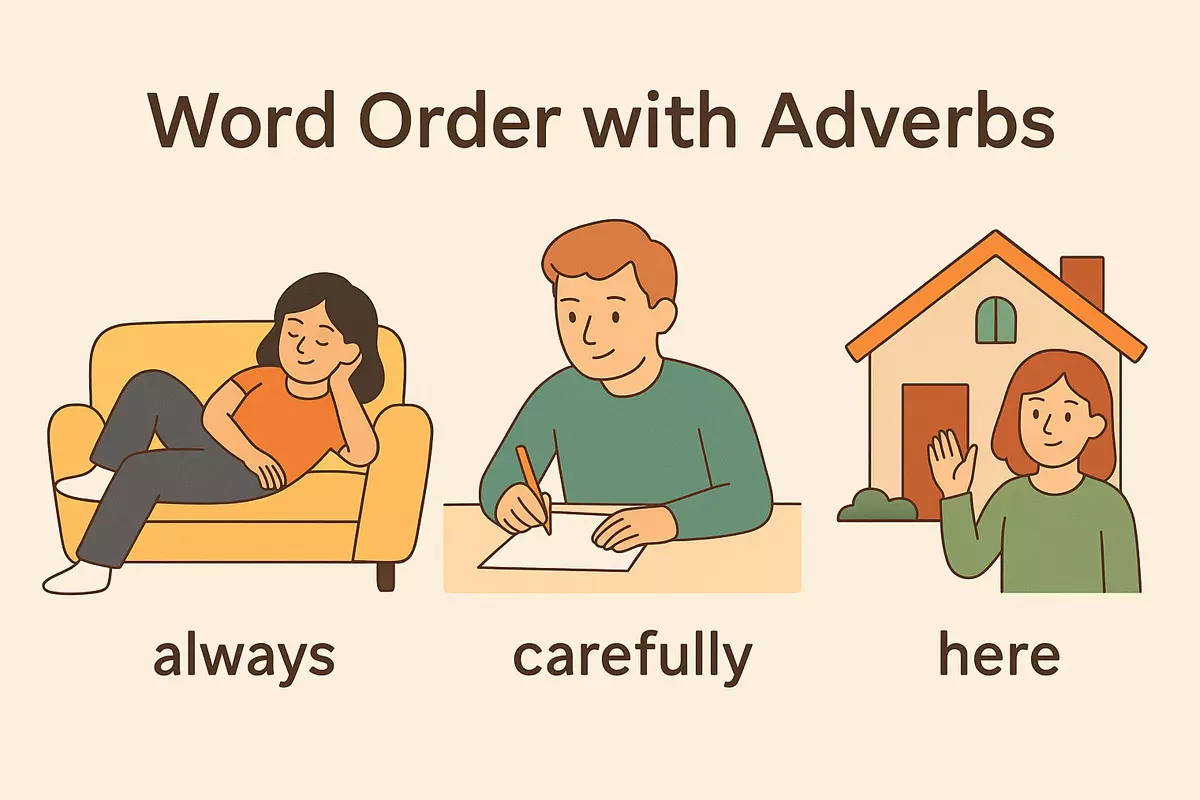 This article explains where to place adverbs in sentences, how their position differs with be and other verbs, the distinctions among frequency, manner, and time adverbs, tips for emphasis, the natural order of two adverbs, and common mistakes to avoid.
Have you ever found yourself unsure about where to put words such as quickly or often in an English sentence? Understanding the usual placement of these descriptive words, known as adverbs, can greatly improve the clarity and flow of both your writing and your speech. Adverbs that describe how, when, or how often something happens typically appear before the main verb or after the object, depending on what you want to emphasize. By mastering their correct position, you can communicate your ideas more precisely and confidently.
Core Positions: mid, end, front
The placement of adverbs in sentences depends on their type and what they modify. English offers three typical locations for adverbs: before the main verb (mid-position), at the end of the sentence or clause (end-position), and at the very beginning (front-position). Each spot subtly shifts emphasis or focus within the sentence.
Mid-Position: Between Subject and Main Verb

Adverbs of frequency (like "always," "never," "usually") and some modal adverbs (such as "probably" or "certainly") commonly appear just after the subject and before the main verb. If there is an auxiliary verb, the adverb usually follows it:
- She always arrives early.
- We usually eat breakfast at 7.
- He has already finished his homework.
- You can definitely trust her.
- They will probably come later.
- I have never seen that movie.
- She is still working.
- Do you really want to go?
- We might just catch the train.
- He often forgets his keys.
If the verb is "to be," the adverb generally comes after it: "She is always cheerful."
End-Position: After the Verb or Object
Many adverbs, especially those describing manner, place, or time, appear at the end of a sentence or clause. This is the most flexible and natural place for longer adverbial phrases:
- She spoke quietly.
- We met yesterday.
- He works in London.
- They left after the meeting.
- I will see you tomorrow.
- The children played outside.
- She finished the project quickly.
- They arrived late.
- He answered politely.
- We went home by bus.
Front-Position: At the Beginning of the Sentence
Placing an adverb or adverbial phrase at the front of a sentence can set the scene or add emphasis. This is frequent with adverbs of time, linking words, or when you want to highlight contrast or attitude:
- Yesterday, we went to the park.
- Suddenly, the lights went out.
- Honestly, I don’t know the answer.
- In the morning, she jogs for an hour.
- Sometimes, he forgets his wallet.
- Unfortunately, the store was closed.
- Afterwards, we had lunch together.
- Carefully, he opened the box.
- Once a week, they visit their grandmother.
- Perhaps, we could try again tomorrow.
Comparison of Typical Adverb Positions
| Adverb Type | Usual Position | Example |
|---|---|---|
| Frequency (always, never, often) | Mid-position | She always arrives early. |
| Manner (quickly, quietly, well) | End-position | He finished quickly. |
| Time (yesterday, soon, later) | Front or end-position | Yesterday, we met. / We met yesterday. |
| Attitude (fortunately, obviously, perhaps) | Front or mid-position | Fortunately, nobody was hurt. / She is obviously upset. |
Understanding these placements helps you create clearer, more natural sentences. When in doubt, consider the type of adverb and what you wish to emphasize—position often makes a subtle but important difference.
Adverbs with Be vs Other Verbs
Adverbs often have different positions in a sentence depending on whether the main verb is be or another (action) verb. This can change both the meaning and the natural flow of your sentences. Understanding these patterns helps make your English sound more fluent and clear.
Adverbs and the Verb "Be"
When the main verb is a form of be (am, is, are, was, were), most adverbs of frequency and many other adverbs are placed after the verb:
- She is always on time. ✅
- They were usually friendly. ✅
- I am never late. ✅
- He is often tired after work.
- Are you ever bored?
Placing the adverb before be is generally incorrect:
- She always is on time. ❌
Adverbs with Other Verbs
With most action verbs, adverbs of frequency and similar adverbs go before the main verb but after an auxiliary (helping) verb:
- He often goes to the gym. ✅
- They usually eat lunch at noon. ✅
- I never forget my keys. ✅
- She sometimes walks to work.
- We rarely see him these days.
When there is an auxiliary verb (like have, will, can, do), the adverb comes after the auxiliary and before the main verb:
- They have always lived here. ✅
- I will never forget this. ✅
- She can sometimes help us.
Comparison Table: Adverb Placement
| Form of "Be" | Other Verbs |
|---|---|
| He is always early. | He always arrives early. |
| They are usually happy. | They usually smile a lot. |
| I am never hungry at night. | I never eat at night. |
| We were often late. | We often arrived late. |
| She is sometimes busy. | She sometimes works late. |
Notice how the adverb comes directly after be but before the main verb in other cases. This difference is especially important with adverbs of frequency (always, never, usually, sometimes, often, rarely, etc.).
Other Common Adverbs
While frequency adverbs have set positions, adverbs of manner, time, and place often go at the end of the sentence regardless of the main verb:
- He is at home now.
- She works quickly.
- They are together today.
- I will see you tomorrow.
Getting familiar with these patterns makes your sentences clearer and helps you avoid common mistakes.
Frequency vs Manner vs Time Priority
Understanding the typical arrangement of adverbs in a sentence helps make your English sound natural and clear. When you use more than one adverb to modify a verb, there’s a preferred sequence: adverbs of manner (how), adverbs of place (where), adverbs of frequency (how often), adverbs of time (when), and adverbs of purpose (why). This order isn’t arbitrary—it reflects how native speakers process information.
The Standard Adverb Order
English tends to follow a "Manner → Place → Frequency → Time → Purpose" sequence after the main verb or object. While all types of adverbs can appear in various positions, stacking them together is most natural in this order. For example:
- She sang beautifully (manner) at the concert (place) every weekend (frequency) last year (time) to raise money (purpose).
If you swap the order, the sentence often becomes confusing or awkward.
Comparing Frequency, Manner, and Time
When you use adverbs of frequency (such as "always," "sometimes," "never"), manner ("quickly," "carefully," "loudly"), and time ("yesterday," "soon," "last week") together, priority matters. The usual order is: 1. Manner 2. Frequency 3. Time Here are some examples to illustrate:
- He drives carefully (manner) always (frequency) at night (time).
- They work quietly (manner) sometimes (frequency) in the morning (time).
- She reads quickly (manner) often (frequency) before bed (time).
Quick Reference Table
| Adverb Type | Common Examples |
|---|---|
| Manner | quickly, slowly, carefully, loudly, silently, beautifully, badly, easily |
| Frequency | always, often, sometimes, rarely, never, usually, occasionally, frequently |
| Time | today, yesterday, tomorrow, now, soon, already, last week, recently, later, tonight |
Tips for Natural Adverb Placement
- Place adverbs of frequency before the main verb, except with "to be" (e.g., "She always is late" ❌ "She is always late" ✅).
- Manner adverbs usually come after the verb or verb + object.
- Time adverbs commonly appear at the end of the sentence for emphasis or clarity.
- If you use all three, keep them in the Manner → Frequency → Time order for clarity.
Mastering this adverb sequence helps your sentences flow more naturally and avoids ambiguity. Mixing up the order occasionally won’t always sound wrong, but following these guidelines ensures your meaning is clear and idiomatic.
Focus and Emphasis Tricks
Choosing where to place adverbs can subtly change the meaning or highlight different parts of a sentence. By shifting the position of an adverb, you can draw attention to particular actions, times, or attitudes—giving your sentences just the nuance you want.
Front-Position for Highlighting
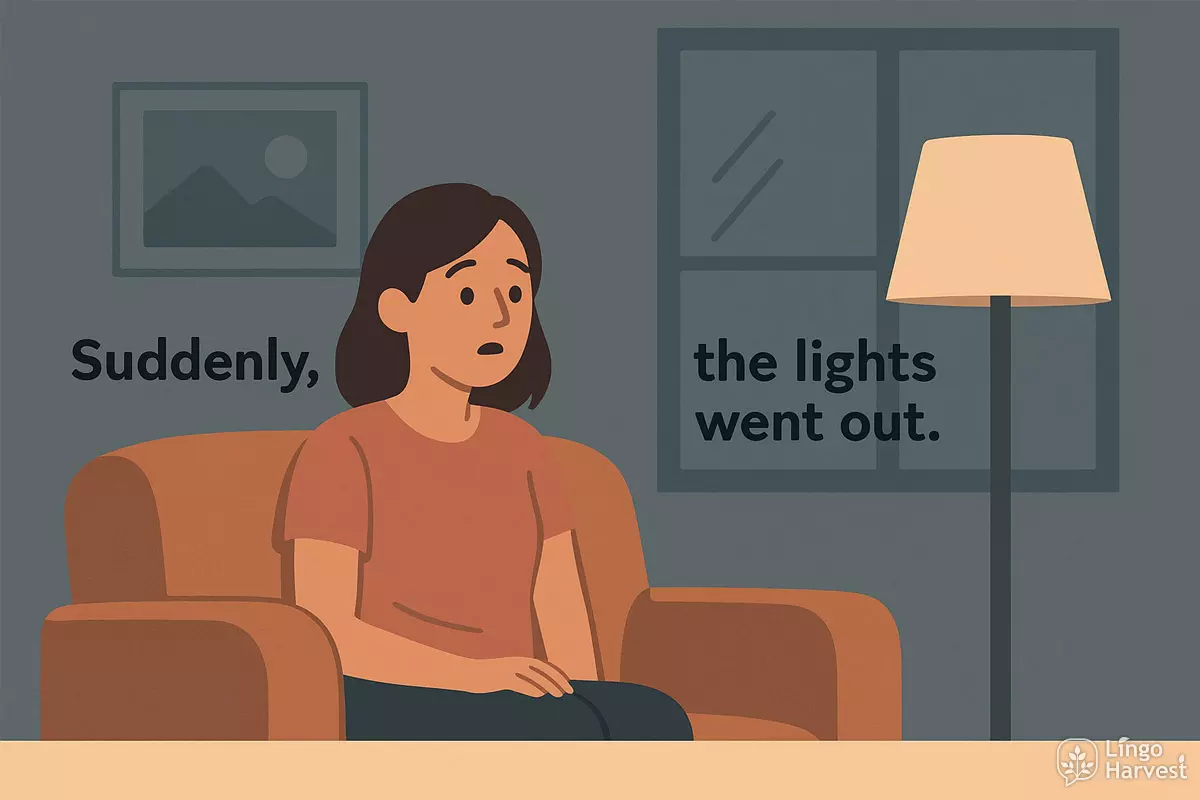
Placing adverbs at the very start of a sentence often emphasizes the adverb itself. This can set the tone or show contrast:
- Suddenly, the lights went out. (Focuses on the abruptness.)
- Usually, she takes the bus. (Highlights the routine.)
- Unfortunately, we missed the train. (Emphasizes regret.)
Mid-Position for Neutral Statements
Inserting adverbs before the main verb (or after "be") often gives a neutral tone, simply stating a fact without special emphasis.
- He often forgets his keys.
- The results clearly show improvement.
- She is definitely ready.
End-Position for Results and Outcomes
When adverbs come at the end, they usually stress the result, frequency, or manner of the action. This is common with time adverbs and some manner adverbs.
- We met yesterday.
- He spoke calmly.
- They will finish the project soon.
Comparing Placement Effects
The table below shows how shifting adverb placement can change what stands out in a sentence:
| Adverb Position | Effect on Sentence |
|---|---|
| At the beginning | Highlights the adverb’s meaning or sets the scene “Quickly, she left the room.” |
| Before the main verb (“mid”) | Gives a neutral or factual tone “She quickly left the room.” |
| At the end | Emphasizes the action’s manner or timing “She left the room quickly.” |
| After the subject (rare, formal) | Creates literary emphasis or formality “She, quickly, left the room.” |
Quick Tips for Highlighting
- To spotlight the frequency or attitude, try moving the adverb to the front.
- Keep adverbs close to the word they modify for clarity.
- Use end-position for time and manner adverbs when you want the listener to remember that detail.
- For strong emotional emphasis, pair a fronted adverb with a pause (comma), e.g., “Honestly, I didn’t know.”
- Be careful: some adverbs (like “only,” “almost,” “even”) can change the meaning dramatically depending on placement.
Mastering these placement strategies lets you guide your reader’s attention and fine-tune the meaning of your sentences. Experiment with different positions to see which effect works best for your message.
Two Adverbs Together: natural order
When you use two adverbs in a sentence, their order can affect clarity and fluency. English prefers a natural sequence, with each adverb describing a different aspect—such as manner, place, time, or frequency. Typically, adverbs of manner come first, followed by those of place, and finally time-related adverbs. This order helps listeners or readers understand your meaning quickly and without confusion.
Typical Adverb Pairings and Placement
It’s common to combine adverbs that describe how and when something happens, or how and where. For example:
- She sang beautifully at the concert last night.
- He worked quietly in his room all day.
- They responded immediately after the meeting.
Notice how adverbs of manner (beautifully, quietly, immediately) lead, followed by place or time.
Natural Order Guidelines
- Manner (how): quickly, silently, well
- Place (where): here, outside, at home
- Time (when): yesterday, soon, in the morning
- Frequency (how often): always, rarely, every week
A standard sequence is: manner → place → time. For example:
- She left quietly without a word yesterday.
- He will arrive early at the station tomorrow.
Common Adverb Combinations
Here are some pairs you might encounter, showing how natural placement works:
- quickly downstairs
- happily abroad
- silently outside
- carefully at home
- gently in the morning
- enthusiastically every week
- rarely at night
- eagerly on Friday
- loudly in class
- politely at the table
- firmly at first
- regularly in June
- constantly on vacation
- occasionally in winter
Adverbs That Don’t Mix Well
Not all adverb types combine smoothly. For instance, two adverbs of manner can sound awkward together. Instead, try to pair different types for better flow.
| ✅ Natural Order | ❌ Unnatural Order |
|---|---|
| She answered politely yesterday. | She answered yesterday politely. |
| He worked quietly at home. | He worked at home quietly. |
| They met secretly in Paris. | They met in Paris secretly. |
| We spoke briefly after lunch. | We spoke after lunch briefly. |
Quick Tips
- Pair different adverb types for clarity.
- Follow the typical manner–place–time sequence.
- Read sentences aloud: if it sounds odd, try switching the adverbs.
Choosing the right sequence for two adverbs helps your sentences sound natural and easy to understand.
Common Mistakes and Quick Fixes
Misplacing adverbs often leads to confusion or changes the intended meaning of a sentence. Many learners put adverbs in the wrong spot, especially with verbs or when using negatives, which can make sentences sound unnatural or even incorrect. Recognizing and adjusting these small errors can make your English much clearer.
Frequent Placement Errors
- Placing adverbs between the verb and its object (e.g., She reads always books instead of She always reads books).
- Putting adverbs before auxiliary verbs (He quickly has finished instead of He has quickly finished or He has finished quickly).
- Incorrectly splitting verb phrases (They have never seen is correct, but They never have seen is usually not).
- Using adverbs at the start of questions unnecessarily (Always do you eat breakfast? instead of Do you always eat breakfast?).
- Confusing placement for emphasis (e.g., Only she saw the movie vs. She only saw the movie).
Quick Fixes for Better Adverb Positioning
- Most adverbs of frequency (always, often, never, sometimes) go before the main verb but after be as a main verb: She is always late. / She always arrives late.
- With modal verbs (can, will, must), adverbs usually come after the modal: You can usually find him here.
- Adverbs of manner (quickly, carefully) often come after the object: She wrote the letter carefully.
- When using negatives, place adverbs before the main verb: She doesn't usually eat meat.
- For emphasis, consider the meaning: Only I saw him (no one else did) vs. I only saw him (nothing else happened).
Common Adverbs and Their Typical Placement
| Adverb | Usual Position | Example Sentence |
|---|---|---|
| always | Before main verb / after "be" | She always drinks tea. |
| never | Before main verb / after "be" | He is never late. |
| quickly | After object or verb | He finished his work quickly. |
| rarely | Before main verb / after "be" | They rarely watch TV. |
| sometimes | Beginning, before main verb, or end | Sometimes I walk to work. |
| already | Before main verb (except "be") | She has already left. |
| just | Before main verb (except "be") | I have just finished. |
| still | Before main verb (except "be") | We still need help. |
| hardly ever | Before main verb / after "be" | She hardly ever complains. |
| completely | Before main verb or after object | They completely forgot the meeting. |
Remember, checking for the natural flow and clarity of your sentences can help you catch most placement issues. If in doubt, read the sentence aloud or compare with examples from reliable sources. Over time, correct patterns will become second nature.
Practice: Reorder for Natural English
Getting comfortable with adverb placement is essential for fluent, natural-sounding English. Below, you’ll find exercises to help you identify and practice typical word order, especially with adverbs like always, usually, never, and quickly.
Rearrange the Sentences
Rewrite each sentence so it sounds natural in English. Focus on where the adverb should go.
- I eat breakfast always at home.
- She her homework does usually in the evening.
- They to school walk sometimes.
- He late never arrives.
- We have already finished dinner.
- The dog barks loudly every morning.
- You should carefully read the instructions.
- My friends visit rarely on weekdays.
- I can easily solve this problem.
- The teacher explained the rules clearly.
Show answers
- I always eat breakfast at home.
- She usually does her homework in the evening.
- They sometimes walk to school.
- He never arrives late.
- We have finished dinner already.
- The dog loudly barks every morning.
(But more natural: The dog barks loudly every morning.) - You should read the instructions carefully.
- My friends rarely visit on weekdays.
- I can solve this problem easily.
- The teacher explained the rules clearly.
Spot the Odd Word Order
Some of these sentences use adverbs in a way that sounds unusual to native speakers. Choose which ones need to be rearranged:
- He always is on time.
- They quickly finished the project.
- She drives carefully.
- We rarely go out on Mondays.
- I have never seen that movie.
- You should never ignore safety rules.
Show answers
- He always is on time. → He is always on time.
Common Patterns for Adverb Placement
Here’s a quick reference for where adverbs often go in English sentences (using common adverbs):
| Sentence Pattern | Adverb Placement Example |
|---|---|
| Subject + adverb + main verb | She usually goes to bed early. |
| Subject + auxiliary + adverb + main verb | They have never visited Paris. |
| Subject + main verb + adverb (manner/frequency/time) | He reads quickly. |
| Adverb at the beginning or end | Sometimes, I forget my keys. I go jogging every morning. |
| Between modal and main verb | You can easily do this. |
Try It Yourself
Create your own sentences using these patterns with adverbs such as never, quickly, sometimes, rarely, already, carefully, usually, always, soon, and clearly. Write at least five examples and check if the adverb fits naturally in your sentence.