Grammar ▾
▸ Articles ▸ Advanced Grammar ▸ Adjectives & Adverbs ▸ Conjunctions ▸ Conditionals ▸ Determiners ▸ Gerunds & Infinitives ▸ Grammar Practice ▸ Modal Verbs ▸ Nouns ▸ Parts of Speech ▸ Prepositions ▸ Pronouns ▸ Quantifiers ▸ Question Formation ▸ Reported Speech ▸ Verbs
Writing ▾
▸ Punctuation ▸ Sentence Structure ▸ Writing Mistakes
Vocabulary ▾
▸ Visual Vocabulary ▸ Food Vocabulary ▸ People Vocabulary ▸ Places Vocabulary ▸ Hobbies Vocabulary ▸ Home Vocabulary ▸ School Vocabulary ▸ Weather Vocabulary ▸ Basic Vocabulary ▸ General Vocabulary
Speaking ▾
▸ Conversational English
Calculators Contacts
Home » C1 Advanced

Using Modal Verbs in English Reported Speech

Using Modal Verbs in English Reported Speech
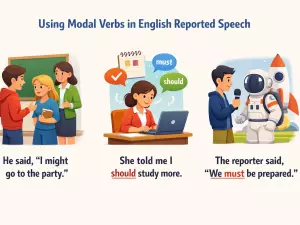
This article explains how indirect speech can change modal verbs, which ones usually shift, and when can becomes could. It also covers modals in reported questions and requests, cases where modals stay the same, how context affects meaning, and practice exercises.

How Modal Verbs Help When Making Decisions

How Modal Verbs Help When Making Decisions
This article explains how speakers use modal verbs to think through decisions, offer options and recommendations, and compare alternatives with could, might, and should. It includes conversation examples, shows how tone and context affect choice, and ends with practice exercises.

How Modal Verbs Work with Passive Voice

How Modal Verbs Work with Passive Voice
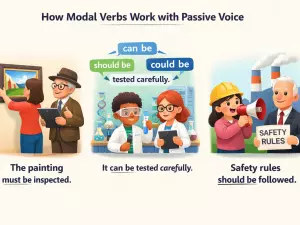
Covers how modal verbs work with the passive voice, using the modal plus be plus past participle pattern. Explains how focus shifts from the doer to the action, gives real examples like can be completed and must be approved, and shows use in instructions, reports, and formal writing, plus practice exercises.

Modal Verbs for Everyday Decisions and Solutions

Modal Verbs for Everyday Decisions and Solutions
This article explains how modal verbs help you suggest possible solutions, discuss choices, and explore alternatives using could and might. It includes everyday problem-solving examples, shows how modals express uncertainty, compares multiple options, and offers practice exercises.

Perfect Modal Constructions and Their Meaning

Perfect Modal Constructions and Their Meaning
This article explains what modal perfect constructions mean in English, how modal verbs pair with have plus a past participle, and what forms like could have, may have, and must have express. It includes past-completed examples, result/guess uses, and practice exercises.

How to Give Advice About the Past with Modal Verbs

How to Give Advice About the Past with Modal Verbs
This article explains how English speakers use modal verbs to judge past decisions, especially should have, with examples of mistakes and missed options. It shows how past advice differs from criticism, when people reflect on outcomes, and includes practice exercises.

How to Express Past Obligation Using Modal Verbs

How to Express Past Obligation Using Modal Verbs
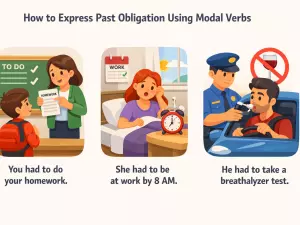
It explains how English talks about past responsibilities, including structures for past necessity and expectations and the difference between had to and should have. You’ll see examples of past rules and duties, how speakers justify earlier requirements in explanations or storytelling, plus practice exercises.

How to Express Past Possibility with Modal Verbs

How to Express Past Possibility with Modal Verbs
Learn how English speakers speculate about past events using may have, might have, and could have. See how each modal shows stronger or weaker certainty, with examples of what probably happened, how context and evidence shape your choice, and practice exercises for real conversations.

Using Modal Verbs for Regret and Criticism in English

Using Modal Verbs for Regret and Criticism in English
Learn why people use modal verbs to look back on decisions. See how should have signals criticism or hindsight advice, and could have highlights missed chances. Get everyday examples of regret and disappointment, tone shifts, ways to soften blame, plus practice exercises.

Should Have vs Could Have vs Would Have Explained

Should Have vs Could Have vs Would Have Explained
This article explains how modal perfect forms describe alternative past situations, what should have means when judging past actions, how could have points to missed possibilities or abilities, and how would have signals hypothetical past outcomes.
Previous 1 2 3 4 5 6 7 8 9 10 ... 31 Next
English Learning Tools
  • CEFR Text Level Checker
  • Type-Token Ratio Calculator
  • Sentence Length & Clarity Analyzer
  • Reading Time Calculator
  • Dialogue vs Narrative Analyzer
  • Question Types Analyzer
  • Error Density Checker
  • English Learning Time Calculator
  • Syllable Counter
Popular Articles
Modal Verbs in Job Interview Questions and Answers
Using Modal Verbs for Regret and Criticism in English
Should Have vs Could Have vs Would Have Explained
Modal Verbs in Legal and Rule-Based Language
Modal Verbs Commonly Used in Professional Emails
Modal Verbs Used in Negotiation and Persuasion
About / Privacy Policy / Cookie Policy / Terms of Use

© 2025-2026 LingoHarvest — lingoharvest.com

Content on this website is provided for informational and educational purposes. You may share links to our pages; copying full texts is not permitted without permission.