Search the site
Search
Grammar ▾
▸ Articles
▸ Advanced Grammar
▸ Adjectives & Adverbs
▸ Conjunctions
▸ Conditionals
▸ Determiners
▸ Gerunds & Infinitives
▸ Grammar Practice
▸ Modal Verbs
▸ Nouns
▸ Parts of Speech
▸ Prepositions
▸ Pronouns
▸ Quantifiers
▸ Question Formation
▸ Reported Speech
▸ Verbs
Writing ▾
▸ Punctuation
▸ Sentence Structure
▸ Writing Mistakes
Vocabulary ▾
▸ Visual Vocabulary
▸ Food Vocabulary
▸ People Vocabulary
▸ Places Vocabulary
▸ Hobbies Vocabulary
▸ Home Vocabulary
▸ School Vocabulary
▸ Weather Vocabulary
▸ Basic Vocabulary
▸ General Vocabulary
Speaking ▾
▸ Conversational English
Calculators
Contacts
Home
» C1 Advanced
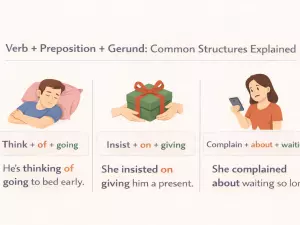
Verb + Preposition + Gerund: Common Structures Explained
Here we what verb plus preposition plus gerund means, lists common combinations, explains how to form and use them, compares them to infinitive patterns, points out typical errors, and provides practice exercises and fixed phrases to remember.
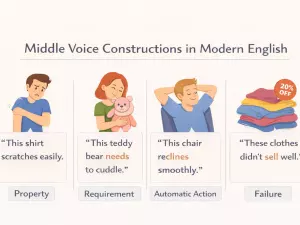
Middle Voice Constructions in Modern English
Here we what the middle voice is in English, how to form middle constructions, and which verbs are commonly used.
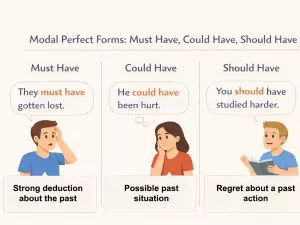
Modal Perfect Forms: Must Have, Could Have, Should Have
This article explains how modal perfect forms like must have, could have, and should have express certainty, possibility, criticism, and regret. It covers their formation, meanings, common mistakes, use in speech, and practice activities.
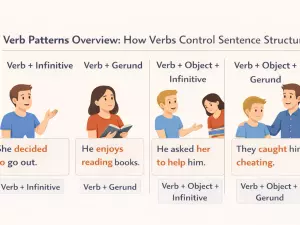
Verb Patterns Overview: How Verbs Control Sentence Structure
The article defines verb patterns in grammar, describes main English types, and explains how verbs determine sentence structure. It covers objects, complements, common errors, pattern selection, and includes practice exercises.
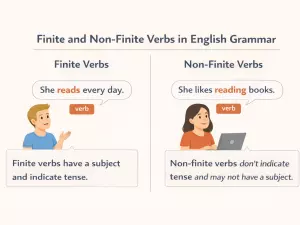
Finite and Non-Finite Verbs in English Grammar
This article defines finite and non-finite verbs, explains how finite verbs indicate tense and agreement, and describes types and functions of non-finite forms like infinitives, gerunds, and participles.
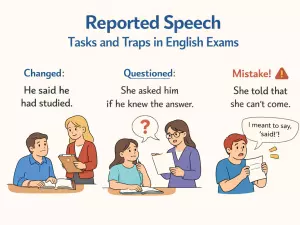
Reported Speech Tasks and Traps in English Exams
The article explains why reported speech causes exam errors, outlines typical exam tasks, and highlights common tense and pronoun traps. It also discusses challenges with reporting questions and commands, overusing backshifting, and practical ways to avoid mistakes.
Advanced Reporting Verbs for C1 and C2 Learners
Here we the importance of advanced reporting verbs, how they convey nuance and attitude, suitable verbs for formal or academic contexts, common verb patterns at C1–C2 level, and tips for choosing precise verbs while avoiding overuse and mistakes.
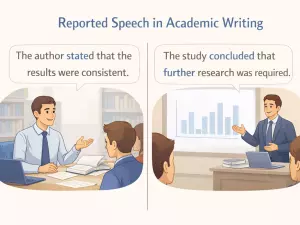
Reported Speech in Academic and Formal Writing Style
Here we the use of reported speech in academic writing, focusing on formal reporting verbs, maintaining objectivity, correct tense usage, and proper citation of sources. It also addresses common stylistic issues in academic reporting.
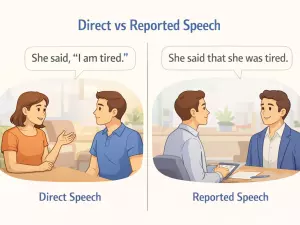
Direct Speech Punctuation vs Reported Speech Structure
Here we key punctuation rules for direct speech, including quotation marks, explains how reported speech is structured and why punctuation is dropped, highlights common errors, and describes the process of changing direct speech to reported form.
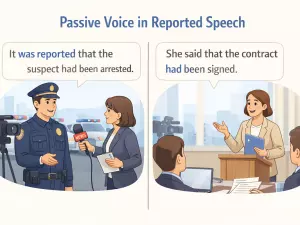
Using Passive Voice in Reported Speech Correctly
This article explains the reasons for using passive voice in reported speech, how to form passive structures in indirect reporting, and when to shift focus from the agent to the action.
Previous
1
2
3
4
5
6
7
8
9
10
...
31
Next