Search the site
Search
Grammar ▾
▸ Articles
▸ Advanced Grammar
▸ Adjectives & Adverbs
▸ Conjunctions
▸ Conditionals
▸ Determiners
▸ Gerunds & Infinitives
▸ Grammar Practice
▸ Modal Verbs
▸ Nouns
▸ Parts of Speech
▸ Passive Voice
▸ Prepositions
▸ Pronouns
▸ Quantifiers
▸ Question Formation
▸ Reported Speech
▸ Verbs
Writing ▾
▸ Punctuation
▸ Sentence Structure
▸ Writing Mistakes
Vocabulary ▾
▸ Visual Vocabulary
▸ Food Vocabulary
▸ People Vocabulary
▸ Places Vocabulary
▸ Hobbies Vocabulary
▸ Home Vocabulary
▸ School Vocabulary
▸ Weather Vocabulary
▸ Basic Vocabulary
▸ General Vocabulary
Speaking ▾
▸ Conversational English
Calculators
Contacts
Home
» C1 Advanced
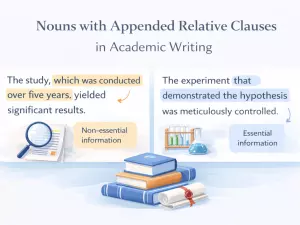
Nouns with Appended Relative Clauses in Academic Writing
Here we how relative clauses after nouns improve clarity in academic writing. It explains restrictive and non-restrictive clauses, relative pronoun choice, punctuation, common learner mistakes, and provides practice with adding correct clauses.
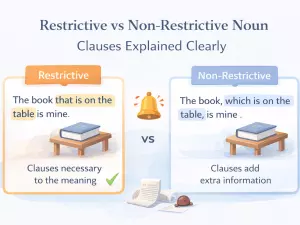
Restrictive vs Non-Restrictive Noun Clauses Explained Clearly
Here we the difference between restrictive and non-restrictive meanings in noun clauses, their role in sentence structure, how punctuation and information focus affect meaning, common introducers, typical learner errors, and practice identifying clause…
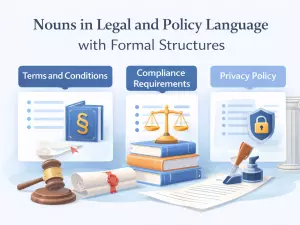
Nouns in Legal and Policy Language with Formal Structures
Here we why legal and policy writing relies on abstract nouns, details common legal noun types, shows how precise meaning is achieved, explains set legal phrases, compares legal to everyday language, and provides practice simplifying legal nouns.
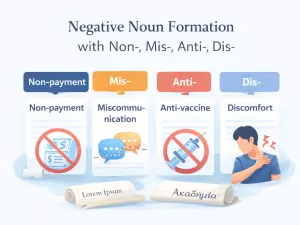
Negative Noun Formation with Non-, Mis-, Anti-, Dis-
This article explains how English forms negative nouns using prefixes like non-, mis-, anti-, and dis-. It covers their specific meanings, which nouns take them, spelling and pronunciation changes, common mistakes, and includes practice exercises.
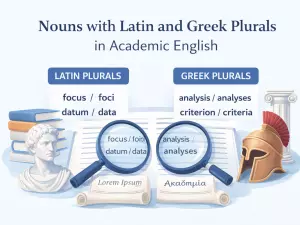
Nouns with Latin and Greek Plurals in Academic English
Here we why English uses Latin and Greek plurals such as criteria and phenomena, examines how singular and plural agreement works, covers modern trends and usage differences, highlights common mistakes, and includes practice with classical forms.
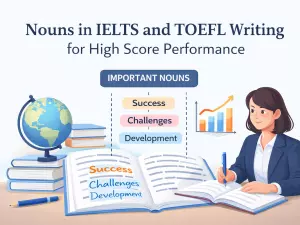
Nouns in IELTS and TOEFL Writing for High Score Performance
This article explains why varying your nouns is essential for exam success, outlines key academic and abstract noun types, covers accurate article and countability use, and warns about common noun mistakes that often lower scores. It also includes a practice exercise.
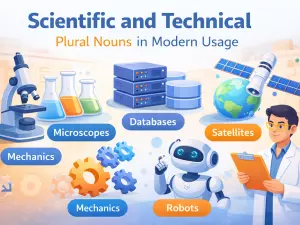
Scientific and Technical Plural Nouns in Modern Usage
Here we how plural nouns are used in scientific writing, including irregular and classical forms, agreement in complex phrases, differences between spoken and written technical language, common learner issues, and provides pluralization practice.
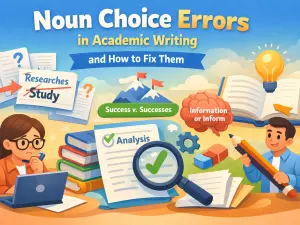
Noun Choice Errors in Academic Writing and How to Fix Them
Here we the importance of precise noun choice in academic writing, common problems such as vague or overly general nouns, countable versus uncountable nouns, collocation errors, and offers strategies and practical editing exercises for better noun usage.
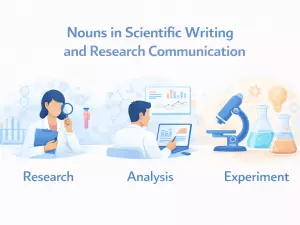
Nouns in Scientific Writing and Research Communication
Here we how nouns function in scientific writing, focusing on their roles in explanation and reporting, the use of different noun types, nominalization, objectivity, information density, typical learner errors, and sentence revision for clarity.
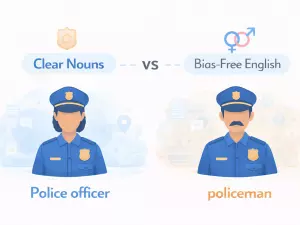
Noun Choice for Clear and Bias-Free Writing in English
Here we how noun choices shape neutrality and perception, examines bias from loaded or exclusionary nouns in various contexts, and gives practical guidance and exercises for selecting neutral, precise nouns in professional and academic writing.
Previous
1
...
11
12
13
14
15
16
17
18
19
...
31
Next